

Spanish story with translation · A1 · 14 lines
Hoy no es mi día Today isn't my day
Comic · 10 panels

Hoy no es mi día.
Today isn't my day.
Estoy demasiado cansada y todavía tengo sueño.
I'm too tired and I'm still sleepy (woman speaking).

Mi jefa está enfadada porque llego tarde.
My boss (female) is angry because I'm late.
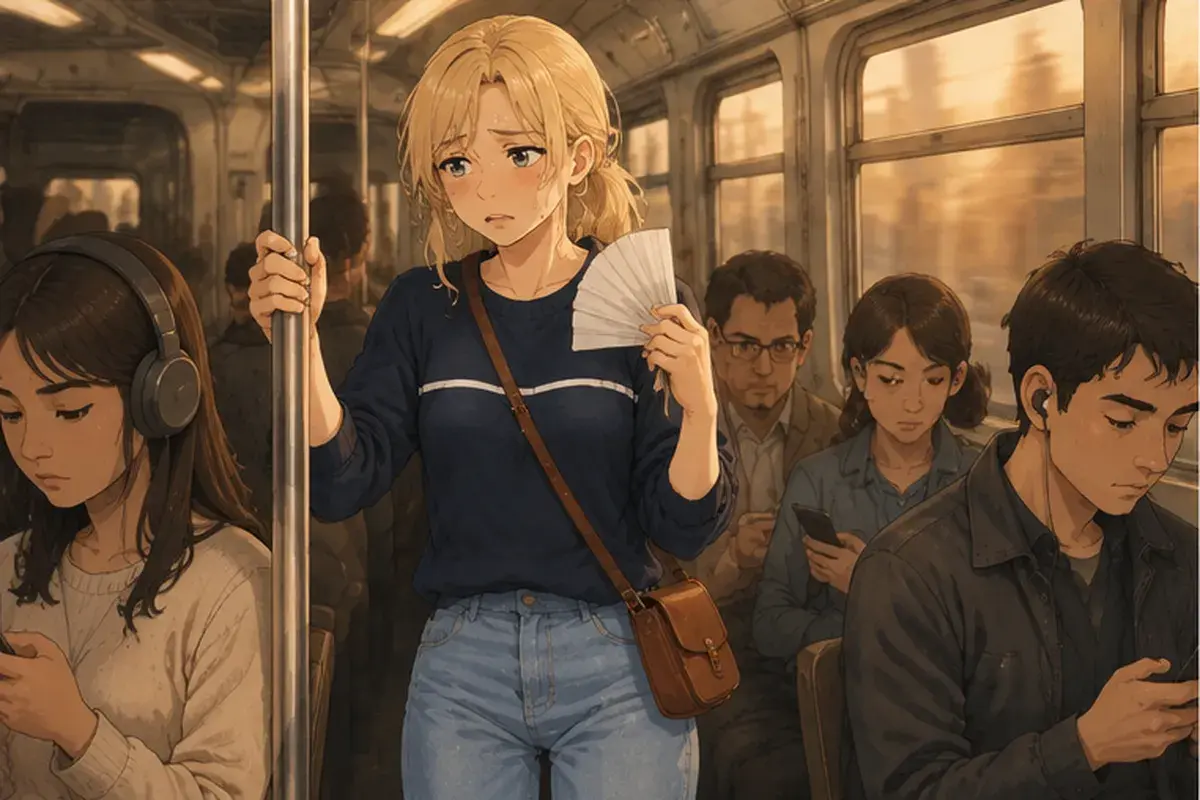
En el metro hace mucho calor. Todo el mundo mira el móvil y nadie habla.
It's very hot on the metro. Everyone is looking at their phone and no one is talking.
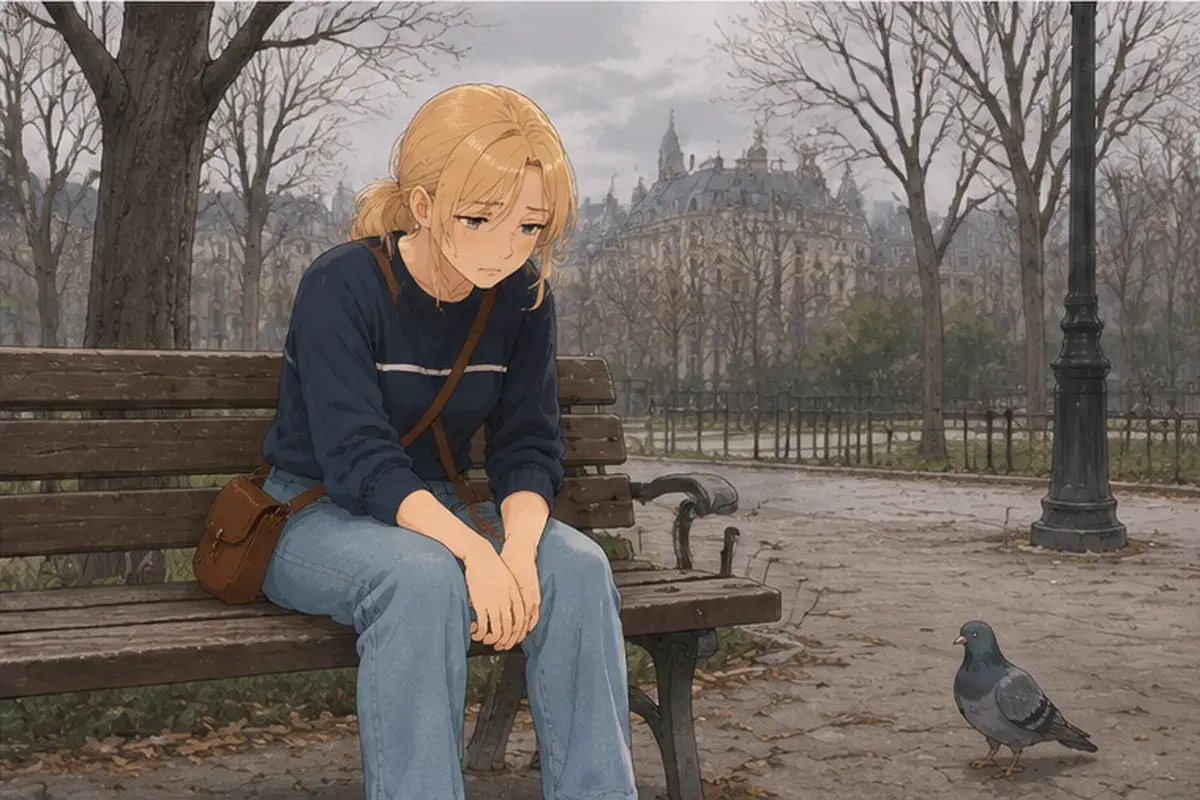
Pienso que la vida es difícil.
I think life is hard.
Estoy triste y me parece que todo es horrible.
I'm sad, and it seems to me that everything is horrible.

Mis compañeros están ocupados y yo estoy aburrida.
My coworkers are busy and I'm bored (woman speaking).

Pero entonces llama Pablo con una noticia genial.
But then Pablo calls with some great news.
Ya tiene los billetes para las vacaciones.
He already has the tickets for the vacation.

Y hoy es su cumpleaños. ¡Felicidades, Pablo! ¡Feliz cumpleaños!
And today is his birthday. Congratulations, Pablo! Happy birthday!

Ahora estoy contenta, casi feliz.
Now I'm content, almost happy (woman speaking).
Mi opinión: un mal día no es un problema importante.
My opinion: a bad day isn't an important problem.

Después del trabajo estoy más tranquila. ¡Qué bien!
After work I'm calmer. How nice! (woman speaking)

Tal vez mañana tengo más suerte. ¿Y tú? ¿Cómo estás: bien, mal, regular?
Maybe tomorrow I'll have better luck. And you? How are you: good, bad, so-so?
Grammar for this text
Ser or estar. Hoy no es mi día, la vida es difícil — ser: what something is, what it's like in general. Estoy demasiado cansada, Mi jefa está enfadada, Estoy triste — estar: how things are right now. The narrator is a woman, so the adjectives end in -a: cansada, aburrida, contenta, tranquila.
estoy aburrida. "I'm bored" — with estar. With ser it would mean something else: soy aburrida — "I'm boring".
tengo sueño, hace mucho calor. todavía tengo sueño — "I'm still sleepy", word for word "I still have sleep". hace mucho calor — "it's very hot": calor is a noun ("heat"), so "very" is mucho, not muy.
Pienso que, me parece que. Pienso que la vida es difícil — "I think (that)…". me parece que todo es horrible — "it seems to me that…": it works like me gusta.
Todo el mundo, nadie. Todo el mundo mira el móvil — "everyone is looking at their phone": word for word "the whole world looks", and the verb is singular, as with English "everyone". nadie habla — "no one is talking": when nadie comes before the verb, you don't need no.
llego tarde. "I'm late", word for word "I arrive late".
un mal día. malo drops its -o before a masculine noun: mal.
tengo más suerte. Tal vez mañana tengo más suerte — "maybe I'll have better luck tomorrow": tener suerte — "to be lucky", word for word "to have luck". Spanish often uses the present tense for tomorrow, where English says "will".
Words and grammar of the unit: Make small talk.
Learn the words from the texts with flashcards
In the app, you can tap any word in a text to see its translation, forms and examples, and new words stick with flashcards. 15 minutes a day.
Start for freeEverything is open for free. No card needed to sign up.