

Spanish story with translation · A1 · 11 lines
¡Eso es muy caro! That's very expensive!
Comic · 8 panels

Hola, Pablo. Soy Ana y estoy en una tienda del centro.
Hi, Pablo. It's Ana, and I'm at a store downtown.
Necesito unos zapatos negros, pero los precios no son baratos.
I need black shoes, but the prices aren't cheap.
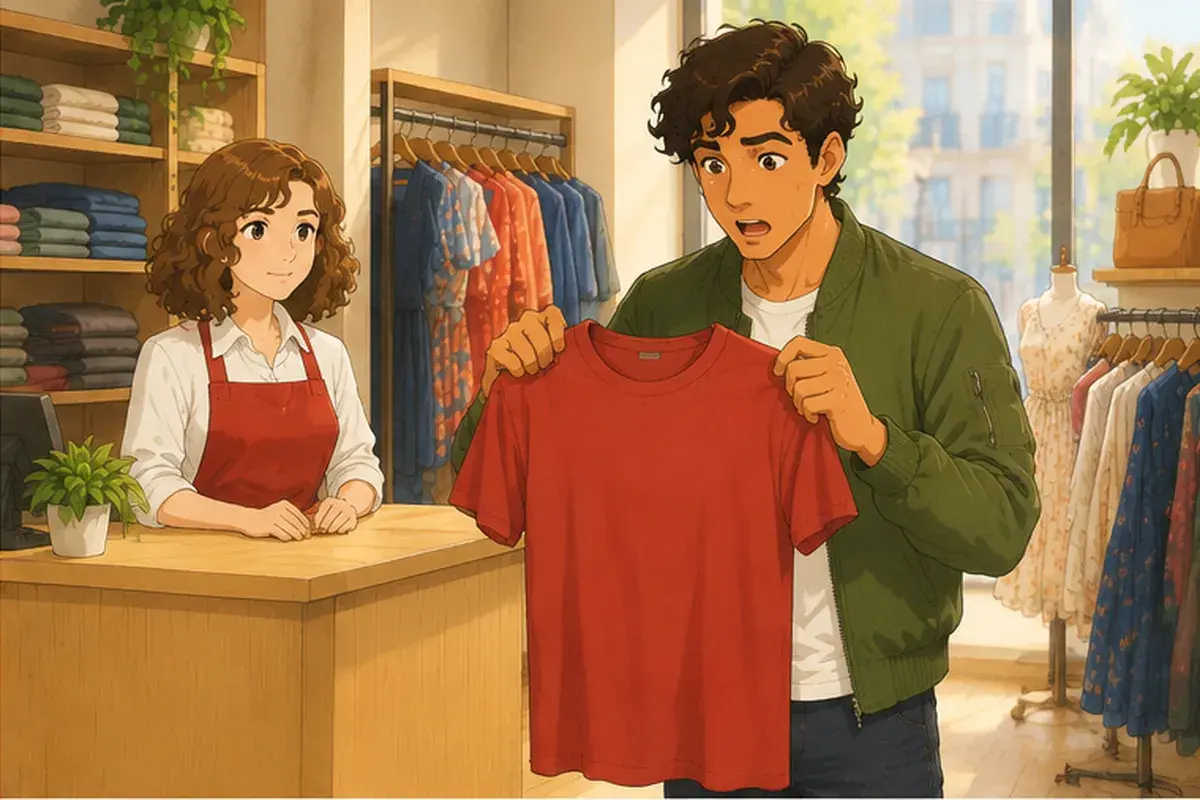
¡Una camiseta roja cuesta cuarenta euros! Eso es muy caro.
A red T-shirt costs forty euros! That's very expensive.
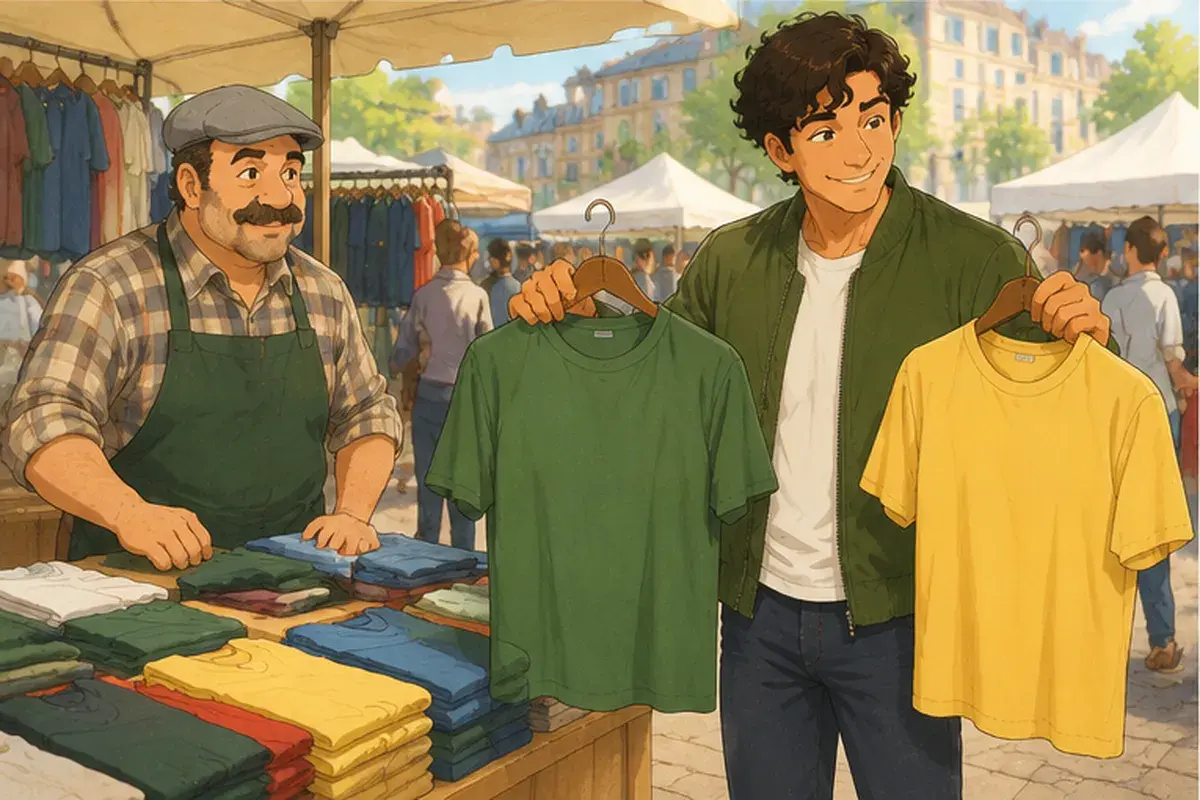
Después voy al mercado: allí la ropa es más barata. Compro dos camisetas: una verde y una amarilla.
Then I'm going to the market: clothes are cheaper there. I'm buying two T-shirts: a green one and a yellow one.

Aquí no puedo pagar con tarjeta, solo en efectivo. Y yo llevo poco dinero.
I can't pay by card here, only in cash. And I don't have much money on me.
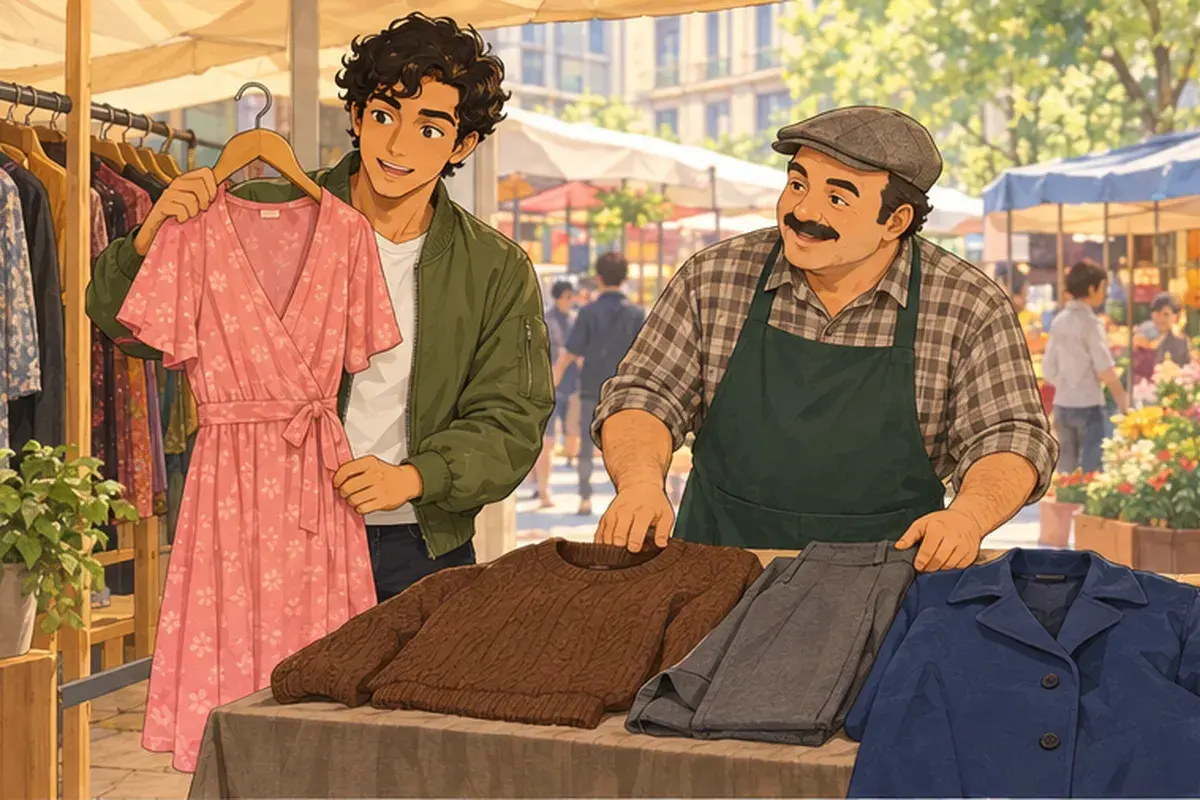
Mira, esto es para tu madre: un vestido rosa muy bonito.
Look, this is for your mom: a very pretty pink dress.
También hay un jersey marrón, unos pantalones grises y un abrigo azul. Mi color favorito es el azul.
There's also a brown sweater, some gray pants and a blue coat. My favorite color is blue.

Por la tarde voy al supermercado. Abre a las nueve de la mañana y cierra a las diez de la noche.
In the afternoon I'm going to the supermarket. It opens at nine in the morning and closes at ten at night.

Llevo mucha ropa, por eso necesito una bolsa grande.
I'm carrying a lot of clothes, and that's why I need a big bag.
¿Necesitas algo? Llámame, por favor.
Do you need anything? Call me, please.

Hasta luego, Pablo.
See you later, Pablo.
Grammar for this text
esto and eso: "this" and "that". esto es para tu madre, Eso es muy caro — you use them when you don't name the thing itself. esto is something I'm showing (the dress). eso is what was just mentioned (the T-shirt for forty euros).
The color after the noun. Una camiseta roja, un vestido rosa, un jersey marrón, un abrigo azul — the color goes after the noun and agrees with it: unos zapatos negros. In una verde y una amarilla the word camiseta isn't repeated: "a green one and a yellow one".
unos zapatos, unos pantalones. With things that come in pairs, unos doesn't mean "some" but "a pair": unos zapatos negros — black shoes (one pair), unos pantalones grises — gray pants (one pair).
Llevo: two meanings. yo llevo poco dinero — I don't have much money on me. Llevo mucha ropa — I'm carrying a lot of clothes.
más barata. allí la ropa es más barata — clothes are cheaper there: más + an adjective makes a comparison, like English "more" or "-er".
Opens and closes. Abre a las nueve de la mañana y cierra a las diez de la noche — it opens at nine in the morning and closes at ten at night. cierra comes from cerrar: when the stress falls on the stem, the e becomes ie.
Llámame, Mira. Llámame, por favor — "Call me, please." This is a command to a friend (tú): for llamar (to call) it looks the same as the él form (llama), me (me) is attached to the end, and a written accent appears. Mira, esto es para tu madre is also a tú command: "look", from mirar.
Words and grammar of the unit: Buy clothes at a store.
Learn the words from the texts with flashcards
In the app, you can tap any word in a text to see its translation, forms and examples, and new words stick with flashcards. 15 minutes a day.
Start for freeEverything is open for free. No card needed to sign up.