

Spanish dialogue with translation · A1 · 14 lines
¿Cuánto cuesta aquella camisa? How much is that shirt over there?
Comic · 12 panels
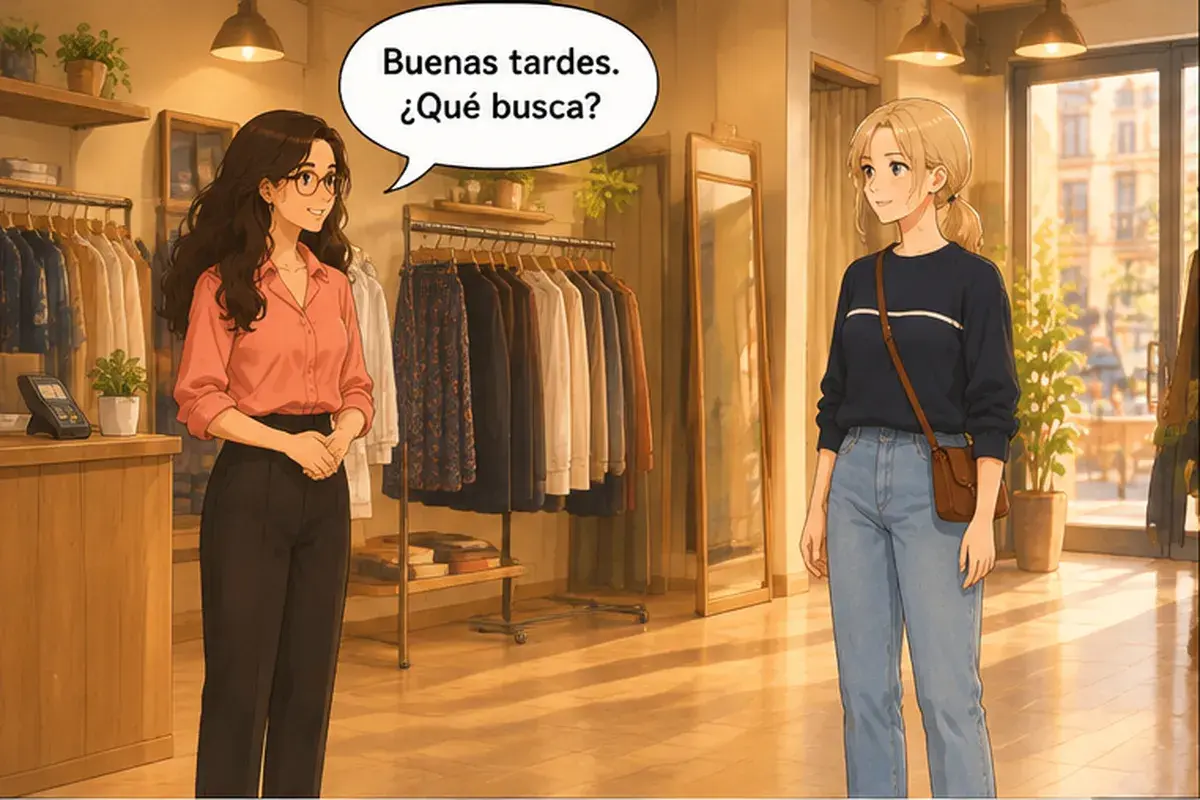
- Lucía
Buenas tardes. ¿Qué busca?
Good afternoon. What are you looking for? (formal)
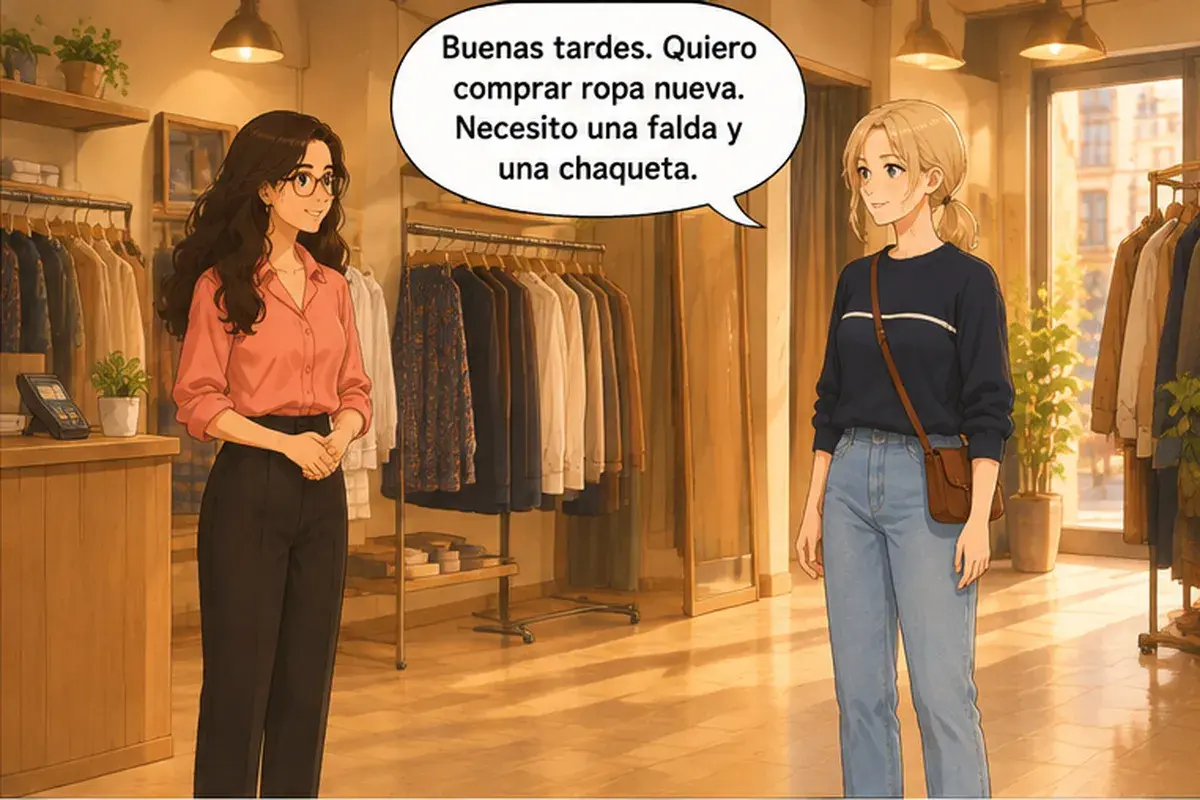
- Ana
Buenas tardes. Quiero comprar ropa nueva. Necesito una falda y una chaqueta.
Good afternoon. I want to buy new clothes. I need a skirt and a jacket.
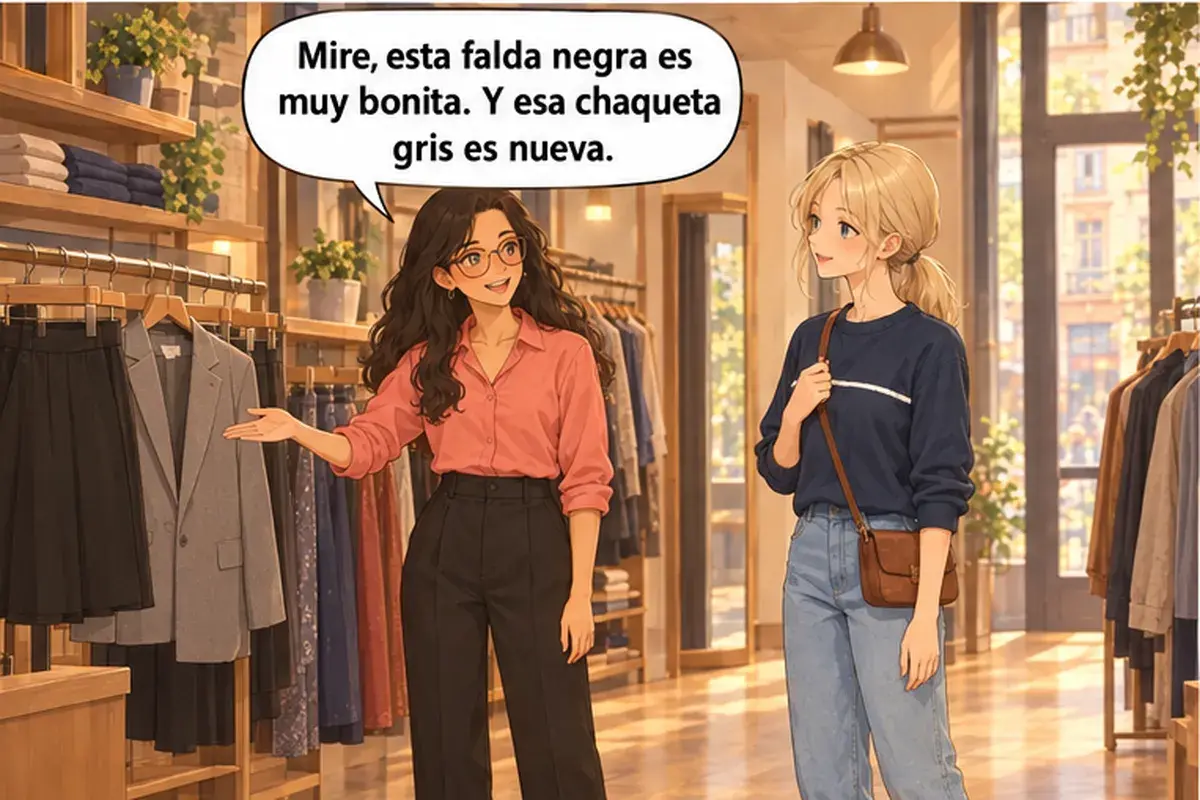
- Lucía
Mire, esta falda negra es muy bonita. Y esa chaqueta gris es nueva.
Look, this black skirt is very pretty. And that gray jacket is new. (formal)
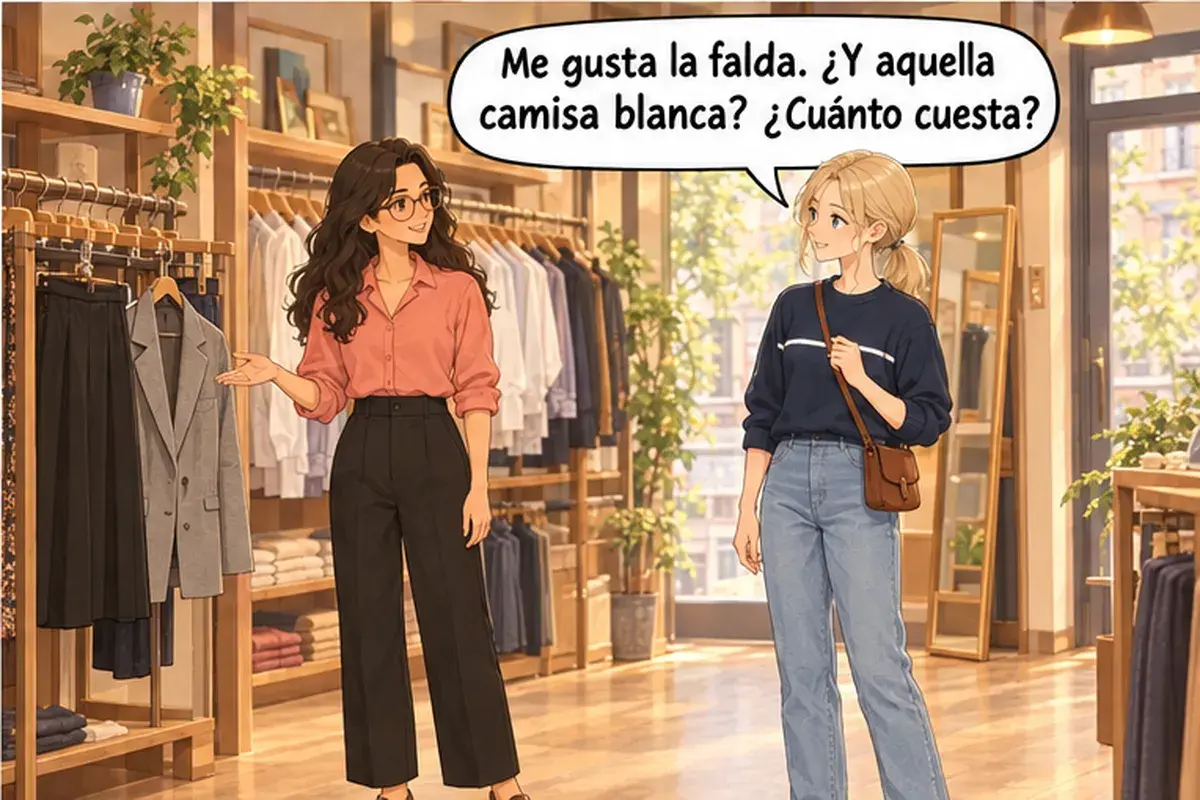
- Ana
Me gusta la falda. ¿Y aquella camisa blanca? ¿Cuánto cuesta?
I like the skirt. And that white shirt over there? How much is it?
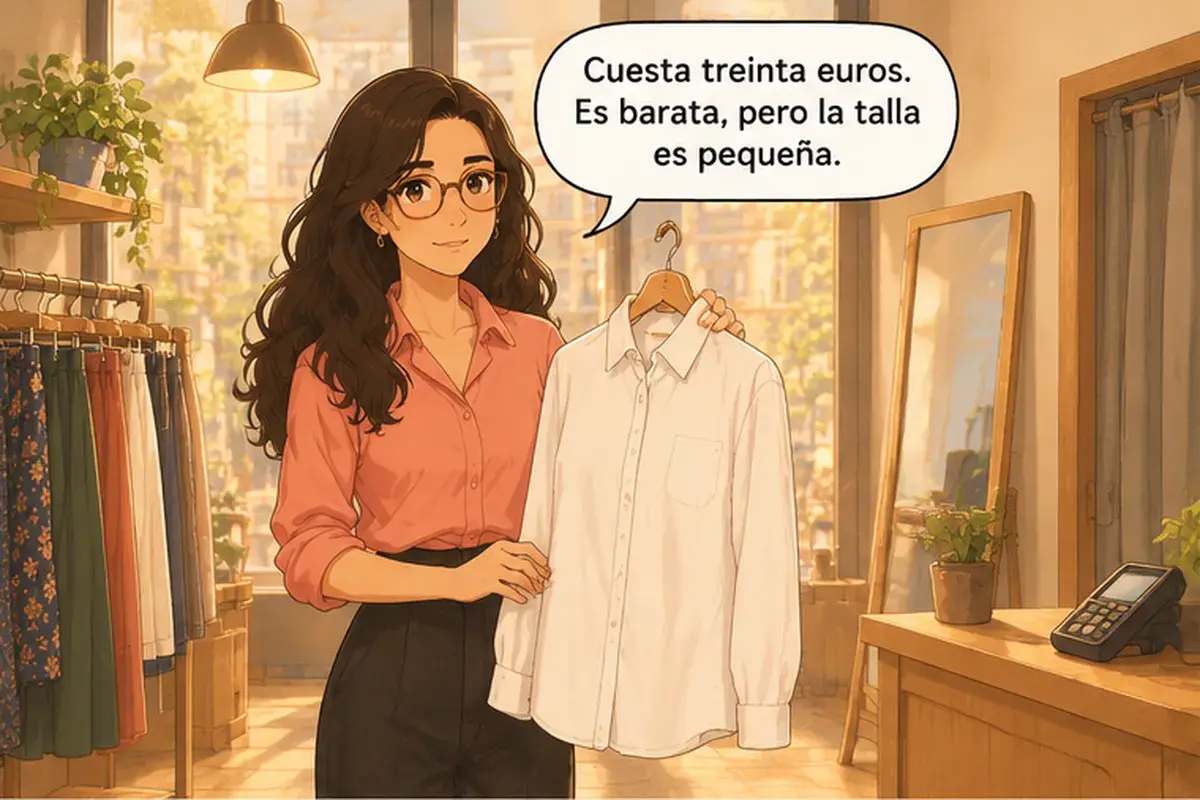
- Lucía
Cuesta treinta euros. Es barata, pero la talla es pequeña.
It costs thirty euros. It's cheap, but the size is small.
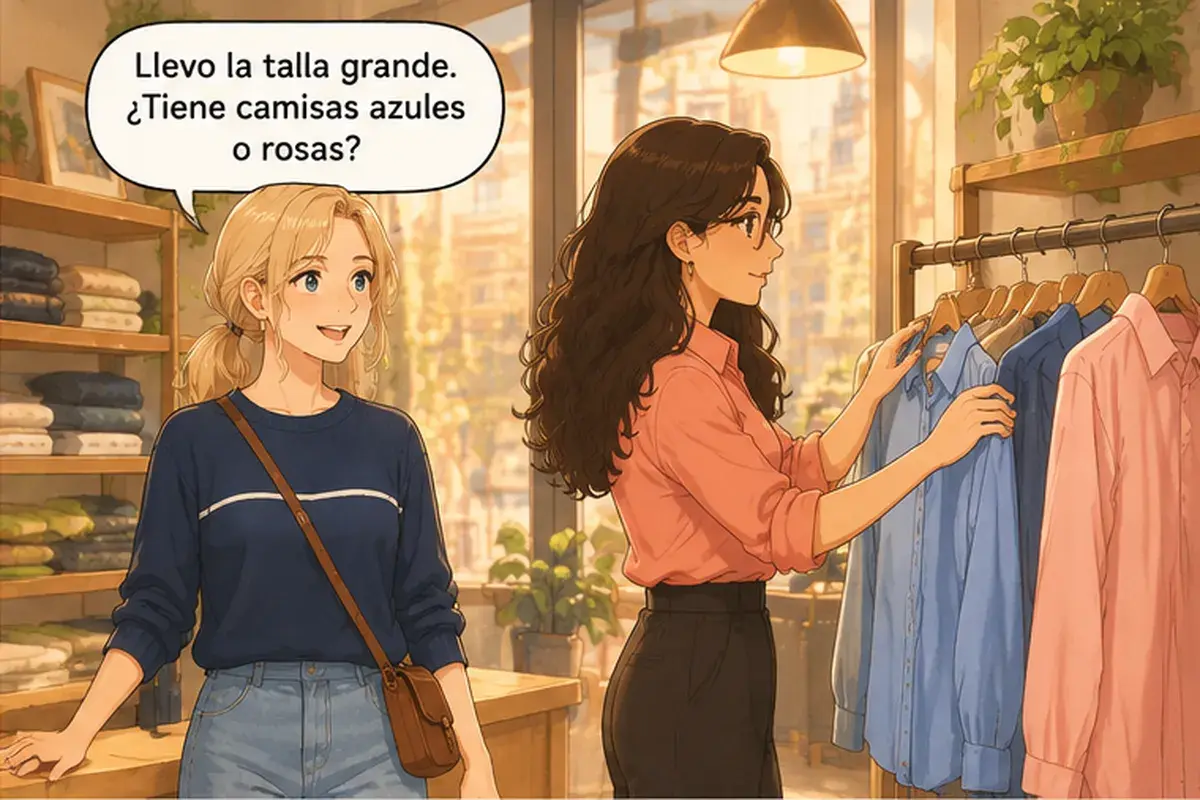
- Ana
Llevo la talla grande. ¿Tiene camisas azules o rosas?
I wear a large size. Do you have blue or pink shirts? (formal)
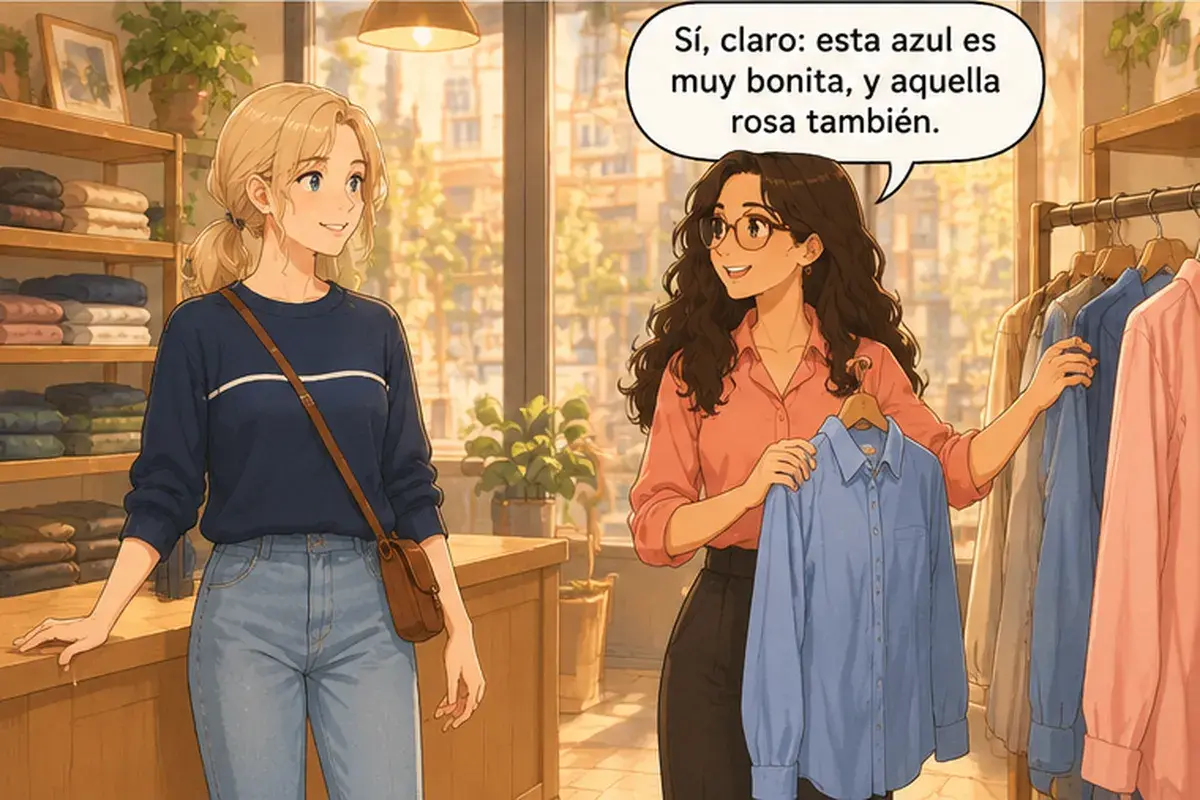
- Lucía
Sí, claro: esta azul es muy bonita, y aquella rosa también.
Yes, of course: this blue one is very pretty, and that pink one over there too.
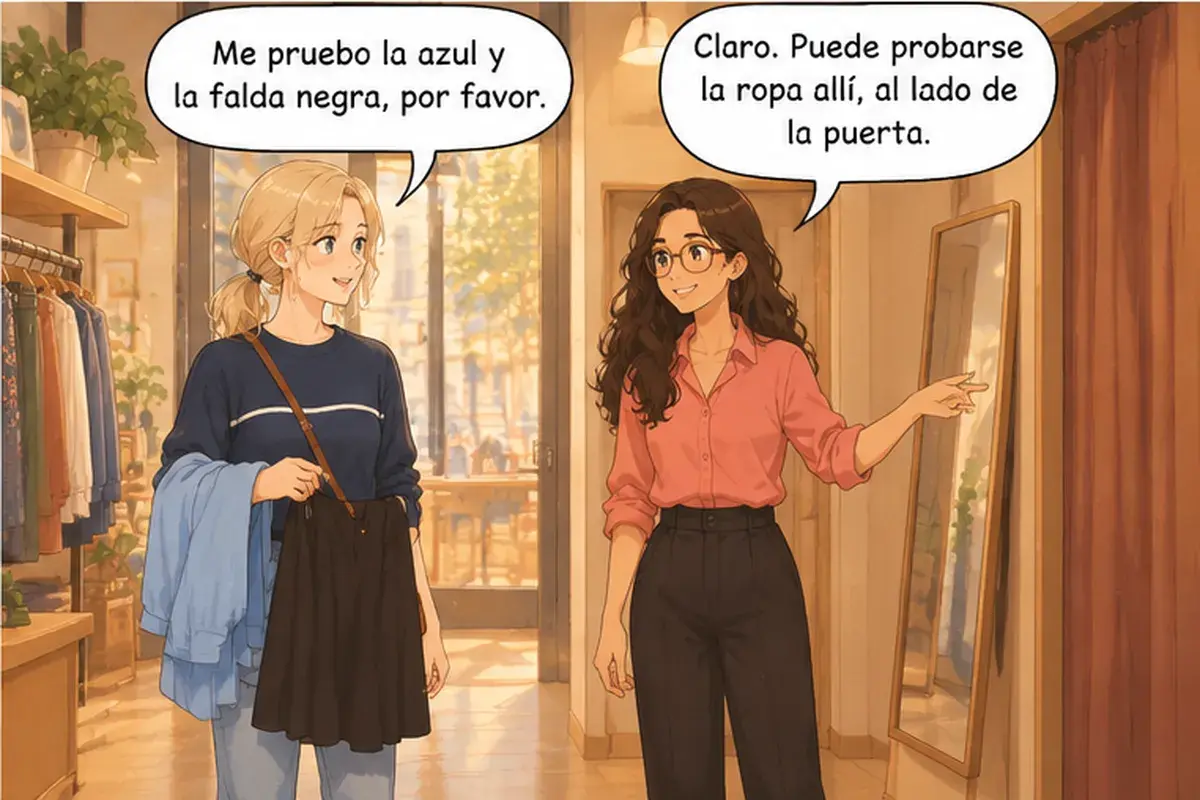
- Ana
Me pruebo la azul y la falda negra, por favor.
I'll try on the blue one and the black skirt, please.
- Lucía
Claro. Puede probarse la ropa allí, al lado de la puerta.
Of course. You can try on the clothes over there, next to the door. (formal)
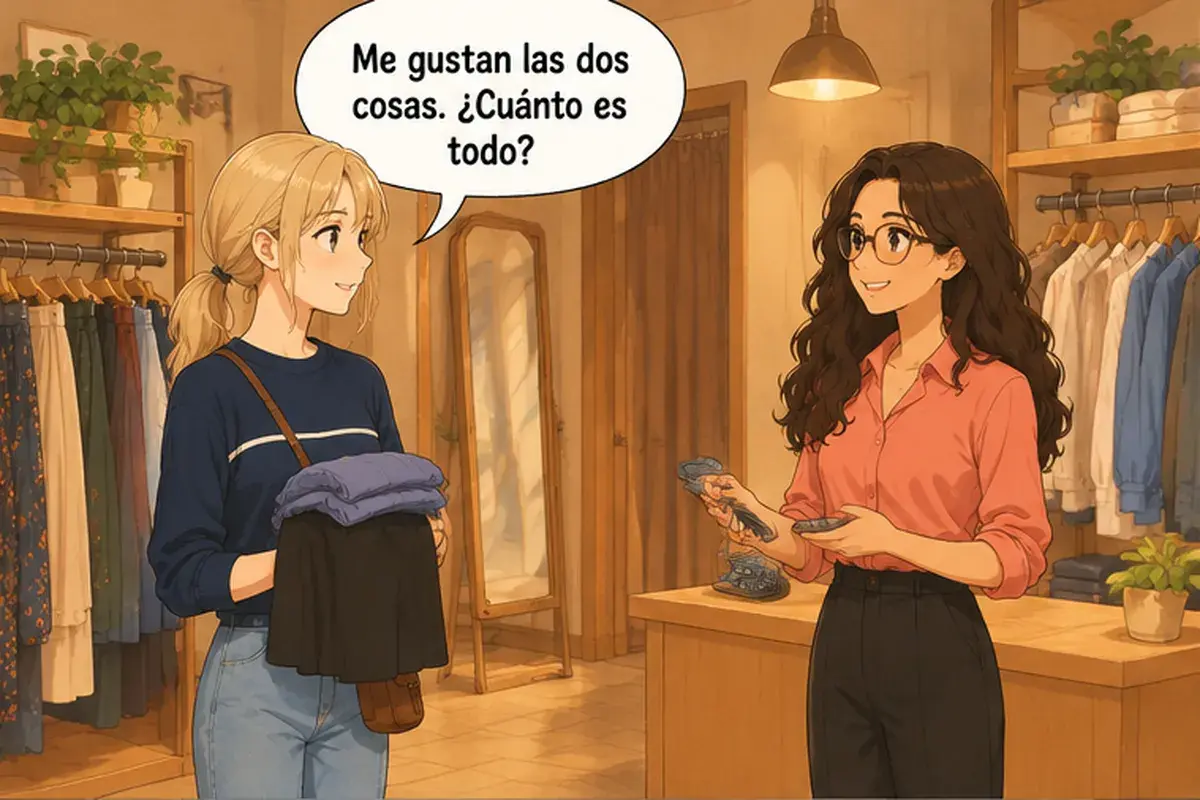
- Ana
Me gustan las dos cosas. ¿Cuánto es todo?
I like both things. How much is everything?
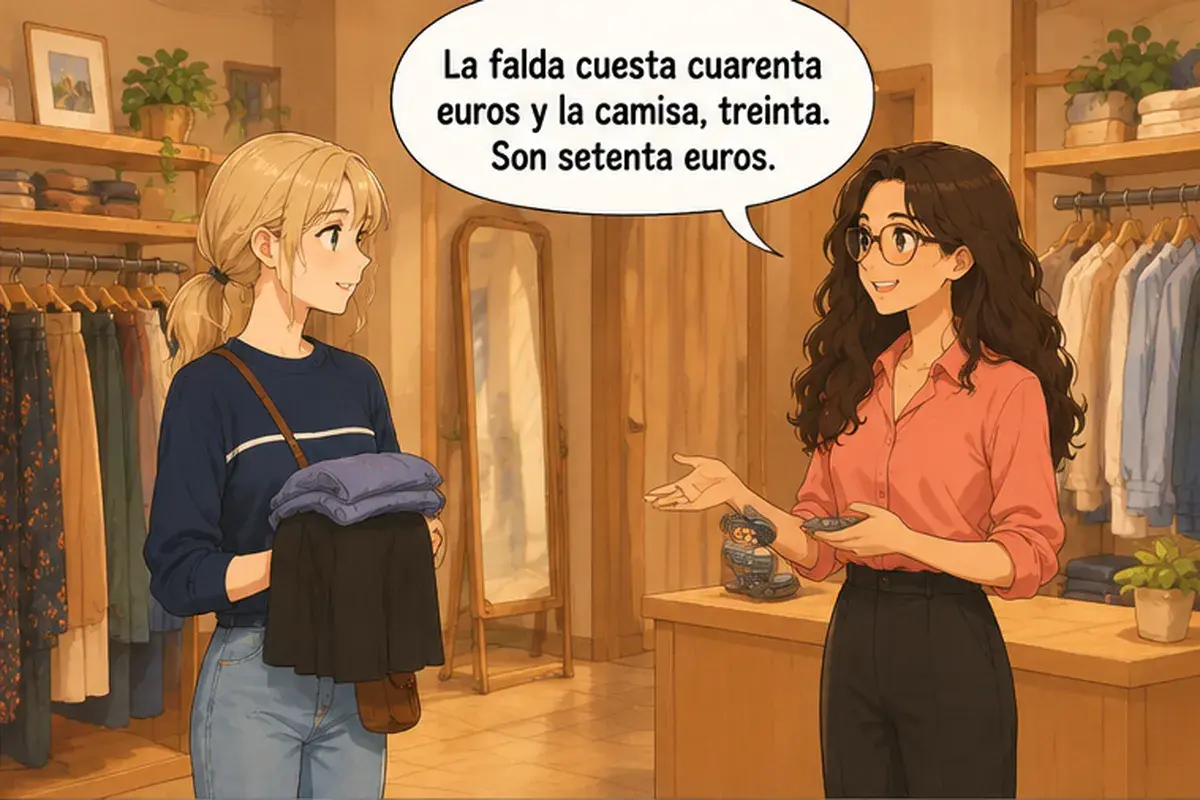
- Lucía
La falda cuesta cuarenta euros y la camisa, treinta. Son setenta euros.
The skirt costs forty euros and the shirt, thirty. That's seventy euros.
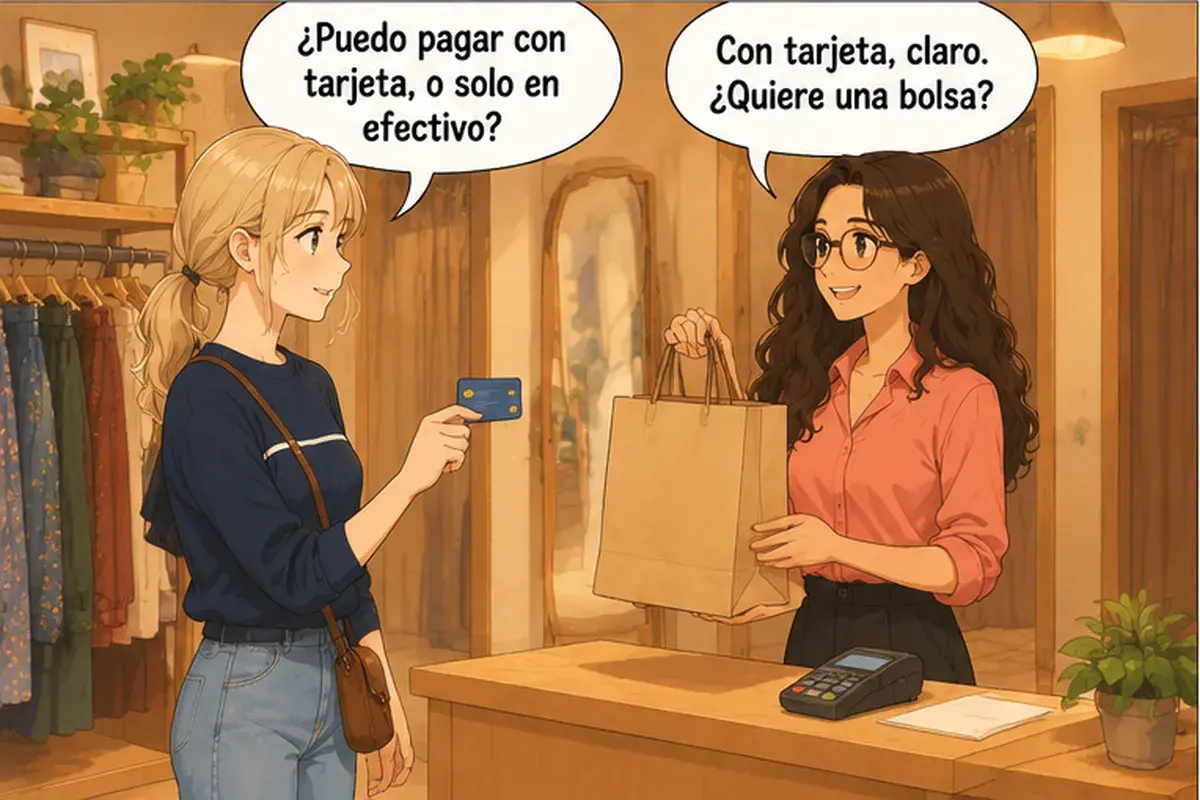
- Ana
¿Puedo pagar con tarjeta, o solo en efectivo?
Can I pay by card, or only in cash?
- Lucía
Con tarjeta, claro. ¿Quiere una bolsa?
By card, of course. Do you want a bag? (formal)
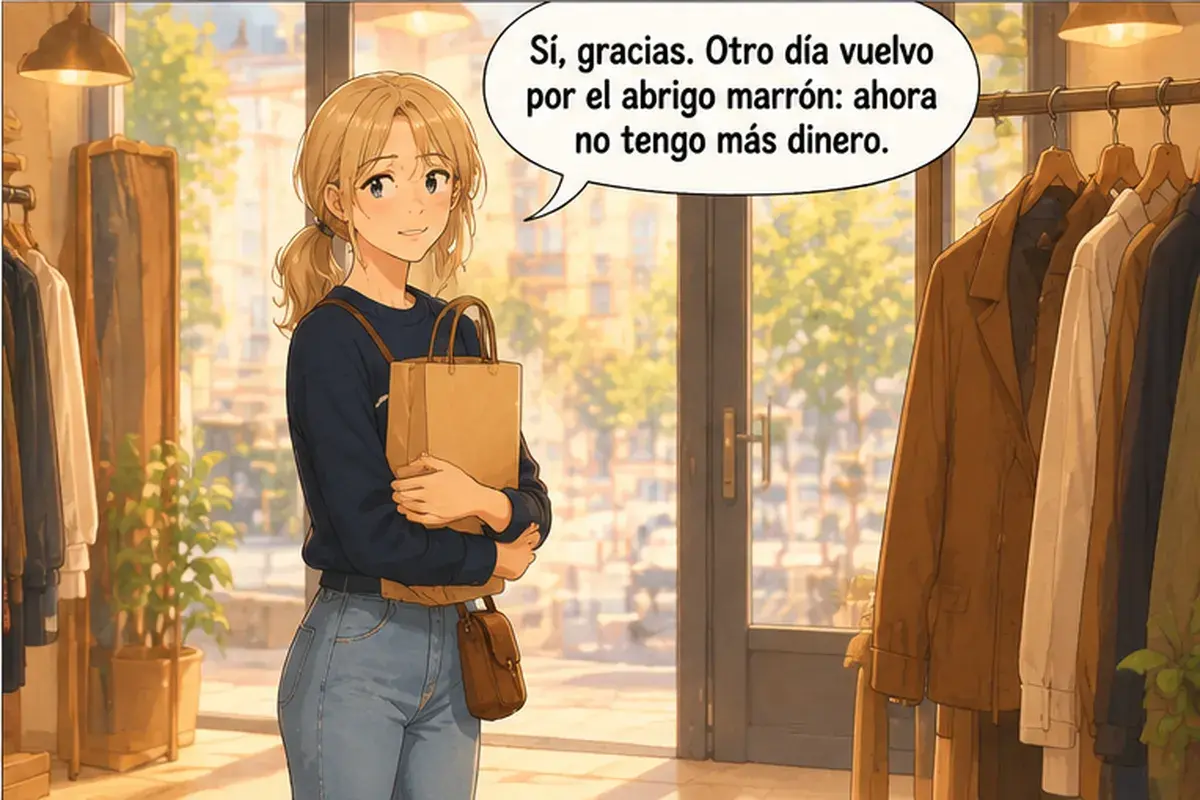
- Ana
Sí, gracias. Otro día vuelvo por el abrigo marrón: ahora no tengo más dinero.
Yes, thanks. Another day I'll come back for the brown coat: right now I don't have any more money.
Grammar for this text
This, that, that over there. The three demonstratives show how far away something is: esta falda negra — near the speaker, esa chaqueta gris — a little farther, aquella camisa blanca — far away, "that one over there".
The color comes after the noun. esta falda negra, camisas azules o rosas, el abrigo marrón — English says "a black skirt", Spanish says "a skirt black". The color agrees with the noun: negra is feminine, azules is plural.
la azul, esta azul: no noun. esta azul es muy bonita, y aquella rosa también, Me pruebo la azul — the word camisa isn't repeated. An article or a demonstrative + a color means "the blue one", "that pink one over there". English adds "one"; Spanish doesn't.
Trying on. probarse is a reflexive verb: Me pruebo la azul — I'll try on the blue one; Puede probarse la ropa allí — you can try on the clothes over there. In the yo form the stem changes: pruebo.
Mire. Mire, esta falda negra es muy bonita — "Look, this black skirt is very pretty." This is a command: the shop assistant speaks to the customer formally (usted). It comes from mirar (to look): the final -ar becomes -e, like gire in unit 7.
Price and paying. ¿Cuánto cuesta? is about one thing. ¿Cuánto es todo? means "How much is everything?", and the answer is Son setenta euros.
Llevo, vuelvo por. Llevo la talla grande — I wear a large size. Otro día vuelvo por el abrigo marrón — volver por + a thing means "to come back for it".
Words and grammar of the unit: Buy clothes at a store.
Learn the words from the texts with flashcards
In the app, you can tap any word in a text to see its translation, forms and examples, and new words stick with flashcards. 15 minutes a day.
Start for freeEverything is open for free. No card needed to sign up.