

Spanish story with translation · A1 · 11 lines
Ya tengo piso nuevo I already have a new apartment
Comic · 6 panels

¡Hola, Pablo! Ya tengo piso nuevo.
Hi, Pablo! I already have a new apartment.
Está en un barrio bonito, en una calle pequeña. Cerca hay un jardín.
It's in a pretty neighborhood, on a small street. There's a garden nearby.
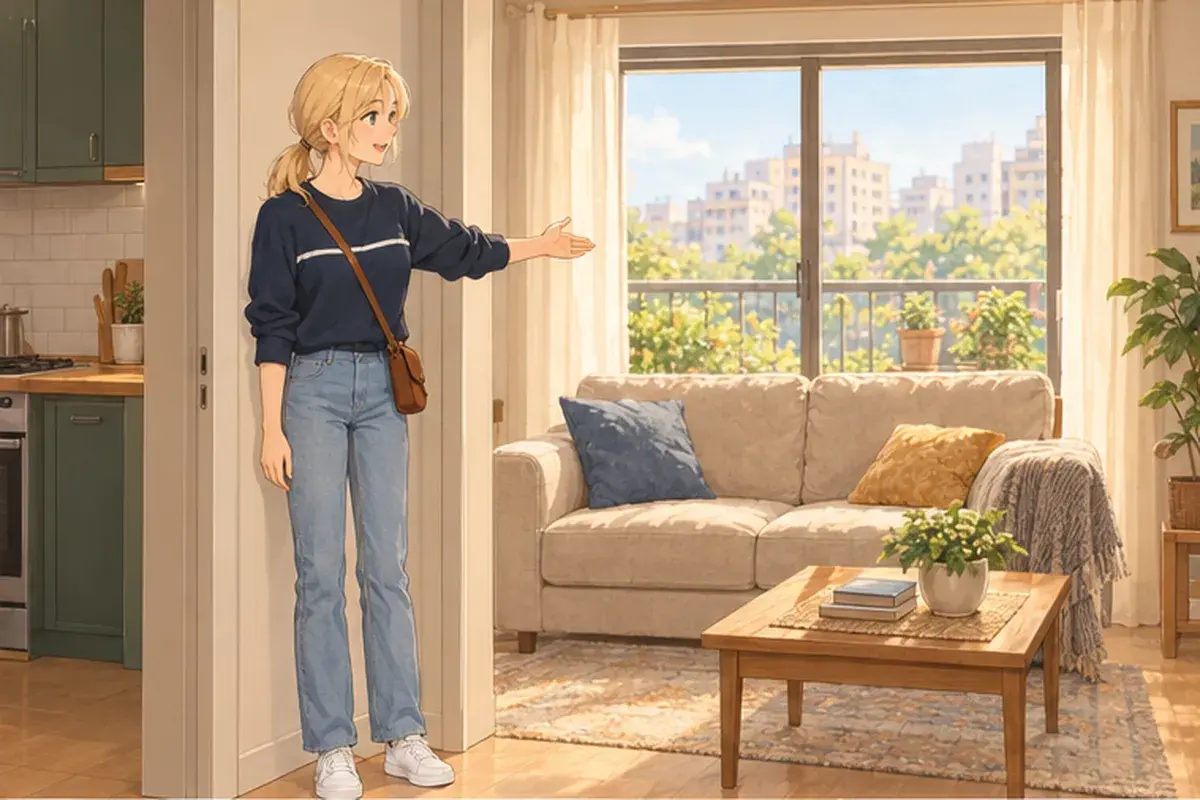
No es grande: hay un salón, una cocina, un baño y un dormitorio.
It isn't big: there's a living room, a kitchen, a bathroom and a bedroom.
El salón tiene balcón. Delante de la ventana hay un sofá.
The living room has a balcony. In front of the window there's a sofa.
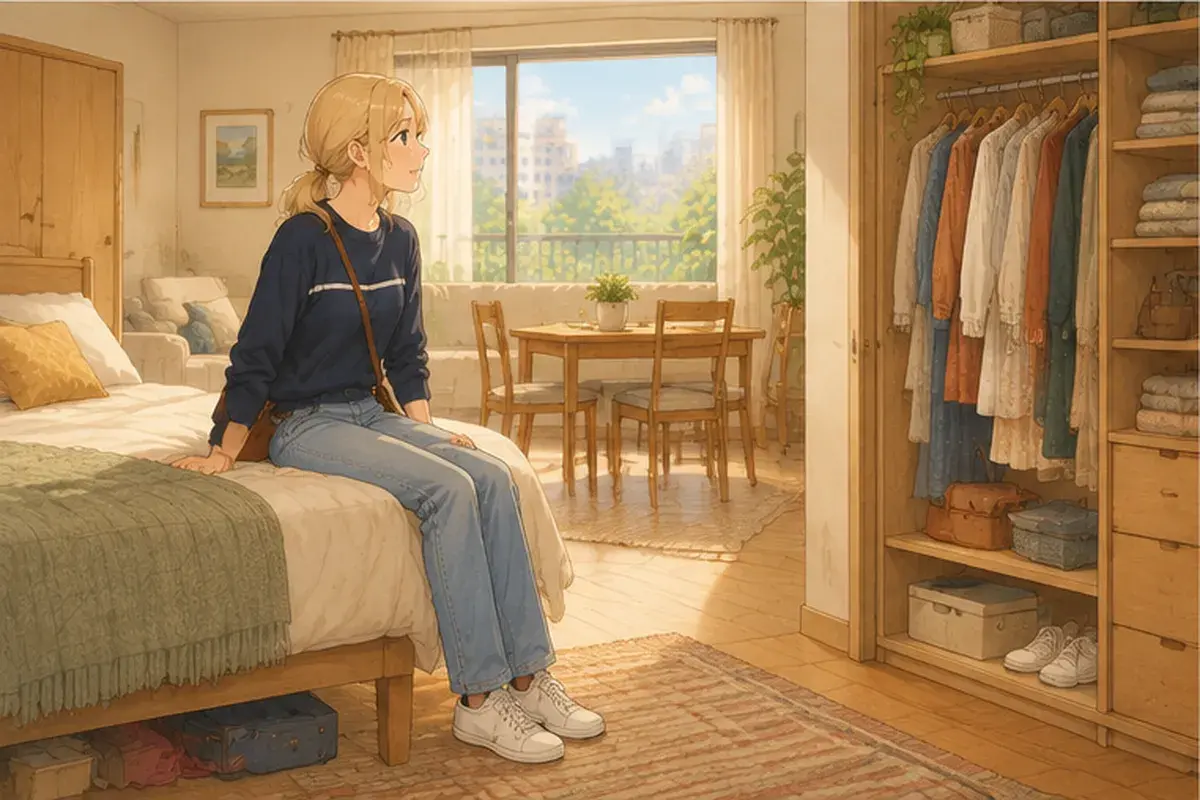
Detrás del sofá hay una mesa con dos sillas.
Behind the sofa there's a table with two chairs.
En mi dormitorio hay una cama y un armario. Debajo de la cama están mis cosas.
In my bedroom there's a bed and a closet. My things are under the bed.
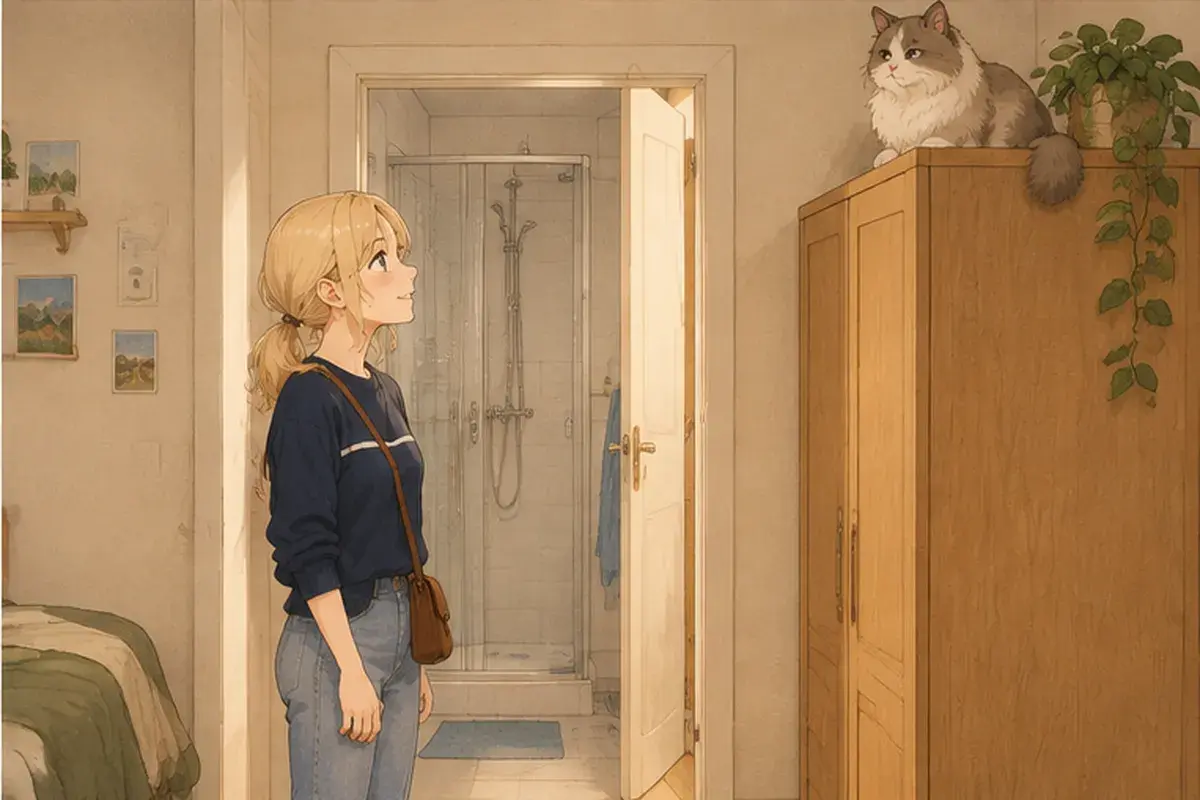
Mi gato está encima del armario. Siempre está allí.
My cat is on top of the closet. It's always there.
En el baño hay una ducha. Es pequeña, pero nueva.
In the bathroom there's a shower. It's small, but new.
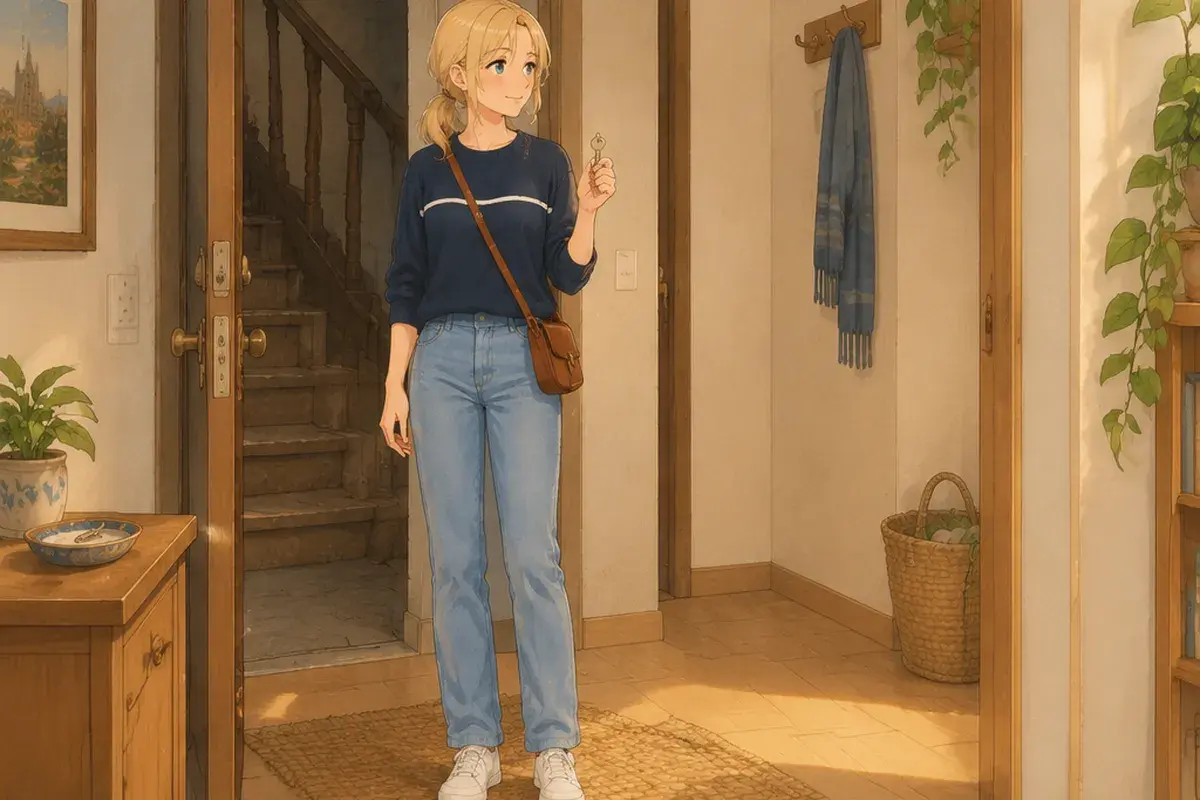
En mi casa no hay ascensor: ¡tres pisos con mis cosas!
There's no elevator at my place: three floors with my things!
Es vieja, pero cómoda. Y la llave está sobre la mesa.
It's old, but comfortable. And the key is on the table.

¿Estás hoy en el barrio? Mi casa es tu casa.
Are you in the neighborhood today? My house is your house.
Grammar for this text
Prepositions of place
- Delante de la ventana — "in front of the window", Detrás del sofá — "behind the sofa", Debajo de la cama — "under the bed", encima del armario — "on top of the closet", sobre la mesa — "on the table".
- Before the article el, de joins it: de + el = del (Detrás del sofá, encima del armario). With la nothing joins: Delante de la ventana.
Hay or está
- Something new you're telling about: Cerca hay un jardín, hay un sofá, hay una mesa con dos sillas.
- Something known, and where it is: Mi gato está encima del armario, la llave está sobre la mesa. For several things it's están: Debajo de la cama están mis cosas (after hay you don't use mi, el, la).
- Está en un barrio bonito, ¿Estás hoy en el barrio? — where an apartment or a person is also takes estar: está — it is, estás — you are.
Who or what: pequeña, vieja
- Es pequeña, pero nueva — there's no subject, but the ending -a tells you it's about una ducha (feminine). Es vieja, pero cómoda — this is about mi casa.
- No es grande — about the apartment; grande is the same for masculine and feminine.
Piso: apartment and floor
- Ya tengo piso nuevo — an apartment, but tres pisos con mis cosas — three floors. The context tells you which.
Words and grammar of the unit: Describe your apartment.
Learn the words from the texts with flashcards
In the app, you can tap any word in a text to see its translation, forms and examples, and new words stick with flashcards. 15 minutes a day.
Start for freeEverything is open for free. No card needed to sign up.