
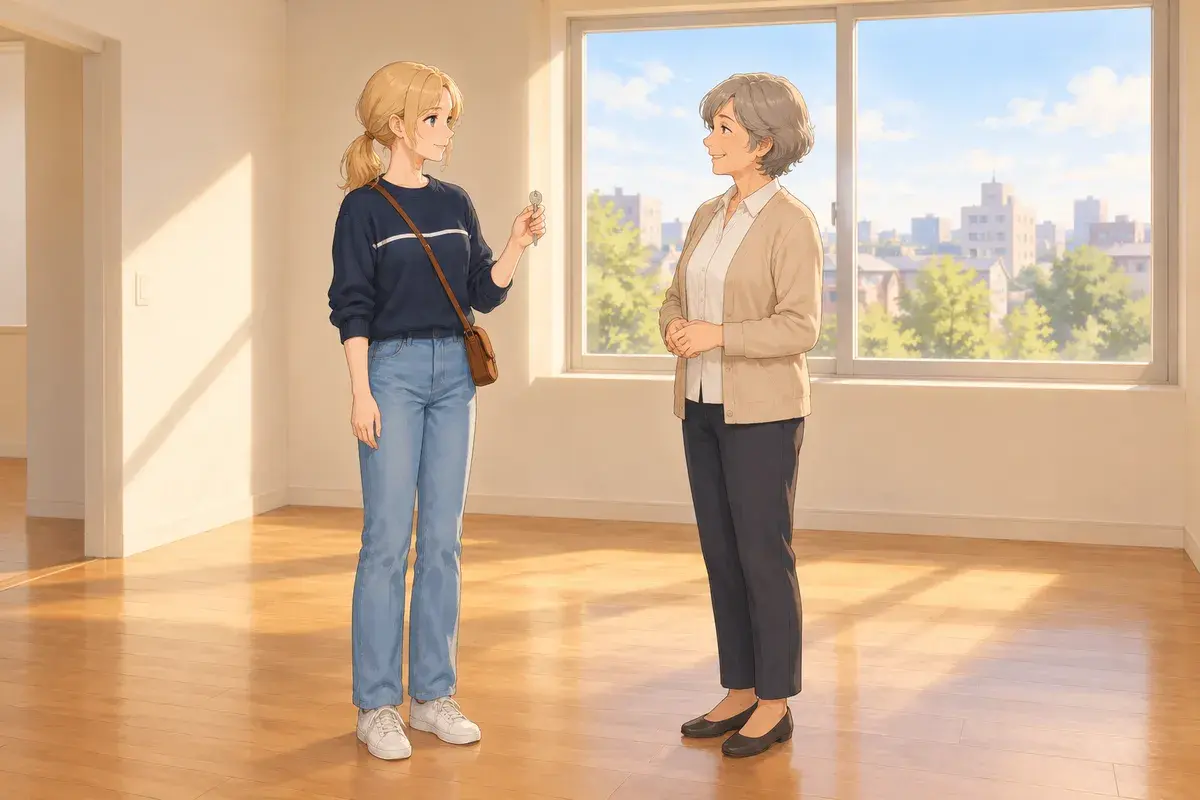
Spanish dialogue with translation · A1 · 14 lines
¿Cuántas habitaciones hay? How many rooms are there?
Comic · 14 panels
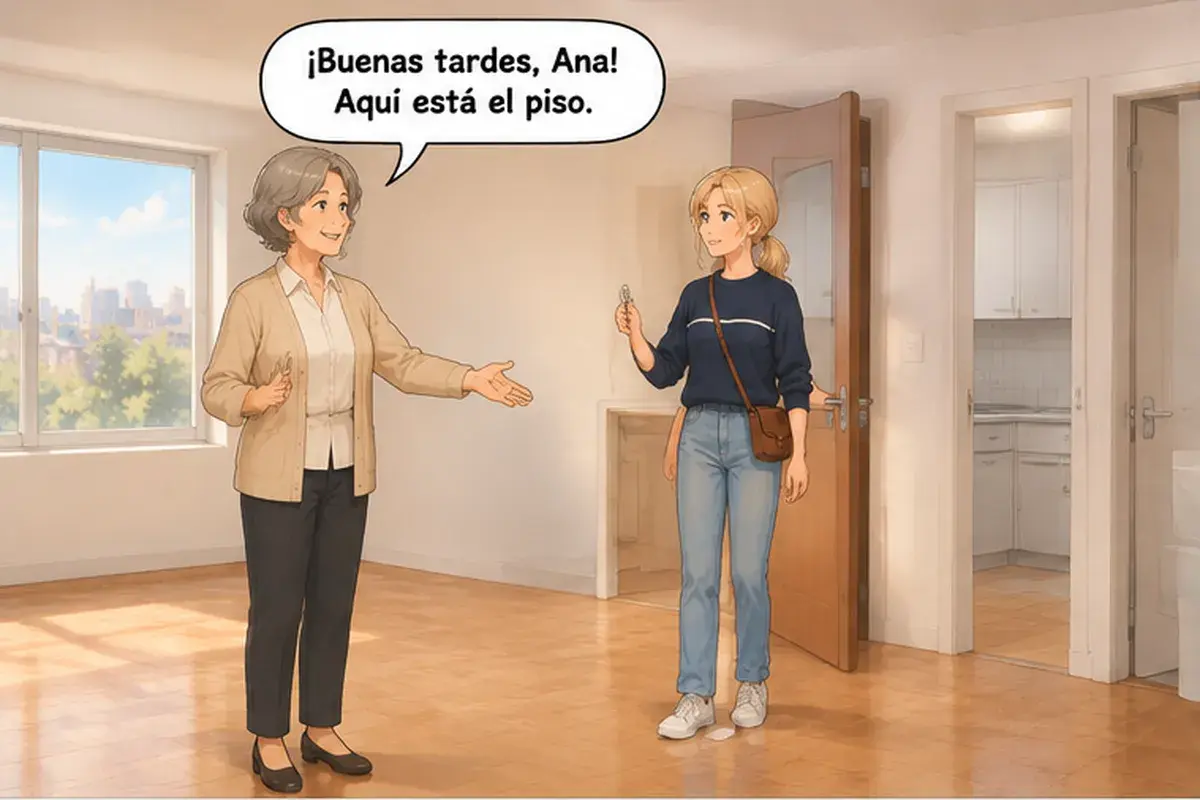
- Rosa
¡Buenas tardes, Ana! Aquí está el piso.
Good afternoon, Ana! Here's the apartment.
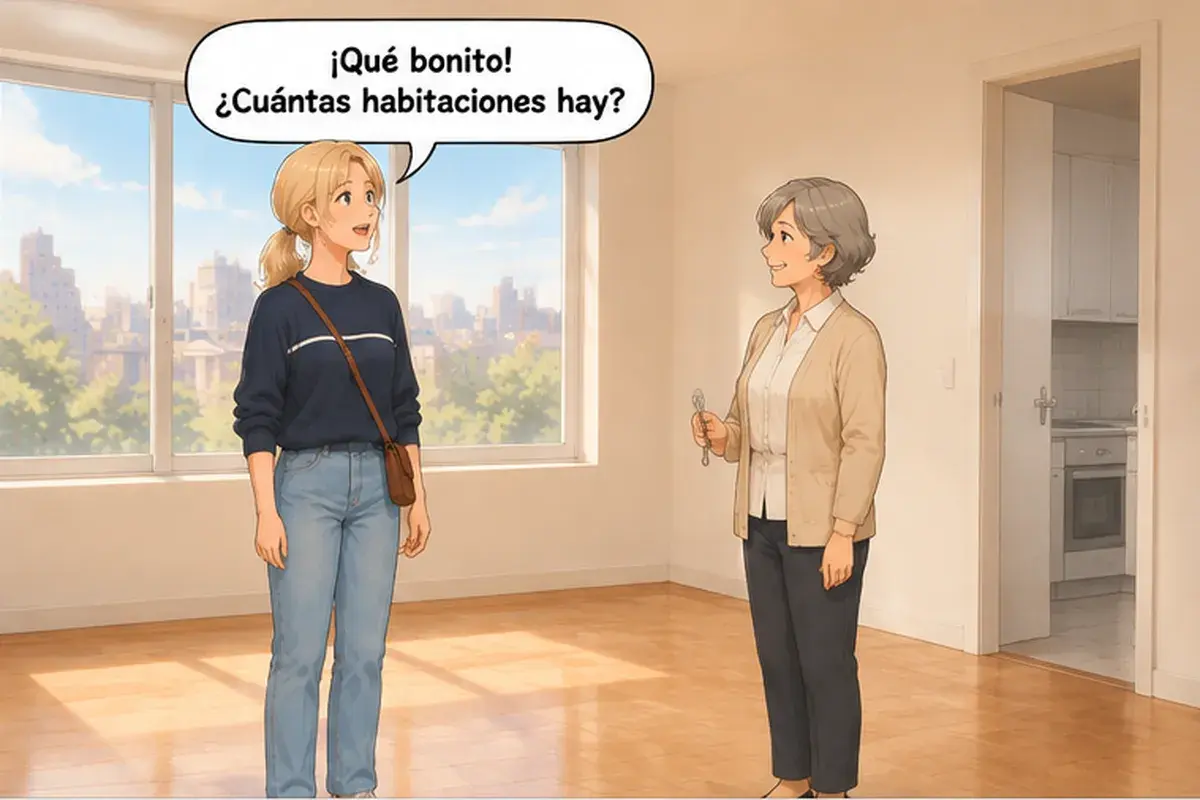
- Ana
¡Qué bonito! ¿Cuántas habitaciones hay?
How pretty! How many rooms are there?
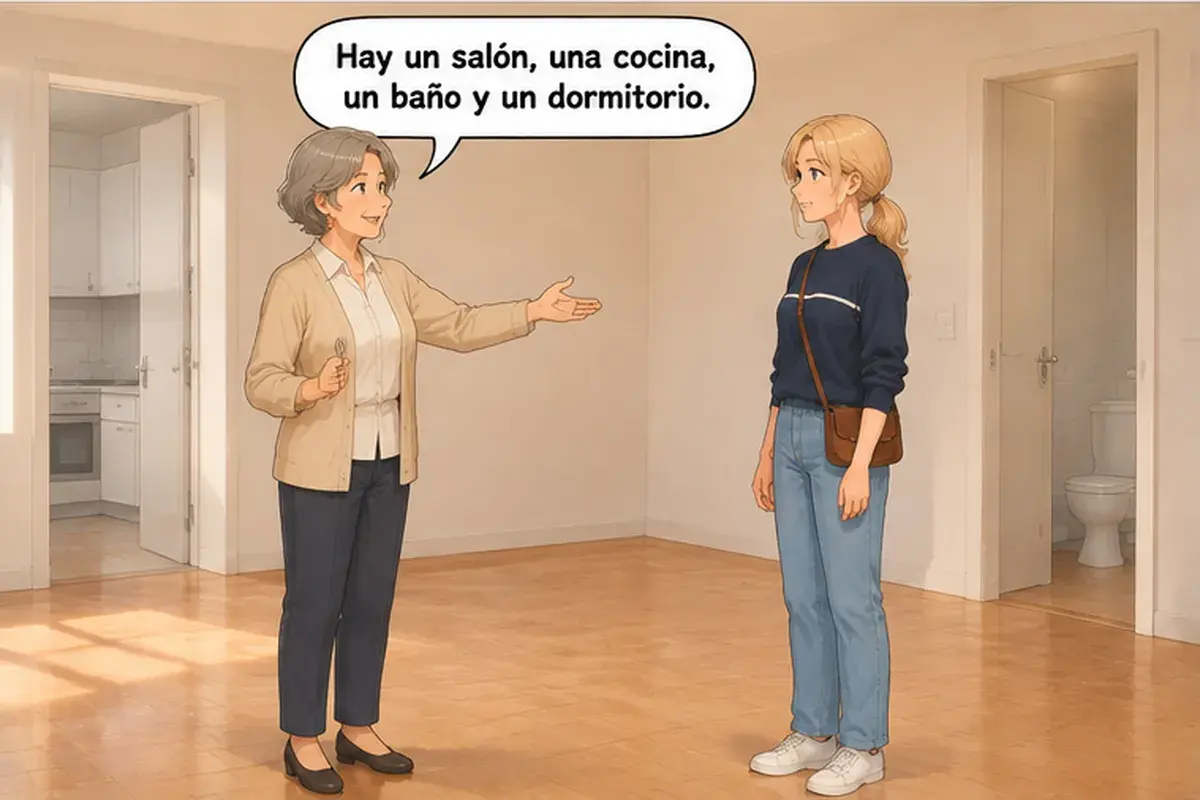
- Rosa
Hay un salón, una cocina, un baño y un dormitorio.
There's a living room, a kitchen, a bathroom and a bedroom.
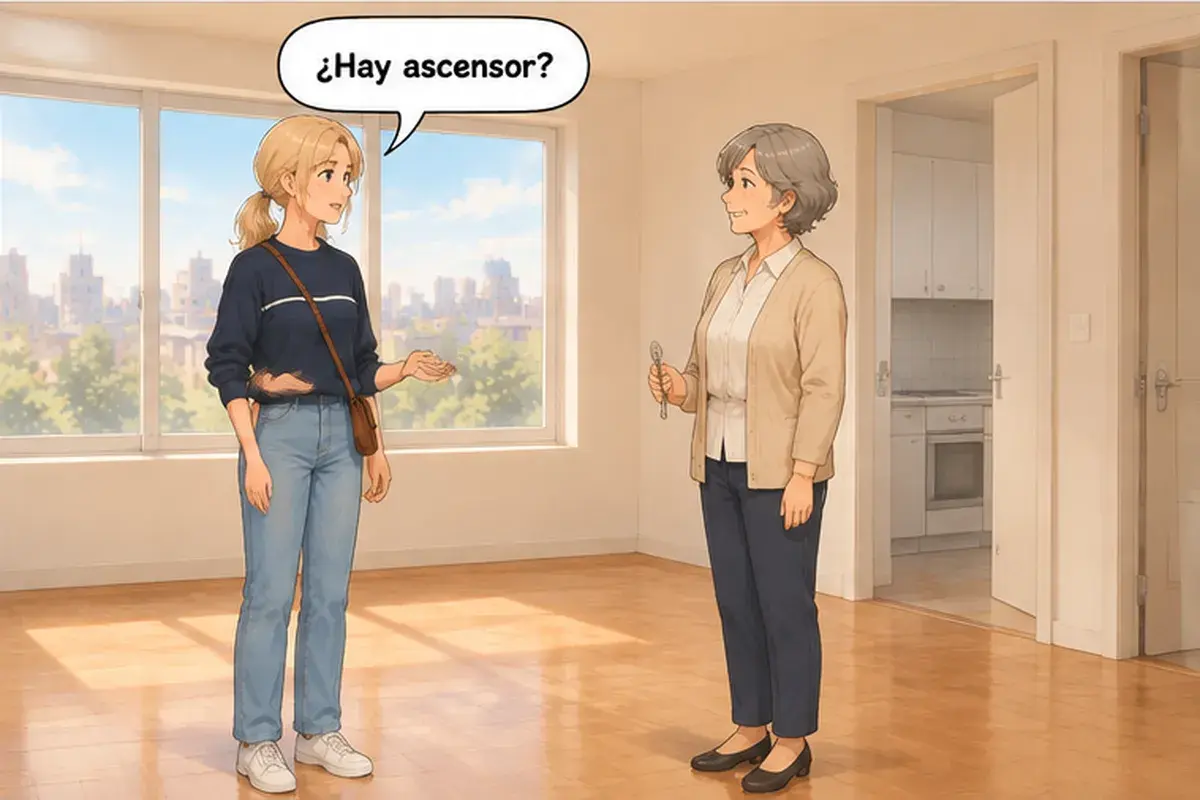
- Ana
¿Hay ascensor?
Is there an elevator?
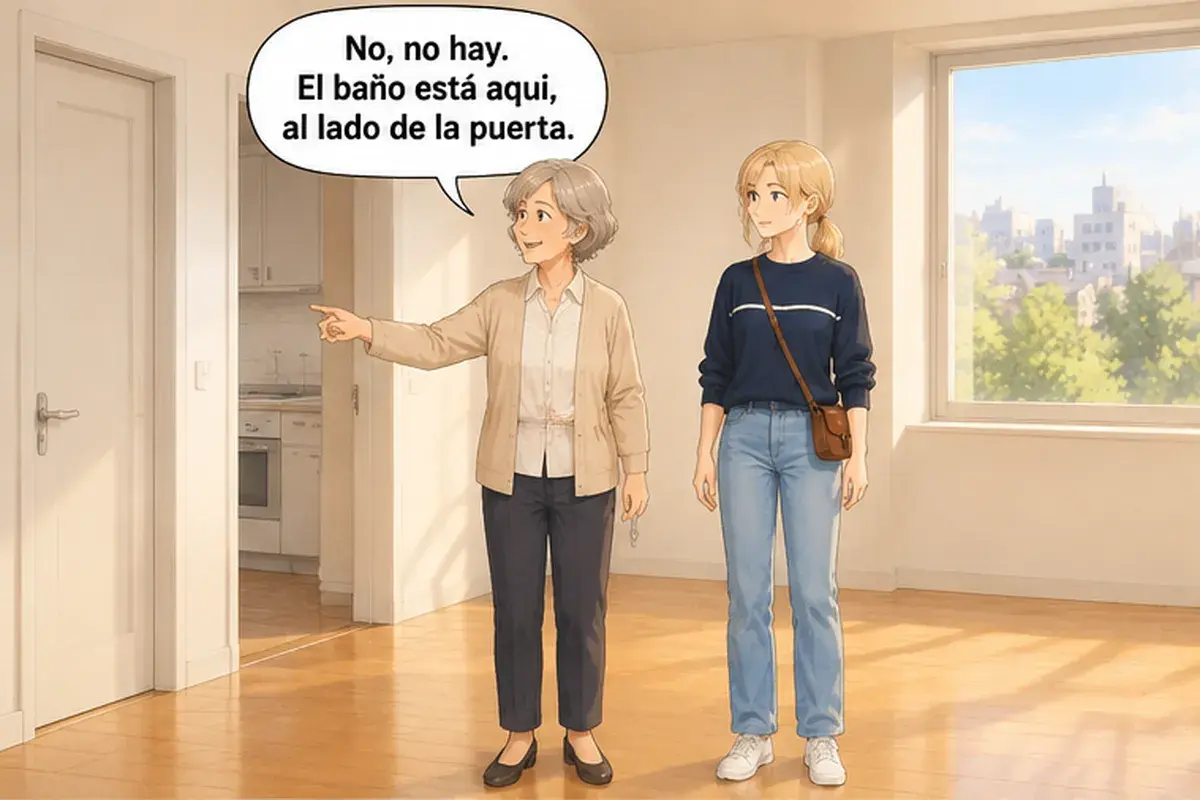
- Rosa
No, no hay. El baño está aquí, al lado de la puerta.
No, there isn't. The bathroom is here, next to the door.
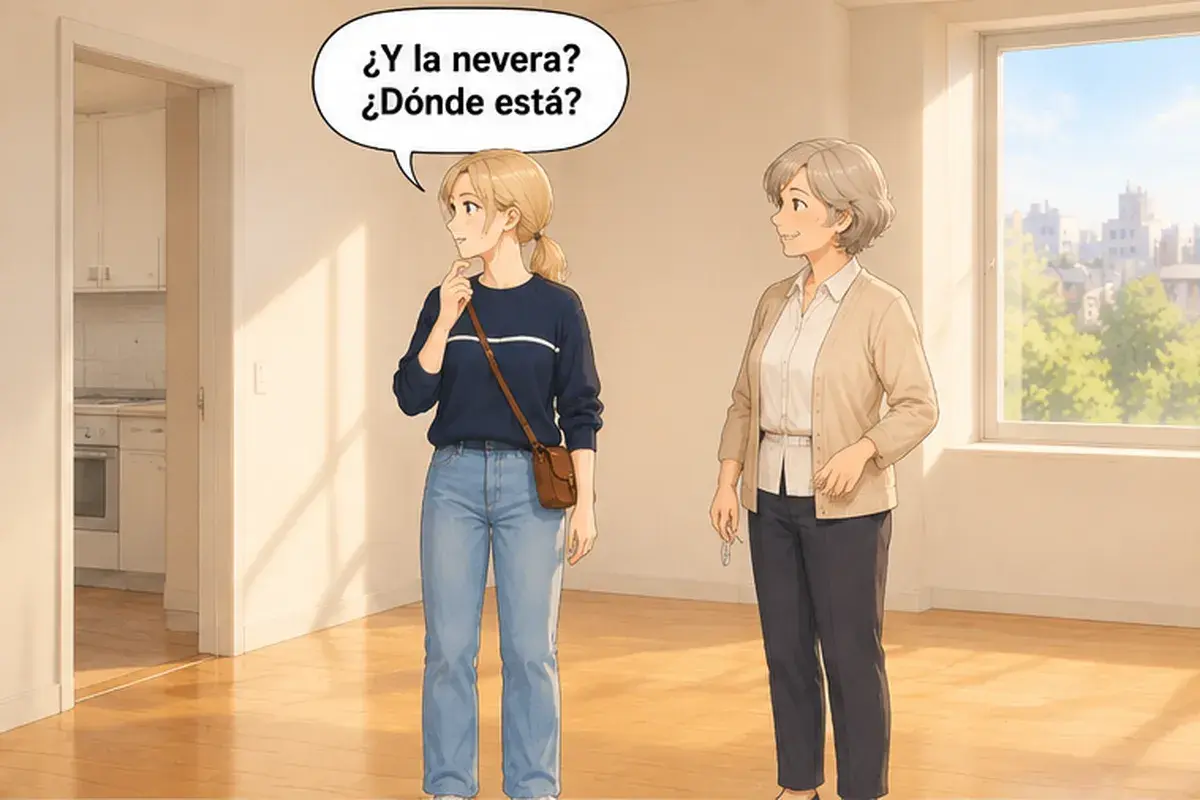
- Ana
¿Y la nevera? ¿Dónde está?
And the fridge? Where is it?
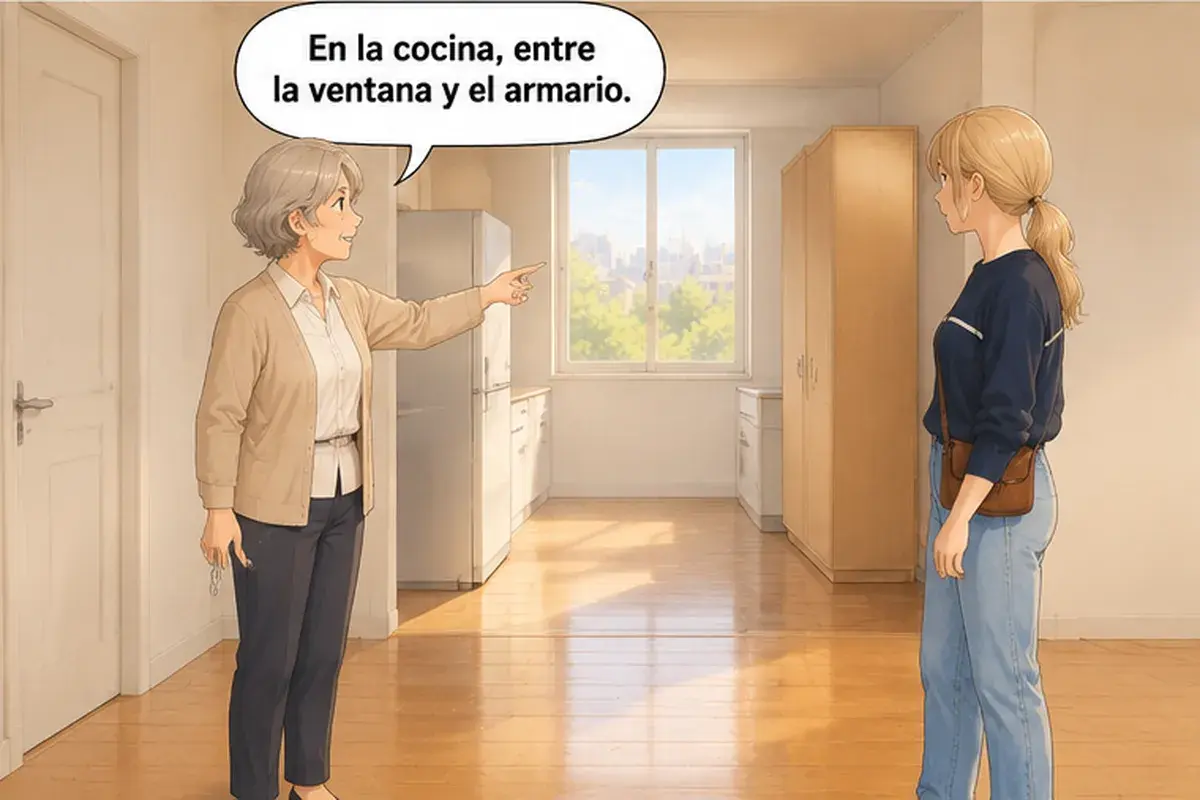
- Rosa
En la cocina, entre la ventana y el armario.
In the kitchen, between the window and the cabinet.
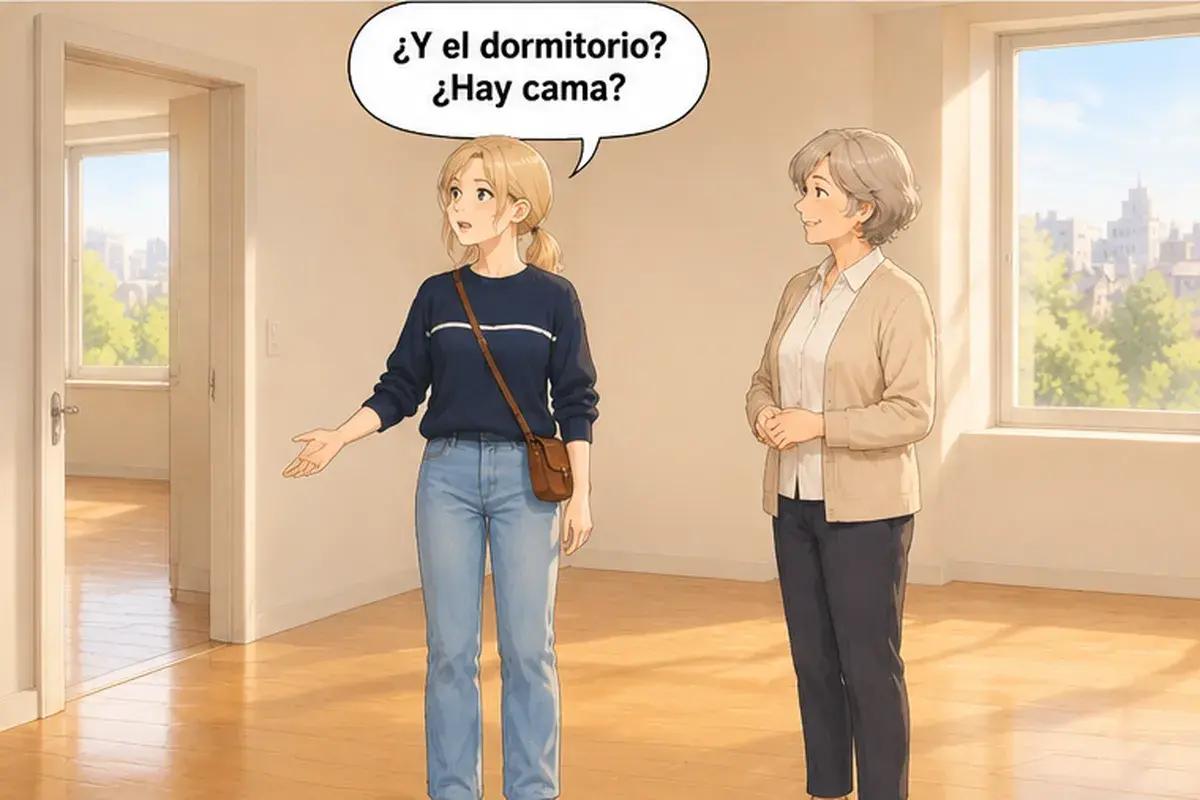
- Ana
¿Y el dormitorio? ¿Hay cama?
And the bedroom? Is there a bed?
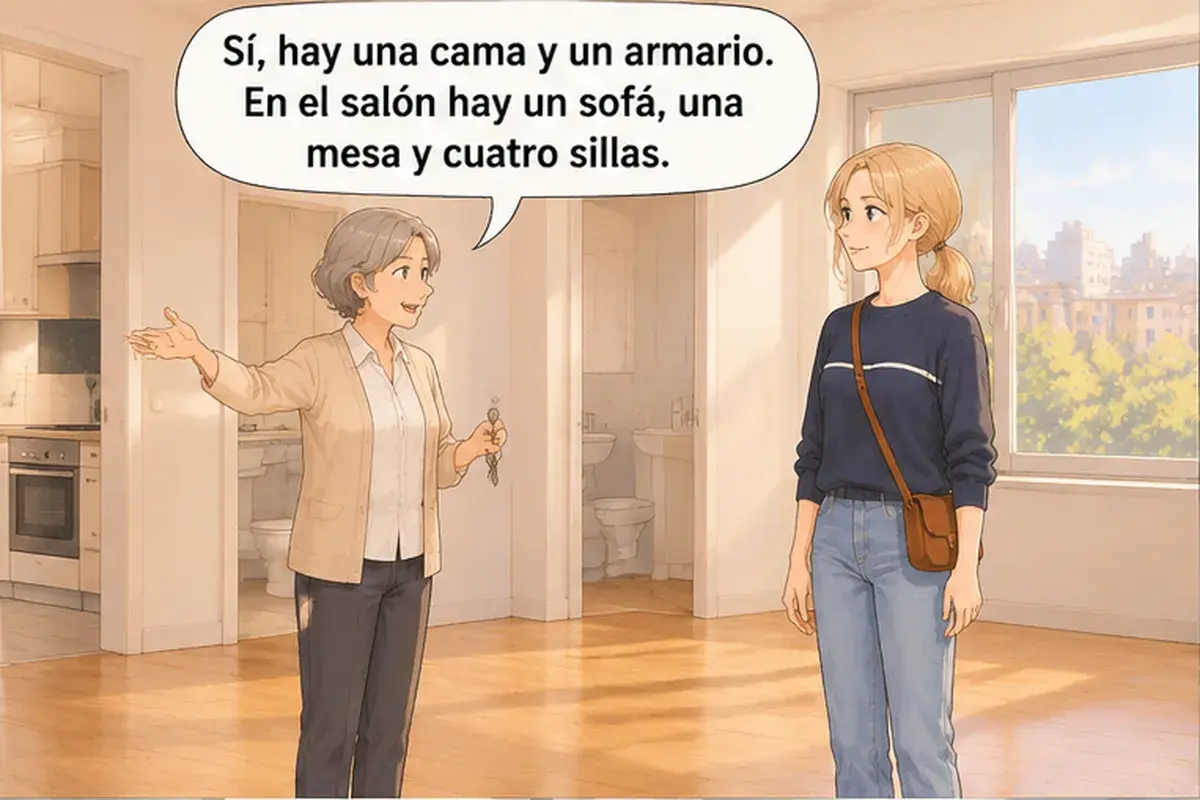
- Rosa
Sí, hay una cama y un armario. En el salón hay un sofá, una mesa y cuatro sillas.
Yes, there's a bed and a closet. In the living room there's a sofa, a table and four chairs.
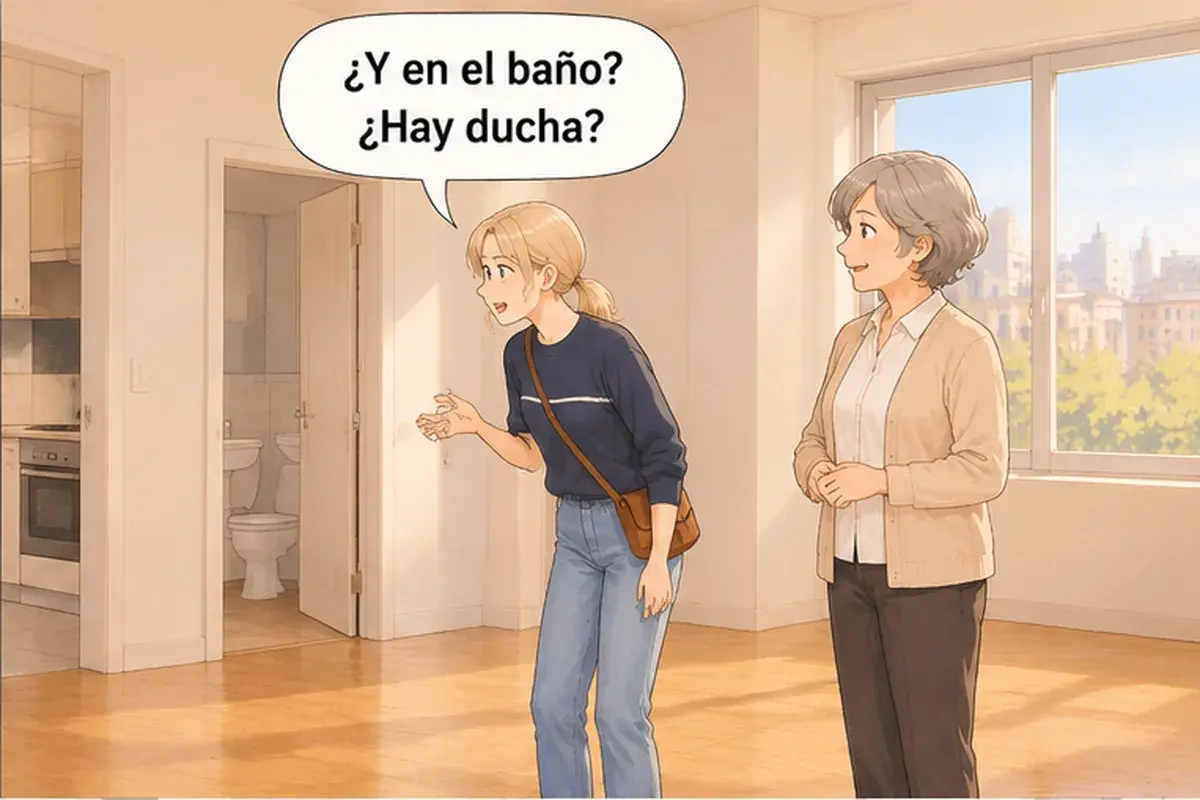
- Ana
¿Y en el baño? ¿Hay ducha?
And in the bathroom? Is there a shower?
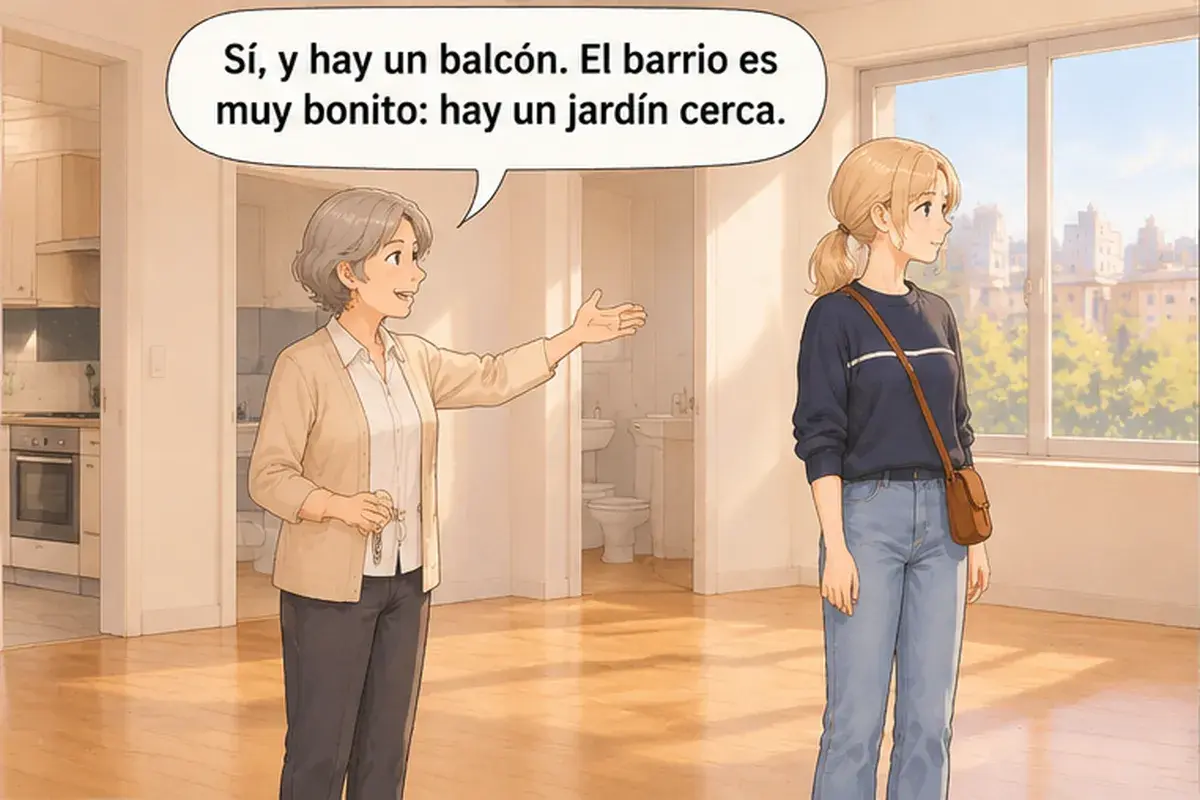
- Rosa
Sí, y hay un balcón. El barrio es muy bonito: hay un jardín cerca.
Yes, and there's a balcony. The neighborhood is very pretty: there's a garden nearby.
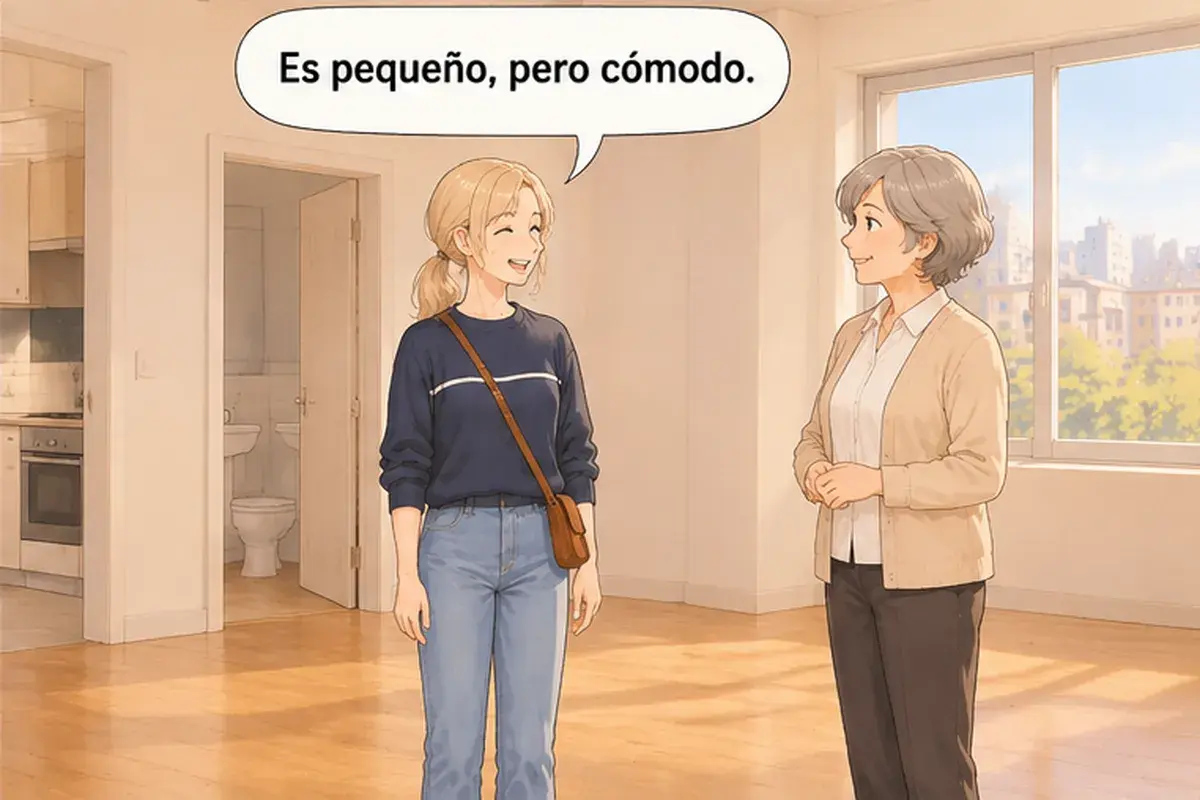
- Ana
Es pequeño, pero cómodo.
It's small, but comfortable.
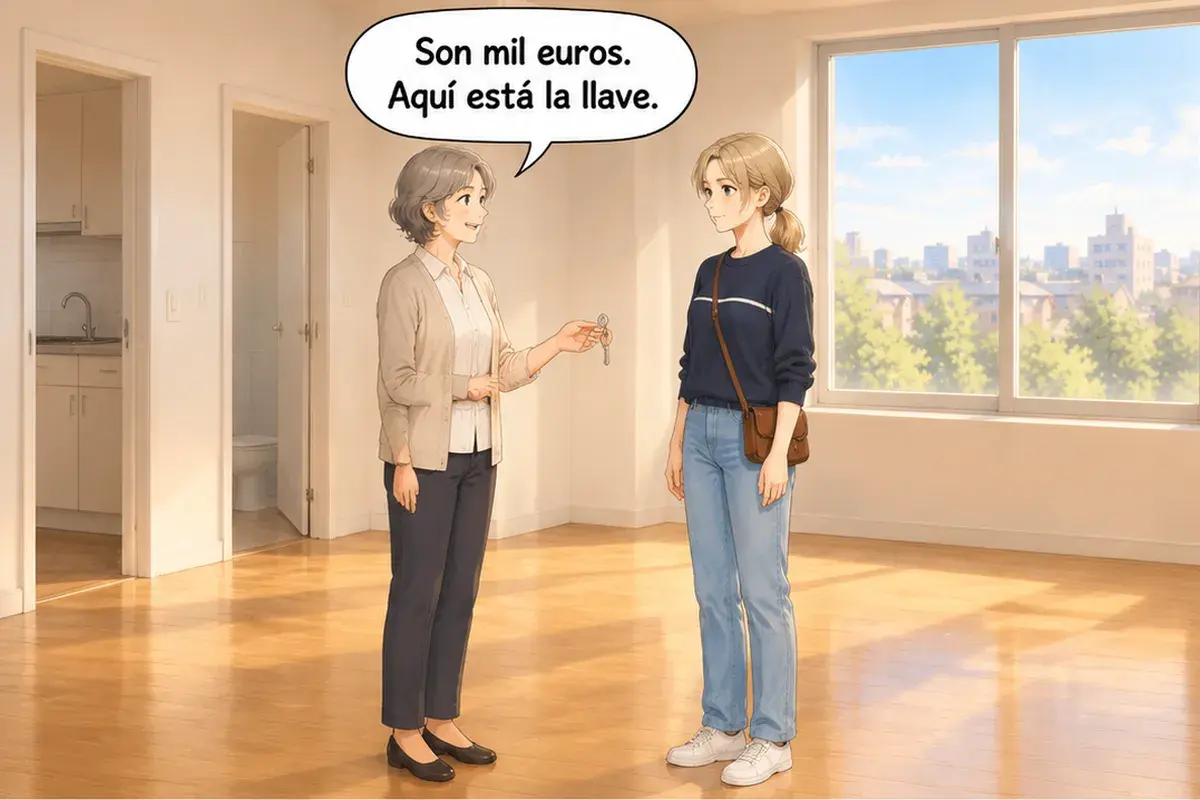
- Rosa
Son mil euros. Aquí está la llave.
It's a thousand euros. Here's the key.
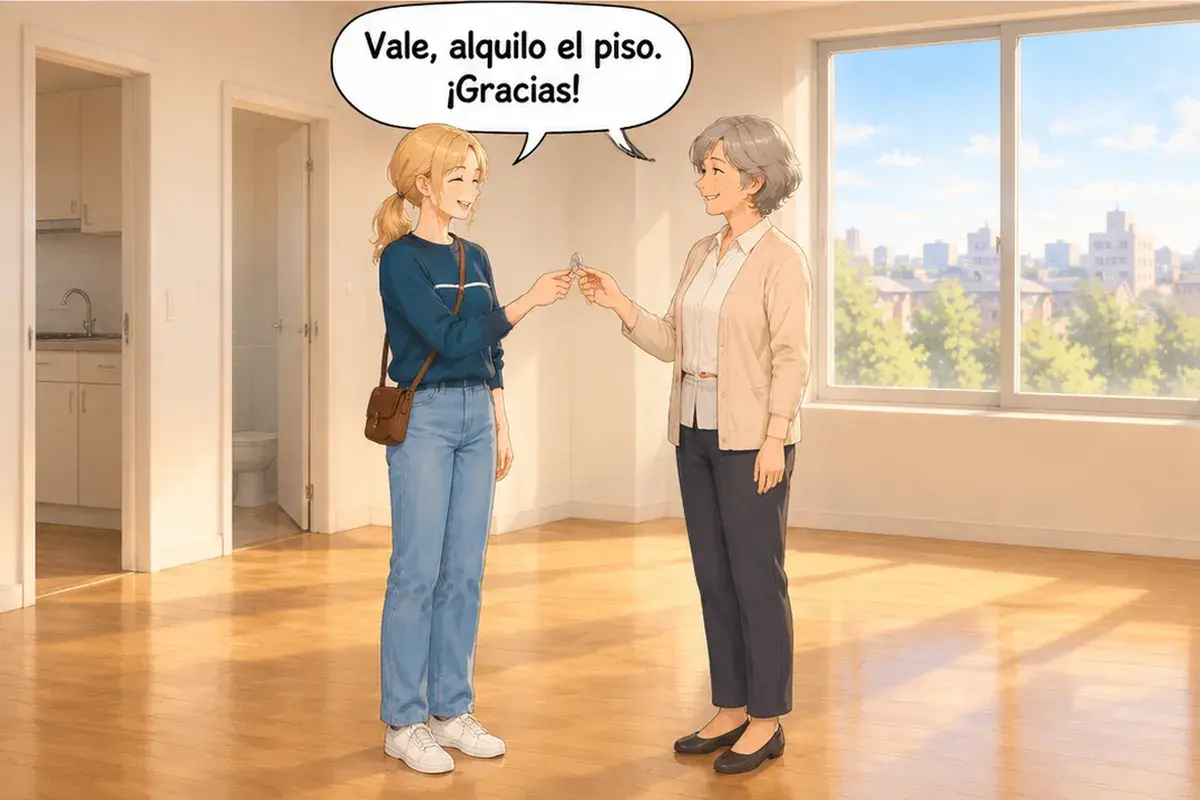
- Ana
Vale, alquilo el piso. ¡Gracias!
OK, I'll rent the apartment. Thanks!
Grammar for this text
Hay: "there is, there are"
- Hay un salón, una cocina, un baño y un dormitorio — hay says that something is there. It has one form for one thing and for many: hay una cama, cuatro sillas.
- ¿Hay ascensor?, ¿Hay cama?, ¿Hay ducha? — when you ask whether there is one at all, Spanish needs no article (English says "an elevator", "a bed").
- No, no hay — the first no is "no", the second is "not" before the verb: "No, there isn't."
- ¿Cuántas habitaciones hay? — cuántas ends in -as because habitaciones (rooms) is feminine.
Está: where it is
- El baño está aquí, ¿Dónde está? — for a thing that has already been named (el baño, la nevera), you say and ask where it is with está, not with hay.
- Aquí está el piso, Aquí está la llave — word for word "here is the apartment (the key)". You say it when you show or hand over something, just like English "Here's the key."
Where exactly
- al lado de la puerta — "next to the door": al lado de is three words that work as one preposition.
- entre la ventana y el armario — "between the window and the cabinet". hay un jardín cerca — cerca means "nearby".
Pequeño, pero cómodo: why -o
- Es pequeño, pero cómodo — Ana is talking about the apartment, and el piso is masculine, so both adjectives end in -o. English "it's small" doesn't show this.
- ¡Qué bonito! — qué before an adjective makes an exclamation: "How pretty!"
Words and grammar of the unit: Describe your apartment.
Learn the words from the texts with flashcards
In the app, you can tap any word in a text to see its translation, forms and examples, and new words stick with flashcards. 15 minutes a day.
Start for freeEverything is open for free. No card needed to sign up.