
Spanish story with translation · A1 · 11 lines
La familia de Pablo Pablo's family
Comic · 7 panels
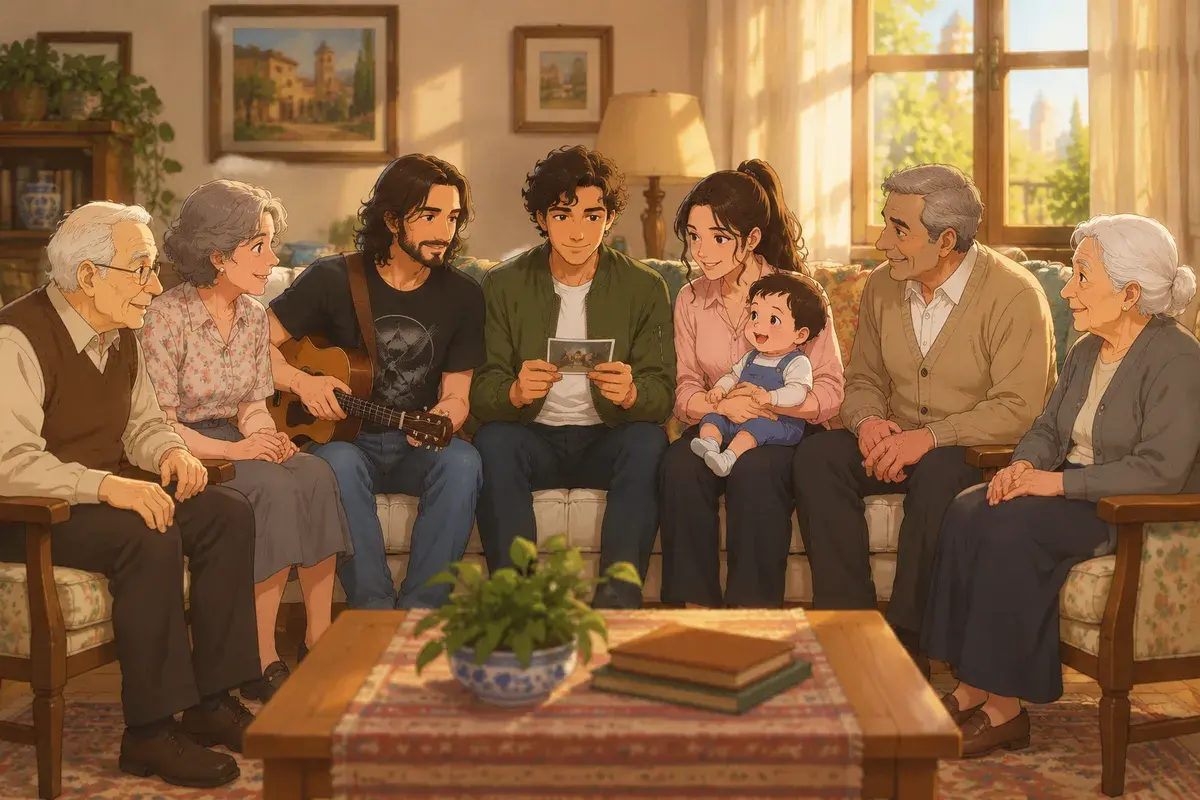
Mi familia es muy grande. En la familia de mi abuela somos más de veinte personas.
My family is very big. In my grandmother's family there are more than twenty of us.
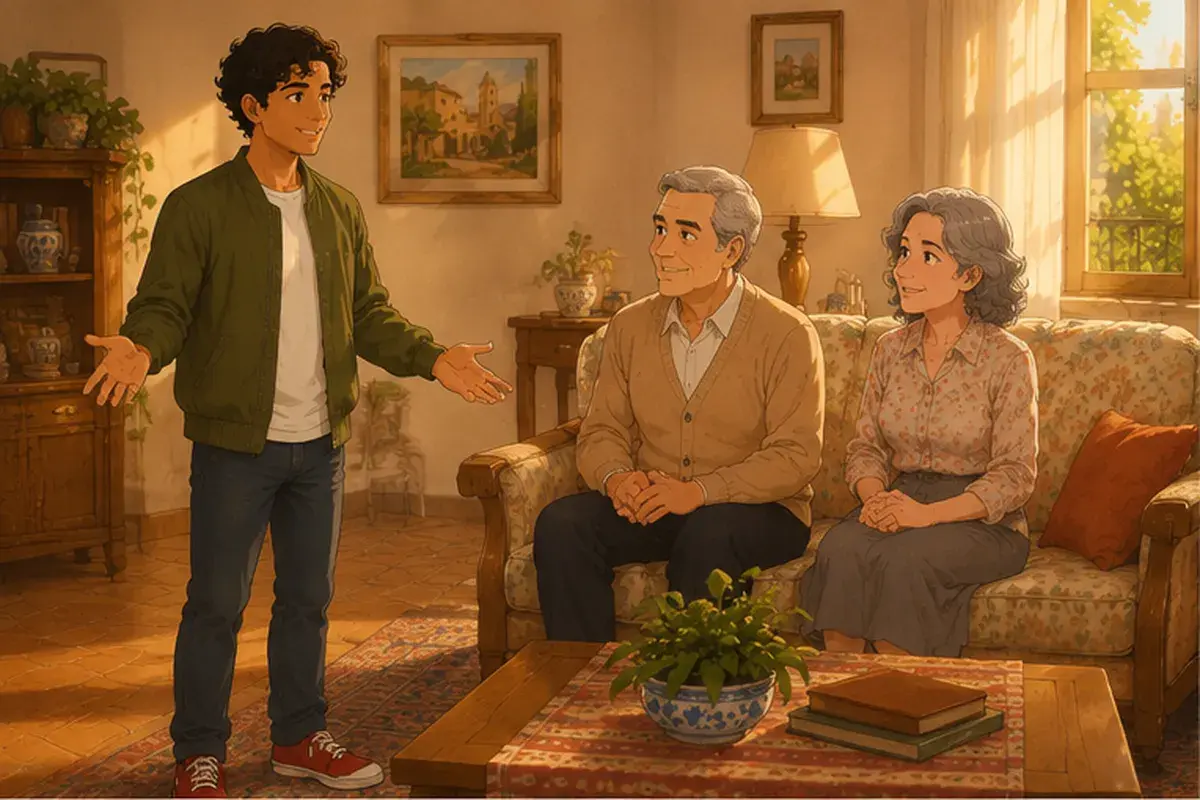
Mi padre se llama Antonio y mi madre, Carmen. Tienen tres hijos: Carlos, Laura y yo.
My father's name is Antonio and my mother's is Carmen. They have three children: Carlos, Laura and me.
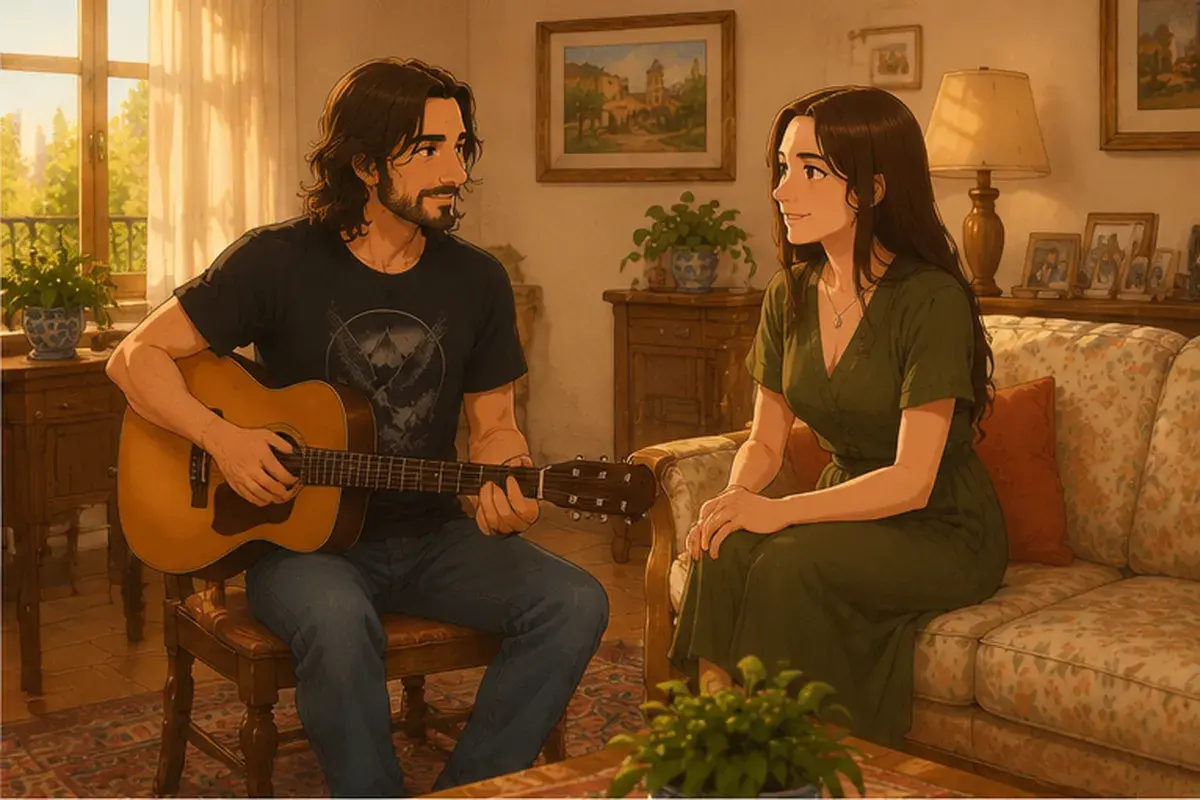
Carlos es el mayor: tiene treinta y cinco años. Es soltero, pero tiene novia.
Carlos is the oldest: he's thirty-five. He's single, but he has a girlfriend.
Su novia se llama Elena. Es una mujer joven: tiene treinta años.
His girlfriend's name is Elena. She's a young woman: she's thirty.
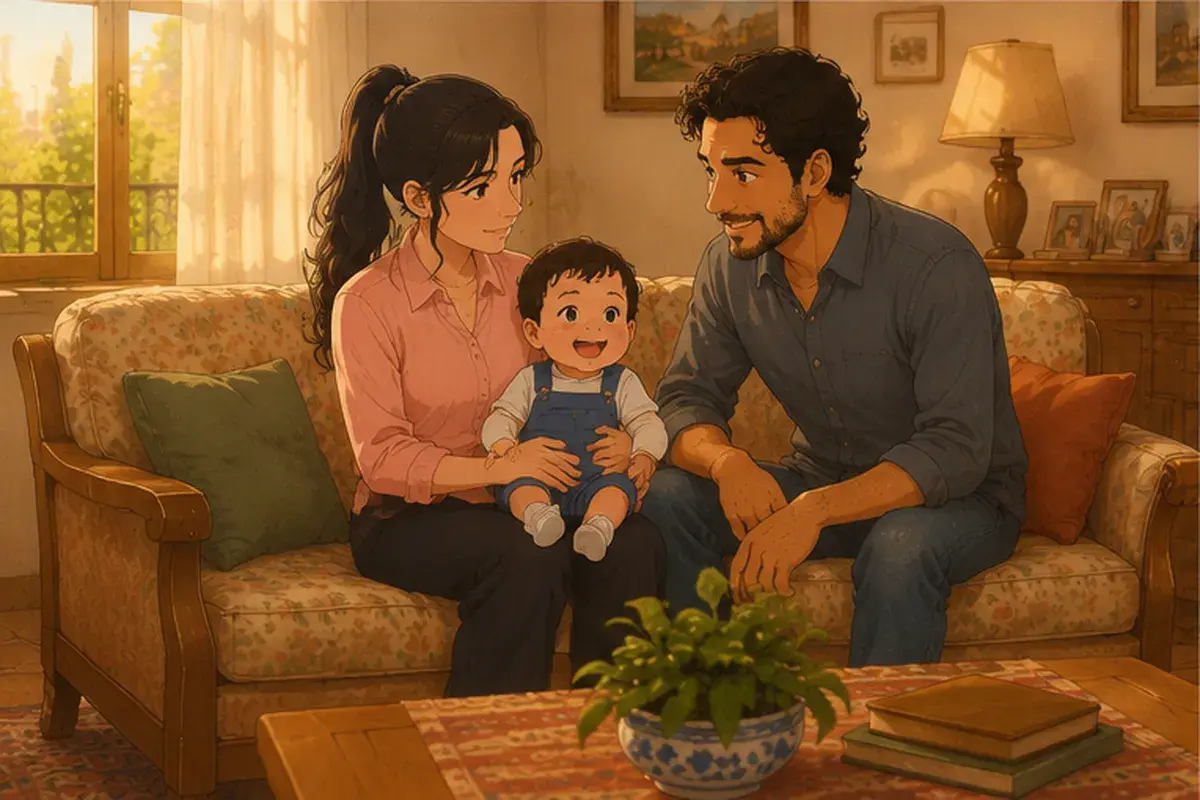
Laura es la menor. Su marido se llama Jorge y tienen un hijo, Hugo.
Laura is the youngest. Her husband's name is Jorge, and they have a son, Hugo.
Hugo es el nieto de mis padres y el bebé de la familia.
Hugo is my parents' grandson and the baby of the family.
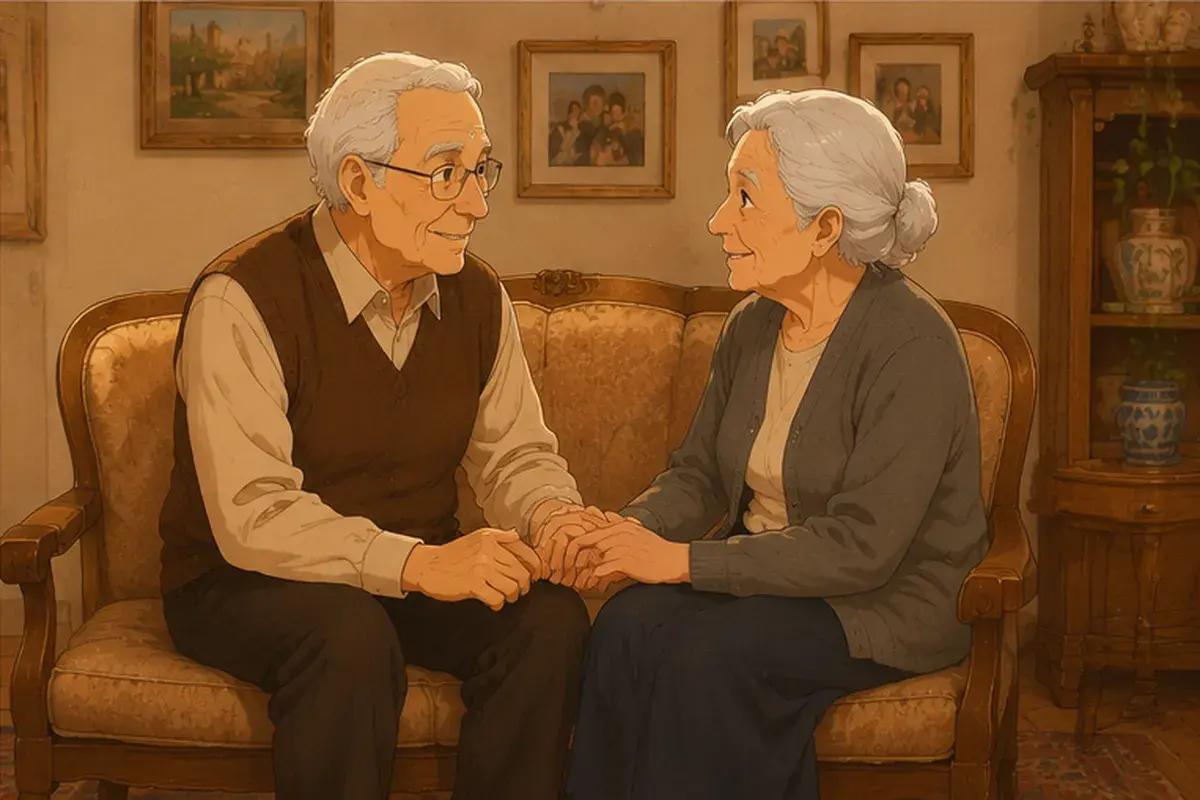
Mi abuelo y mi abuela viven con mis padres. Son muy mayores y tienen muchos nietos.
My grandfather and my grandmother live with my parents. They're very old and they have lots of grandchildren.
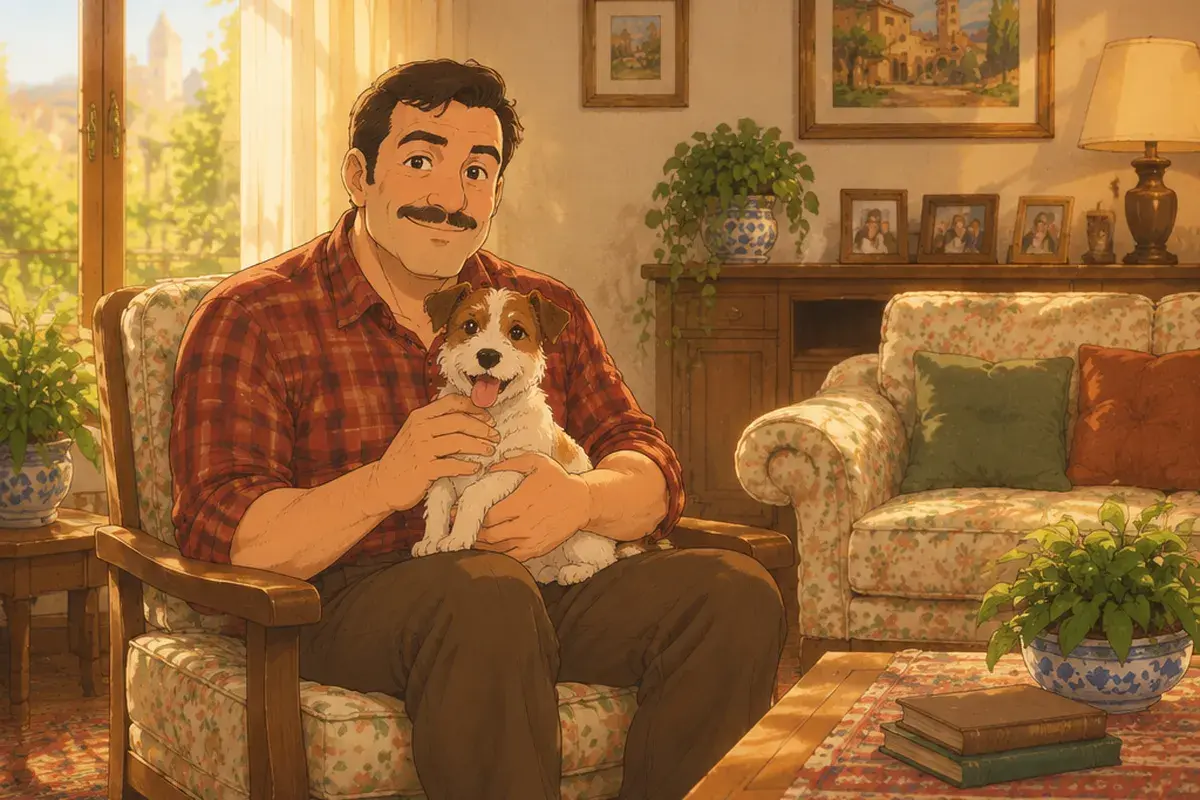
Mi tío Luis es un hombre casado: tiene mujer, tres hijos y un perro.
My uncle Luis is a married man: he has a wife, three children and a dog.

Mi prima Marta es muy joven, pero tiene novio.
My cousin Marta is very young, but she has a boyfriend.
Mis primos y mis tíos viven en Sevilla también.
My cousins and my uncles and aunts live in Seville too.

¿Y vuestra familia? ¿Quién es el mayor? ¿Quién es el menor?
And your family? Who's the oldest? Who's the youngest? (to several people)
Grammar for this text
El mayor, la menor: the oldest and the youngest
- Carlos es el mayor — "Carlos is the oldest (of the children)": the article turns "older" into "the oldest". About Laura it's Laura es la menor: only the article changes; mayor and menor are the same for men and women.
- Son muy mayores — about the grandparents, mayor means "old, elderly"; there are two of them, so it ends in -es.
Su and vuestra: whose
- Su novia se llama Elena — "his girlfriend" (about Carlos); Su marido se llama Jorge — "her husband" (about Laura). It's the same word; the sentence before tells you whose.
- ¿Y vuestra familia? — "and your family?": this is how you ask several people you call tú. It ends in -a because familia is feminine.
Words with two meanings
- tiene mujer — "he has a wife", but Es una mujer joven — "she's a young woman".
- Tienen tres hijos: Carlos, Laura y yo — here hijos means "children": sons and a daughter together. Likewise muchos nietos — "lots of grandchildren", mis tíos — "my uncles and aunts".
How the sentences are built
- Mi padre se llama Antonio y mi madre, Carmen — the comma stands for a second se llama, just like in English: "my father's name is Antonio, and my mother's, Carmen".
- somos más de veinte personas — word for word "we are more than twenty people", meaning "there are more than twenty of us".
Words and grammar of the unit: Talk about your family.
Learn the words from the texts with flashcards
In the app, you can tap any word in a text to see its translation, forms and examples, and new words stick with flashcards. 15 minutes a day.
Start for freeEverything is open for free. No card needed to sign up.