

Spanish dialogue with translation · A1 · 14 lines
¿Tienes hermanos? Do you have any brothers or sisters?
Comic · 13 panels
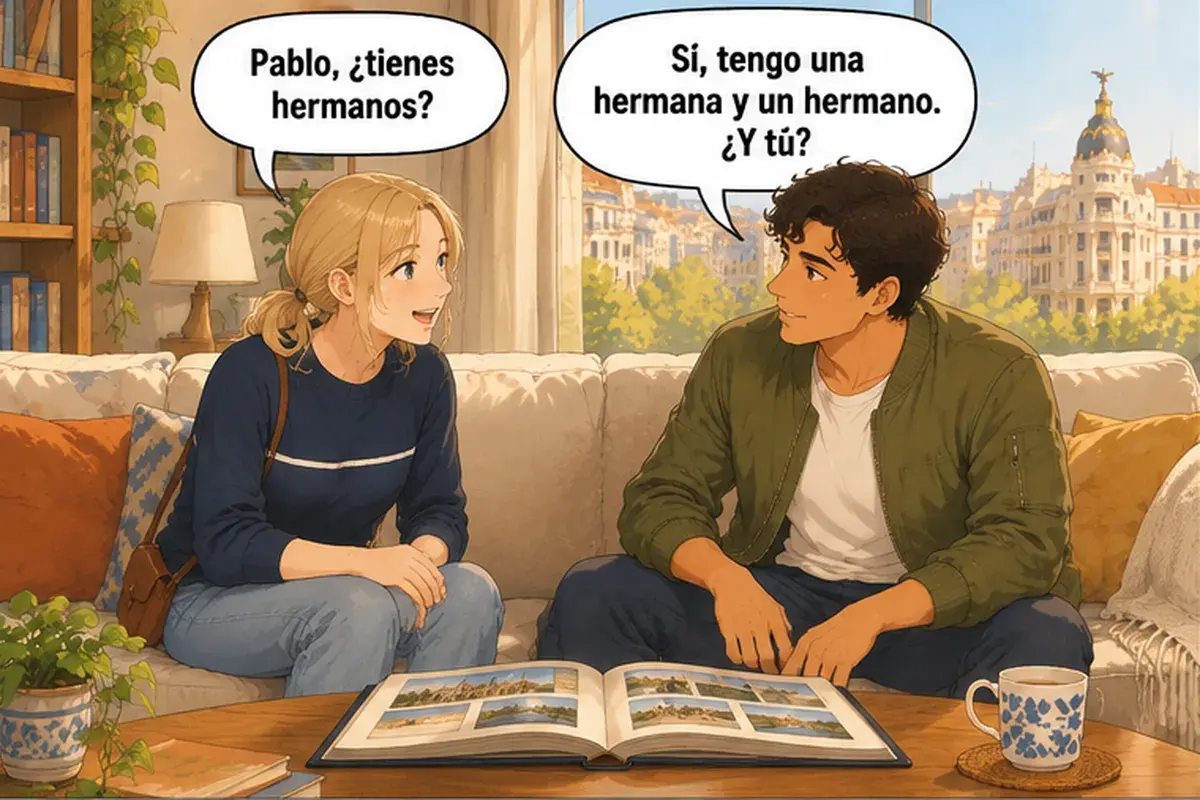
- Ana
Pablo, ¿tienes hermanos?
Pablo, do you have any brothers or sisters?
- Pablo
Sí, tengo una hermana y un hermano. ¿Y tú?
Yes, I have a sister and a brother. And you?
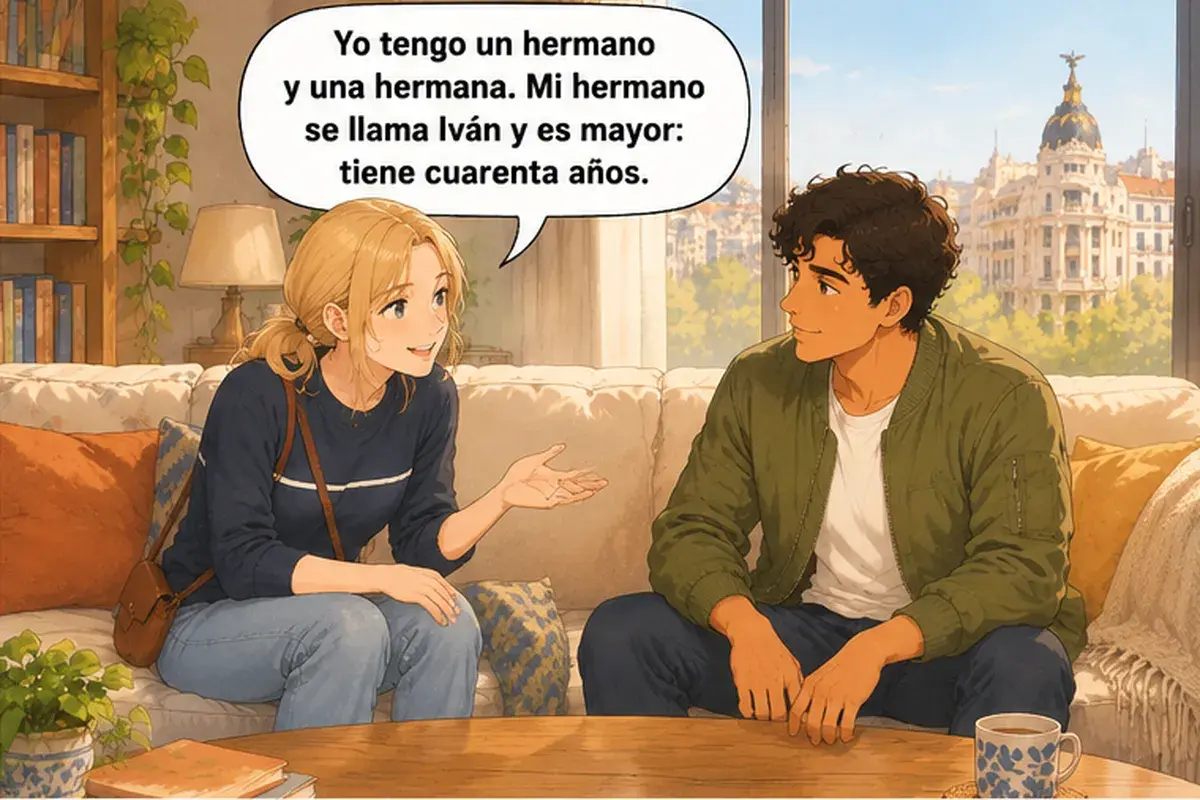
- Ana
Yo tengo un hermano y una hermana. Mi hermano se llama Iván y es mayor: tiene cuarenta años.
I have a brother and a sister. My brother's name is Iván and he's older: he's forty.
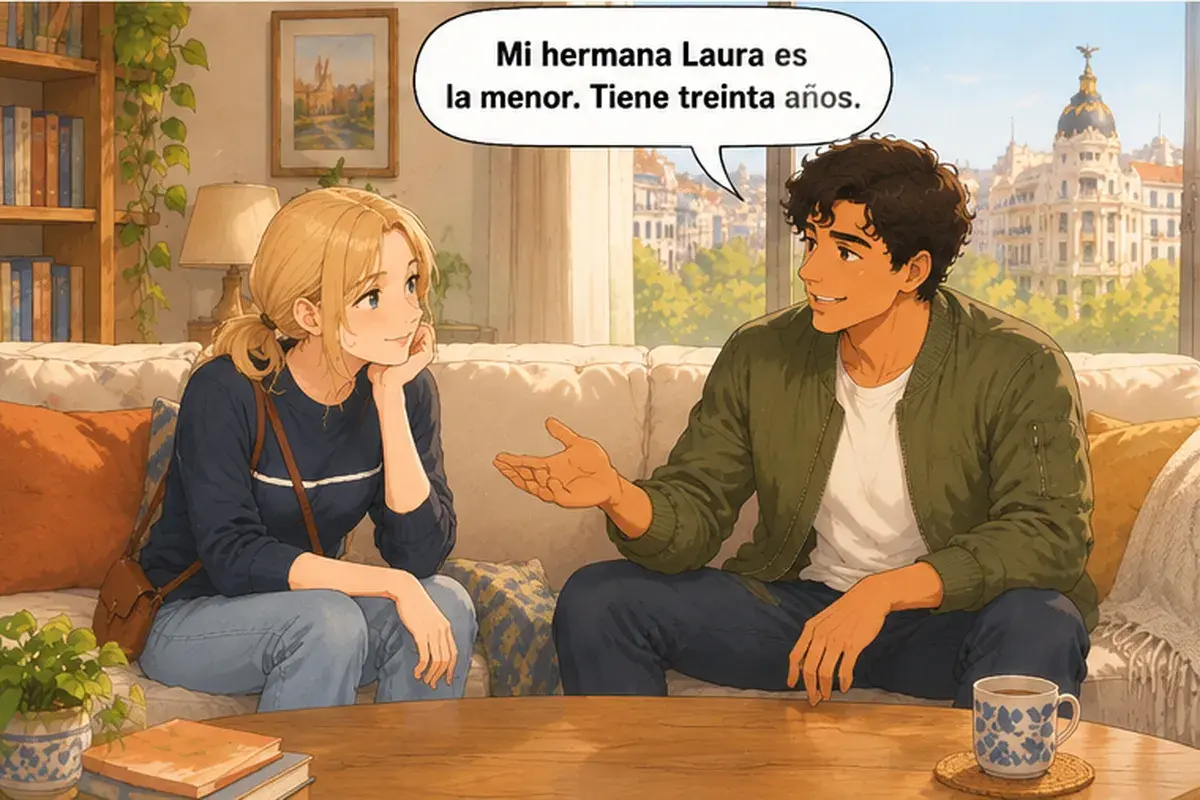
- Pablo
Mi hermana Laura es la menor. Tiene treinta años.
My sister Laura is the youngest. She's thirty.
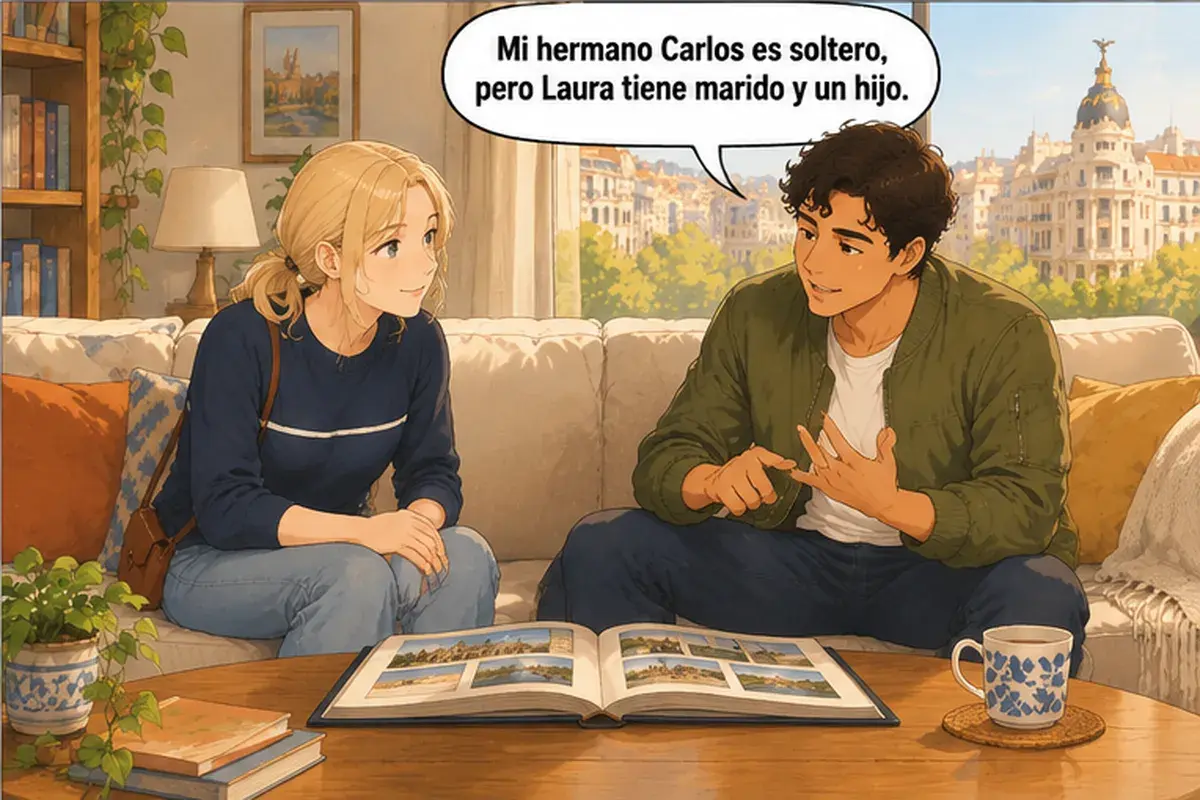
- Pablo
Mi hermano Carlos es soltero, pero Laura tiene marido y un hijo.
My brother Carlos is single, but Laura has a husband and a son.
- Ana
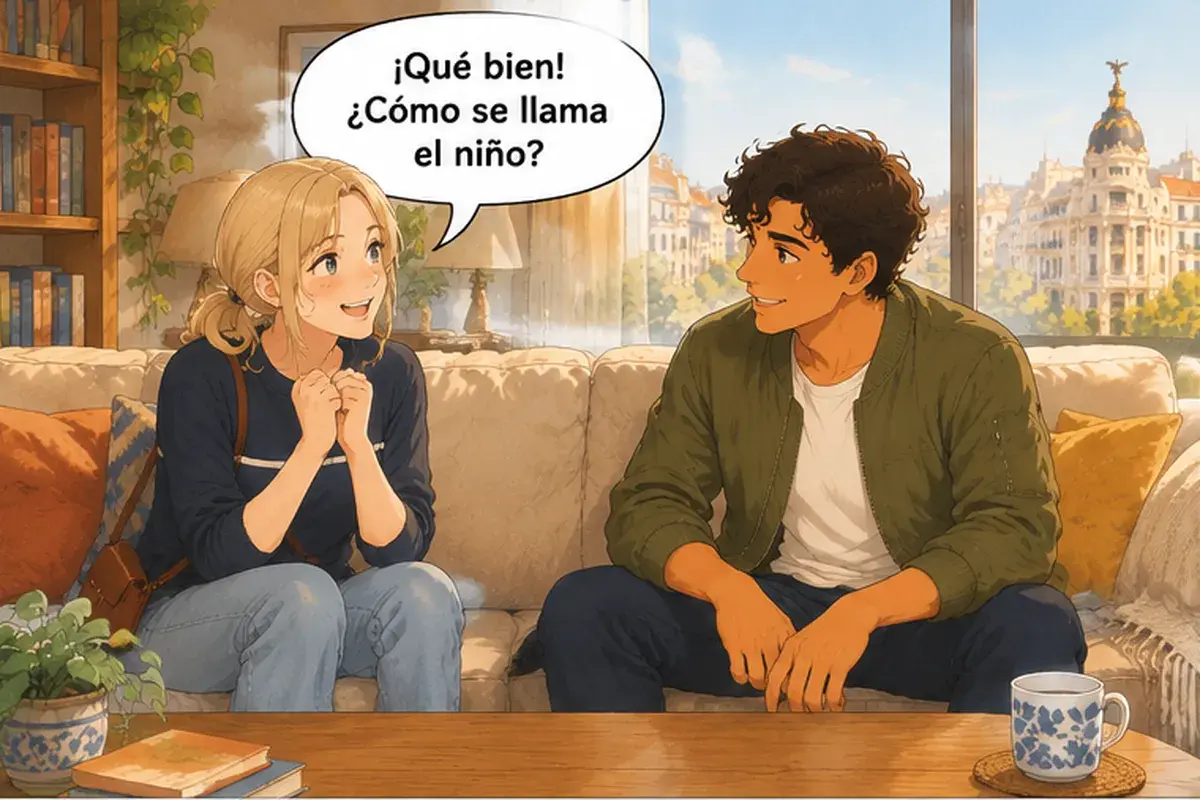
¡Qué bien! ¿Cómo se llama el niño?
How nice! What's the boy's name?
- Pablo
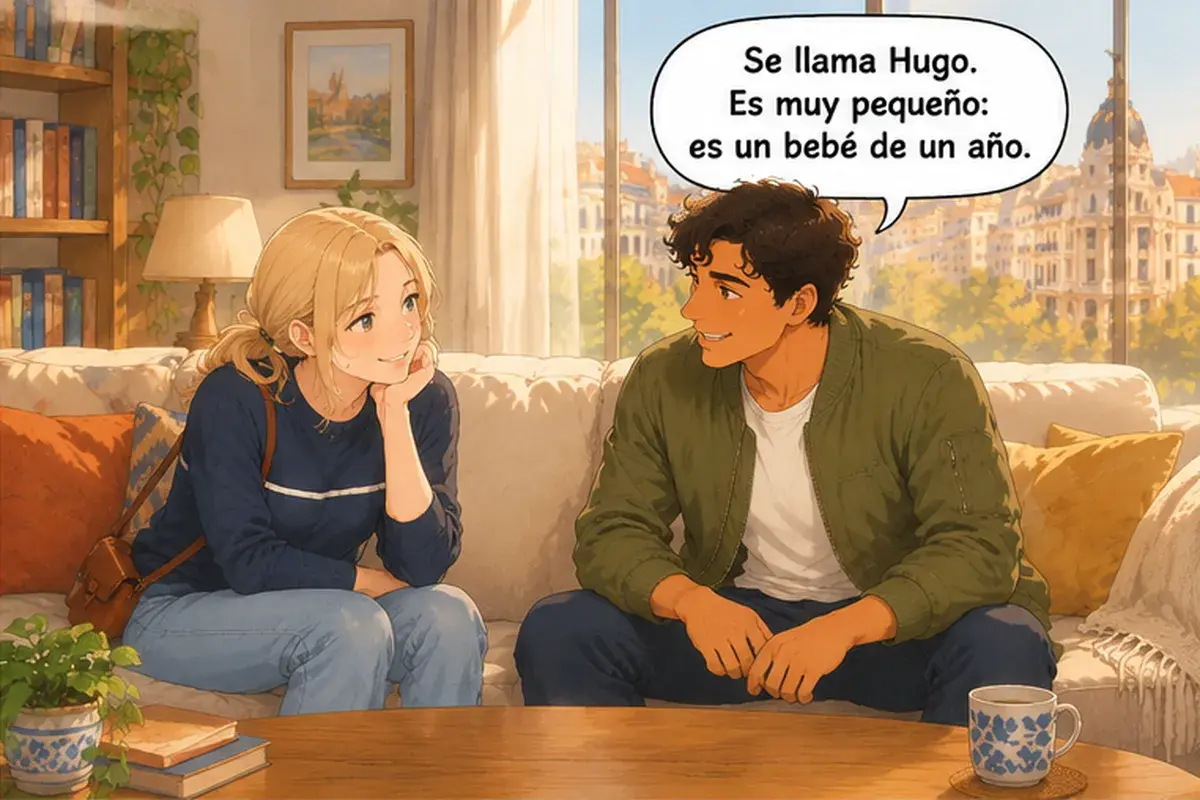
Se llama Hugo. Es muy pequeño: es un bebé de un año.
His name is Hugo. He's very little: he's a one-year-old baby.
- Ana
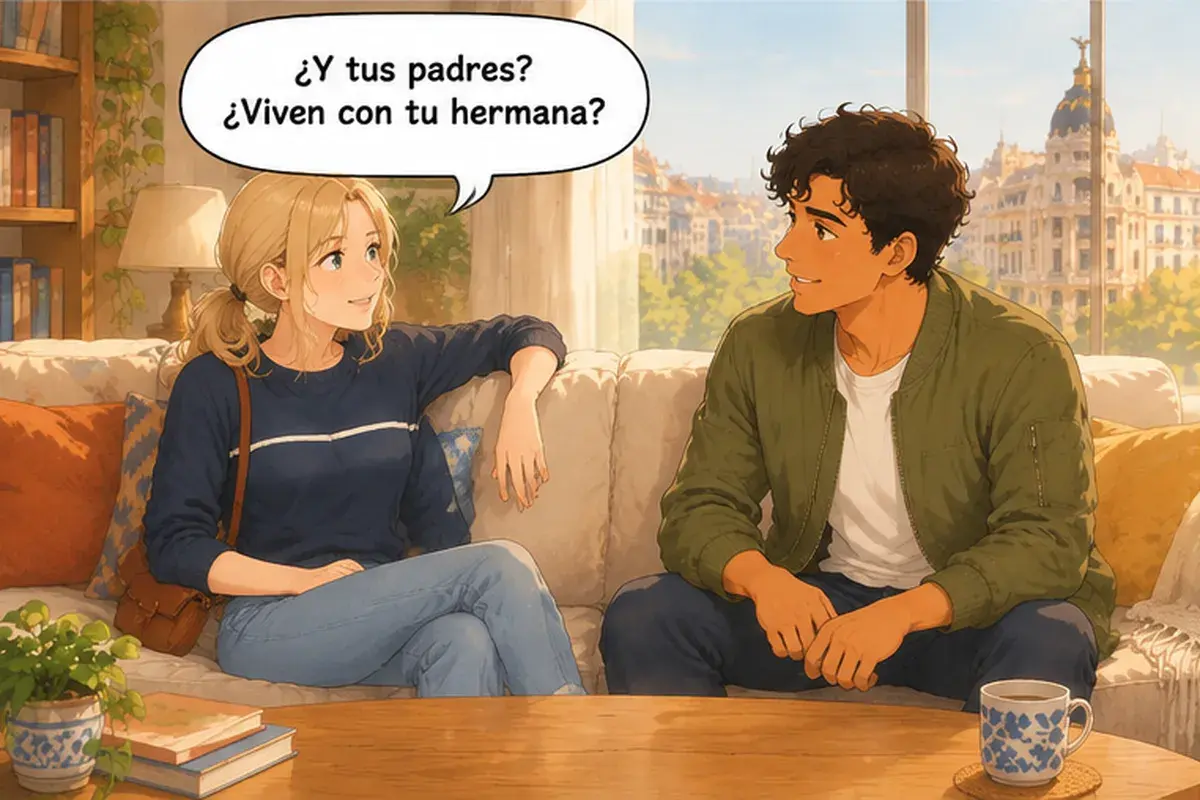
¿Y tus padres? ¿Viven con tu hermana?
And your parents? Do they live with your sister?
- Pablo
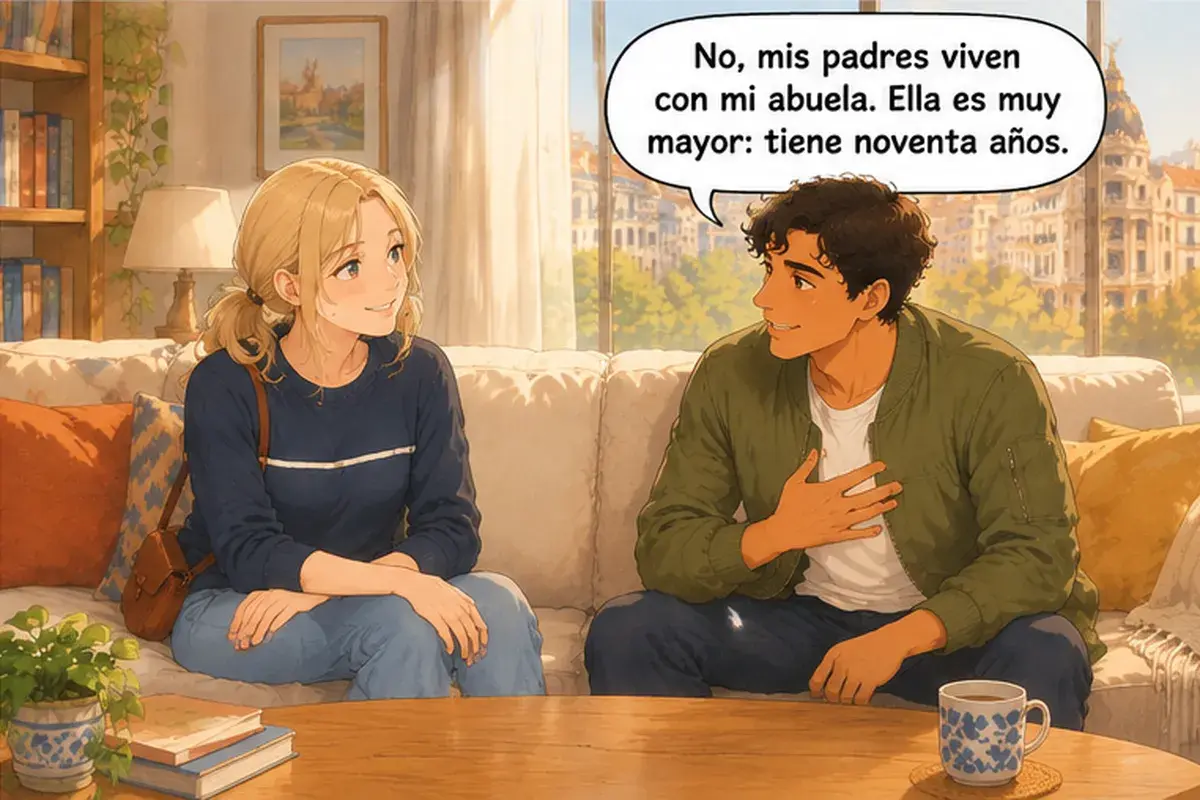
No, mis padres viven con mi abuela. Ella es muy mayor: tiene noventa años.
No, my parents live with my grandmother. She's very old: she's ninety.
- Pablo
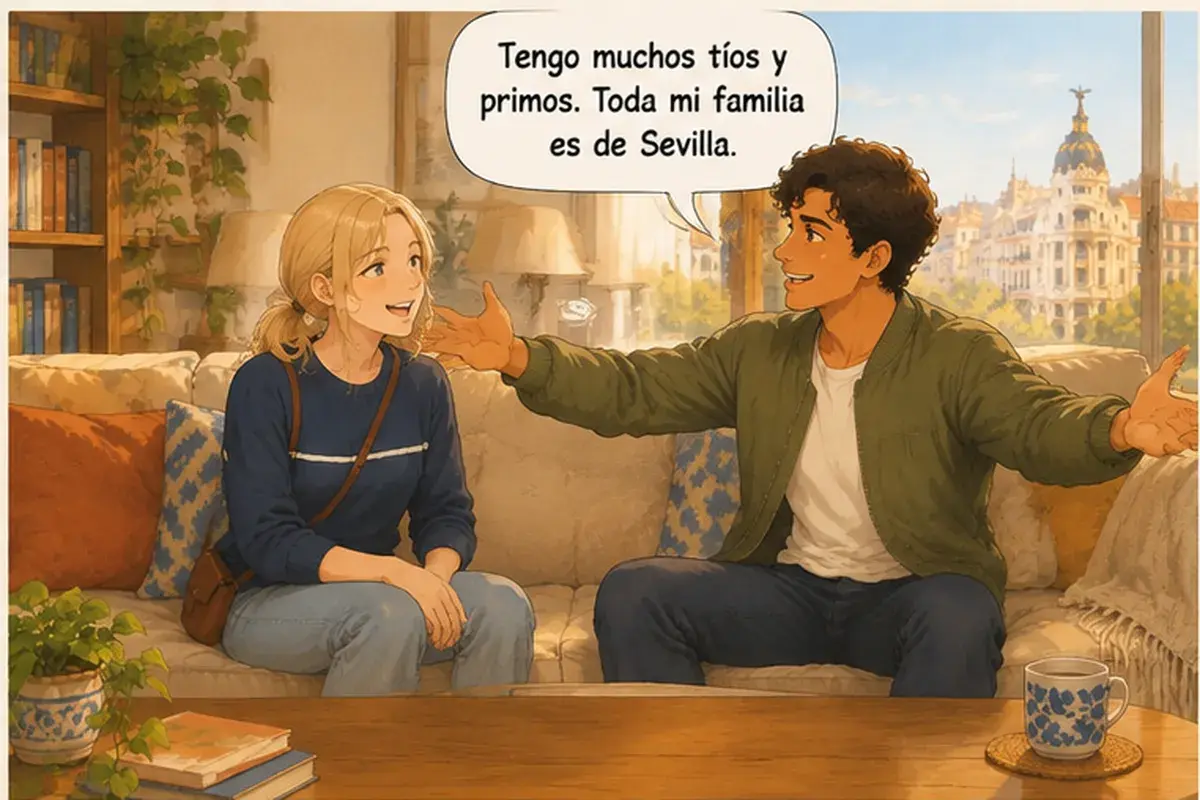
Tengo muchos tíos y primos. Toda mi familia es de Sevilla.
I have lots of uncles, aunts and cousins. My whole family is from Seville.
- Ana
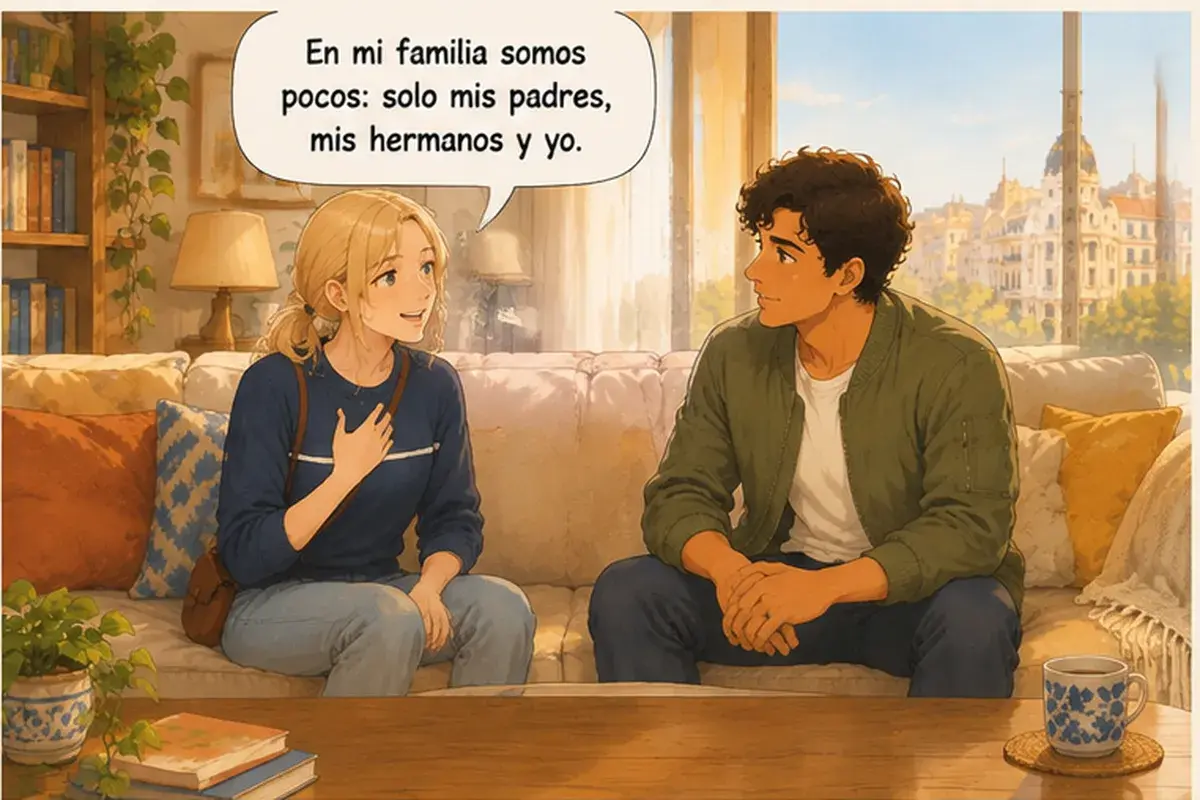
En mi familia somos pocos: solo mis padres, mis hermanos y yo.
There are few of us in my family: just my parents, my brother and sister, and me.
- Ana
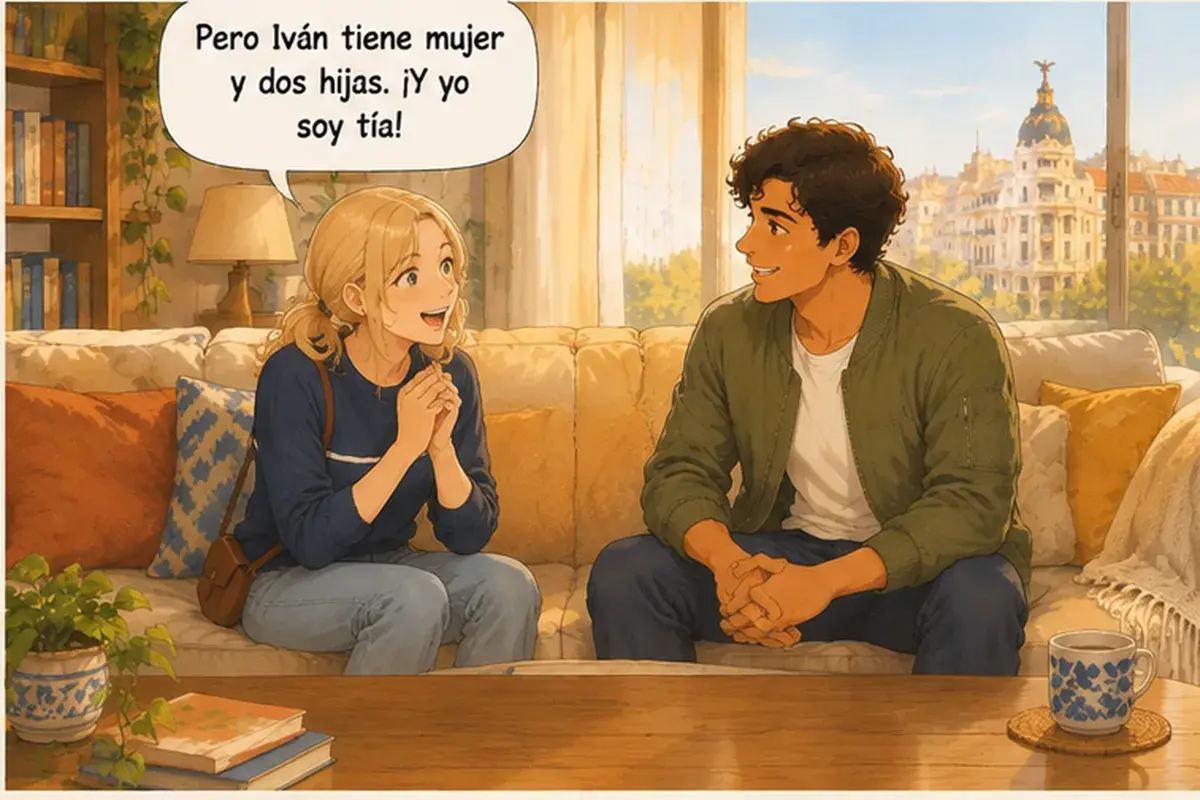
Pero Iván tiene mujer y dos hijas. ¡Y yo soy tía!
But Iván has a wife and two daughters. And I'm an aunt!
- Ana
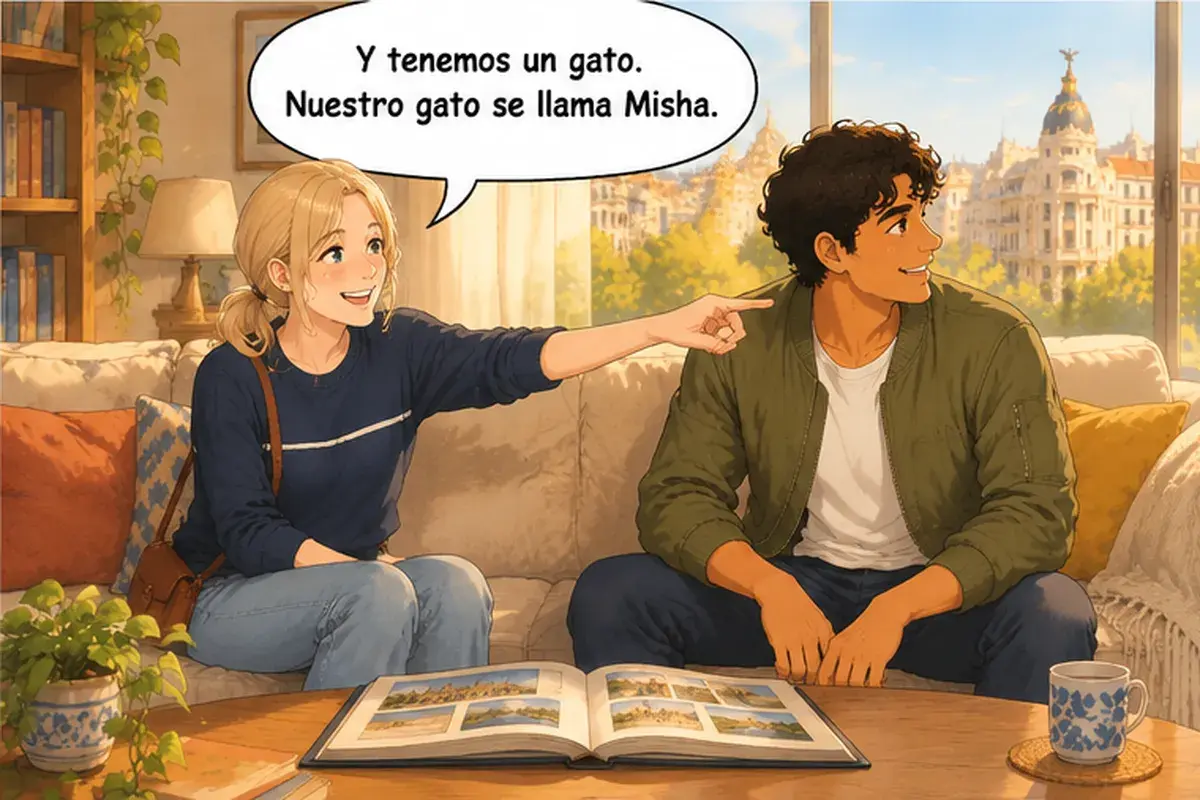
Y tenemos un gato. Nuestro gato se llama Misha.
And we have a cat. Our cat's name is Misha.
- Pablo
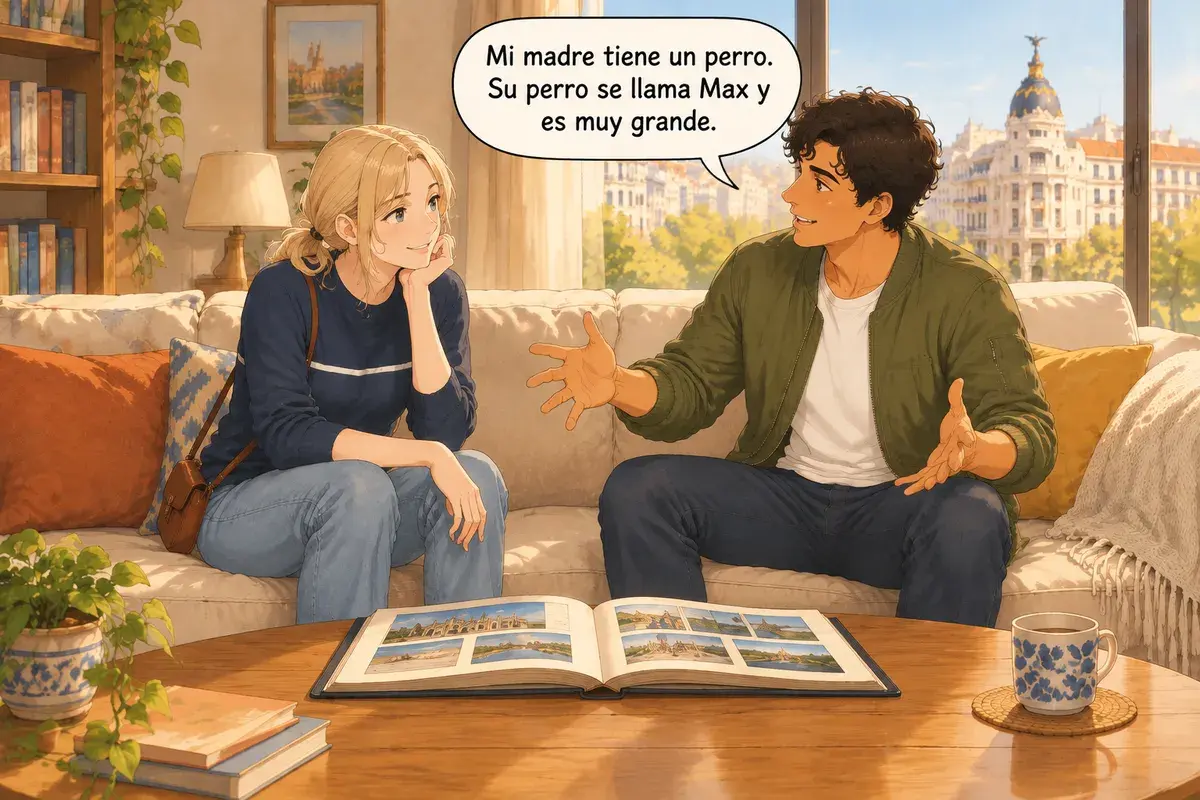
Mi madre tiene un perro. Su perro se llama Max y es muy grande.
My mother has a dog. Her dog's name is Max and he's very big.
Grammar for this text
Hermanos, padres, tíos: the masculine plural covers everyone
- ¿tienes hermanos? means "do you have any brothers or sisters?", not only brothers: the masculine plural names the whole group.
- In the same way, mis padres is "my parents", and muchos tíos y primos is "lots of uncles, aunts and cousins".
Mi, tu, su, nuestro: whose
- Mi hermano, tu hermana, nuestro gato — "my brother", "your sister", "our cat". For several things, add -s: mis padres, tus padres.
- Su perro se llama Max — su can mean "his", "her" or "their". Pablo has just talked about his mother, so here it's "her dog".
Mayor and menor
- es mayor: tiene cuarenta años — "he's older: he's forty". Mi hermana Laura es la menor — with the article la it means "the youngest of us".
- Ella es muy mayor — about the grandmother: muy mayor means "very old".
Tener: what someone has
- Age goes with tener: tiene treinta años — "she's thirty" (word for word, "she has thirty years").
- tengo una hermana y un hermano — una goes before a feminine word, un before a masculine one.
- Laura tiene marido — no article: Spanish says it this way when what matters is simply having a husband or a wife. Iván tiene mujer — "Iván has a wife": mujer means both "woman" and "wife".
- es un bebé de un año — "a one-year-old baby": the age is joined with de.
- En mi familia somos pocos — word for word "in my family we are few", meaning "there aren't many of us".
Words and grammar of the unit: Talk about your family.
Learn the words from the texts with flashcards
In the app, you can tap any word in a text to see its translation, forms and examples, and new words stick with flashcards. 15 minutes a day.
Start for freeEverything is open for free. No card needed to sign up.