

Spanish dialogue with translation · A1 · 14 lines
¿Qué cocinamos hoy? What should we cook today?
Comic · 13 panels
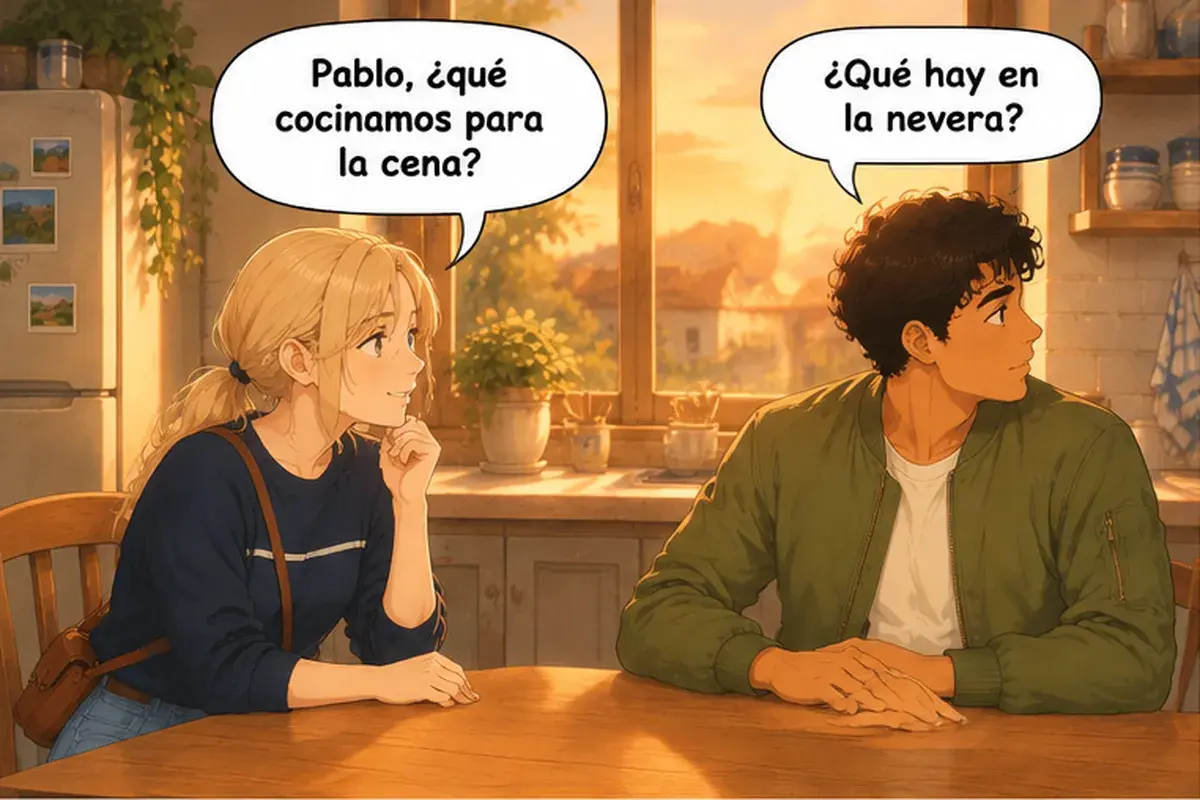
- Ana
Pablo, ¿qué cocinamos para la cena?
Pablo, what should we cook for dinner?
- Pablo
¿Qué hay en la nevera?
What's in the fridge?
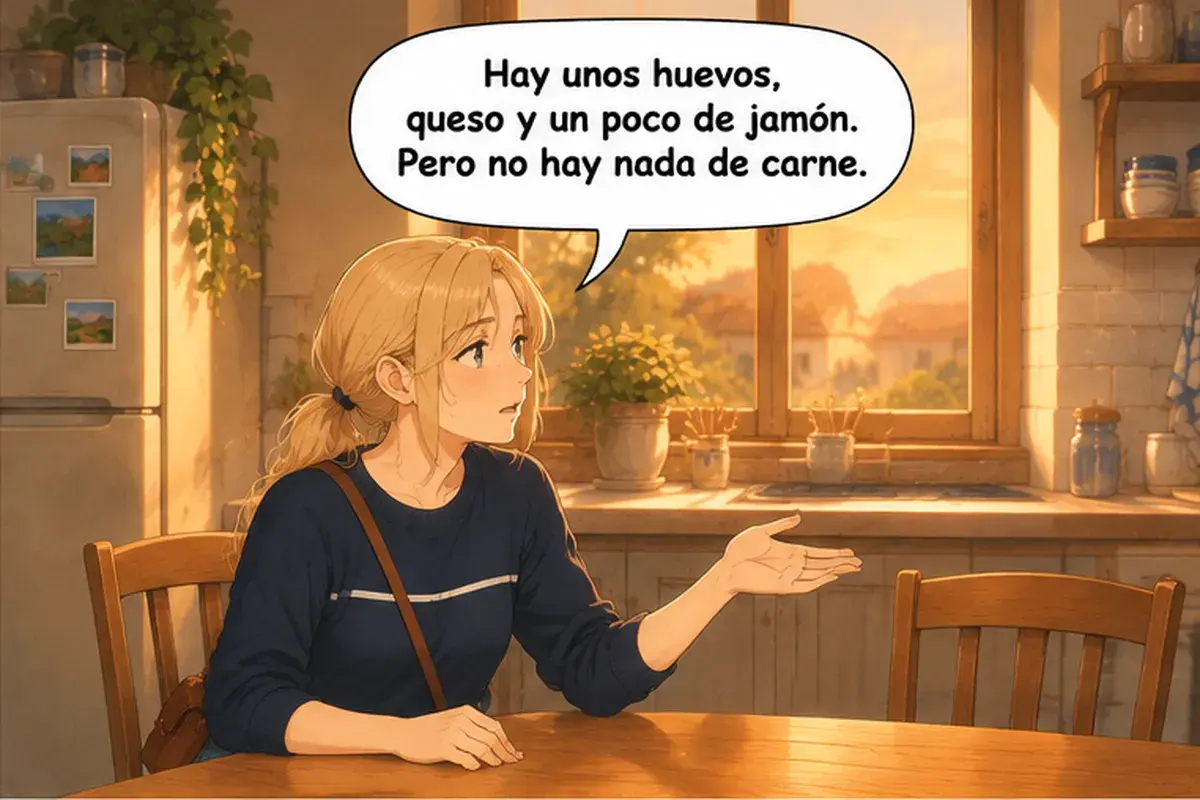
- Ana
Hay unos huevos, queso y un poco de jamón. Pero no hay nada de carne.
There are some eggs, cheese and a little ham. But there's no meat at all.
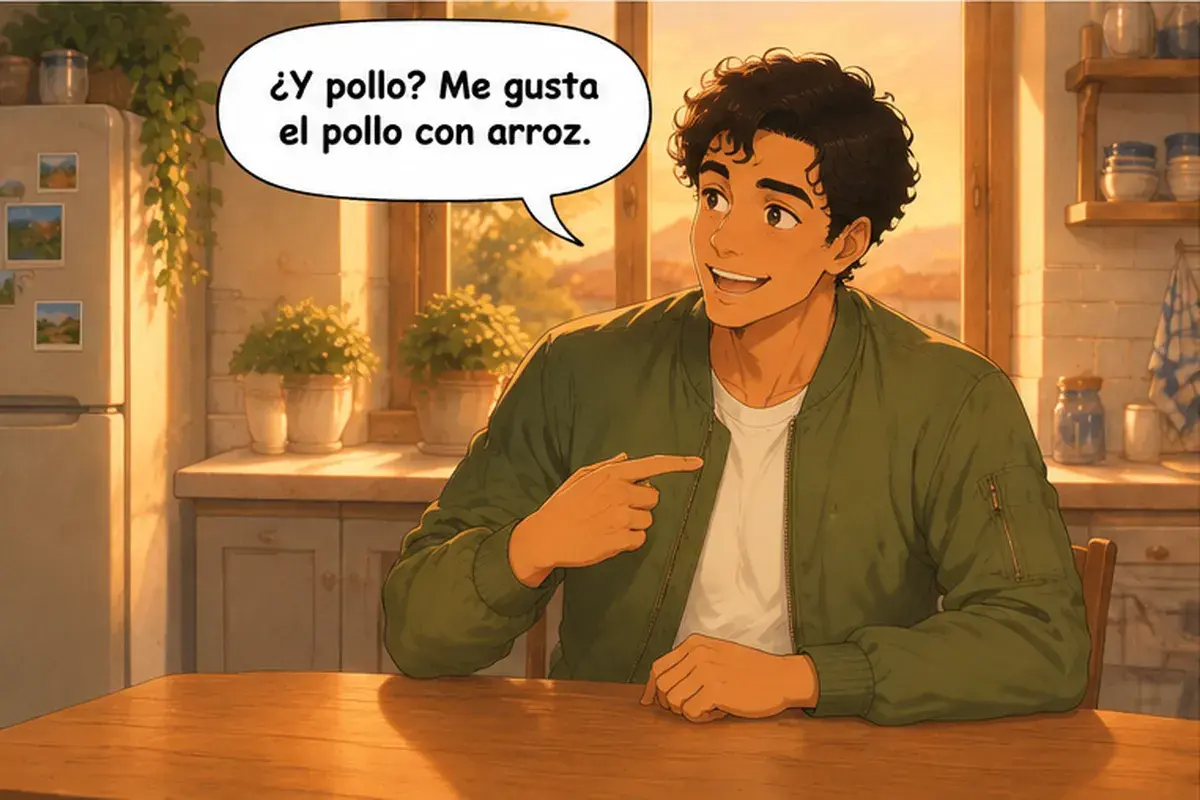
- Pablo
¿Y pollo? Me gusta el pollo con arroz.
And chicken? I like chicken with rice.
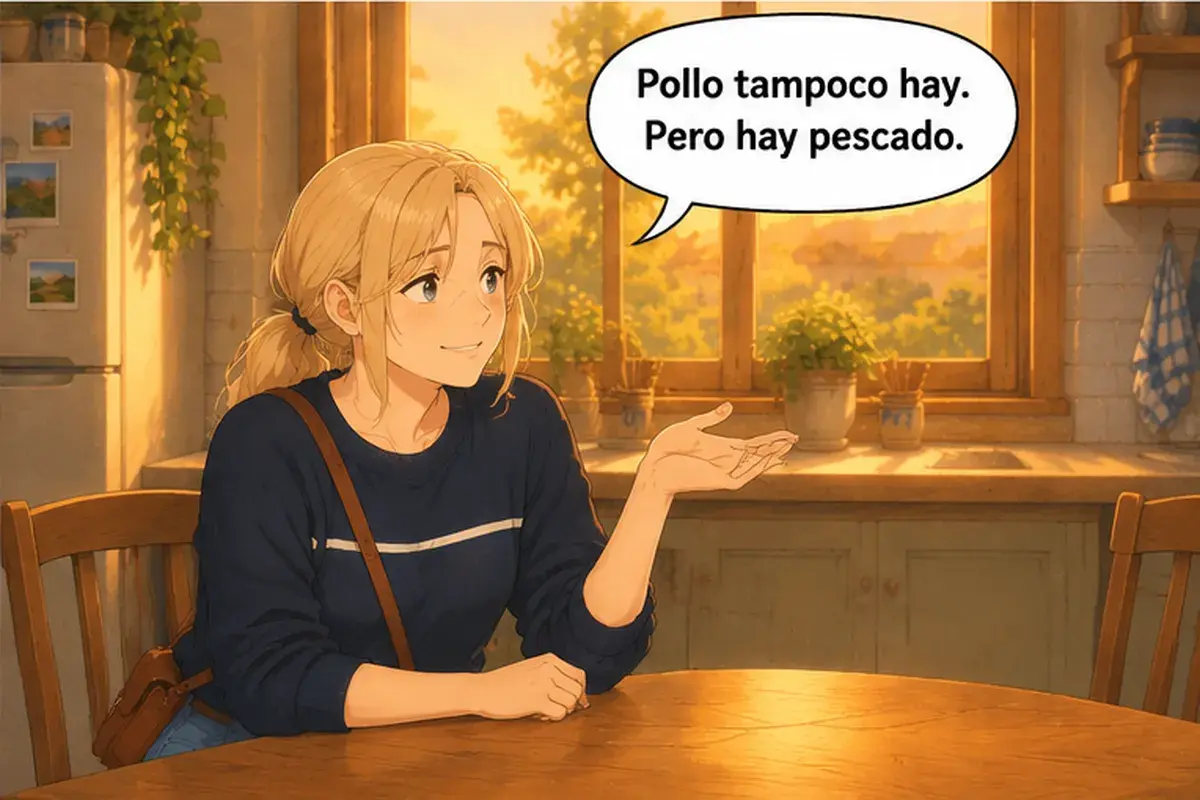
- Ana
Pollo tampoco hay. Pero hay pescado.
There's no chicken either. But there's fish.
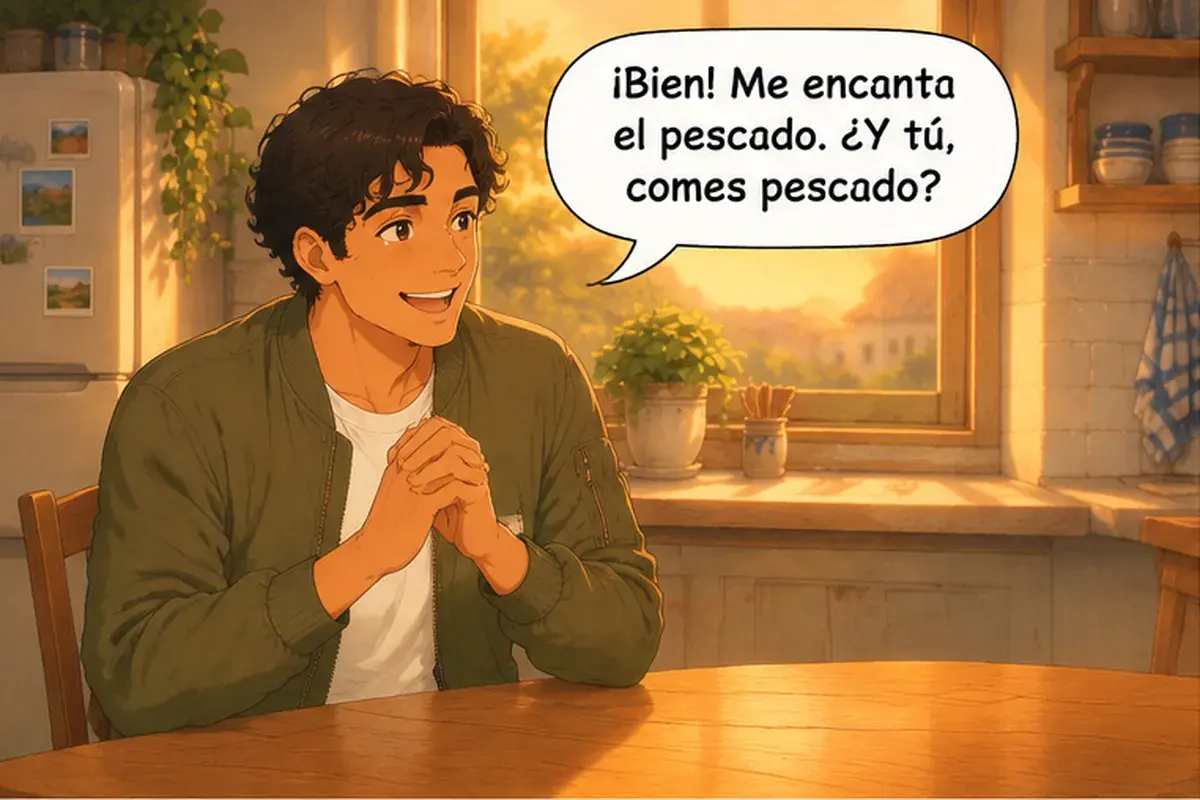
- Pablo
¡Bien! Me encanta el pescado. ¿Y tú, comes pescado?
Good! I love fish. And you, do you eat fish?
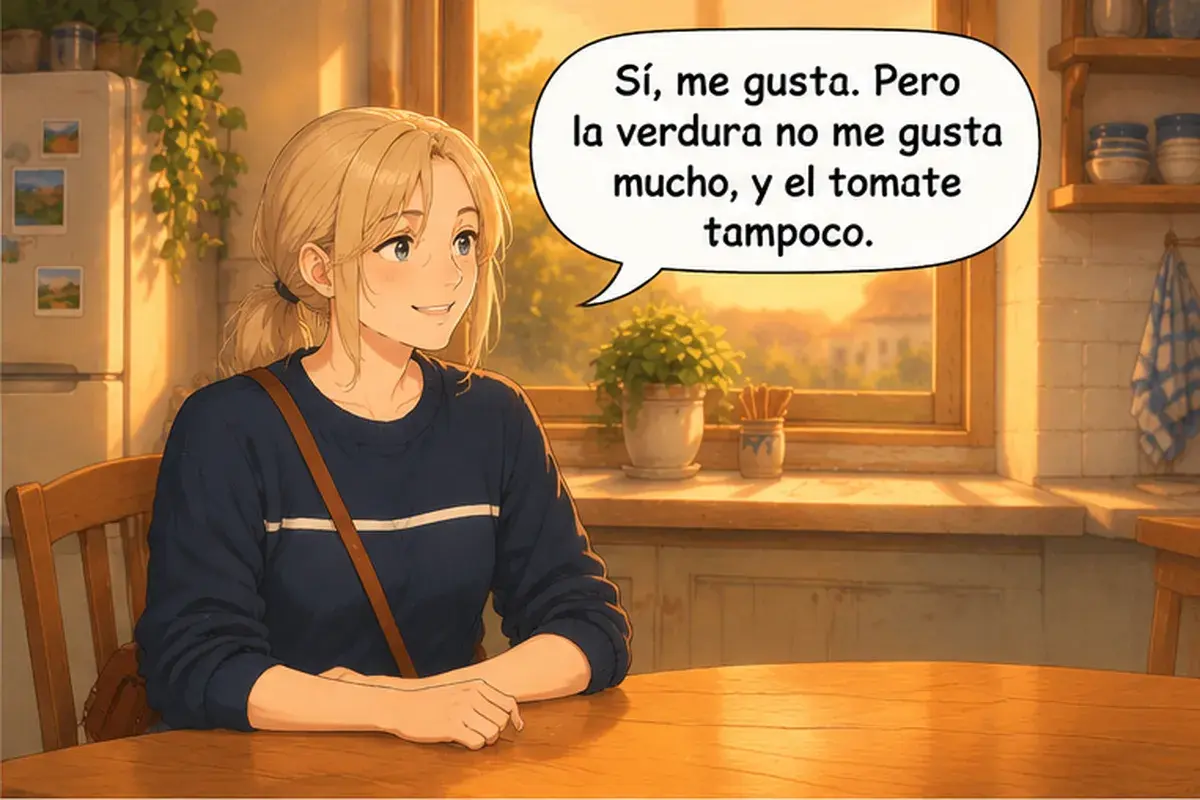
- Ana
Sí, me gusta. Pero la verdura no me gusta mucho, y el tomate tampoco.
Yes, I like it. But I don't like vegetables much, and I don't like tomatoes either.
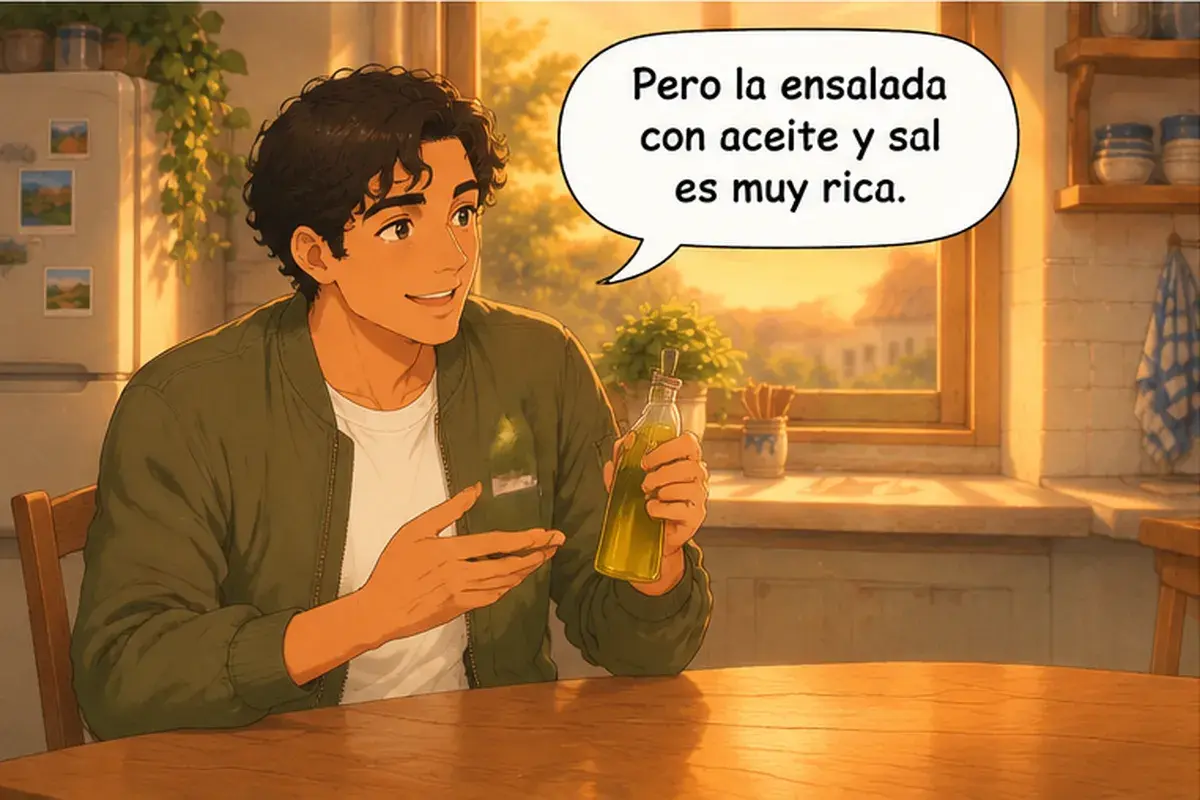
- Pablo
Pero la ensalada con aceite y sal es muy rica.
But salad with oil and salt is very tasty.
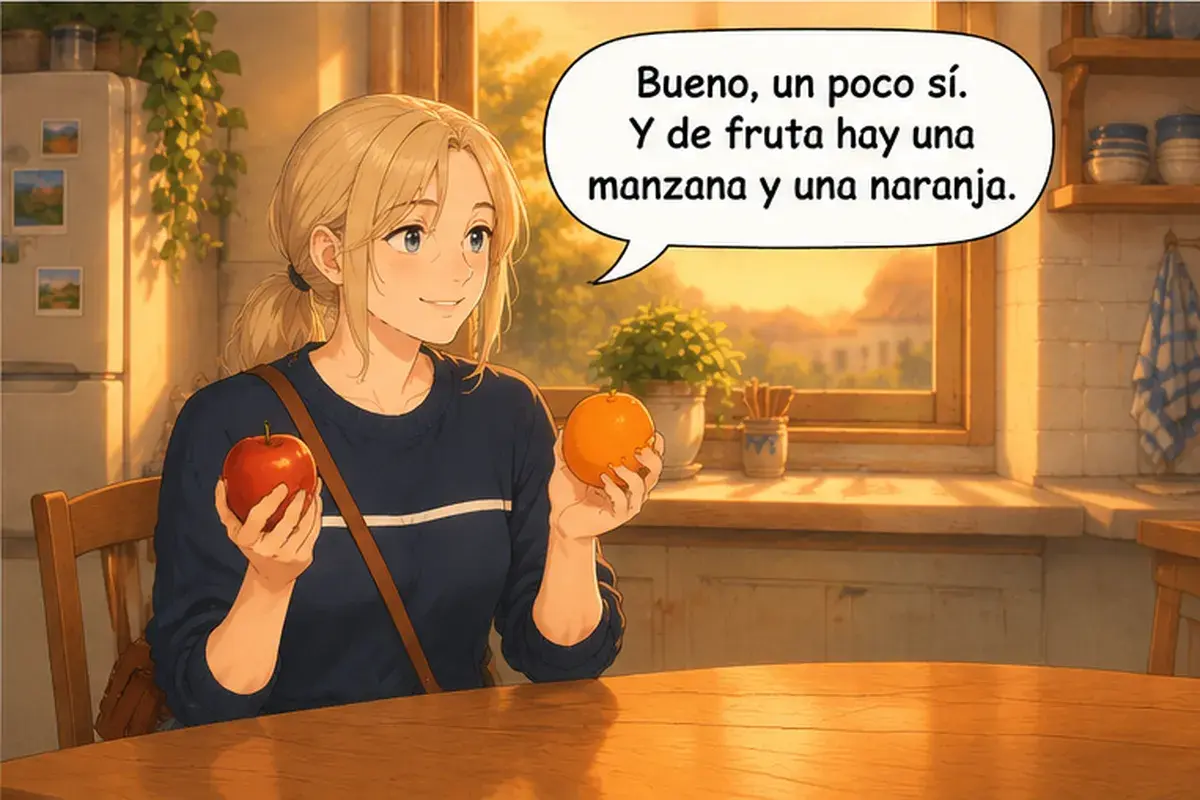
- Ana
Bueno, un poco sí. Y de fruta hay una manzana y una naranja.
Well, a little, yes. And for fruit, there's an apple and an orange.
- Pablo
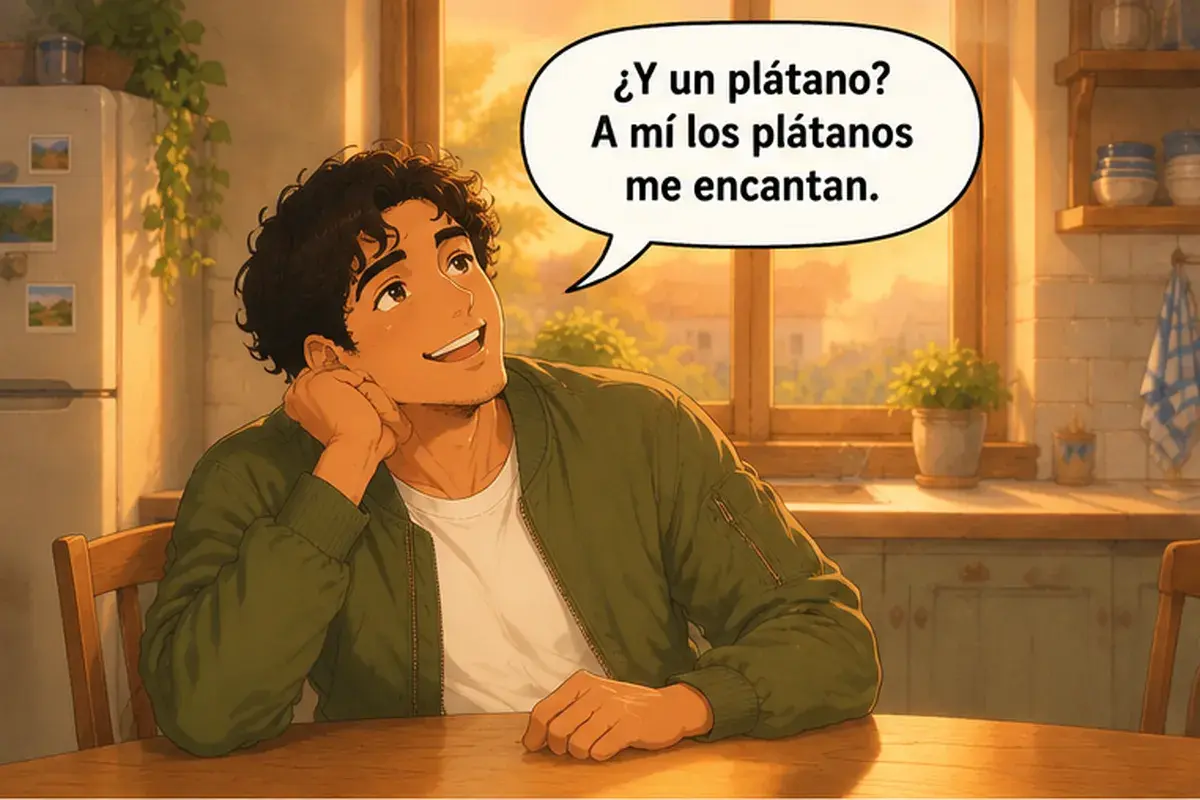
¿Y un plátano? A mí los plátanos me encantan.
And a banana? I love bananas.
- Ana
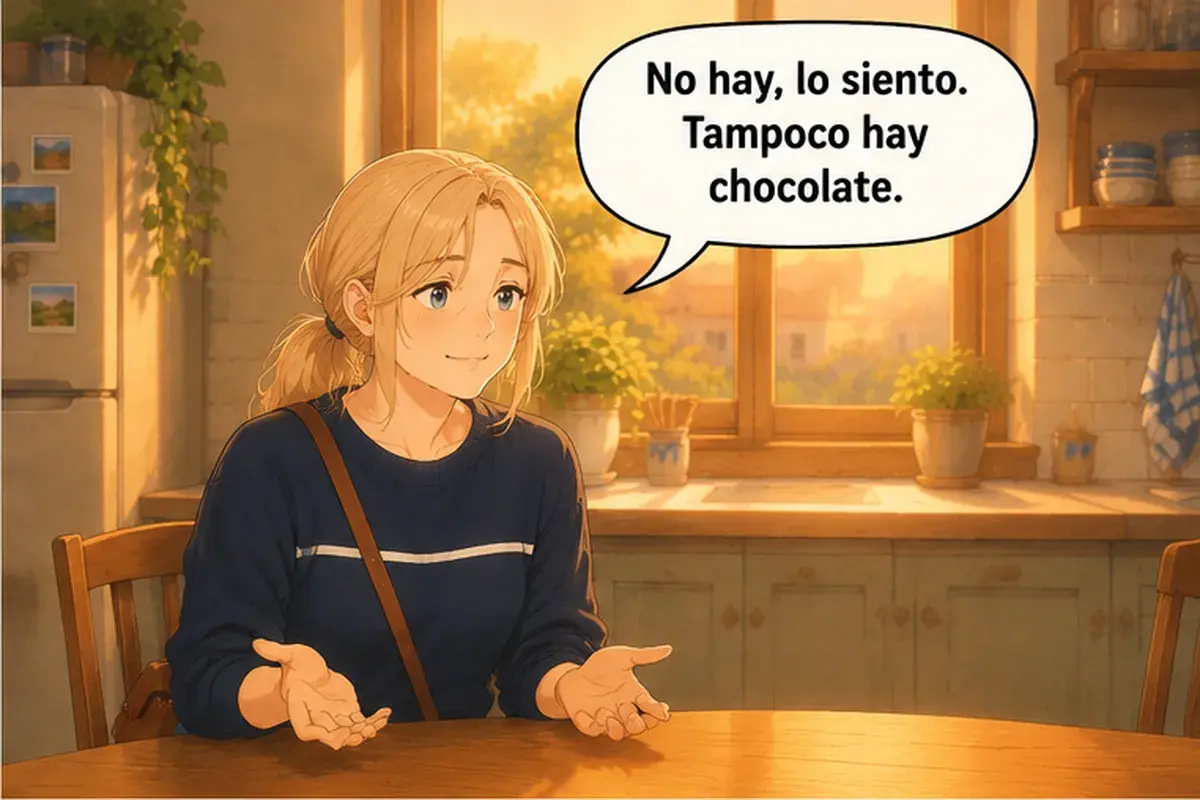
No hay, lo siento. Tampoco hay chocolate.
There isn't one, I'm sorry. There's no chocolate either.
- Pablo
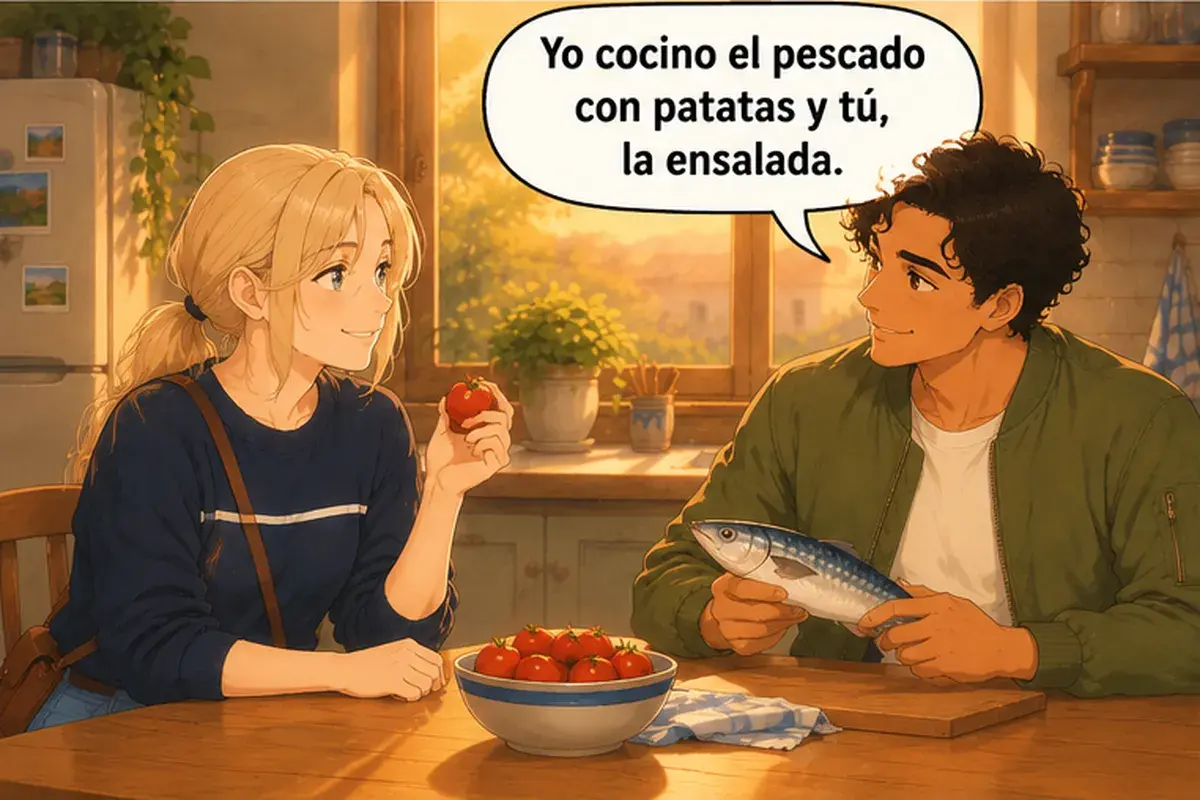
Yo cocino el pescado con patatas y tú, la ensalada.
I cook the fish with potatoes, and you make the salad.
- Ana
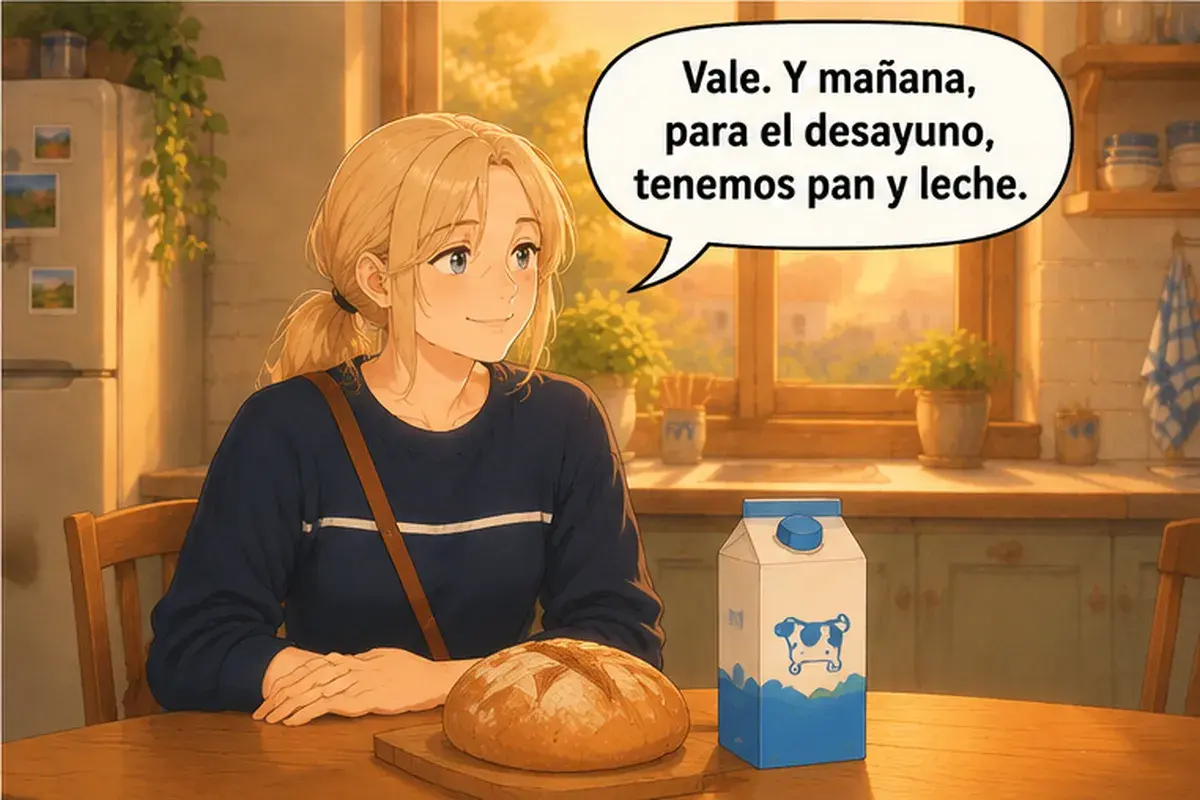
Vale. Y mañana, para el desayuno, tenemos pan y leche.
OK. And tomorrow, for breakfast, we've got bread and milk.
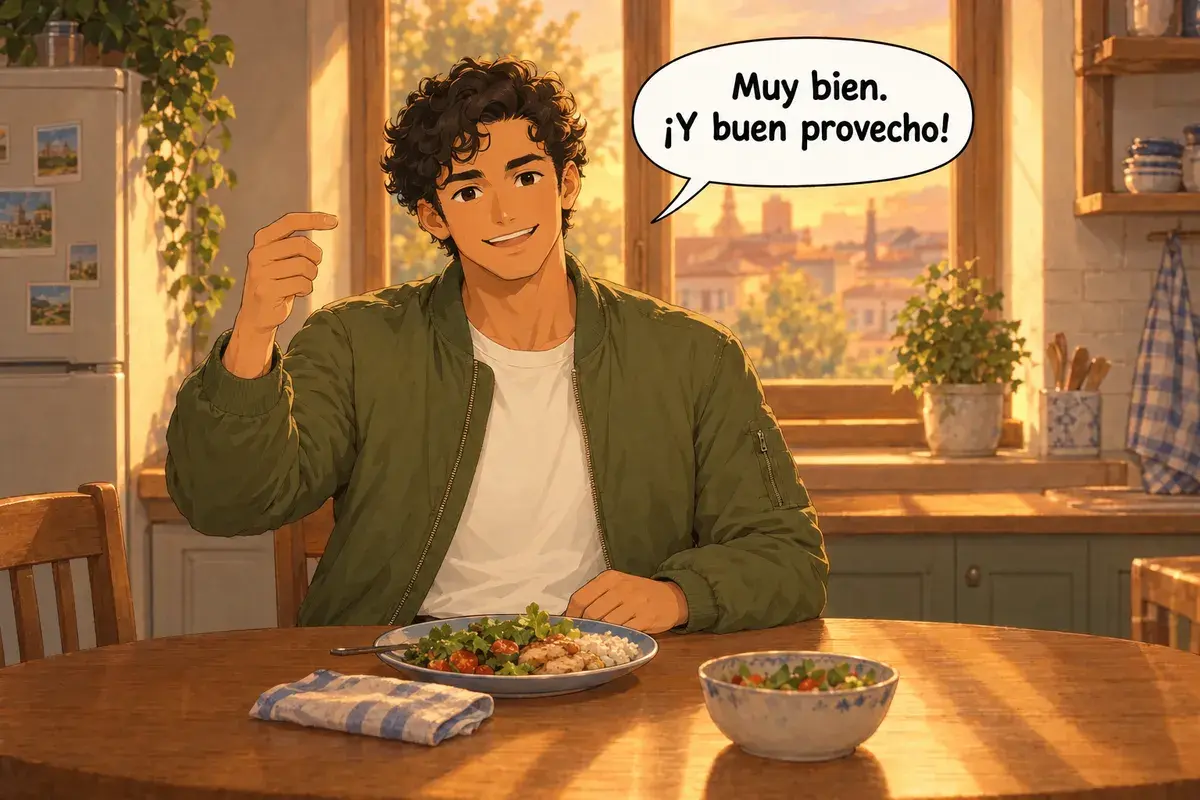
- Pablo
Muy bien. ¡Y buen provecho!
Very good. And enjoy your meal!
Grammar for this text
Gustar: "to like"
- Me gusta el pollo con arroz — "I like chicken with rice", but word for word "chicken with rice pleases me". The main word here is the chicken, not "I", and the verb agrees with it: one thing — gusta, several things — add -n: los plátanos me encantan.
- Encantar (to love) works the same way: Me encanta el pescado.
- No goes before me: la verdura no me gusta mucho — "I don't like vegetables much".
The article: yes with gustar, no after hay
- Me gusta el pollo, Me encanta el pescado, los plátanos — when you talk about a food in general ("I like chicken"), Spanish uses el, la, los, while English uses no article.
- After hay, there's no el or la: hay pescado, Tampoco hay chocolate.
A mí
- A mí los plátanos me encantan — a mí adds stress, as if Pablo says "as for me, I love bananas". The word me stays.
Not... either: tampoco
- Pollo tampoco hay, Tampoco hay chocolate, y el tomate tampoco — when tampoco comes before the verb, you don't need no.
Nothing: no... nada
- no hay nada de carne — if nada comes after the verb, you must put no before the verb: the double negative is normal in Spanish. Nada de carne means "no meat at all".
- Amounts are joined with de the same way: un poco de jamón — a little ham.
Cocinamos
- ¿qué cocinamos para la cena? — cocinamos means "we cook", but in a question like this it means "what should we cook?"
Words and grammar of the unit: Decide what to cook for dinner.
Learn the words from the texts with flashcards
In the app, you can tap any word in a text to see its translation, forms and examples, and new words stick with flashcards. 15 minutes a day.
Start for freeEverything is open for free. No card needed to sign up.