

Spanish dialogue with translation · A1 · 14 lines
Me duele la garganta My throat hurts
Comic · 13 panels
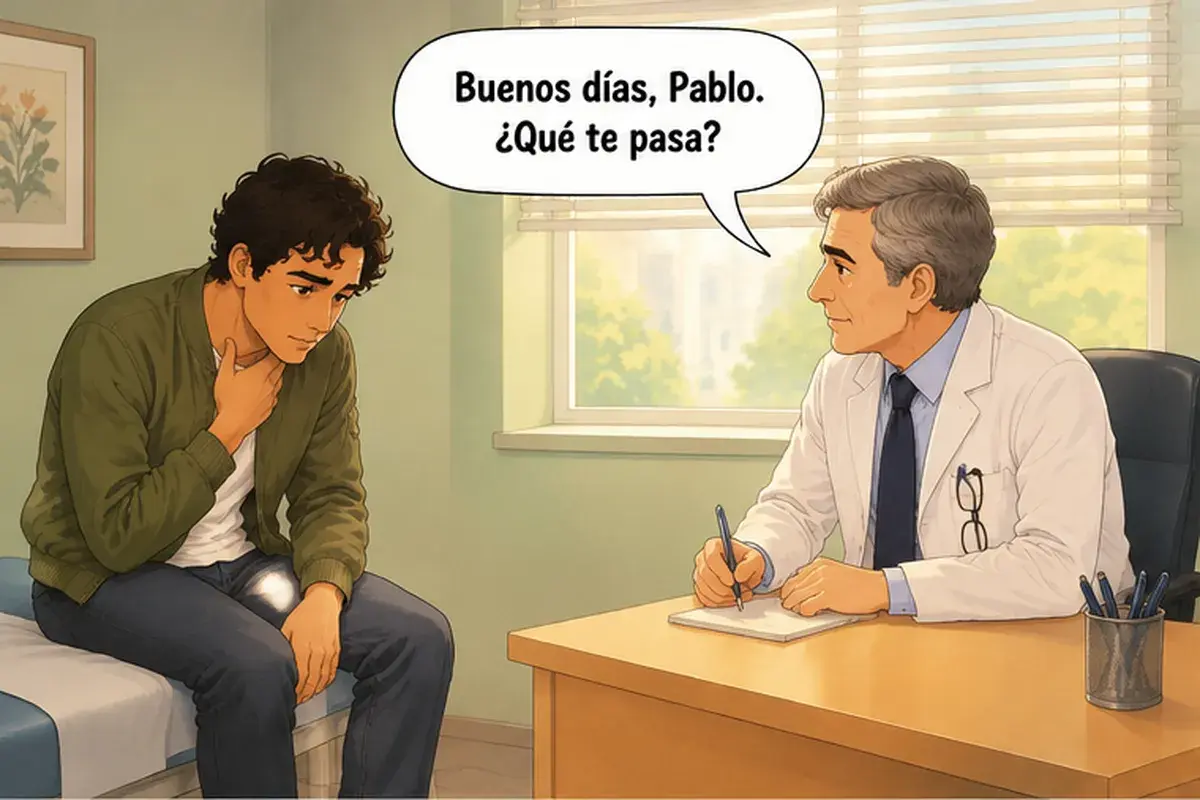
- Médico
Buenos días, Pablo. ¿Qué te pasa?
Good morning, Pablo. What's wrong?
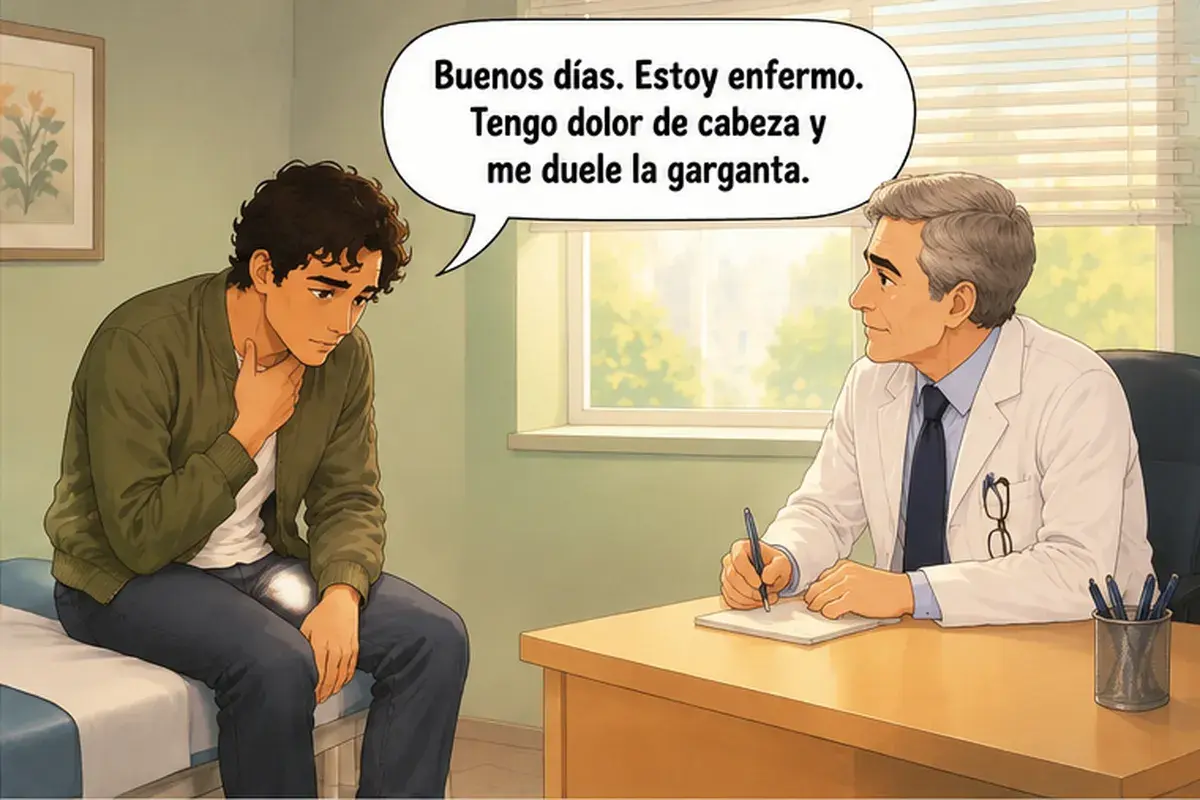
- Pablo
Buenos días. Estoy enfermo. Tengo dolor de cabeza y me duele la garganta.
Good morning. I'm sick. I have a headache and my throat hurts (man speaking).
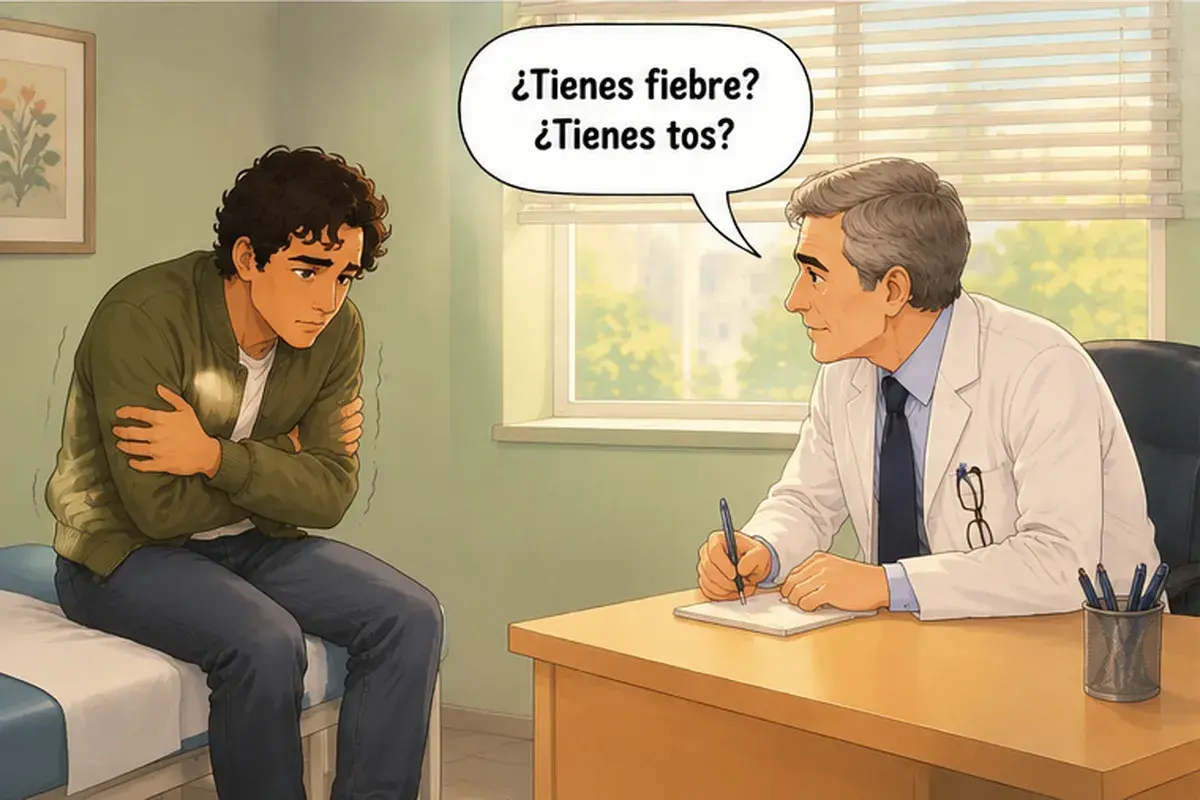
- Médico
¿Tienes fiebre? ¿Tienes tos?
Do you have a fever? Do you have a cough?
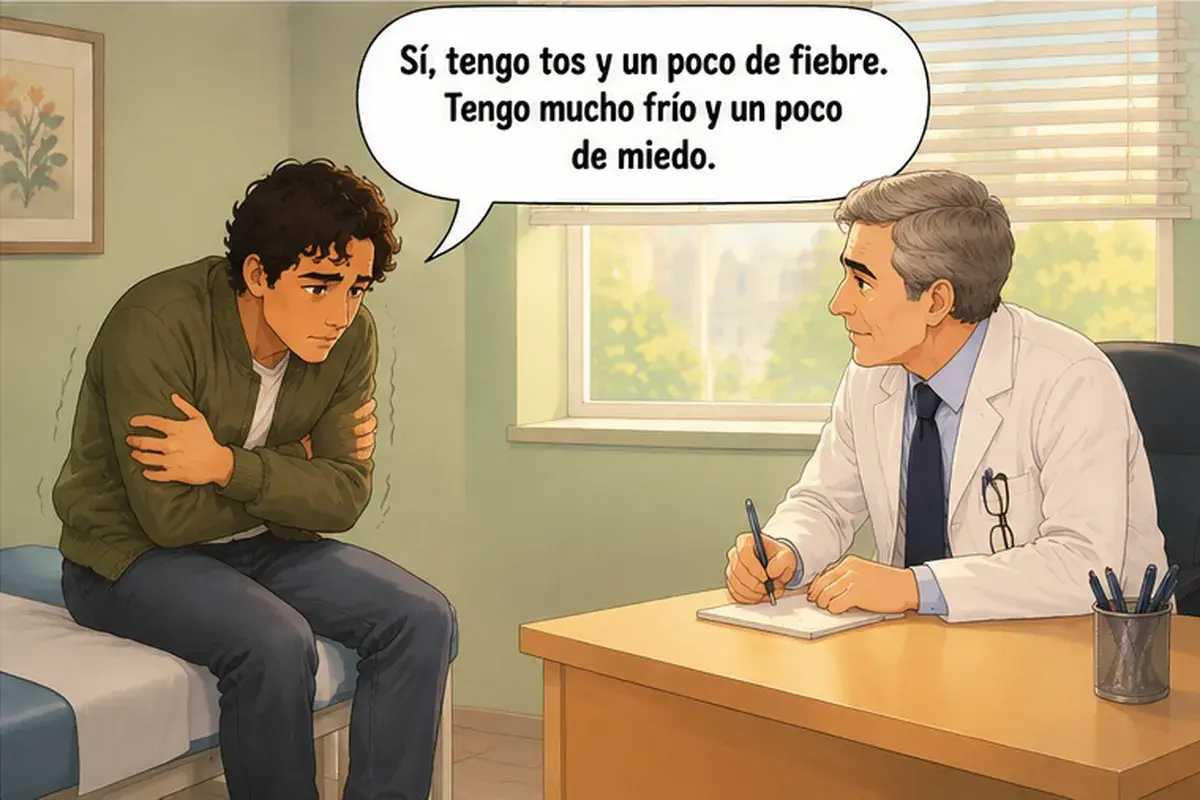
- Pablo
Sí, tengo tos y un poco de fiebre. Tengo mucho frío y un poco de miedo.
Yes, I have a cough and a bit of a fever. I'm very cold and a little scared.
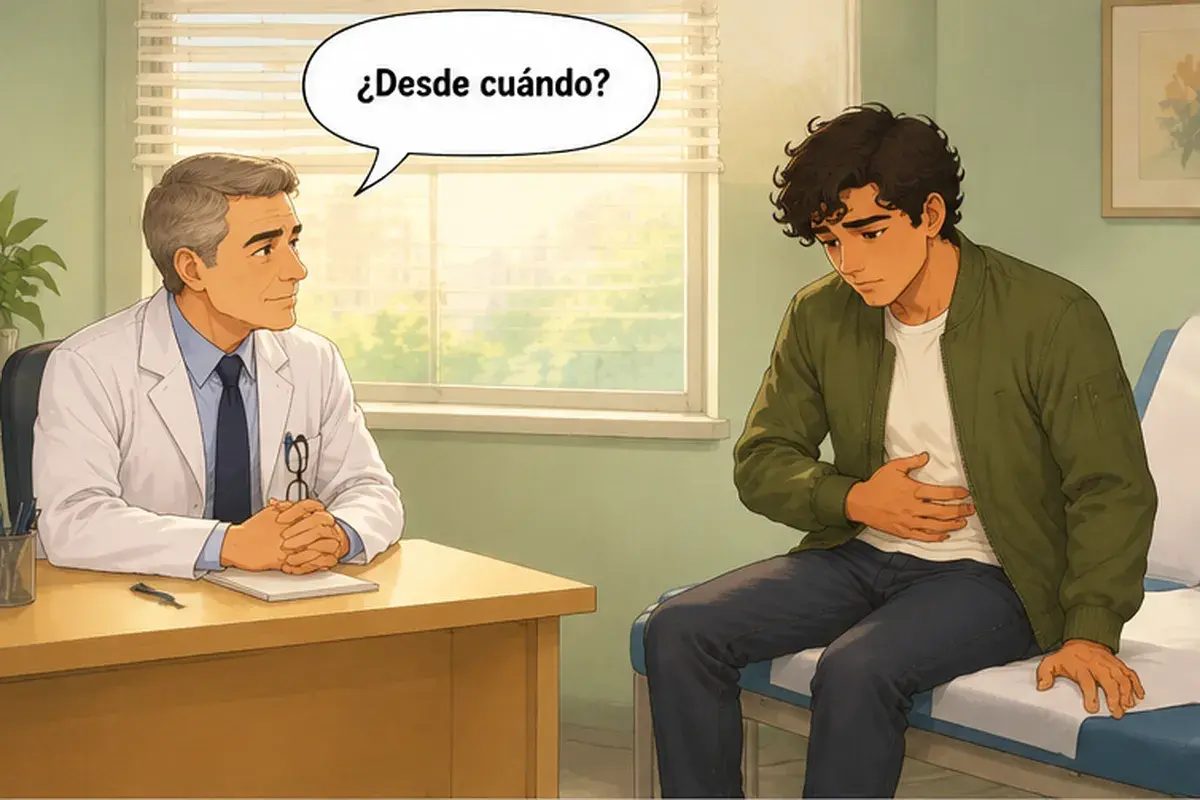
- Médico
¿Desde cuándo?
Since when?
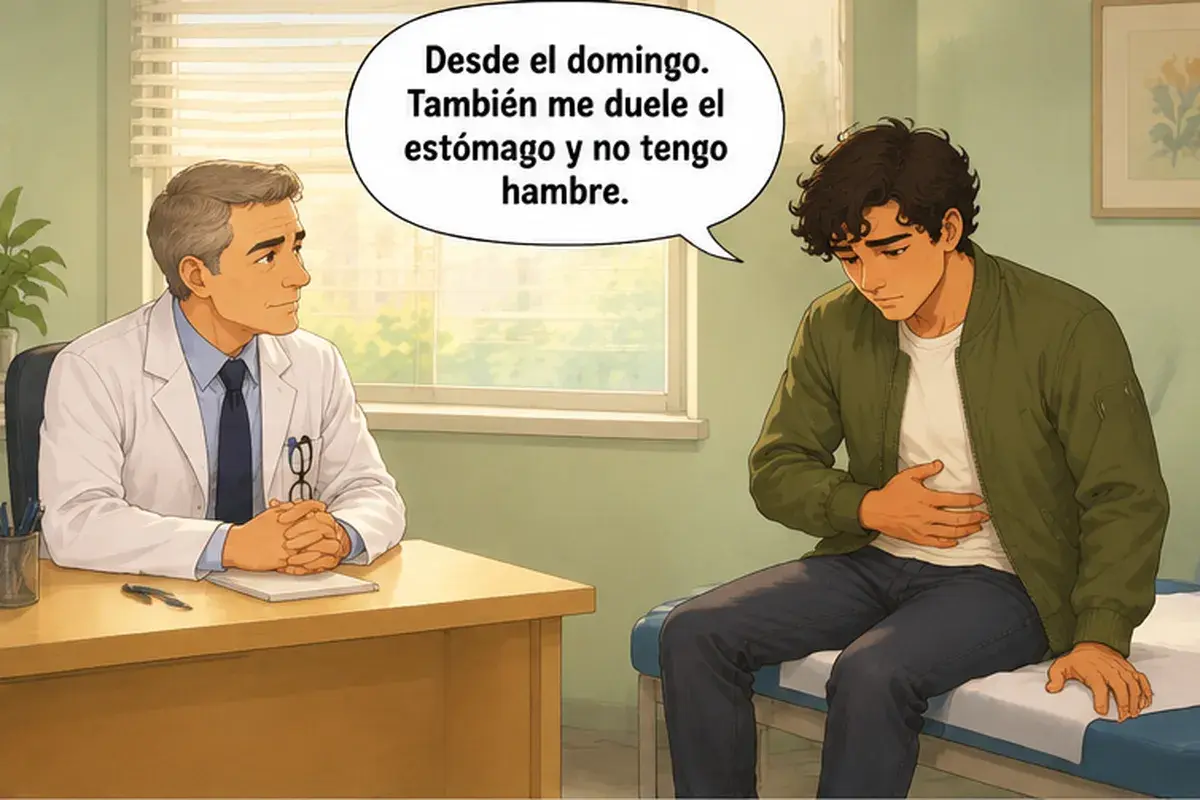
- Pablo
Desde el domingo. También me duele el estómago y no tengo hambre.
Since Sunday. My stomach hurts too, and I'm not hungry.
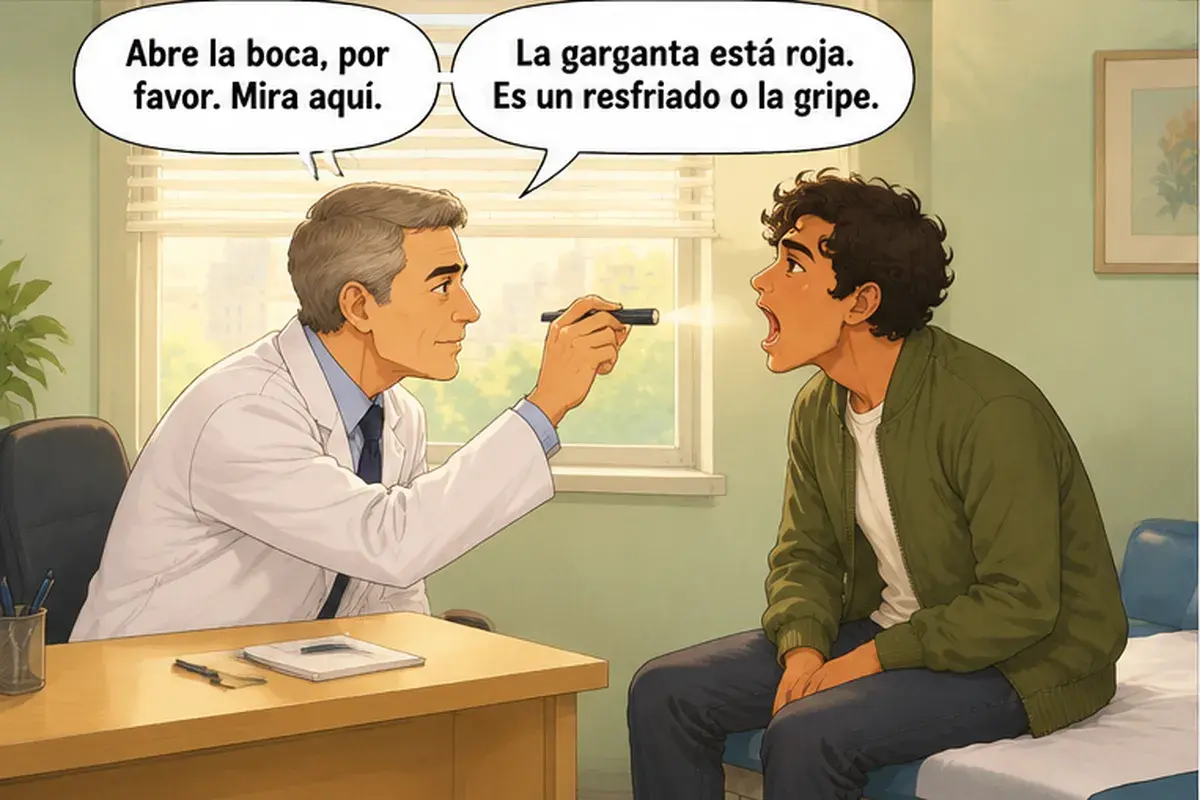
- Médico
Abre la boca, por favor. Mira aquí.
Open your mouth, please. Look here.
- Médico
La garganta está roja. Es un resfriado o la gripe.
Your throat is red. It's a cold or the flu.
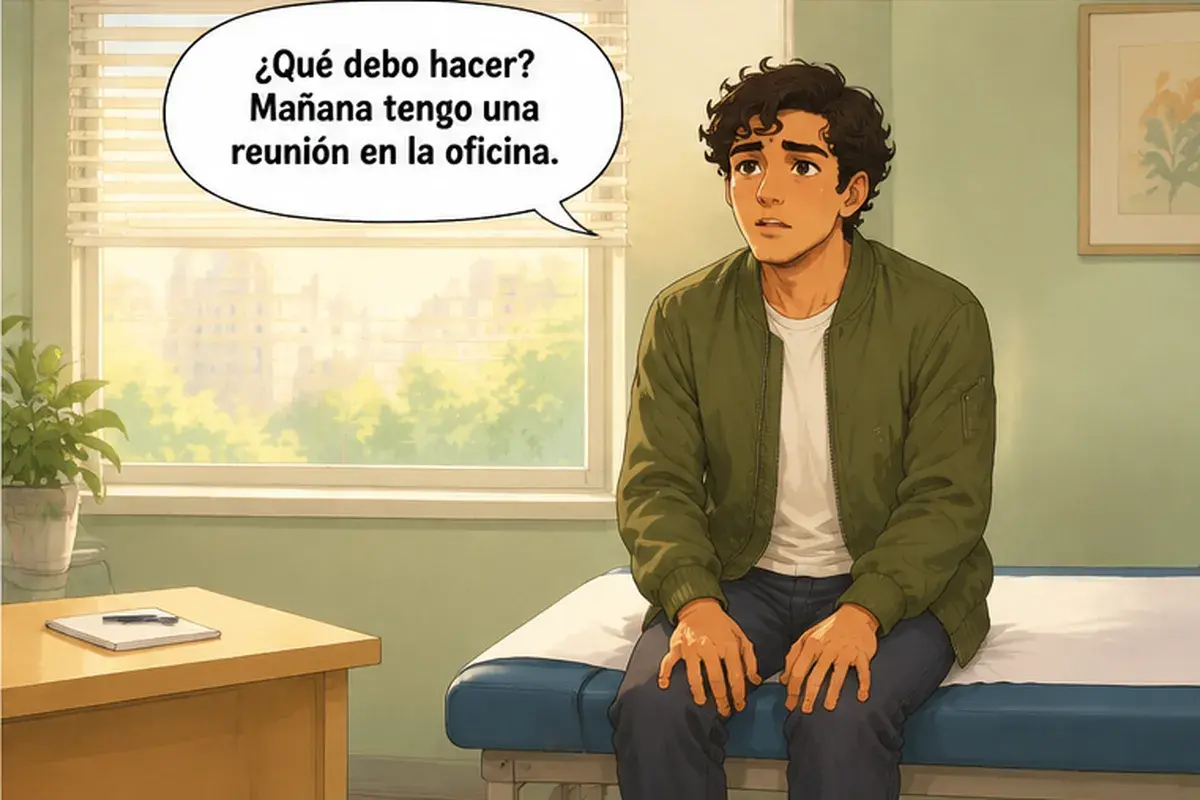
- Pablo
¿Qué debo hacer? Mañana tengo una reunión en la oficina.
What should I do? Tomorrow I have a meeting at the office.
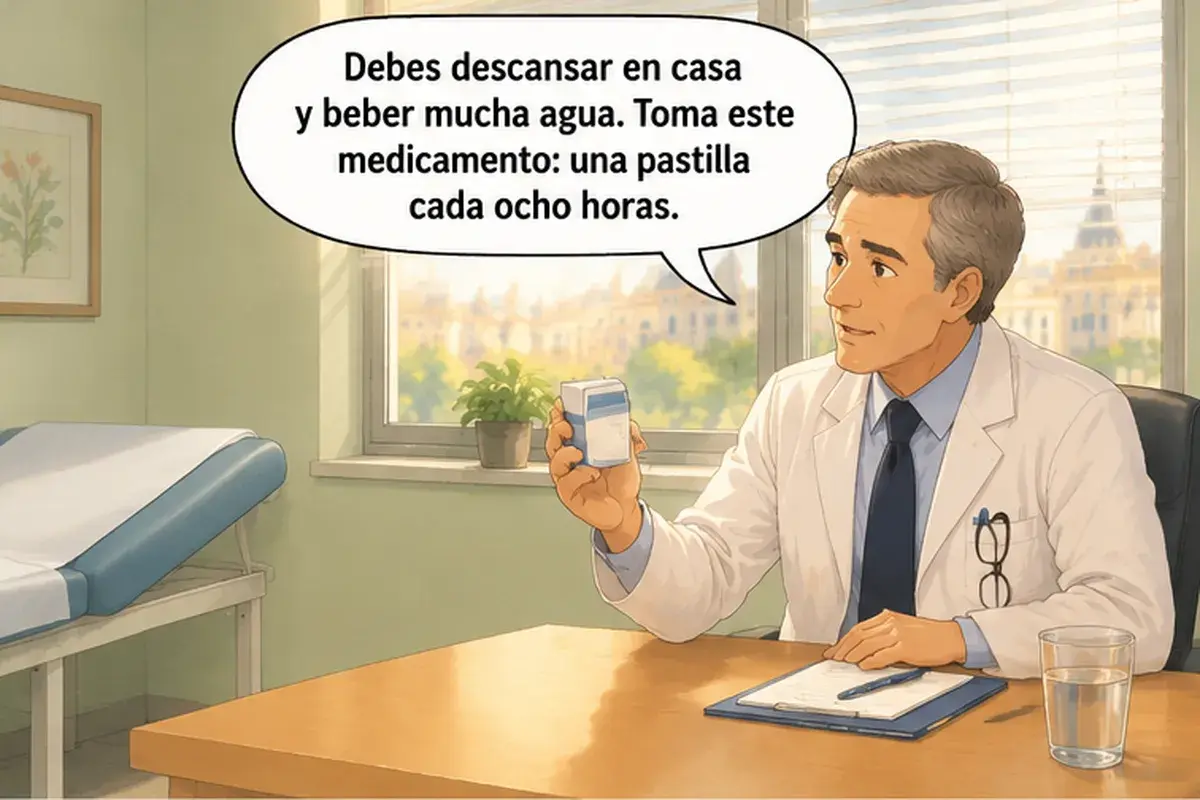
- Médico
Debes descansar en casa y beber mucha agua. Toma este medicamento: una pastilla cada ocho horas.
You should rest at home and drink lots of water. Take this medicine: one pill every eight hours.
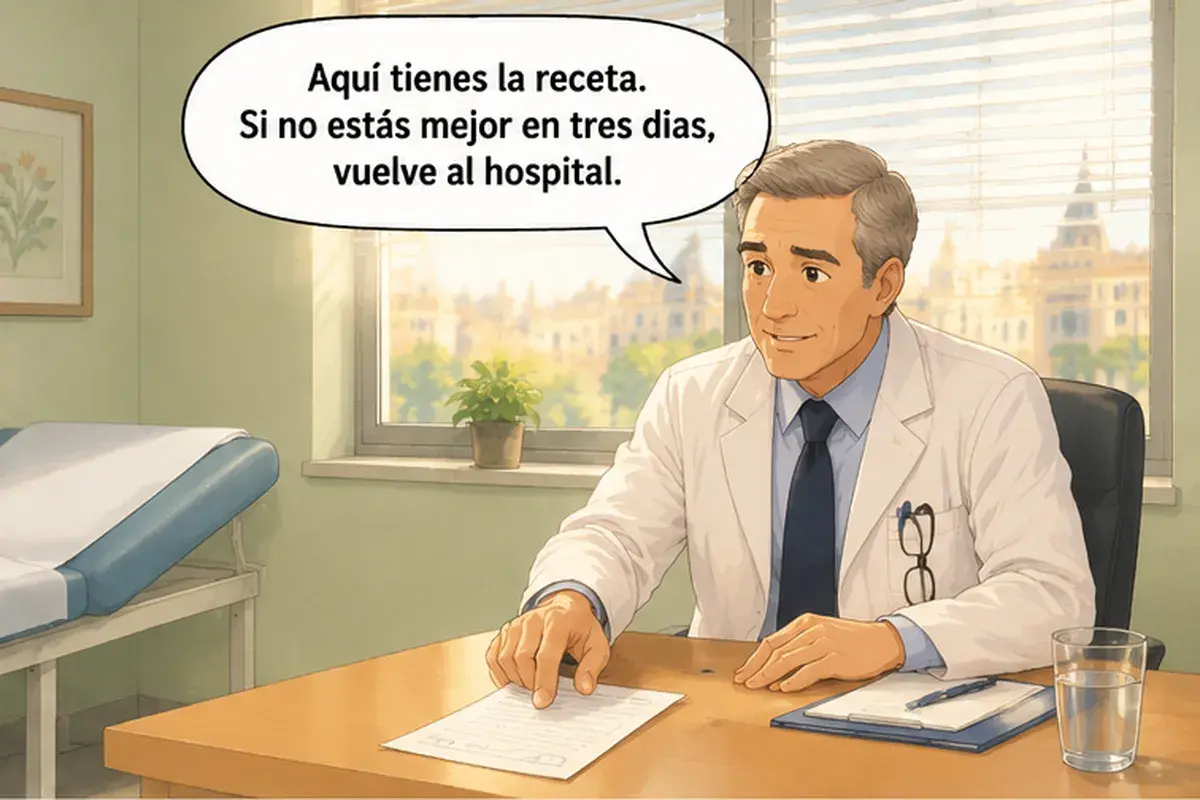
- Médico
Aquí tienes la receta. Si no estás mejor en tres días, vuelve al hospital.
Here's the prescription. If you're not better in three days, come back to the hospital.
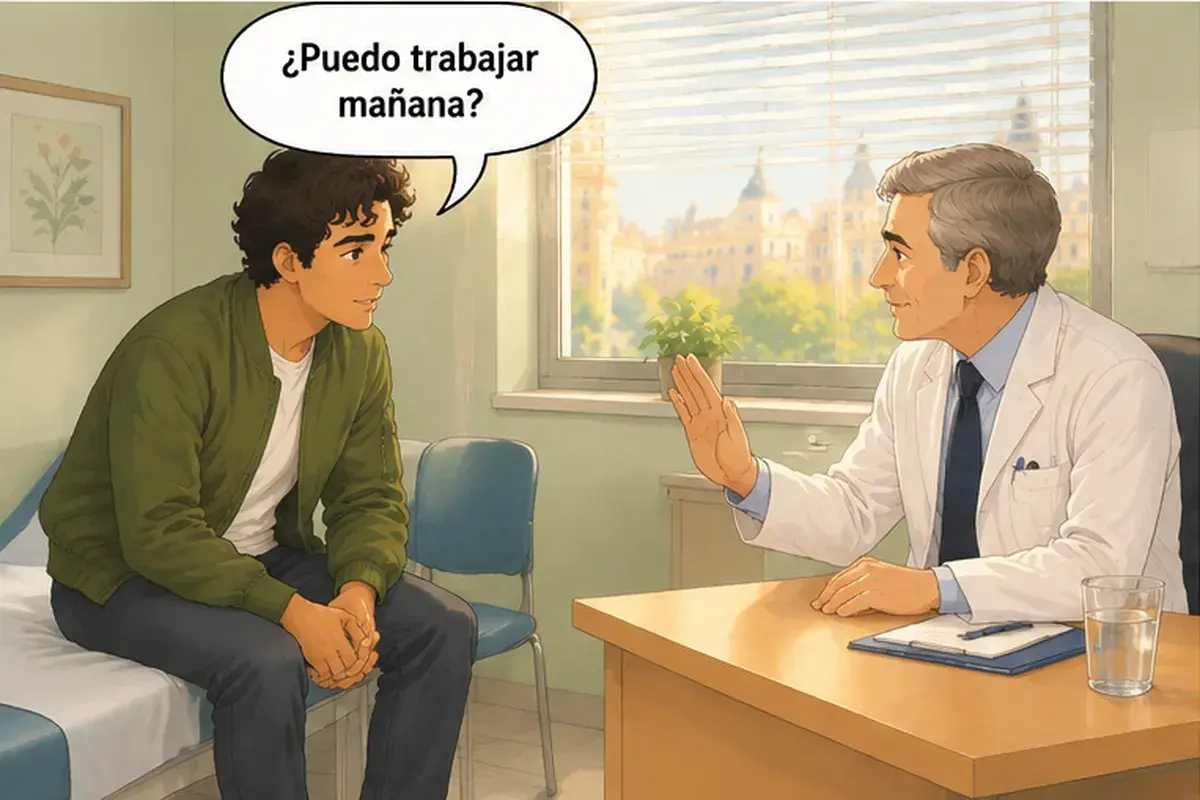
- Pablo
¿Puedo trabajar mañana?
Can I work tomorrow?
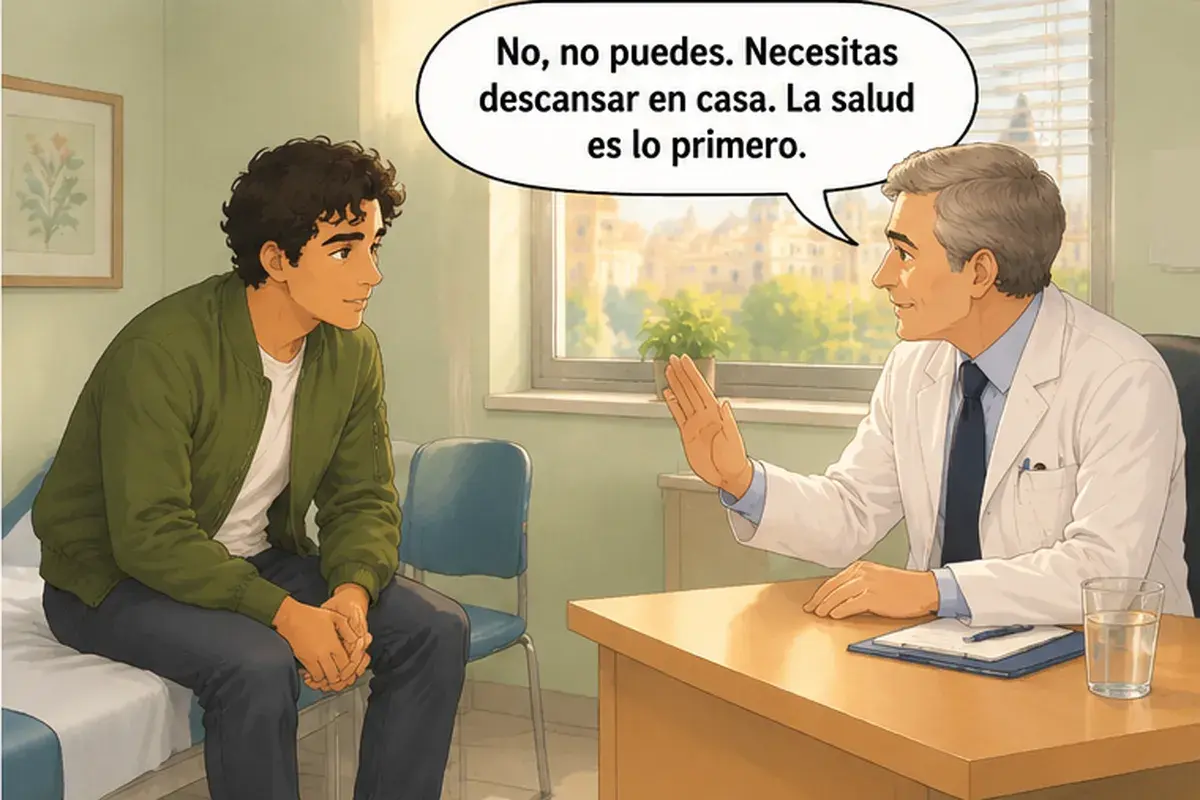
- Médico
No, no puedes. Necesitas descansar en casa. La salud es lo primero.
No, you can't. You need to rest at home. Health comes first.
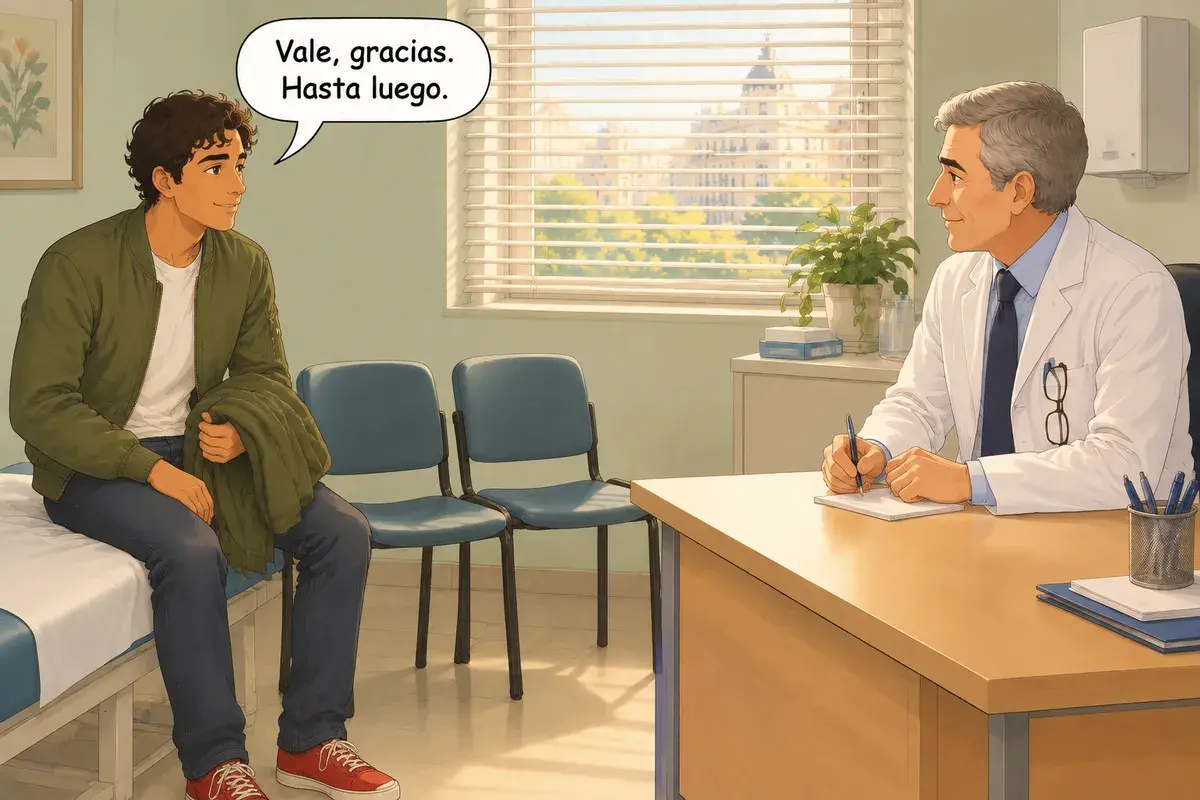
- Pablo
Vale, gracias. Hasta luego.
OK, thanks. See you later.
Grammar for this text
It hurts: me duele. me duele la garganta, me duele el estómago — word for word "the throat hurts me". doler works like gustar: me shows who feels the pain, and the thing that hurts comes after the verb. Use el or la before the body part, not "my". You can say the same with the noun dolor (pain): Tengo dolor de cabeza — "I have a headache", word for word "I have pain of head".
tengo for how you feel. tengo tos — I have a cough, no tengo hambre — I'm not hungry, Tengo mucho frío — I'm very cold. Here frío is a noun ("cold"), so "very" is mucho.
Estoy enfermo, está roja. How someone feels and how something looks right now take estar: Estoy enfermo — I'm sick, La garganta está roja — your throat is red. The diagnosis takes ser: Es un resfriado o la gripe.
The doctor uses tú. ¿Qué te pasa? — What's wrong?, word for word "What's happening to you?". Commands: Abre la boca, Mira aquí, Toma este medicamento, vuelve al hospital — open, look, take, come back. The tú command looks the same as the él / ella form of the present: abre — he opens, but also "open!".
Should, can, need. ¿Qué debo hacer?, Debes descansar, ¿Puedo trabajar mañana?, Necesitas descansar — after deber (should), poder (can) and necesitar (to need), the second verb is an infinitive.
en tres días. Si no estás mejor en tres días — if you're not better in three days: en + a period of time means "in", that is, after that time. ¿Desde cuándo? — Since when?
Words and grammar of the unit: Tell a doctor what hurts.
Learn the words from the texts with flashcards
In the app, you can tap any word in a text to see its translation, forms and examples, and new words stick with flashcards. 15 minutes a day.
Start for freeEverything is open for free. No card needed to sign up.