

Spanish dialogue with translation · A1 · 13 lines
¿Usted no es la profesora de inglés? Aren't you the English teacher? (to a woman, formal)
Comic · 12 panels
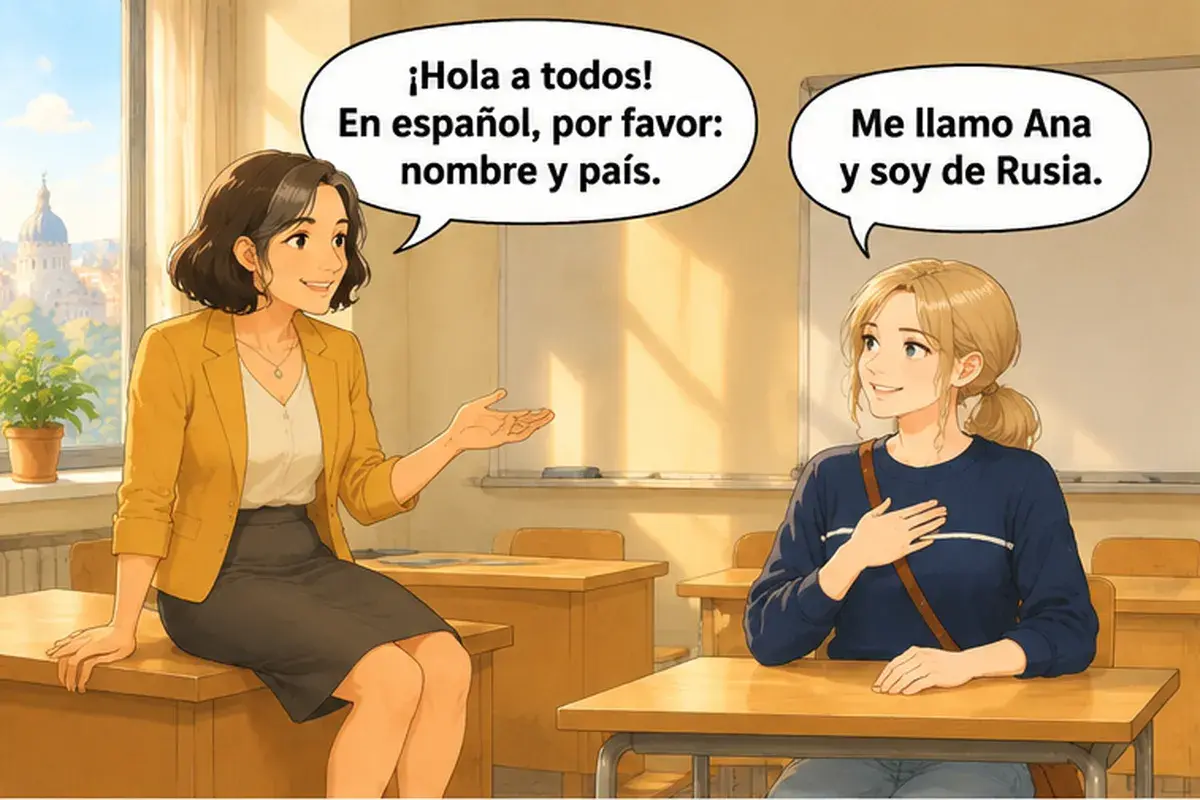
- Marta
¡Hola a todos! En español, por favor: nombre y país.
Hi, everyone! In Spanish, please: name and country.
- Ana
Me llamo Ana y vivo en Madrid.
My name is Ana and I live in Madrid.
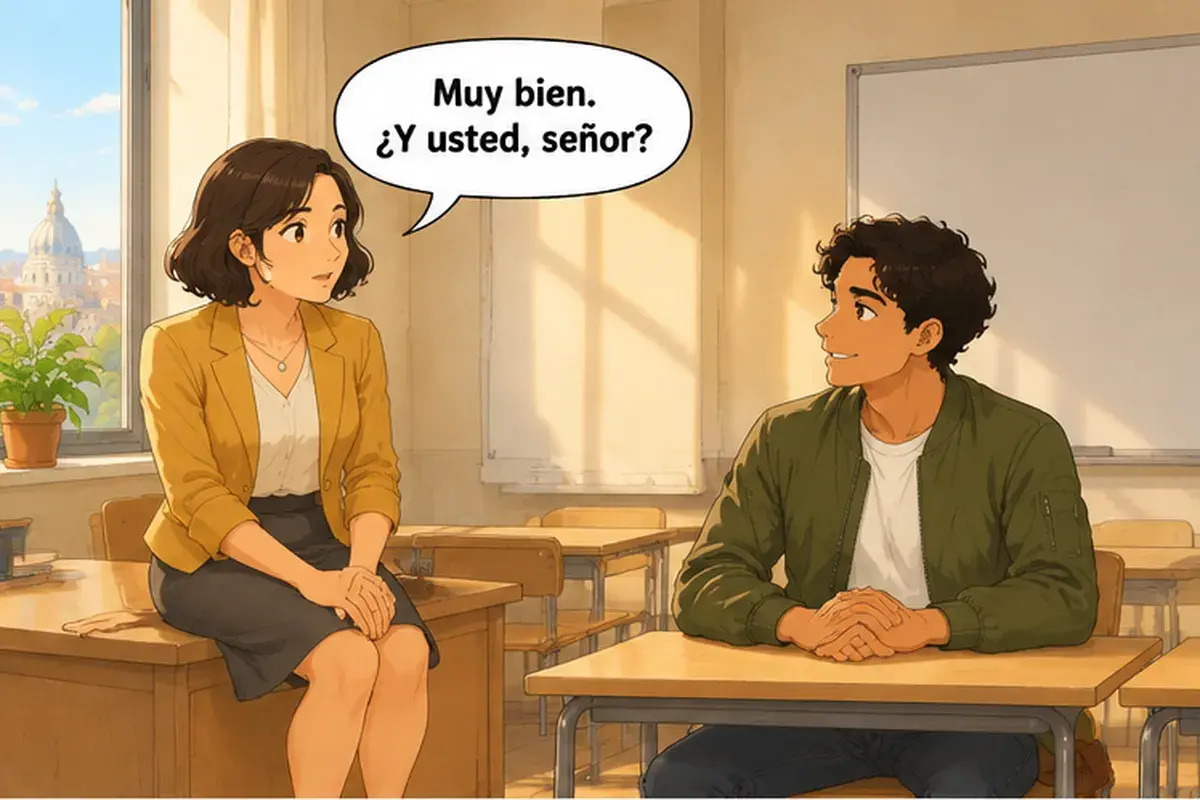
- Marta
Muy bien. ¿Y usted, señor?
Very good. And you, sir? (formal)
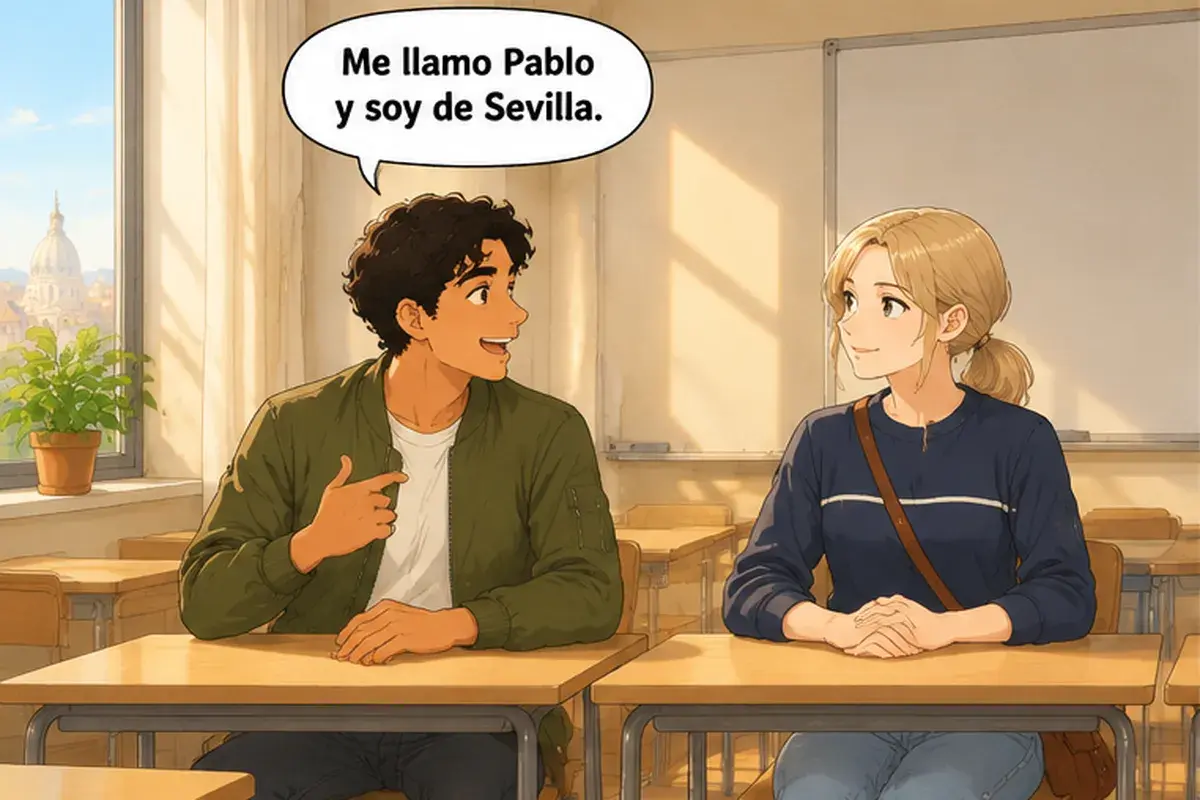
- Pablo
Me llamo Pablo y soy de Sevilla.
My name is Pablo and I'm from Seville.
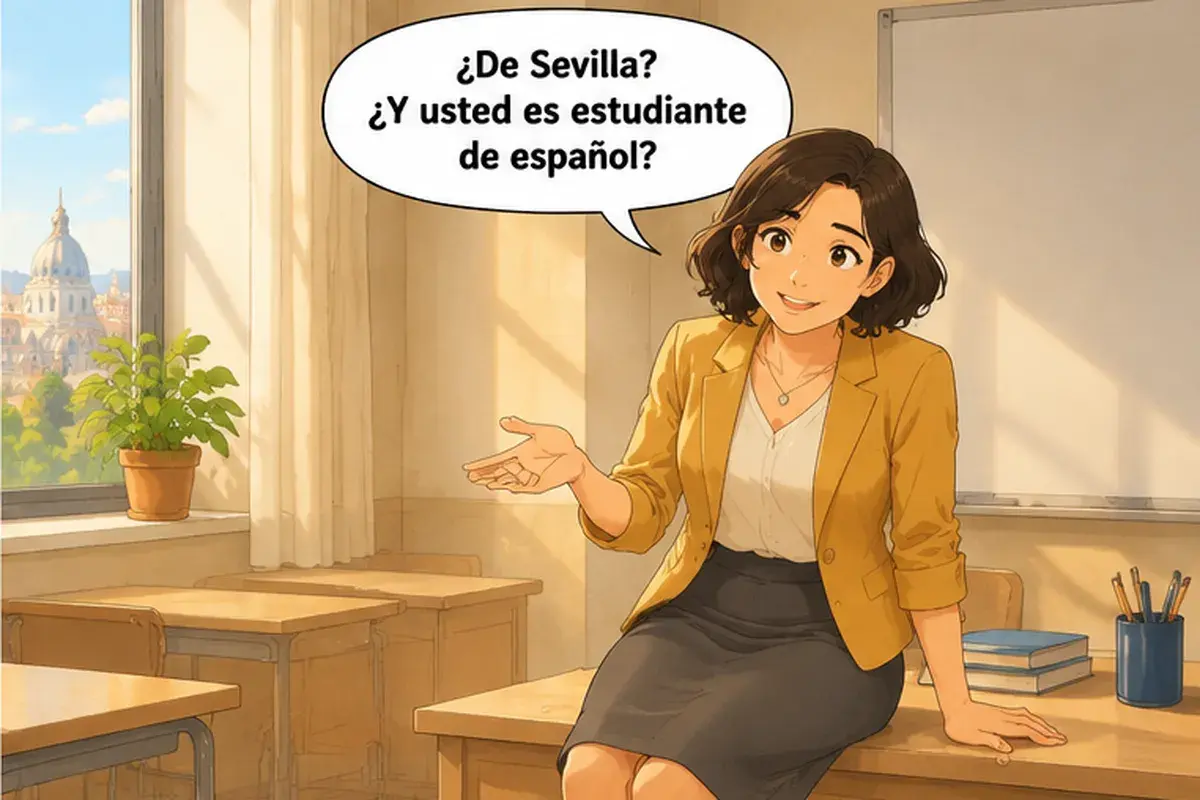
- Marta
¿De Sevilla? ¿Y usted es estudiante de español?
From Seville? And you're a student of Spanish? (formal)
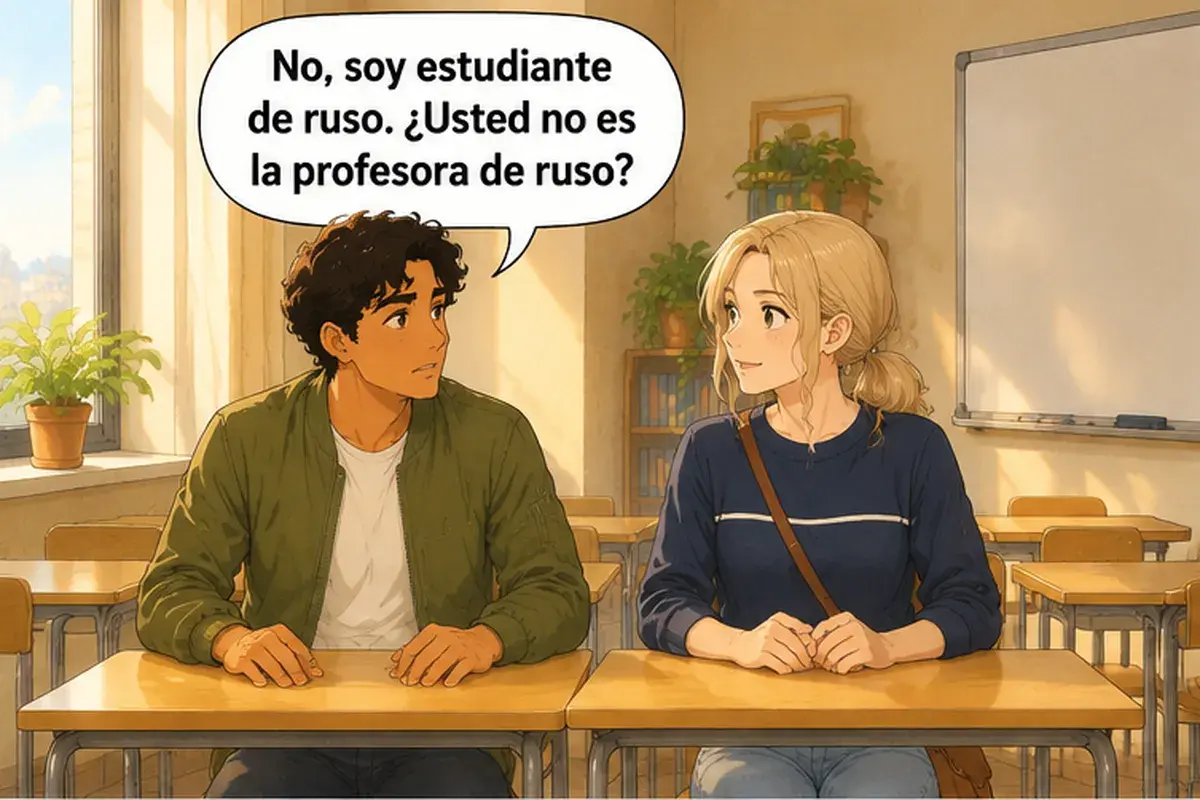
- Pablo
No, soy estudiante de inglés. ¿Usted no es la profesora de inglés?
No, I'm a student of English. Aren't you the English teacher? (to a woman, formal)
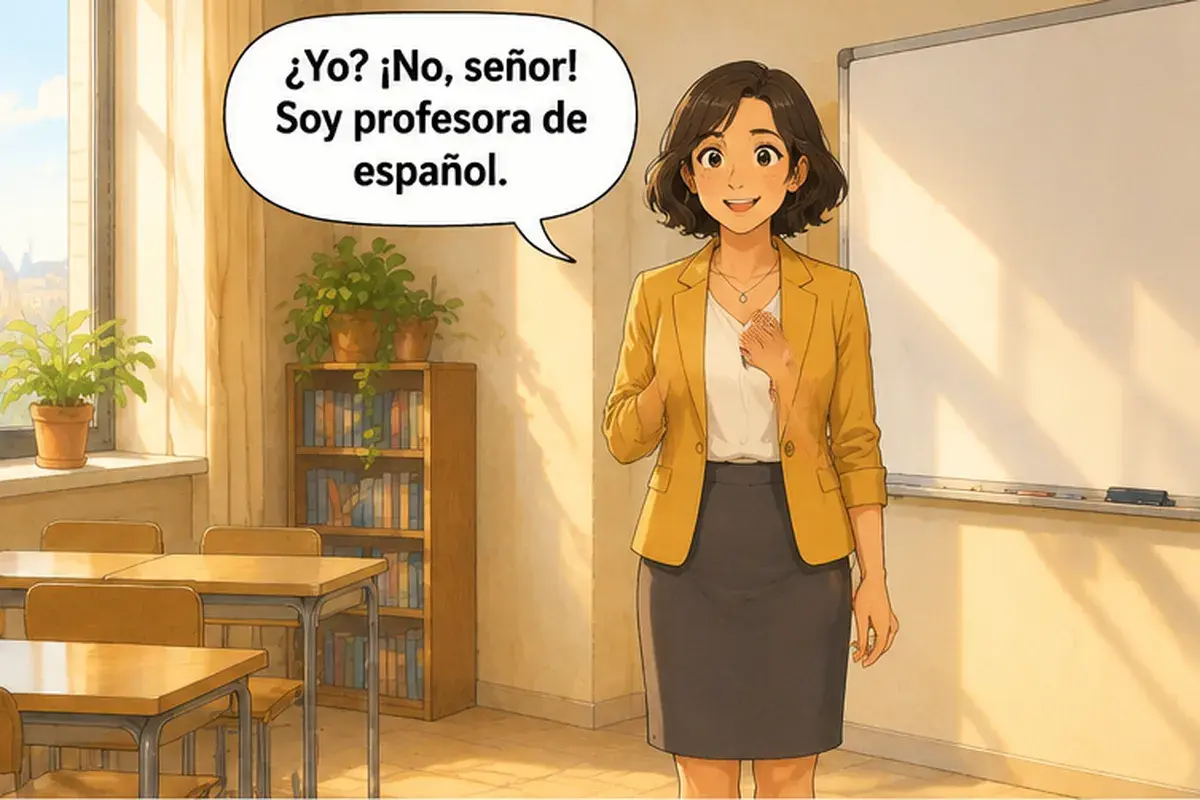
- Marta
¿Yo? ¡No, señor! Soy profesora de español.
Me? No, sir! I'm a Spanish teacher (woman speaking).
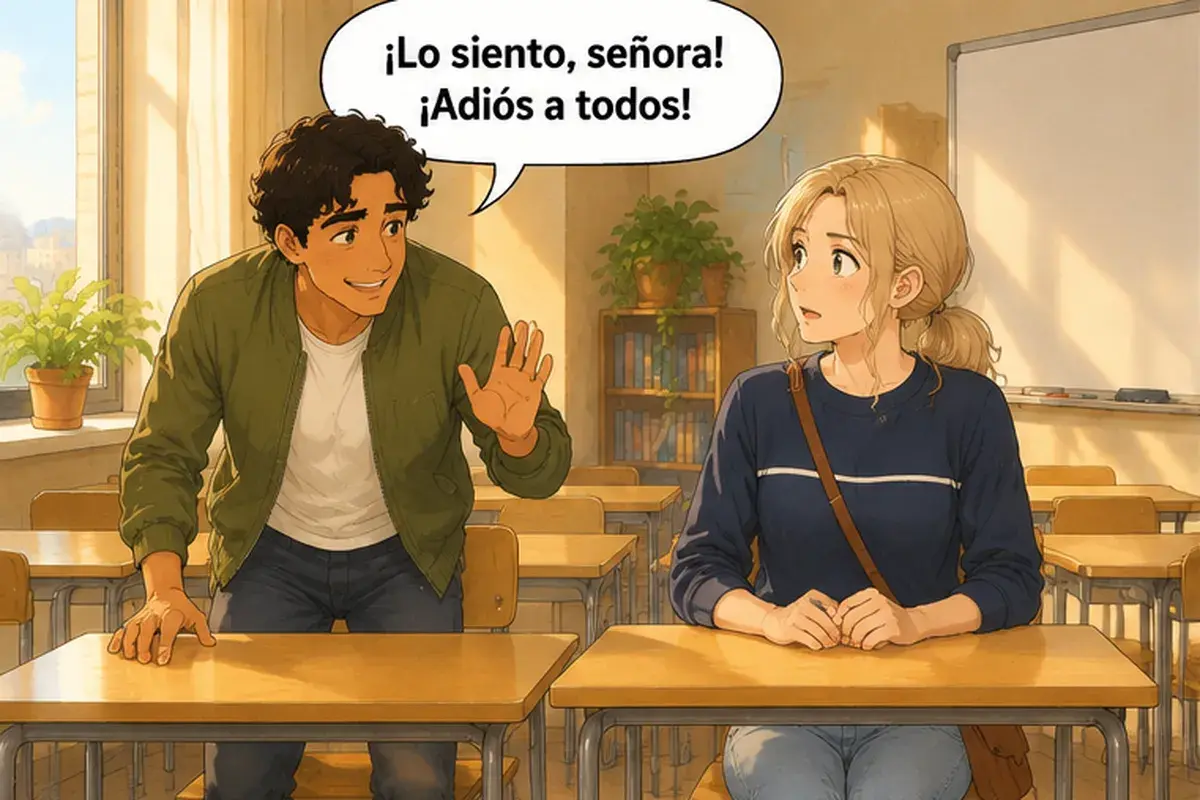
- Pablo
¡Lo siento, señora! ¡Adiós a todos!
I'm sorry, ma'am! Goodbye, everyone!
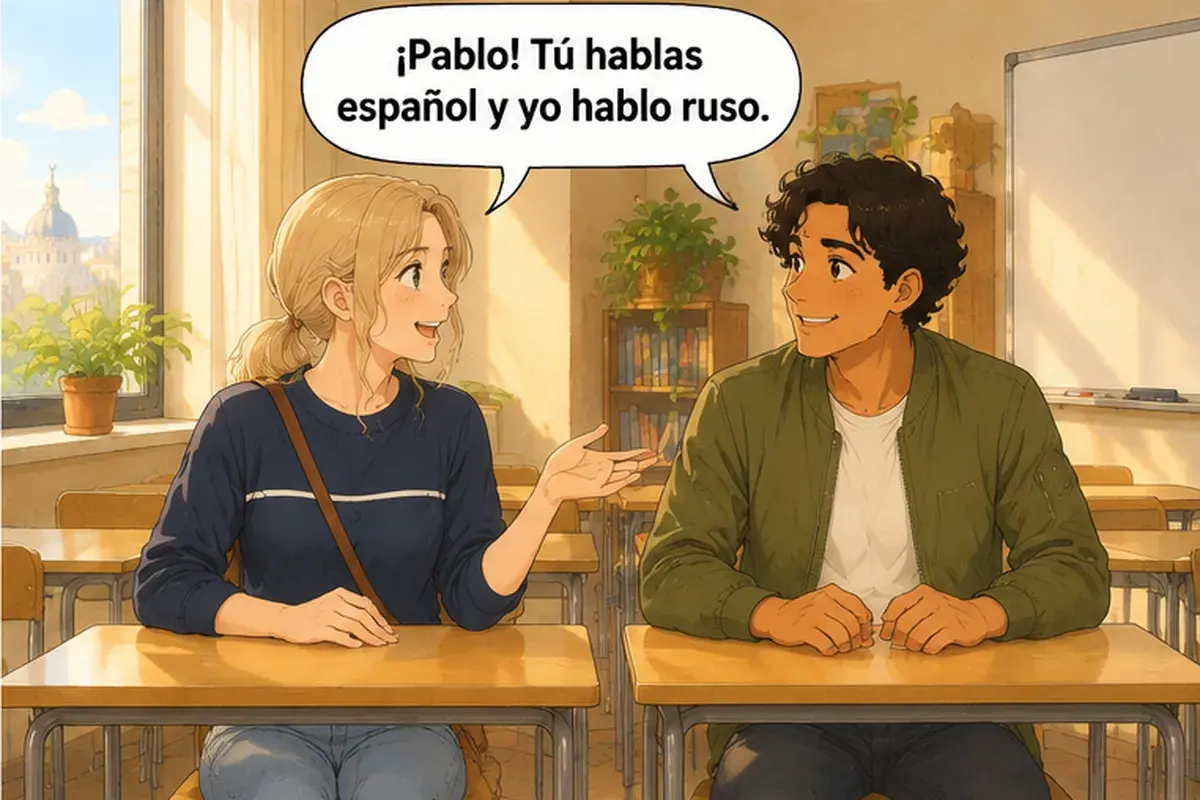
- Ana
¡Pablo! Tú hablas español y yo hablo inglés.
Pablo! You speak Spanish and I speak English.
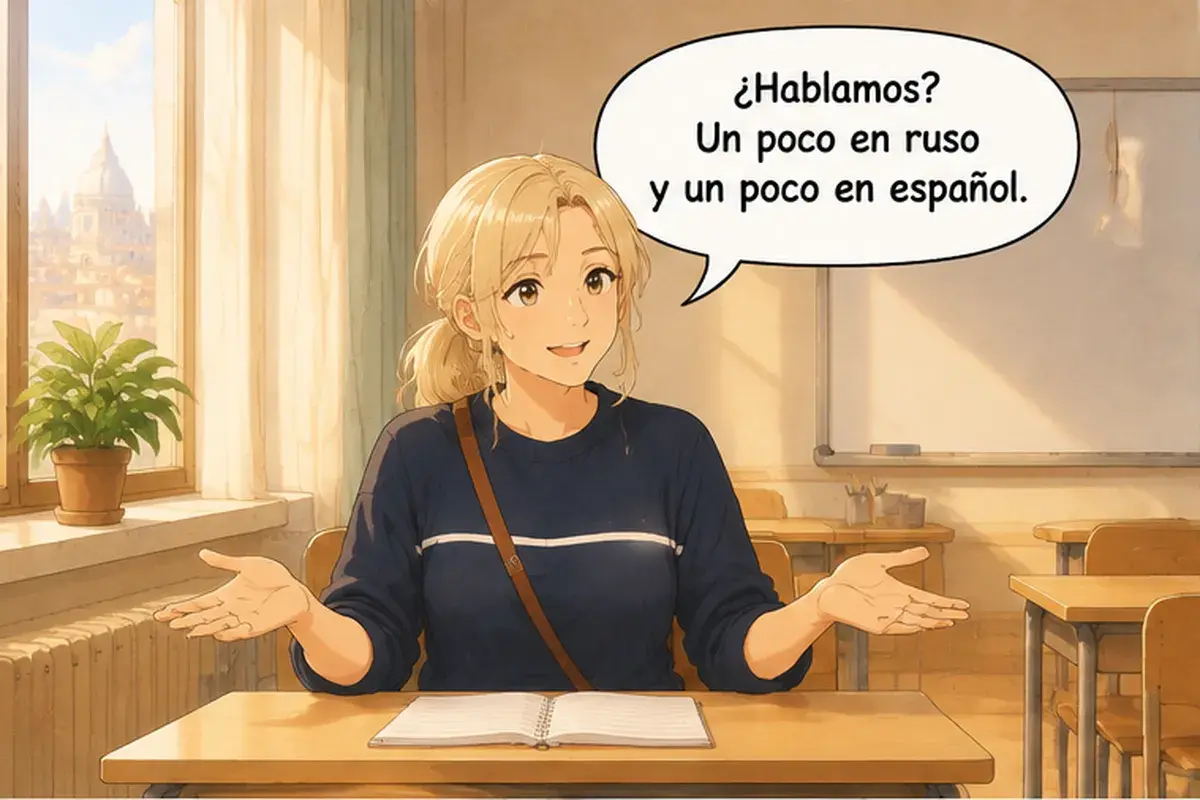
- Ana
¿Hablamos? Un poco en inglés y un poco en español.
Shall we talk? A little in English and a little in Spanish.
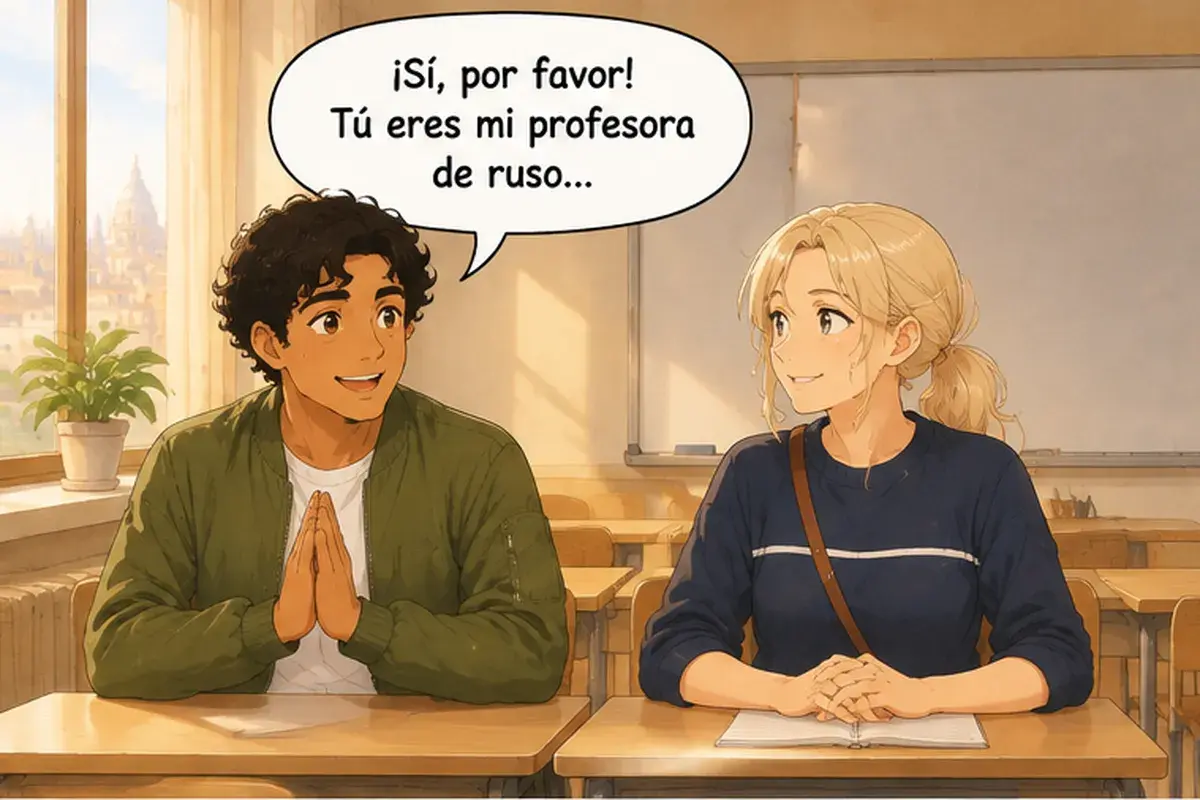
- Pablo
¡Sí, por favor! Tú eres mi profesora de inglés…
Yes, please! You're my English teacher… (to a woman)
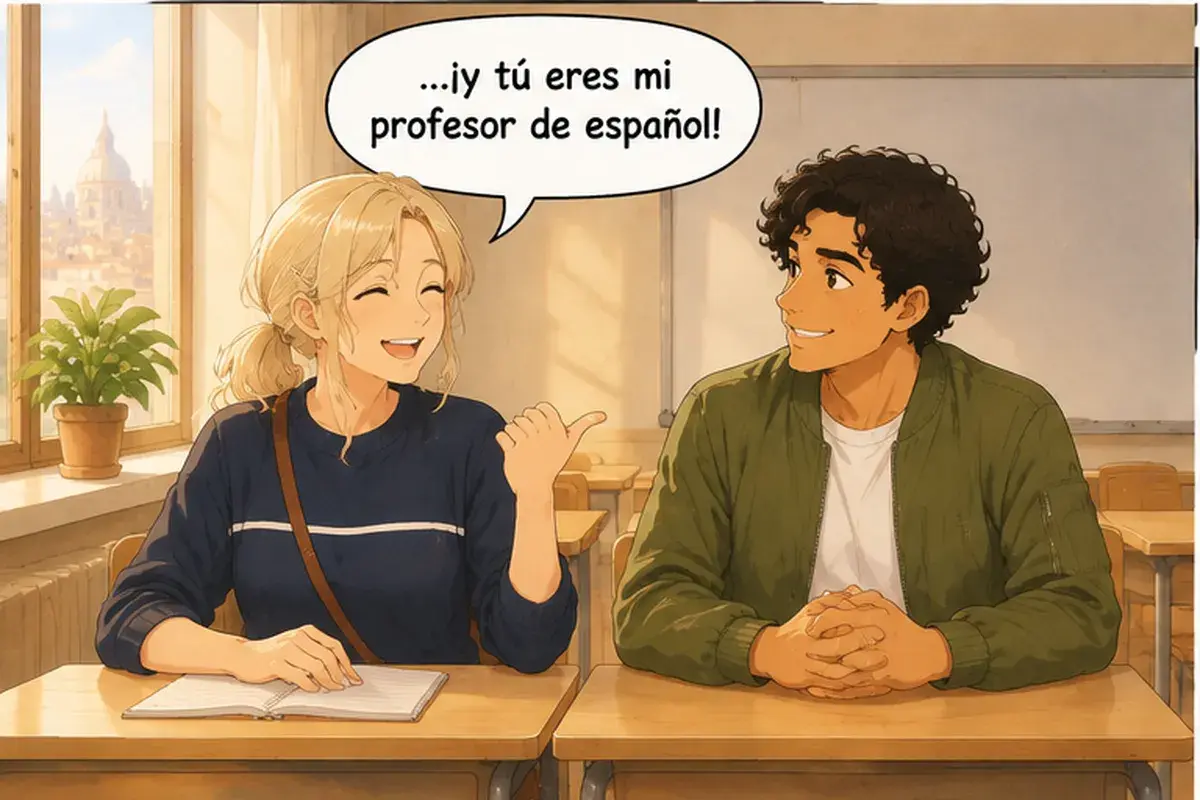
- Ana
…¡y tú eres mi profesor de español!
…and you're my Spanish teacher! (to a man)
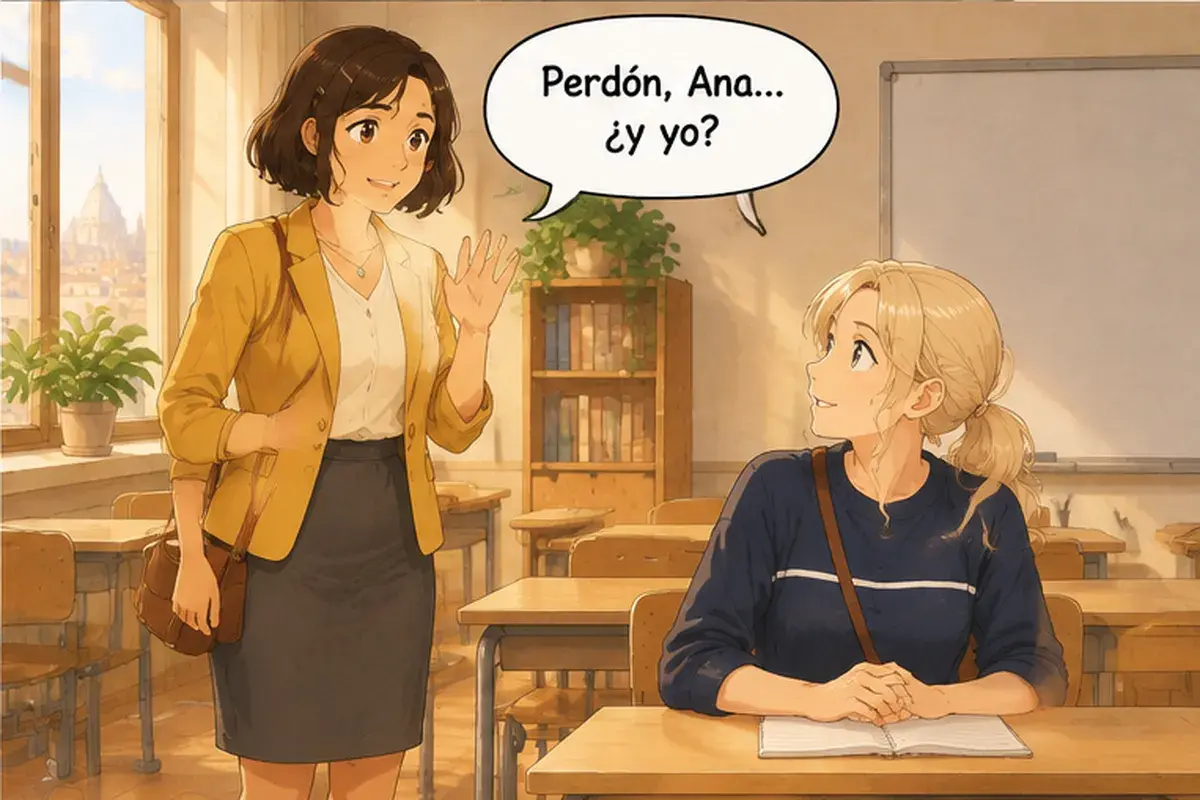
- Marta
Perdón, Ana… ¿y yo?
Excuse me, Ana… what about me?
Grammar for this text
¿Usted no es la profesora de inglés?: "Aren't you…?"
¿Usted no es la profesora de inglés?:nobefore the verb makes a surprised question: "Aren't you the English teacher?".lais needed here: Pablo is looking for one particular person, the one who teaches English.Soy profesora de español: no article here. When you say what you do or what you study, Spanish uses no article, while English needs "a": "I'm a Spanish teacher". The same goes forsoy estudiante de inglés.
Estudiante de inglés, profesora de español
dehere tells you the subject:estudiante de inglésis "a student of English",profesora de españolis "a Spanish teacher".profesorais for a woman,profesorfor a man:…¡y tú eres mi profesor de español!.estudiantehas one form for both.
Usted es, tú eres
- Marta and Pablo use
ustedwith each other:¿Y usted, señor?. Withustedthe verb is the same as for "he" or "she":¿Y usted es estudiante de español?hases. Ana and Pablo usetú:Tú eres mi profesora de inglés…haseres.
¿Hablamos?: "Shall we talk?"
¿Hablamos? Un poco en inglés y un poco en español.hablamosmeans "we speak". A question in the present tense is a way to suggest doing something together: "Shall we talk?".Tú hablas españolmeans "you speak Spanish" (you know the language).en inglés,en españoltell you which language people are talking in: "in English", "in Spanish".
Words and grammar of the unit: Say hello and introduce yourself.
Learn the words from the texts with flashcards
In the app, you can tap any word in a text to see its translation, forms and examples, and new words stick with flashcards. 15 minutes a day.
Start for freeEverything is open for free. No card needed to sign up.