

Spanish dialogue with translation · A1 · 14 lines
¿Cuál es el número de teléfono? What's the phone number?
Comic · 9 panels
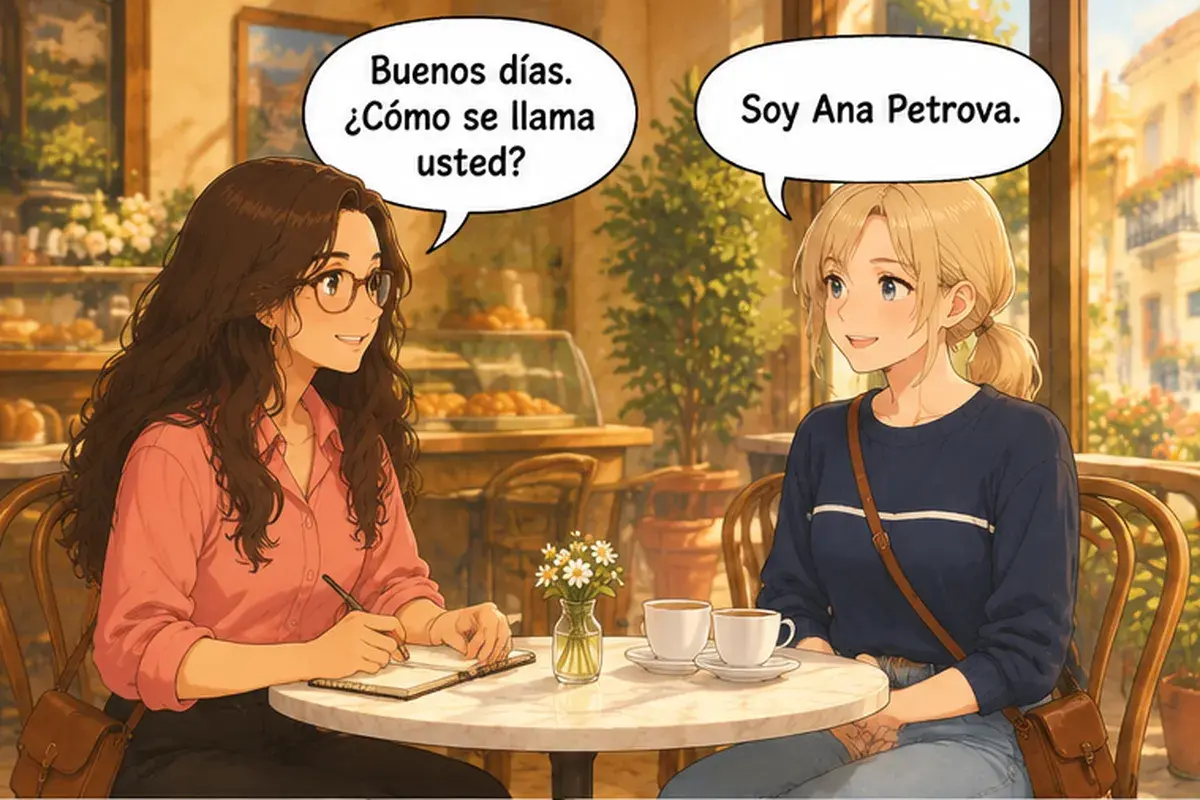
- Lucía
Buenos días. ¿Cómo se llama usted?
Good morning. What's your name? (formal)
- Ana
Soy Ana Lind.
I'm Ana Lind.
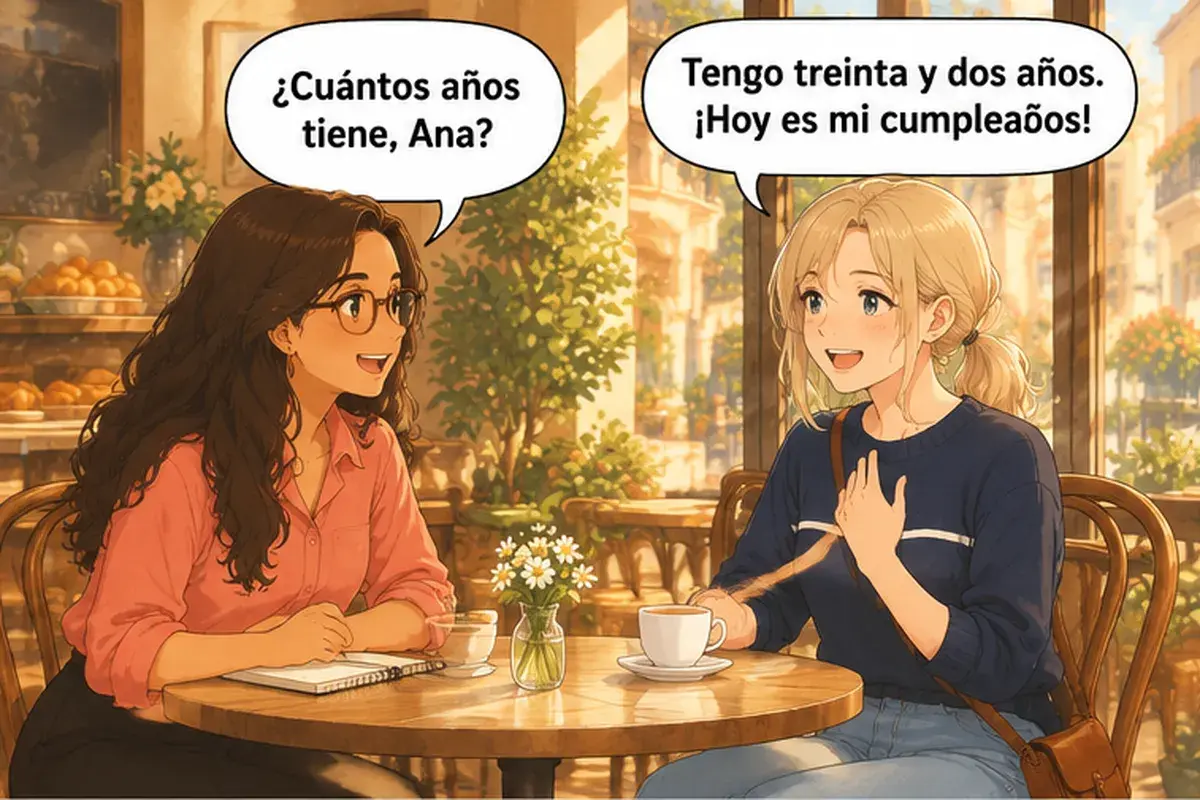
- Lucía
¿Cuántos años tiene, Ana?
How old are you, Ana? (formal)
- Ana
Tengo treinta y dos años. ¡Hoy es mi cumpleaños!
I'm thirty-two. Today is my birthday!
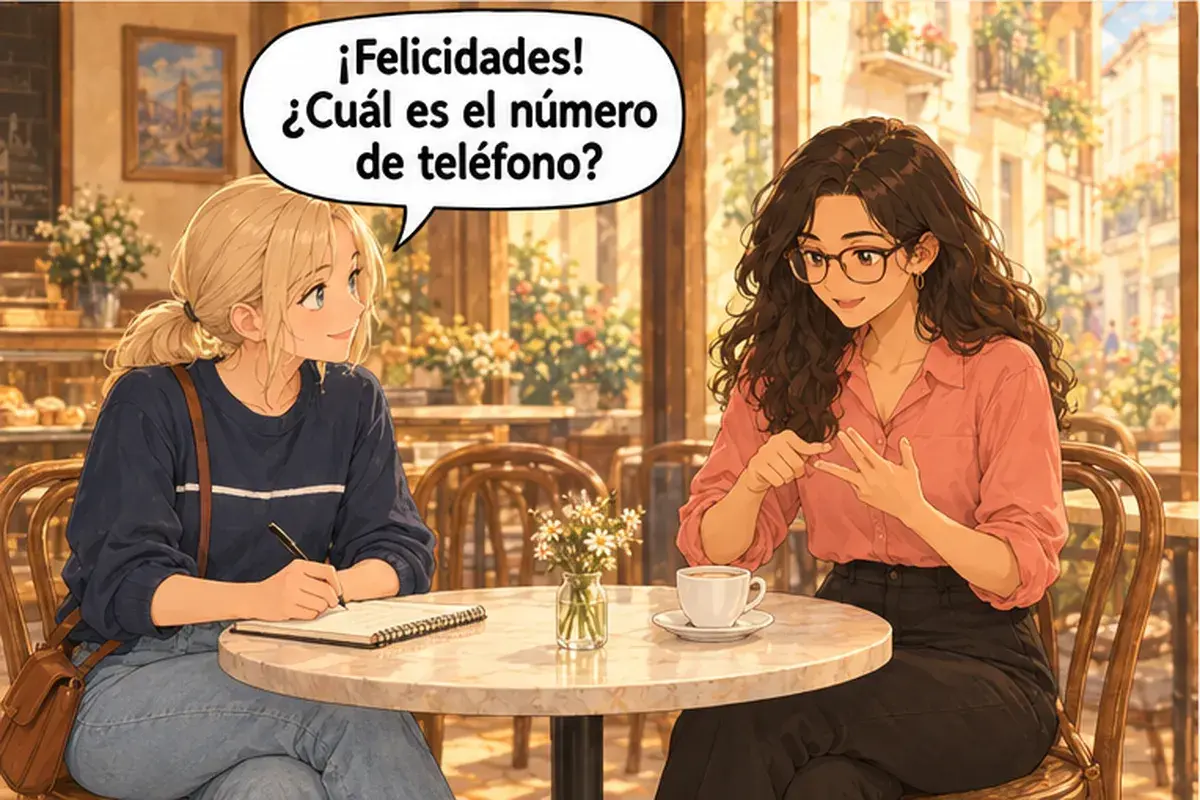
- Lucía
¡Felicidades! ¿Cuál es el número de teléfono?
Congratulations! What's the phone number?
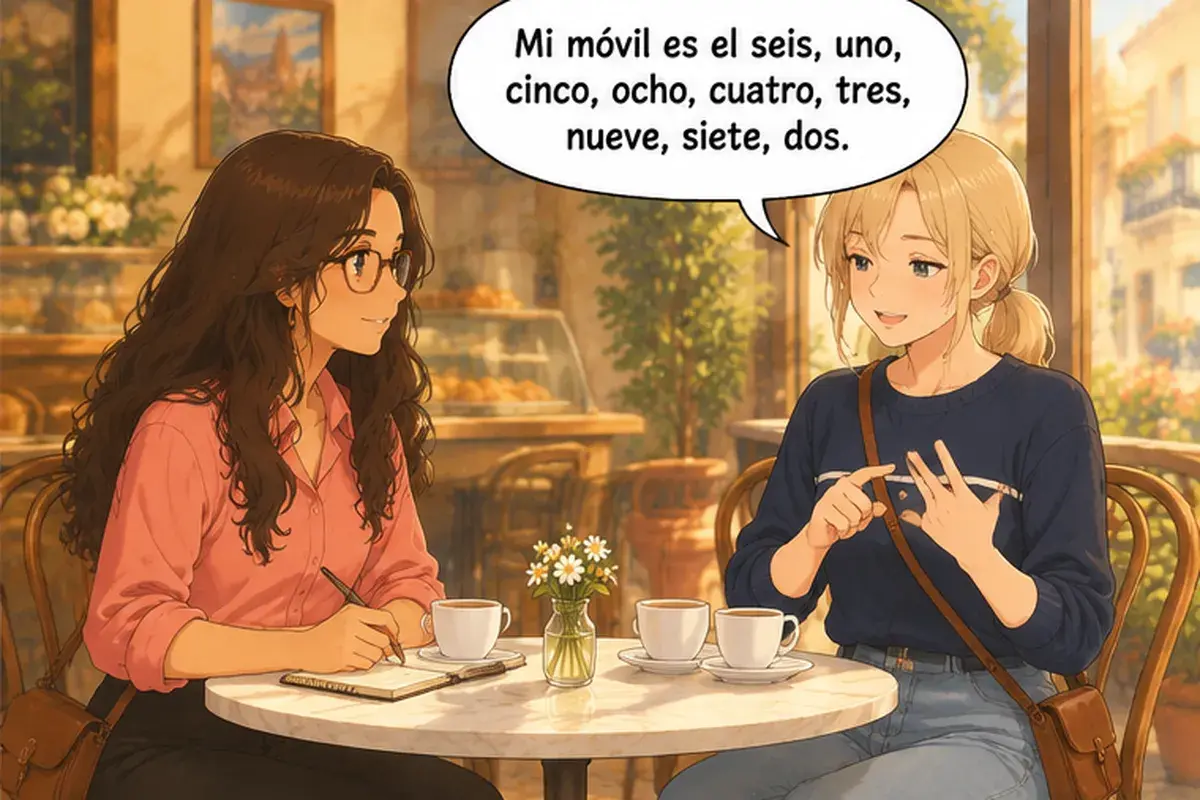
- Ana
Mi móvil es el seis, uno, cinco, ocho, cuatro, tres, nueve, siete, dos.
My cell is six, one, five, eight, four, three, nine, seven, two.
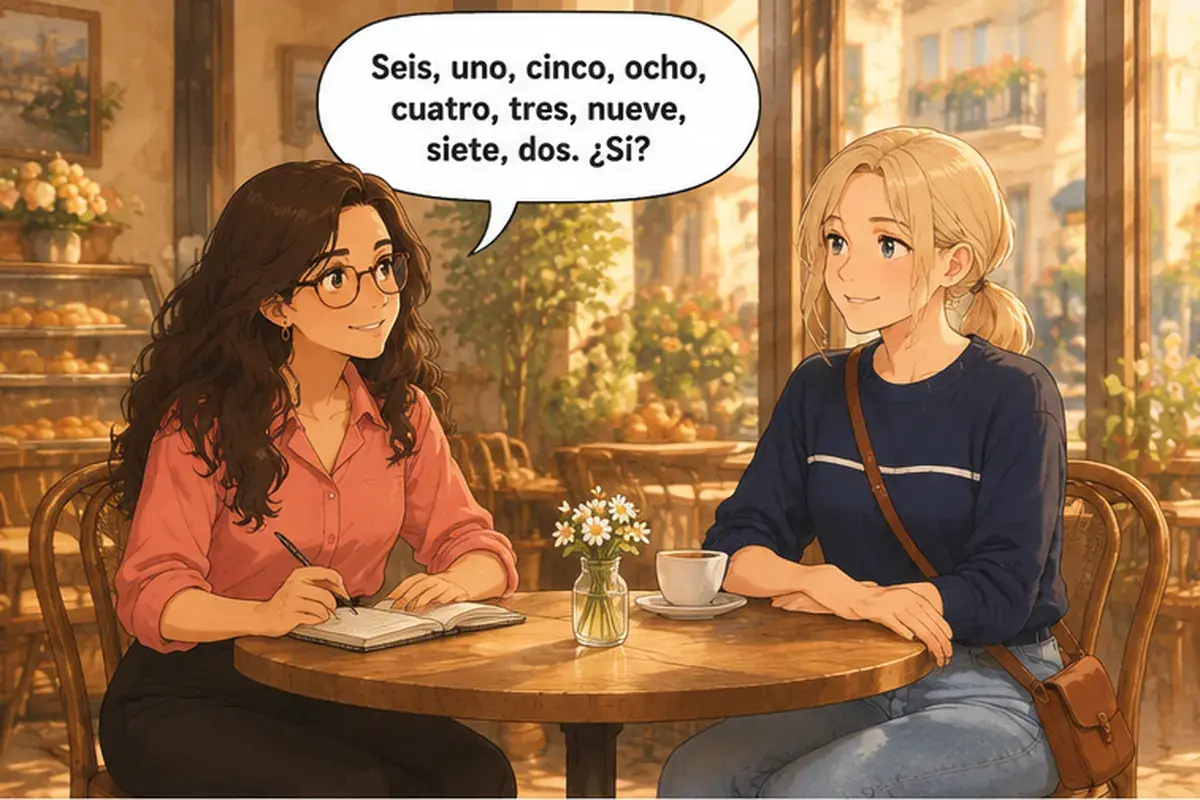
- Lucía
Seis, uno, cinco, ocho, cuatro, tres, nueve, siete, dos. ¿Sí?
Six, one, five, eight, four, three, nine, seven, two. Right?
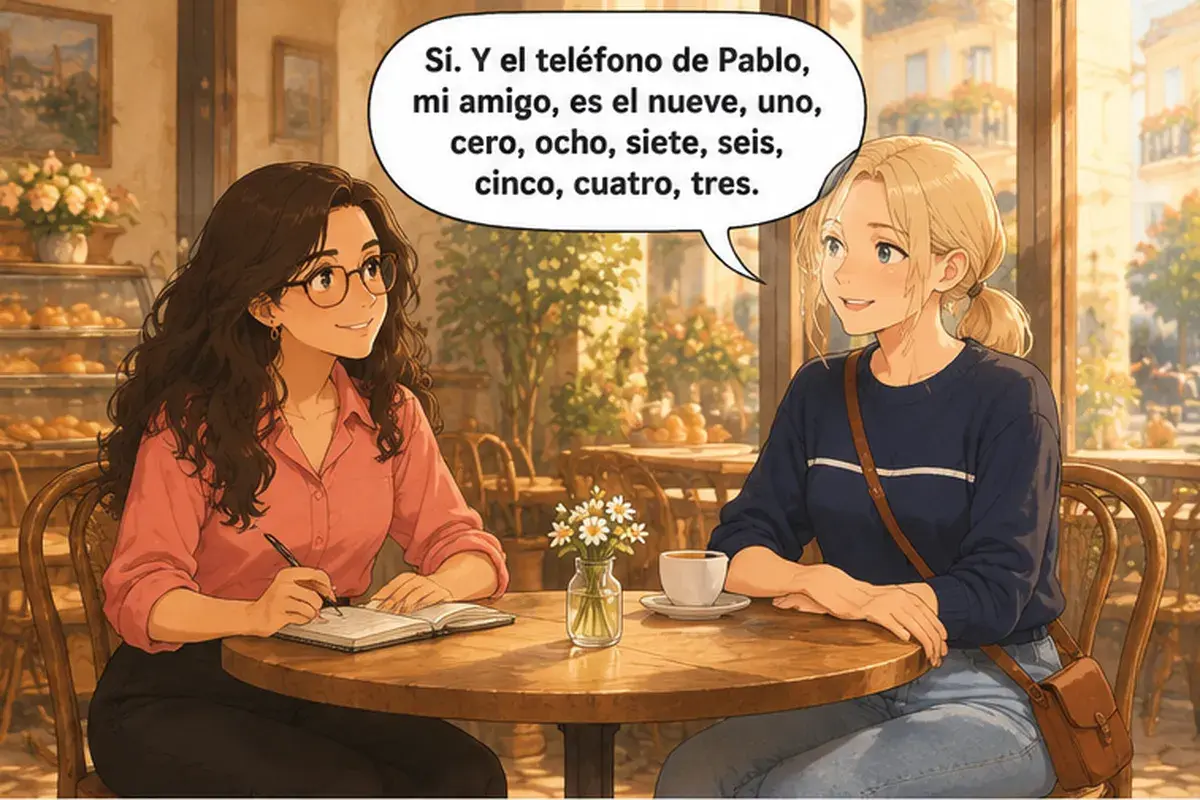
- Ana
Sí. Y el teléfono de Pablo, mi amigo, es el nueve, uno, cero, ocho, siete, seis, cinco, cuatro, tres.
Yes. And my friend Pablo's phone number is nine, one, zero, eight, seven, six, five, four, three.
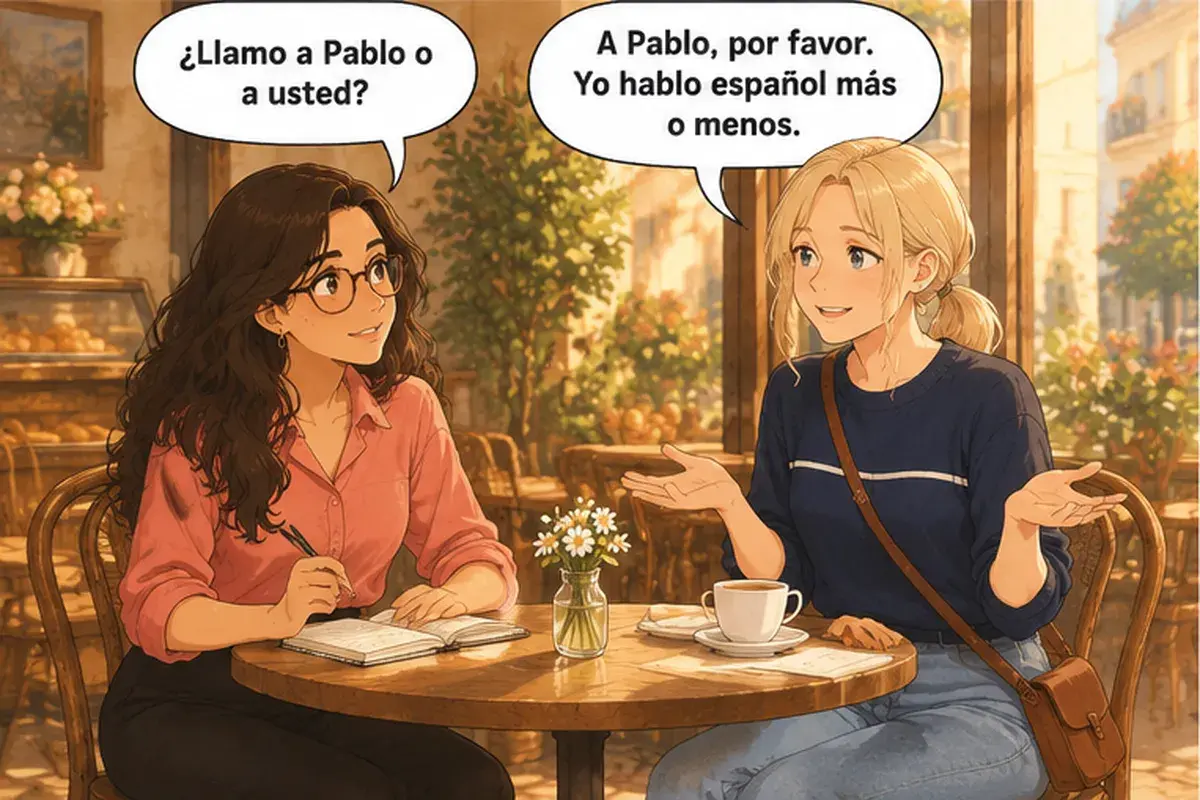
- Lucía
¿Llamo a Pablo o a usted?
Should I call Pablo or you? (formal)
- Ana
A Pablo, por favor. Yo hablo español más o menos.
Pablo, please. I speak Spanish so-so.
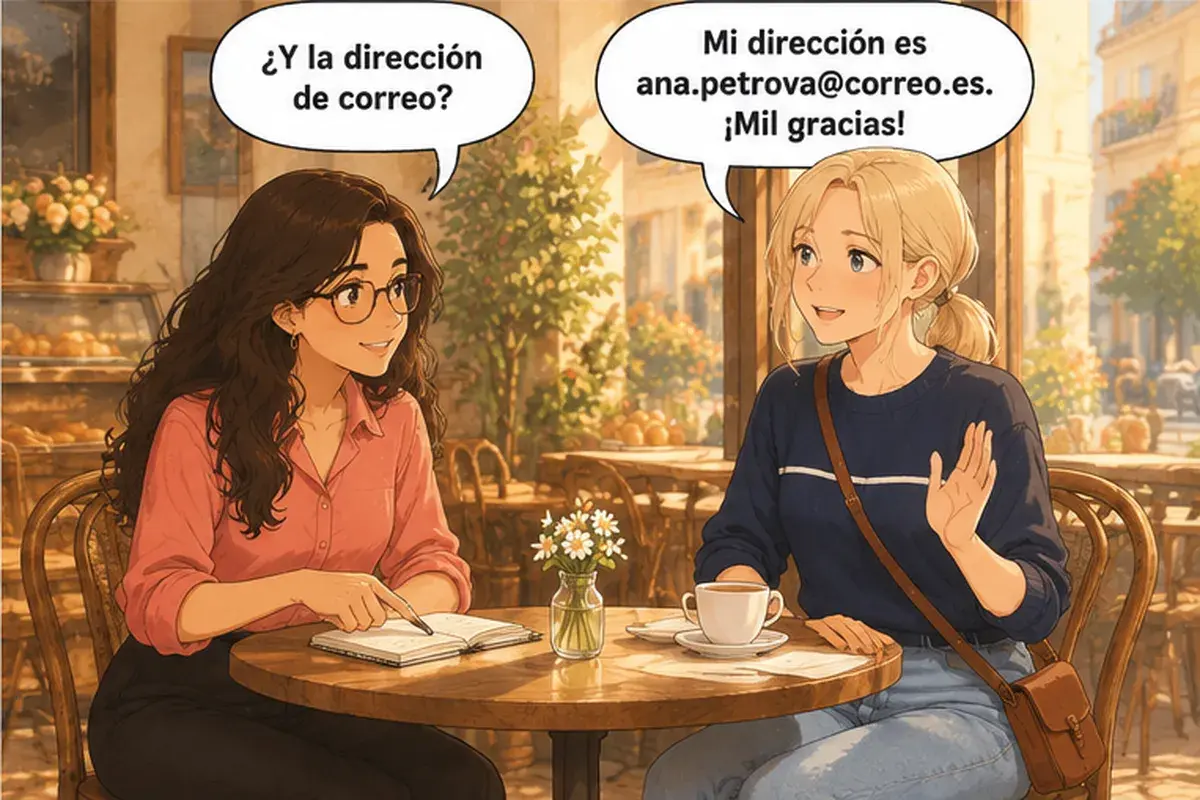
- Lucía
¿Y la dirección de correo?
And the email address?
- Ana
Mi dirección es ana.lind@correo.es. ¡Mil gracias!
My address is ana.lind@correo.es. Thanks a million!

- Lucía
De nada. Son ciento cincuenta euros.
You're welcome. That's one hundred fifty euros.
- Ana
Vale. ¡Hasta luego!
OK. See you later!
Grammar for this text
Age: tengo … años
- Tengo treinta y dos años — "I'm thirty-two", word for word "I have thirty-two years". Spanish uses tener (to have) for age, where English uses "to be".
- ¿Cuántos años tiene, Ana? — "How old are you, Ana?": cuántos means "how many", and tiene is the usted form — Lucía speaks to Ana formally.
- treinta y dos — the tens and the ones are joined with y (and): "thirty and two".
Phone numbers
- Mi móvil es el seis, uno, cinco, ocho — the number is said one digit at a time. There's el before the digits because el número (the number) is understood.
- ¿Cuál es el número de teléfono? — to ask for a number, an address or a name, Spanish uses cuál, not qué, even though English says "what".
- el número de teléfono, la dirección de correo, el teléfono de Pablo — de links the two nouns: English says "phone number", "email address", "Pablo's phone".
Llamar and llamarse
- ¿Cómo se llama usted? — with se, the verb means "to be called": "What's your name?"
- ¿Llamo a Pablo o a usted? — without se, it means "to call" (on the phone). Llamo is "I call"; as a question it asks what to do: "Should I call Pablo or you?" The a shows who gets the call.
Money
- Son ciento cincuenta euros — Spanish gives the amount to pay with son: "That's one hundred fifty euros". Exactly a hundred is cien, but when more numbers follow, it's ciento.
Words and grammar of the unit: Say your age and phone number.
Learn the words from the texts with flashcards
In the app, you can tap any word in a text to see its translation, forms and examples, and new words stick with flashcards. 15 minutes a day.
Start for freeEverything is open for free. No card needed to sign up.