

Spanish dialogue with translation · A1 · 14 lines
Me llamo Ana. ¿Y tú? My name is Ana. And you?
Comic · 8 panels
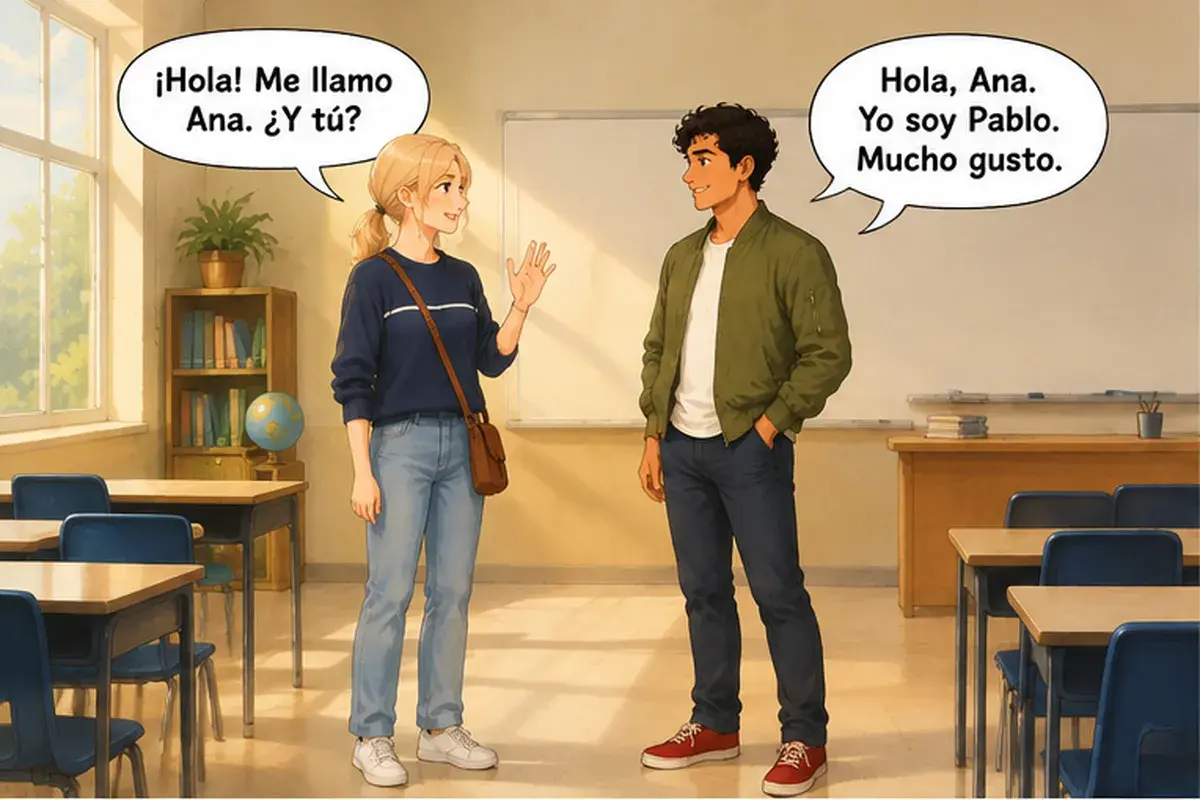
- Ana
¡Hola! Me llamo Ana. ¿Y tú?
Hi! My name is Ana. And you?
- Pablo
Hola, Ana. Yo soy Pablo. Mucho gusto.
Hi, Ana. I'm Pablo. Nice to meet you.
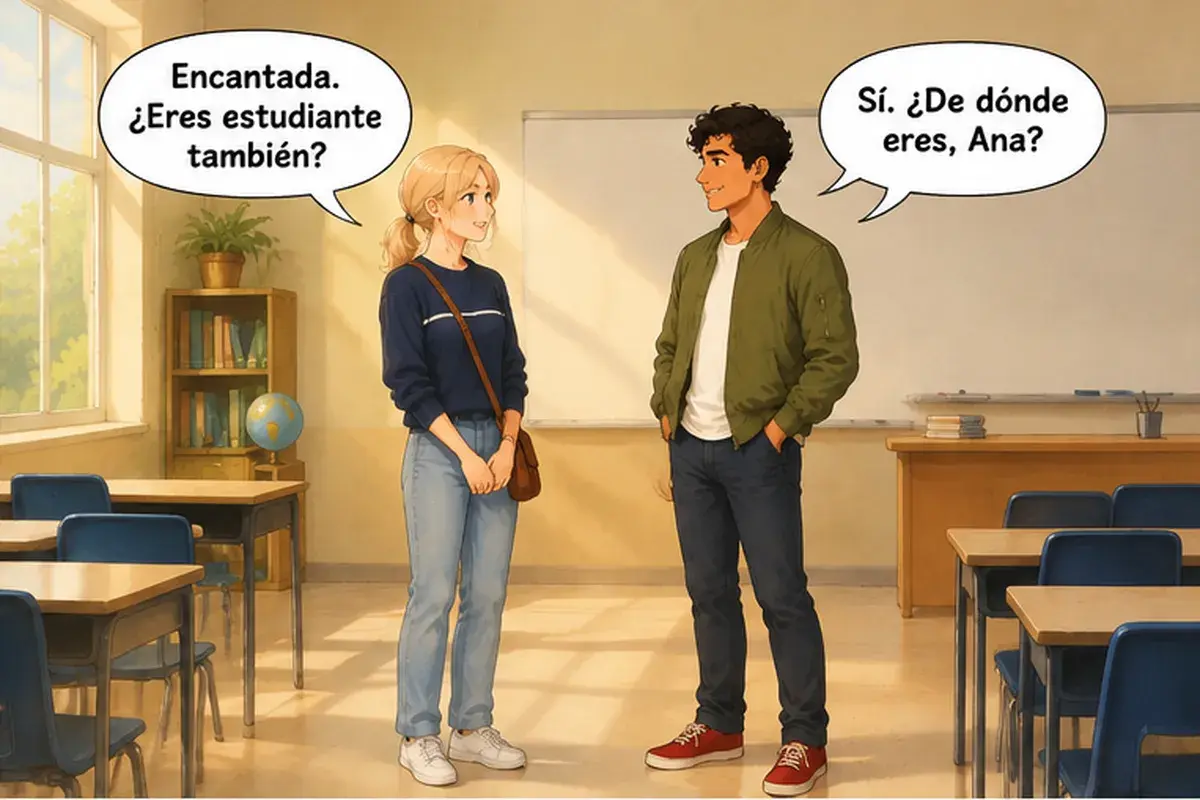
- Ana
Encantada. ¿Eres estudiante también?
Nice to meet you. Are you a student too? (woman speaking)
- Pablo
Sí. ¿De dónde eres, Ana?
Yes. Where are you from, Ana?
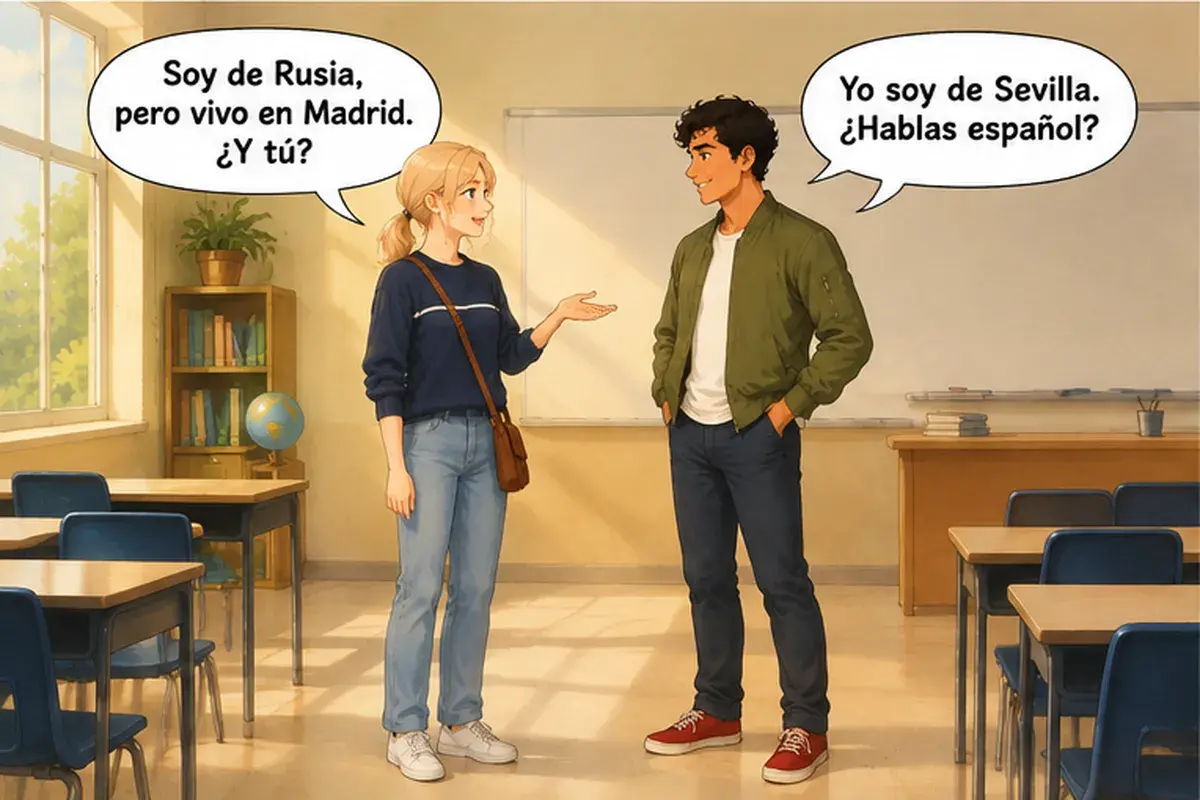
- Ana
No soy de España, pero vivo en Madrid. ¿Y tú?
I'm not from Spain, but I live in Madrid. And you?
- Pablo
Yo soy de Sevilla. ¿Hablas español?
I'm from Seville. Do you speak Spanish?
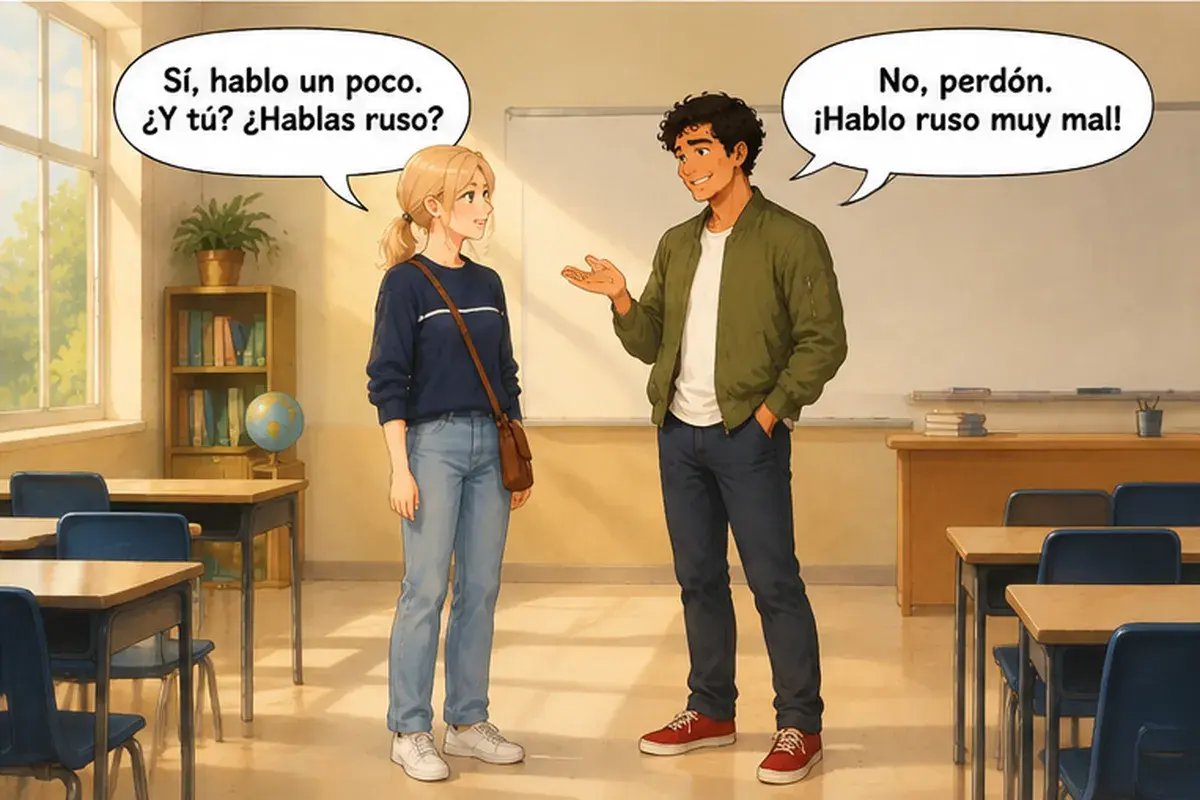
- Ana
Sí, hablo un poco. ¿Y tú? ¿Hablas inglés?
Yes, I speak a little. And you? Do you speak English?
- Pablo
No, perdón. ¡Hablo inglés muy mal!
No, sorry. I speak English very badly!
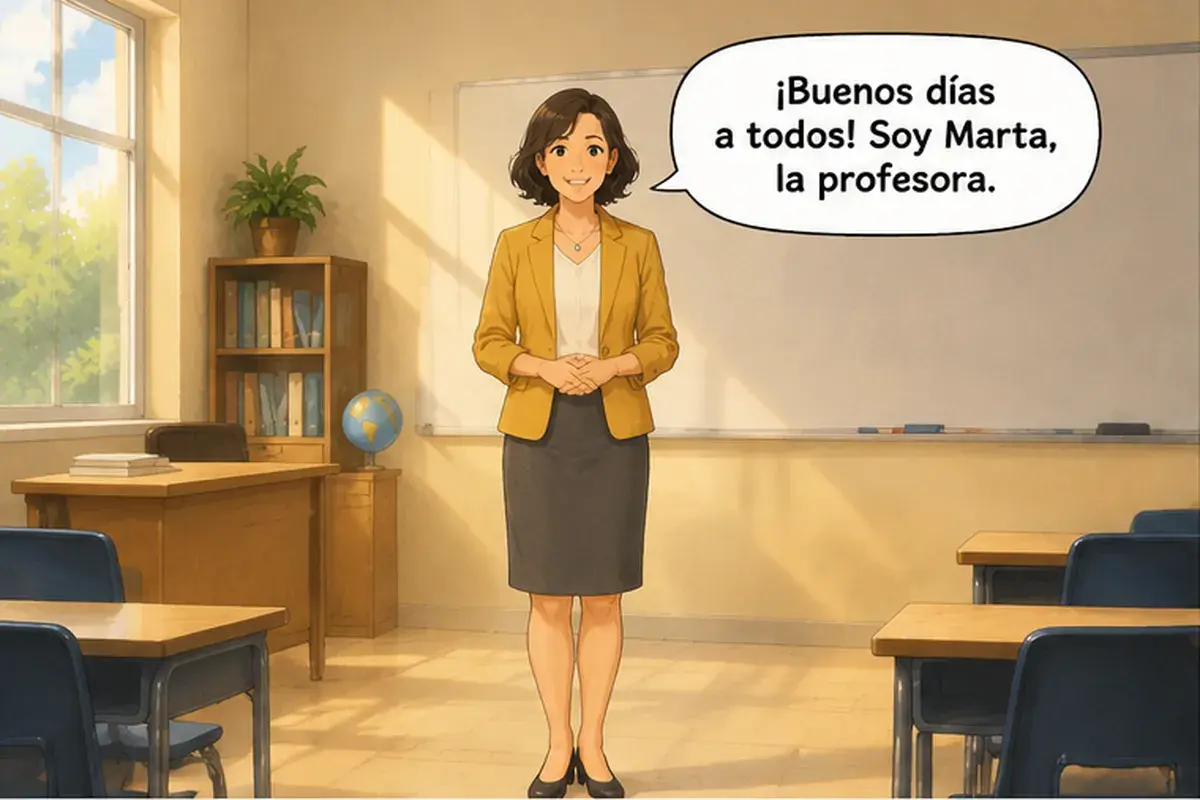
- Marta
¡Buenos días a todos! Soy Marta, la profesora.
Good morning, everyone! I'm Marta, the teacher.
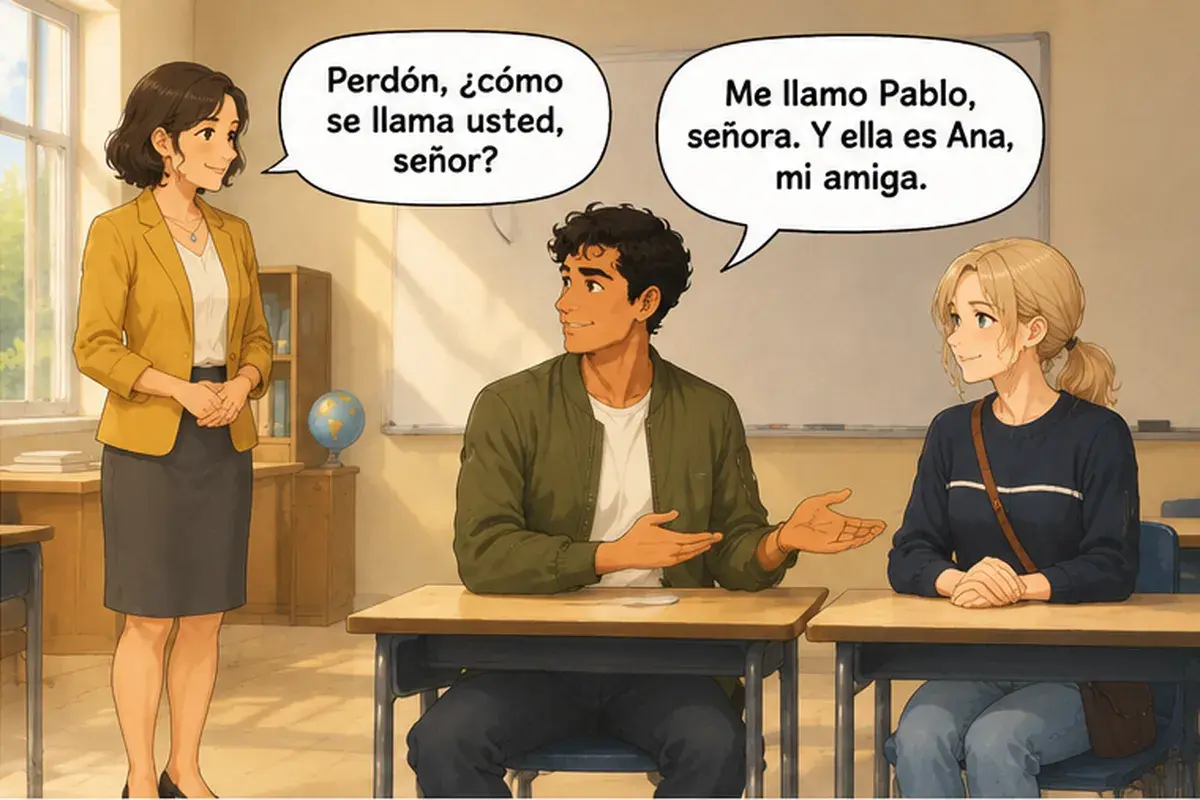
- Marta
Perdón, ¿cómo se llama usted, señor?
Excuse me, what's your name, sir? (formal)
- Pablo
Me llamo Pablo, señora. Y ella es Ana, mi amiga.
My name is Pablo, ma'am. And she's Ana, my friend.
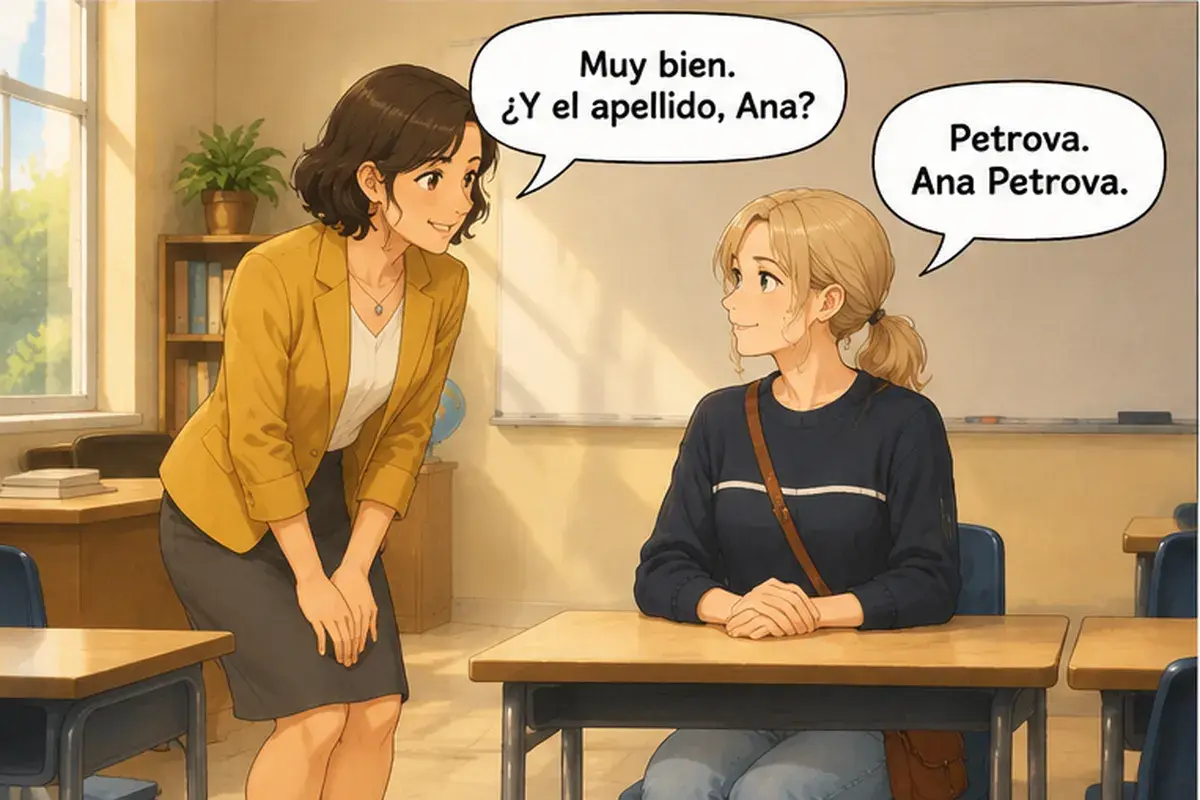
- Marta
Muy bien. ¿Y el apellido, Ana?
Very good. And your last name, Ana?
- Ana
Lind. Soy Ana Lind.
Lind. I'm Ana Lind.
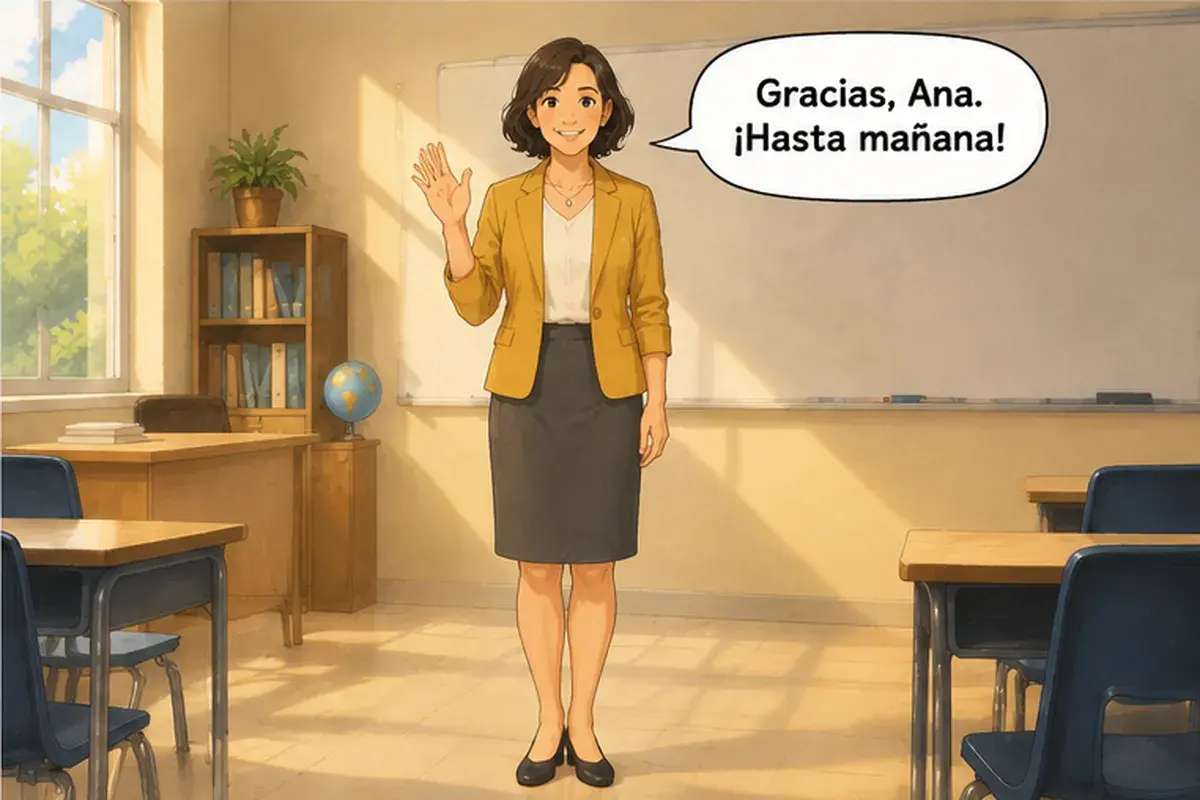
- Marta
Gracias, Ana. ¡Hasta mañana!
Thank you, Ana. See you tomorrow!
Grammar for this text
Me llamo: "my name is"
Me llamo Anais word for word "I call myself Ana". The little word before the verb shows who it's about:meis about me,seis about him, her or a person you callusted.
Soy, eres, es: the verb "to be"
Yo soy Pablo,¿Eres estudiante también?,Y ella es Ana:soyis about yourself (I am),eresis about the person you calltú(you are),esis about him or her (he is, she is).¿De dónde eres, Ana?means "Where are you from, Ana?",No soy de Españameans "I'm not from Spain":demeans "from".
Where did "I" and "you" go?
No soy de España, pero vivo en Madrid,¿Hablas español?: there's no word for "I" or "you" here. The verb ending shows who it is:vivo,hablo(ending in -o) mean "I",hablas(ending in -as) means "you".Yo soy de Sevilla: Pablo addsyofor contrast, the way you'd stress "I" in English: "Well, I'm from Seville."
Informal and formal you
- Ana and Pablo use
túwith each other:¿Y tú?. The teacher usesustedwith Pablo. Withustedthe verb has the same form as for "he" or "she":se llama.
Encantada, la profesora: feminine forms
Mucho gustoandEncantadaboth mean "nice to meet you". Ana is a woman, so she saysencantadawith -a at the end; a man would sayencantado.Soy Marta, la profesora:lais the feminine word for "the". In¿Y el apellido, Ana?,elis the same word for a masculine noun; English says "your last name" here.
Words and grammar of the unit: Say hello and introduce yourself.
Learn the words from the texts with flashcards
In the app, you can tap any word in a text to see its translation, forms and examples, and new words stick with flashcards. 15 minutes a day.
Start for freeEverything is open for free. No card needed to sign up.