

German dialogue with translation · B2 · 15 lines
Frag einfach, wenn du etwas brauchst Just ask if you need something
Comic · 15 panels
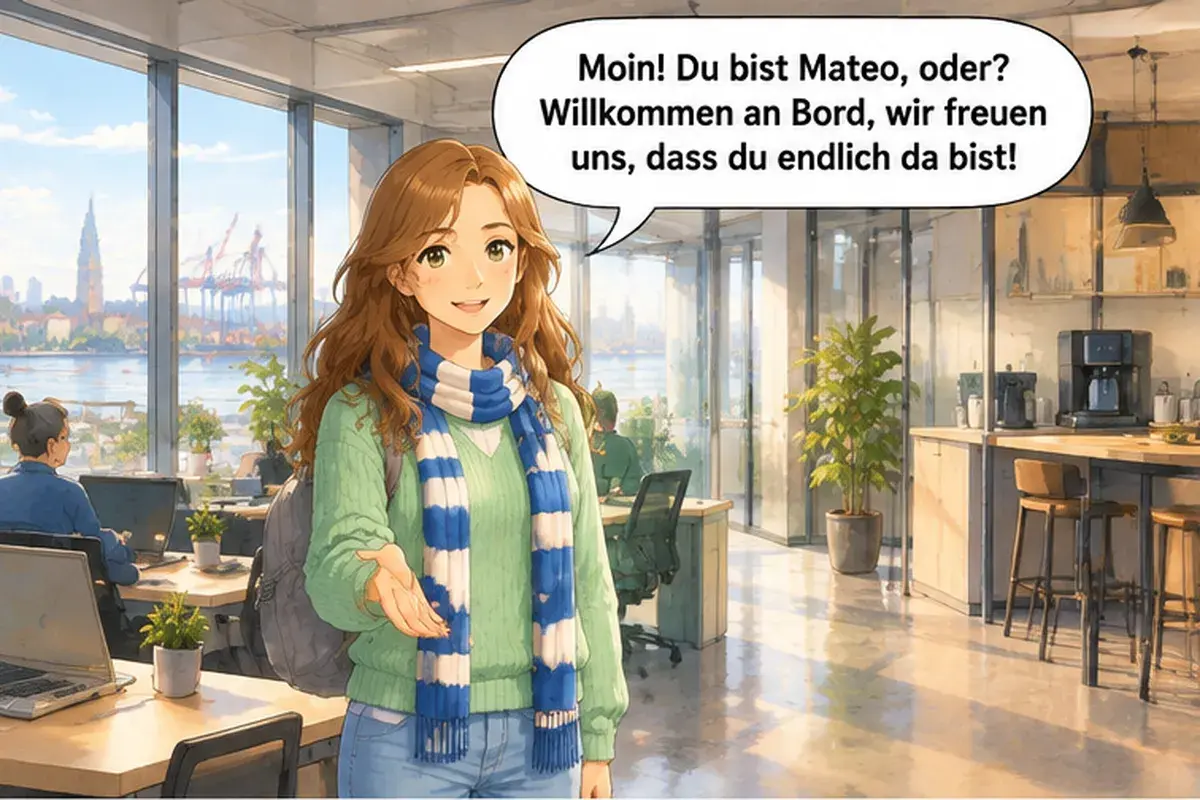
- Katja
Moin! Du bist Mateo, oder? Willkommen an Bord, wir freuen uns, dass du endlich da bist!
Hi! You're Mateo, right? Welcome aboard, we're so glad you're finally here!
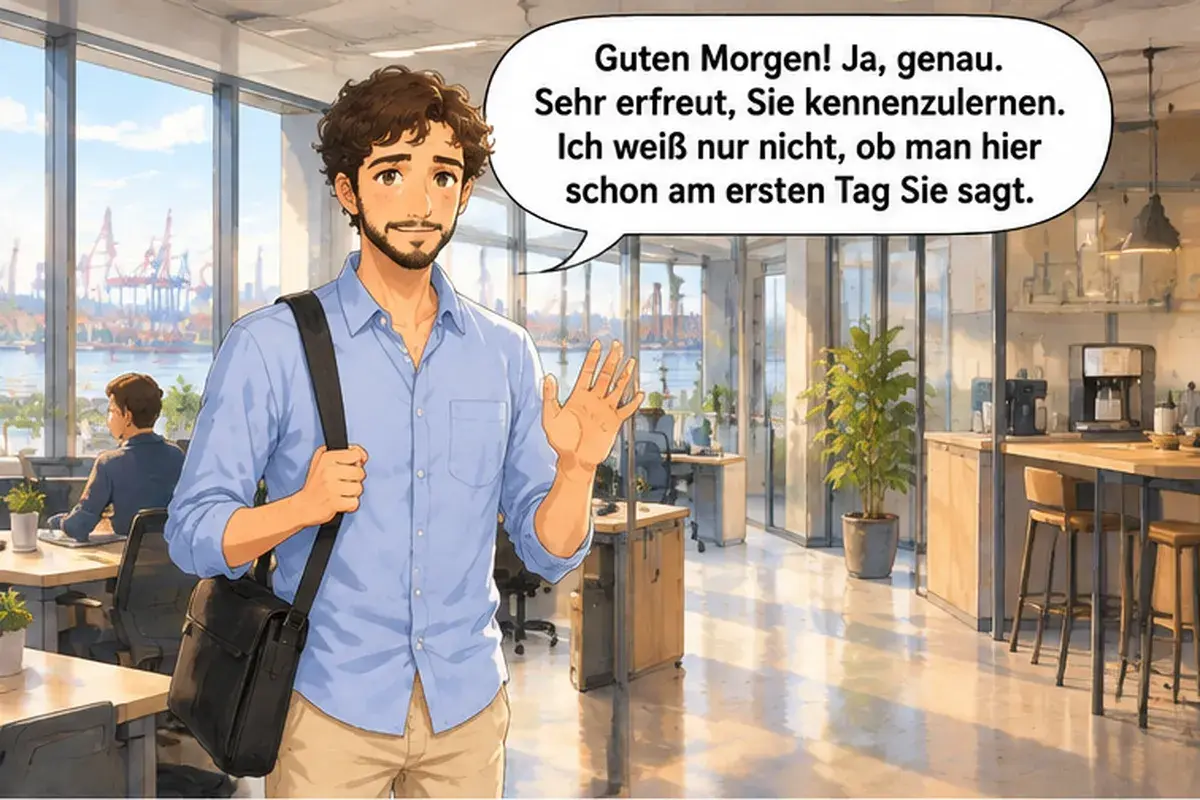
- Mateo
Guten Morgen! Ja, genau. Sehr erfreut, Sie kennenzulernen. Ich weiß nur nicht, ob man hier schon am ersten Tag Sie sagt.
Good morning! Yes, that's right. Very pleased to meet you (formal). I just don't know if people here already say "Sie" on the first day.
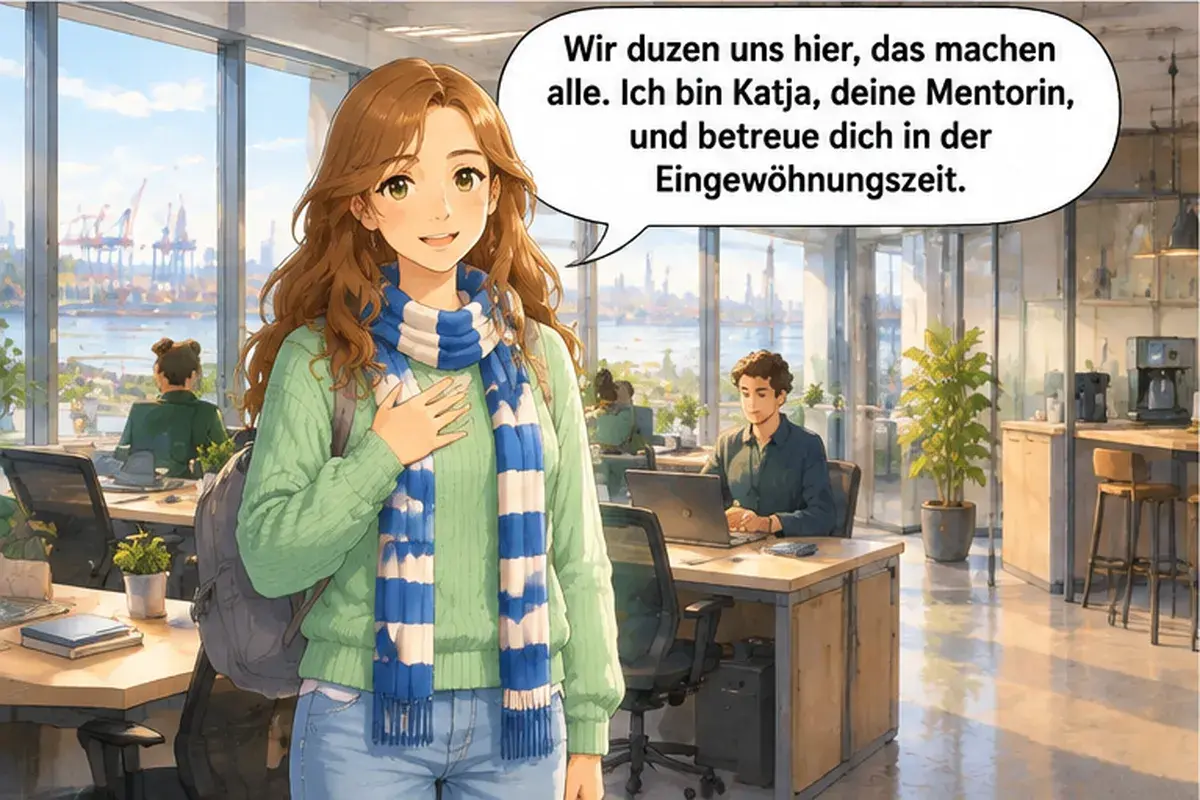
- Katja
Wir duzen uns hier, das machen alle. Ich bin Katja, deine Mentorin, und betreue dich in der Eingewöhnungszeit.
We say du to each other here, everyone does. I'm Katja, your mentor (woman speaking), and I'll look after you while you settle in.
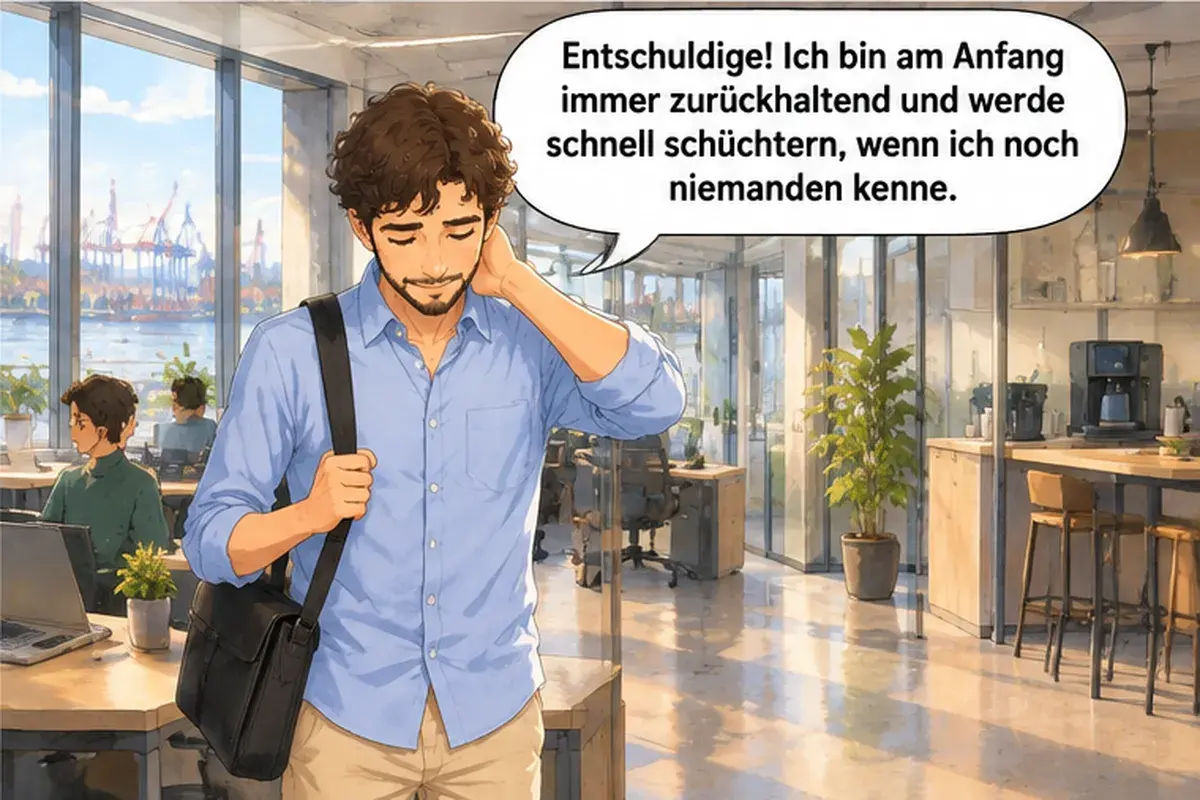
- Mateo
Entschuldige! Ich bin am Anfang immer zurückhaltend und werde schnell schüchtern, wenn ich noch niemanden kenne.
Sorry! I'm always reserved at first, and I get shy quickly when I don't know anyone yet.
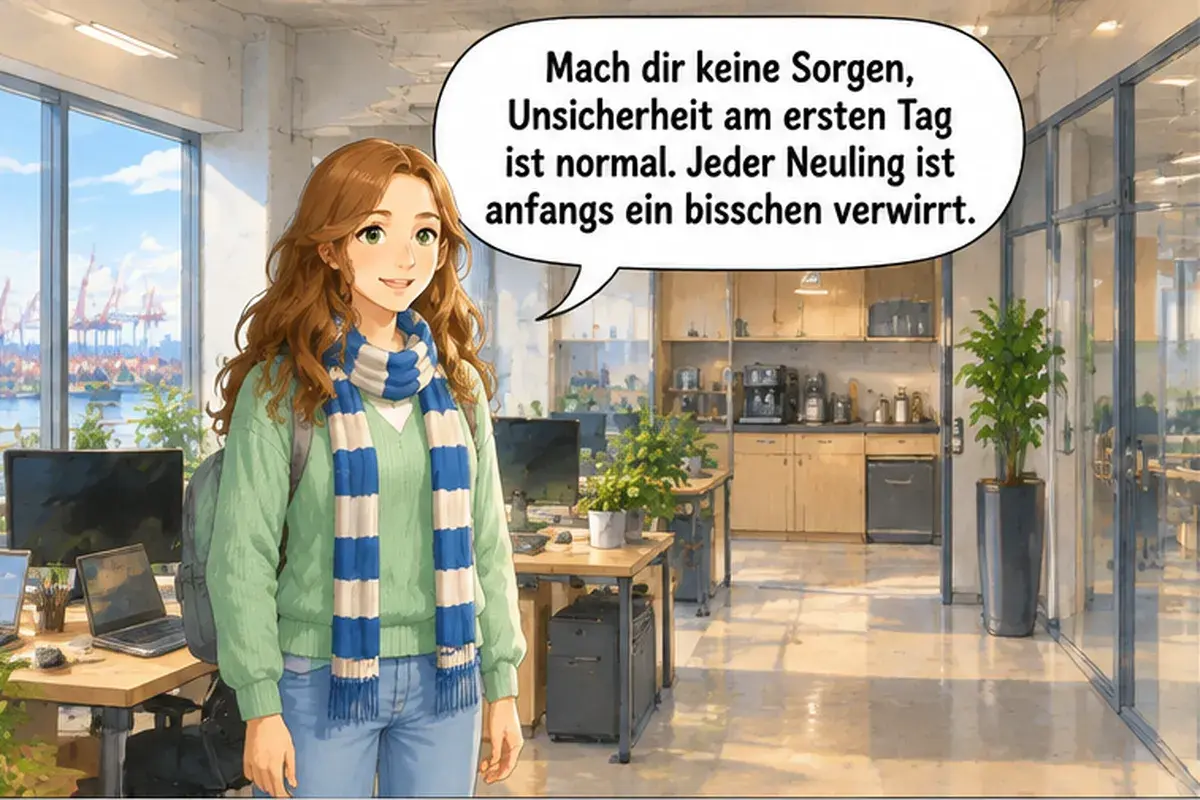
- Katja
Mach dir keine Sorgen, Unsicherheit am ersten Tag ist normal. Jeder Neuling ist anfangs ein bisschen verwirrt.
Don't worry, uncertainty on the first day is normal. Every newcomer is a little confused at first.
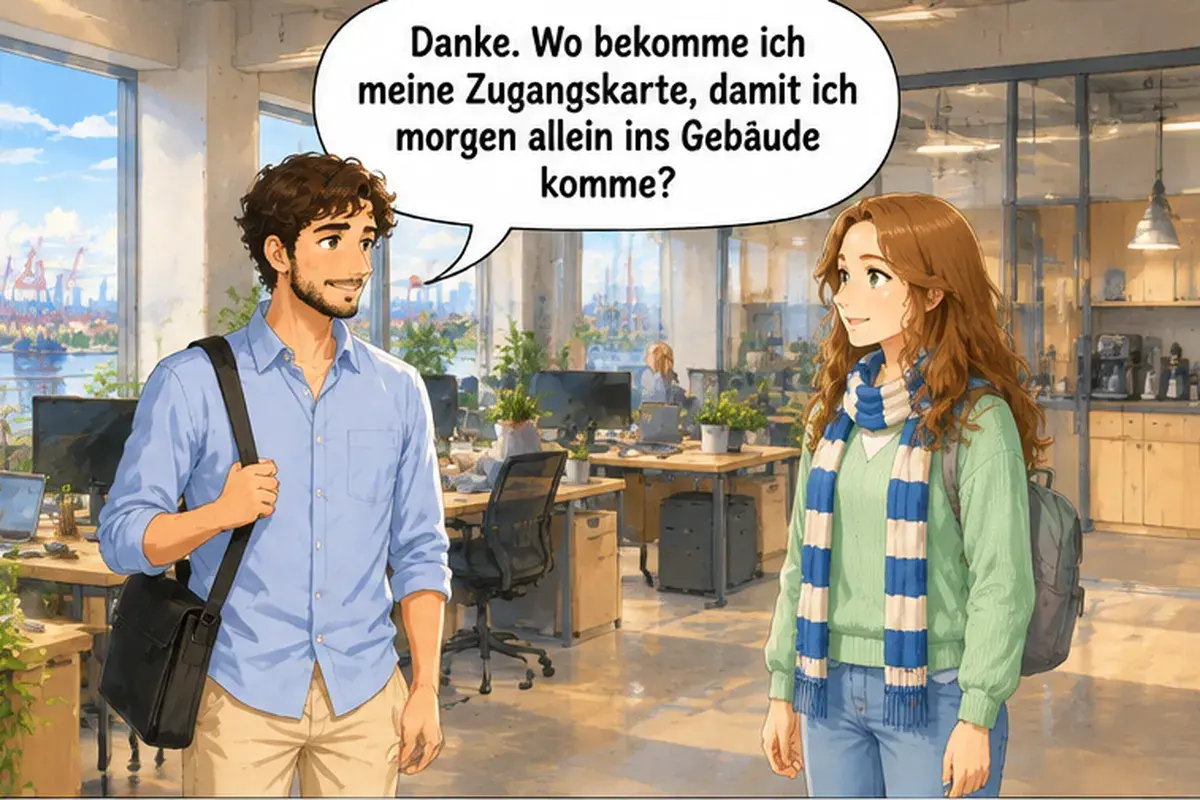
- Mateo
Danke. Wo bekomme ich meine Zugangskarte, damit ich morgen allein ins Gebäude komme?
Thanks. Where do I get my access card so I can get into the building on my own tomorrow?

- Katja
Hier, bitte. Sobald du am Laptop sitzt, loggst du dich mit dem Passwort ein, das auf dem Zettel steht.
Here you go. As soon as you're sitting at the laptop, you log in with the password that's on the slip of paper.
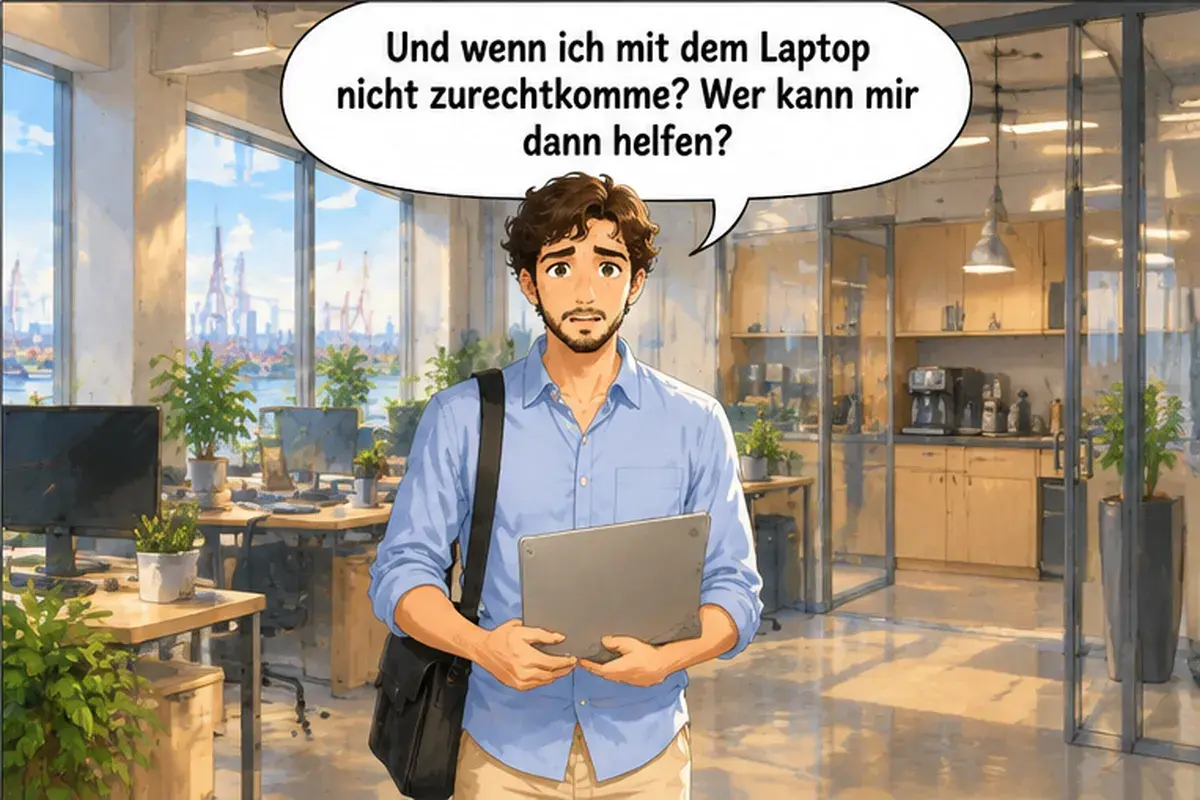
- Mateo
Und wenn ich mit dem Laptop nicht zurechtkomme? Wer kann mir dann helfen?
And what if I can't cope with the laptop? Who can help me then?

- Katja
Am besten fragst du Tobias, deinen Ansprechpartner: Er weiß überall Bescheid und ist witzig, solange er seinen Kaffee hat.
It's best to ask Tobias, your contact person: he's in the know about everything and is funny as long as he has his coffee.
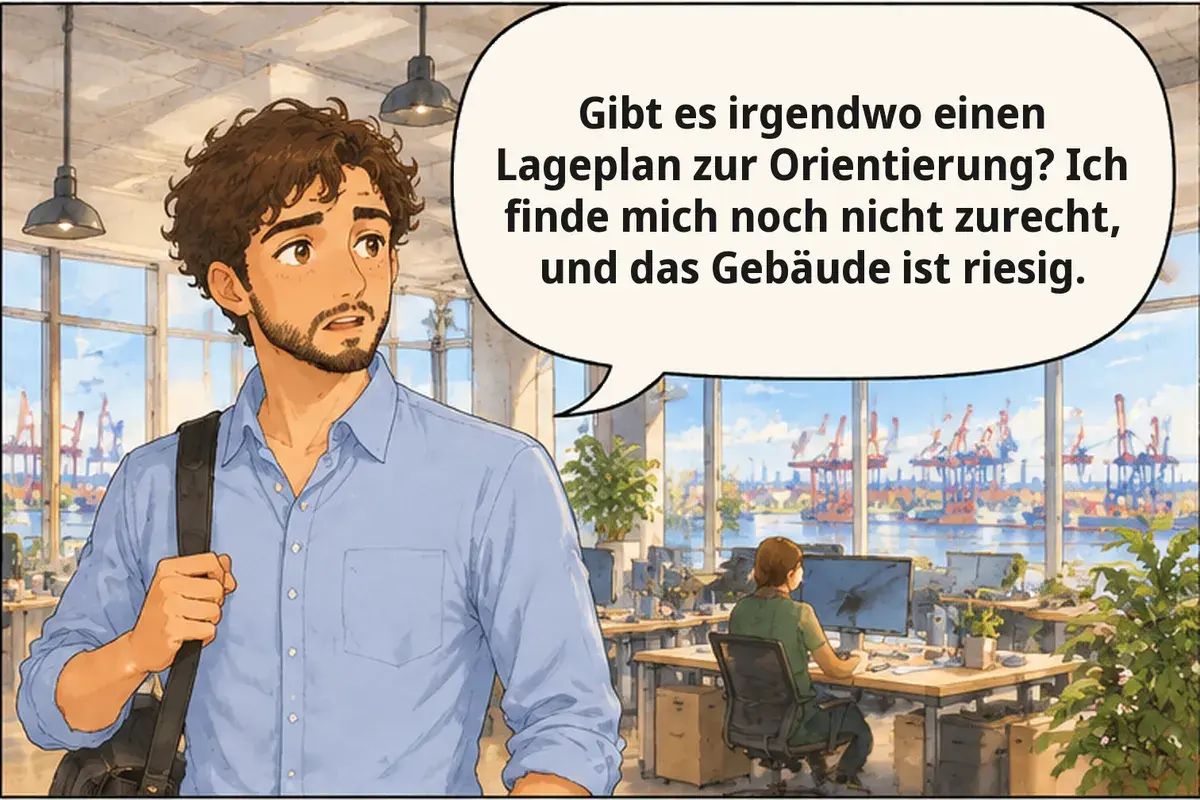
- Mateo
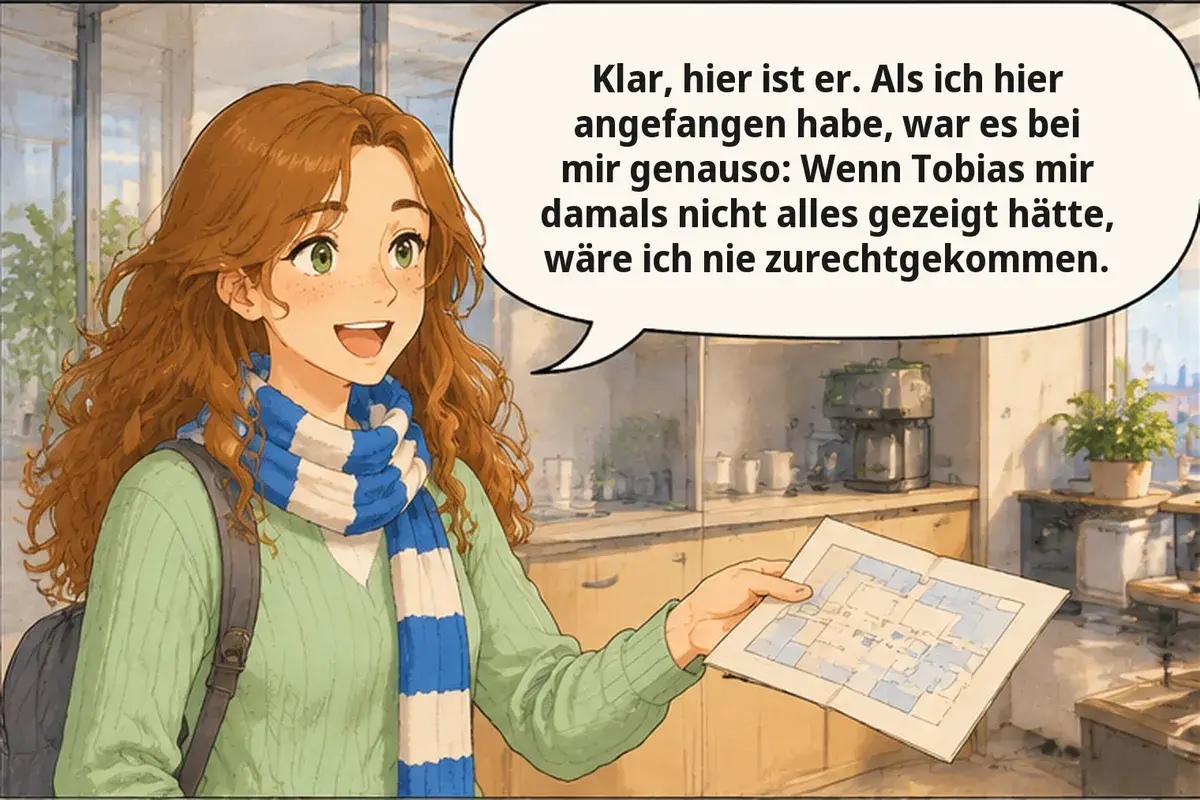
Gibt es irgendwo einen Lageplan zur Orientierung? Ich finde mich noch nicht zurecht, und das Gebäude ist riesig.
Is there a building map somewhere to help me get my bearings? I can't find my way around yet, and the building is huge.
- Katja
Klar, hier ist er. Als ich hier angefangen habe, war es bei mir genauso: Wenn Tobias mir damals nicht alles gezeigt hätte, wäre ich nie zurechtgekommen.
Sure, here it is. When I started here, it was exactly the same for me: if Tobias hadn't shown me everything back then, I never would have managed.
- Mateo
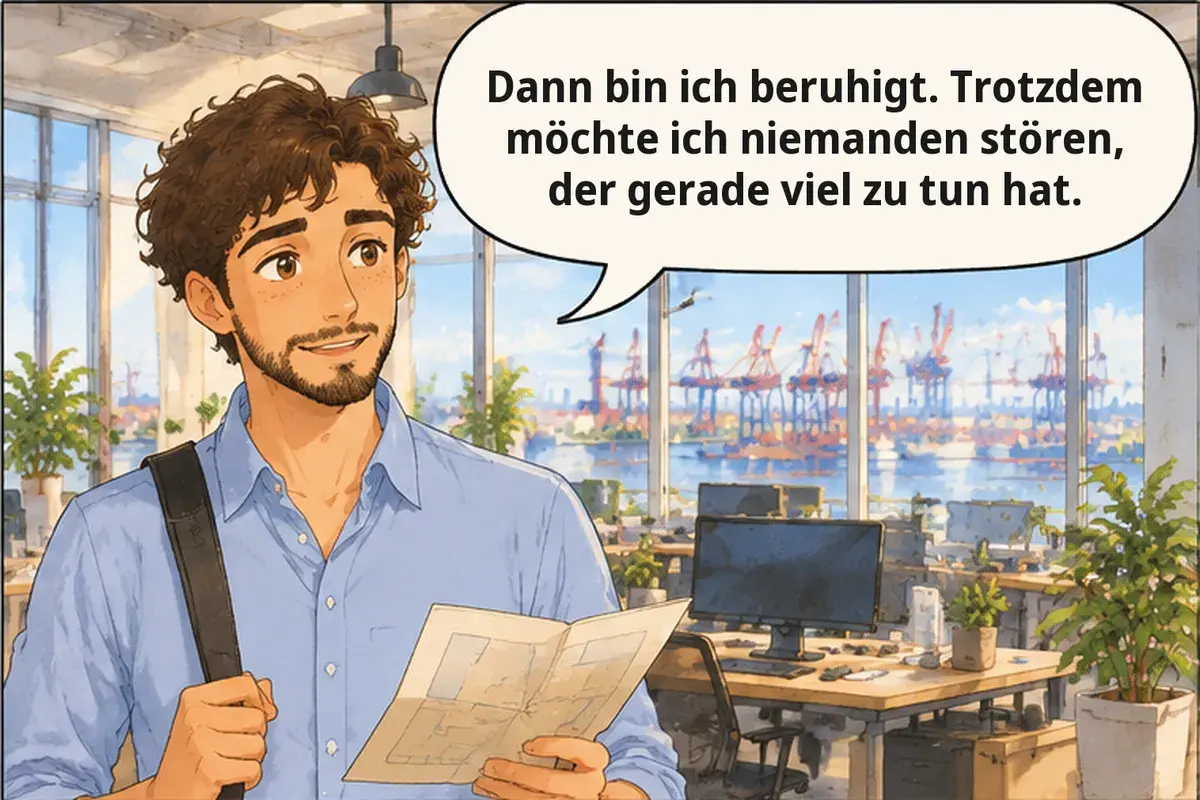
Dann bin ich beruhigt. Trotzdem möchte ich niemanden stören, der gerade viel zu tun hat.
Then I'm relieved. Still, I don't want to disturb anyone who's really busy right now.
- Katja
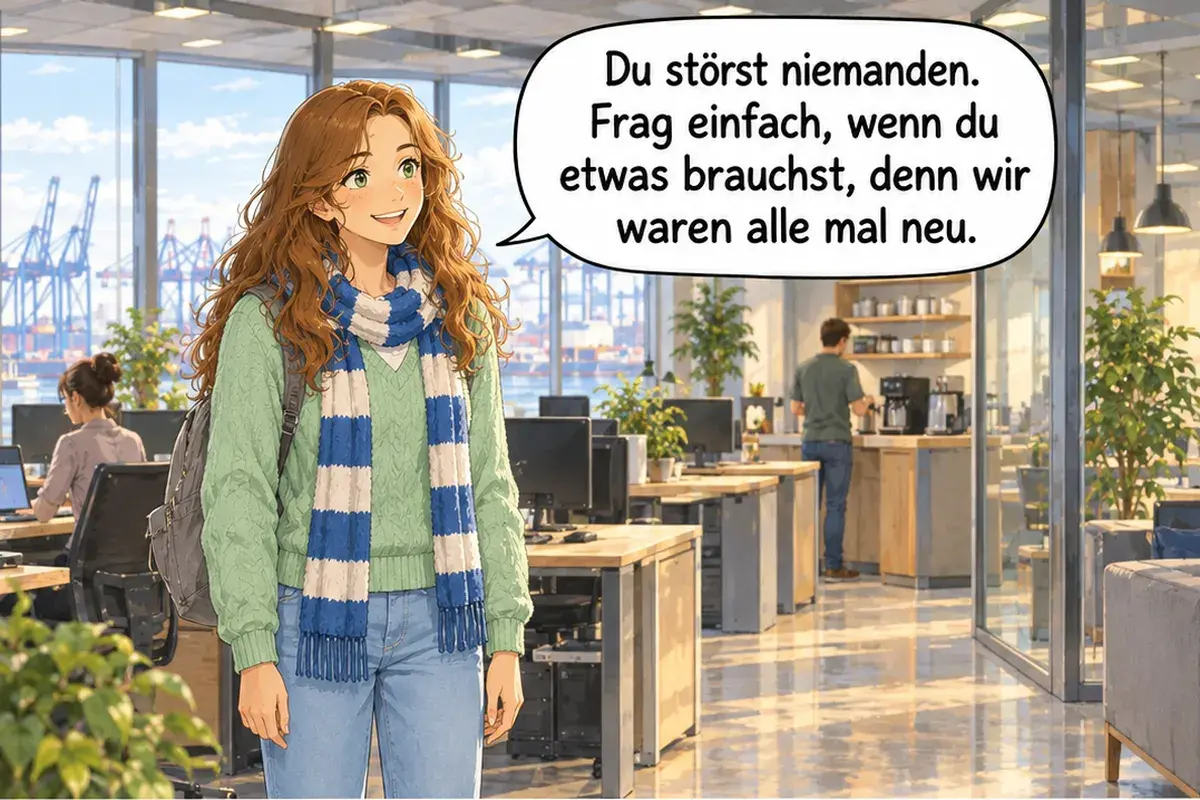
Du störst niemanden. Frag einfach, wenn du etwas brauchst, denn wir waren alle mal neu.
You're not disturbing anyone. Just ask if you need something, because we were all new once.

- Mateo
Gut, dann habe ich gleich die erste Frage: Wo kann ich mir hier einen Kaffee holen?
OK, then I have my first question right away: where can I get a coffee here?

- Katja
Komm her! Ich zeige dir erst die Kaffeeküche, danach bringe ich dich zu deinem Platz.
Come here! First I'll show you the coffee kitchen, then I'll take you to your spot.
Grammar for this text
- Sehr erfreut, Sie kennenzulernen — a polite, bookish phrase:
erfreutmeans "pleased." In everyday life people more often sayFreut mich. Withzu, the verbkennenlernenjoins into one word:kennenzulernen. - Ich weiß nur nicht, ob man hier schon am ersten Tag Sie sagt — after
ob("if, whether") the verb goes to the end:sagt.manmeans "people in general," andSieis formal "you" (capital S). - Mach dir keine Sorgen — advice with the du command of
sich Sorgen machen("to worry"):machwithout the-stending, anddiris "yourself." - Wo bekomme ich meine Zugangskarte, damit ich morgen allein ins Gebäude komme? —
damitmeans "so that"; the clause has its own subject (ich) and the verb at the end:komme. - Sobald du am Laptop sitzt, loggst du dich mit dem Passwort ein, das auf dem Zettel steht — the clause with
sobald("as soon as") comes first, so the verb of the main clause comes right after the comma:loggst, and only thendu.einloggensplits:loggst … ein.dasmeans "that" (Passwortis neuter). - Am besten fragst du Tobias, deinen Ansprechpartner —
am bestengives advice, "it's best to …"; it takes first place, so the verbfragstcomes right after it.deinen AnsprechpartnerexplainsTobiasand is in the same accusative case. - Wenn Tobias mir damals nicht alles gezeigt hätte, wäre ich nie zurechtgekommen — an unreal past situation: "if Tobias hadn't shown me everything, I would never have managed."
hätte gezeigt(fromzeigen),wäre zurechtgekommen(fromzurechtkommen:gegoes between the prefix and the stem).
Words and grammar of the unit: Welcome a new coworker.
Learn the words from the texts with flashcards
In the app, you can tap any word in a text to see its translation, forms and examples, and new words stick with flashcards. 15 minutes a day.
Start for freeEverything is open for free. No card needed to sign up.