

German dialogue with translation · B2 · 14 lines
Der Fischmarkt steht unter Wasser The fish market is under water
Comic · 13 panels

- Priya
Hallo Katja! Gehen wir heute Abend an die Elbe?
Hi Katja! Shall we go to the Elbe tonight?
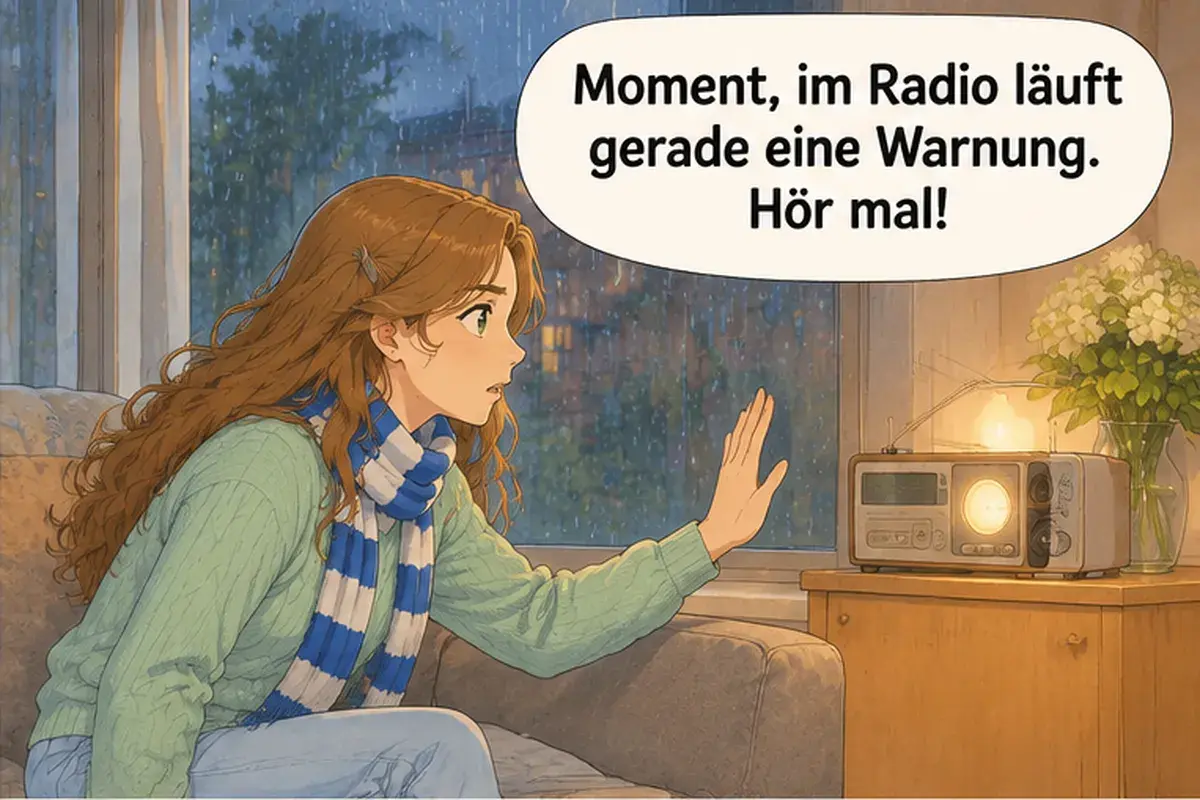
- Katja
Moment, im Radio läuft gerade eine Warnung. Hör mal!
Hold on, there's a warning on the radio right now. Listen!

- Sprecherin
Die Behörde hat für heute Abend eine Sturmflut angekündigt.
The authorities have announced a storm surge for this evening.

- Sprecherin
Dem Bericht zufolge steht der Fischmarkt dann unter Wasser.
According to the report, the fish market will then be under water.

- Sprecherin
Das Hochwasser tritt vor allem im Gebiet am Hafen auf.
The high water occurs mainly in the harbor area.
- Sprecherin
Die Behörde teilt mit, dann sei mit zahlreichen überschwemmten Straßen zu rechnen.
The authorities say that numerous flooded streets are to be expected then.

- Sprecherin
Im Zusammenhang mit der Flut gibt es Einschränkungen im Verkehr.
In connection with the flood, there are restrictions on traffic.

- Sprecherin
Bitte meiden Sie bis auf weiteres die Ufer der Elbe.
Please avoid the banks of the Elbe until further notice. (formal)

- Sprecherin
Die Behörde macht darauf aufmerksam: Wer sein Auto am Ufer abstellt, tut das auf eigene Gefahr.
The authorities point out: Anyone who parks their car on the bank does so at their own risk.

- Sprecherin
Bei einer Sirene: Radio einschalten, Ruhe bewahren.
In case of a siren: turn on the radio, keep calm.

- Katja
Demnach fällt unser Spaziergang aus. Wie letztes Jahr: Der Fischmarkt steht unter Wasser.
So our walk is canceled. Like last year: The fish market is under water.

- Priya
Ja. Aber mit der Ebbe geht das Wasser schnell wieder zurück.
Yes. But with the ebb tide, the water goes back quickly.

- Katja
Trotzdem bleibe ich vorsorglich zu Hause. Kommst du zu mir?
Still, I'm staying home as a precaution. Are you coming to my place?

- Priya
Gern! Ich bringe Kuchen mit. Bis später!
Sure! I'll bring cake. See you later!
Grammar for this text
- Dem Bericht zufolge steht der Fischmarkt dann unter Wasser —
zufolgecomes after its noun and takes the dative:dem Bericht. It means "according to the report."steht unter Wasser— literally "stands under water," that is, it is flooded. - Das Hochwasser tritt vor allem im Gebiet am Hafen auf —
auftreten("to occur, to appear") is an irregular verb:ich trete auf,du trittst auf,er tritt auf;aufgoes to the end. - Die Behörde teilt mit, dann sei mit zahlreichen überschwemmten Straßen zu rechnen —
seiis reported speech (unit 19): the newscaster passes on someone else's words.ist zu+ infinitive (unit 9):ist zu rechnenmeans "is to be expected."überschwemmten Straßenis a participle before a noun (unit 6). Inüberschwemmenthe prefix does not separate, so the participle has noge-. - Im Zusammenhang mit der Flut gibt es Einschränkungen im Verkehr —
im Zusammenhang mit+ dative: "in connection with."Einschränkungenmeans "restrictions." - Bitte meiden Sie bis auf weiteres die Ufer der Elbe —
meiden Sieis a formal request: the verb comes first, thenSie.bis auf weiteresmeans "until further notice." - Die Behörde macht darauf aufmerksam: Wer sein Auto am Ufer abstellt, tut das auf eigene Gefahr —
auf etwas aufmerksam machenmeans "to point something out";daraufis "to this," and after the colon comes what is pointed out.auf eigene Gefahrmeans "at your own risk." - Demnach fällt unser Spaziergang aus —
demnachdraws a conclusion from what was just heard: "so, then."ausfallen:er fällt aus(a becomes ä), andausgoes to the end.
Words and grammar of the unit: Understand an official letter and the news.
Learn the words from the texts with flashcards
In the app, you can tap any word in a text to see its translation, forms and examples, and new words stick with flashcards. 15 minutes a day.
Start for freeEverything is open for free. No card needed to sign up.