

German dialogue with translation · B2 · 14 lines
Mach dir keine Sorgen Don't worry
Comic · 14 panels
- Priya
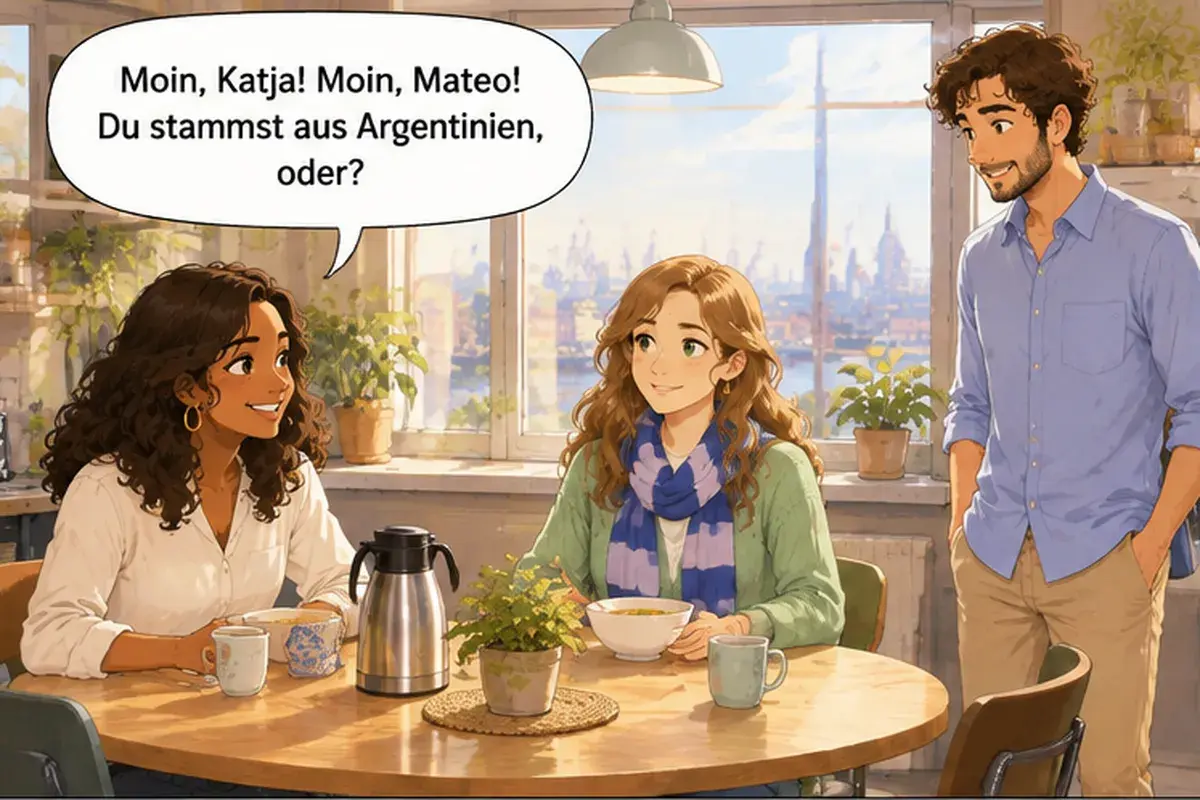
Moin, Katja! Moin, Mateo! Du stammst aus Argentinien, oder?
Hi, Katja! Hi, Mateo! You come from Argentina, right?

- Mateo
Moin! Genau. Sagt man hierzulande auch mittags Moin?
Hi! Exactly. Do people around here say Moin at lunchtime too?

- Priya
Klar, den ganzen Tag. Setz dich zu uns!
Of course, all day long. Sit down with us!
- Mateo
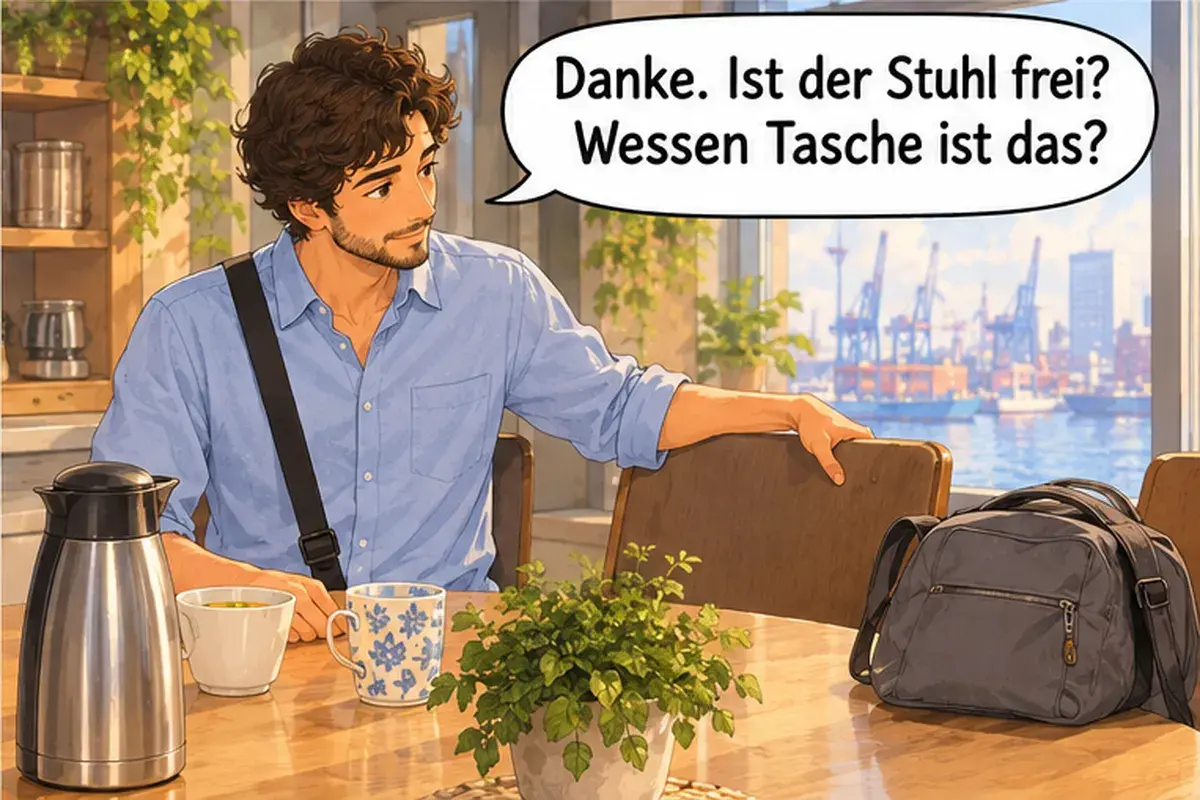
Danke. Ist der Stuhl frei? Wessen Tasche ist das?
Thanks. Is the chair free? Whose bag is that?
- Tobias
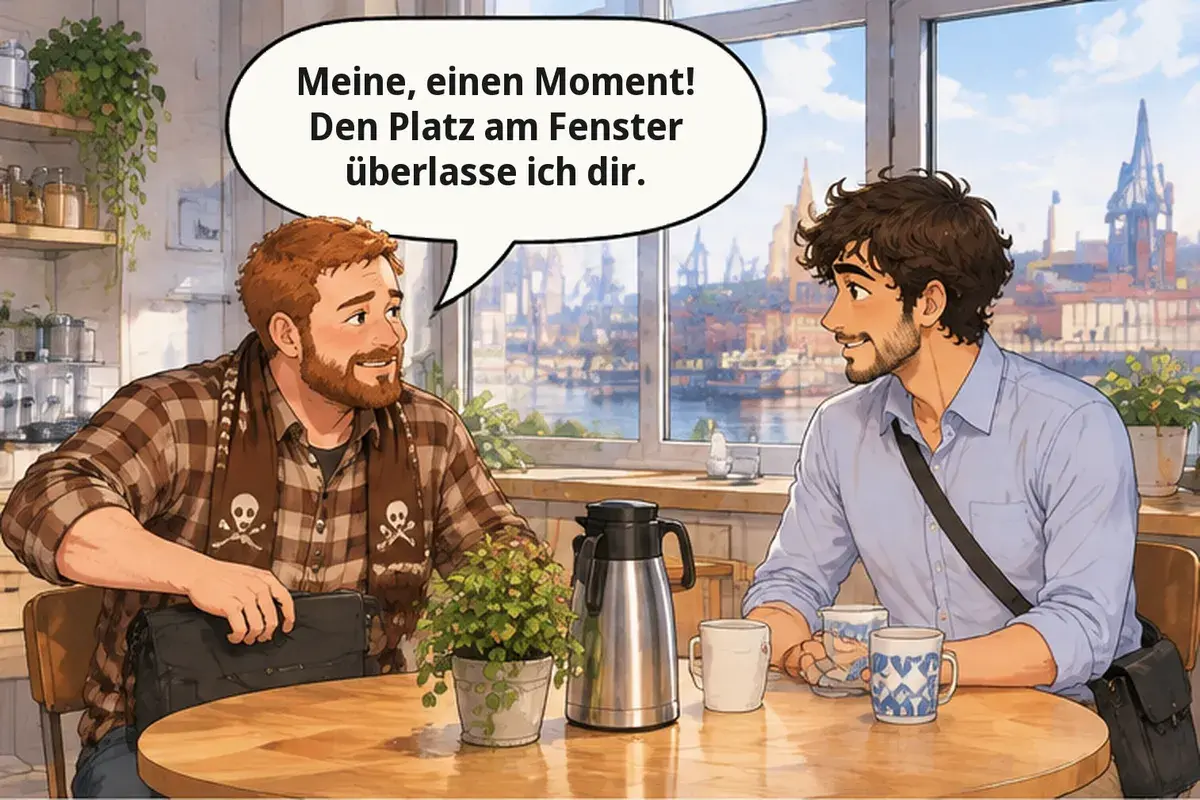
Meine, einen Moment! Den Platz am Fenster überlasse ich dir.
Mine, one moment! I'll let you have the seat by the window.
- Priya
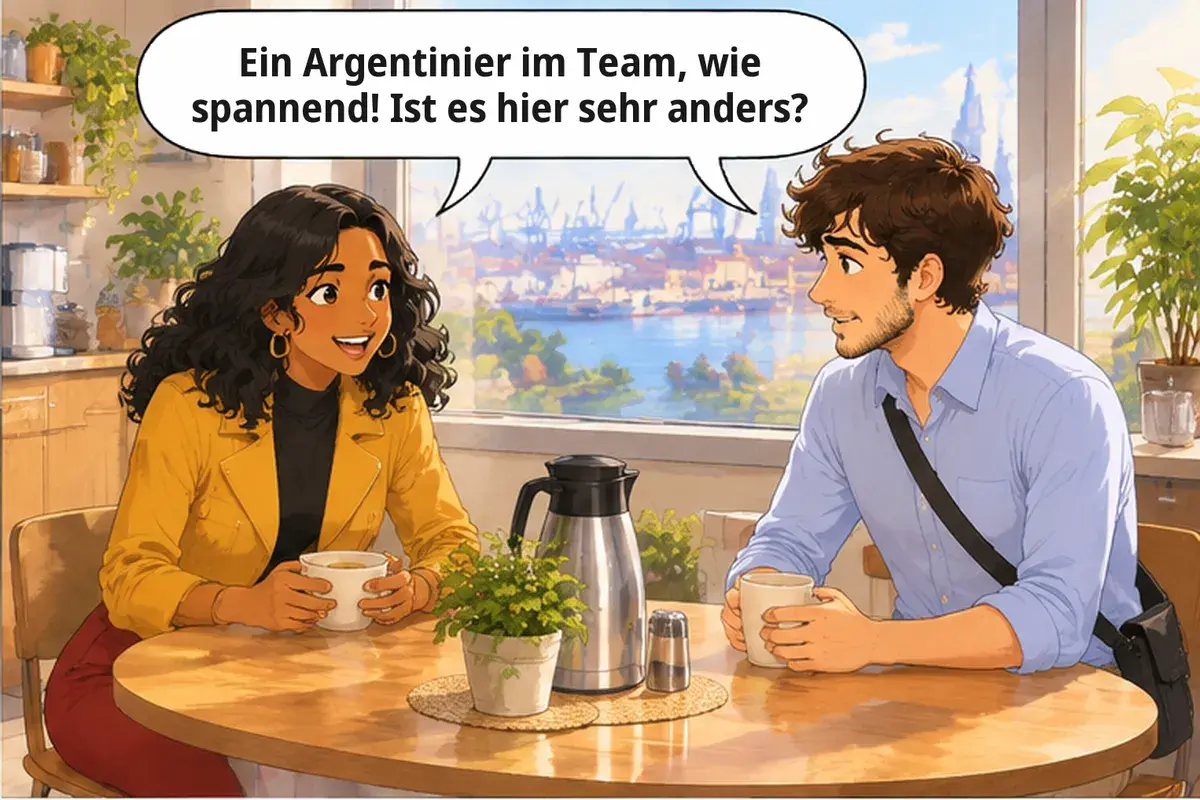
Ein Argentinier im Team, wie spannend! Ist es hier sehr anders?
An Argentinian on the team, how exciting! Is it very different here?
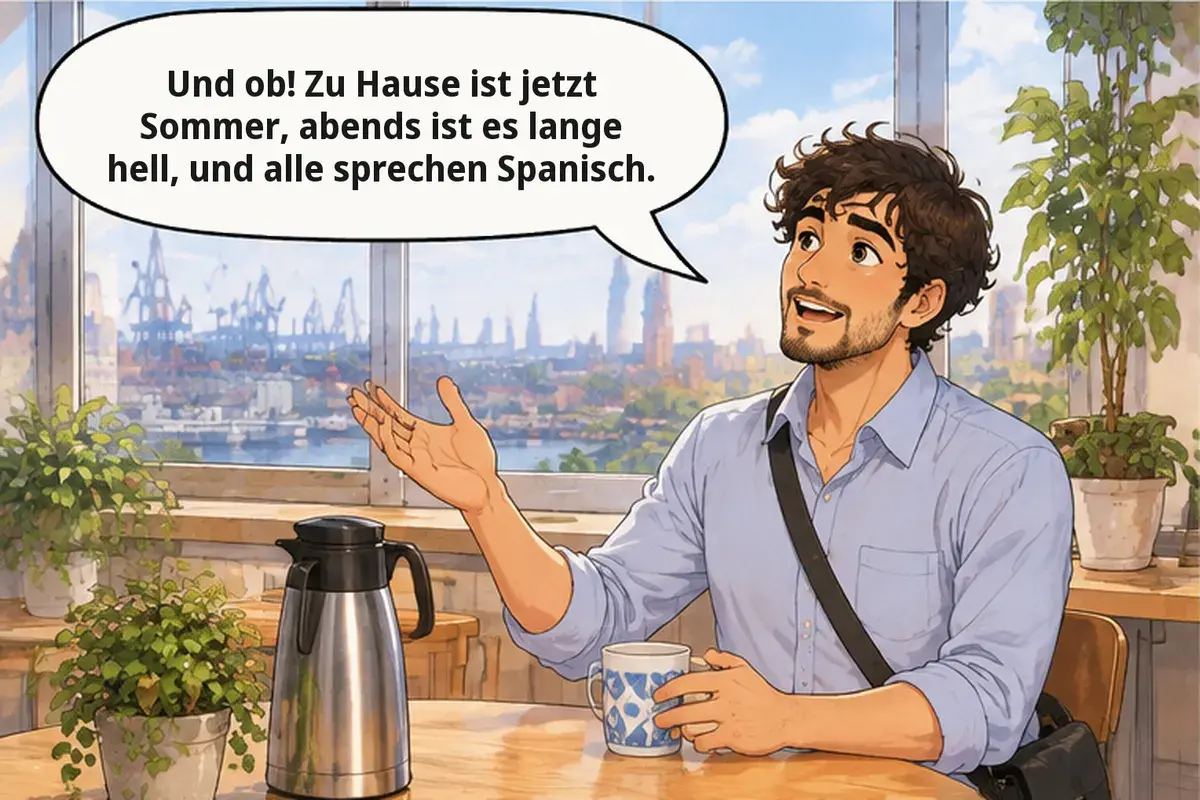
- Mateo
Und ob! Zu Hause ist jetzt Sommer, abends ist es lange hell, und alle sprechen Spanisch.
You bet! At home it's summer now, it stays light late in the evening, and everyone speaks Spanish.
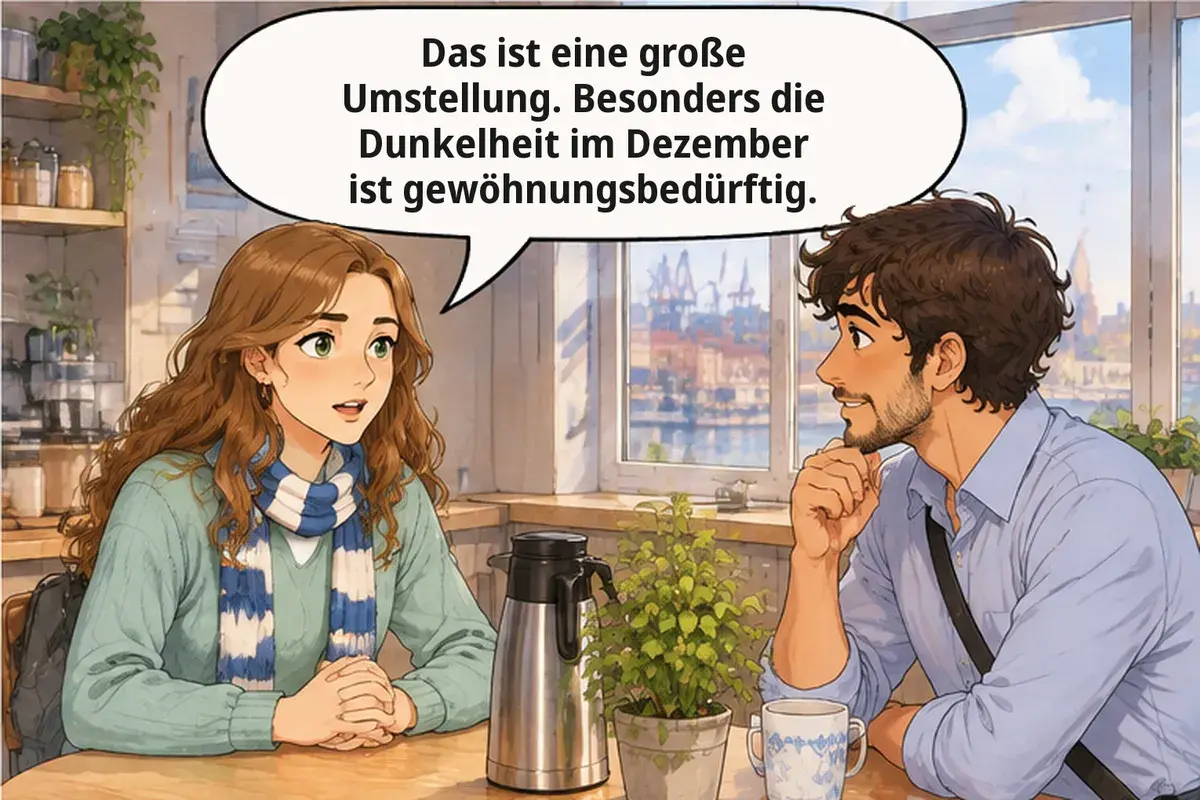
- Katja
Das ist eine große Umstellung. Besonders die Dunkelheit im Dezember ist gewöhnungsbedürftig.
That's a big adjustment. The darkness in December especially takes getting used to.

- Tobias
Am besten nimmst du die Suppe. Bei Schmuddelwetter passt sie bestens.
It's best to get the soup. In nasty weather it's just right.

- Mateo
Gut. Ob ich mich hier wirklich einlebe?
OK. I wonder if I'll really settle in here?

- Priya
Mach dir keine Sorgen. Die Eingewöhnung dauert, aber das wird schon.
Don't worry. Settling in takes a while, but it'll work out.

- Mateo
Mir wird ganz mulmig, wenn ich an die Vorstellungsrunde um zwei denke.
I get really uneasy when I think about the round of introductions at two.

- Katja
Nur Mut! Hier geht es kollegial zu, nichts ist förmlich. Du solltest einfach von dir erzählen.
Go for it! Things are collegial here, nothing is formal. You should just talk about yourself.

- Mateo
Danke, das tut gut! Morgen bringe ich Mate mit.
Thanks, that feels good! Tomorrow I'll bring some mate.
Grammar for this text
- Du stammst aus Argentinien, oder? —
stammen ausmeans "to come from, to originate from";du stammstis the du form. It sounds more formal thankommen.oder?at the end means "right?" and asks for confirmation. - Sagt man hierzulande auch mittags Moin? —
manmeans "people in general," with the er form of the verb:sagt.hierzulandemeans "around here." In the north people sayMoinat any time of day. - Wessen Tasche ist das? —
wessenmeans "whose": the genitive ofwer. The word never changes, and a noun without an article follows right after it. - Den Platz am Fenster überlasse ich dir —
überlassen("to let someone have") does not split.den Platzis moved to the front, so the verb is in second place andichcomes after it.diris dative: "to you." - Am besten nimmst du die Suppe —
am bestenmeans "it's best to …". It takes first place, so the verb comes right after it, anddufollows. A version with a comma (Am besten, du …) is also heard in speech, but the first one is safer. - Ob ich mich hier wirklich einlebe? —
ob("if, whether") sends the verb to the end, and the prefix is attached:einlebe. This issich einleben, "to settle in." - Mach dir keine Sorgen — a command from
sich Sorgen machen("to worry"):dichchanges todir, and you don't saydu. More in the unit grammar.
Words and grammar of the unit: Welcome a new coworker.
Learn the words from the texts with flashcards
In the app, you can tap any word in a text to see its translation, forms and examples, and new words stick with flashcards. 15 minutes a day.
Start for freeEverything is open for free. No card needed to sign up.