

German dialogue with translation · B1 · 12 lines
Setzen Sie sich, wo Sie wollen Sit wherever you like (formal)
Comic · 12 panels
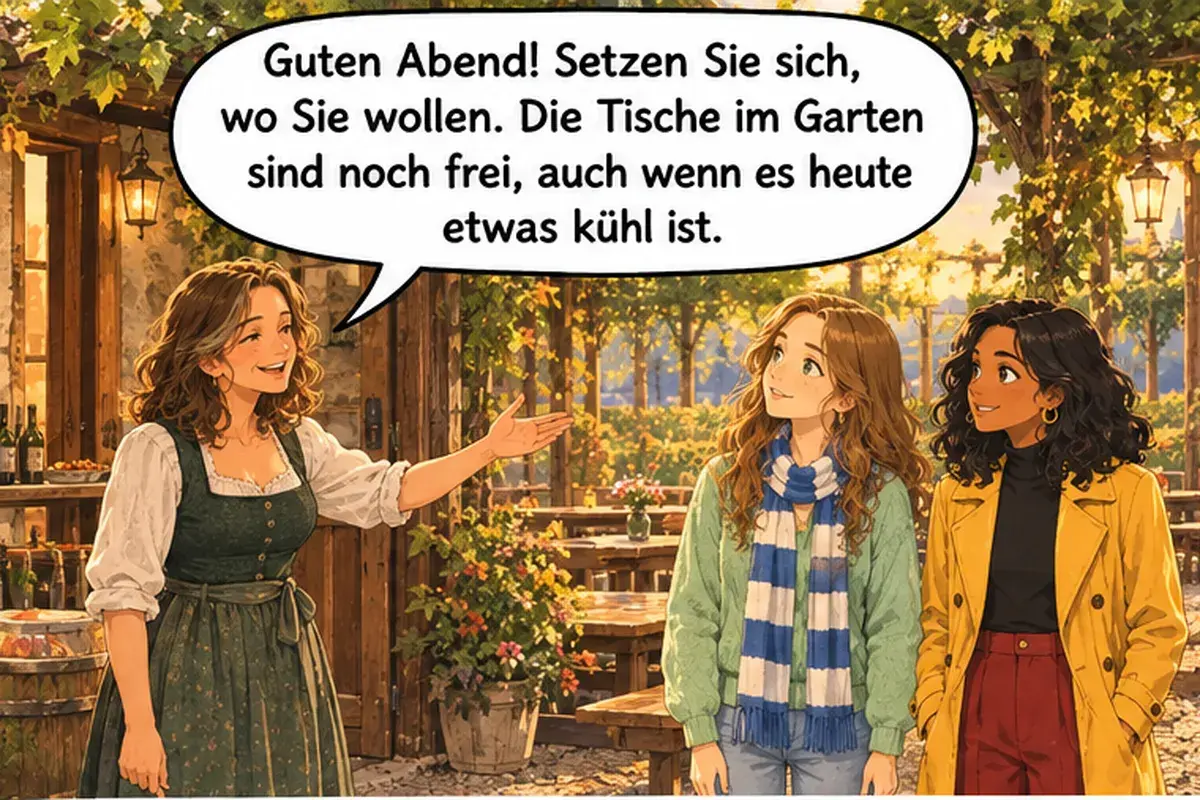
- Winzerin
Guten Abend! Setzen Sie sich, wo Sie wollen. Die Tische im Garten sind noch frei, auch wenn es heute etwas kühl ist.
Good evening! Sit wherever you like (formal). The tables in the garden are still free, even though it's a little chilly today.
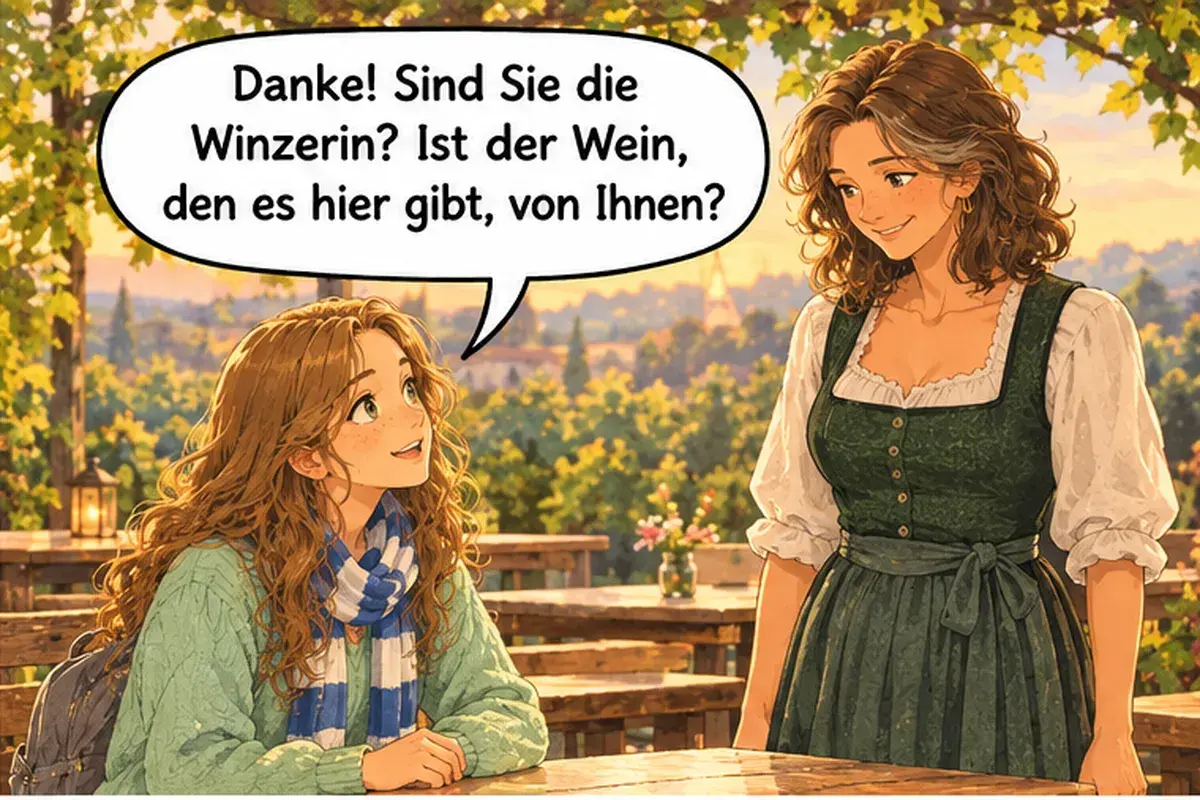
- Katja
Danke! Sind Sie die Winzerin? Ist der Wein, den es hier gibt, von Ihnen?
Thank you! Are you the winemaker? (to a woman, formal) Is the wine they have here from you? (formal)
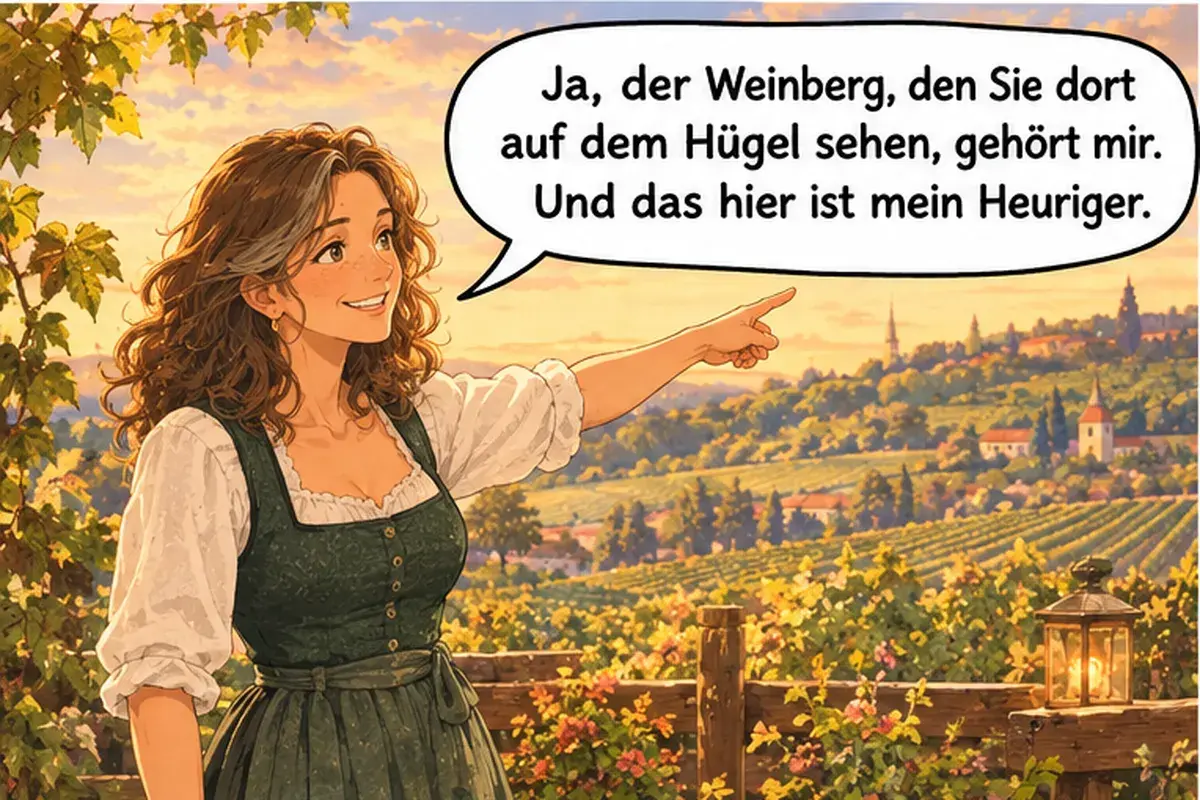
- Winzerin
Ja, der Weinberg, den Sie dort auf dem Hügel sehen, gehört mir. Und das hier ist mein Heuriger.
Yes, the vineyard you see over there on the hill belongs to me (formal). And this is my Heuriger.
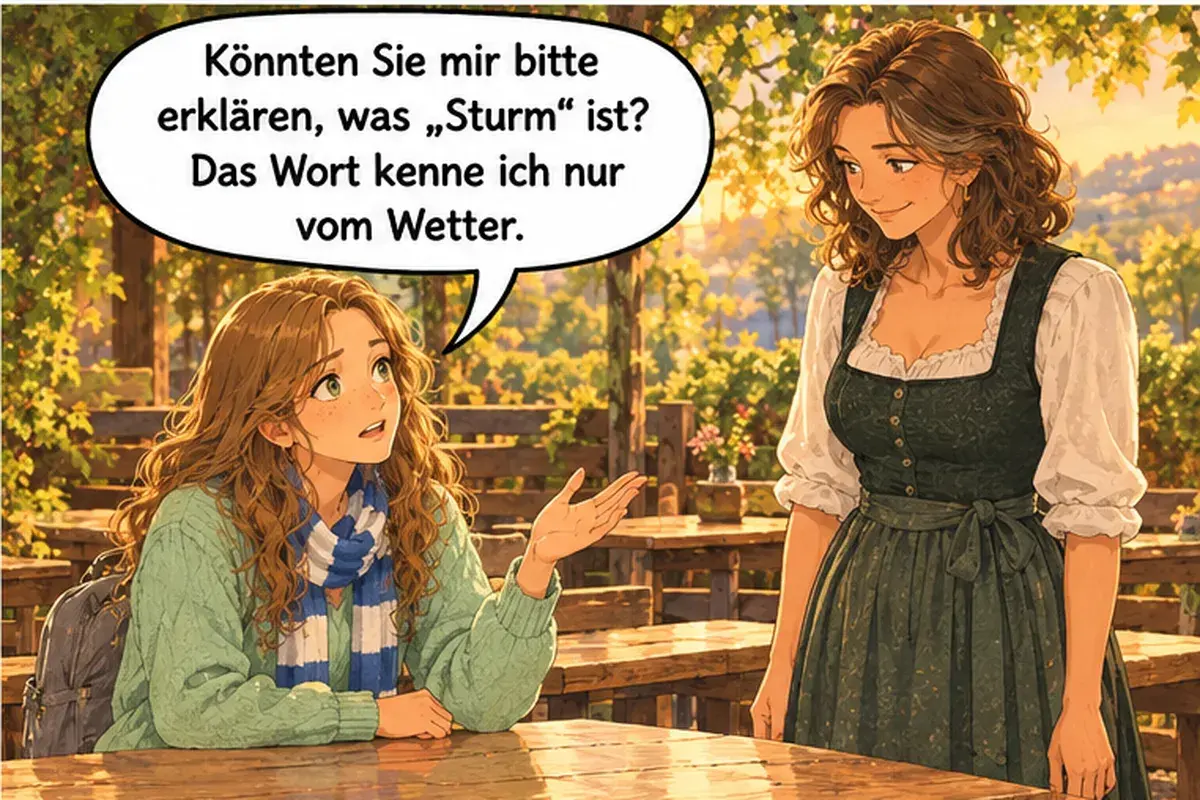
- Katja
Könnten Sie mir bitte erklären, was „Sturm“ ist? Das Wort kenne ich nur vom Wetter.
Could you please explain to me what "Sturm" is? (formal) I only know that word from the weather.
- Winzerin
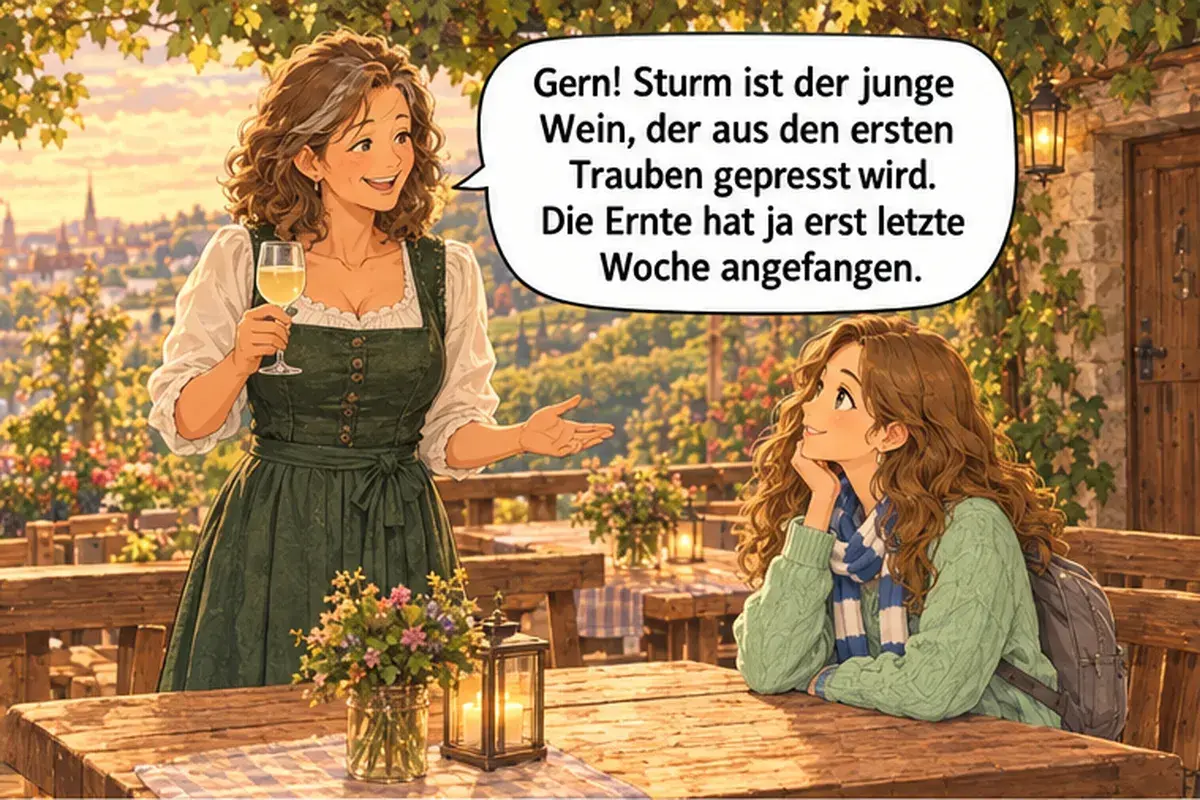
Gern! Sturm ist der junge Wein, der aus den ersten Trauben gepresst wird. Die Ernte hat ja erst letzte Woche angefangen.
Gladly! Sturm is the young wine that's pressed from the first grapes. The harvest only started last week, after all.
- Priya
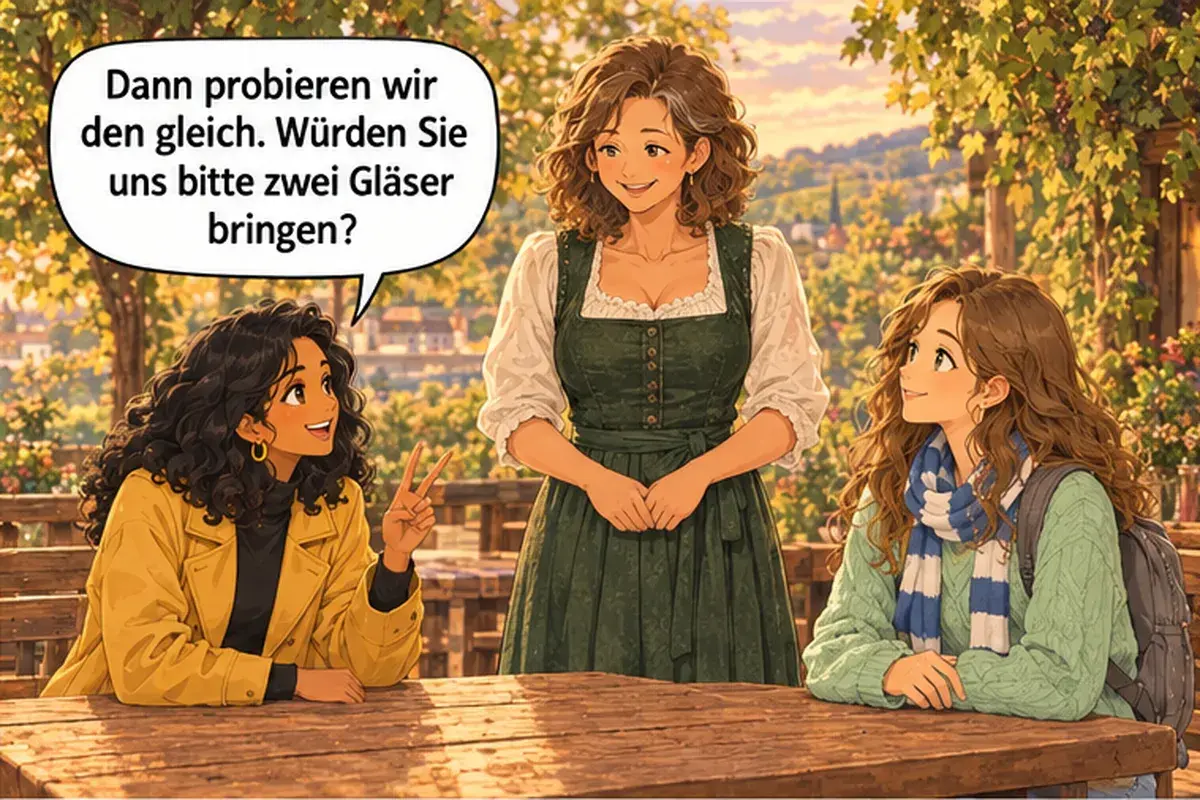
Dann probieren wir den gleich. Würden Sie uns bitte zwei Gläser bringen?
Then we'll try that right away. Would you please bring us two glasses? (formal)
- Winzerin
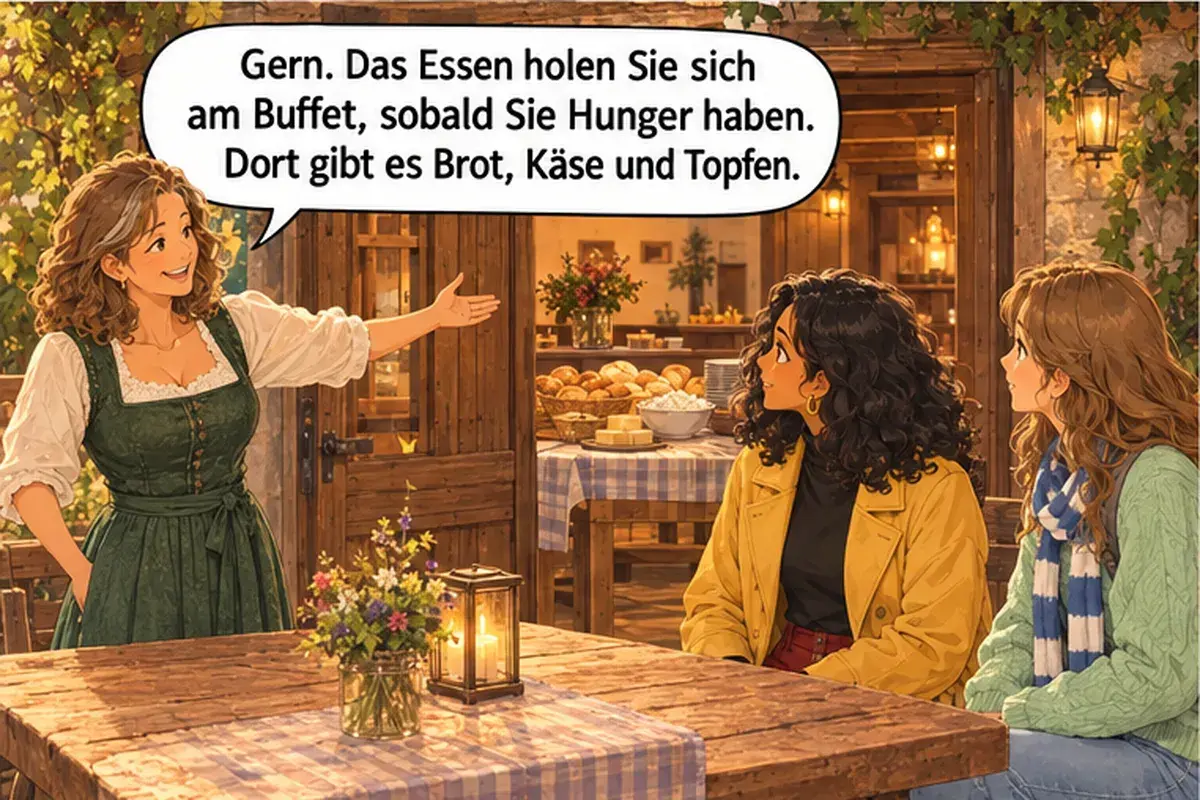
Gern. Das Essen holen Sie sich am Buffet, sobald Sie Hunger haben. Dort gibt es Brot, Käse und Topfen.
Gladly. You get the food yourselves at the buffet as soon as you're hungry (formal). There's bread, cheese and Topfen there.
- Katja
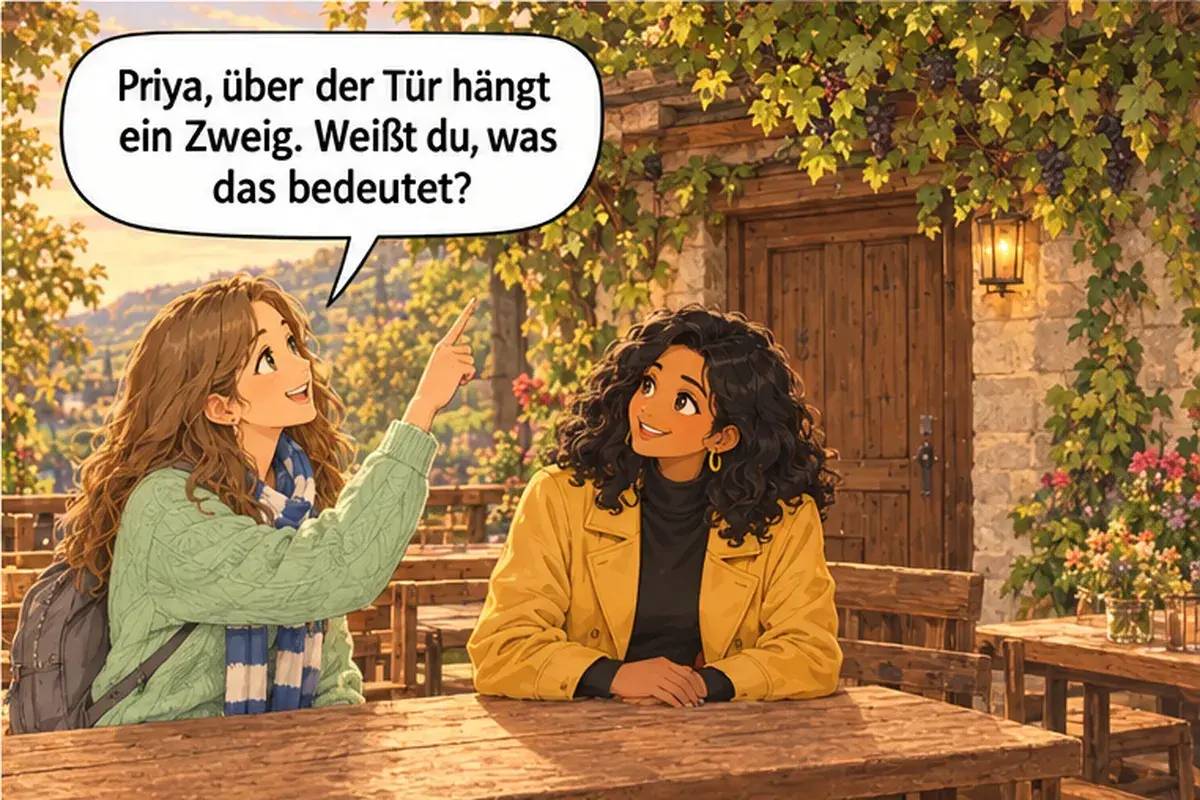
Priya, über der Tür hängt ein Zweig. Weißt du, was das bedeutet?
Priya, there's a branch hanging over the door. Do you know what that means?
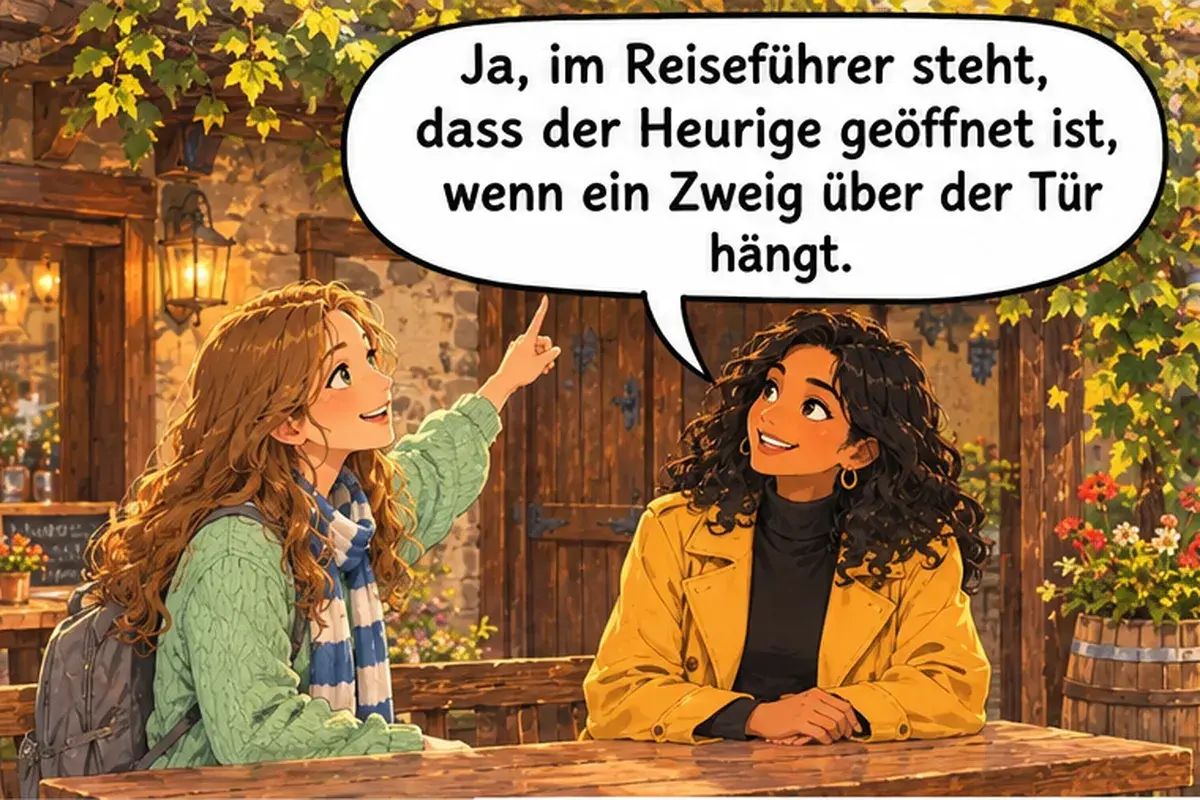
- Priya
Ja, im Reiseführer steht, dass der Heurige geöffnet ist, wenn ein Zweig über der Tür hängt.
Yes, the guidebook says that the Heuriger is open when a branch hangs over the door.
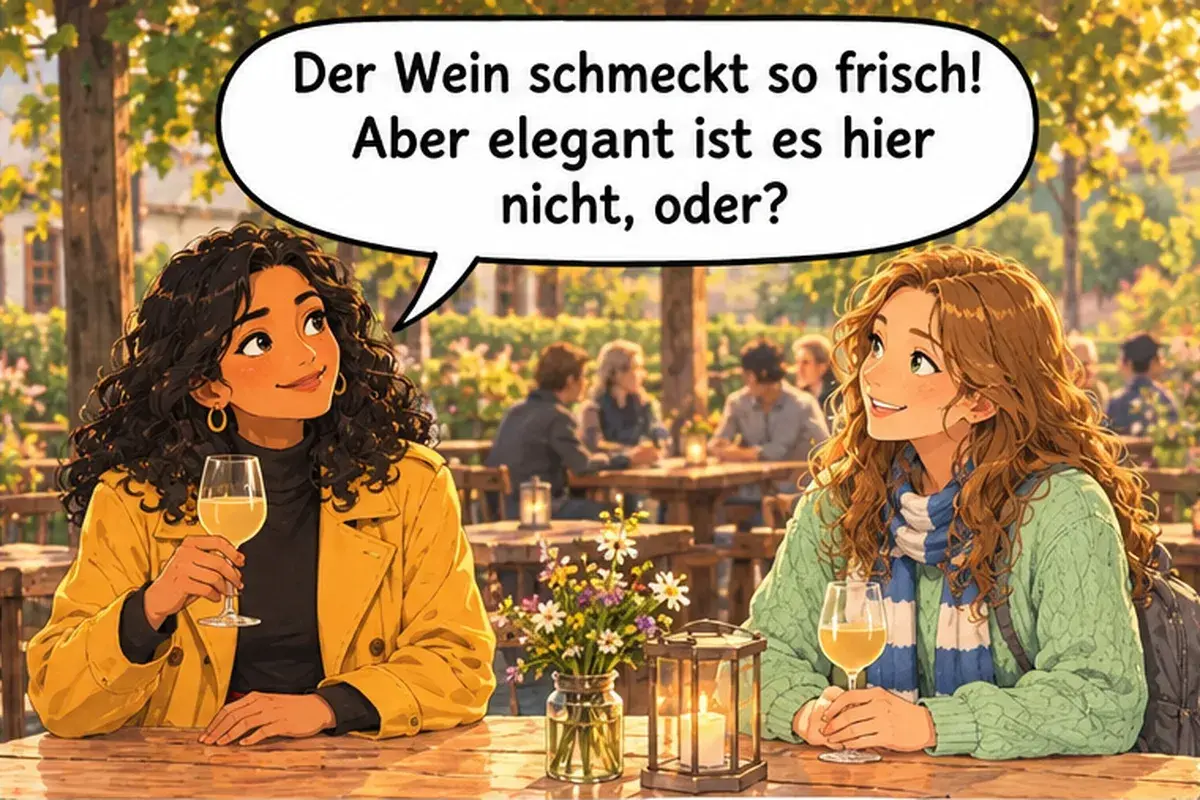
- Priya
Der Wein schmeckt so frisch! Aber elegant ist es hier nicht, oder?
The wine tastes so fresh! But it isn't elegant here, is it?
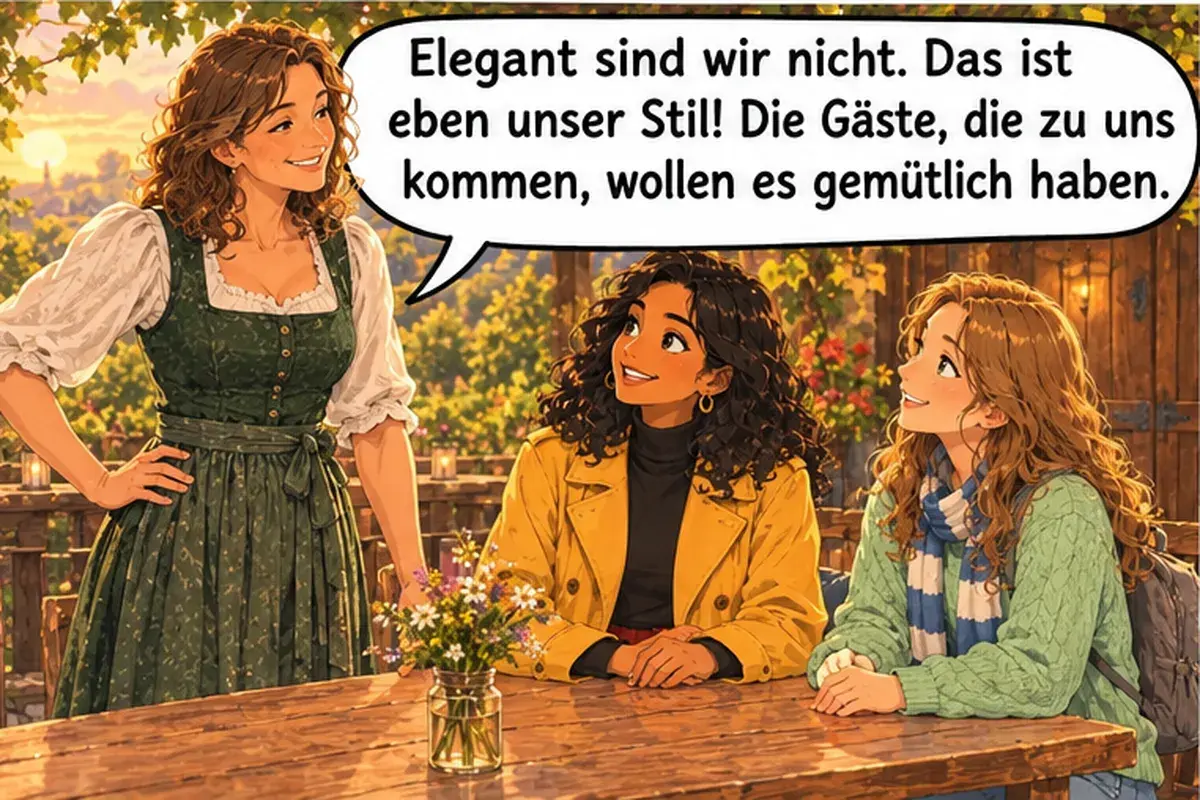
- Winzerin
Elegant sind wir nicht. Das ist eben unser Stil! Die Gäste, die zu uns kommen, wollen es gemütlich haben.
We're not elegant. That's just our style! The guests who come to us want it cozy.
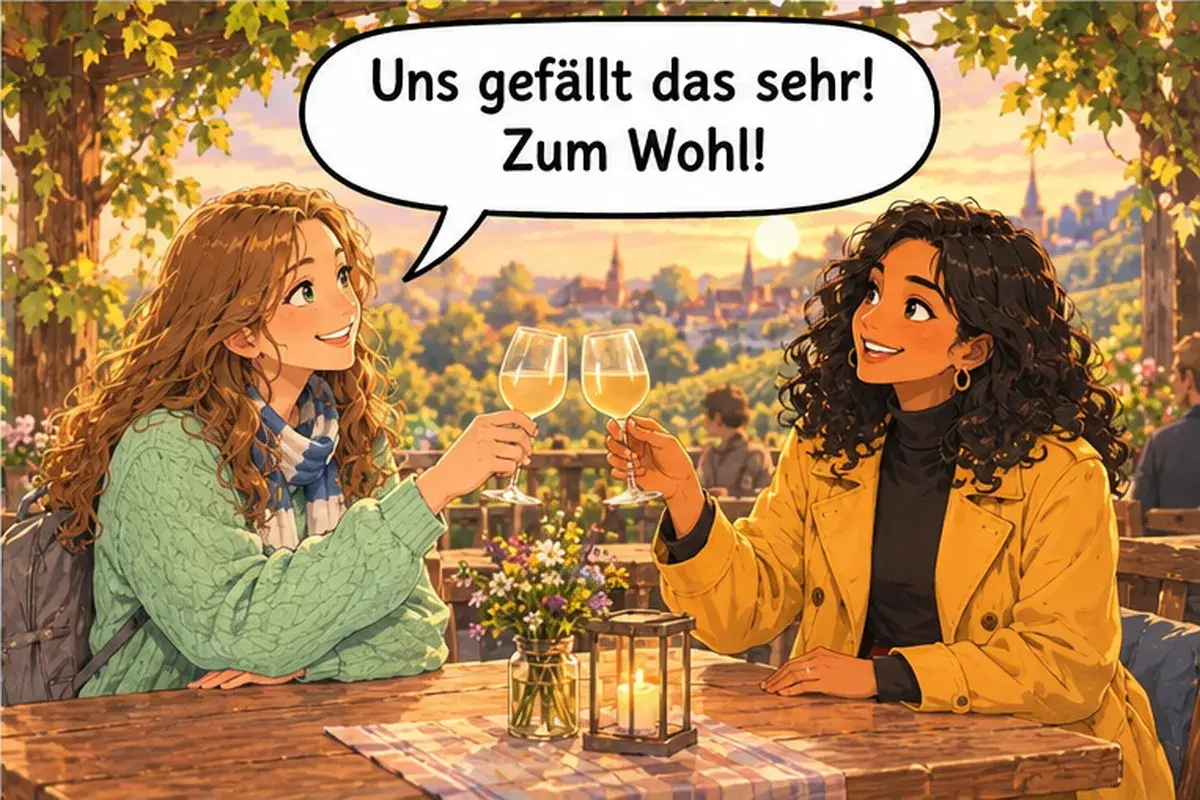
- Katja
Uns gefällt das sehr! Zum Wohl!
We really like this! Cheers!
Grammar for this text
- Ist der Wein, den es hier gibt, von Ihnen? — "Is the wine they have here from you?" This is a relative clause:
denmeans "that/which" and refers toWein(masculine). Afteres gibtyou need the accusative, so it'sden, notder;gibtgoes to the end. der Weinberg, den Sie dort auf dem Hügel sehen, gehört mir — "the vineyard you see over there on the hill belongs to me."denagain means "that/which":Weinbergis masculine and it's the thing being seen, so it's accusative.gehört mirmeans "belongs to me". - Die Tische im Garten sind noch frei, auch wenn es heute etwas kühl ist — "The tables in the garden are still free, even though it's a little chilly today."
auch wennmeans "even if, even though":istgoes to the end of the clause. - Könnten Sie mir bitte erklären, was „Sturm“ ist? — "Could you please explain to me what 'Sturm' is?" A polite request (A2, unit 15);
was „Sturm“ istis a question inside a sentence, with the verb at the end. Würden Sie uns bitte zwei Gläser bringen? — "Would you please bring us two glasses?" The same idea withwürden:bringengoes to the end. - Sturm ist der junge Wein, der aus den ersten Trauben gepresst wird — "Sturm is the young wine that's pressed from the first grapes." This is the passive (unit 5):
wird … gepresstmeans "is pressed". In the clause both verb parts go to the end, the participle first:gepresst wird. Die Ernte hat ja erst letzte Woche angefangen — "The harvest only started last week, after all."hat … angefangenis the Perfekt ofanfangen;jahere means "after all". - Das Essen holen Sie sich am Buffet, sobald Sie Hunger haben — "You get the food yourself at the buffet as soon as you're hungry."
sobaldmeans "as soon as":habengoes to the end.Das Essencomes first because it's what the sentence is about, butholenis still second. - Im Reiseführer steht, dass der Heurige geöffnet ist, wenn ein Zweig über der Tür hängt — "The guidebook says that the Heuriger is open when a branch hangs over the door." Two clauses in a row, and each has its verb at the end. Elegant sind wir nicht — "We're not elegant."
elegantis moved to the front for emphasis, and the verb stays second.
Words and grammar of the unit: Take a weekend trip to Vienna.
Learn the words from the texts with flashcards
In the app, you can tap any word in a text to see its translation, forms and examples, and new words stick with flashcards. 15 minutes a day.
Start for freeEverything is open for free. No card needed to sign up.