

German dialogue with translation · B1 · 15 lines
Ich hätte gern eine Melange I'd like a Melange
Comic · 15 panels
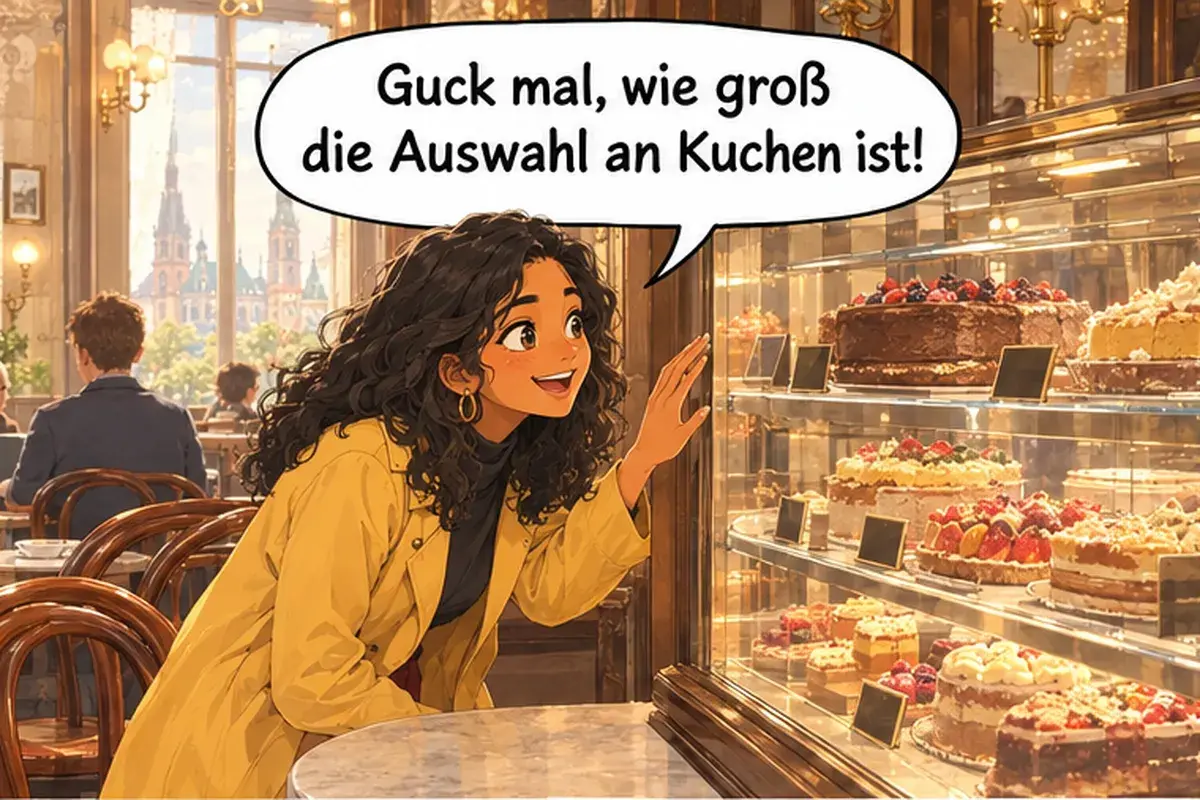
- Priya
Guck mal, wie groß die Auswahl an Kuchen ist!
Look how big the selection of cake is!
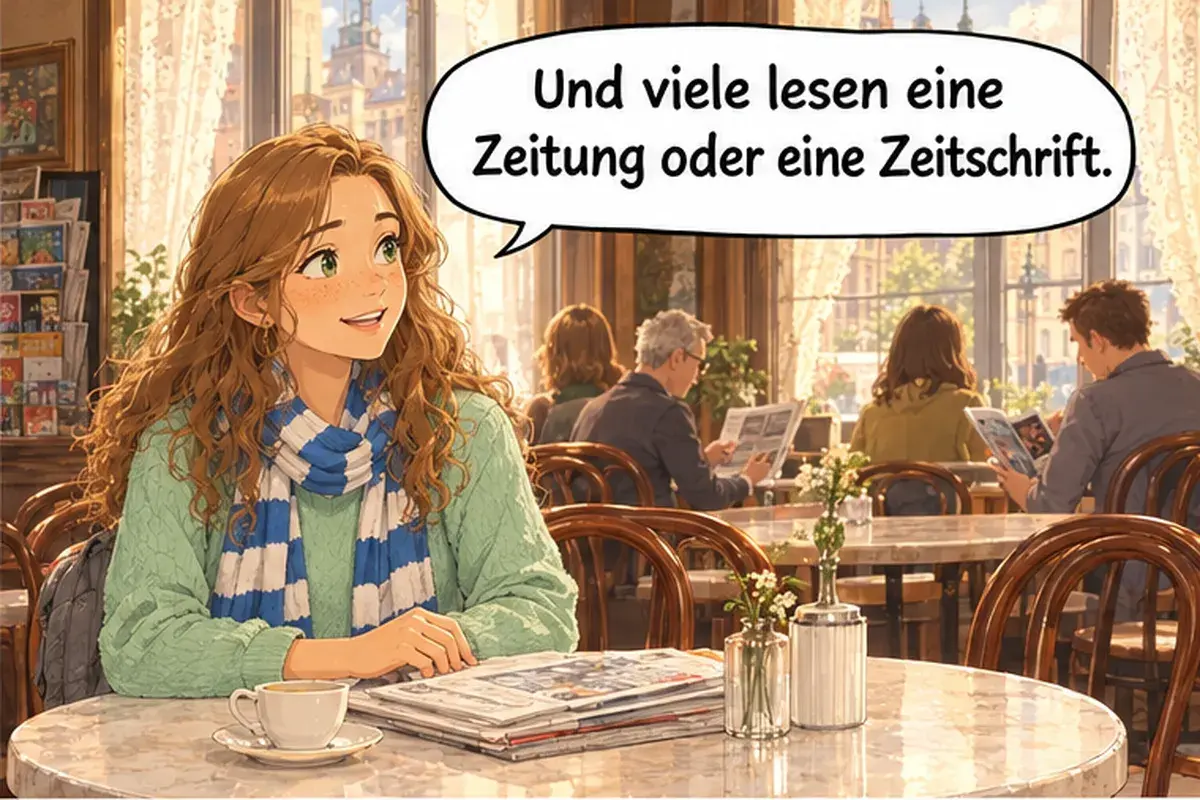
- Katja
Und viele lesen eine Zeitung oder eine Zeitschrift.
And lots of people are reading a newspaper or a magazine.
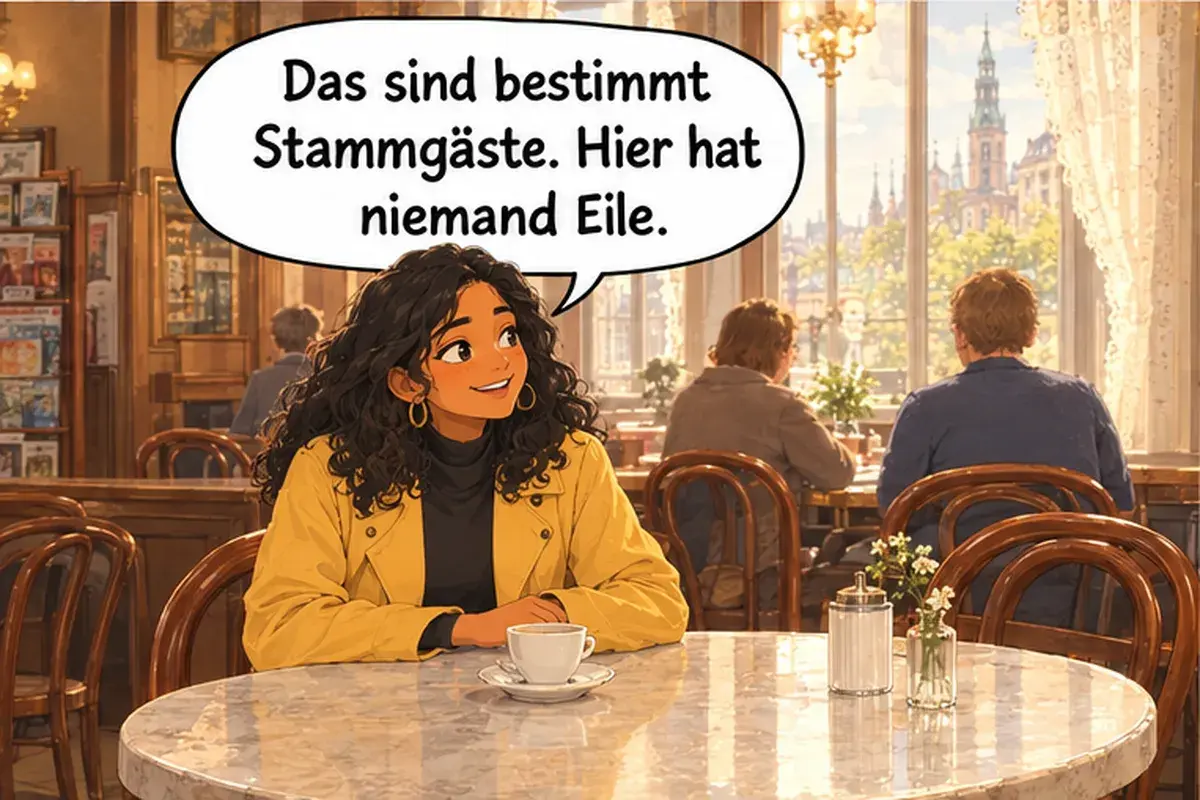
- Priya
Das sind bestimmt Stammgäste. Hier hat niemand Eile.
They must be regulars. Nobody's in a hurry here.
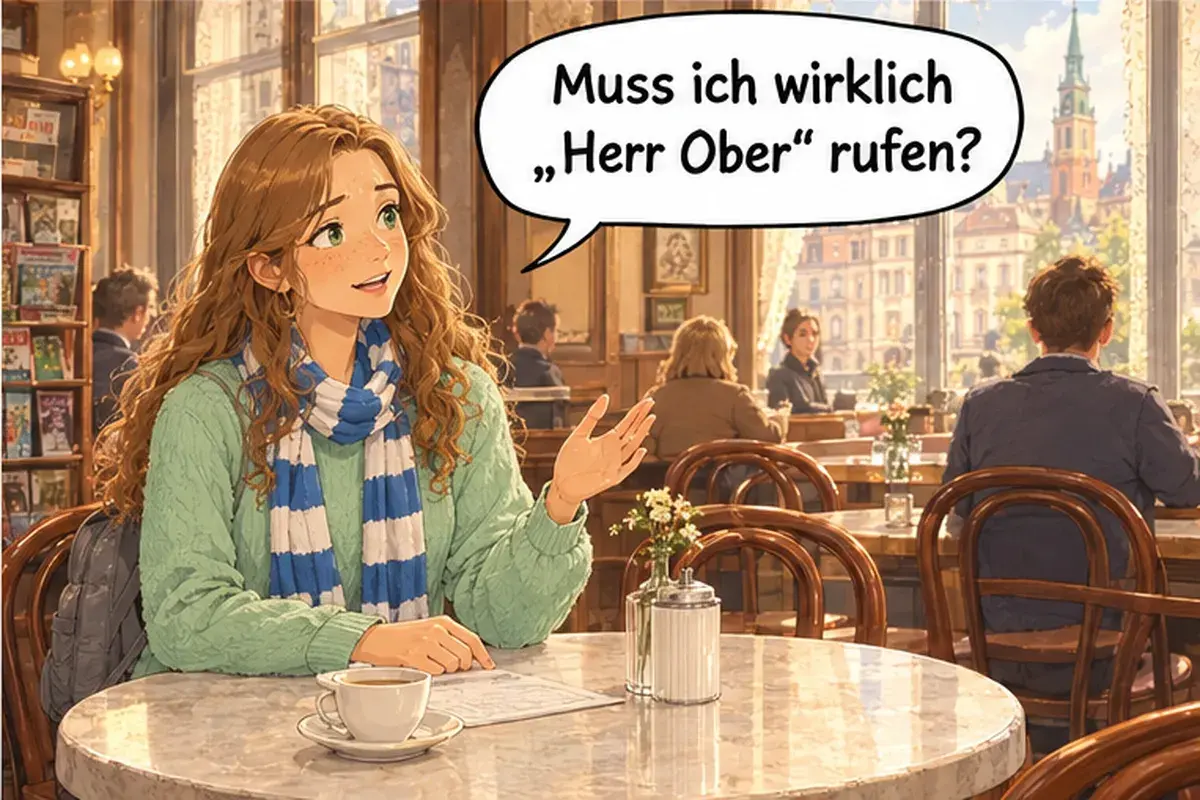
- Katja
Muss ich wirklich „Herr Ober“ rufen?
Do I really have to call out "Herr Ober"?
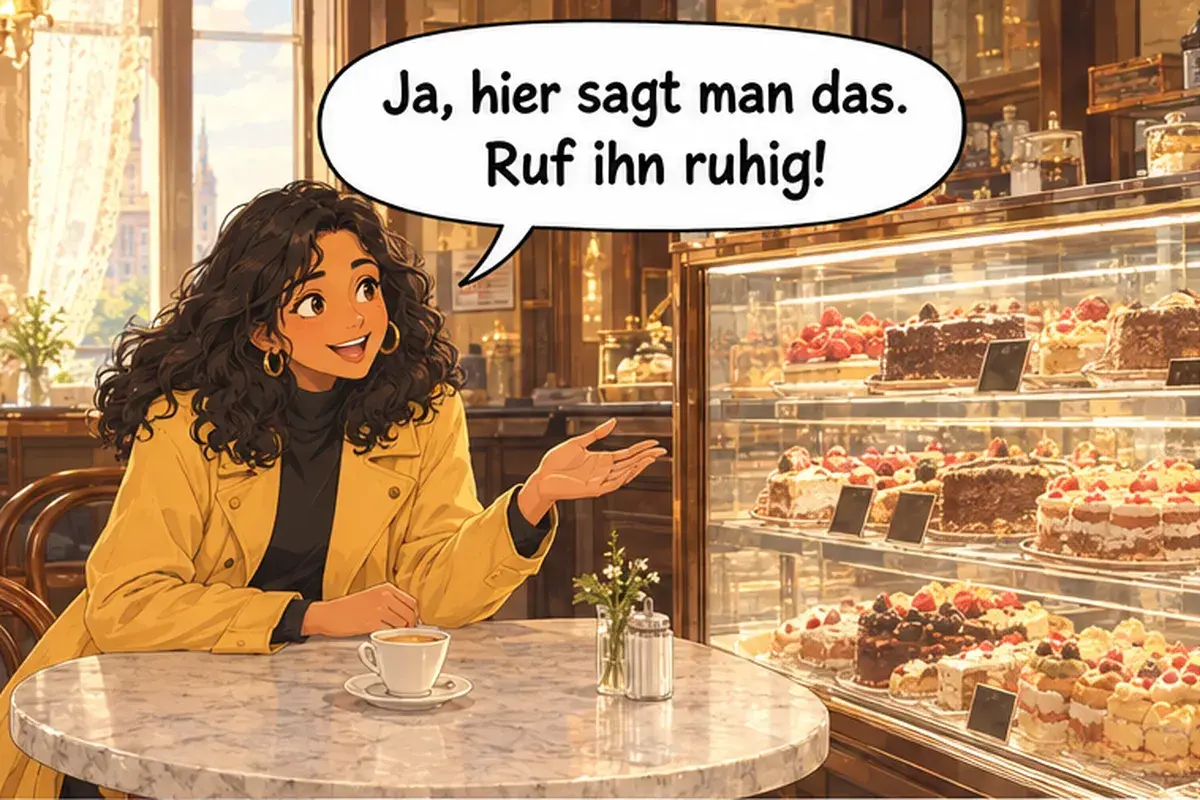
- Priya
Ja, hier sagt man das. Ruf ihn ruhig!
Yes, that's what you say here. Go ahead and call him!
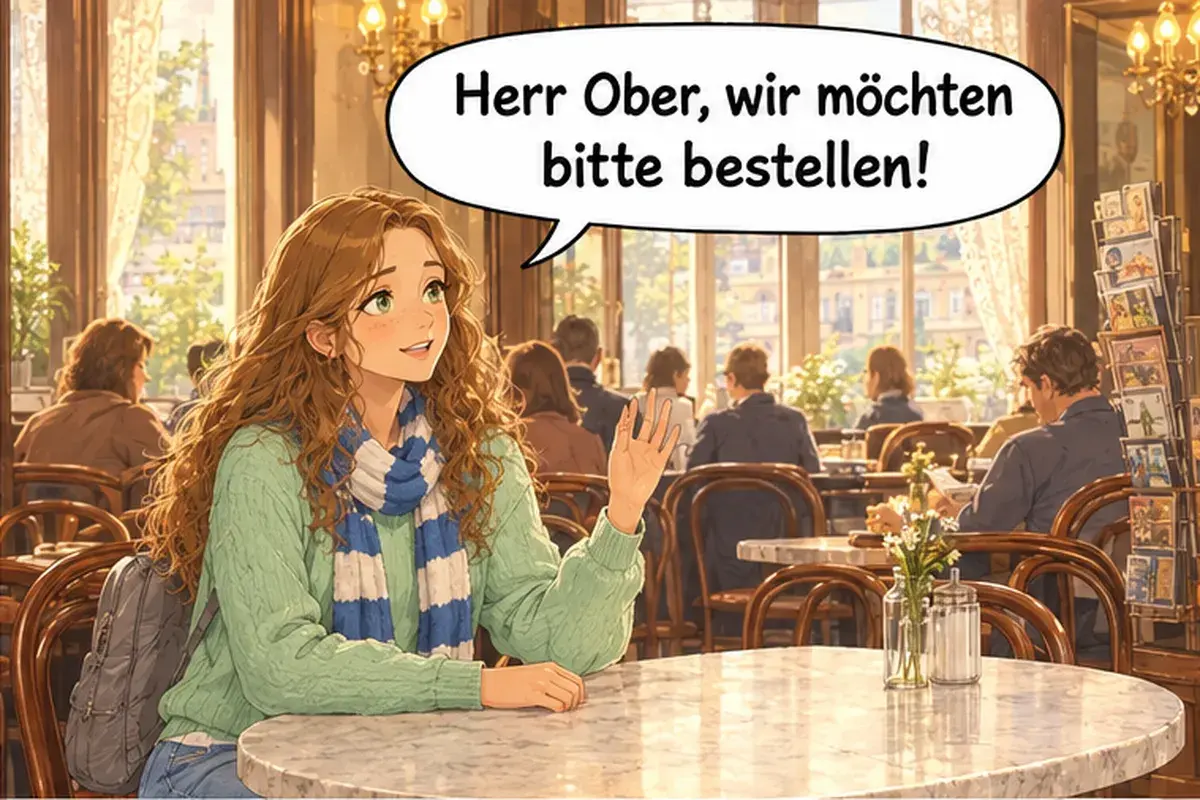
- Katja
Herr Ober, wir möchten bitte bestellen!
Herr Ober, we'd like to order, please!
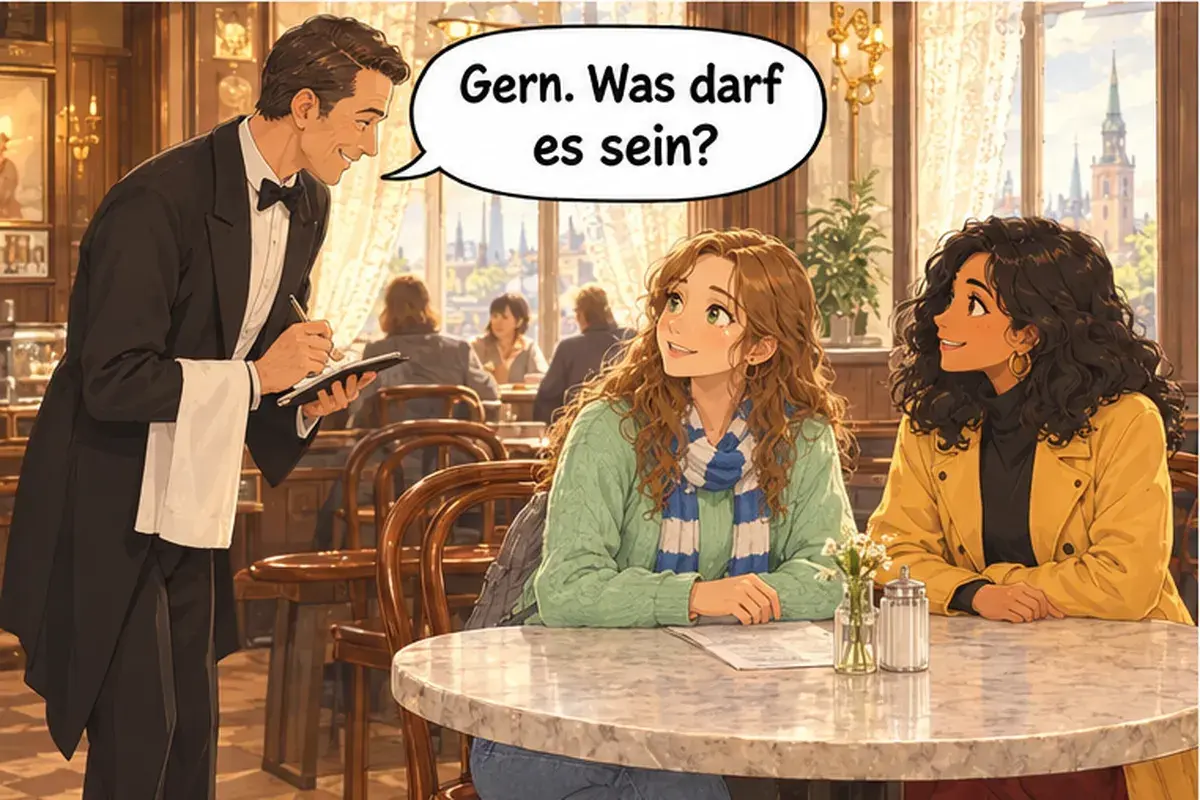
- Kellner
Gern. Was darf es sein?
Gladly. What can I get you?
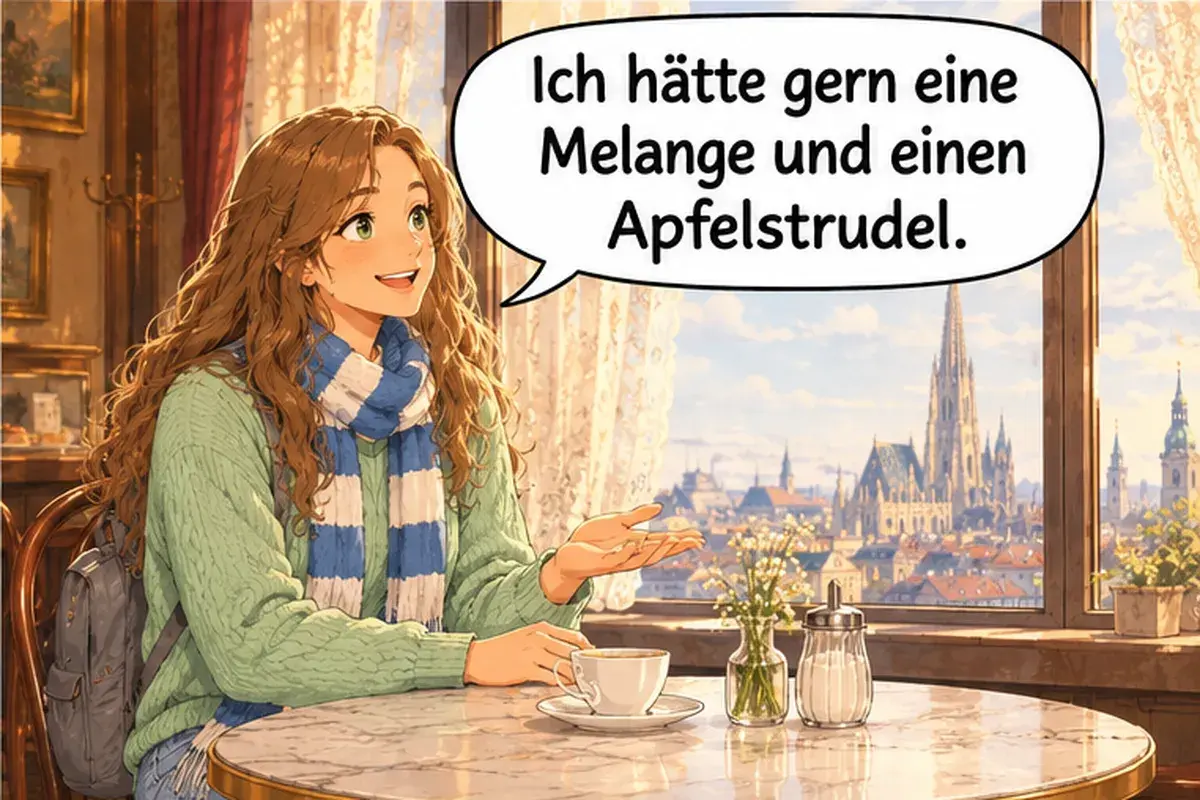
- Katja
Ich hätte gern eine Melange und einen Apfelstrudel.
I'd like a Melange and an apple strudel.
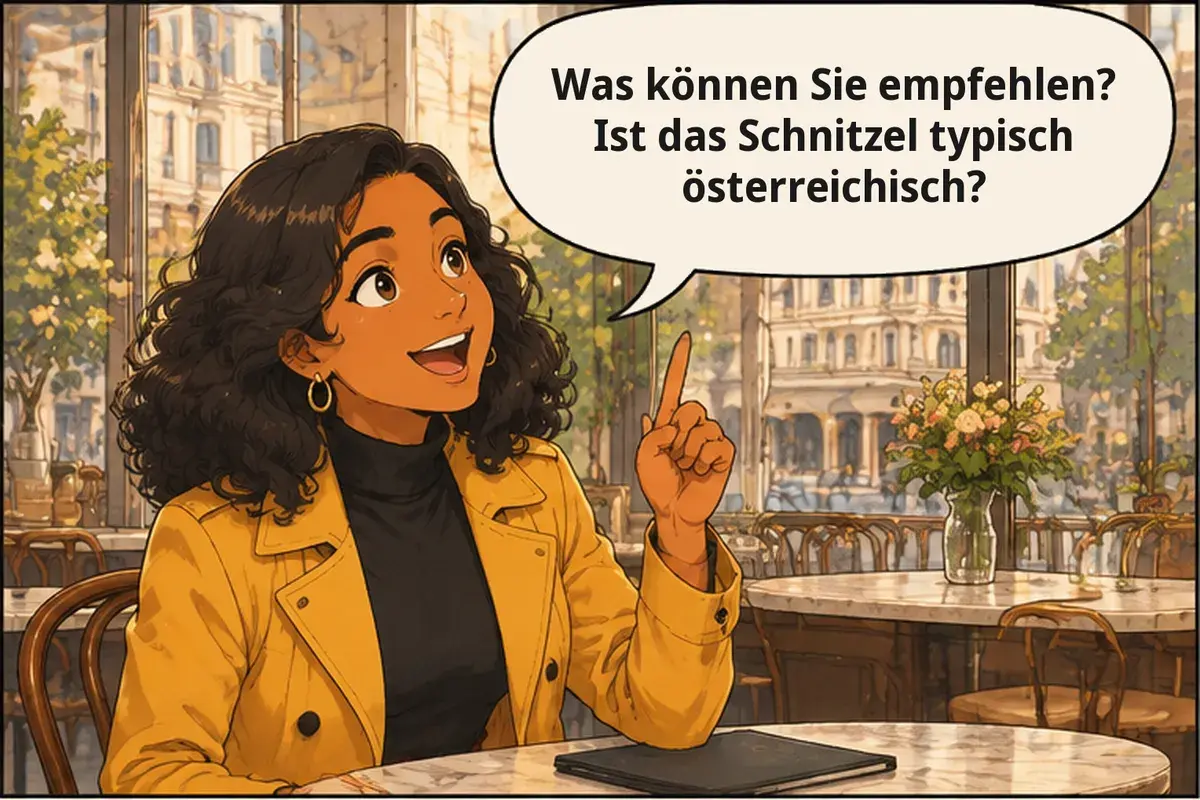
- Priya
Was können Sie empfehlen? Ist das Schnitzel typisch österreichisch?
What can you recommend? (formal) Is the schnitzel typically Austrian?
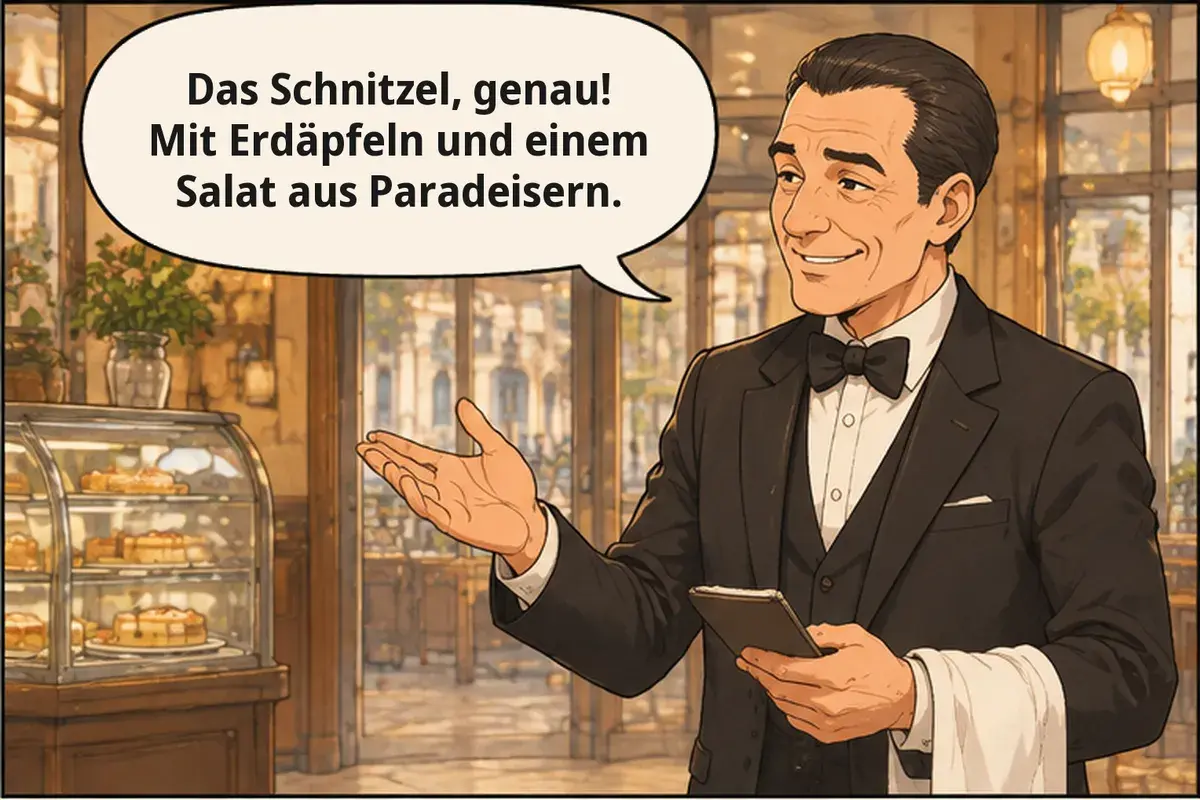
- Kellner
Das Schnitzel, genau! Mit Erdäpfeln und einem Salat aus Paradeisern.
The schnitzel, exactly! With potatoes and a salad of tomatoes.
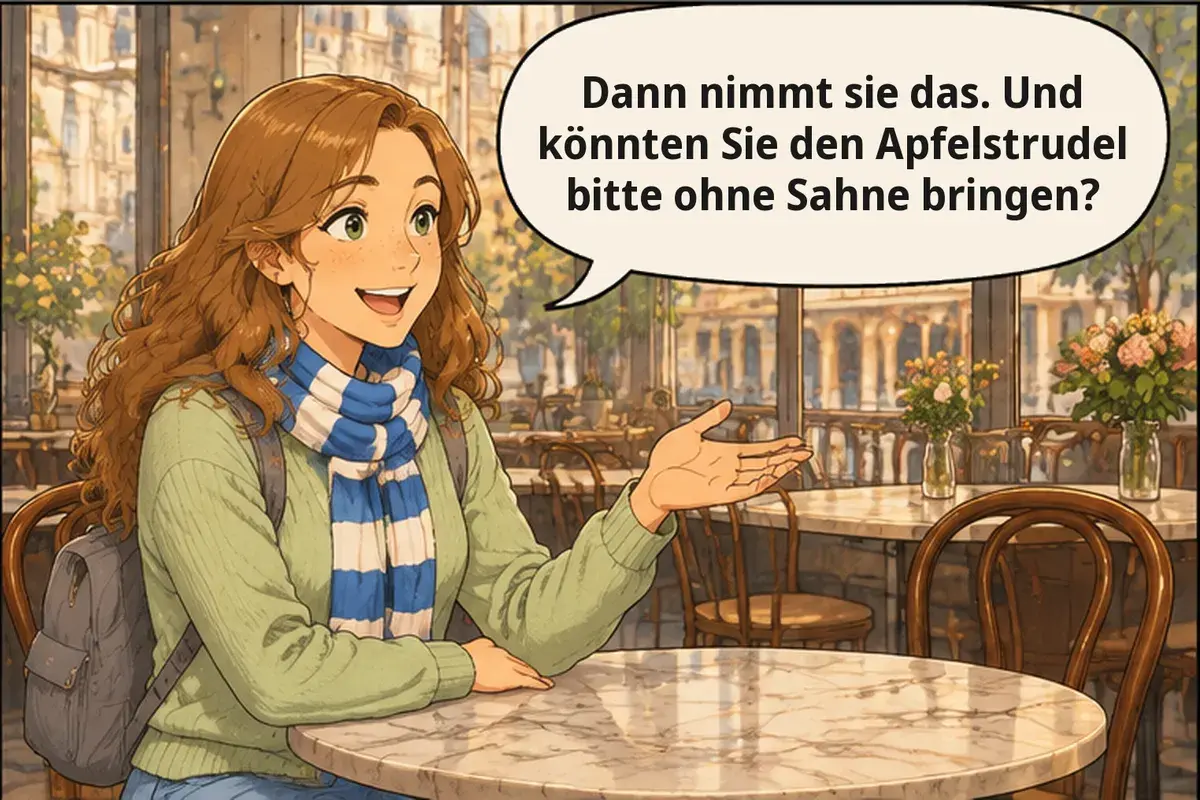
- Katja
Dann nimmt sie das. Und könnten Sie den Apfelstrudel bitte ohne Sahne bringen?
Then she'll have that. And could you bring the apple strudel without cream, please? (formal)
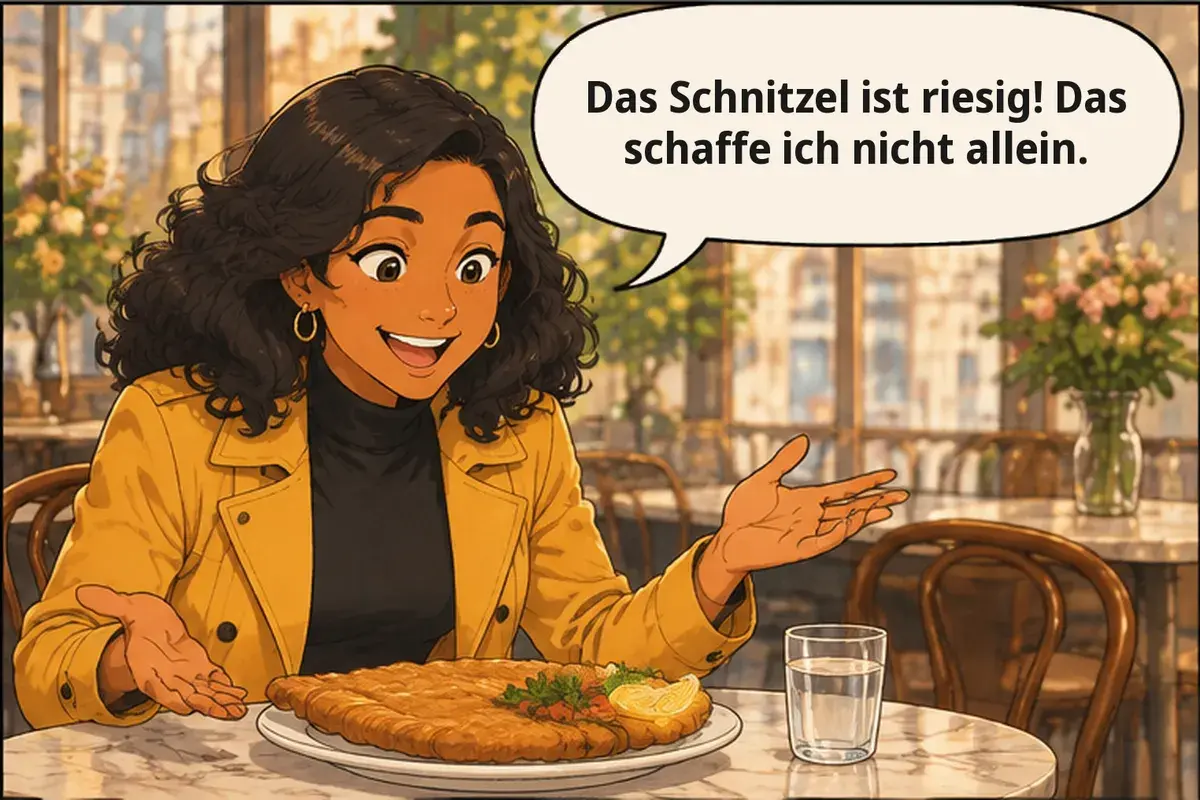
- Priya
Das Schnitzel ist riesig! Das schaffe ich nicht allein.
The schnitzel is huge! I can't finish it on my own.
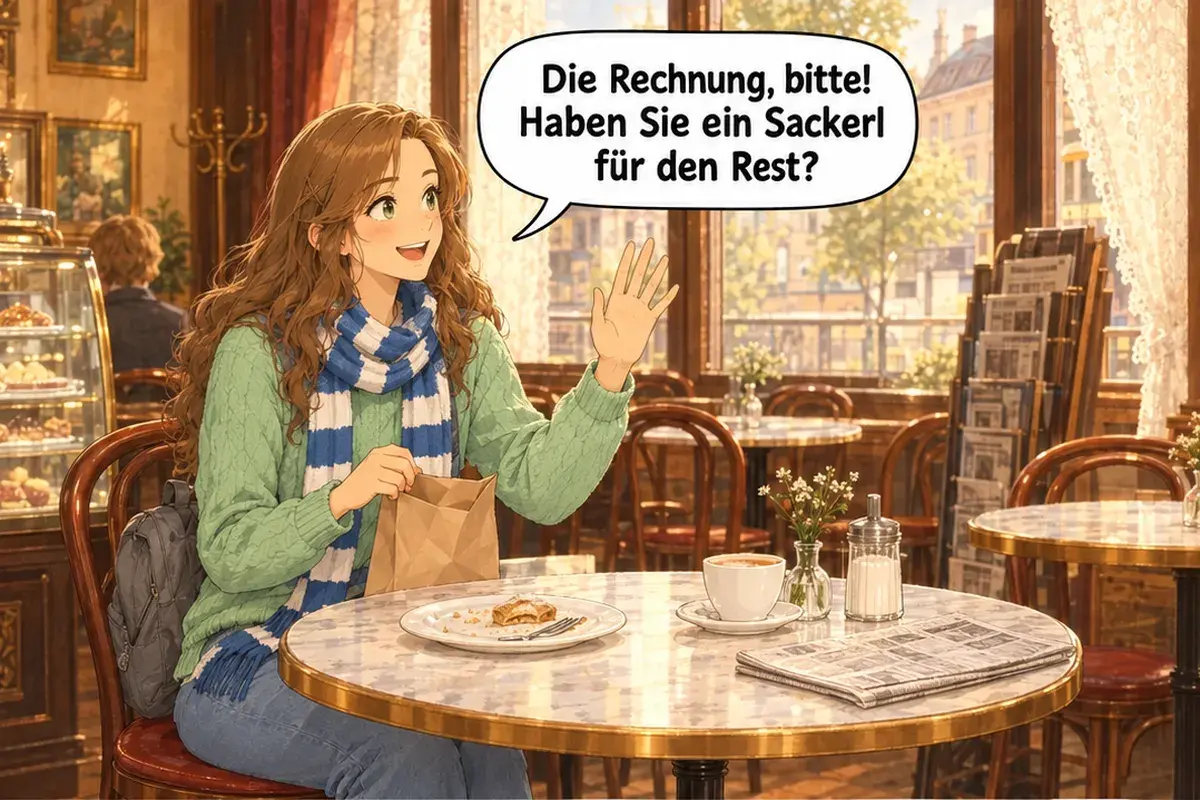
- Katja
Die Rechnung, bitte! Haben Sie ein Sackerl für den Rest?
The check, please! Do you have a bag for the rest? (formal)
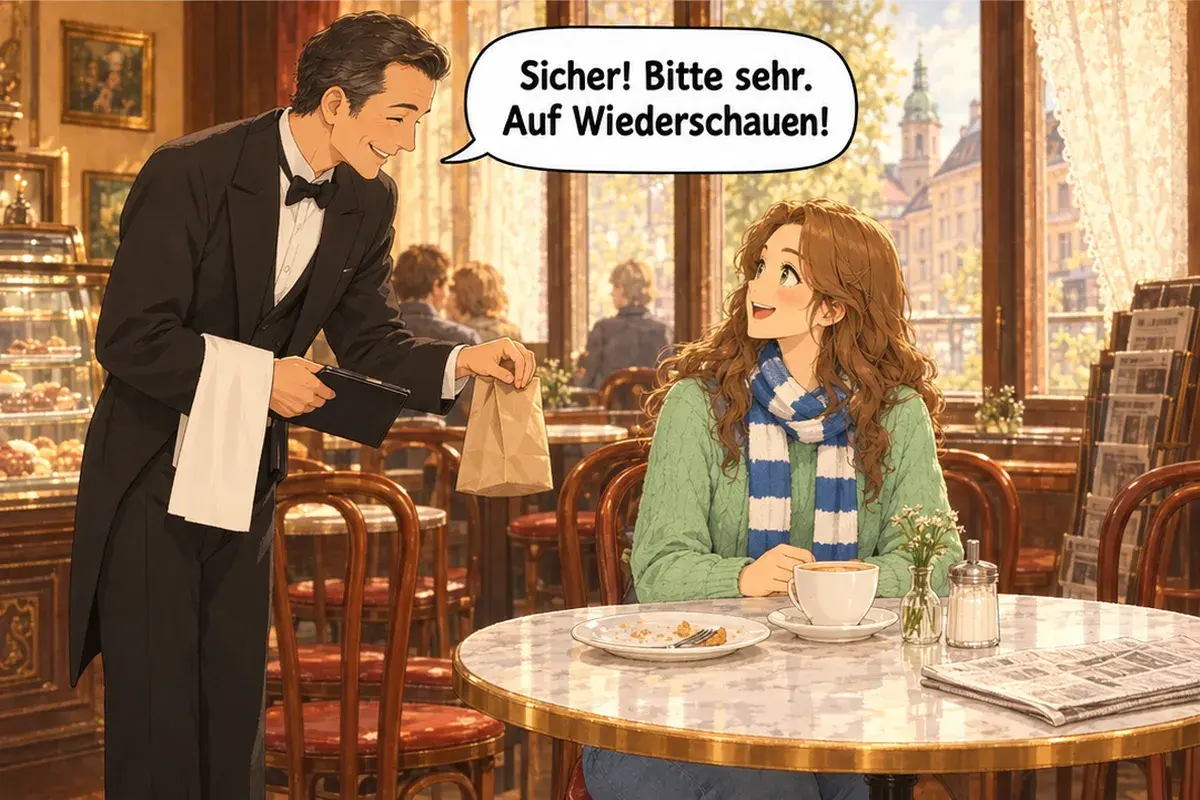
- Kellner
Sicher! Bitte sehr. Auf Wiederschauen!
Sure! Here you go. Goodbye!
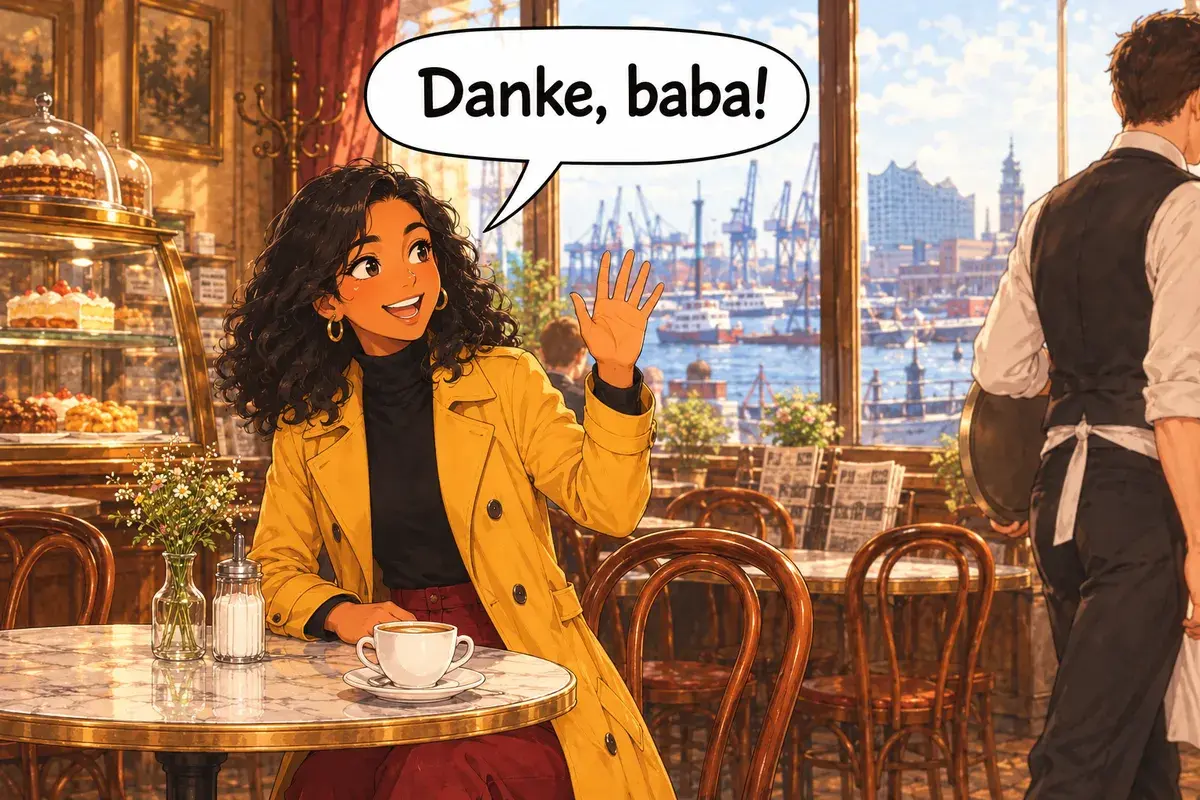
- Priya
Danke, baba!
Thanks, bye!
Grammar for this text
- Guck mal, wie groß die Auswahl an Kuchen ist! — "Look how big the selection of cake is!"
guckis a request, "look" (fromgucken, said to a friend with du), andmalmakes it softer (A2). Afterwiein an exclamation the verb goes to the end:wie groß die Auswahl an Kuchen ist.Auswahl anmeans "a selection of". - Hier hat niemand Eile — "Nobody's in a hurry here."
hatis the er form ofhaben:niemand("no one") takes the same verb form as "he".Eilemeans "hurry". - Muss ich wirklich „Herr Ober“ rufen? — "Do I really have to call out 'Herr Ober'?"
mussis the ich form ofmüssen: the ich form has no ending.Herr Oberis how you address a waiter in old Viennese coffeehouses. In Hamburg nobody says it; people sayEntschuldigung. - Ruf ihn ruhig! — "Go ahead and call him!"
rufis a request to someone you call du, fromrufen.ruhigis a small word (unit 8) that means "go ahead, feel free". - Ich hätte gern eine Melange und einen Apfelstrudel — "I'd like a Melange and an apple strudel."
hätte gernis the polite "I'd like" you use in any café (A1, A2 unit 15). AMelangeis a Viennese coffee with hot milk and milk foam. BeforeApfelstrudelyou seeeinen: what you order is in the accusative case. - Was können Sie empfehlen? — "What can you recommend?" This is how you ask for advice in a café. Ist das Schnitzel typisch österreichisch? — "Is the schnitzel typically Austrian?"
österreichischmeans "Austrian". Mit Erdäpfeln und einem Salat aus Paradeisern — "With potatoes and a salad of tomatoes." These are Austrian words:Erdäpfelare potatoes,Paradeiserare tomatoes. Könnten Sie den Apfelstrudel bitte ohne Sahne bringen? — "Could you bring the apple strudel without cream, please?" A polite request withkönnten. Das schaffe ich nicht allein — "I can't manage that on my own."schaffenmeans "to manage, to finish". - Haben Sie ein Sackerl für den Rest? — "Do you have a bag for the rest?"
Sackerlis the Austrian word; in Hamburg you sayTüte.den Restis in the accusative case. Auf Wiederschauen! — "Goodbye!" A polite Austrian goodbye, the way the waiter says it. Danke, baba! — "Thanks, bye!"babais "bye" between friends; Priya jokingly picks up the local word.
Words and grammar of the unit: Take a weekend trip to Vienna.
Learn the words from the texts with flashcards
In the app, you can tap any word in a text to see its translation, forms and examples, and new words stick with flashcards. 15 minutes a day.
Start for freeEverything is open for free. No card needed to sign up.