

German dialogue with translation · B1 · 14 lines
Könnten Sie mir noch ein Kissen bringen? Could you bring me another pillow? (formal)
Comic · 14 panels
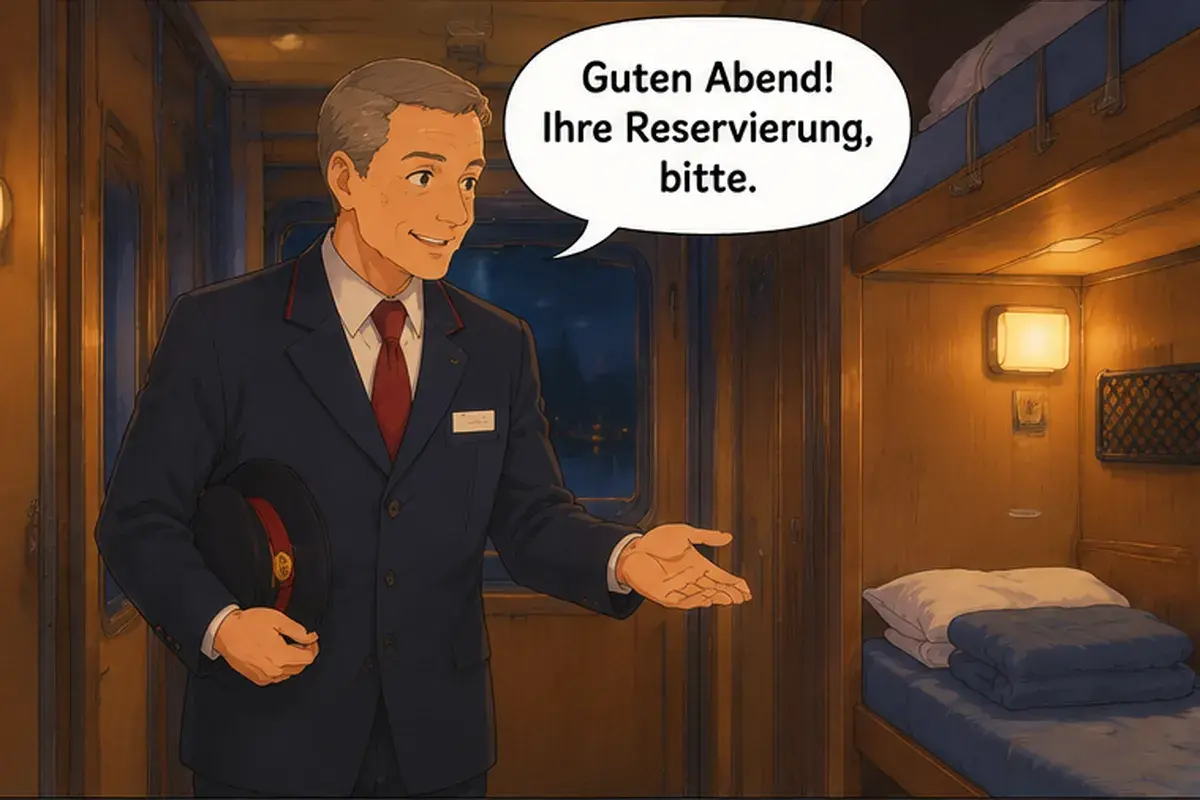
- Zugbegleiter
Guten Abend! Ihre Reservierung, bitte.
Good evening! Your reservation, please (formal).
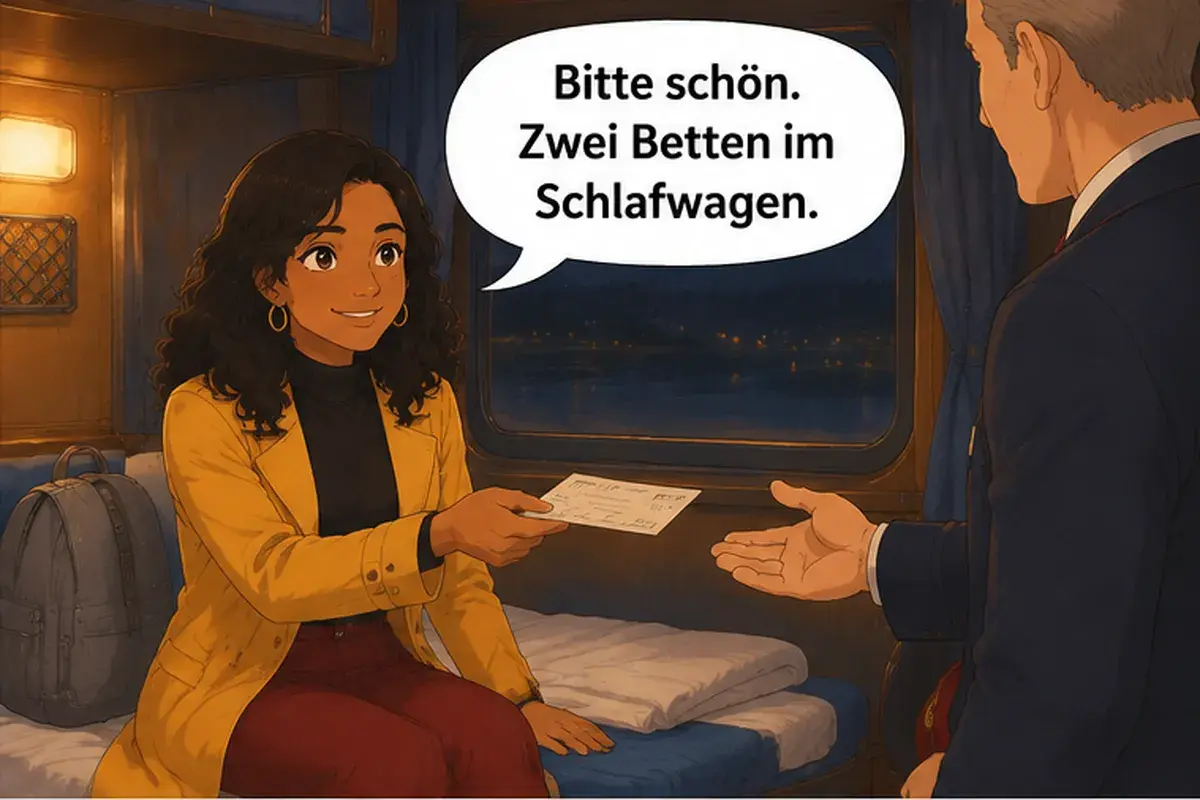
- Priya
Bitte schön. Zwei Betten im Schlafwagen.
Here you go. Two beds in the sleeper car.
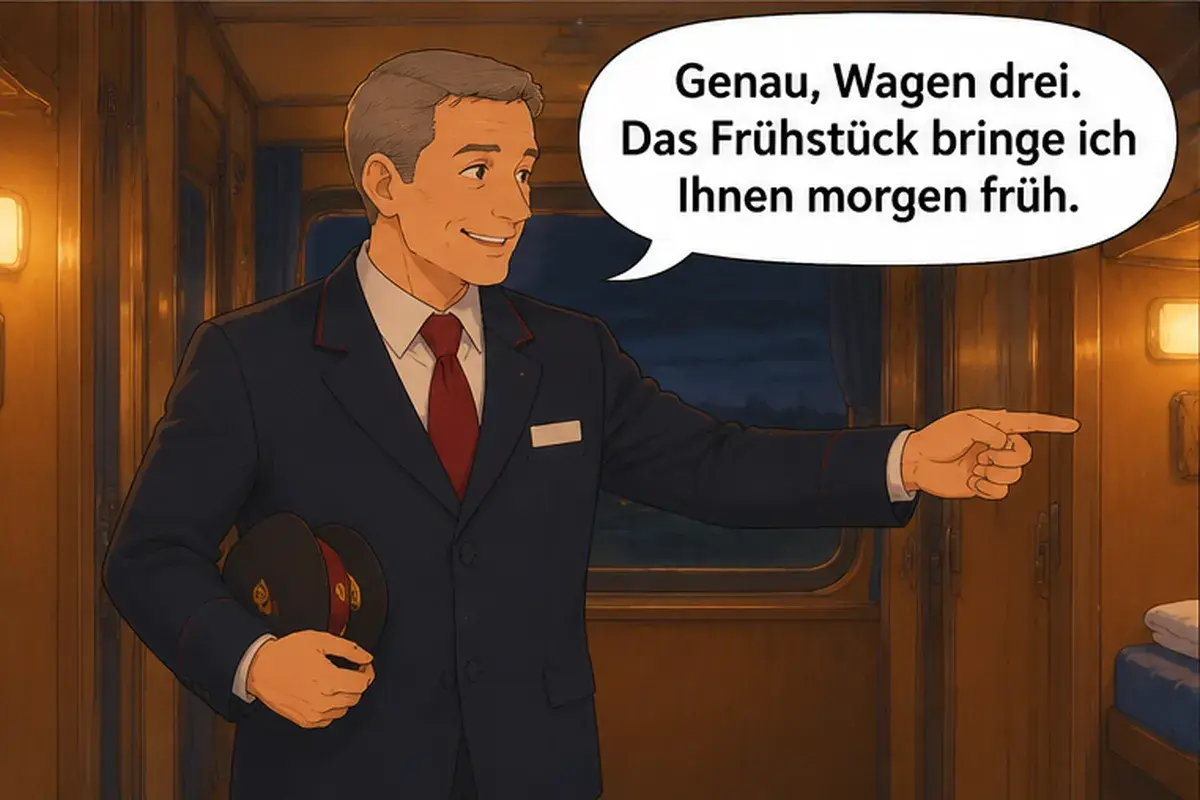
- Zugbegleiter
Genau, Wagen drei. Das Frühstück bringe ich Ihnen morgen früh.
Right, car three. I'll bring you breakfast tomorrow morning (formal).
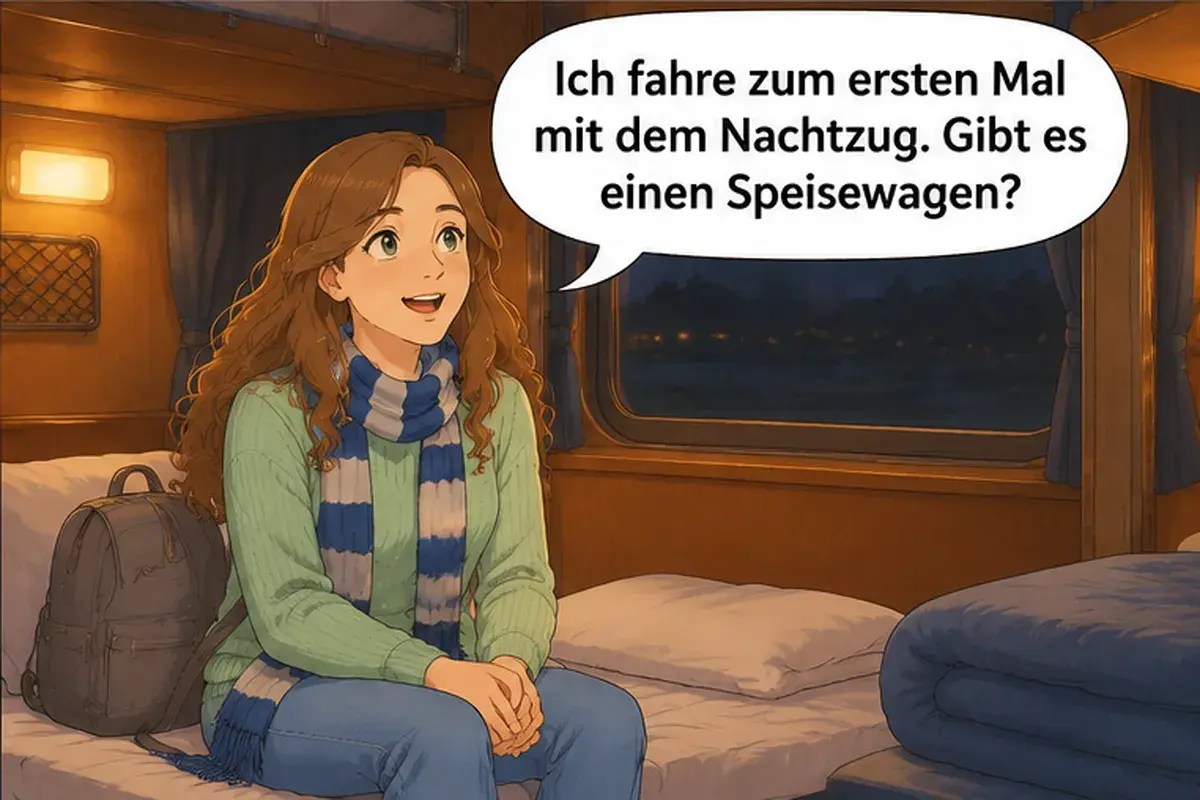
- Katja
Ich fahre zum ersten Mal mit dem Nachtzug. Gibt es einen Speisewagen?
This is my first time on a night train. Is there a dining car?
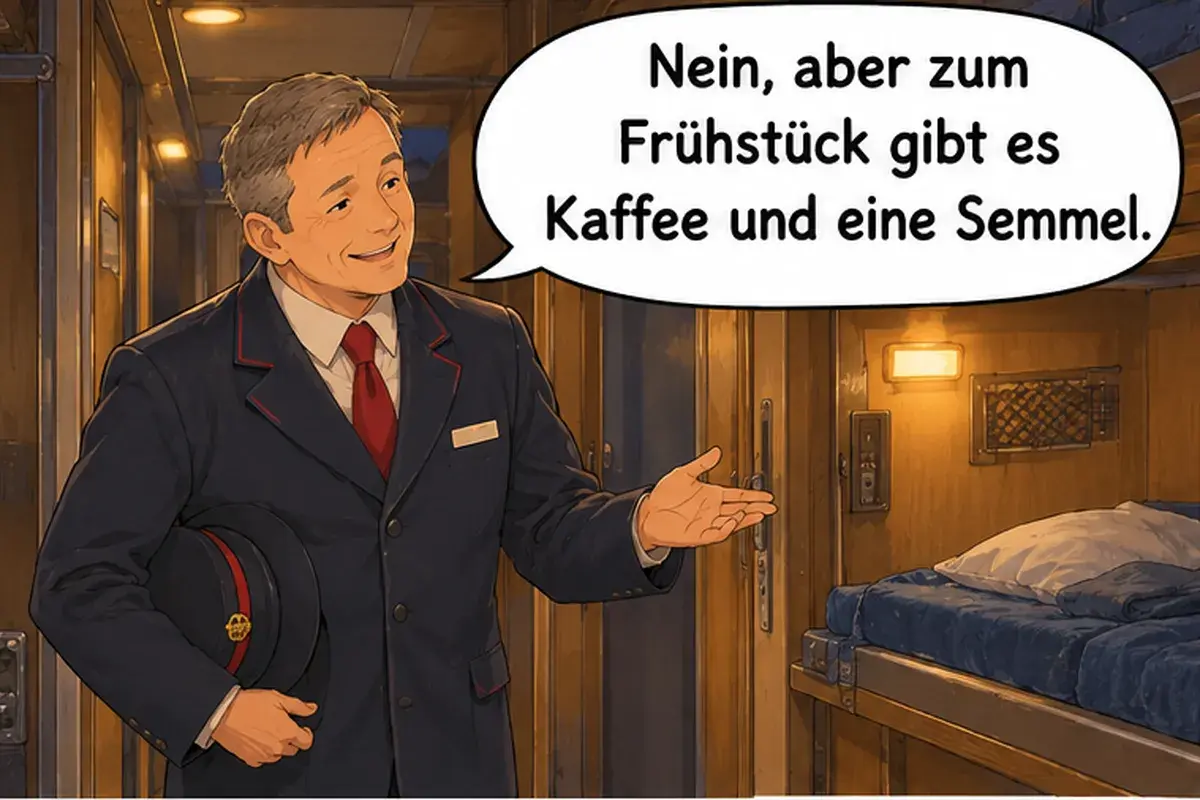
- Zugbegleiter
Nein, aber zum Frühstück gibt es Kaffee und eine Semmel.
No, but for breakfast there's coffee and a Semmel.
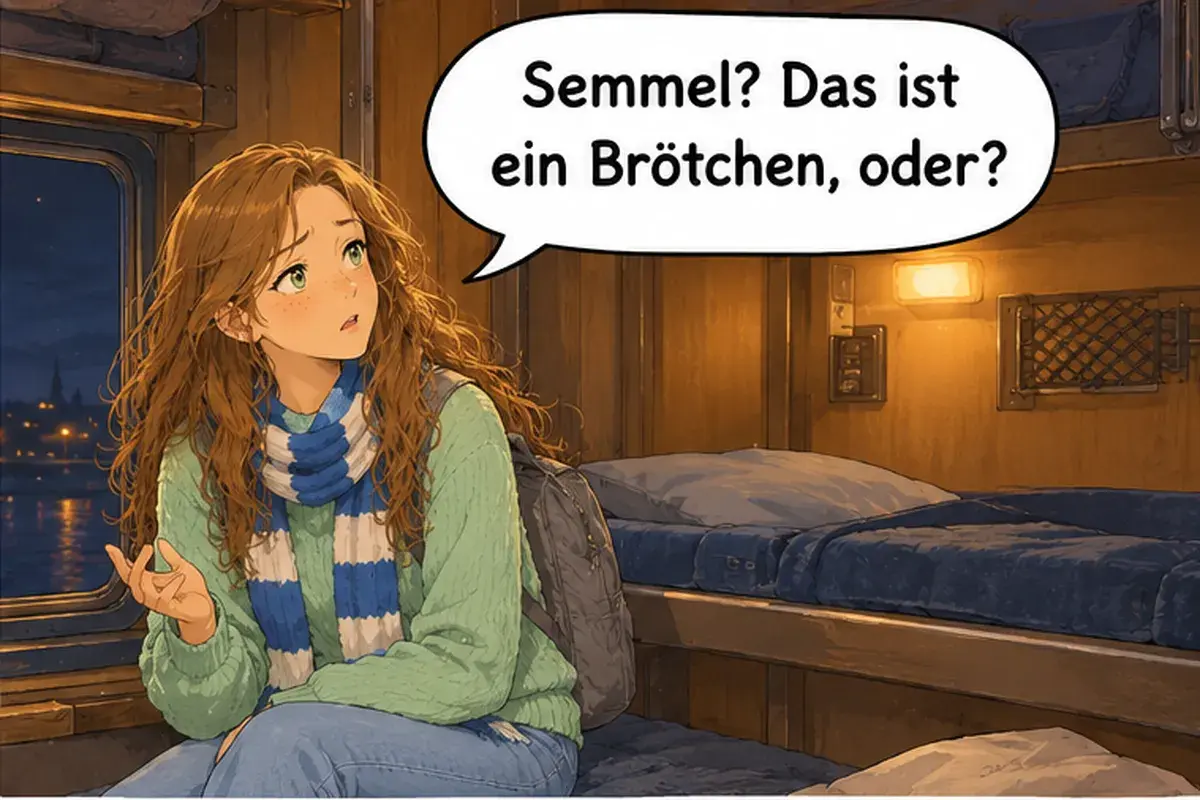
- Katja
Semmel? Das ist ein Brötchen, oder?
Semmel? That's a Brötchen, right?
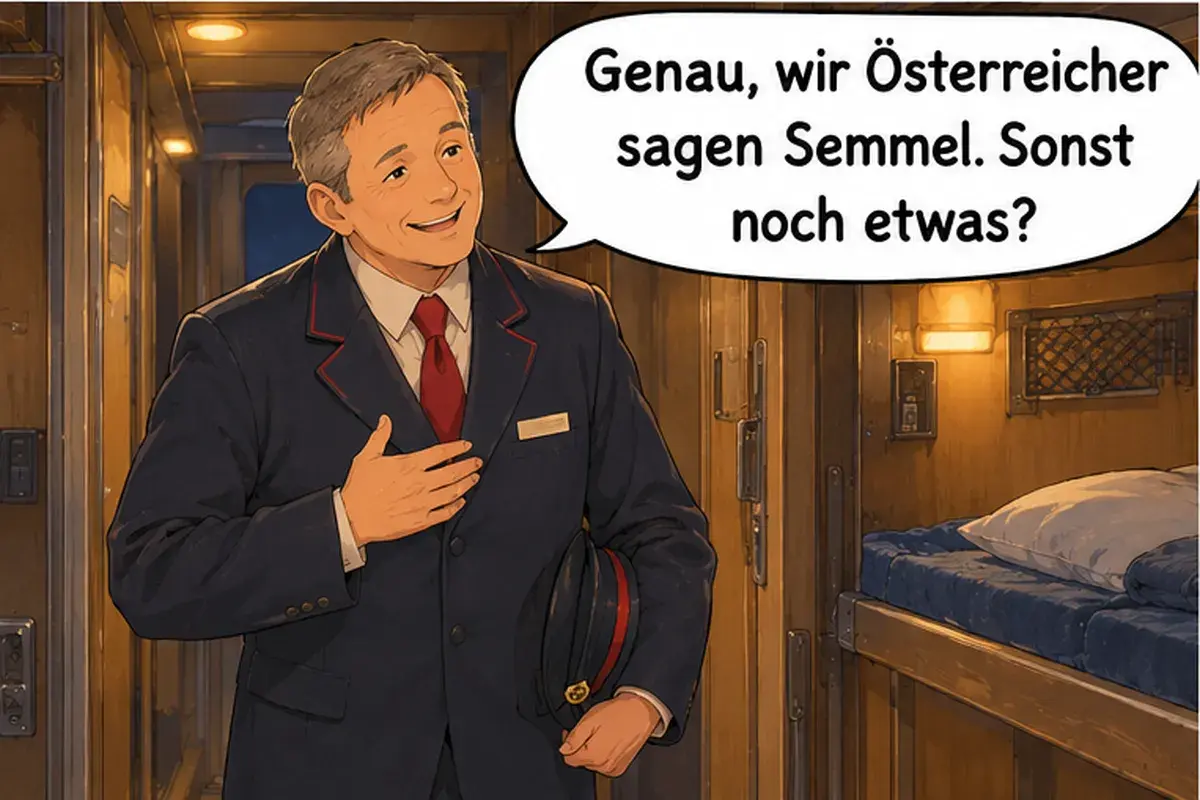
- Zugbegleiter
Genau, wir Österreicher sagen Semmel. Sonst noch etwas?
Right, we Austrians say Semmel. Anything else?
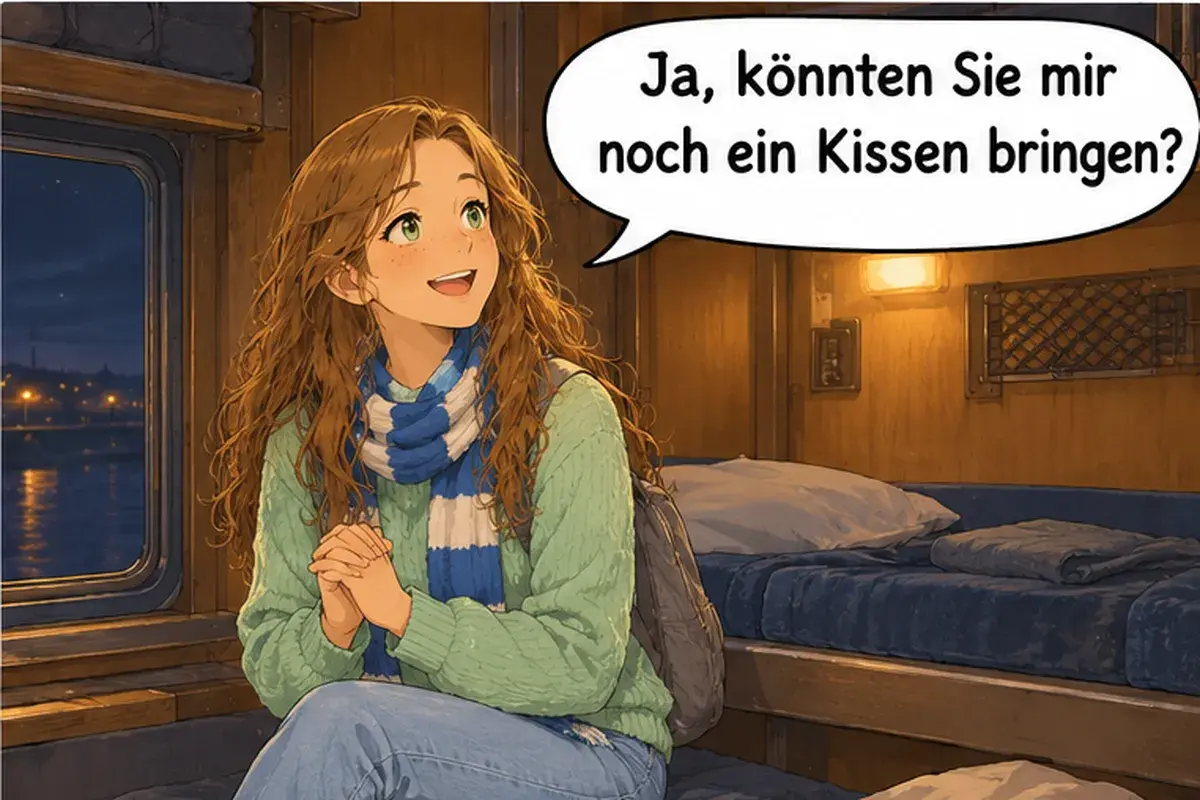
- Katja
Ja, könnten Sie mir noch ein Kissen bringen?
Yes, could you bring me another pillow? (formal)
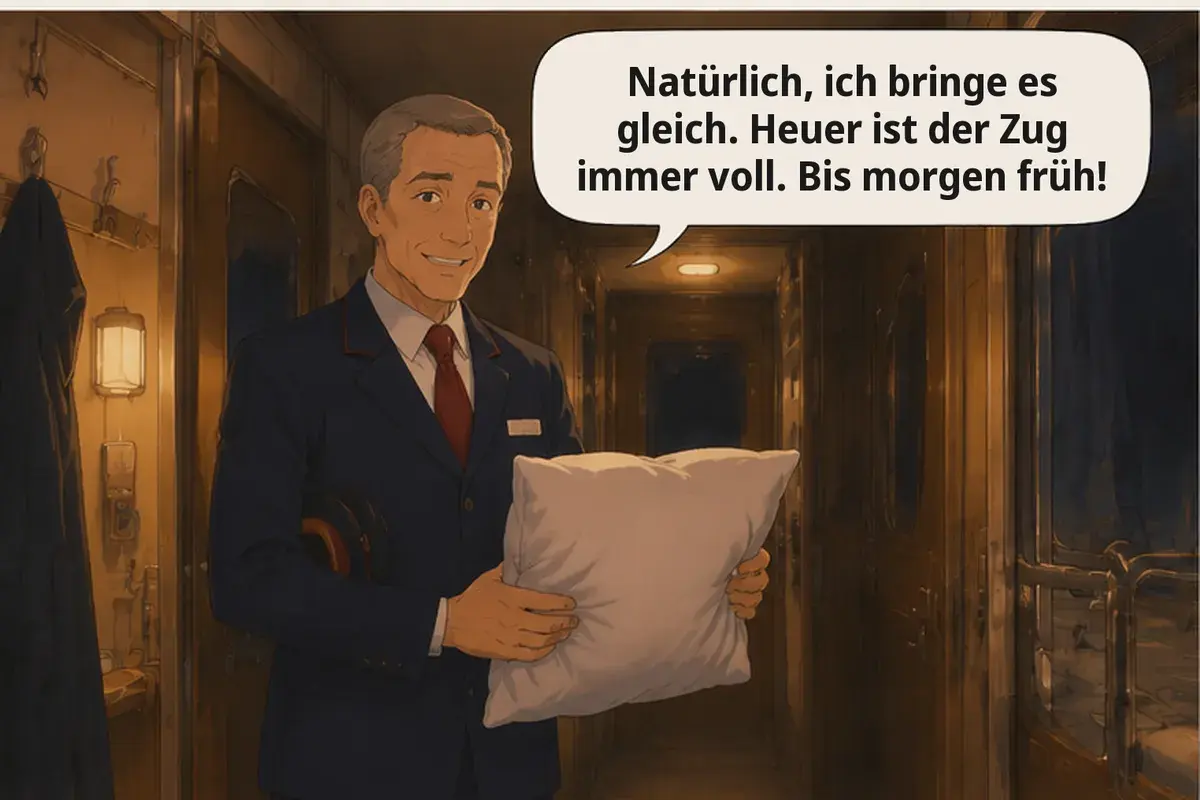
- Zugbegleiter
Natürlich, ich bringe es gleich. Heuer ist der Zug immer voll. Bis morgen früh!
Of course, I'll bring it right away. This year the train is always full. See you tomorrow morning!
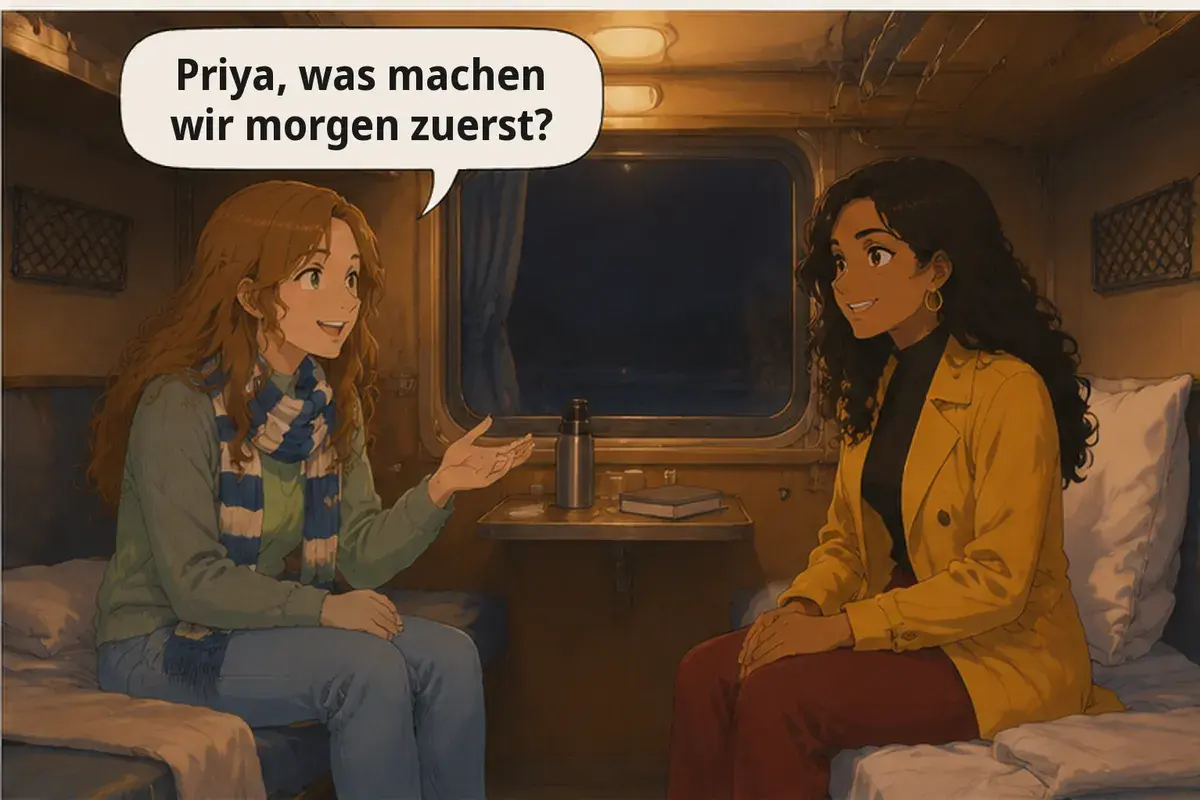
- Katja
Priya, was machen wir morgen zuerst?
Priya, what are we doing first tomorrow?
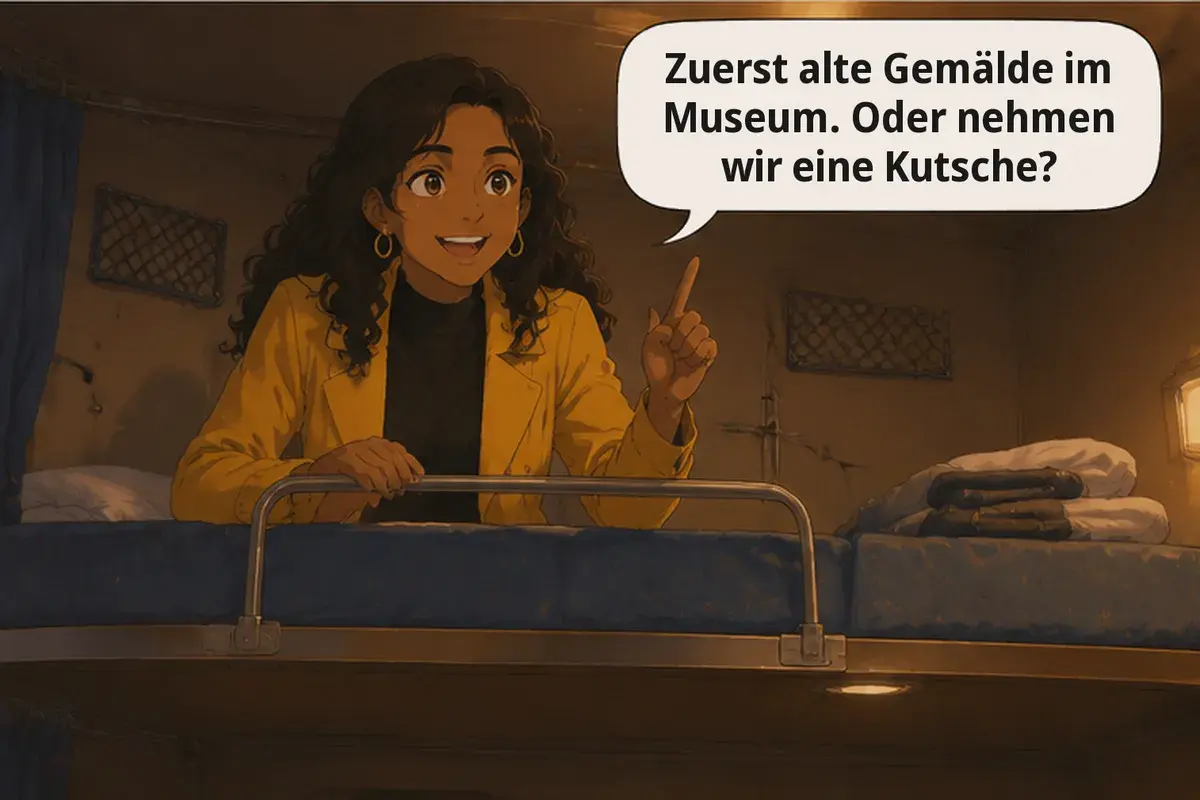
- Priya
Zuerst alte Gemälde im Museum. Oder nehmen wir eine Kutsche?
First, old paintings at the museum. Or should we take a carriage?
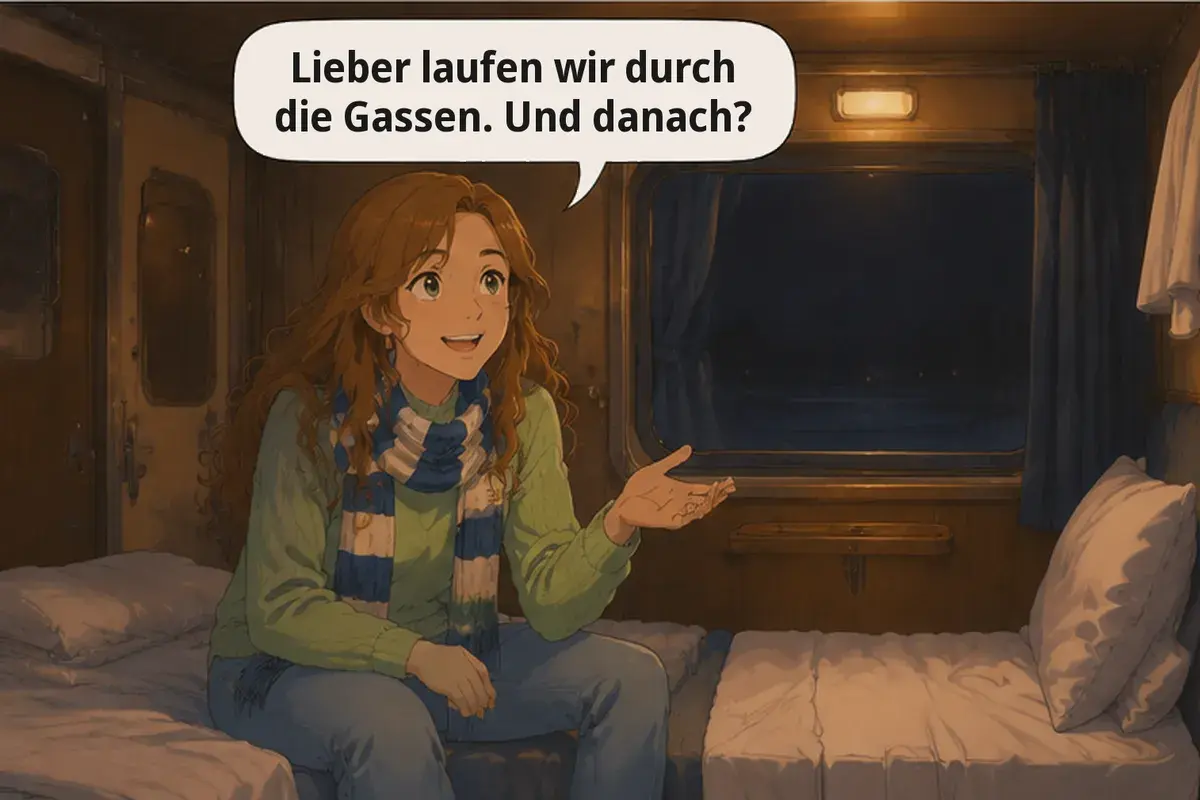
- Katja
Lieber laufen wir durch die Gassen. Und danach?
I'd rather walk through the alleys. And then what?
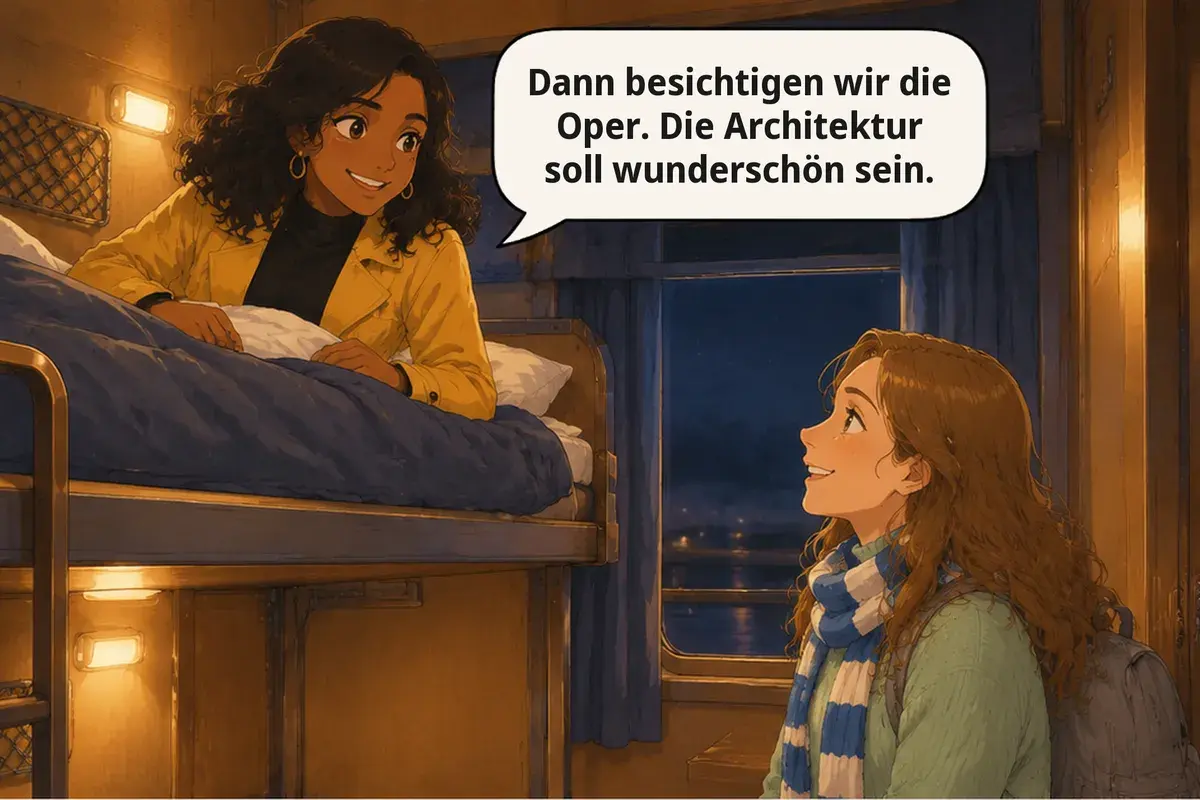
- Priya
Dann besichtigen wir die Oper. Die Architektur soll wunderschön sein.
Then we'll tour the opera. The architecture is supposed to be beautiful.
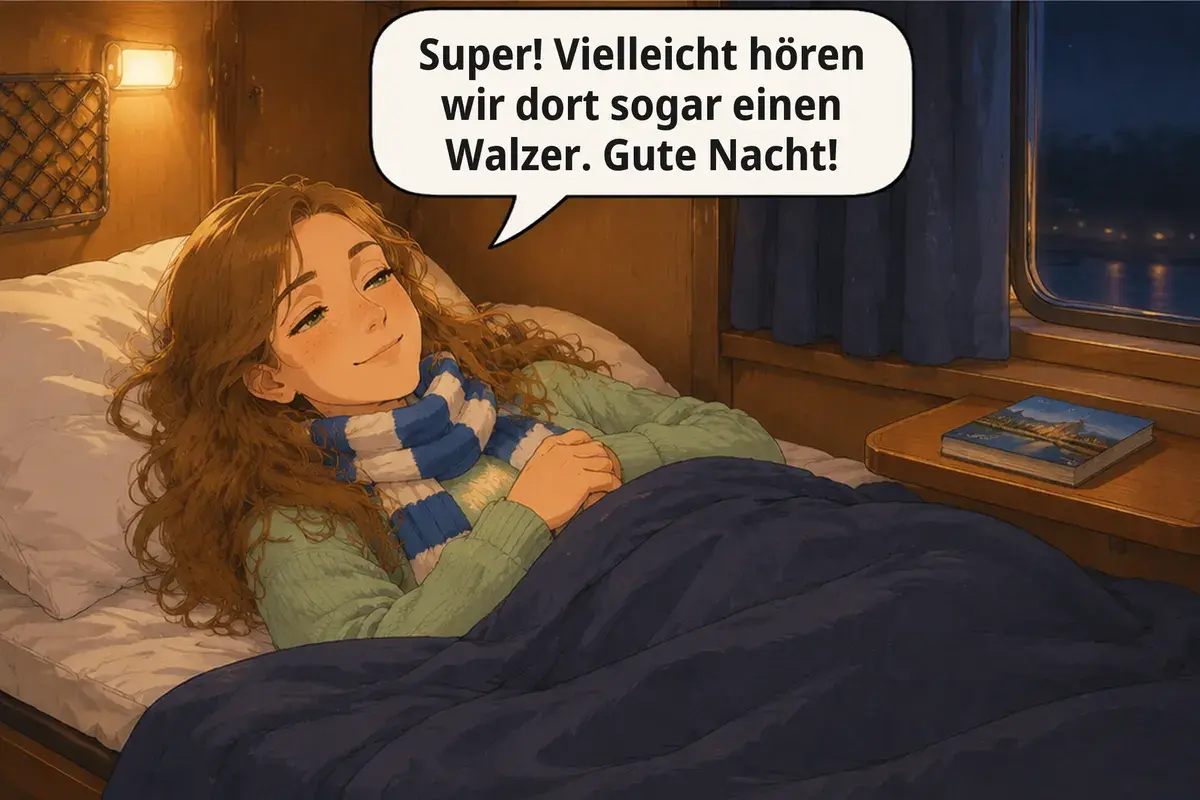
- Katja
Super! Vielleicht hören wir dort sogar einen Walzer. Gute Nacht!
Great! Maybe we'll even hear a waltz there. Good night!
Grammar for this text
- Ihre Reservierung, bitte — "Your reservation, please."
Ihrehas a capital letter: it means "your" (formal). The conductor doesn't know Katja, so he uses Sie. There's no verb: it's clear he wants to see the booking. - Das Frühstück bringe ich Ihnen morgen früh — "I'll bring you breakfast tomorrow morning." The important thing (
das Frühstück) comes first, but the verb is still in second place:bringe, thenich.Ihnenmeans "to you" (the dative ofSie). - Semmel? Das ist ein Brötchen, oder? — "Semmel? That's a Brötchen, right?"
Semmelis the Austrian word; in Hamburg you sayBrötchen., oder?at the end means "right?": you use it to check that you understood. - Wir Österreicher sagen Semmel — "We Austrians say Semmel."
Österreicherstands right afterwirand tells you who "we" is. - Könnten Sie mir noch ein Kissen bringen? — "Could you bring me another pillow?" A polite request:
könntencomes fromkönnen(A2, unit 15).noch einmeans "another". You can ask for a blanket or water the same way. - Heuer ist der Zug immer voll — "This year the train is always full."
heueris the Austrian word for "this year"; in Germany people saydieses Jahr. Zuerst alte Gemälde im Museum. Oder nehmen wir eine Kutsche? — "First, old paintings at the museum. Or should we take a carriage?"das Gemäldemeans "painting" and the plural looks the same; the verb is left out, as often happens in conversation. - Dann besichtigen wir die Oper — "Then we'll tour the opera."
besichtigennever splits: the prefixbe-stays attached. Die Architektur soll wunderschön sein — "The architecture is supposed to be beautiful." Heresollmeans "is said to". Vielleicht hören wir dort sogar einen Walzer — "Maybe we'll even hear a waltz there." Aftervielleichtthe verb is still second:hören wir.sogarmeans "even".
Words and grammar of the unit: Take a weekend trip to Vienna.
Learn the words from the texts with flashcards
In the app, you can tap any word in a text to see its translation, forms and examples, and new words stick with flashcards. 15 minutes a day.
Start for freeEverything is open for free. No card needed to sign up.