

German dialogue with translation · B1 · 13 lines
Deine Probezeit ist vorbei Your probation period is over
Comic · 13 panels
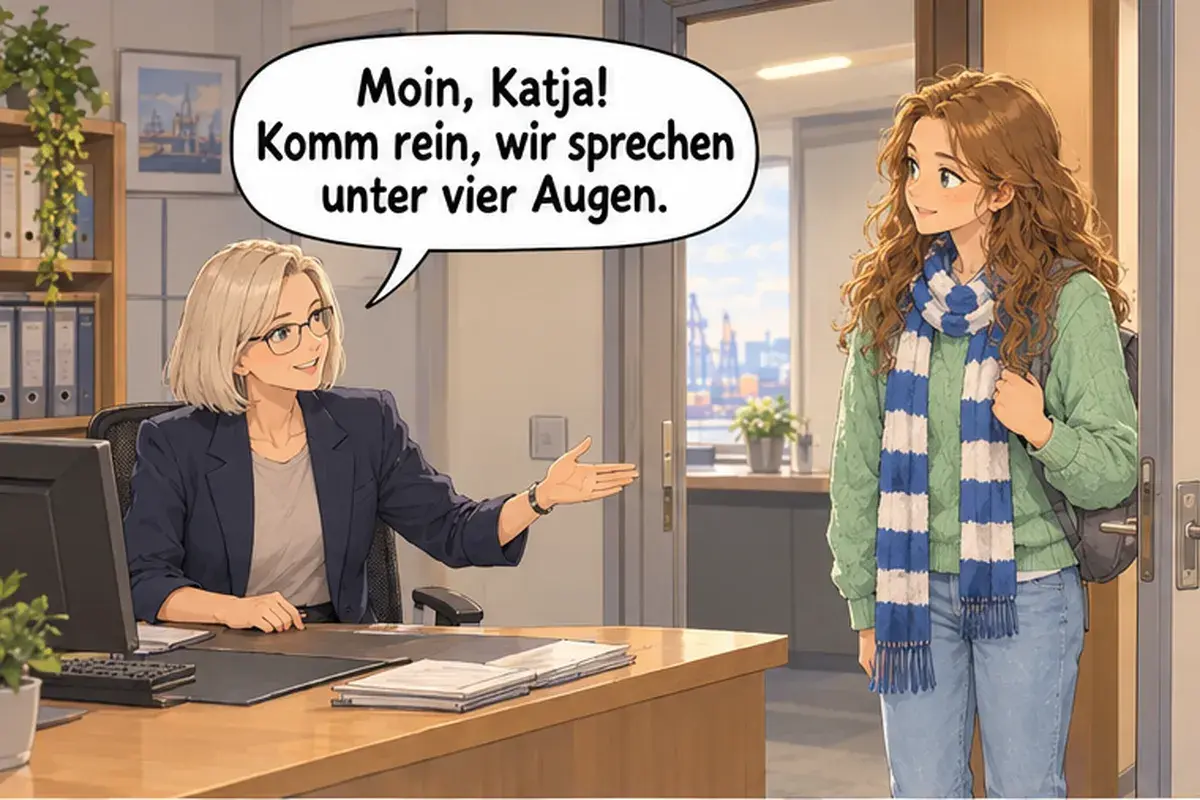
- Sabine
Moin, Katja! Komm rein, wir sprechen unter vier Augen.
Hi, Katja! Come on in, we'll talk in private.
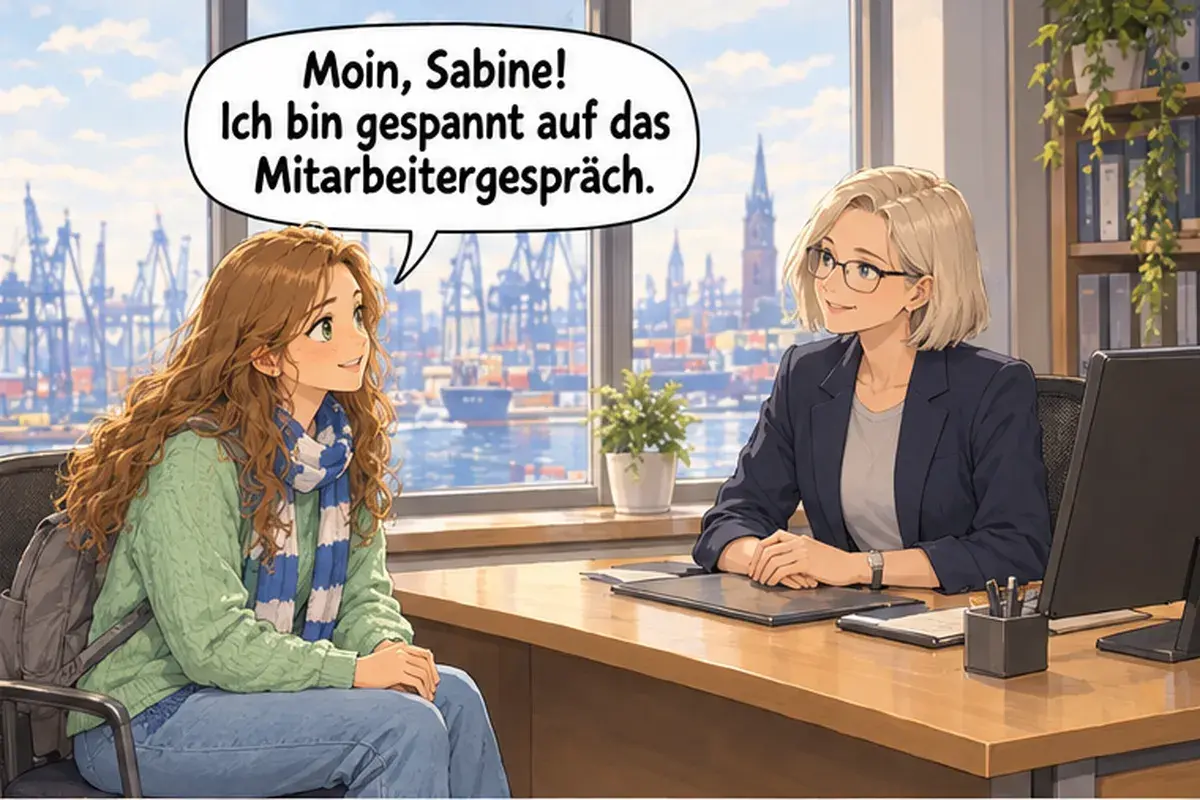
- Katja
Moin, Sabine! Ich bin gespannt auf das Mitarbeitergespräch.
Hi, Sabine! I'm curious about the performance review.
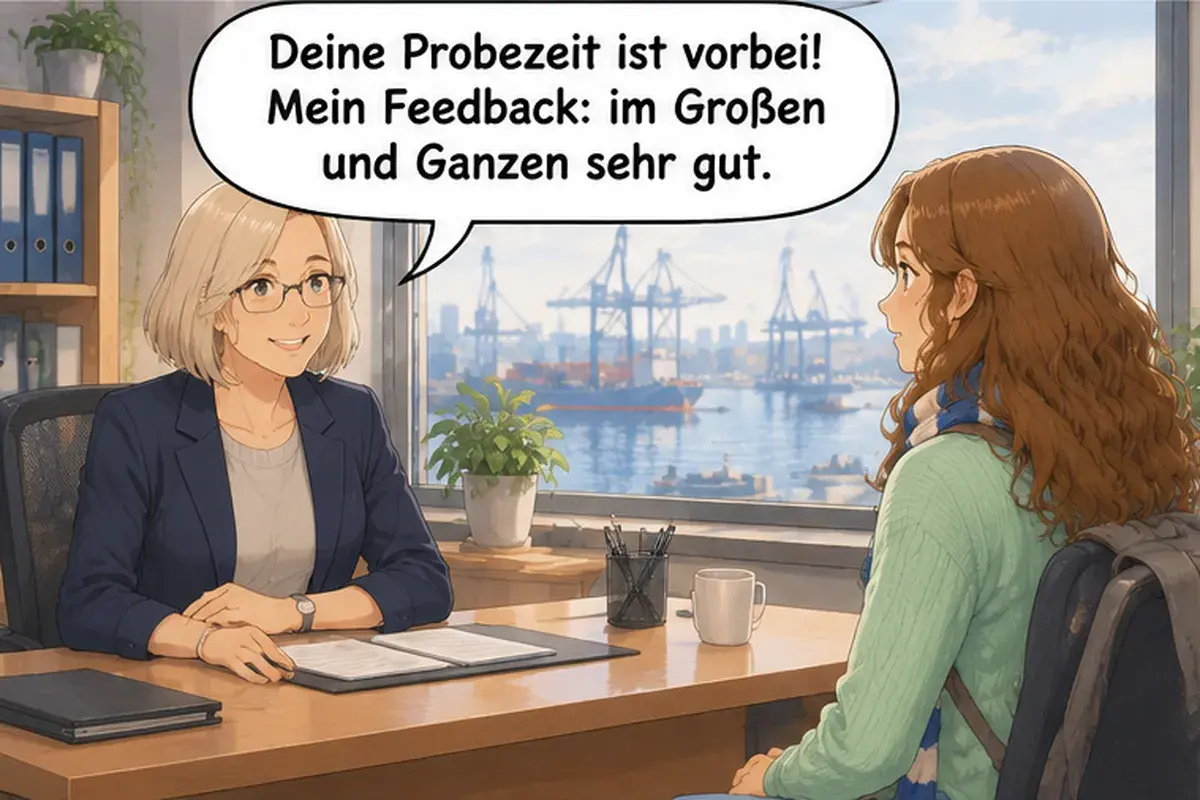
- Sabine
Deine Probezeit ist vorbei! Mein Feedback: im Großen und Ganzen sehr gut.
Your probation period is over! My feedback: on the whole, very good.
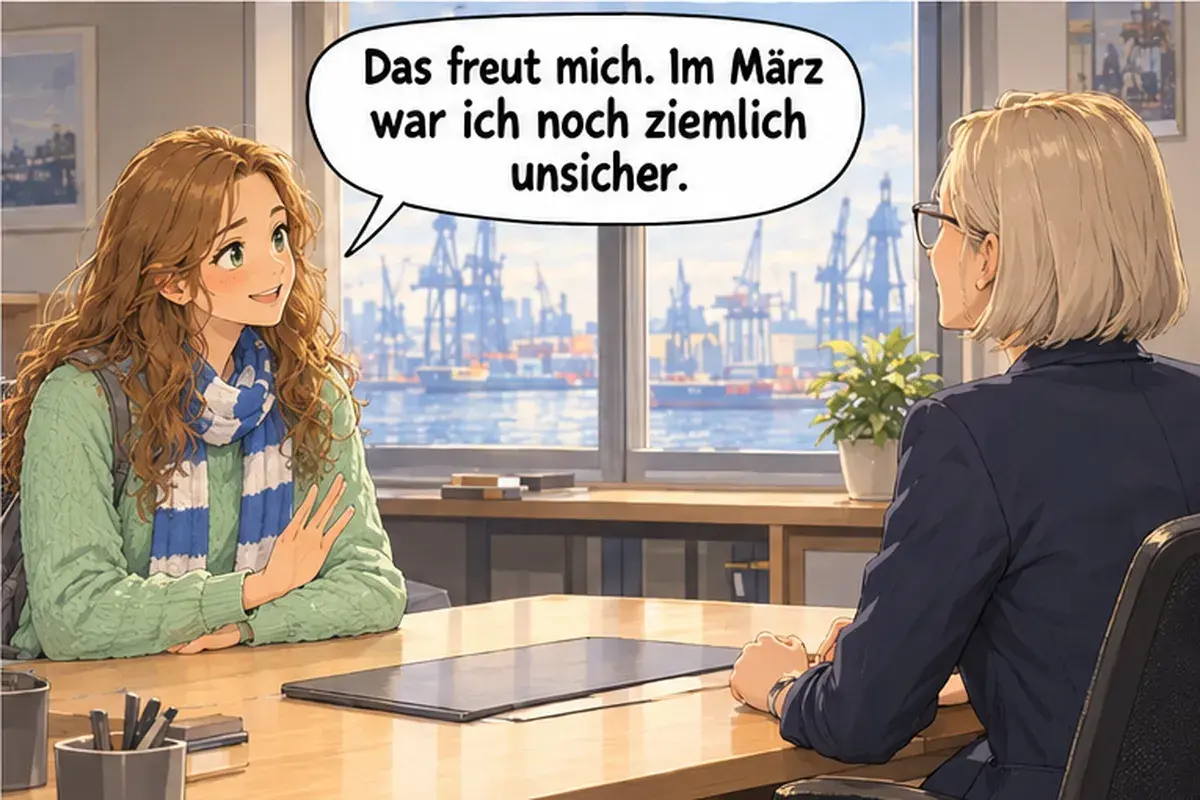
- Katja
Das freut mich. Im März war ich noch ziemlich unsicher.
I'm glad to hear that. In March I was still pretty unsure.
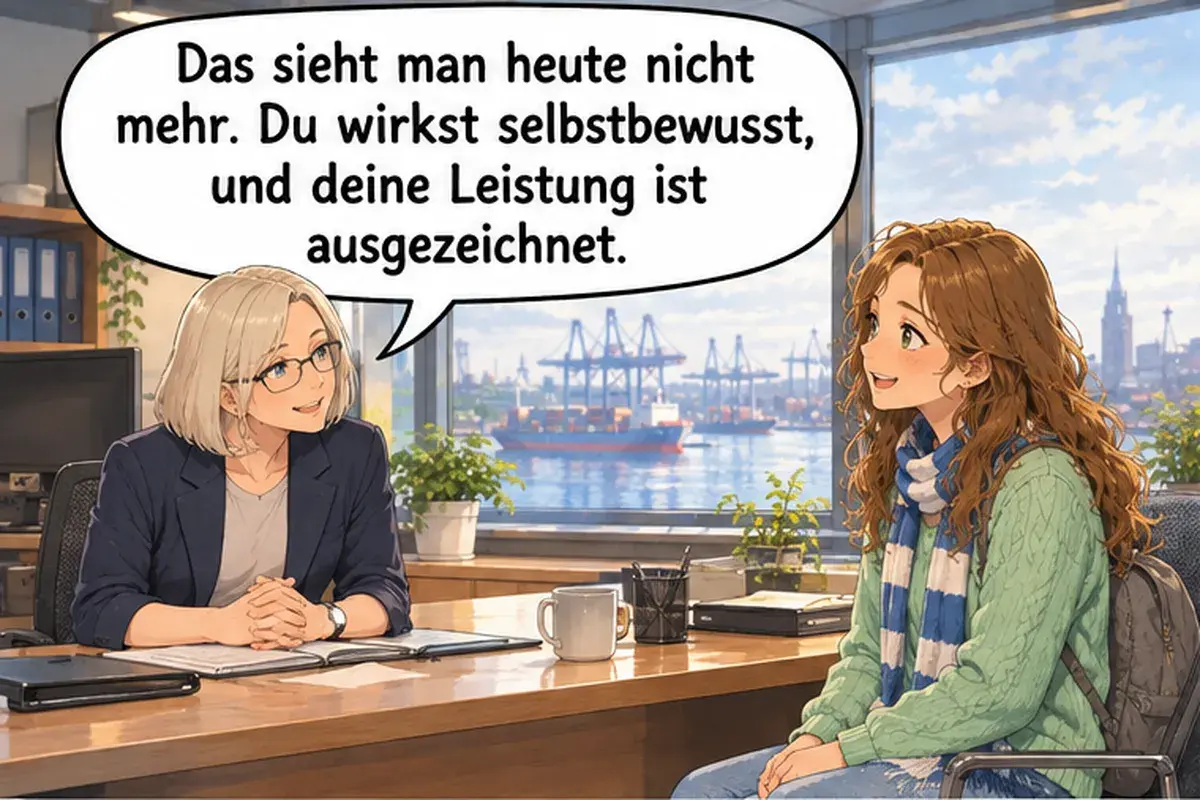
- Sabine
Das sieht man heute nicht mehr. Du wirkst selbstbewusst, und deine Leistung ist ausgezeichnet.
You don't see that anymore today. You come across as confident, and your performance is excellent.
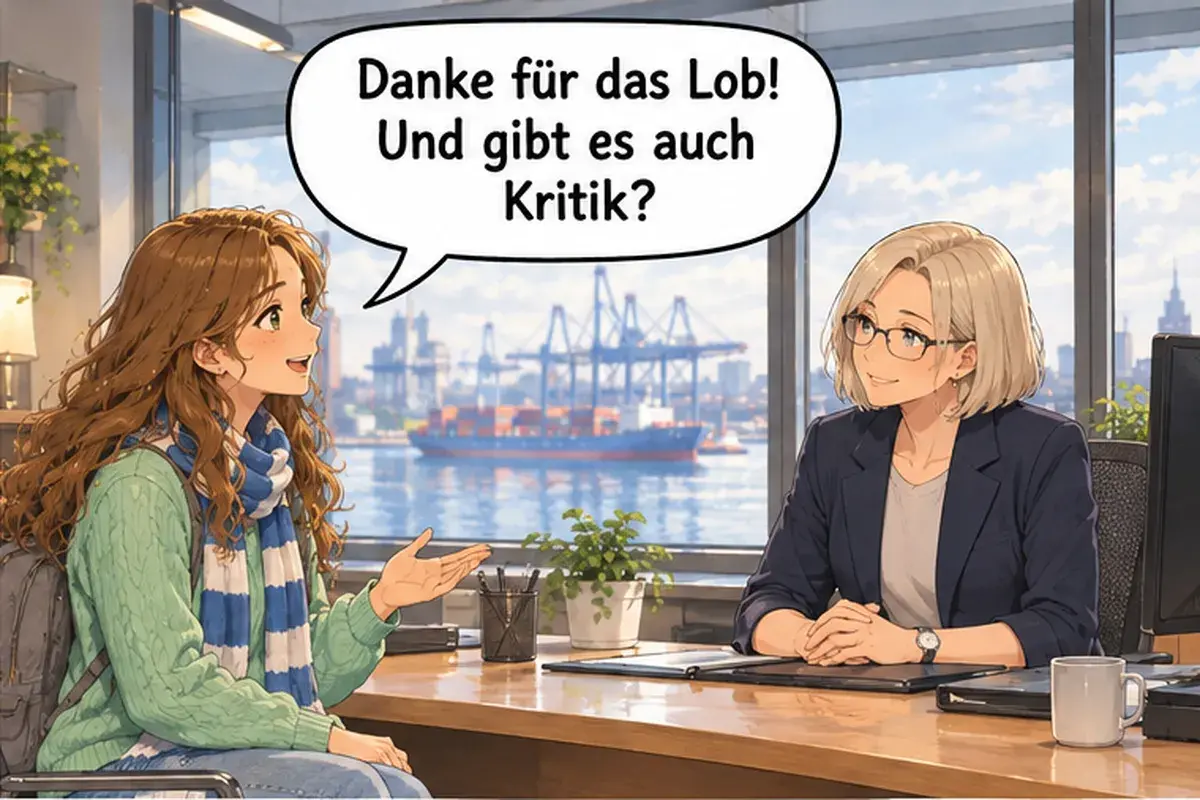
- Katja
Danke für das Lob! Und gibt es auch Kritik?
Thanks for the praise! And is there any criticism too?
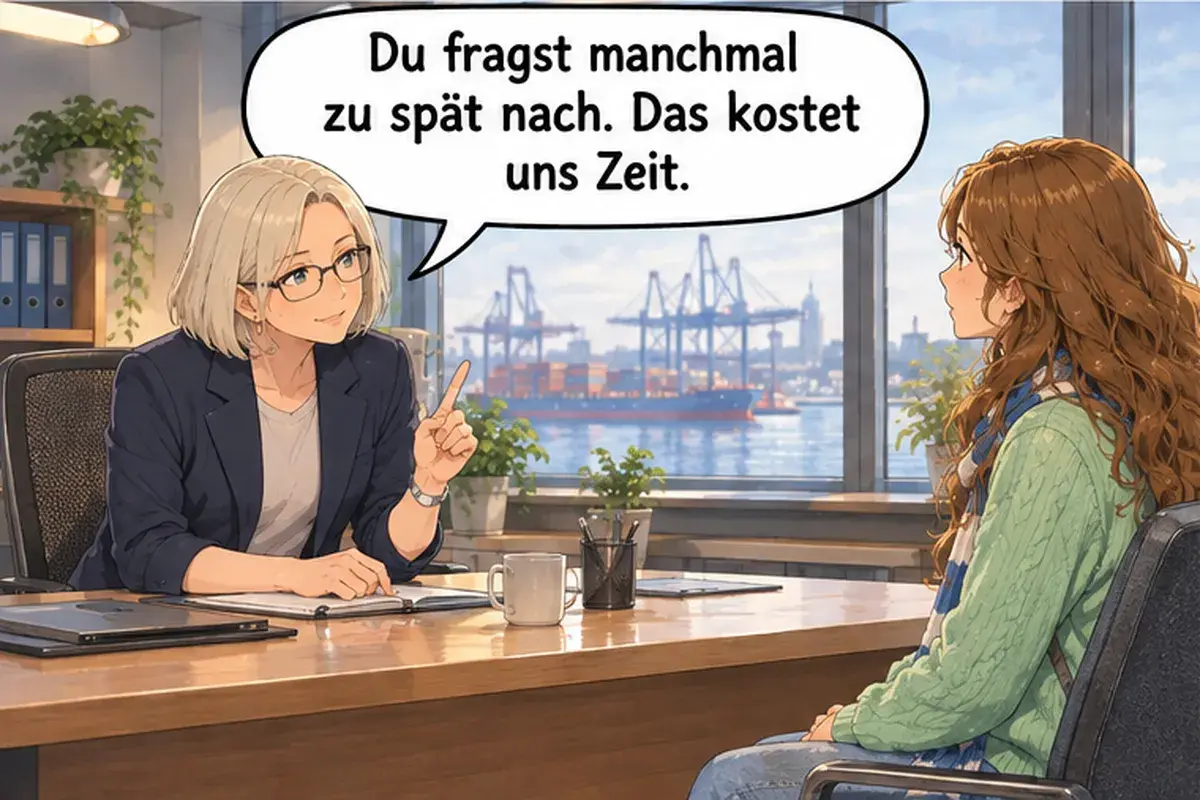
- Sabine
Du fragst manchmal zu spät nach. Das kostet uns Zeit.
Sometimes you ask follow-up questions too late. That costs us time.
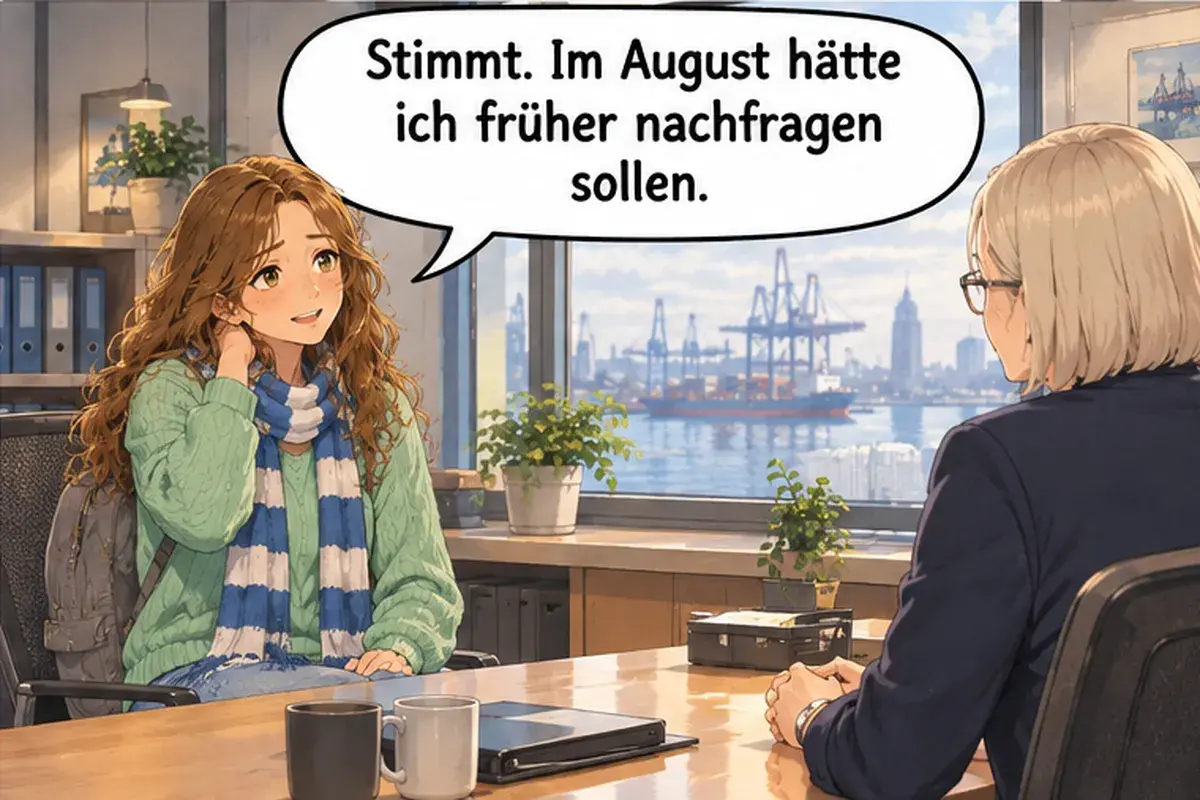
- Katja
Stimmt. Im August hätte ich früher nachfragen sollen.
Right. In August I should have asked sooner.
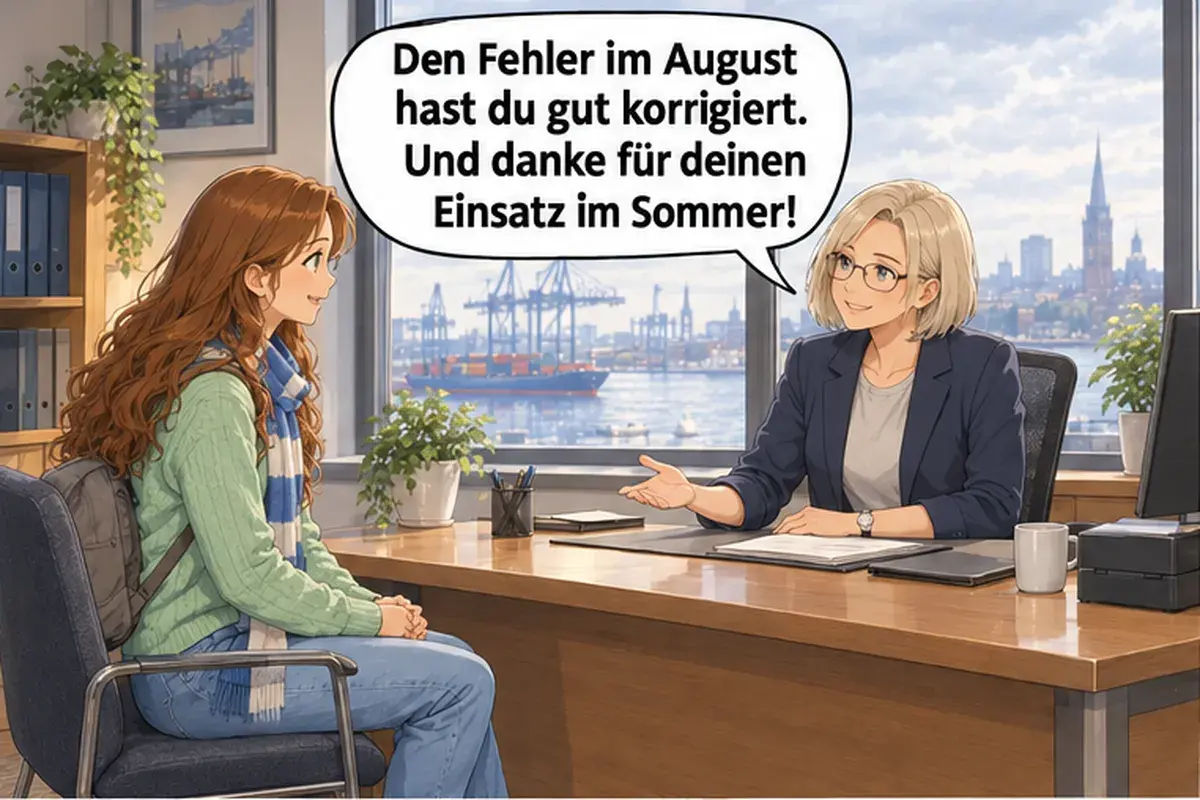
- Sabine
Den Fehler im August hast du gut korrigiert. Und danke für deinen Einsatz im Sommer!
You corrected the mistake in August well. And thanks for your effort this summer!
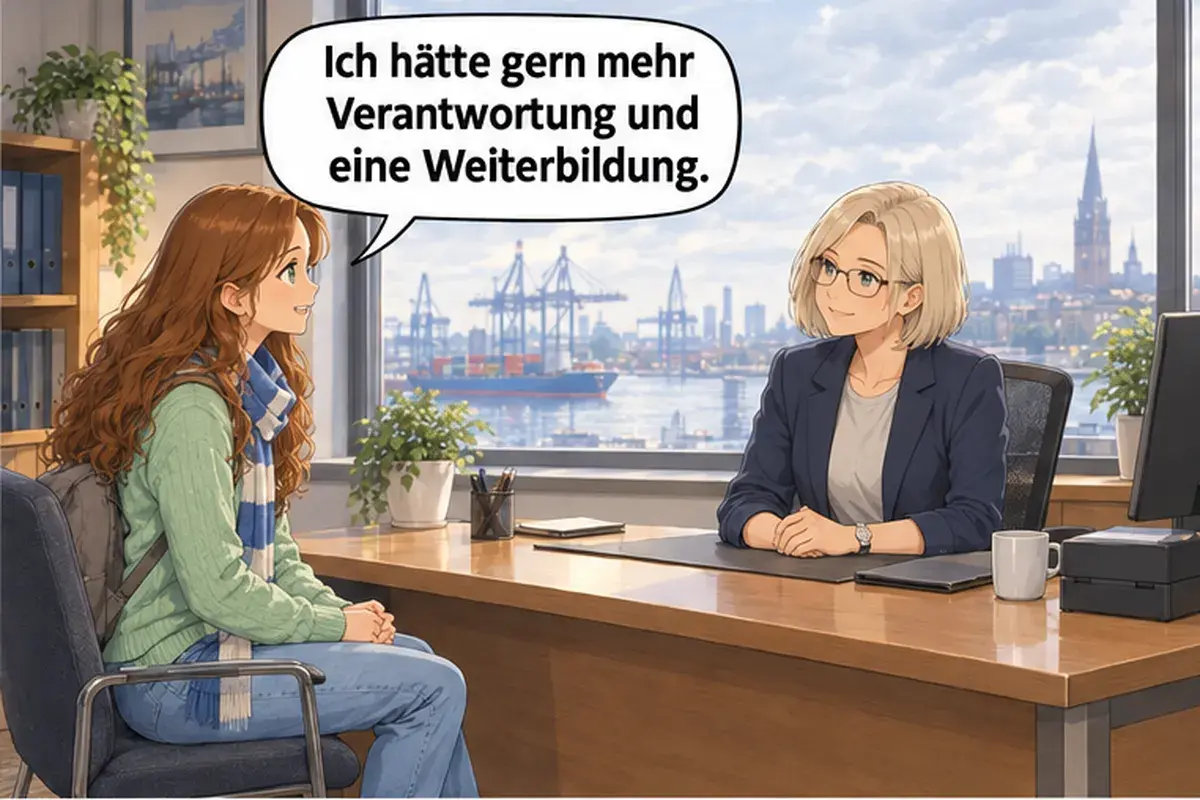
- Katja
Ich hätte gern mehr Verantwortung und eine Weiterbildung.
I'd like more responsibility and some further training.
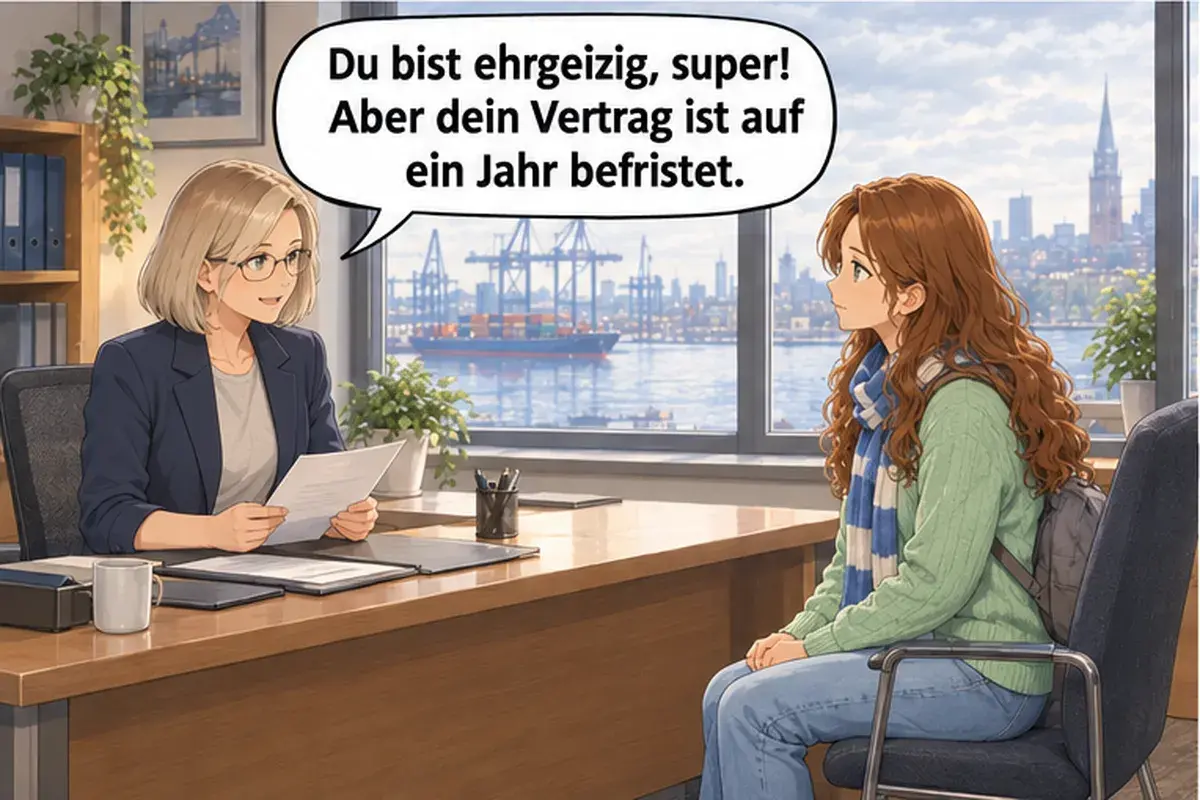
- Sabine
Du bist ehrgeizig, super! Aber dein Vertrag ist auf ein Jahr befristet.
You're ambitious, great! But your contract is limited to one year.
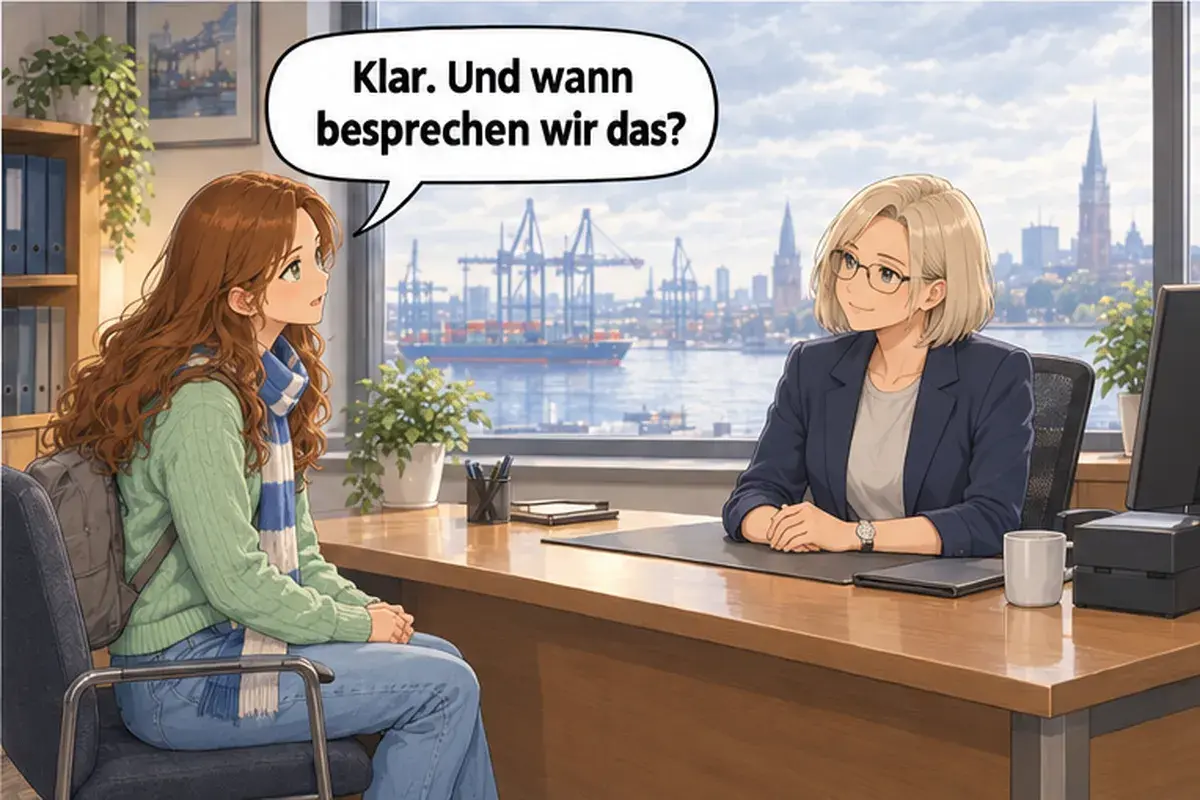
- Katja
Klar. Und wann besprechen wir das?
Sure. And when will we discuss that?
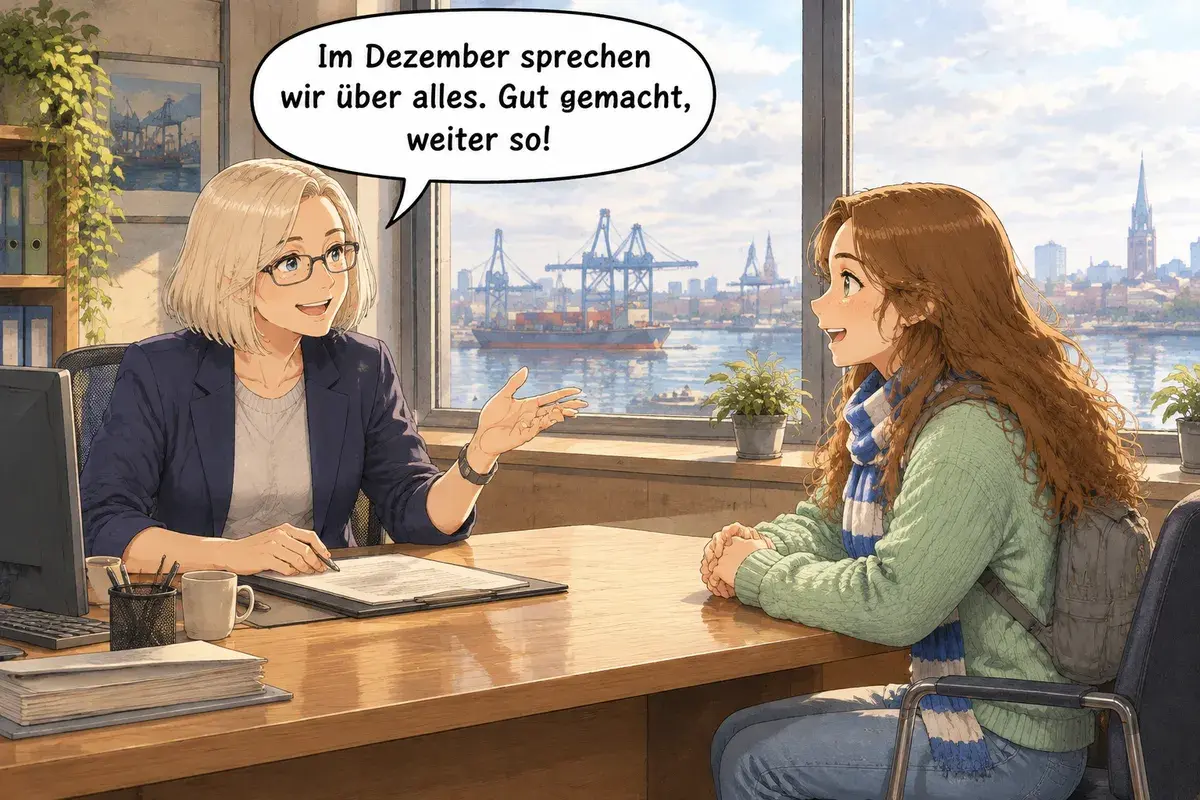
- Sabine
Im Dezember sprechen wir über alles. Gut gemacht, weiter so!
In December we'll talk about everything. Well done, keep it up!
Grammar for this text
- Komm rein, wir sprechen unter vier Augen —
Komm reinis a request, "come on in," fromreinkommen: the prefixreingoes to the end.unter vier Augenmeans "in private" (literally "under four eyes": two people have four eyes). You say it about a talk with no one else around. - im Großen und Ganzen — a fixed expression meaning "overall";
GroßenandGanzenhave capital letters, like nouns. - Du wirkst selbstbewusst —
wirken+ adjective means "to come across as, to seem" (unit 1).wirkstis theduform. - Du fragst manchmal zu spät nach —
nachfragen("to ask a follow-up question, to check") is separable:fragstis in second place,nachgoes to the end.zu spätmeans "too late." - Im August hätte ich früher nachfragen sollen —
hätteis the Konjunktiv II (would-form) ofhaben(unit 11):hattebecomeshätte(a→ä), and theichander / sie / esforms are the same. Two infinitives stand at the end:nachfragen sollen; instead of the participlegesolltyou usesollen. The meaning is "I should have asked sooner": it's in the past, so it can't be changed now. The rule is in the grammar block of this unit. - Ich hätte gern mehr Verantwortung — also
hätte, but with no participle at the end: this is the polite "I'd like" about the present (A1, A2), not about the past. - Den Fehler im August hast du gut korrigiert — the Perfekt (spoken past) of
korrigieren("to correct," unit 15):hast … korrigiert, with noge-, like all verbs ending in-ieren.Den Fehleris the accusative object, put first for emphasis, sohastcomes right after it anddufollows.
Words and grammar of the unit: Talk about your results with your boss.
Learn the words from the texts with flashcards
In the app, you can tap any word in a text to see its translation, forms and examples, and new words stick with flashcards. 15 minutes a day.
Start for freeEverything is open for free. No card needed to sign up.