

German dialogue with translation · B1 · 14 lines
Heute ziehen Sie ein You're moving in today (formal)
Comic · 14 panels
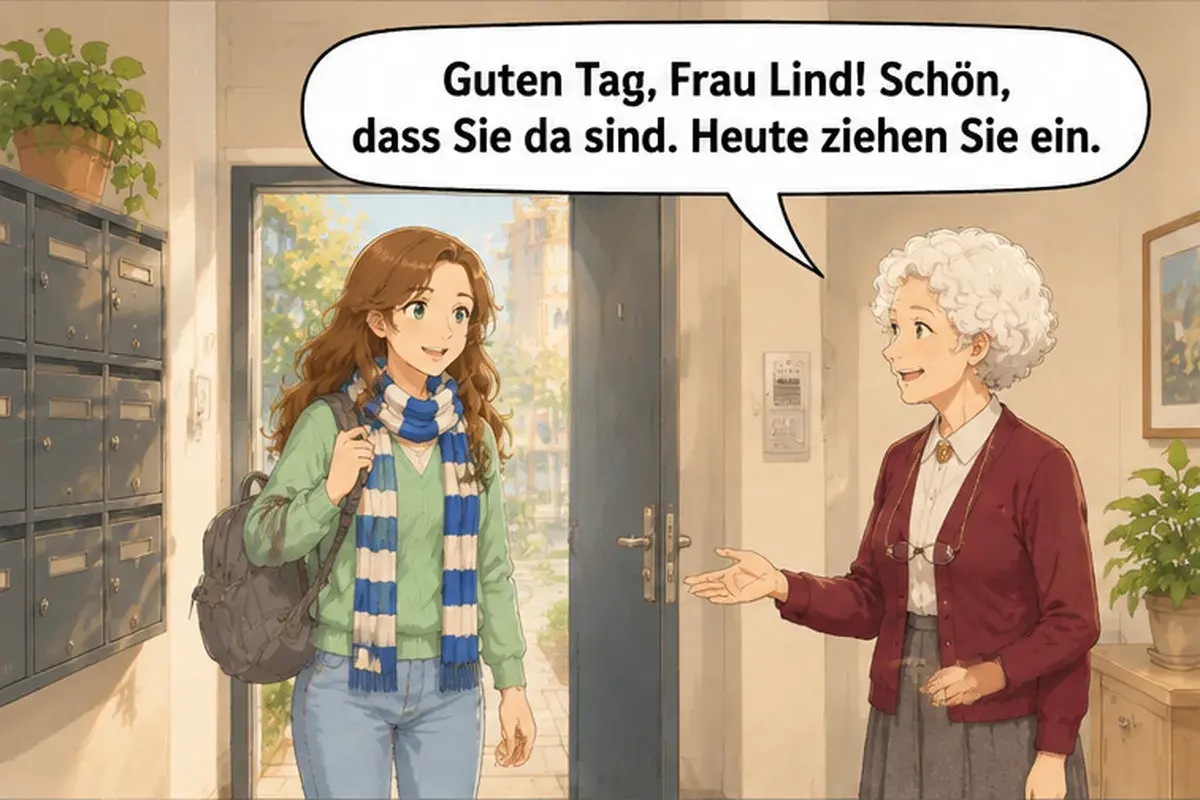
- Beraterin
Guten Tag, Frau Lind! Schön, dass Sie da sind. Heute ziehen Sie ein.
Hello, Frau Lind! It's nice that you're here. You're moving in today (formal).

- Katja
Hallo! Ja, nun geht es endlich los. Als ich vorhin aus der S-Bahn kam, habe ich das Haus sofort gefunden.
Hi! Yes, now it's finally starting. When I came out of the S-Bahn earlier, I found the building right away.
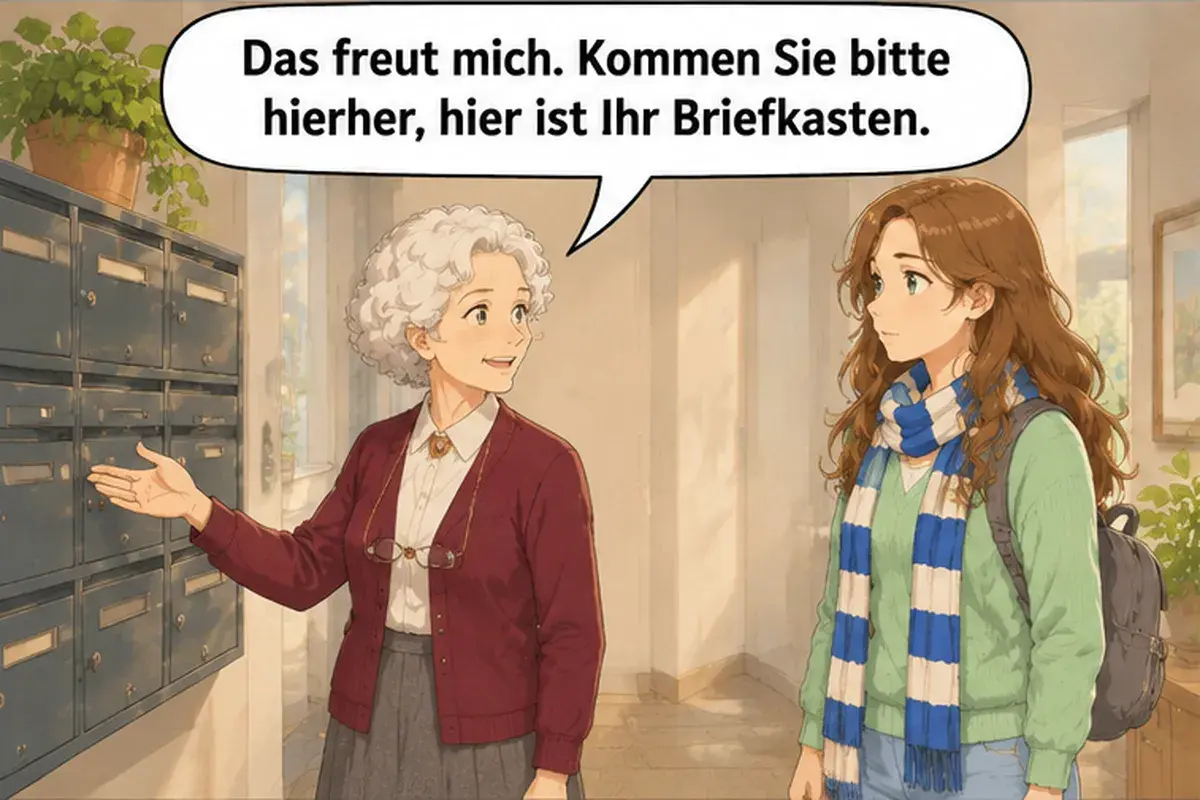
- Beraterin
Das freut mich. Kommen Sie bitte hierher, hier ist Ihr Briefkasten.
I'm glad to hear that. Please come over here, here's your mailbox (formal).
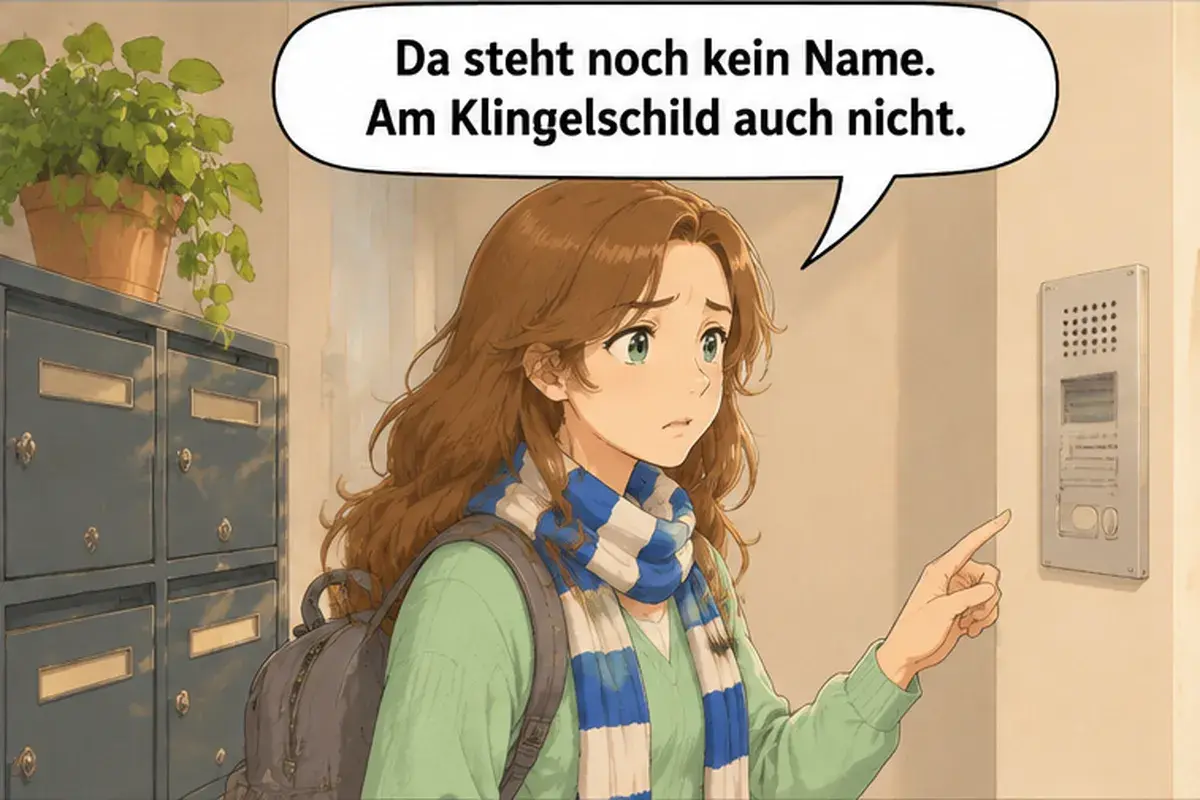
- Katja
Da steht noch kein Name. Am Klingelschild auch nicht.
There's no name on it yet. Not on the name tag on the doorbell either.
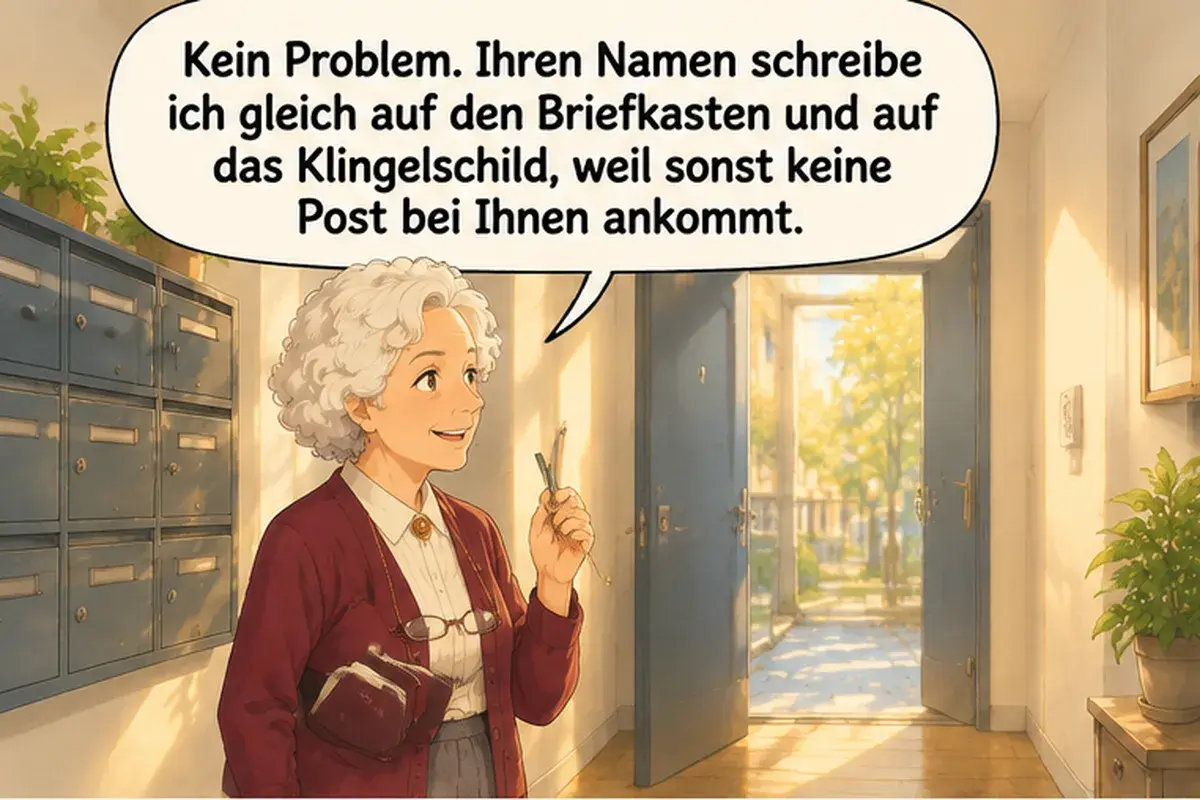
- Beraterin
Kein Problem. Ihren Namen schreibe ich gleich auf den Briefkasten und auf das Klingelschild, weil sonst keine Post bei Ihnen ankommt.
No problem. I'll write your name on the mailbox and on the name tag on the doorbell right away, because otherwise no mail will arrive for you (formal).

- Katja
Danke! Gibt es oben schon Geschirr, Bettwäsche und Geräte, oder muss ich alles kaufen?
Thanks! Are there already dishes, bedding and appliances upstairs, or do I have to buy everything?

- Beraterin
Sie müssen nichts kaufen. Es gibt eine Spülmaschine und eine Waschmaschine. Die Anleitung und das WLAN-Passwort liegen oben auf dem Tisch.
You don't have to buy anything (formal). There's a dishwasher and a washing machine. The instructions and the Wi-Fi password are on the table upstairs.

- Katja
Super. Ich wusste nicht, ob die Wohnung schon geputzt ist.
Great. I didn't know if the apartment had already been cleaned.
- Beraterin
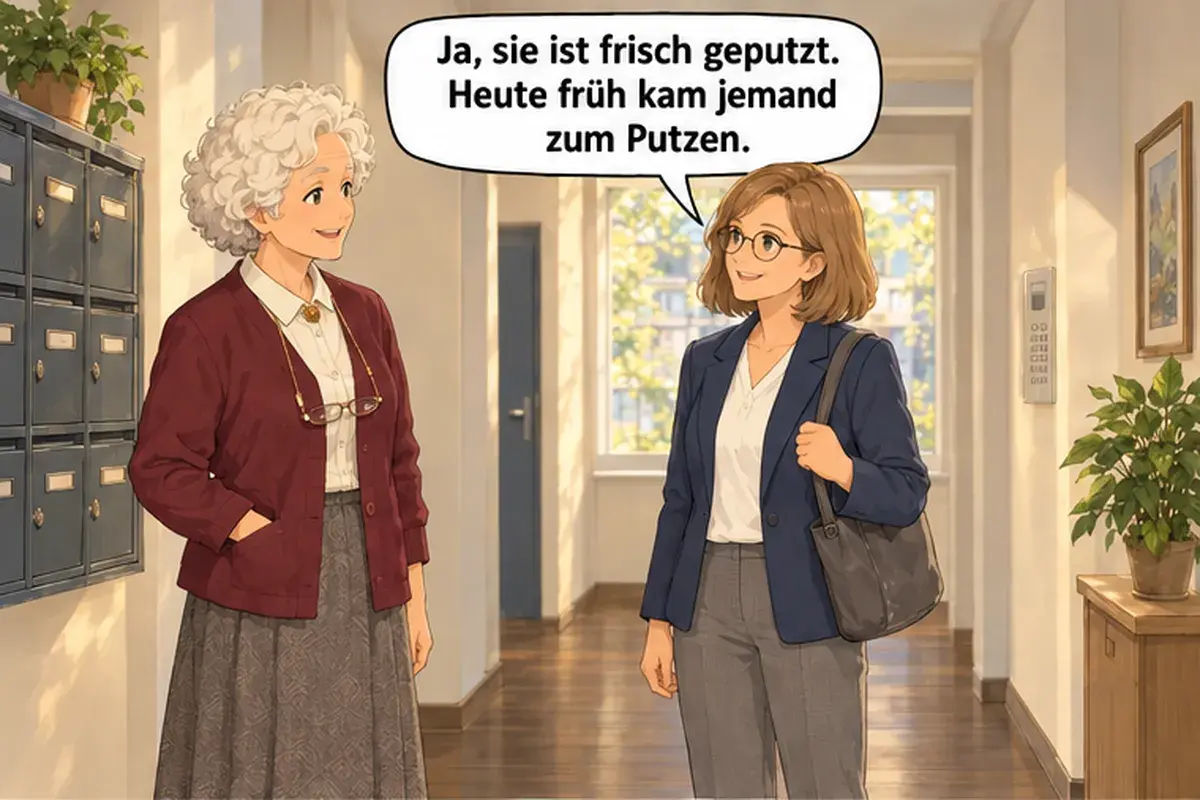
Ja, sie ist frisch geputzt. Heute früh kam jemand zum Putzen.
Yes, it's freshly cleaned. Someone came to clean this morning.
- Katja
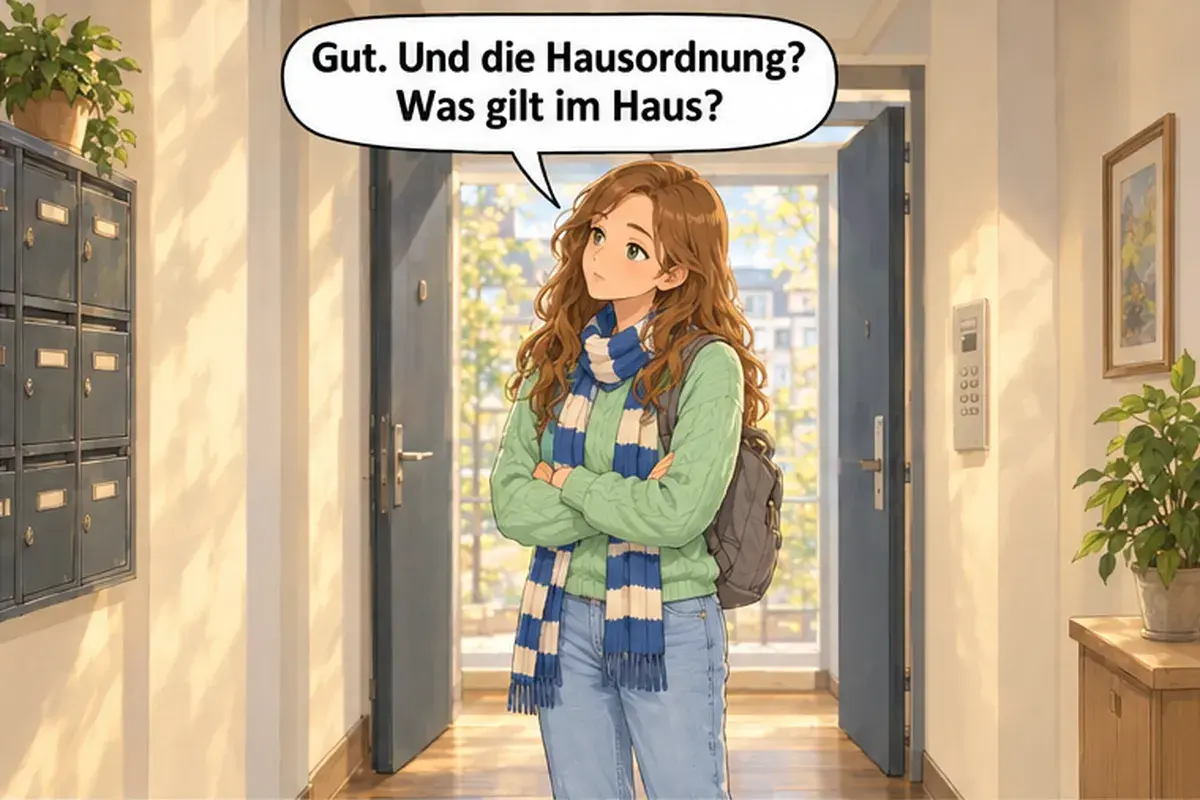
Gut. Und die Hausordnung? Was gilt im Haus?
Good. And the house rules? What are the rules in the building?

- Beraterin
Ab 22:00 Uhr ist Nachtruhe. Und bitte lüften Sie jeden Tag, sonst wird die Luft schnell schlecht.
Quiet hours start at 22:00. And please air out the apartment every day, otherwise the air gets stale quickly (formal).

- Katja
Verstanden. Ich muss noch kurz raus, weil ich nichts zu essen habe. Wo ist der nächste Supermarkt?
Got it. I still have to go out for a bit, because I have nothing to eat. Where's the nearest supermarket?

- Beraterin
Links, in ein paar Minuten sind Sie da. Schönen Abend noch!
To the left, you'll be there in a few minutes (formal). Have a nice evening!

- Katja
Danke für alles! Ich gehe gleich hin. Tschüss.
Thanks for everything! I'll go there right away. Bye.
Grammar for this text
- Schön, dass Sie da sind —
dass(that) starts a subordinate clause, so the verbsindgoes to the end. Heute ziehen Sie ein —einziehen(to move in): the prefixeinwent to the end. - Als ich vorhin aus der S-Bahn kam, habe ich das Haus sofort gefunden —
alsmeans "when" (one time in the past);kamis the Präteritum ofkommen, and in the clause it stands at the end. After the comma the verb of the main clause comes first:habe ich … gefunden. In conversation people often mix like this: a shortkamin thealsclause and the Perfekt in the main clause.vorhinmeans "earlier, a little while ago". - Ihren Namen schreibe ich gleich auf den Briefkasten und auf das Klingelschild, weil sonst keine Post bei Ihnen ankommt — what matters most (the name) comes first, but the verb is still second. After
weilthe verb goes to the end:ankommt, and the prefixanjoins it again.sonstmeans "otherwise". - Ich wusste nicht, ob die Wohnung schon geputzt ist —
wussteis the Präteritum ofwissen.obmeans "if, whether"; the verb goes to the end. - Heute früh kam jemand zum Putzen —
kamis the Präteritum ofkommen; in speech it's as common asist gekommen.zum Putzenmeans "to clean, for the cleaning". - Und bitte lüften Sie jeden Tag, sonst wird die Luft schnell schlecht — a polite request: the verb
lüften(to air out the rooms) comes beforeSie. Aftersonst(otherwise) the verbwirdcomes right away, in second place. Opening the windows wide every day is a German habit. - Ich muss noch kurz raus, weil ich nichts zu essen habe — after
mussyou can leave out the verb of movement, like English "I have to (go) out".nichts zu essenmeans "nothing to eat". Ich gehe gleich hin —hinmeans "there", away from the speaker.
Words and grammar of the unit: Tell the story of your move.
Learn the words from the texts with flashcards
In the app, you can tap any word in a text to see its translation, forms and examples, and new words stick with flashcards. 15 minutes a day.
Start for freeEverything is open for free. No card needed to sign up.