

German dialogue with translation · B1 · 14 lines
Hier duzen wir uns We say du to each other here
Comic · 14 panels
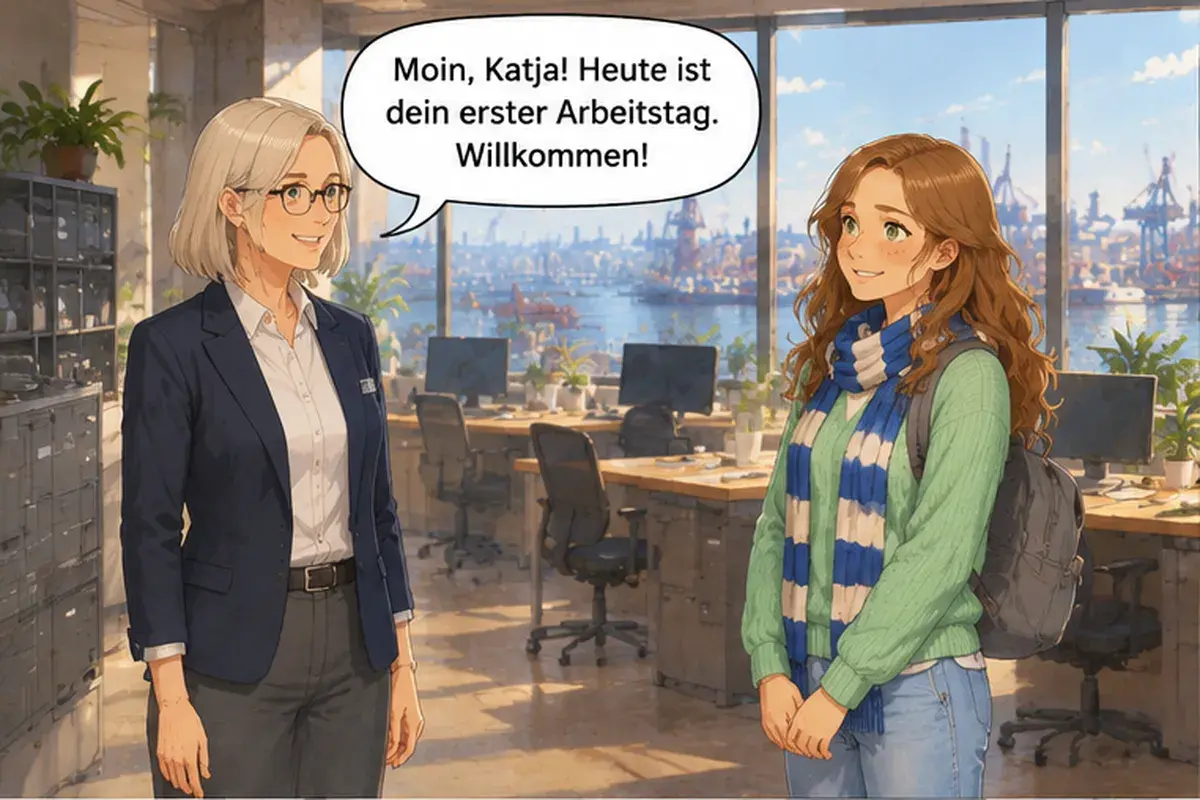
- Sabine
Moin, Katja! Heute ist dein erster Arbeitstag. Willkommen!
Hi, Katja! Today is your first day at work. Welcome!
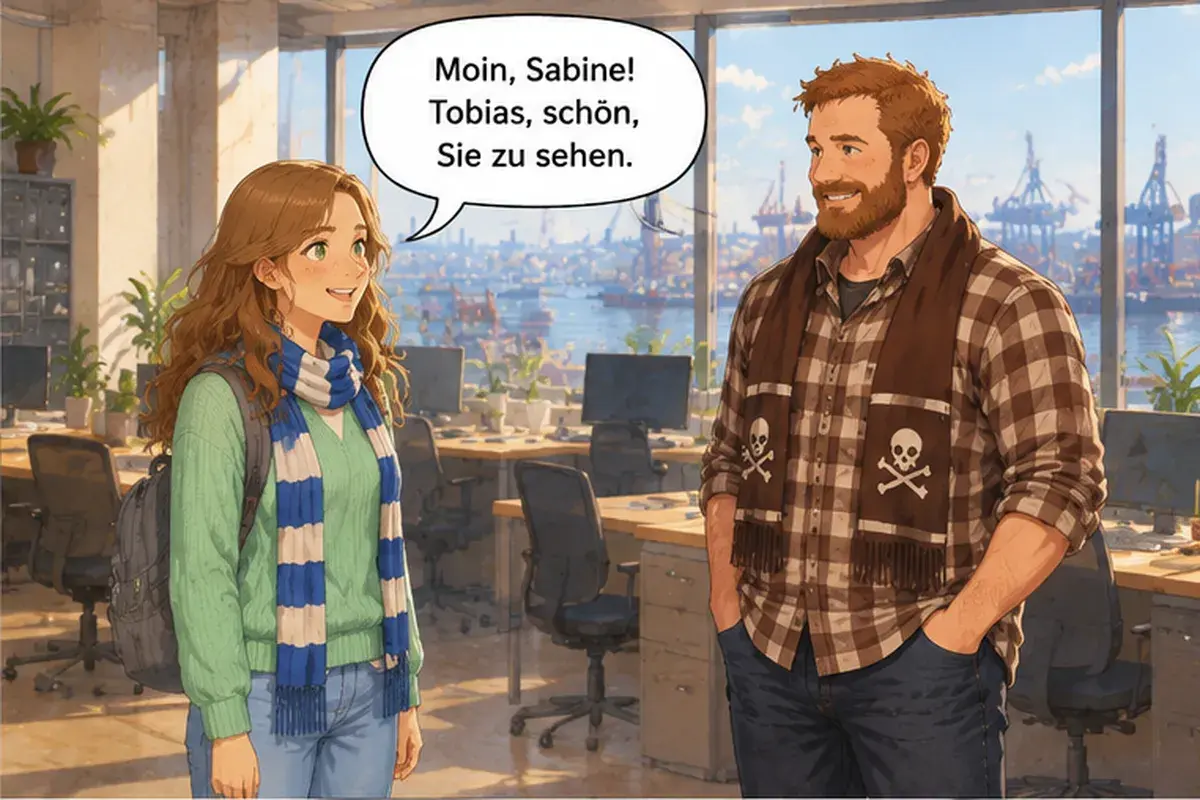
- Katja
Moin, Sabine! Tobias, schön, Sie zu sehen.
Hi, Sabine! Tobias, nice to see you (formal).
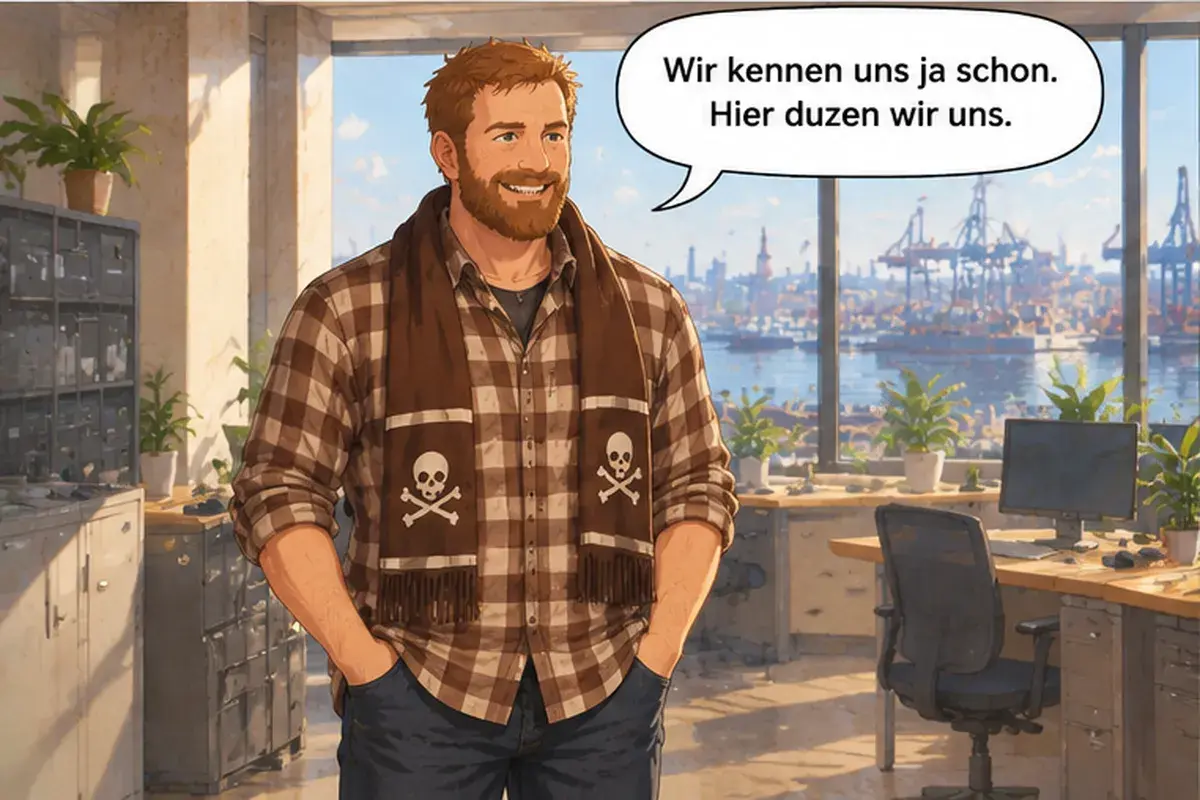
- Tobias
Wir kennen uns ja schon. Hier duzen wir uns.
We already know each other. We say du to each other here.

- Katja
Sorry! Sind hier alle per du?
Sorry! Is everyone here on a first-name basis?
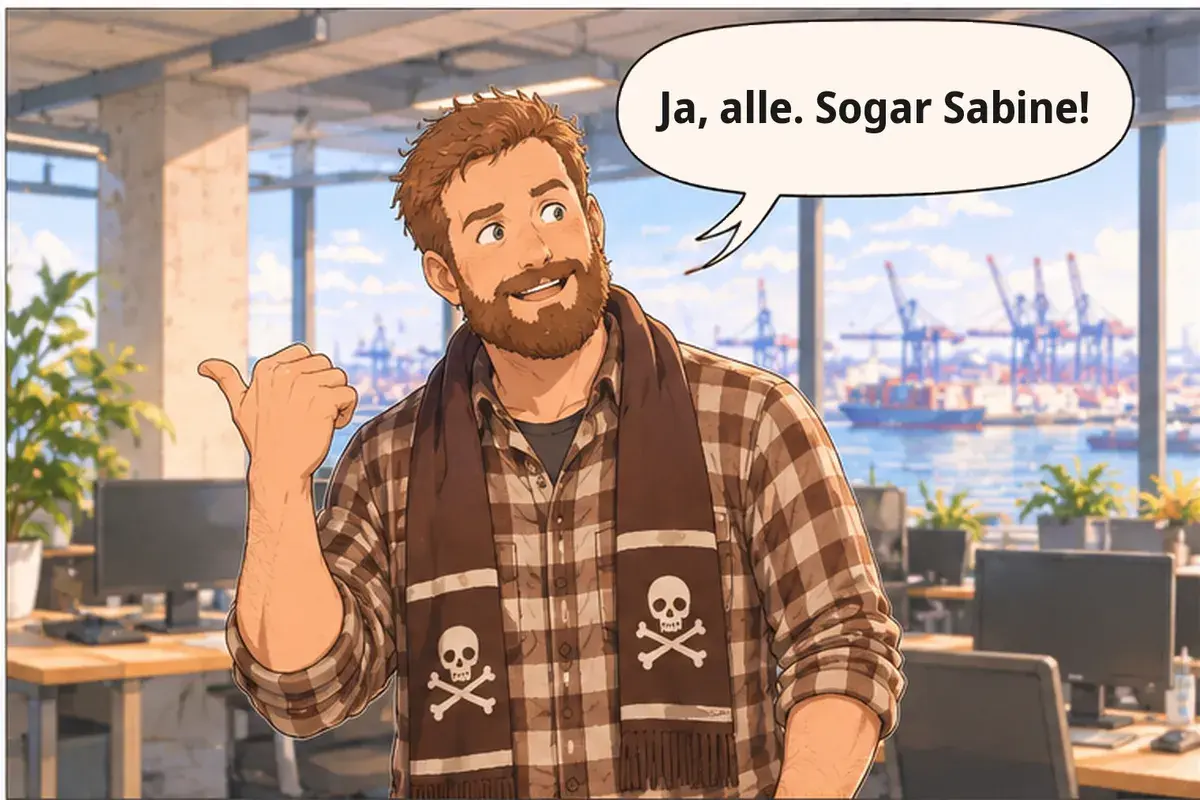
- Tobias
Ja, alle. Sogar Sabine!
Yes, everyone. Even Sabine!
- Sabine
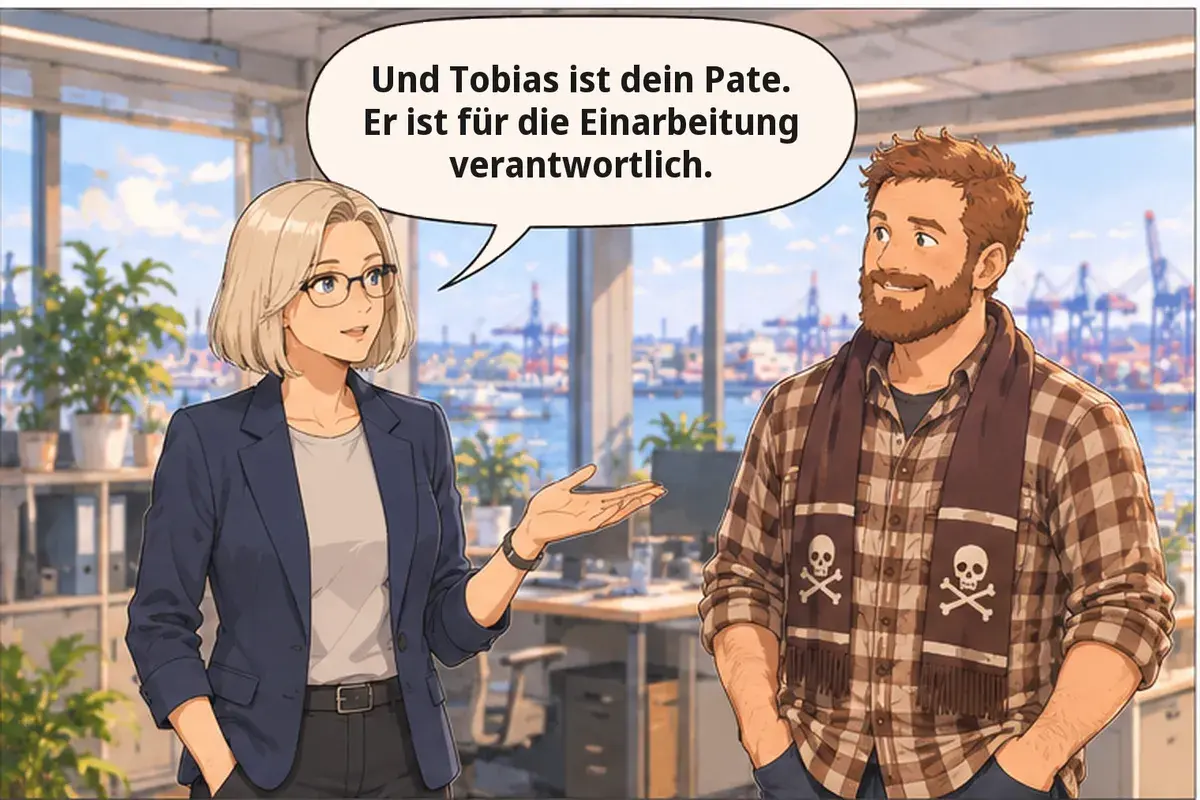
Und Tobias ist dein Pate. Er ist für die Einarbeitung verantwortlich.
And Tobias is your mentor. He's responsible for the onboarding.
- Tobias
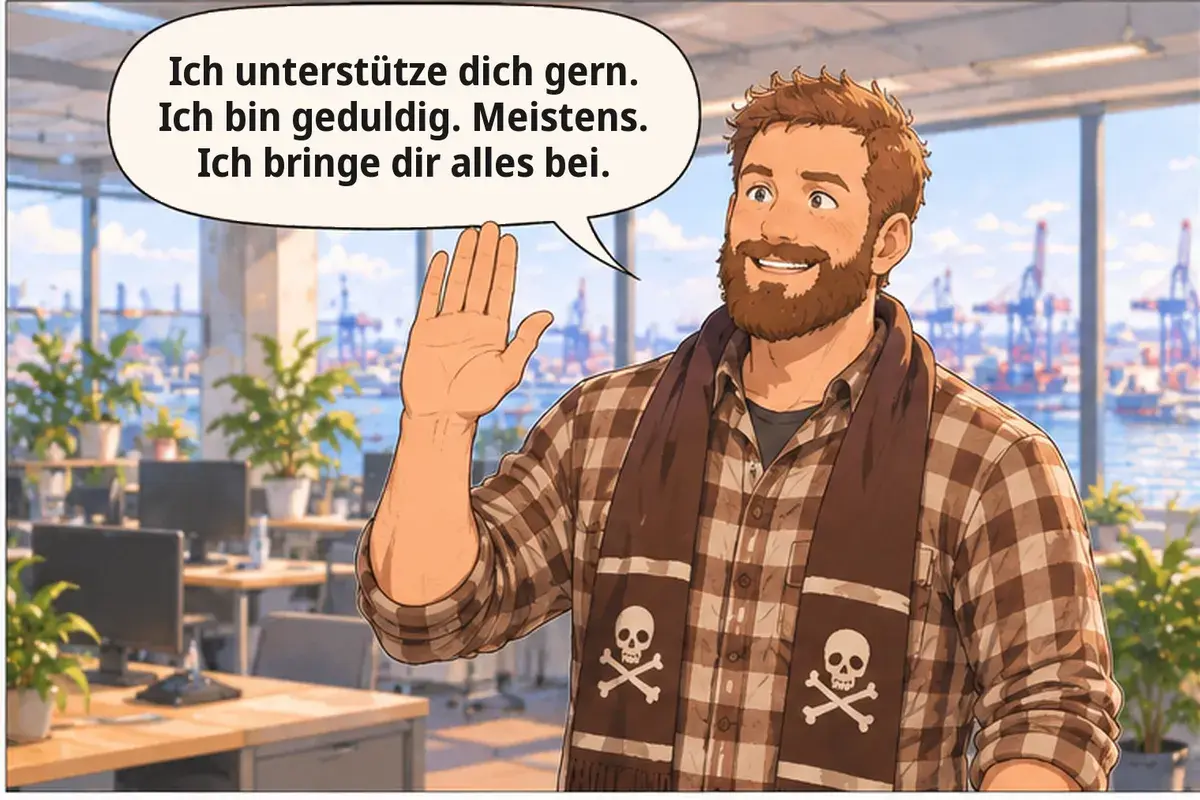
Ich unterstütze dich gern. Ich bin geduldig. Meistens. Ich bringe dir alles bei.
I'm happy to support you. I'm patient. Most of the time. I'll teach you everything.
- Sabine
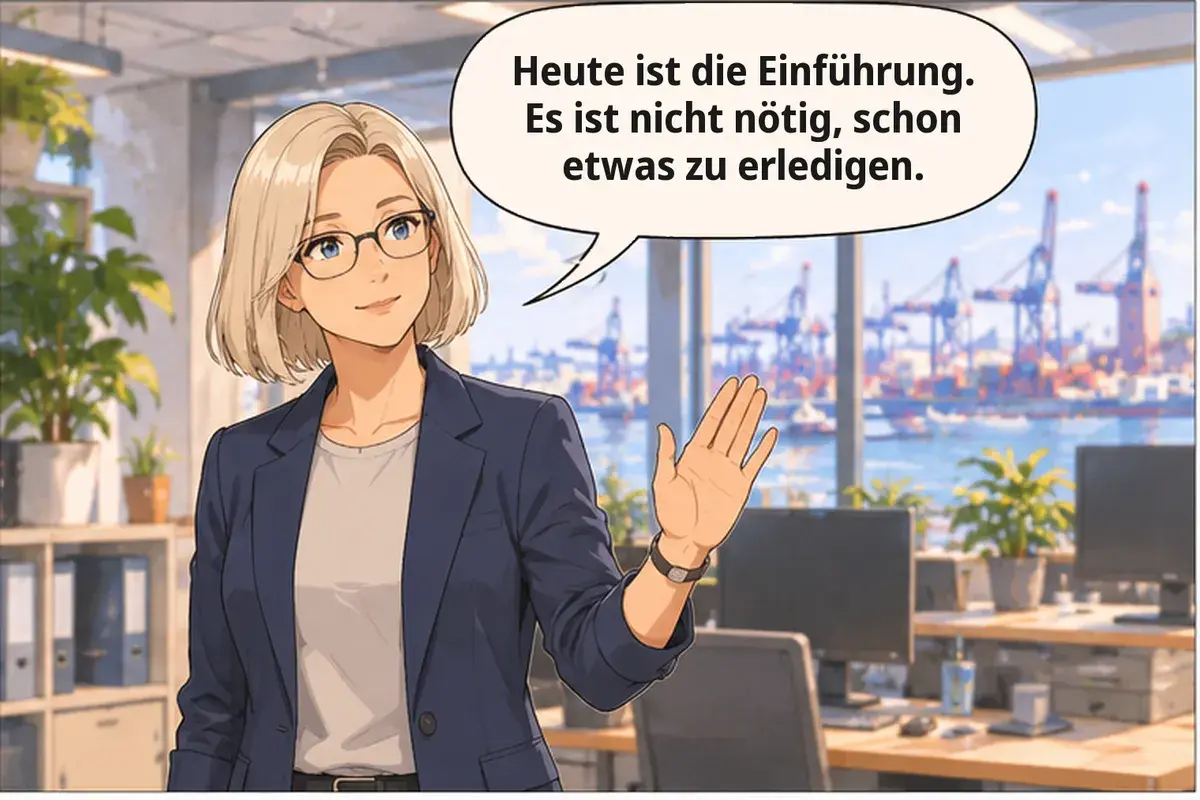
Heute ist die Einführung. Es ist nicht nötig, schon etwas zu erledigen.
Today is the orientation. It's not necessary to get anything done yet.
- Tobias
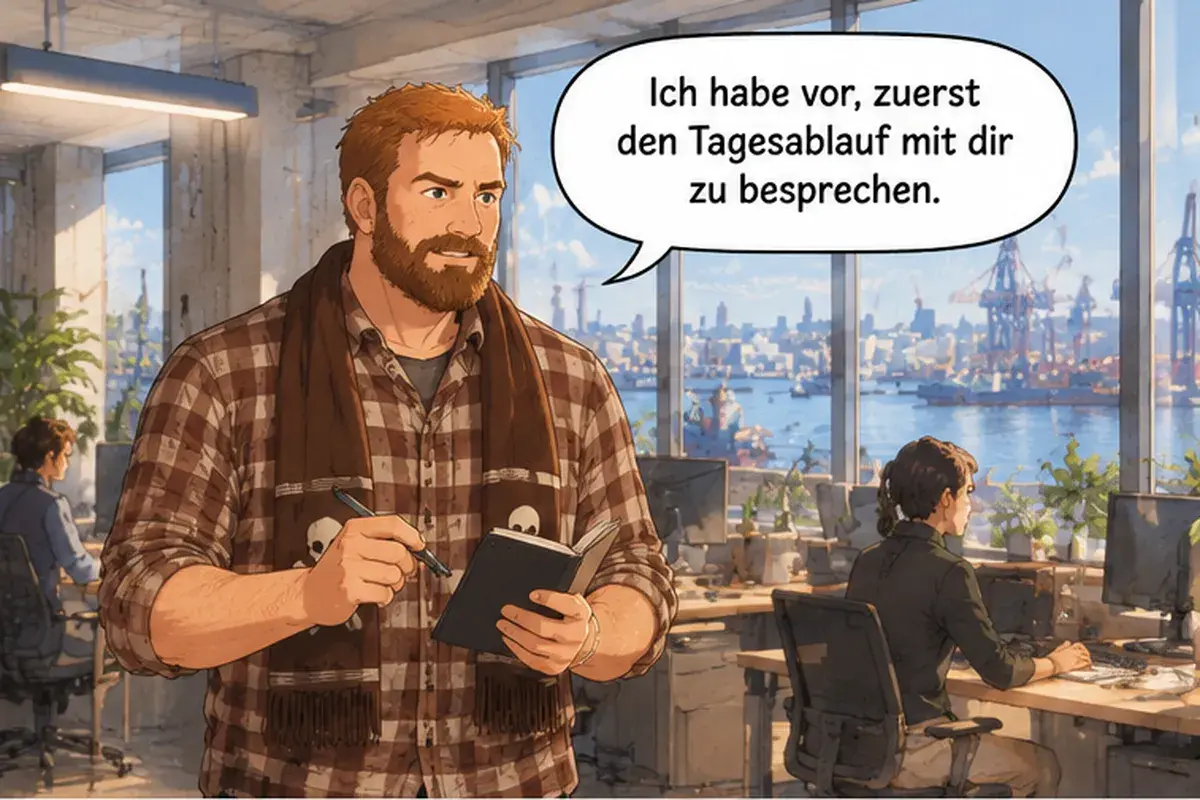
Ich habe vor, zuerst den Tagesablauf mit dir zu besprechen.
I'm planning to discuss the daily routine with you first.

- Katja
Gut. Und wo ist mein Arbeitsplatz?
Good. And where's my workspace?
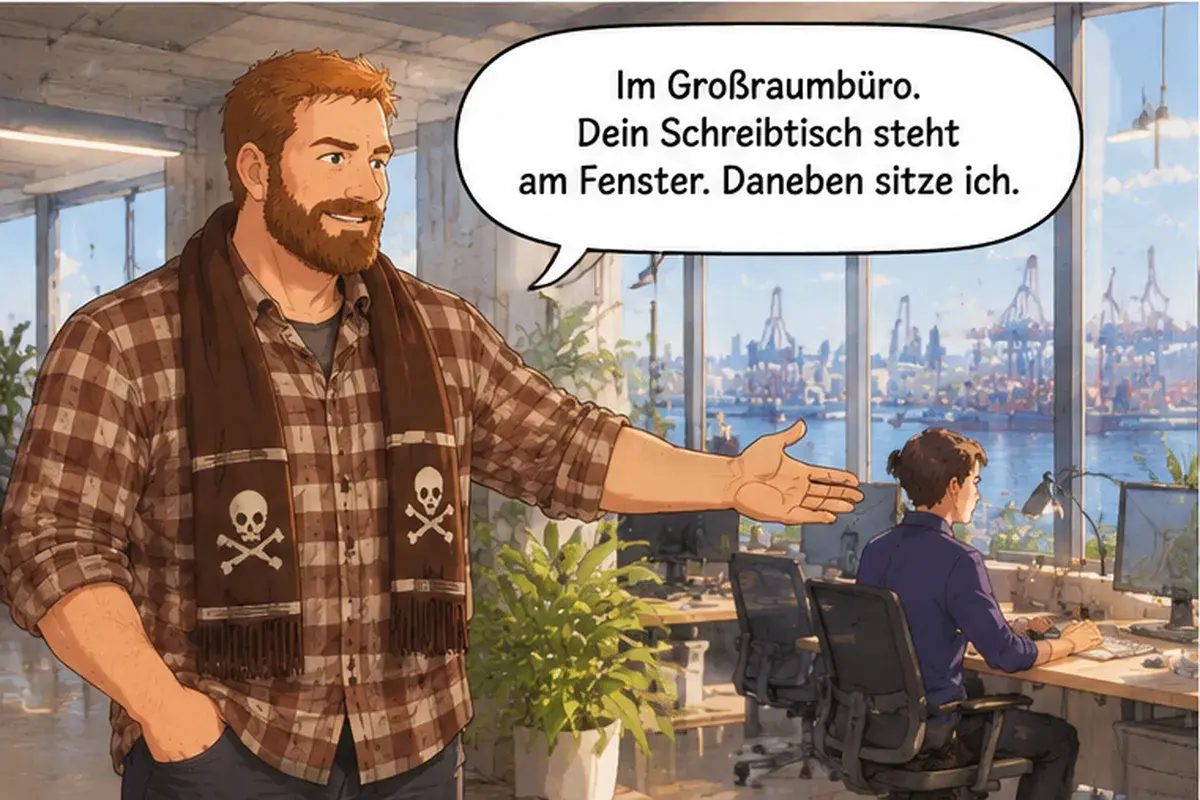
- Tobias
Im Großraumbüro. Dein Schreibtisch steht am Fenster. Daneben sitze ich.
In the open-plan office. Your desk is by the window. I sit next to it.
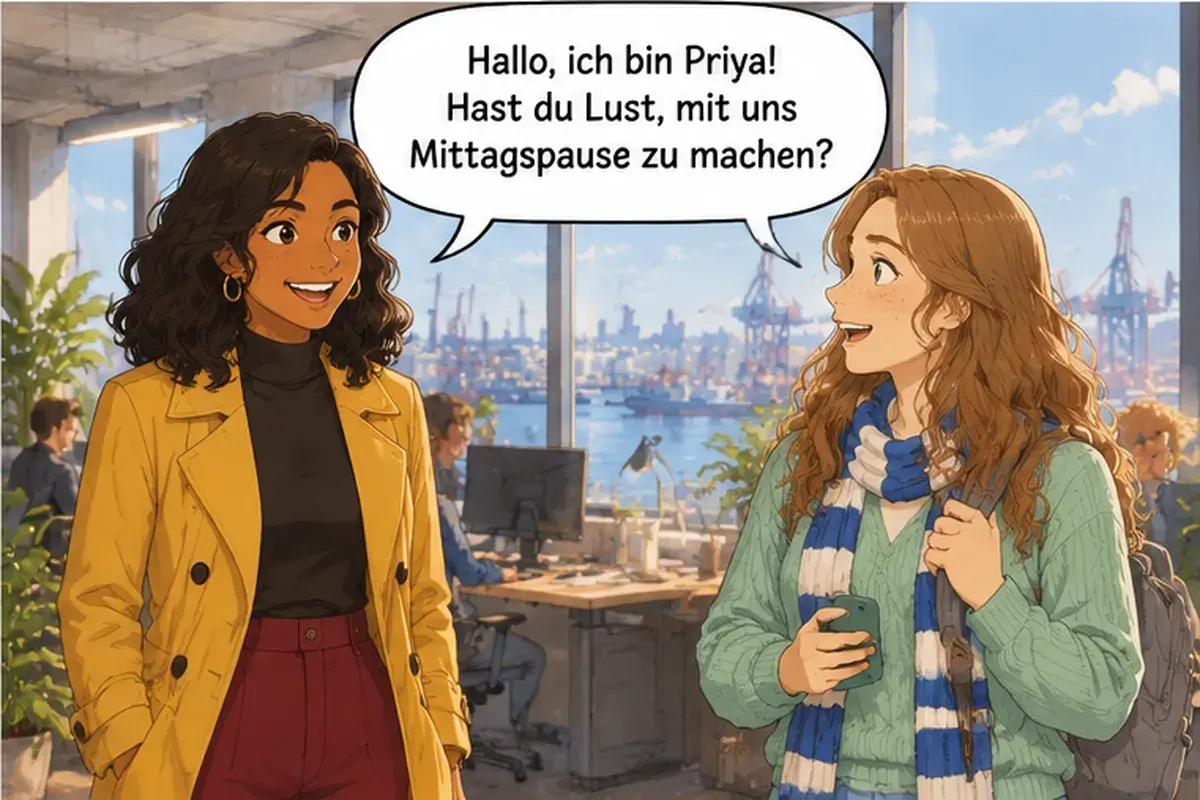
- Priya
Hallo, ich bin Priya! Hast du Lust, mit uns Mittagspause zu machen?
Hi, I'm Priya! Do you feel like taking a lunch break with us?

- Katja
Sehr gern! Ich habe noch nichts vor.
I'd love to! I have nothing planned yet.

- Priya
Dann um halb eins! Hier ist meine Nummer. Schreib mir einfach, wenn du mich suchst.
Then at twelve thirty! Here's my number. Just text me if you're looking for me.
Grammar for this text
- Schön, Sie zu sehen — "nice to see you" (formal). Before the infinitive comes
zu:zu sehen. Katja still saysSieto Tobias out of habit from the job interview (A2, unit 19). - Wir kennen uns ja schon. Hier duzen wir uns —
unshere means "each other";jais a small word that adds "after all, as you know";duzenmeans to sayduto someone. Sind hier alle per du? —per du seinmeans to be on a first-name basis. - Es ist nicht nötig, schon etwas zu erledigen —
Es ist nötig, … zu …means "it's necessary to …"; withnicht, "there's no need to …". After the comma,zuand the infinitive go at the very end. - Ich habe vor, zuerst den Tagesablauf mit dir zu besprechen —
vorhaben(to plan) splits:habe … vor. What you plan to do comes after the comma, withzu besprechenat the end (the prefixbe-doesn't separate, sozuis a separate word). In Katja's answer,vorgoes to the end: Ich habe noch nichts vor — "I have nothing planned yet". - Ich bin geduldig. Meistens. Ich bringe dir alles bei —
meistensmeans "most of the time": Tobias jokes that he isn't always patient.beibringen(to teach) splits:bringe … bei;diris the person you teach,allesis what you teach. - Daneben sitze ich —
daneben(next to it) comes first, so the verbsitzeis in second place andichcomes after it. English keeps "I" first: "I sit next to it." - Hast du Lust, mit uns Mittagspause zu machen? —
Lust haben, … zu …means "to feel like …": a friendly way to invite someone.
Words and grammar of the unit: Start at a new company.
Learn the words from the texts with flashcards
In the app, you can tap any word in a text to see its translation, forms and examples, and new words stick with flashcards. 15 minutes a day.
Start for freeEverything is open for free. No card needed to sign up.