

German story with translation · B1 · 12 lines
Die Reise war lang The trip was long
Comic · 12 panels

Die Reise war lang, aber schließlich kam ich in Hamburg an.
The trip was long, but finally I arrived in Hamburg.
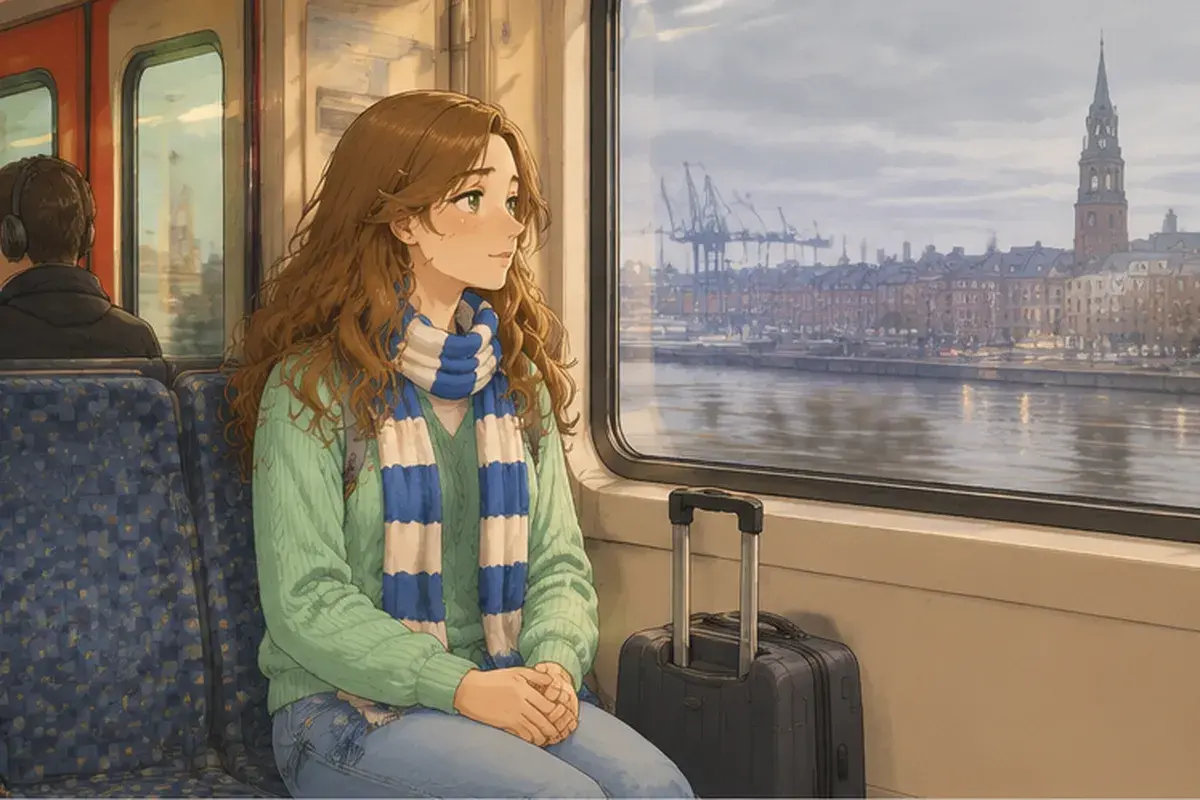
Am Hauptbahnhof nahm ich die S-Bahn nach Altona.
At the main station I took the S-Bahn to Altona.

Ich verließ die S-Bahn, und eine Frau von der Firma wartete schon vor dem Haus.
I left the S-Bahn, and a woman from the company was already waiting in front of the building.

Sie gab mir den Schlüssel, und wir fuhren mit dem Aufzug in die dritte Etage.
She gave me the key, and we took the elevator to the third floor.
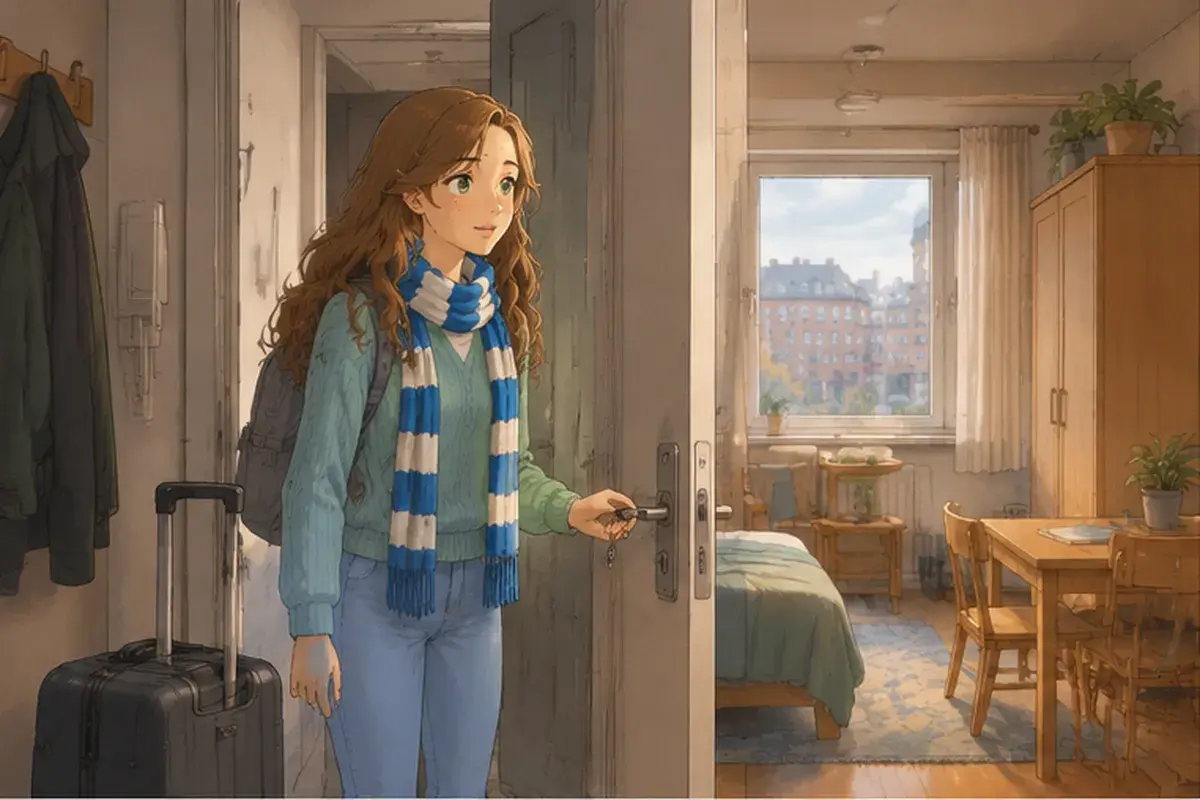
Als ich die Tür aufschloss, sah ich meine Dienstwohnung zum ersten Mal.
When I unlocked the door, I saw my company apartment for the first time.

Es war eine möblierte Einzimmerwohnung.
It was a furnished one-room apartment.

Auf den ersten Blick wirkte sie hübsch, aber winzig.
At first glance it seemed pretty, but tiny.
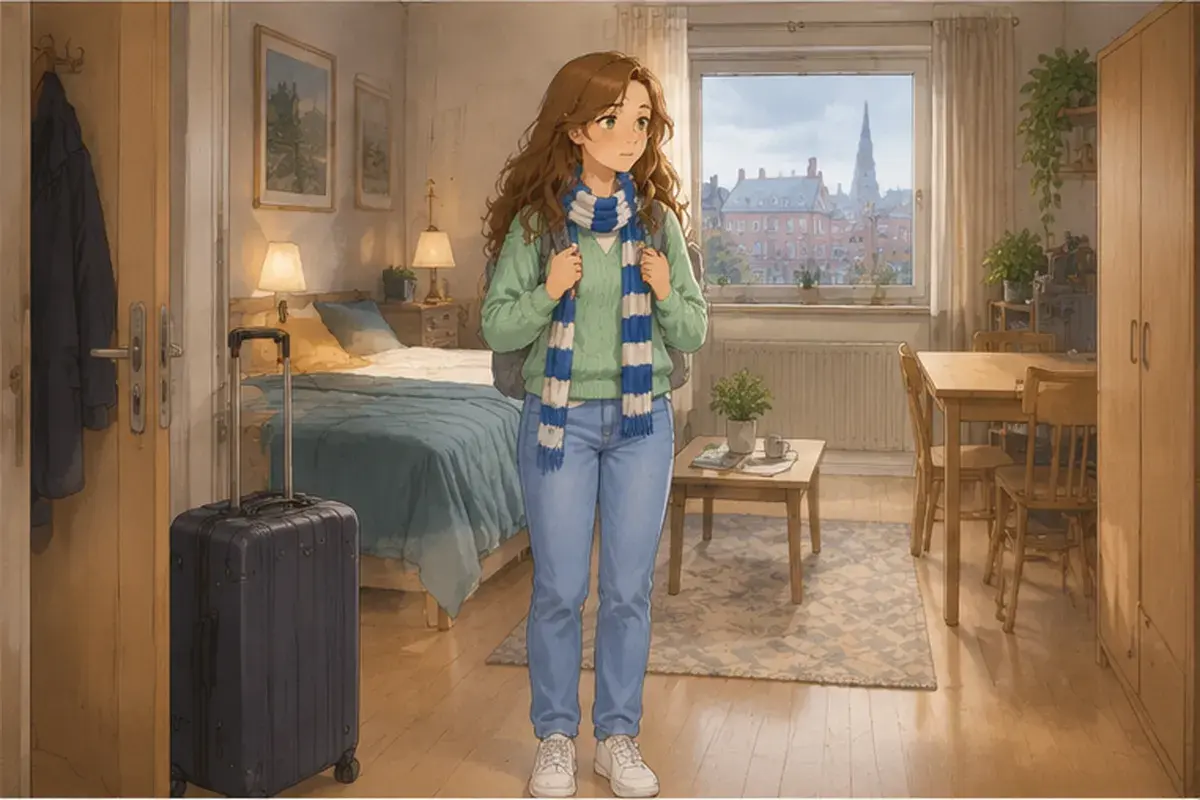
Als die Frau ging, wurde es still.
When the woman left, it got quiet.

Ein seltsamer Geruch hing im Zimmer, also machte ich das Fenster auf.
A strange smell hung in the room, so I opened the window.

Erschöpft packte ich nach und nach die erste Kiste aus.
Exhausted, I unpacked the first box little by little.
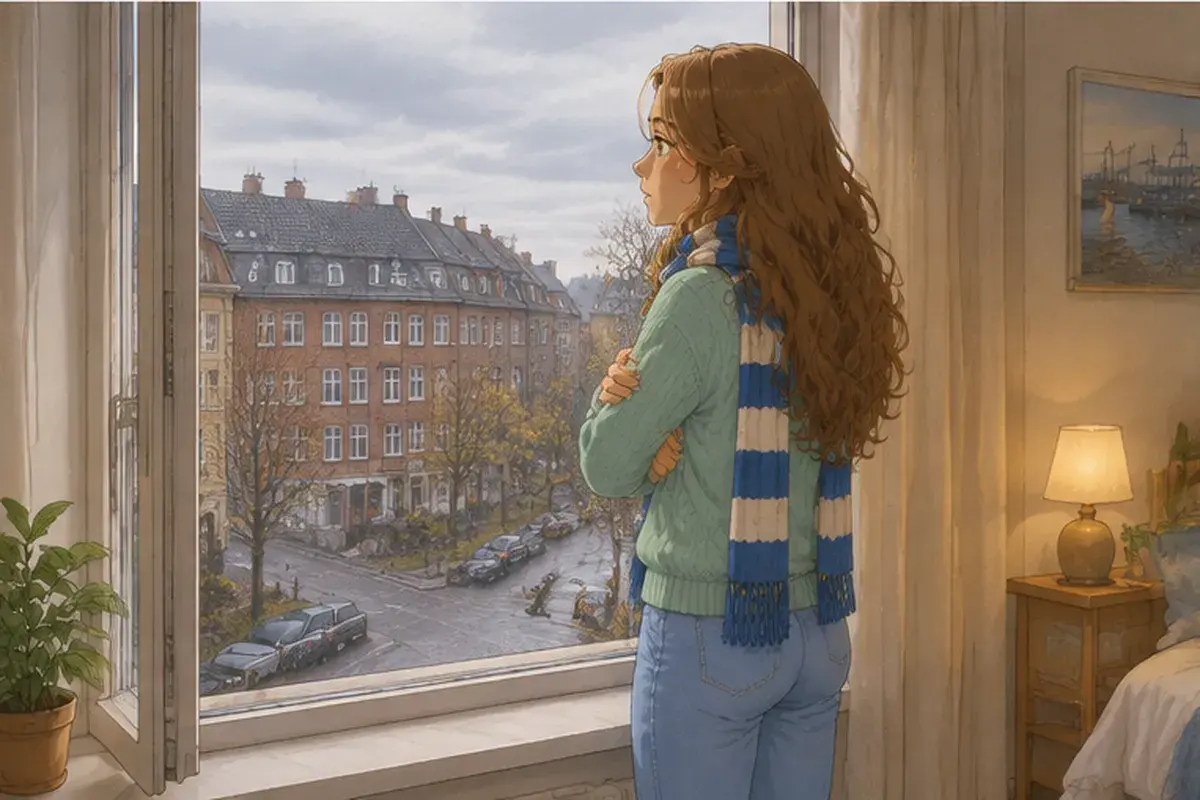
Ich guckte aus dem Fenster und fühlte mich auf einmal einsam.
I looked out the window and suddenly felt lonely.

Ich schrieb Lukas, und schon war ich nicht mehr allein.
I wrote to Lukas, and just like that I wasn't alone anymore.
Grammar for this text
- Die Reise war lang, aber schließlich kam ich in Hamburg an —
warandkamare the Präteritum (narrative past) ofseinandkommen(the ich form has no ending).ankommenis separable: the prefixanwent to the end.schließlichmeans "in the end, finally". - Am Hauptbahnhof nahm ich die S-Bahn nach Altona —
nahmcomes fromnehmen: the vowel changes, and the ich form has no ending. - Ich verließ die S-Bahn, und eine Frau von der Firma wartete schon vor dem Haus —
verließcomes fromverlassen(to leave), no ending in the ich form;warteteis regular (warten+e+te). - Sie gab mir den Schlüssel, und wir fuhren mit dem Aufzug in die dritte Etage —
Siehere means "she" (the woman from the company): it has a capital letter only because it starts the sentence.gabcomes fromgeben,fuhrenfromfahren; the wir form ends in-en.in die dritte Etagemeans "to the third floor": where to? — accusative. - Als ich die Tür aufschloss, sah ich meine Dienstwohnung zum ersten Mal —
alsmeans "when", one time in the past; the verbaufschlossis at the end, so the prefix stays joined. It's the Präteritum ofaufschließen(to unlock).sahcomes fromsehen.zum ersten Malmeans "for the first time". - Auf den ersten Blick wirkte sie hübsch, aber winzig —
siehere means "it", the apartment (die Wohnungis feminine).wirktecomes fromwirken(to seem).auf den ersten Blickmeans "at first glance". - Als die Frau ging, wurde es still —
gingcomes fromgehen,wurdefromwerden:wurde es stillmeans "it got quiet".hingin Ein seltsamer Geruch hing im Zimmer comes fromhängen(to hang).
Words and grammar of the unit: Tell the story of your move.
Learn the words from the texts with flashcards
In the app, you can tap any word in a text to see its translation, forms and examples, and new words stick with flashcards. 15 minutes a day.
Start for freeEverything is open for free. No card needed to sign up.