

German dialogue with translation · B1 · 16 lines
Mehr Geld oder mehr Zeit? More money or more time?
Comic · 14 panels
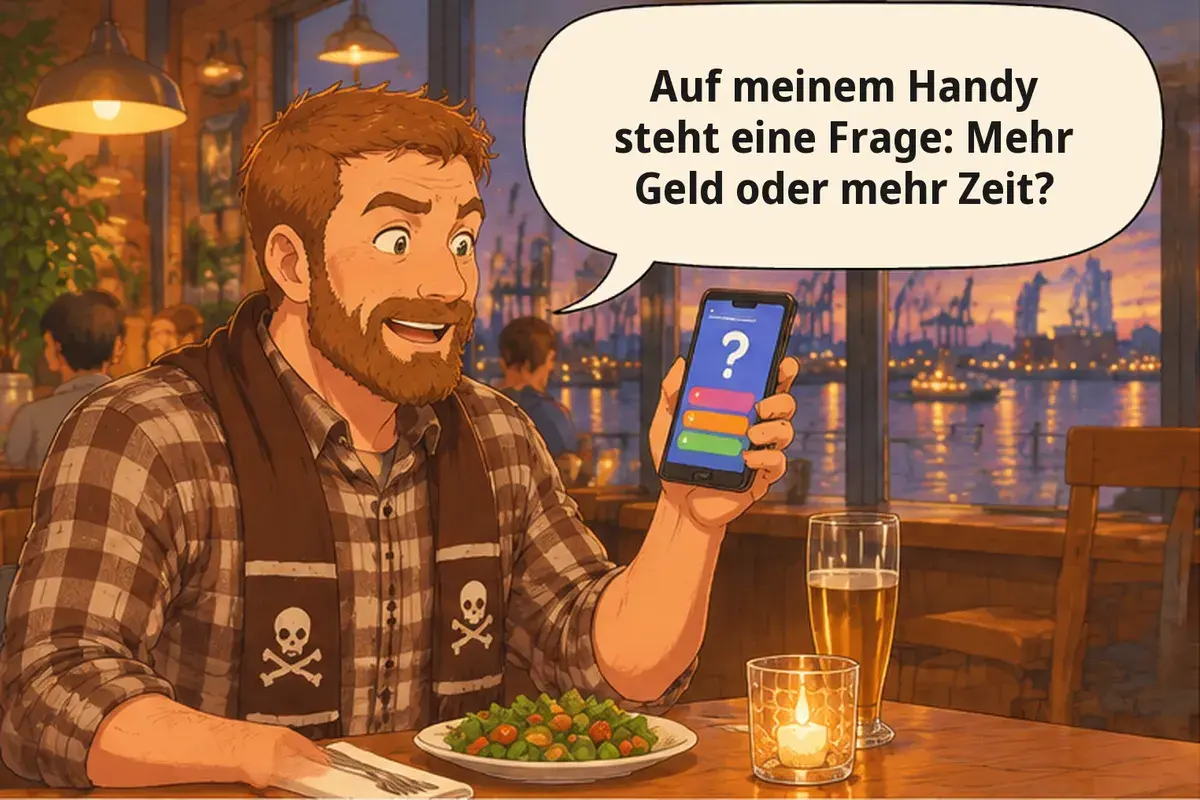
- Tobias
Auf meinem Handy steht eine Frage: Mehr Geld oder mehr Zeit?
My phone has a question on it: more money or more time?
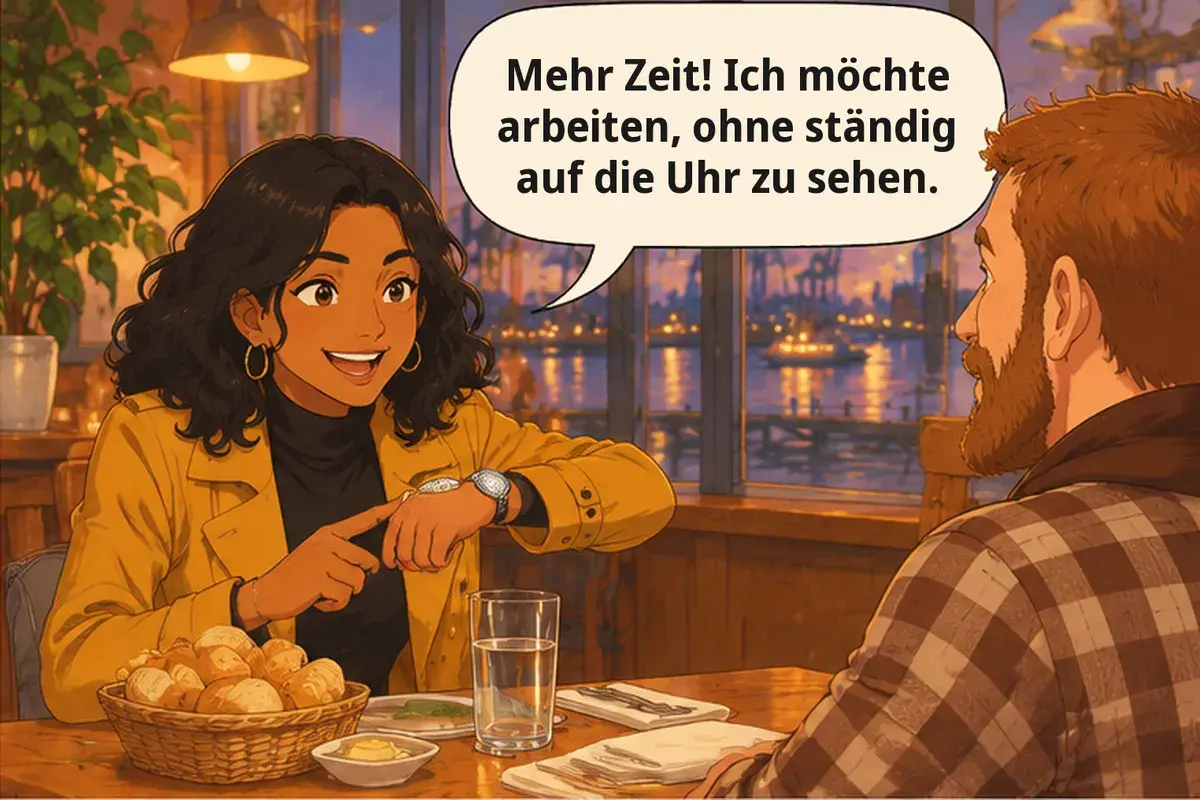
- Priya
Mehr Zeit! Ich möchte arbeiten, ohne ständig auf die Uhr zu sehen.
More time! I want to work without constantly looking at the clock.
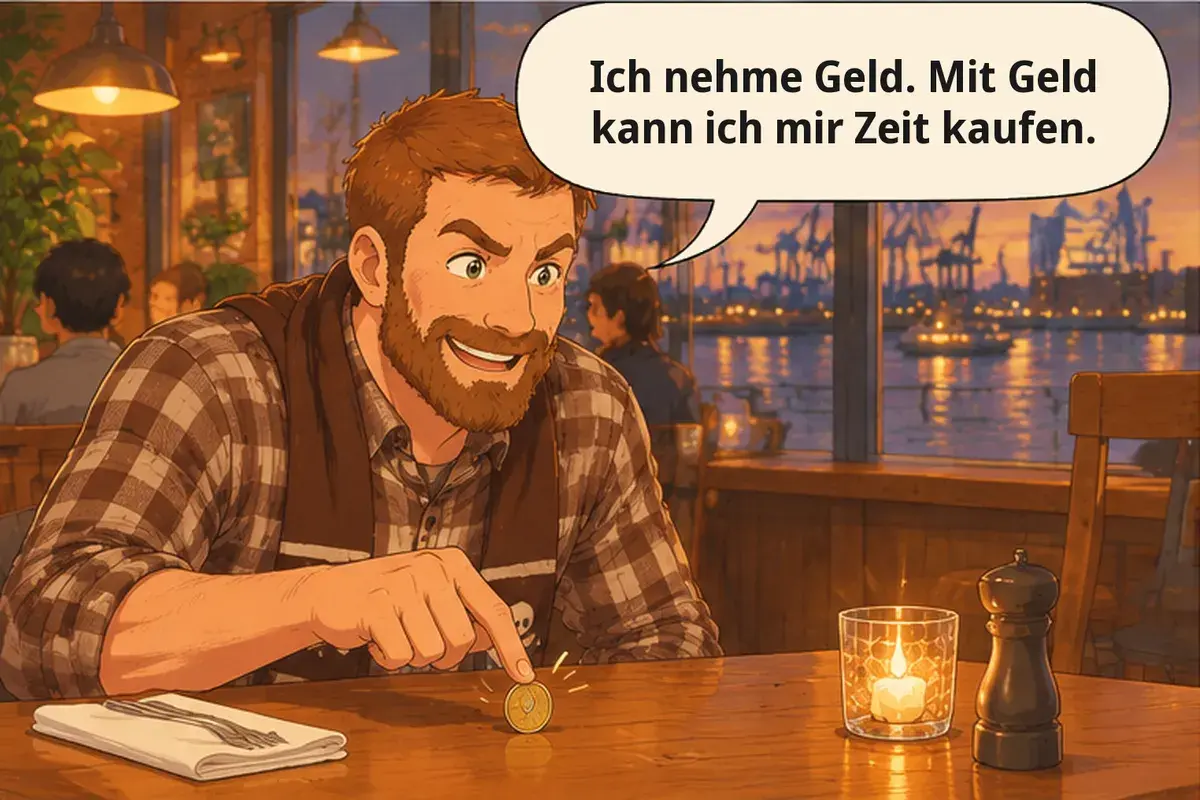
- Tobias
Ich nehme Geld. Mit Geld kann ich mir Zeit kaufen.
I'll take money. With money I can buy myself time.
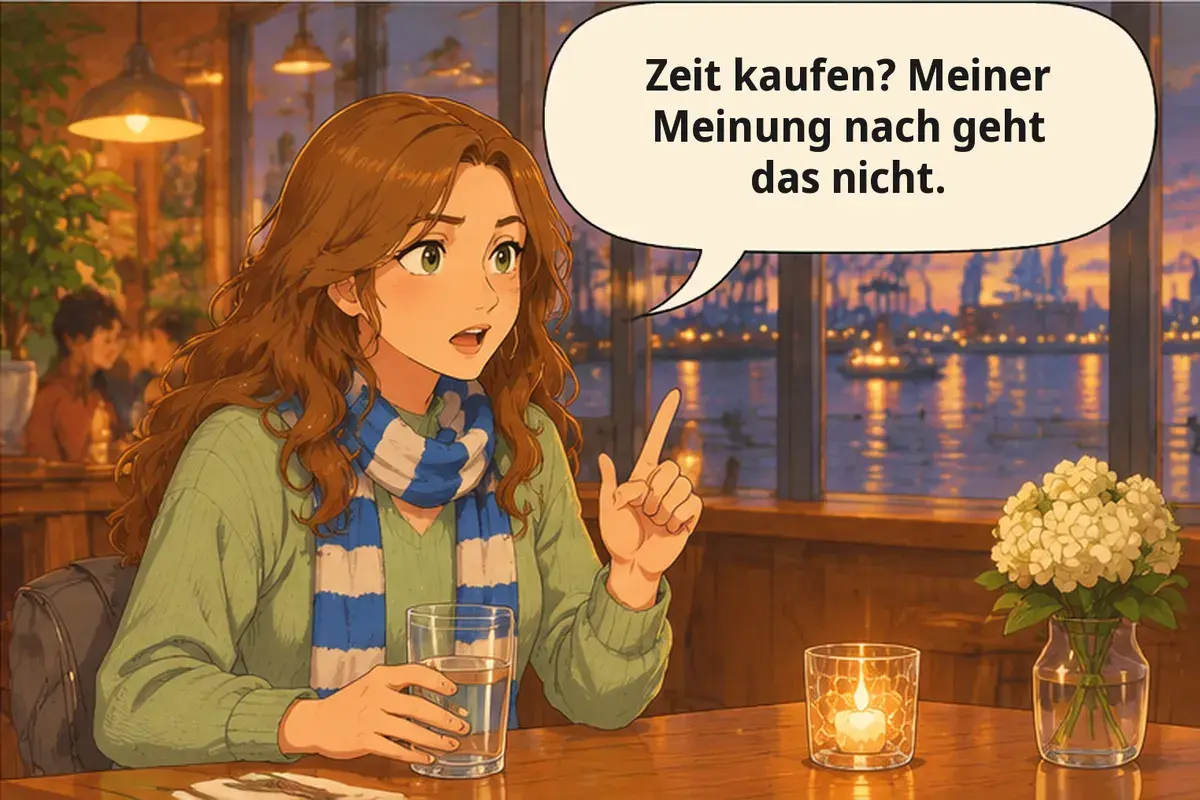
- Katja
Zeit kaufen? Meiner Meinung nach geht das nicht.
Buy time? In my opinion, that doesn't work.
- Tobias
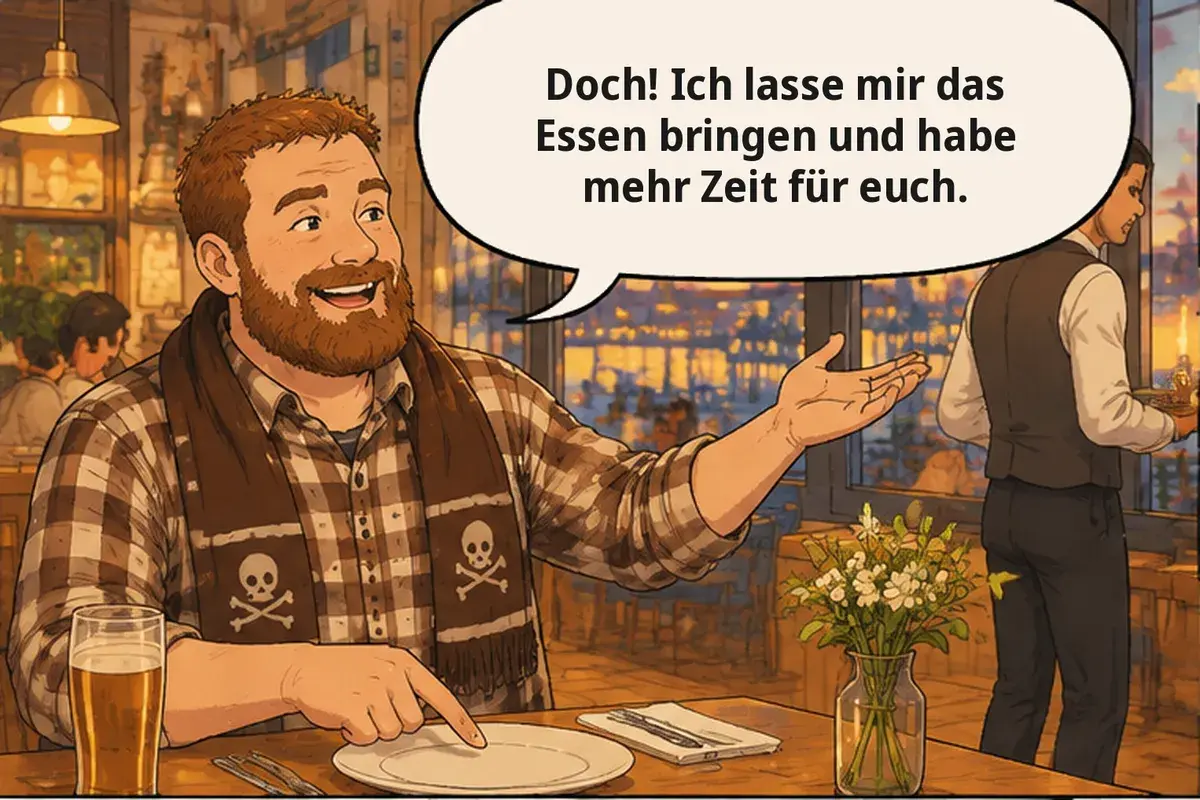
Doch! Ich lasse mir das Essen bringen und habe mehr Zeit für euch.
Oh yes it does! I have my food brought to me and have more time for you. (to several people)

- Katja
Das macht Sinn. Mit mehr Zeit würde ich öfter ins Theater gehen.
That makes sense. With more time I'd go to the theater more often.

- Priya
Genau. Und man sagt ja: Reichtum macht nicht glücklich.
Exactly. And people say, after all: wealth doesn't make you happy.
- Tobias
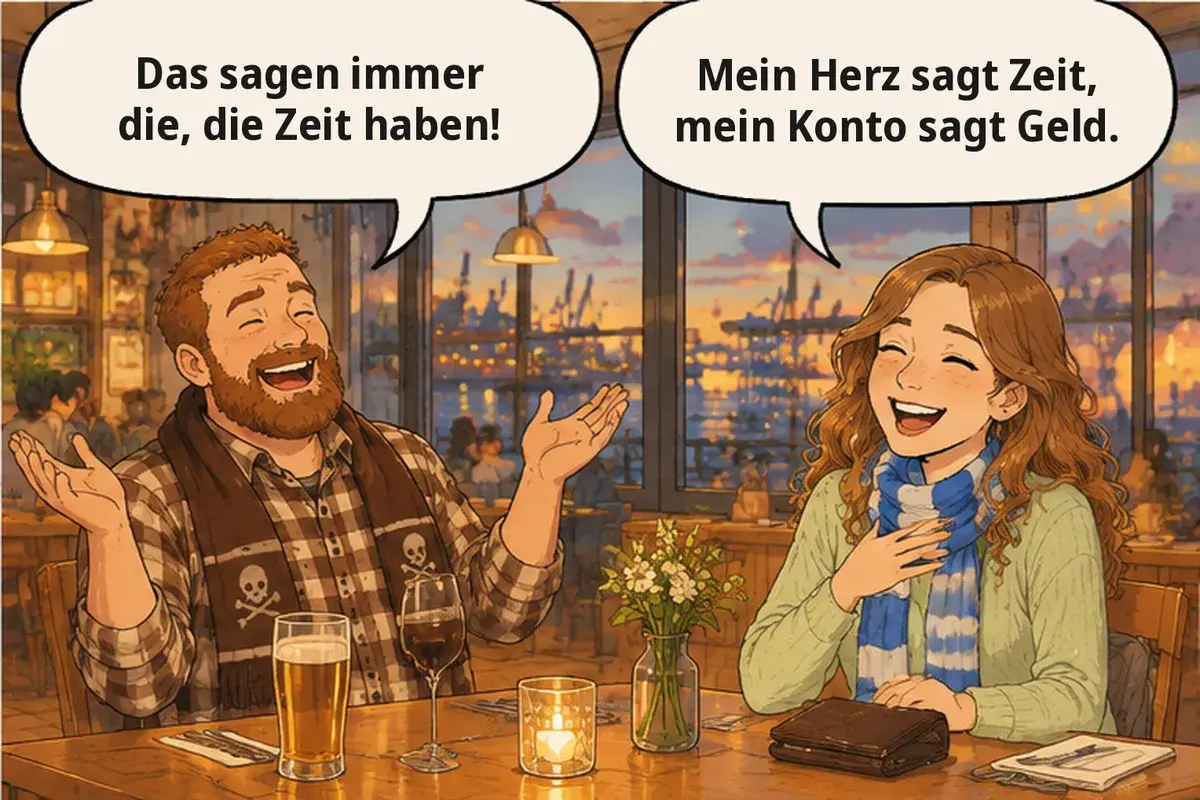
Das sagen immer die, die Zeit haben!
It's always people with time who say that!
- Katja
Mein Herz sagt Zeit, mein Konto sagt Geld.
My heart says time, my bank account says money.

- Priya
Ein berühmter Künstler hat Geld, aber keine Zeit für neue Bilder.
A famous artist has money, but no time for new paintings.
- Tobias
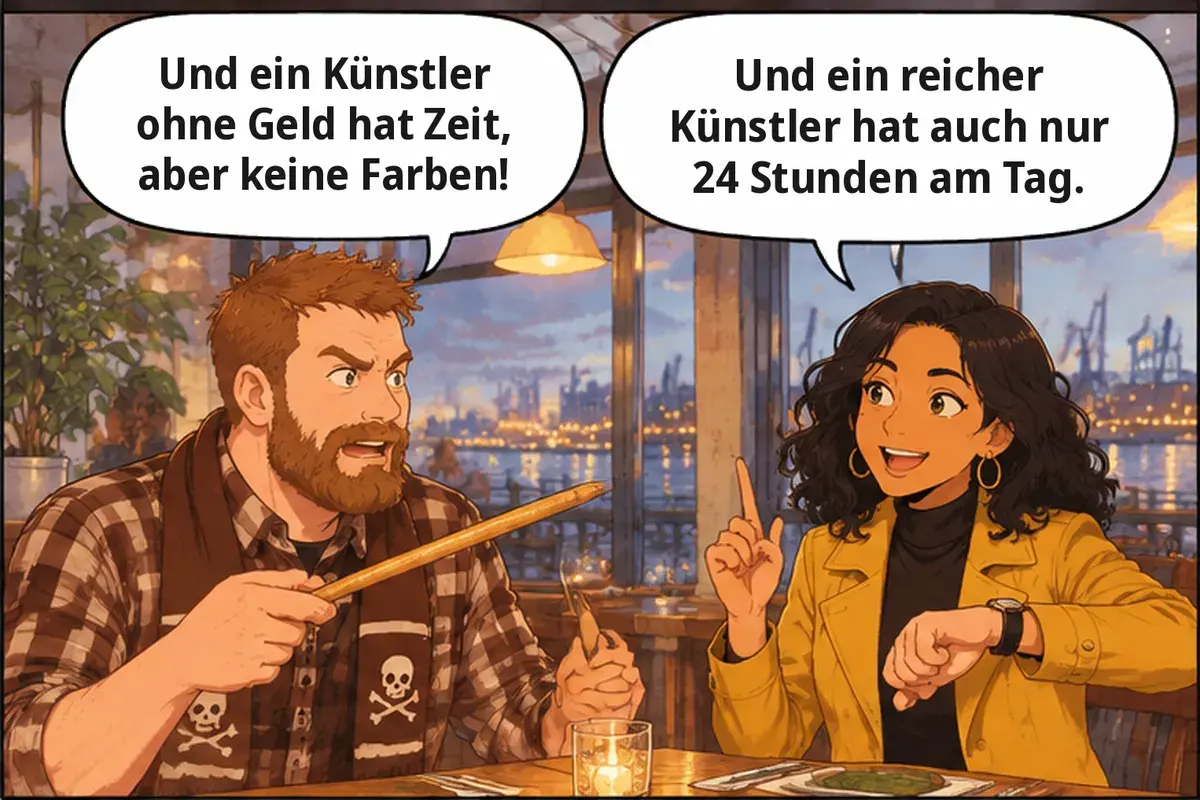
Und ein Künstler ohne Geld hat Zeit, aber keine Farben!
And an artist without money has time, but no paints!
- Priya
Und ein reicher Künstler hat auch nur 24 Stunden am Tag.
And a rich artist only has 24 hours a day too.
- Katja
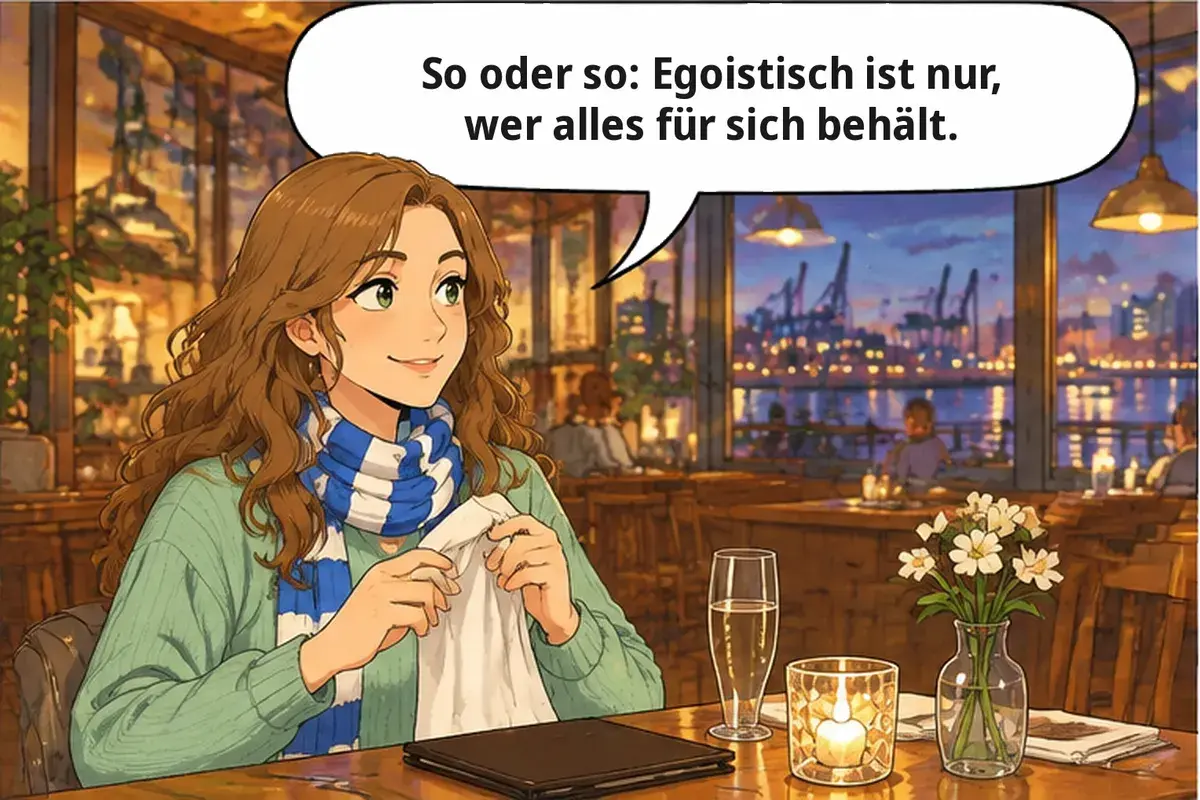
So oder so: Egoistisch ist nur, wer alles für sich behält.
Either way: the only selfish one is whoever keeps everything for themselves.
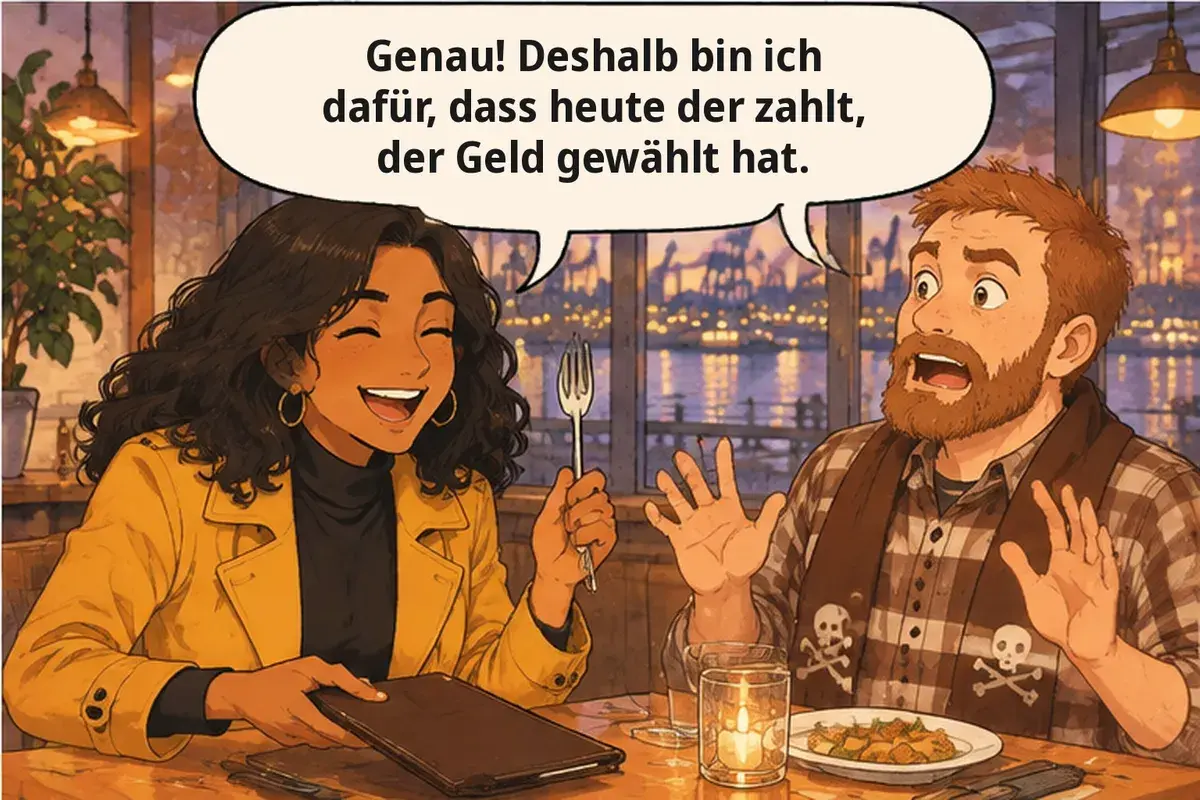
- Priya
Genau! Deshalb bin ich dafür, dass heute der zahlt, der Geld gewählt hat.
Exactly! That's why I'm for whoever chose money paying today.
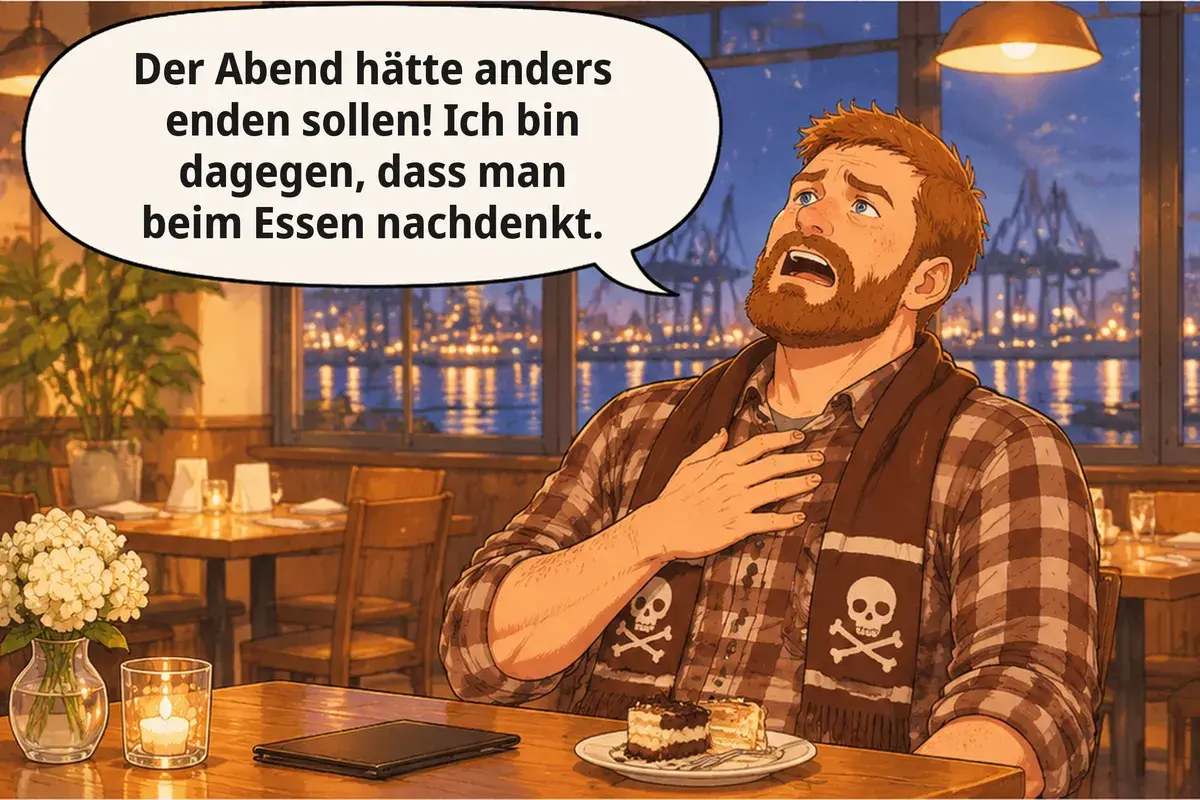
- Tobias
Der Abend hätte anders enden sollen! Ich bin dagegen, dass man beim Essen nachdenkt.
The evening should have ended differently! I'm against people thinking during a meal.

- Katja
Du hast mit der Frage angefangen, Tobias. Und hier kommt die Rechnung.
You started with the question, Tobias. And here comes the check.
Grammar for this text
- Ich möchte arbeiten, ohne ständig auf die Uhr zu sehen —
ohne … zu(unit 17) means "without -ing".zustands before the infinitive at the end; there is no subject, because it is the same as in the main part (ich). - Ich lasse mir das Essen bringen —
lassen(unit 6): "I have my food brought to me"; I don't carry it myself.mirshows for whom. - Das macht Sinn — a fixed phrase: "That makes sense."
Sinnhas a capital letter because it is a noun. - Mit mehr Zeit würde ich öfter ins Theater gehen —
würde+ infinitive is the Konjunktiv II (would-form, unit 11): "with more time I'd go to the theater more often". It's a daydream, not a fact. - Das sagen immer die, die Zeit haben —
die, diemeans "the ones who": the firstdieis "the ones", the second is "who";habenis at the end of the clause. - So oder so: Egoistisch ist nur, wer alles für sich behält —
so oder someans "either way".wermeans "whoever", and the verbbehältis at the end (behalten, unit 6; the er form isbehält). - Der Abend hätte anders enden sollen —
hätte … enden sollenagain (see the review block of this unit): "the evening should have ended differently". Tobias is joking about the check.
Words and grammar of the unit: Argue about a series and what matters.
Learn the words from the texts with flashcards
In the app, you can tap any word in a text to see its translation, forms and examples, and new words stick with flashcards. 15 minutes a day.
Start for freeEverything is open for free. No card needed to sign up.