

German dialogue with translation · B1 · 16 lines
Ich hätte gern mein Geld zurück I'd like my money back
Comic · 16 panels
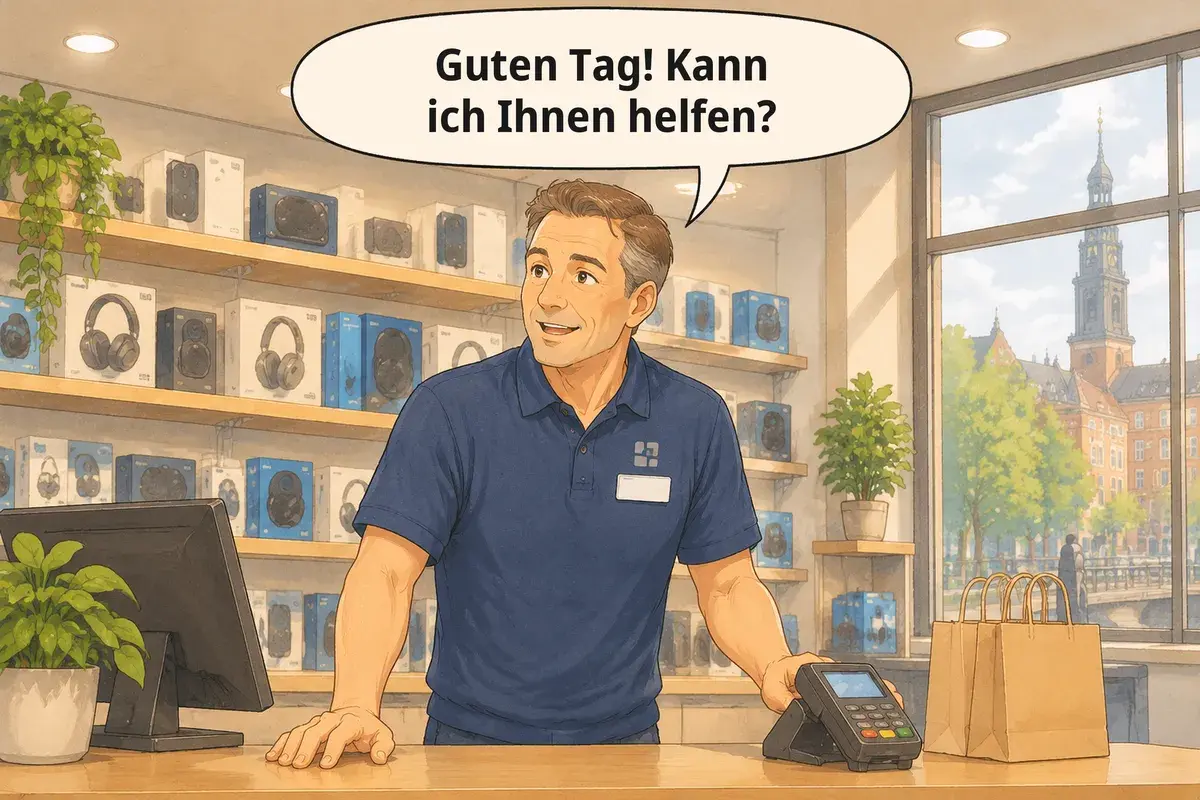
- Verkäufer
Guten Tag! Kann ich Ihnen helfen?
Hello! Can I help you? (formal)
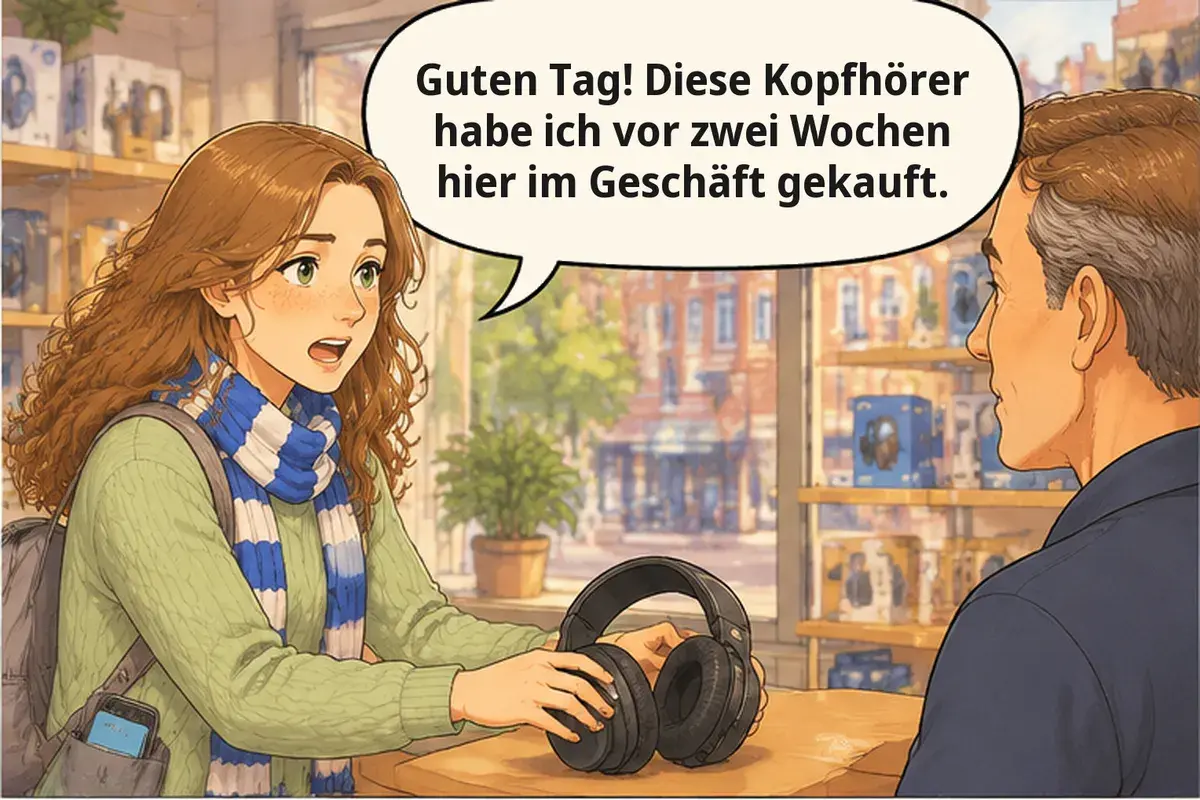
- Katja
Guten Tag! Diese Kopfhörer habe ich vor zwei Wochen hier im Geschäft gekauft.
Hello! I bought these headphones here at the store two weeks ago.
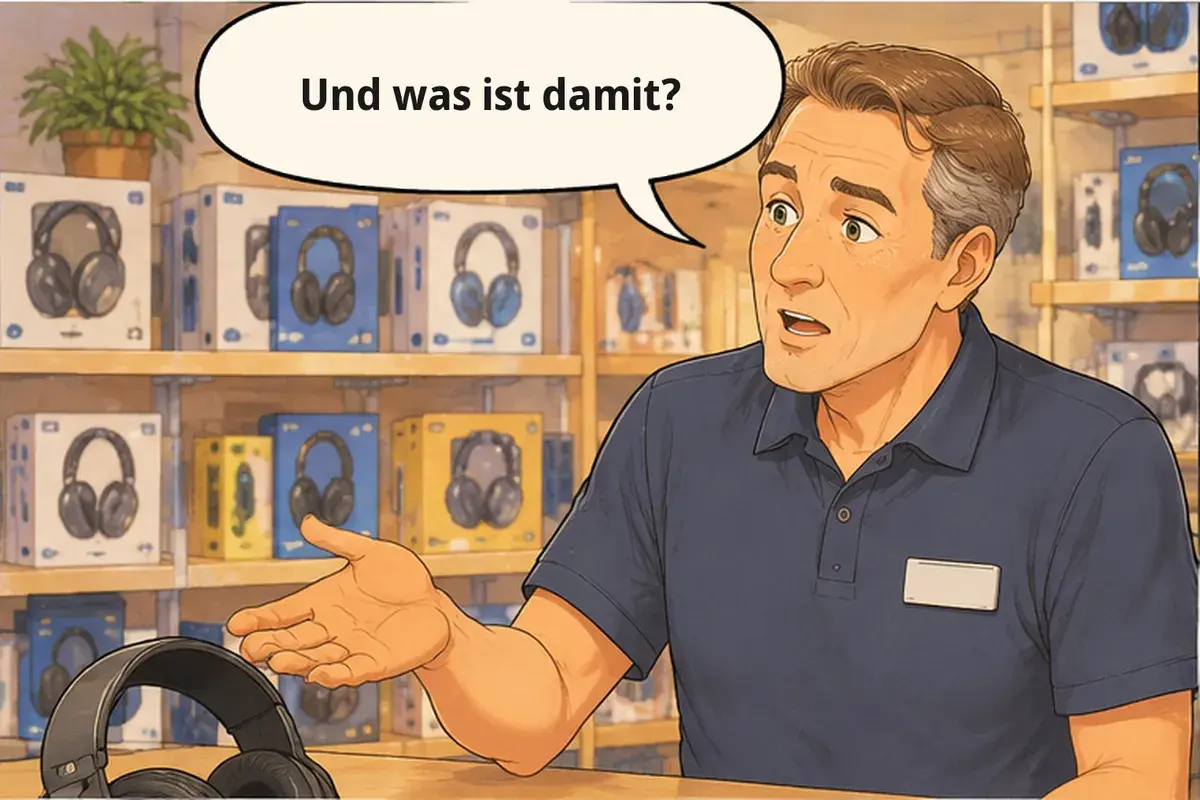
- Verkäufer
Und was ist damit?
And what's wrong with them?
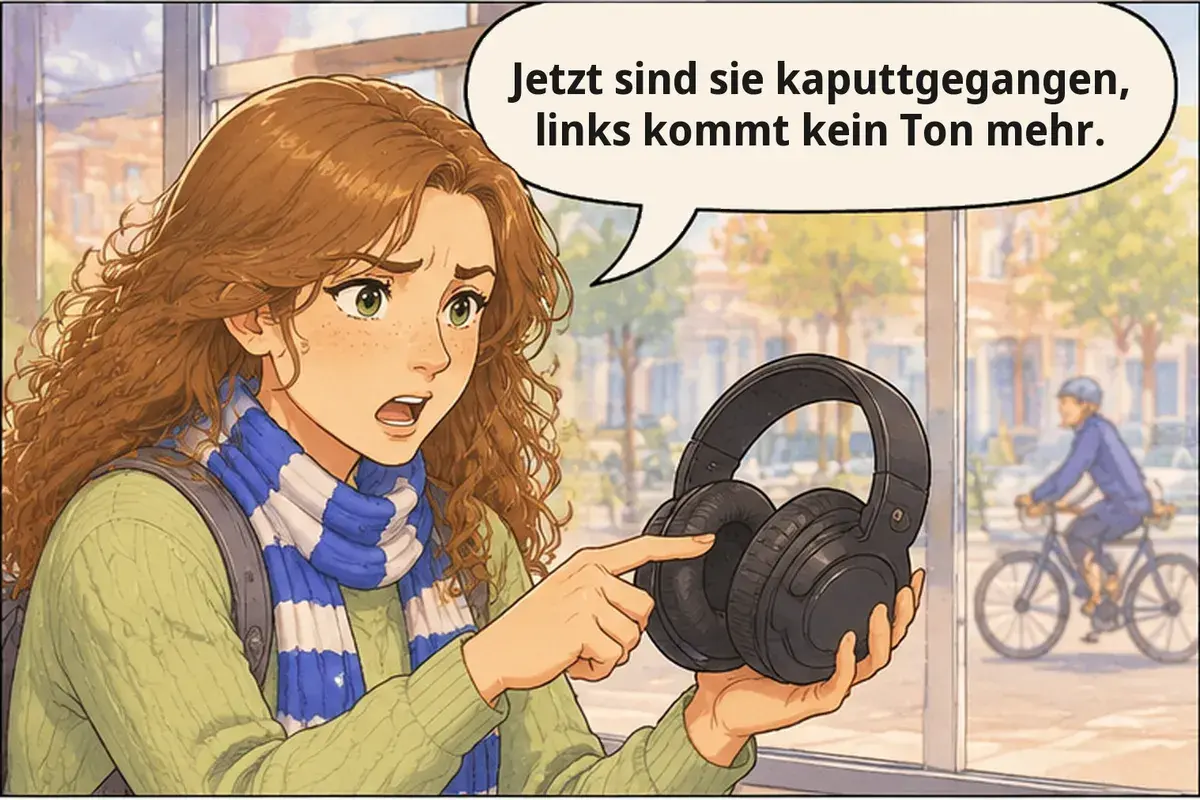
- Katja
Jetzt sind sie kaputtgegangen, links kommt kein Ton mehr.
Now they've broken, there's no sound from the left one anymore.
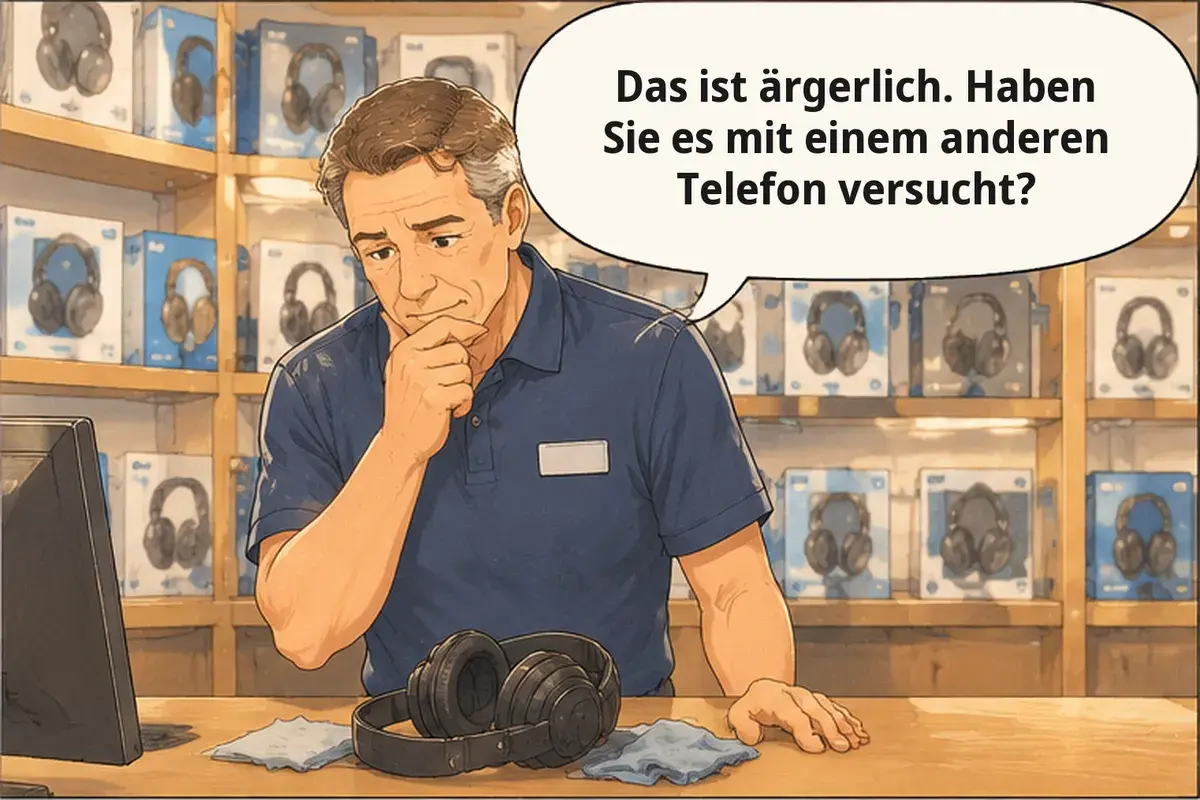
- Verkäufer
Das ist ärgerlich. Haben Sie es mit einem anderen Telefon versucht?
That's annoying. Have you tried it with another phone? (formal)
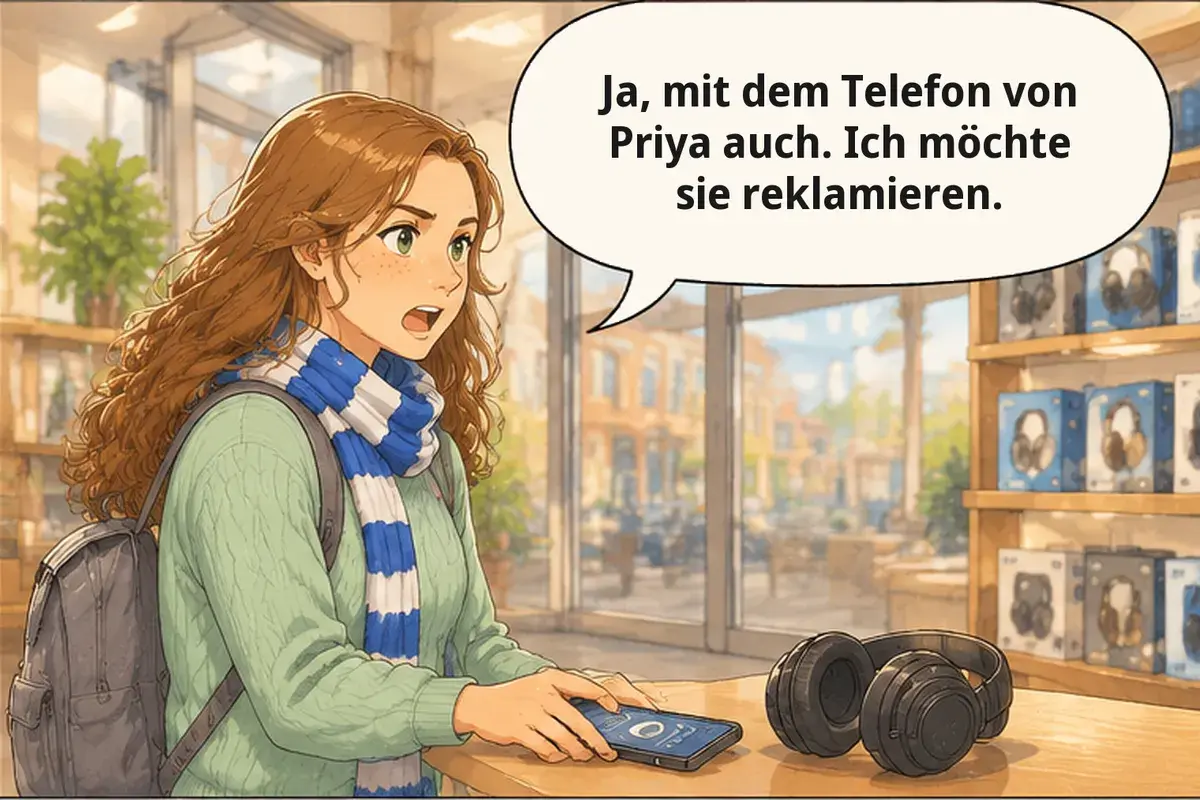
- Katja
Ja, mit dem Telefon von Priya auch. Ich möchte sie reklamieren.
Yes, with Priya's phone too. I'd like to file a complaint about them.
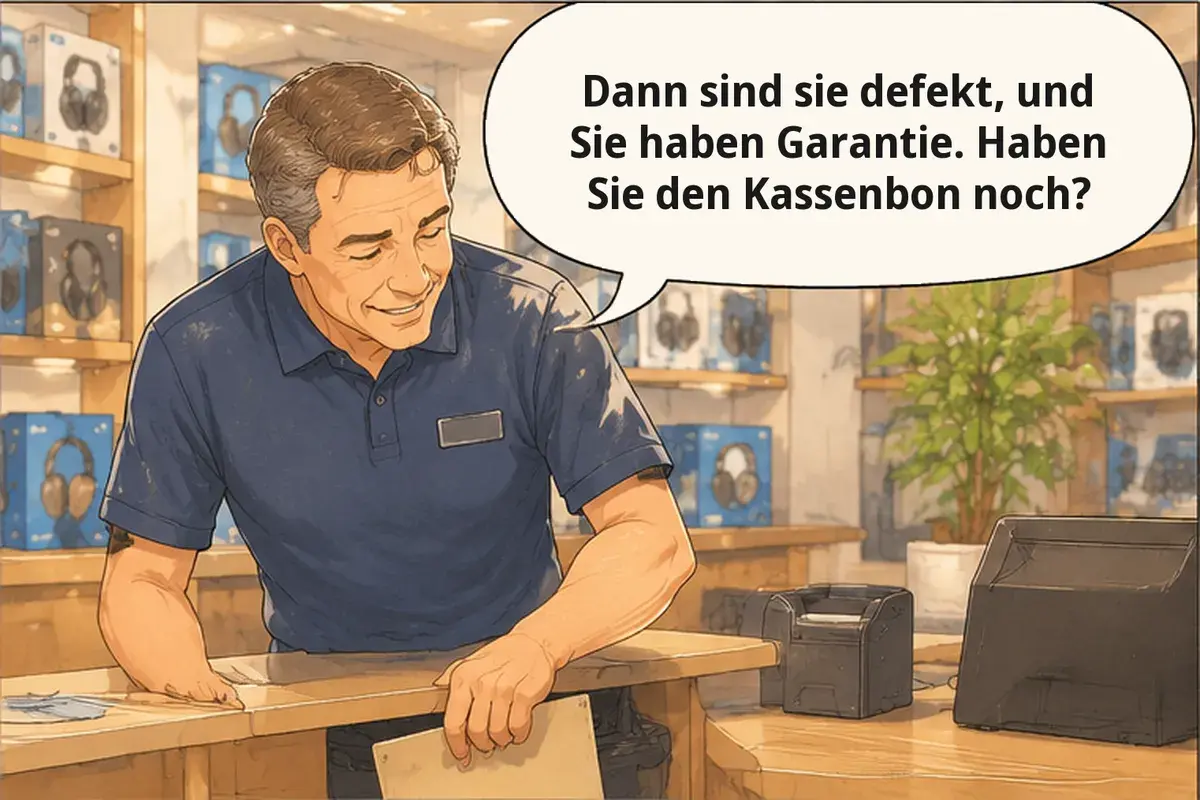
- Verkäufer
Dann sind sie defekt, und Sie haben Garantie. Haben Sie den Kassenbon noch?
Then they're defective, and you have a warranty. Do you still have the receipt? (formal)
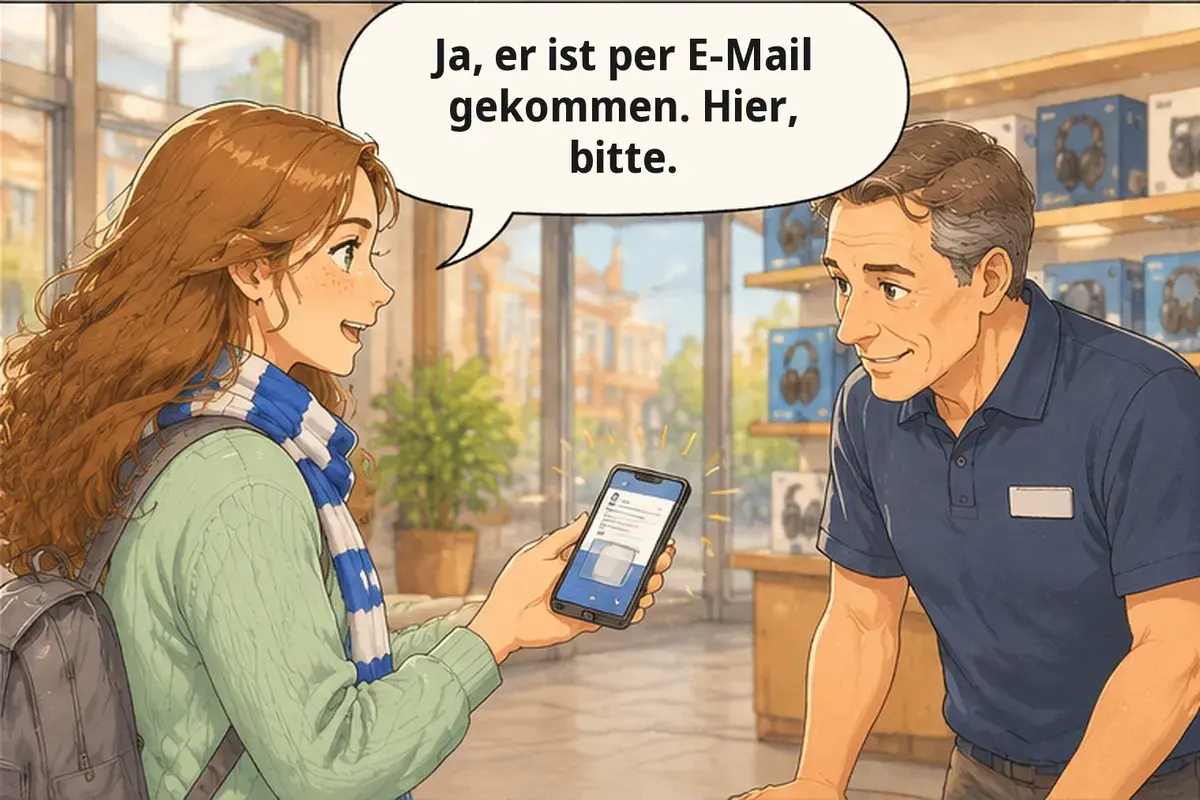
- Katja
Ja, er ist per E-Mail gekommen. Hier, bitte.
Yes, it came by email. Here you are.
- Verkäufer
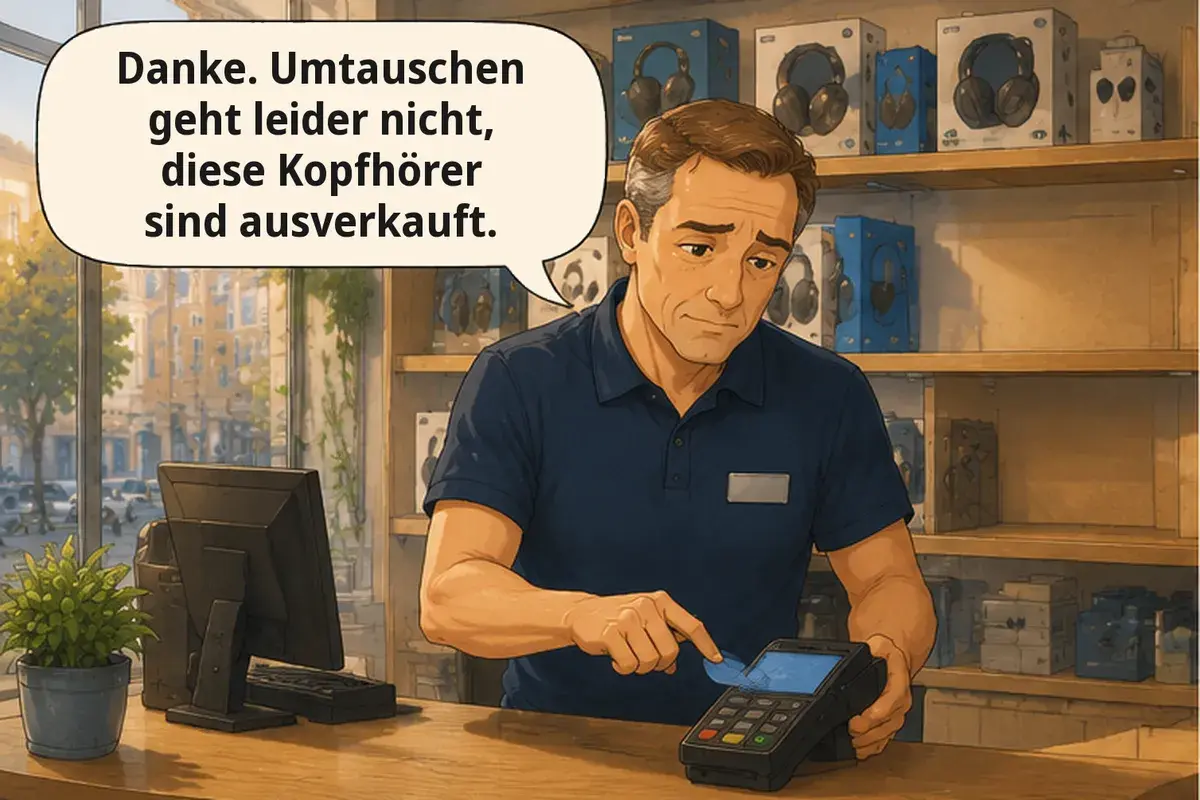
Danke. Umtauschen geht leider nicht, diese Kopfhörer sind ausverkauft.
Thank you. Unfortunately, exchanging them isn't possible, these headphones are sold out.
- Katja
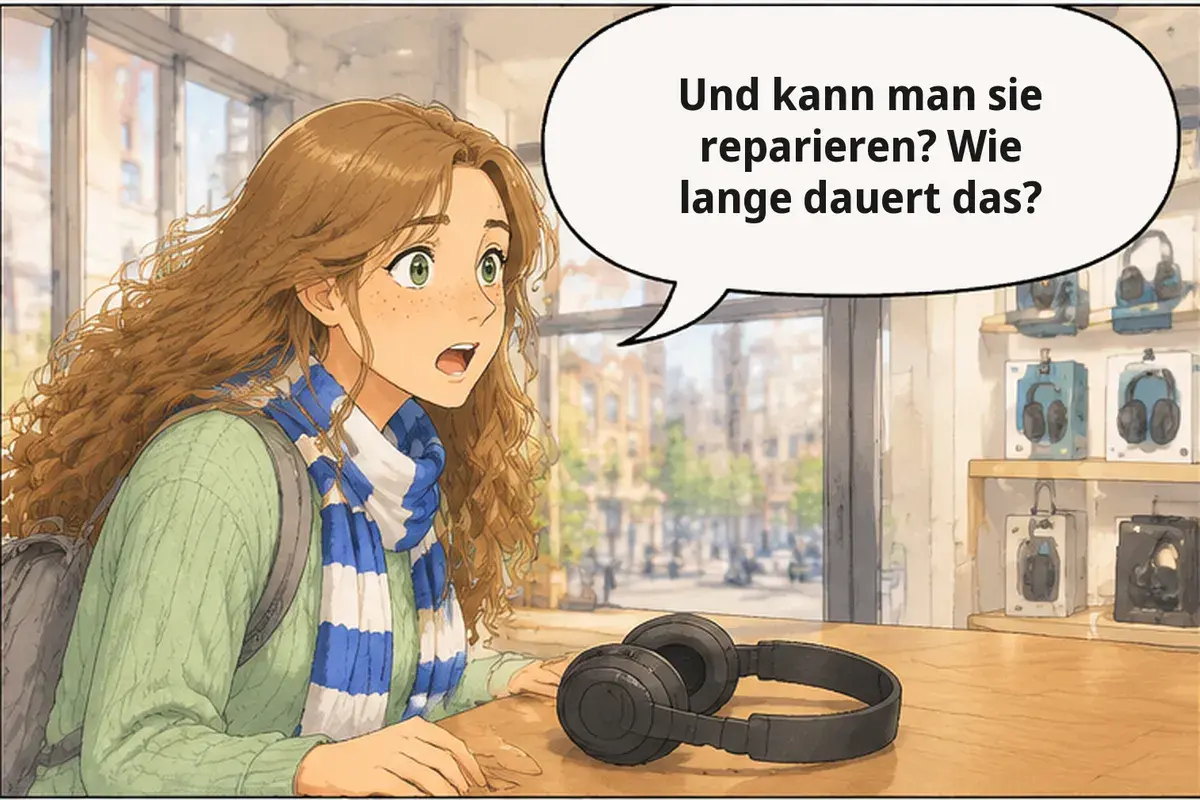
Und kann man sie reparieren? Wie lange dauert das?
And can they be repaired? How long does that take?
- Verkäufer
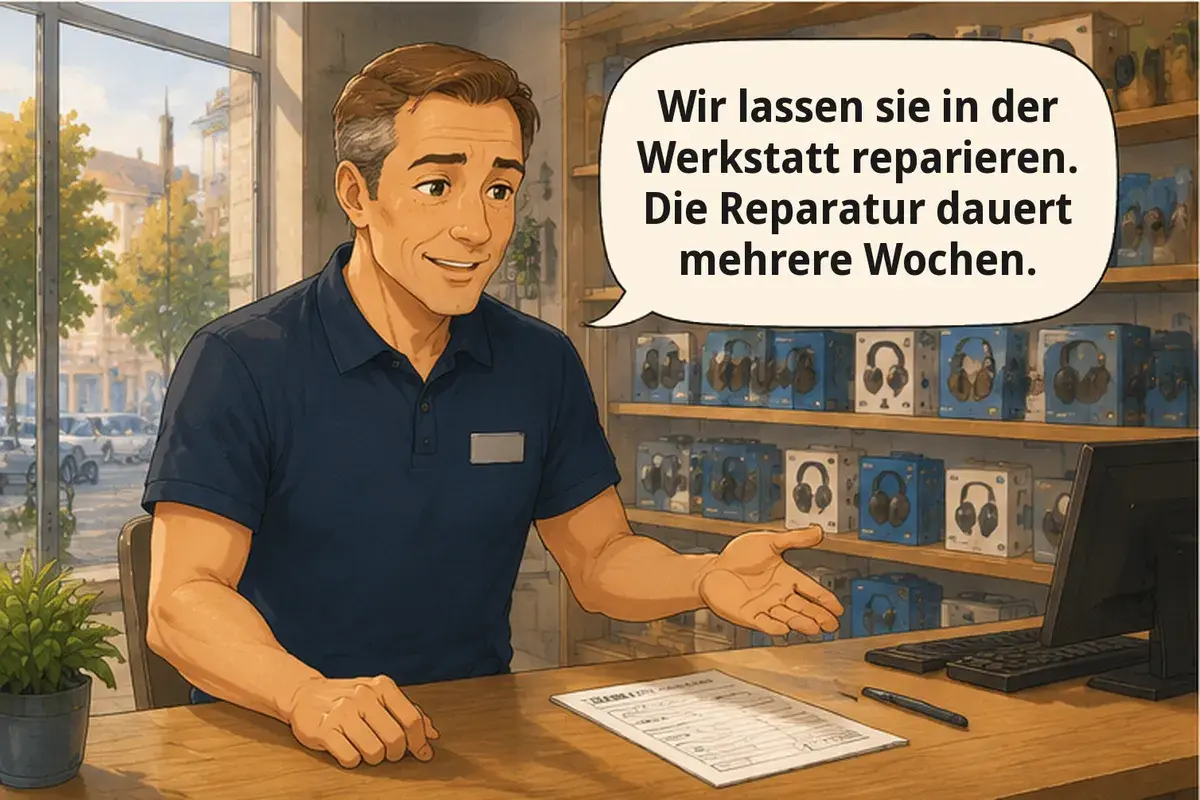
Wir lassen sie in der Werkstatt reparieren. Die Reparatur dauert mehrere Wochen.
We're having them repaired at the repair shop. The repair takes several weeks.

- Katja
Mehrere Wochen? Ich kann nicht pendeln, ohne Musik zu hören!
Several weeks? I can't commute without listening to music!
- Verkäufer
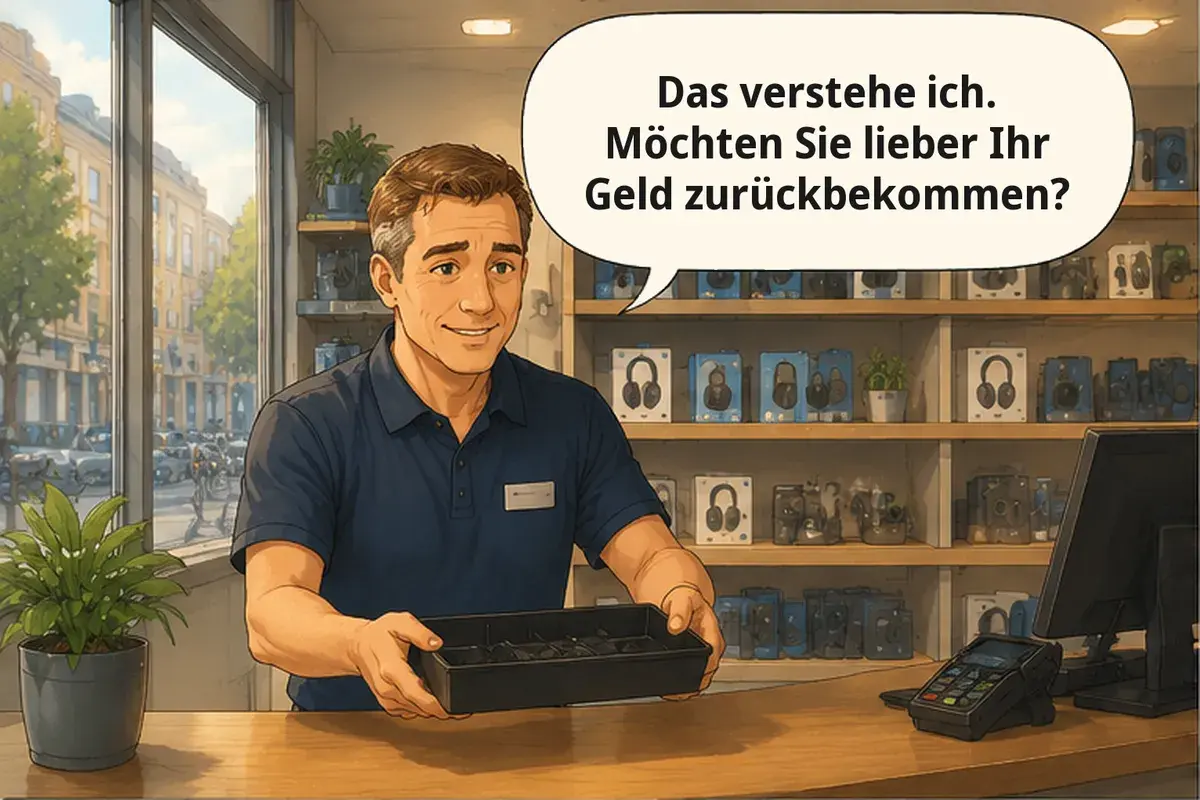
Das verstehe ich. Möchten Sie lieber Ihr Geld zurückbekommen?
I understand. Would you rather get your money back? (formal)
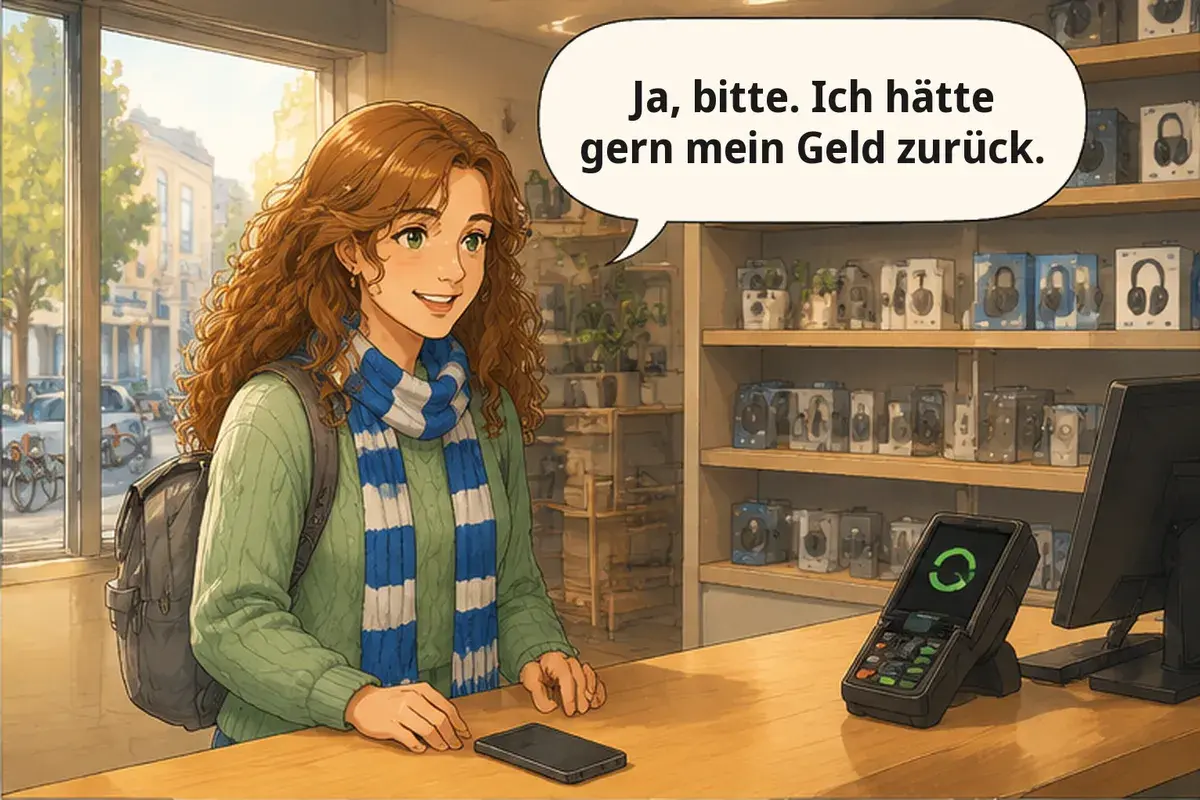
- Katja
Ja, bitte. Ich hätte gern mein Geld zurück.
Yes, please. I'd like my money back.
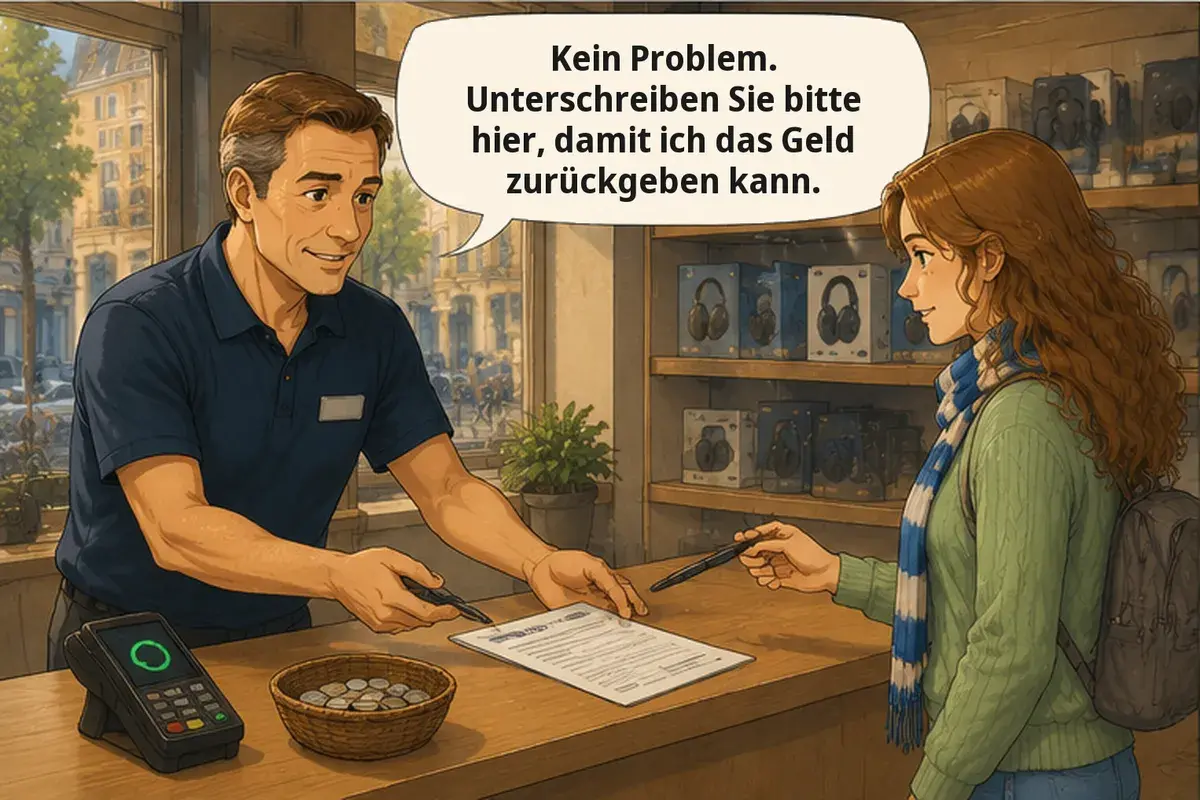
- Verkäufer
Kein Problem. Unterschreiben Sie bitte hier, damit ich das Geld zurückgeben kann.
No problem. Please sign here so that I can give the money back. (formal)

- Katja
Danke für die schnelle Hilfe. Schönen Tag noch!
Thank you for the quick help. Have a nice day!
Grammar for this text
- Diese Kopfhörer habe ich vor zwei Wochen hier im Geschäft gekauft — the thing comes first: "These headphones, I bought them...". So
habestays second,ichcomes after it, and the past participlegekauftgoes to the end.vor zwei Wochenmeans "two weeks ago". - Jetzt sind sie kaputtgegangen, links kommt kein Ton mehr —
kaputtgehen("to break") takesseinin the Perfekt (spoken past):sind kaputtgegangen, likegehen.kein Ton—keinnegates a noun: "no sound at all". - Ich möchte sie reklamieren —
reklamierenmeans "to tell the store that something is defective and file a complaint"; it is a false friend of "to advertise".siehere means the headphones (plural). - Umtauschen geht leider nicht — the infinitive works as the subject: "exchanging them, unfortunately, is not possible". The prefix
umsplits off only in a conjugated form:Ich tausche das um. - Wir lassen sie in der Werkstatt reparieren —
lassenplus an infinitive at the end: we don't fix them ourselves, we have the repair shop do it. The rule is in the grammar block of the unit. - Ich kann nicht pendeln, ohne Musik zu hören —
ohne … zumeans "without doing": no extranichtis needed in the second part. There is one subject: the same person commutes and listens. - Ich hätte gern mein Geld zurück —
hätteis the Konjunktiv II (would-form) ofhaben, the polite "I'd like". There is no verb: "I'd like my money back."
Words and grammar of the unit: Return things and get them repaired.
Learn the words from the texts with flashcards
In the app, you can tap any word in a text to see its translation, forms and examples, and new words stick with flashcards. 15 minutes a day.
Start for freeEverything is open for free. No card needed to sign up.