

German story with translation · B1 · 14 lines
Drei Sterne, und warum Three stars, and why
Comic · 14 panels
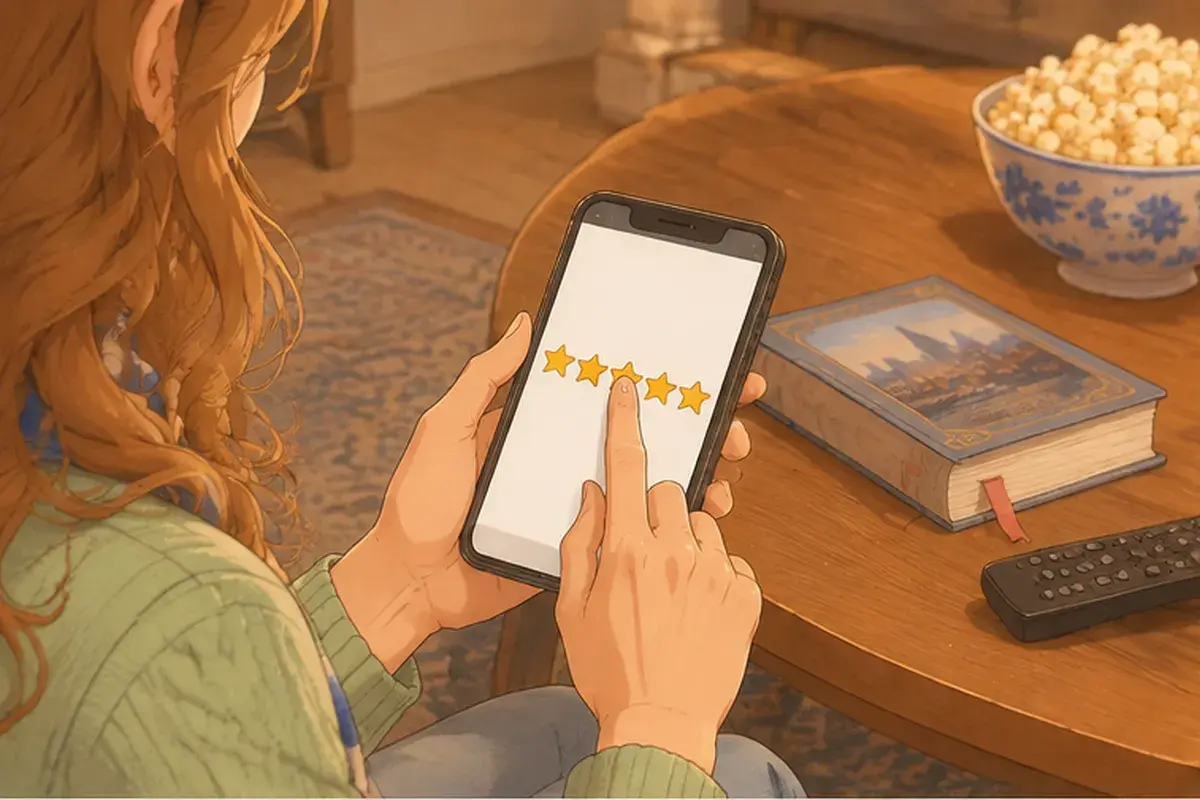
Drei Sterne, und warum: Das ist meine erste Bewertung in dieser App.
Three stars, and why: this is my first review in this app.

Nachdem ich den Roman gelesen hatte, wollte ich den Film unbedingt sehen.
After I had read the novel, I really wanted to see the movie.
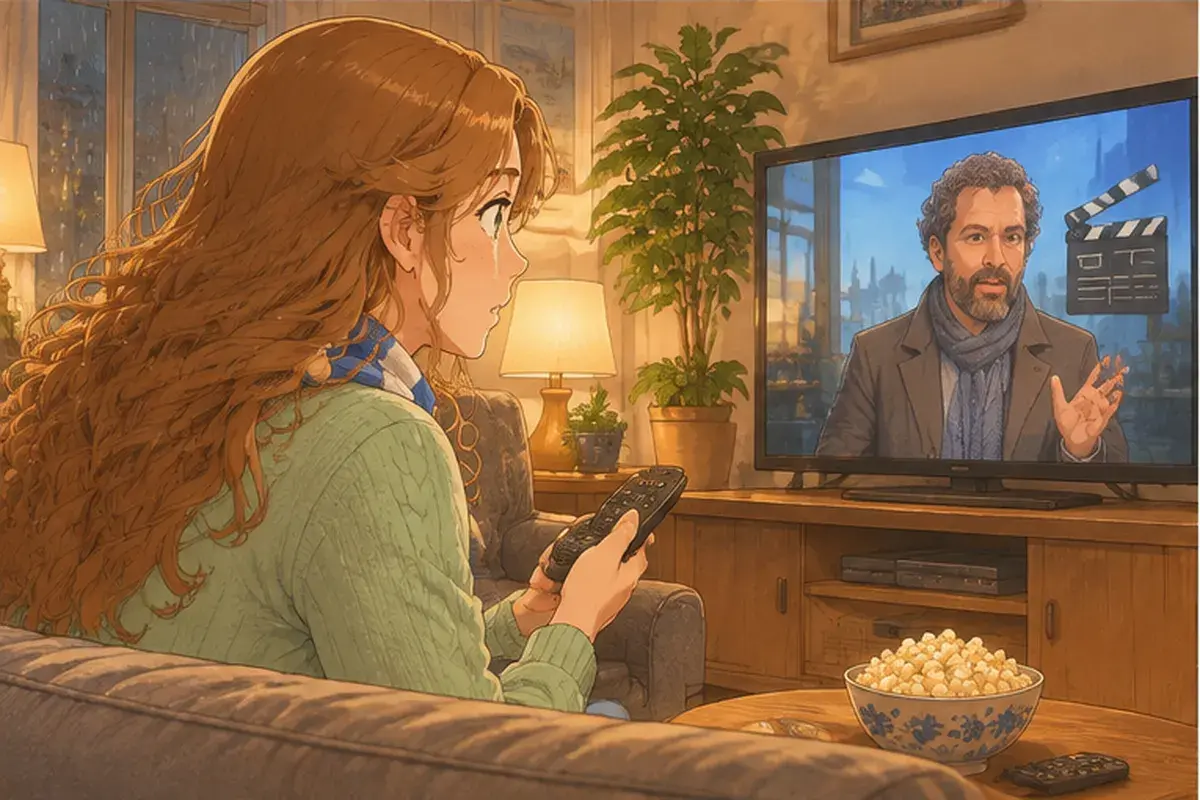
Im Fernsehen kam eine Sendung über den Regisseur und den Film.
A show about the director and the movie was on TV.

Der Film ist eine Komödie, obwohl der Roman ernst ist.
The movie is a comedy, even though the novel is serious.

Komödien sind eigentlich nicht mein Ding, aber dieser Film hat mich überrascht.
Comedies actually aren't my thing, but this movie surprised me.
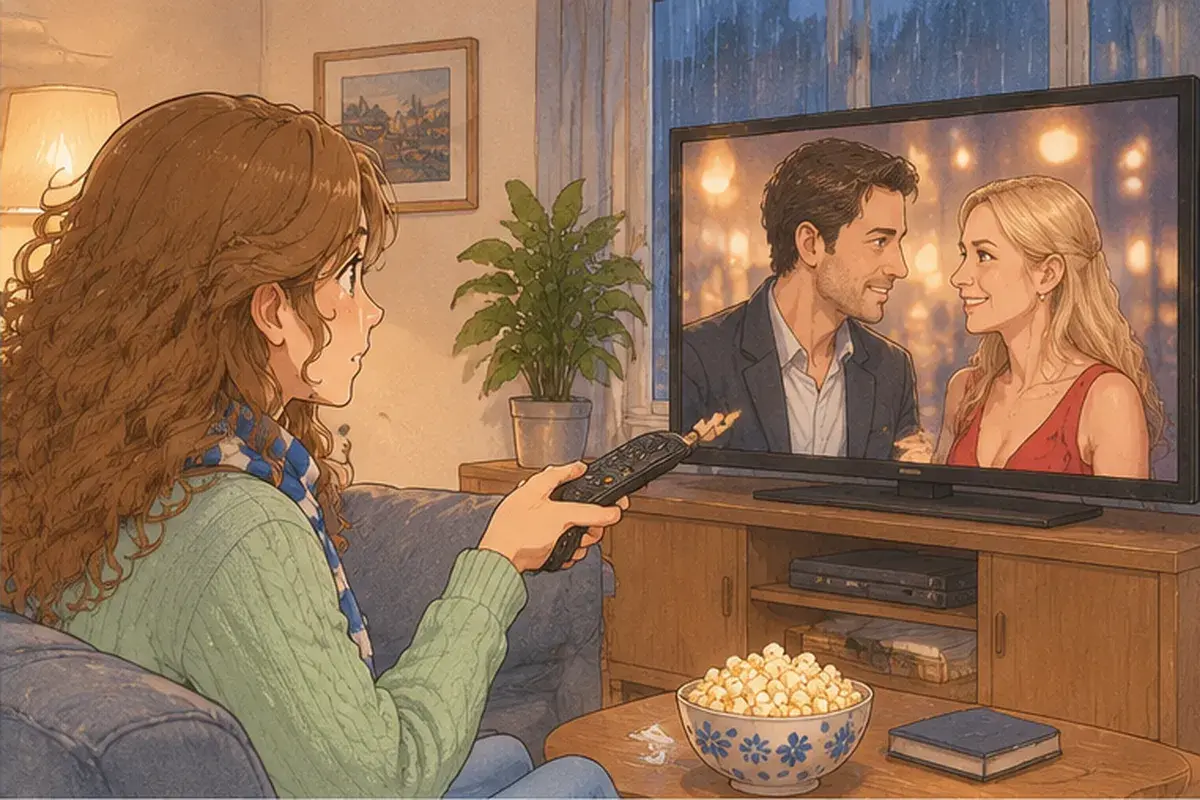
Die Schauspieler sind berühmt, und man sieht, dass sie Spaß hatten.
The actors are famous, and you can see they had fun.

Die Szene auf dem Markt ist so witzig, dass ich laut gelacht habe.
The scene at the market is so funny that I laughed out loud.
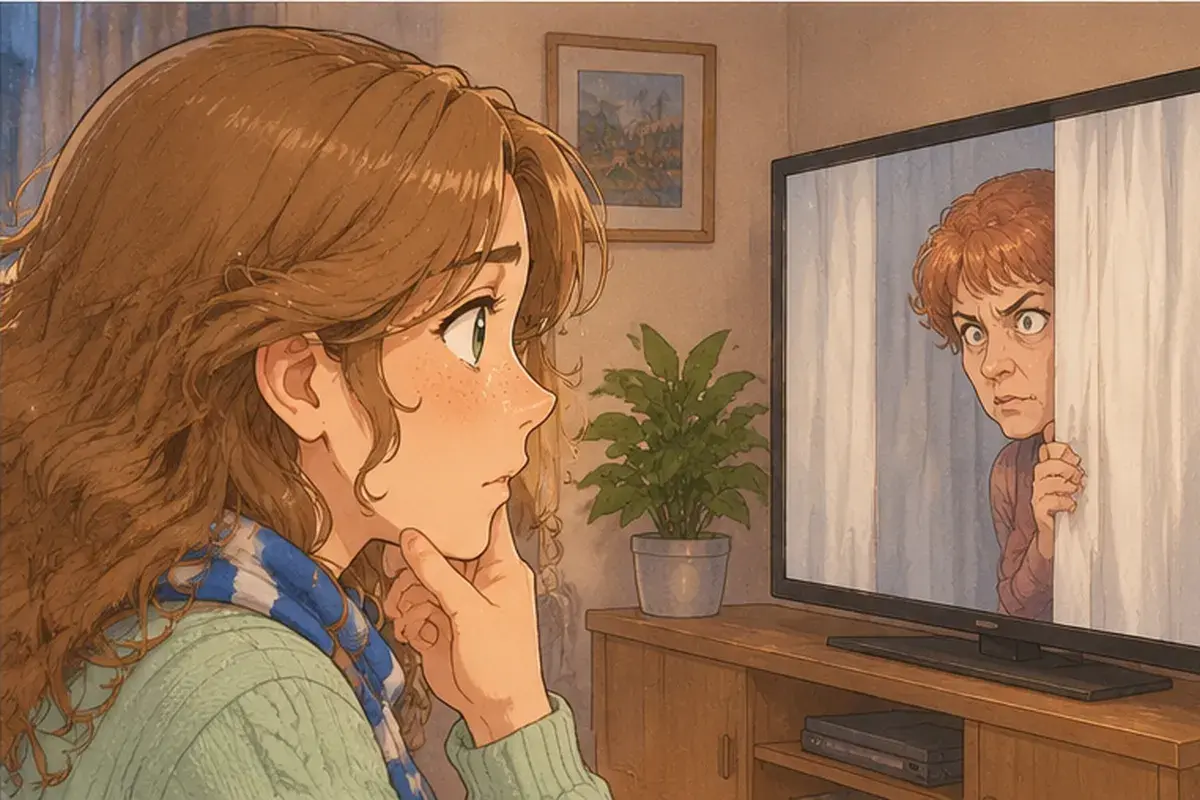
Die Figur des Nachbarn ist spannend, weil man nie weiß, was er denkt.
The neighbor character is gripping because you never know what he's thinking.

Der Regisseur kommt vom Theater, das merkt man an den langen Gesprächen.
The director comes from the theater, and you can tell from the long conversations.
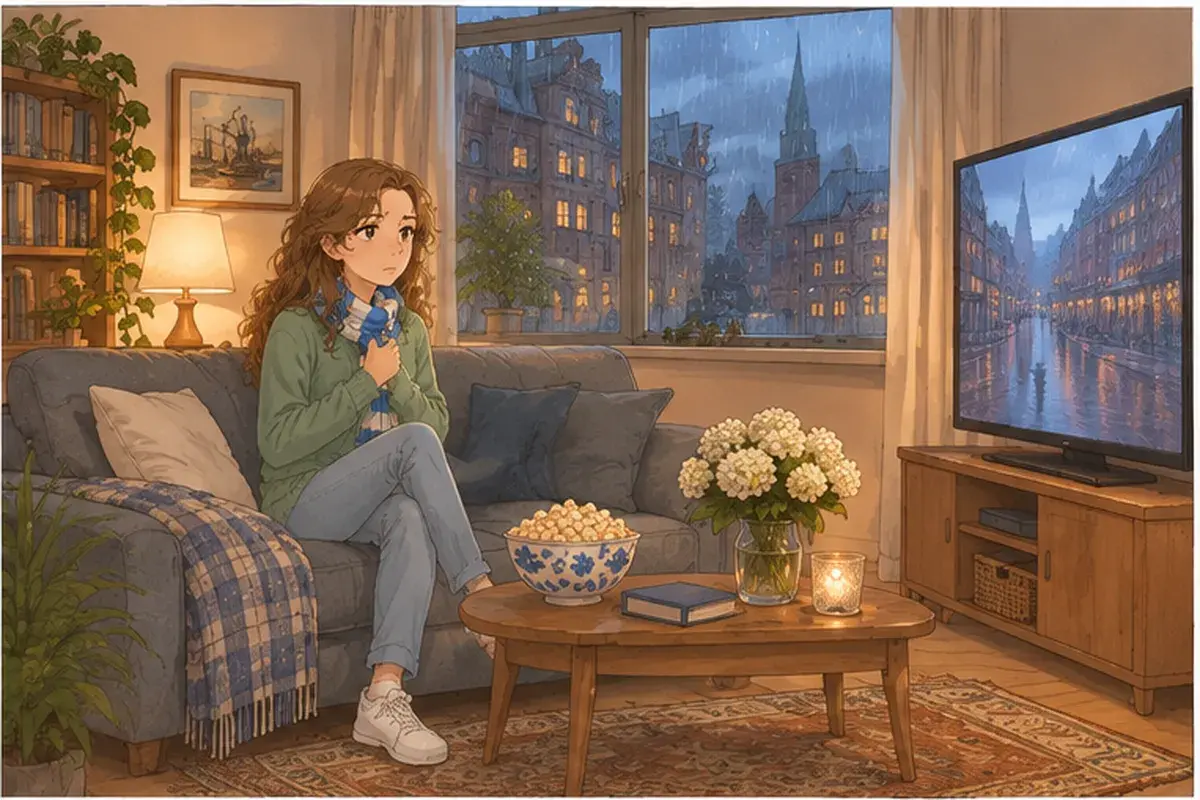
Hässlich ist nur die Stadt im Film: so grau und so nass.
Only the city in the movie is ugly: so gray and so wet.
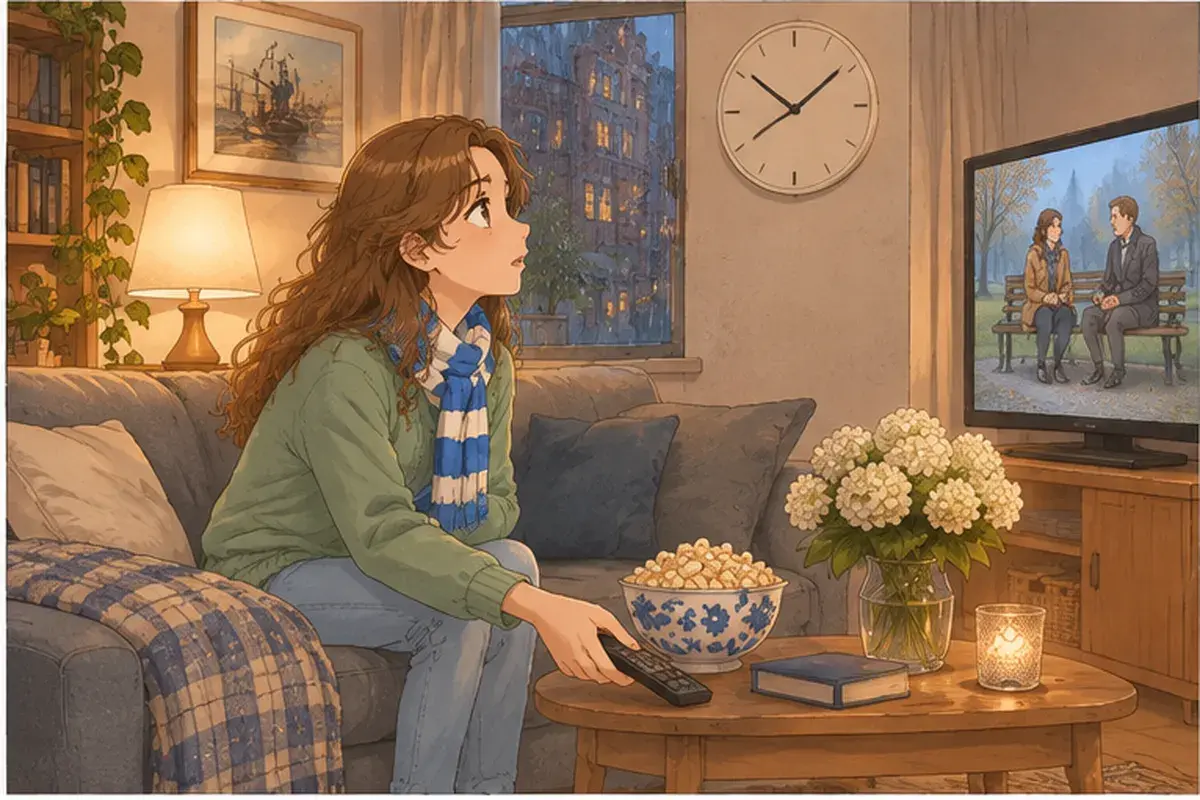
Nach zwei Stunden wird der Film lang, und das Ende ist leider blöd.
After two hours the movie drags, and the ending is unfortunately dumb.

Meiner Meinung nach hätte er zehn Minuten früher enden sollen.
In my opinion, it should have ended ten minutes earlier.

Ich bin dafür, dass man ihn im Kino sieht, damit alle zusammen lachen.
I'm for seeing it in a theater, so that everyone laughs together.

Fünf Sterne gebe ich dem Roman, drei dem Film: Erst lesen, dann gucken!
I give the novel five stars, the movie three: read first, then watch!
Grammar for this text
- Nachdem ich den Roman gelesen hatte, wollte ich den Film unbedingt sehen —
nachdemmeans "after" and goes with the Plusquamperfekt (past perfect, unit 15):gelesen hatte, withhatteat the end of the clause. In the main clausewolltecomes right after the comma. - Im Fernsehen kam eine Sendung —
kamis the Präteritum (narrative past) ofkommen; for a show it means "was on". - Komödien sind eigentlich nicht mein Ding — a fixed phrase:
nicht mein Dingmeans "not my thing".Dingis neuter, so it'smein. - Die Figur des Nachbarn — genitive (unit 13):
der Nachbarbecomesdes Nachbarn, word for word "the character of the neighbor". - Meiner Meinung nach hätte er zehn Minuten früher enden sollen —
hätte … enden sollenagain, like English "should have": it should have ended ten minutes earlier. - Ich bin dafür, dass man ihn im Kino sieht, damit alle zusammen lachen —
dafür, dassmeans "I'm for …".damitmeans "so that", and the verblachengoes to the end.ihnstands forder Film. - Fünf Sterne gebe ich dem Roman, drei dem Film —
Fünf Sterneis in first place (it is the point of the sentence), sogebecomes right after it andichfollows.dem Romananddem Filmare dative: to whom I give them.
Words and grammar of the unit: Argue about a series and what matters.
Learn the words from the texts with flashcards
In the app, you can tap any word in a text to see its translation, forms and examples, and new words stick with flashcards. 15 minutes a day.
Start for freeEverything is open for free. No card needed to sign up.