

German dialogue with translation · B1 · 18 lines
Die Krankschreibung wird elektronisch an die Kasse geschickt The sick note is sent electronically to the health insurer
Comic · 18 panels
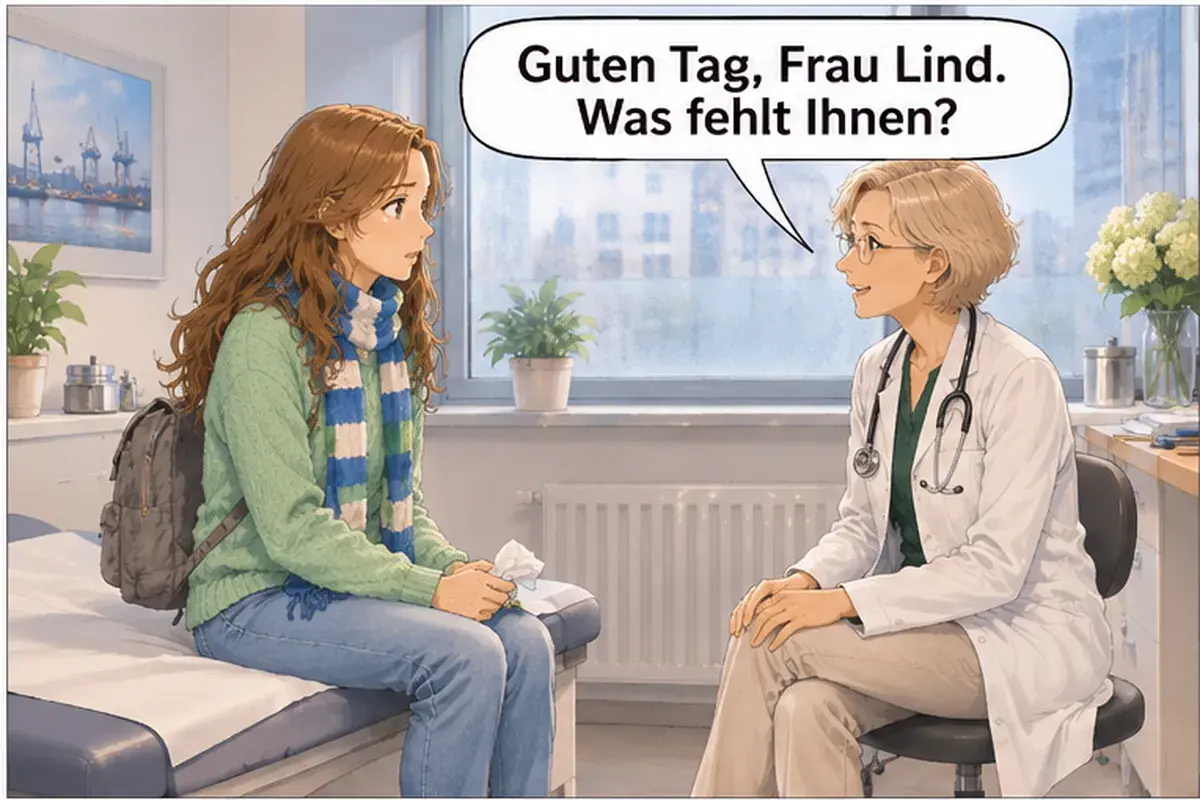
- Ärztin
Guten Tag, Frau Lind. Was fehlt Ihnen?
Hello, Frau Lind. What seems to be the problem? (formal)
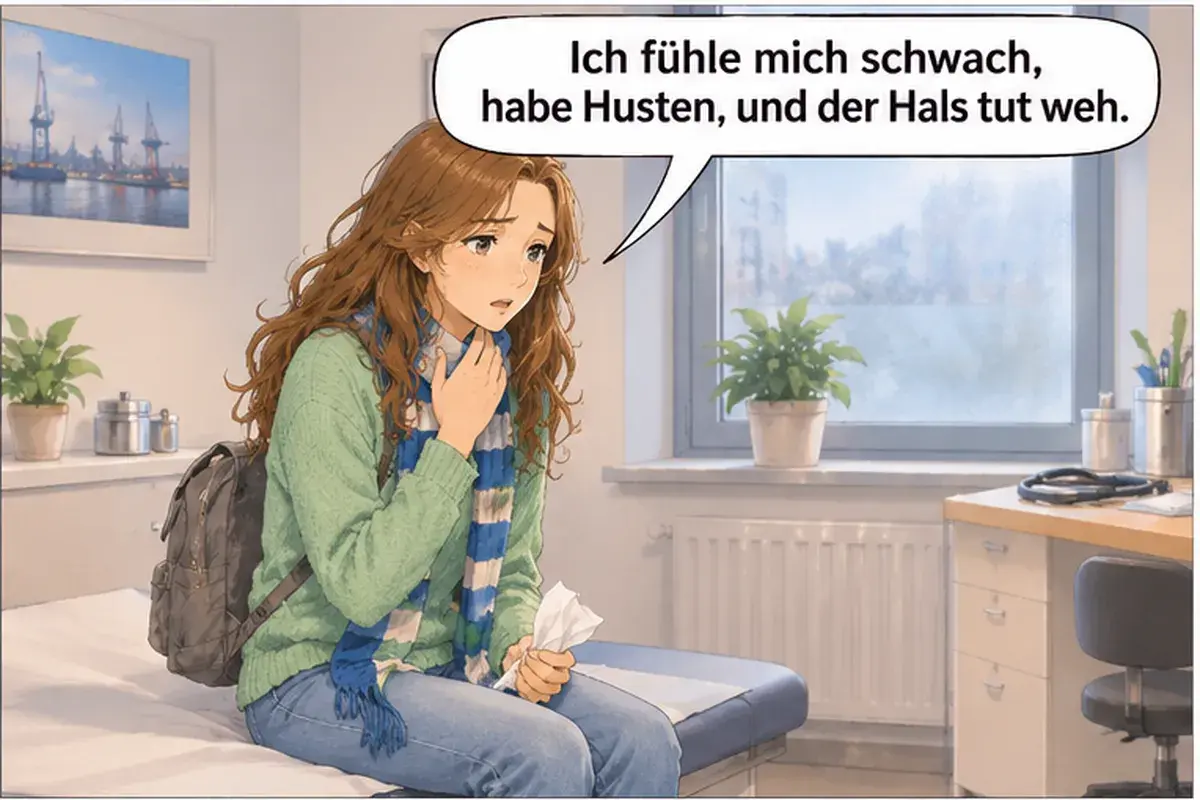
- Katja
Ich fühle mich schwach, habe Husten, und der Hals tut weh.
I feel weak, I have a cough, and my throat hurts.
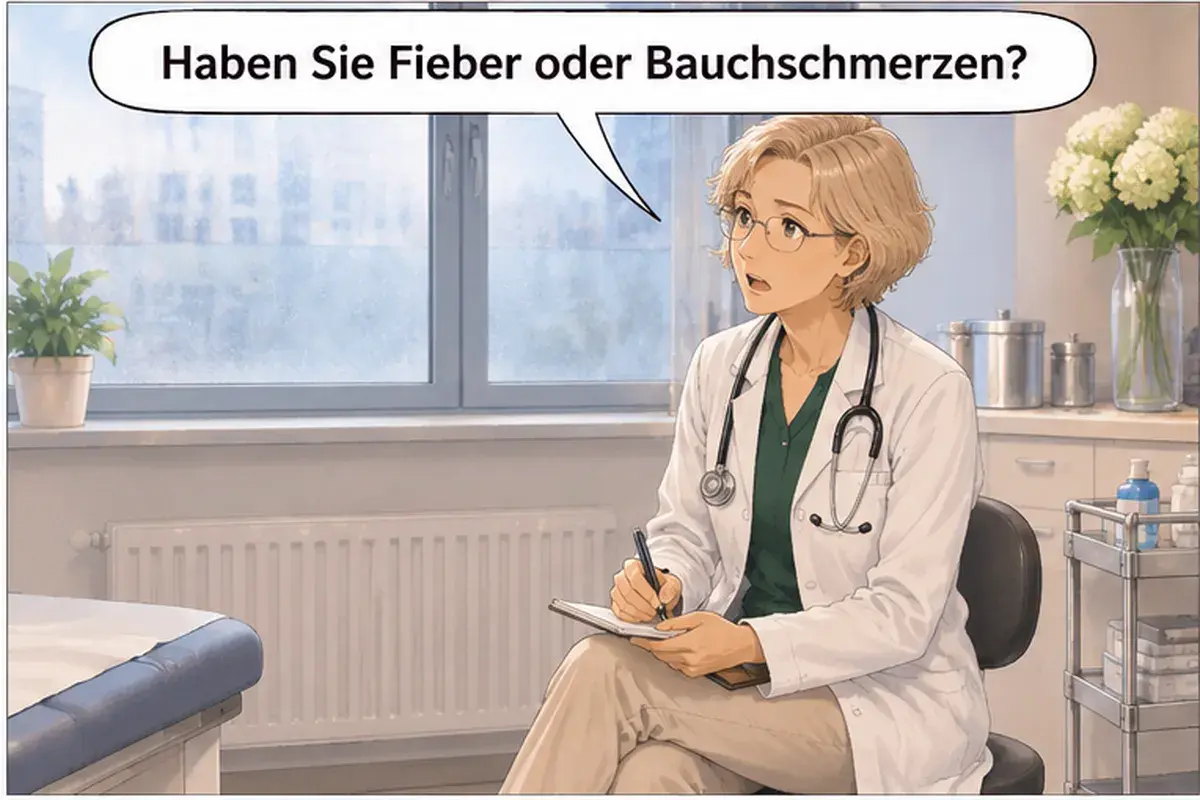
- Ärztin
Haben Sie Fieber oder Bauchschmerzen?
Do you have a fever or a stomachache? (formal)
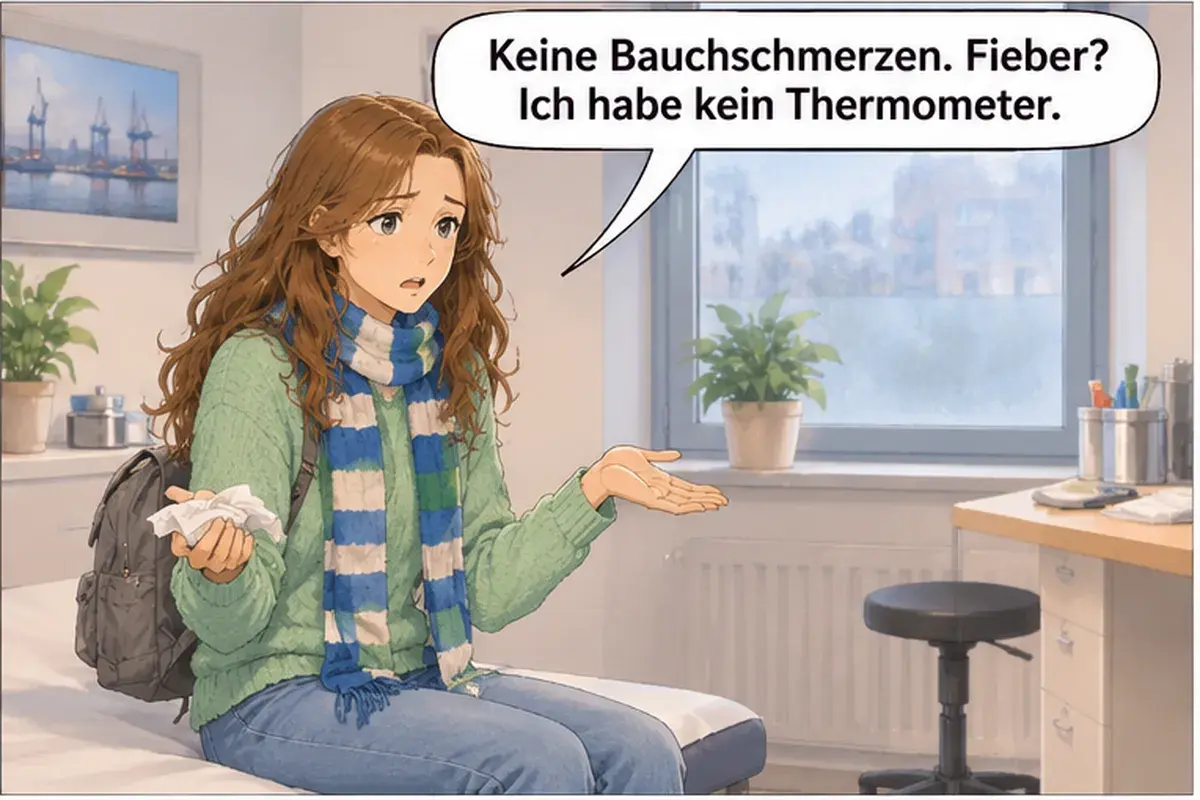
- Katja
Keine Bauchschmerzen. Fieber? Ich habe kein Thermometer.
No stomachache. A fever? I don't have a thermometer.
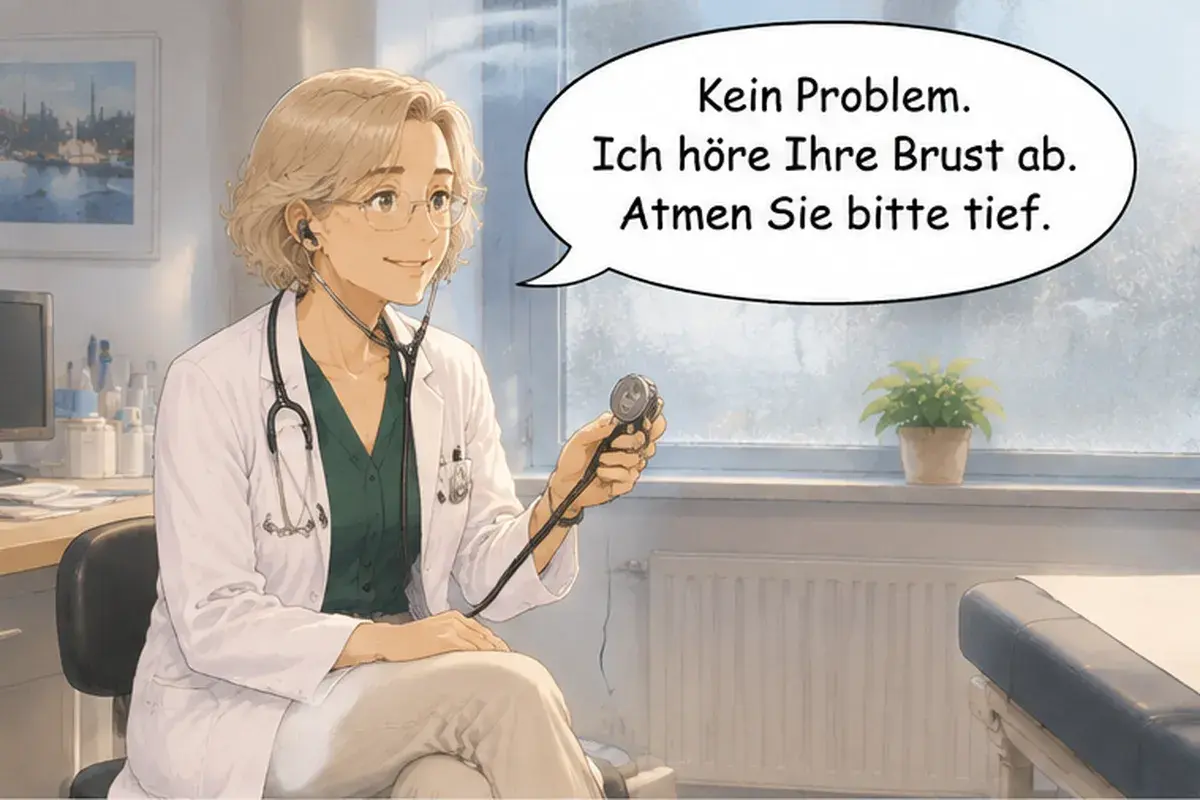
- Ärztin
Kein Problem. Ich höre Ihre Brust ab. Atmen Sie bitte tief.
No problem. I'll listen to your chest. Please breathe deeply. (formal)
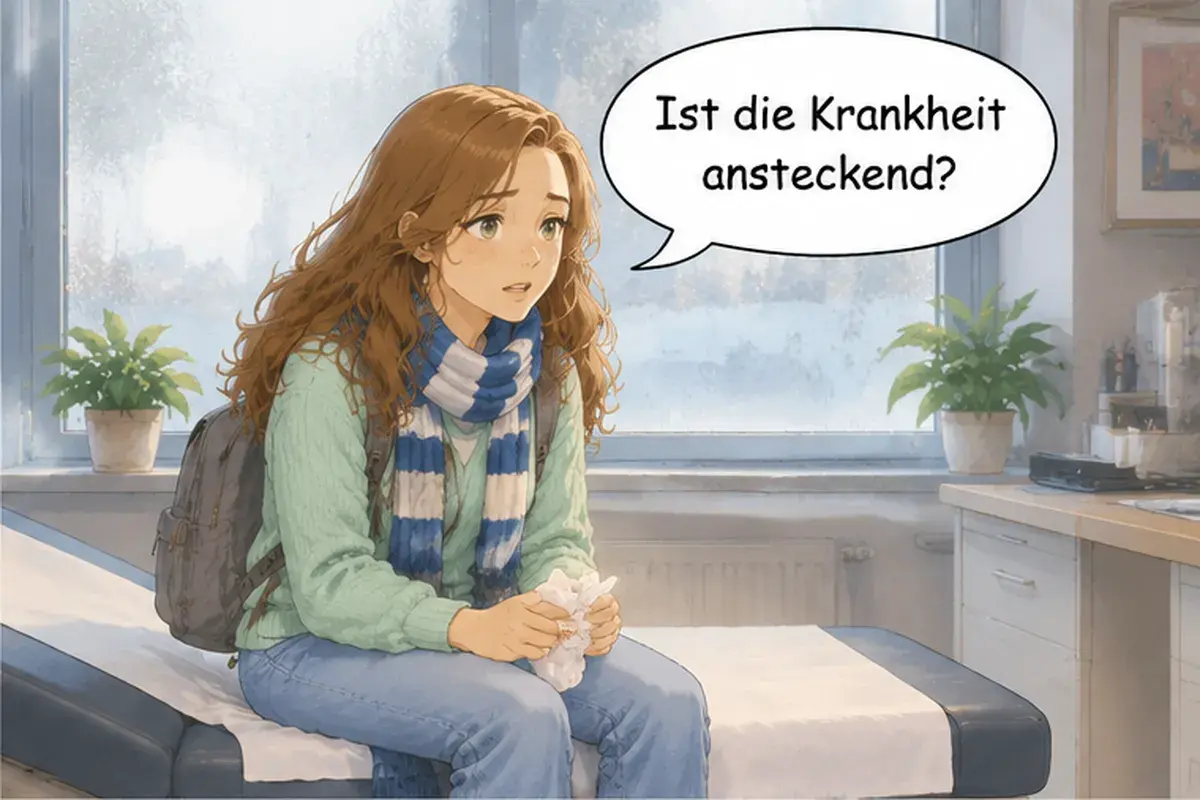
- Katja
Ist die Krankheit ansteckend?
Is the illness contagious?
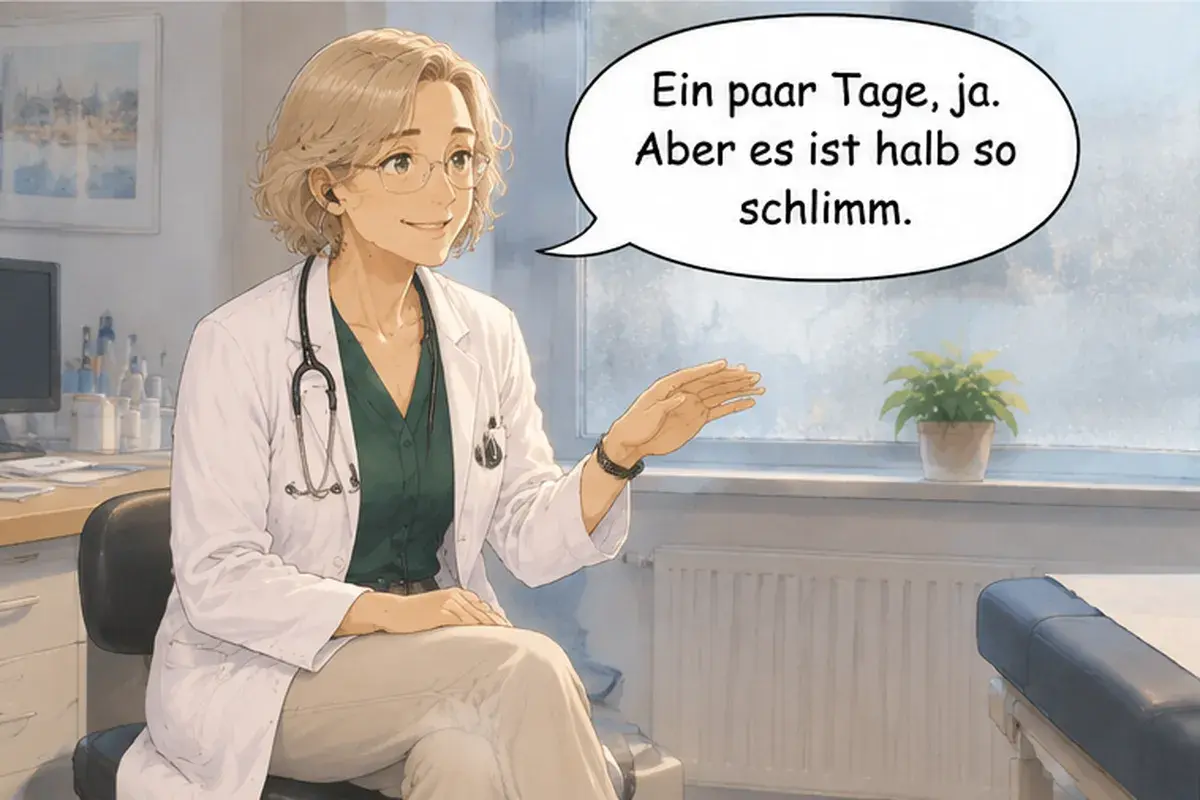
- Ärztin
Ein paar Tage, ja. Aber es ist halb so schlimm.
For a few days, yes. But it's not that bad.
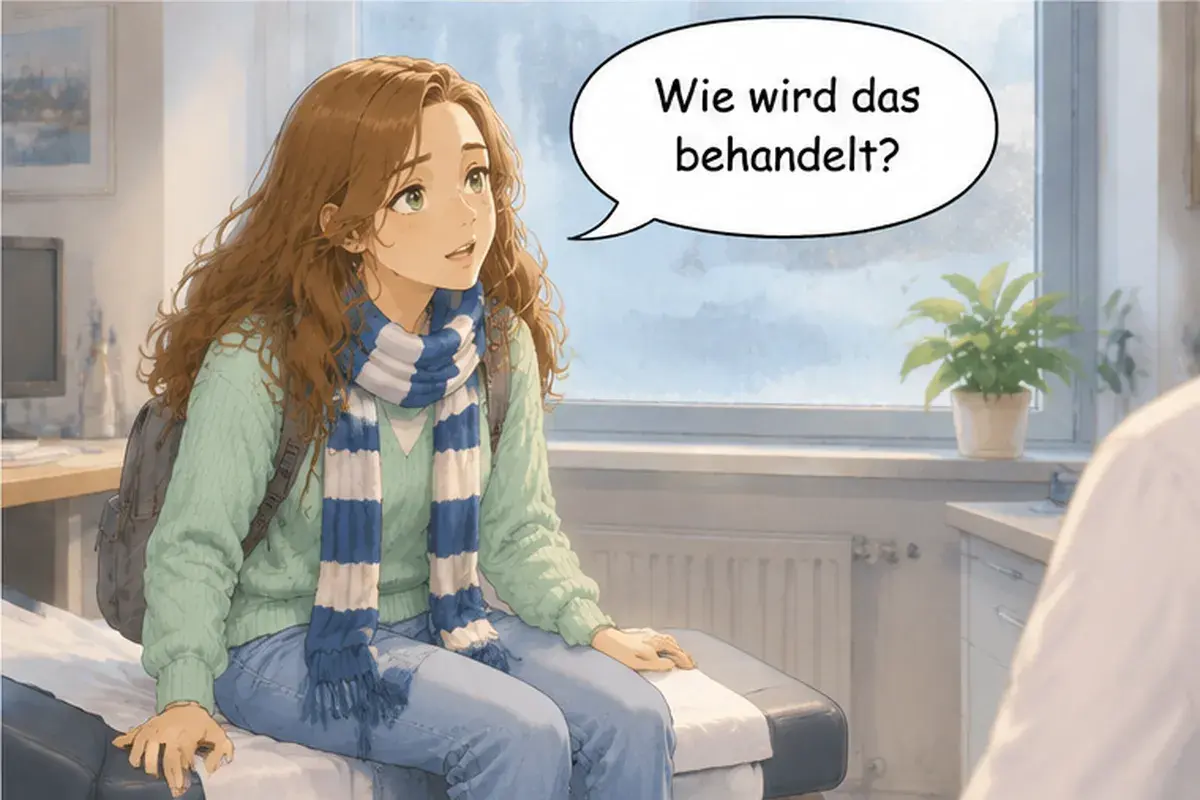
- Katja
Wie wird das behandelt?
How is that treated?
- Ärztin
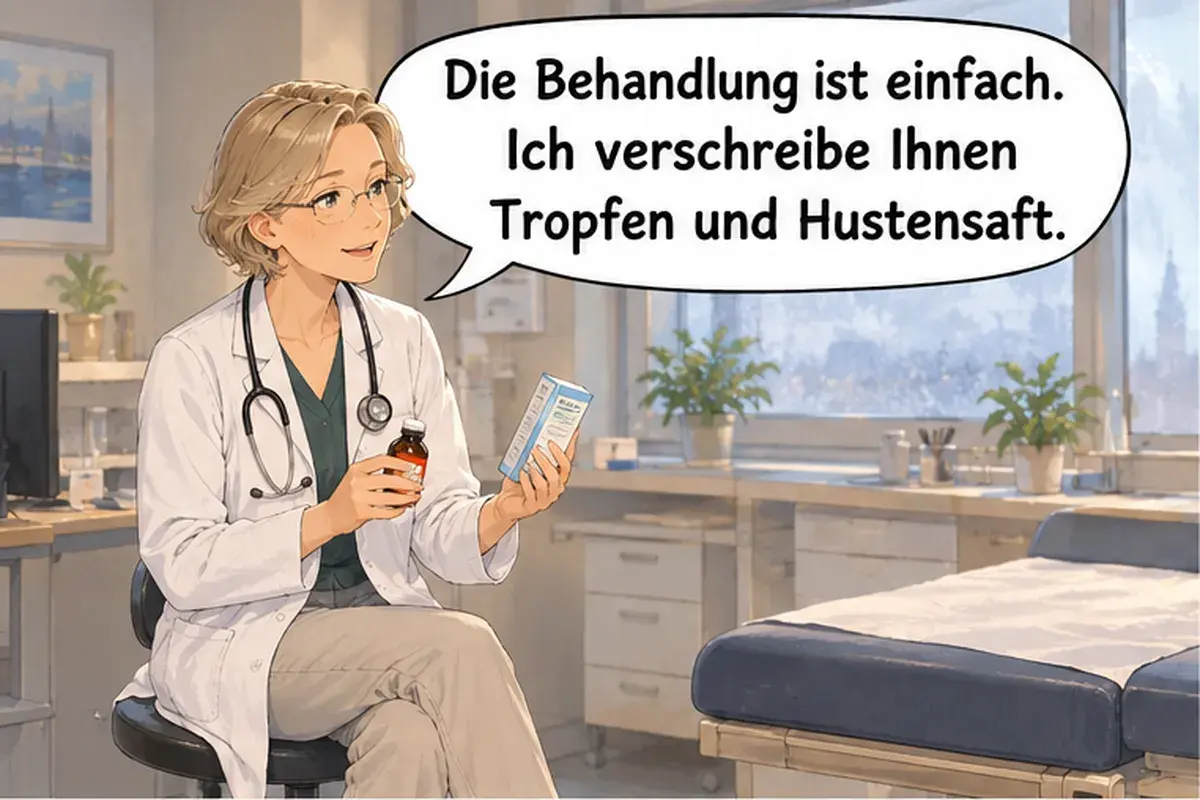
Die Behandlung ist einfach. Ich verschreibe Ihnen Tropfen und Hustensaft.
The treatment is simple. I'll prescribe you drops and cough syrup. (formal)
- Katja
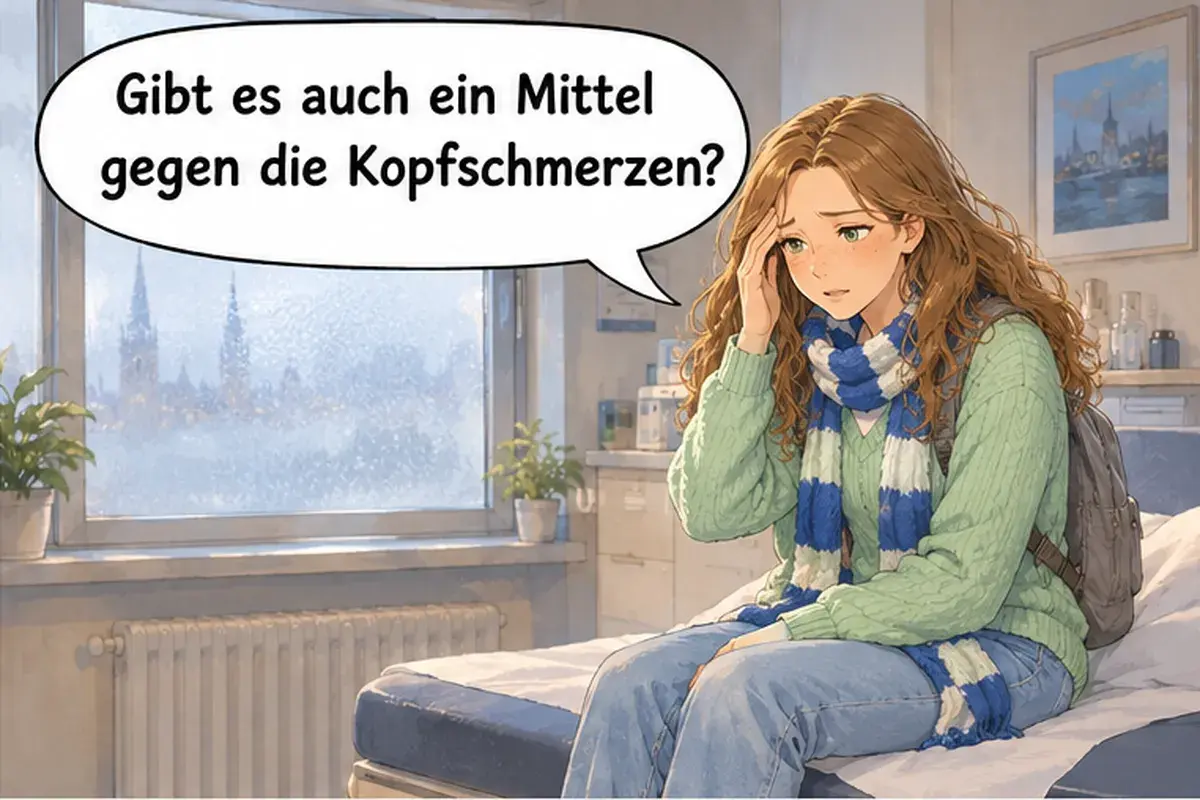
Gibt es auch ein Mittel gegen die Kopfschmerzen?
Is there also some medicine for the headache?
- Ärztin
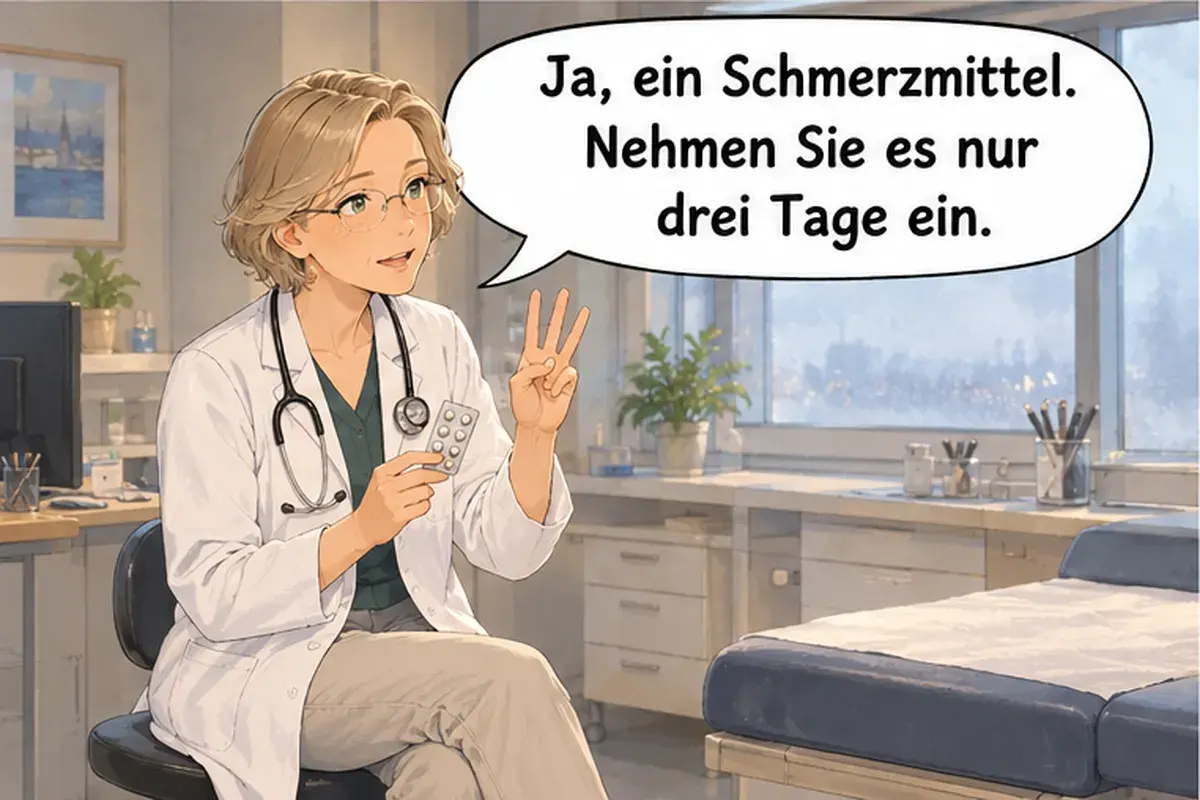
Ja, ein Schmerzmittel. Nehmen Sie es nur drei Tage ein.
Yes, a painkiller. Only take it for three days. (formal)

- Katja
Kann ich morgen arbeiten?
Can I work tomorrow?
- Ärztin
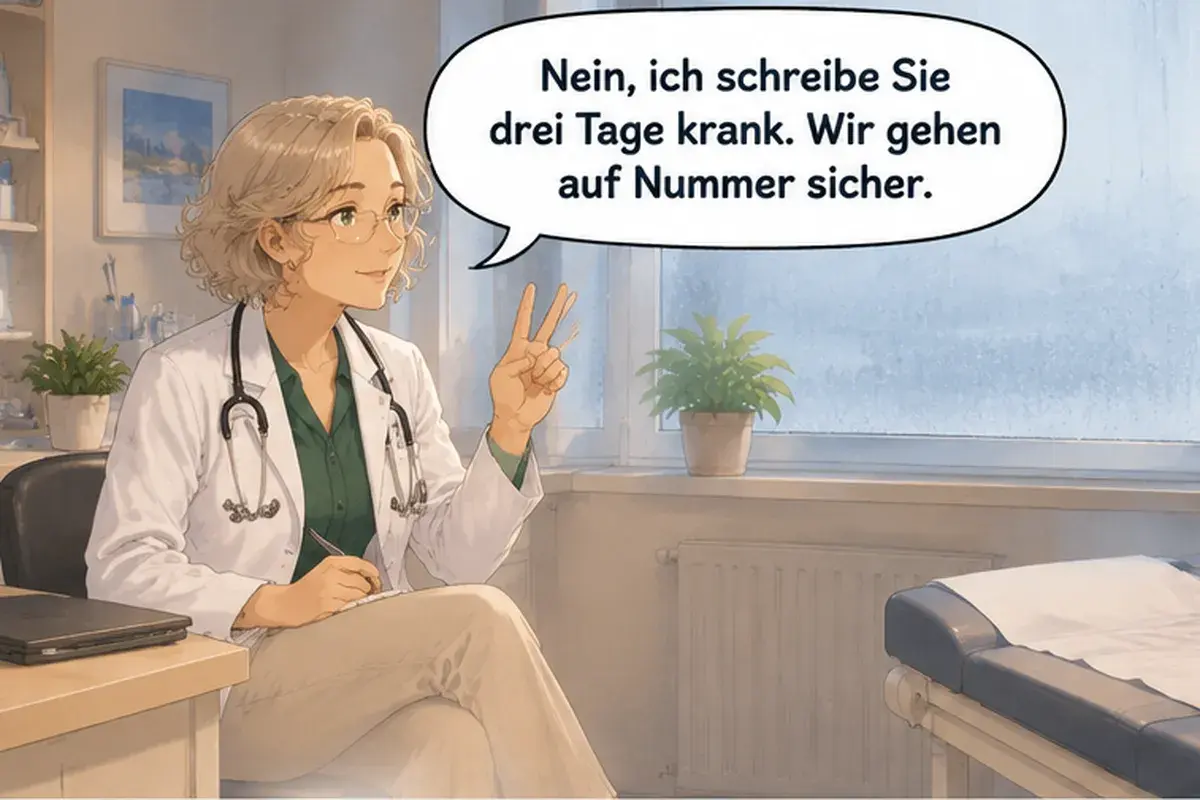
Nein, ich schreibe Sie drei Tage krank. Wir gehen auf Nummer sicher.
No, I'm putting you on sick leave for three days. (formal) We're playing it safe.
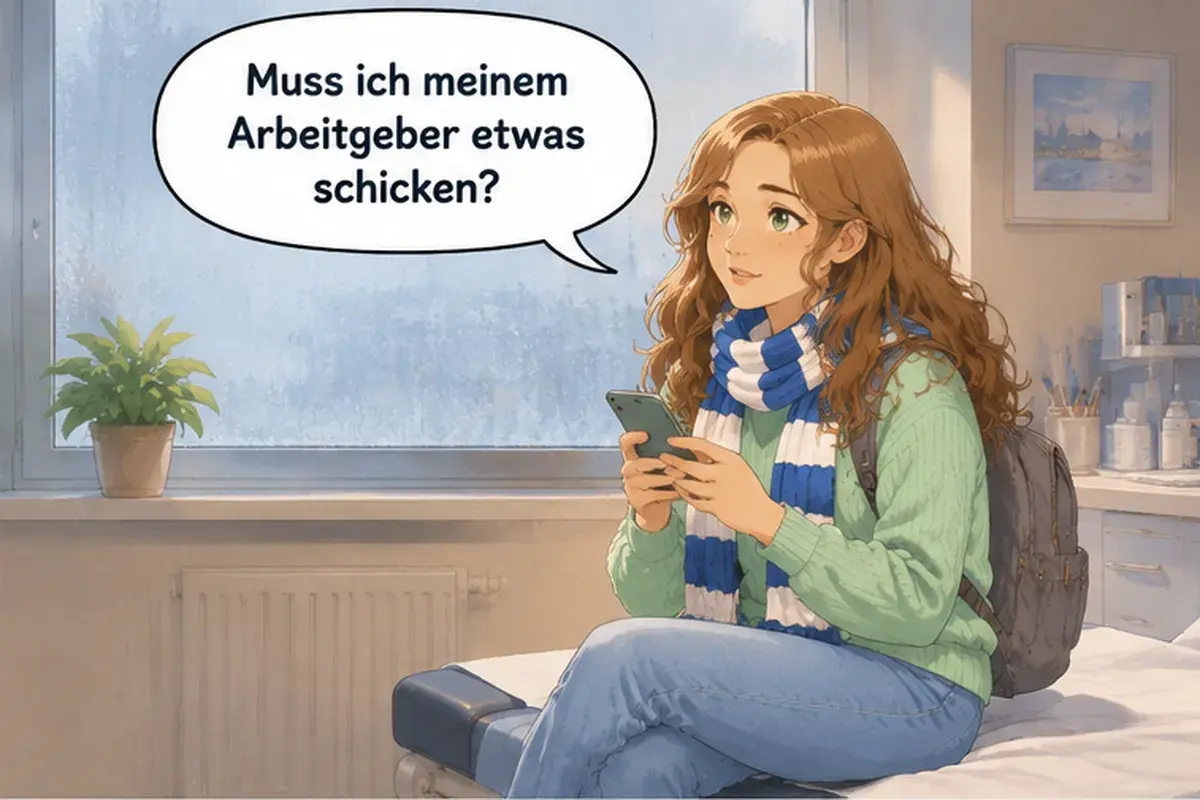
- Katja
Muss ich meinem Arbeitgeber etwas schicken?
Do I have to send my employer anything?
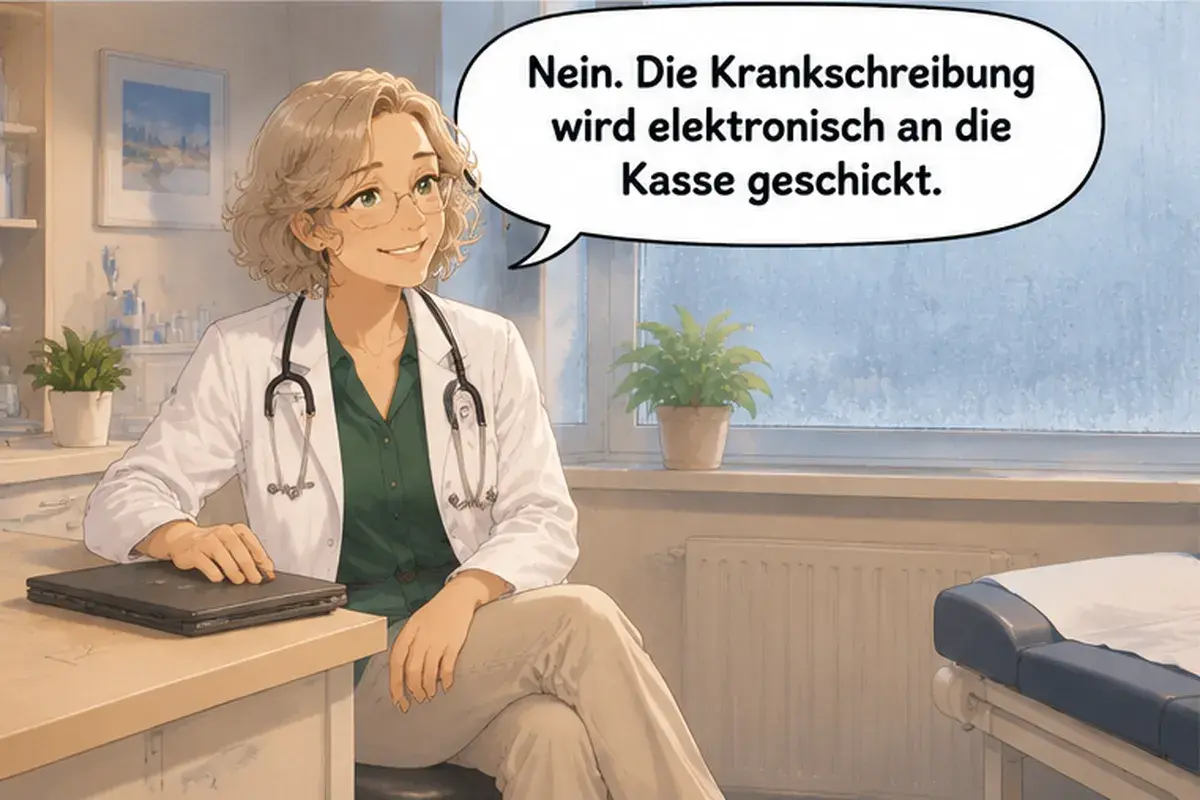
- Ärztin
Nein. Die Krankschreibung wird elektronisch an die Kasse geschickt.
No. The sick note is sent electronically to the health insurer.

- Katja
Gut. Ich habe mich schon bei Sabine krankgemeldet.
Good. I've already called in sick to Sabine.
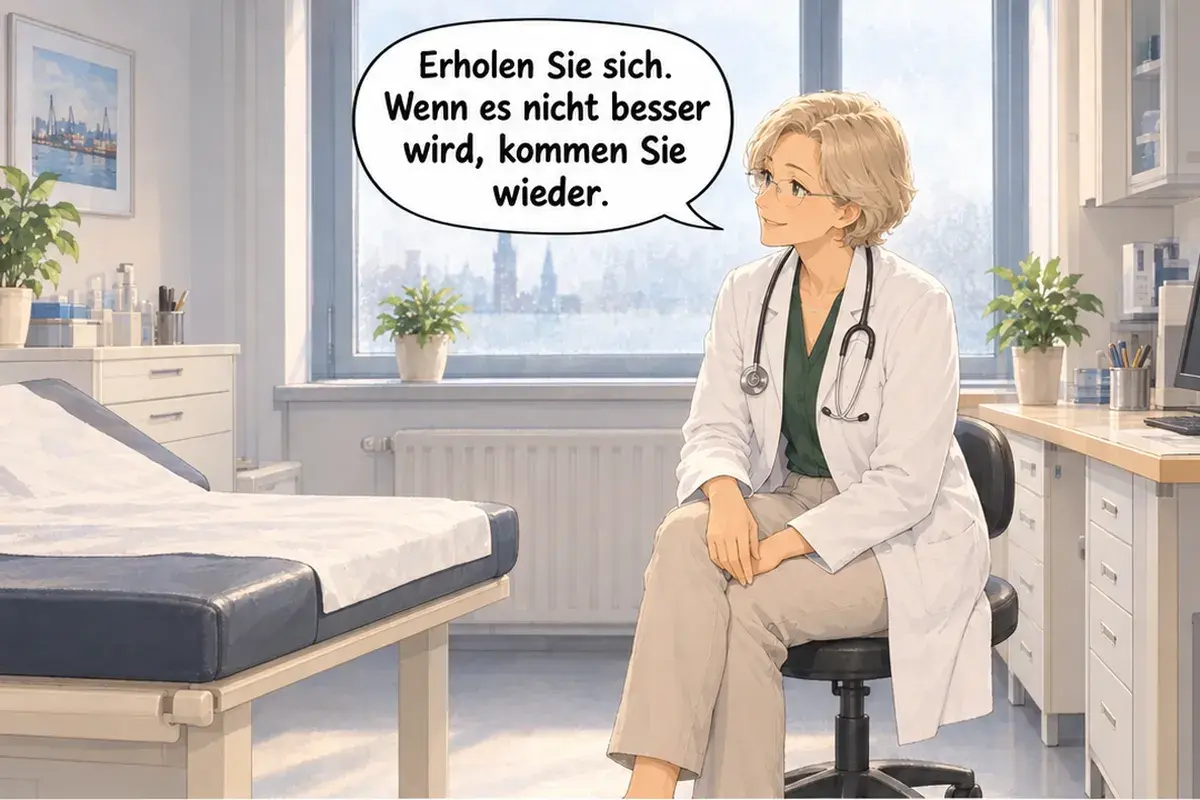
- Ärztin
Erholen Sie sich. Wenn es nicht besser wird, kommen Sie wieder.
Get some rest. If it doesn't get better, come back. (formal)

- Katja
Danke! Ich hole mir noch Taschentücher und Vitamine in der Drogerie.
Thanks! I'll also get myself some tissues and vitamins at the drugstore.
Grammar for this text
- Ich höre Ihre Brust ab —
abhören(to listen to someone's chest):höreis in second place,abat the end. It's not plainhören.Ihrewith a capital letter means "your" (formal). Atmen Sie bitte tief — a formal request: the verb comes first, thenSie. - Ich verschreibe Ihnen Tropfen und Hustensaft —
verschreiben(to prescribe);Ihnenmeans "(to) you" (formal): the person who gets the medicine.Tropfen(drops) is masculine and looks the same in the plural. - Nehmen Sie es nur drei Tage ein —
einnehmen(to take medicine): a formal request,Nehmencomes first,eingoes to the end. - Ich schreibe Sie drei Tage krank —
krankschreiben(to put someone on sick leave) is split:schreibe … krank. Wir gehen auf Nummer sicher — "we're playing it safe"; learn the phrase as a whole. - Ich habe mich schon bei Sabine krankgemeldet — the Perfekt (spoken past) of
sich krankmelden(to call in sick). The prefix here iskrank; it splits off, soge-goes between it and the stem:krankgemeldet.habe … mich—habenis in second place;michbelongs to the reflexive verb, and English has no word for it here. - Die Krankschreibung wird elektronisch an die Kasse geschickt — the passive:
wird+geschickt(fromschicken) at the end.Kassehere means the health insurer (Krankenkasse). The doctor sends the sick note herself, so you don't need to take any paper anywhere. - Ich hole mir noch Taschentücher —
mirmeans "for myself": the verb already has an object (Taschentücher), so the reflexive word is in the dative. More in the grammar block "Dative sich".
Words and grammar of the unit: Find a doctor and get a sick note.
Learn the words from the texts with flashcards
In the app, you can tap any word in a text to see its translation, forms and examples, and new words stick with flashcards. 15 minutes a day.
Start for freeEverything is open for free. No card needed to sign up.