

German dialogue with translation · B1 · 13 lines
Leider nehmen wir keine neuen Patienten auf Unfortunately, we're not taking on any new patients
Comic · 13 panels
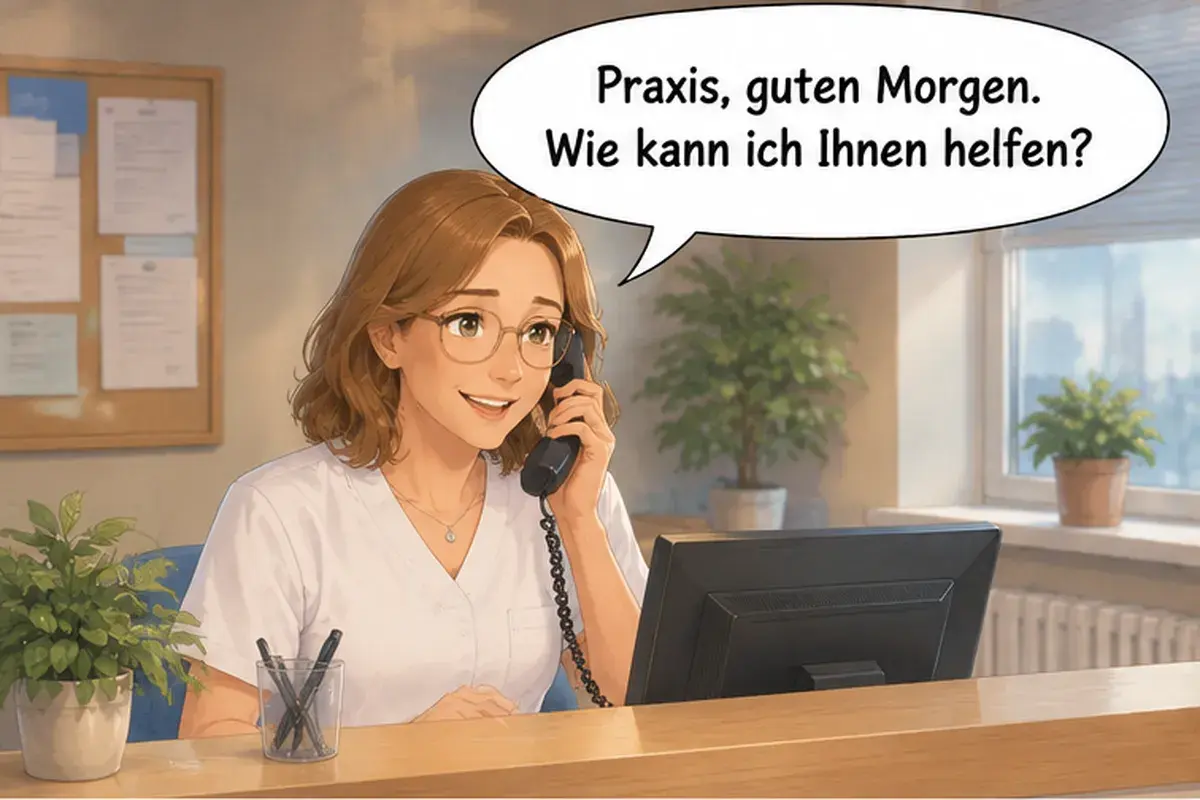
- Arzthelferin
Praxis, guten Morgen. Wie kann ich Ihnen helfen?
Doctor's office, good morning. How can I help you? (formal)

- Katja
Guten Morgen. Ich bin neu in Hamburg und suche einen Hausarzt.
Good morning. I'm new in Hamburg and I'm looking for a family doctor.
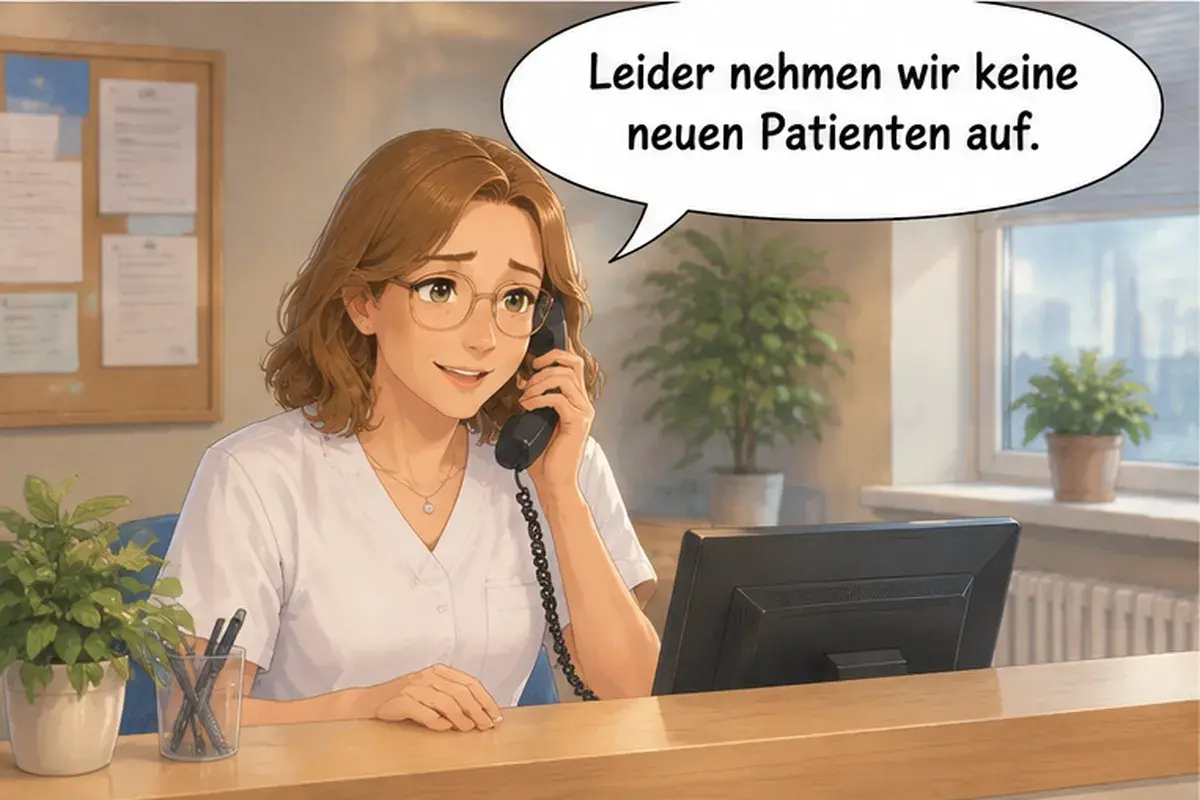
- Arzthelferin
Leider nehmen wir keine neuen Patienten auf.
Unfortunately, we're not taking on any new patients.

- Katja
Schade. Ich habe mich erkältet und habe Kopfschmerzen.
Too bad. I've caught a cold and I have a headache.
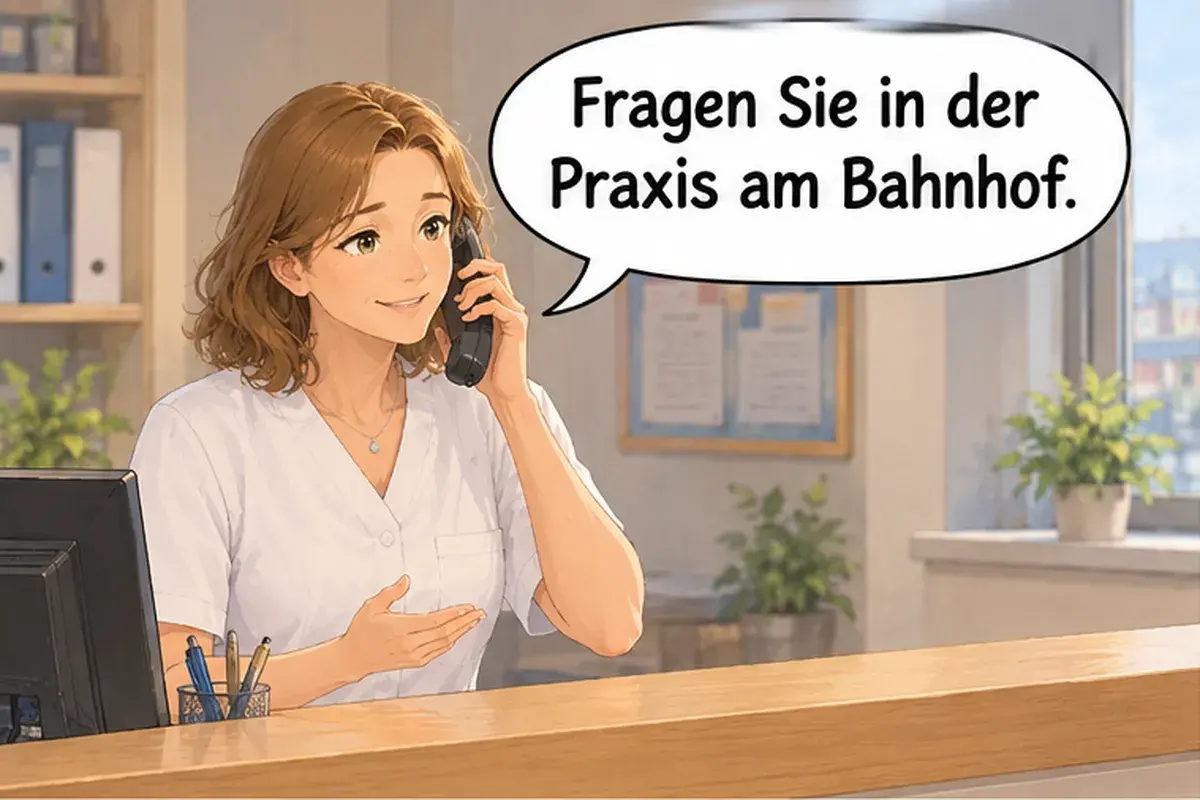
- Arzthelferin
Fragen Sie in der Praxis am Bahnhof.
Ask at the doctor's office by the train station. (formal)
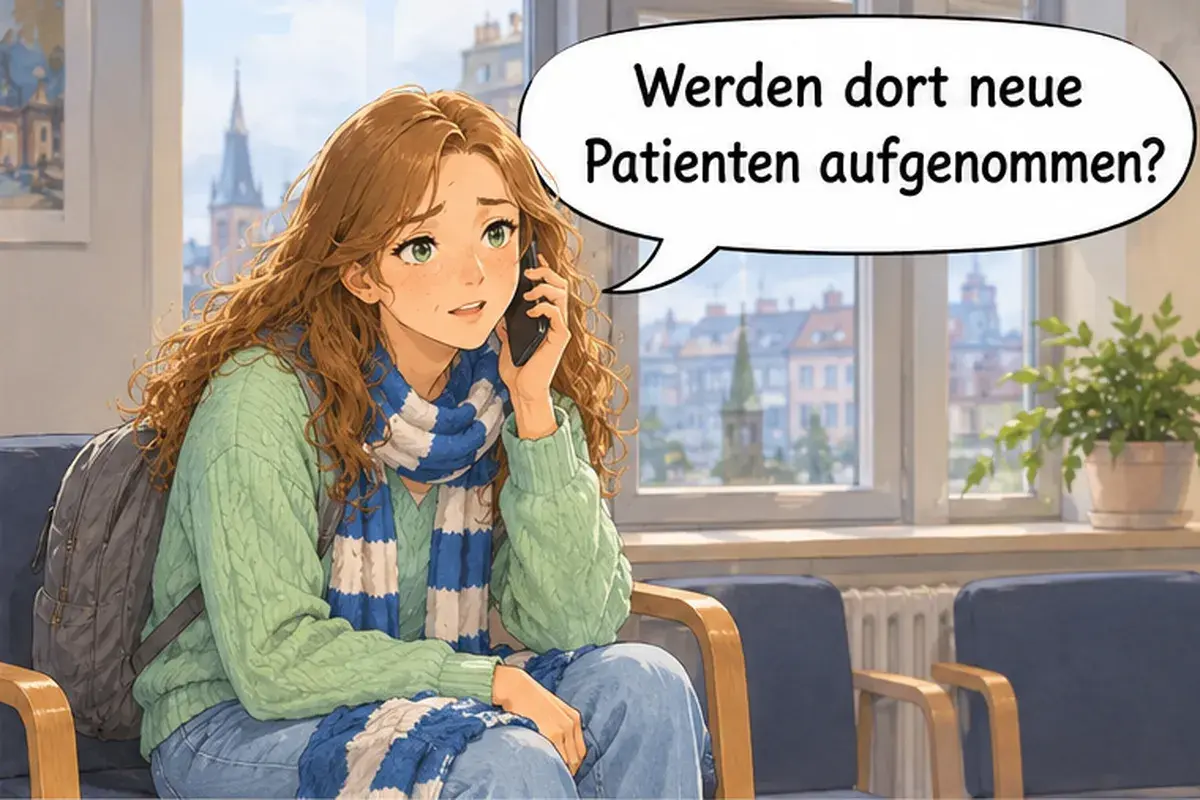
- Katja
Werden dort neue Patienten aufgenommen?
Are new patients being taken on there?
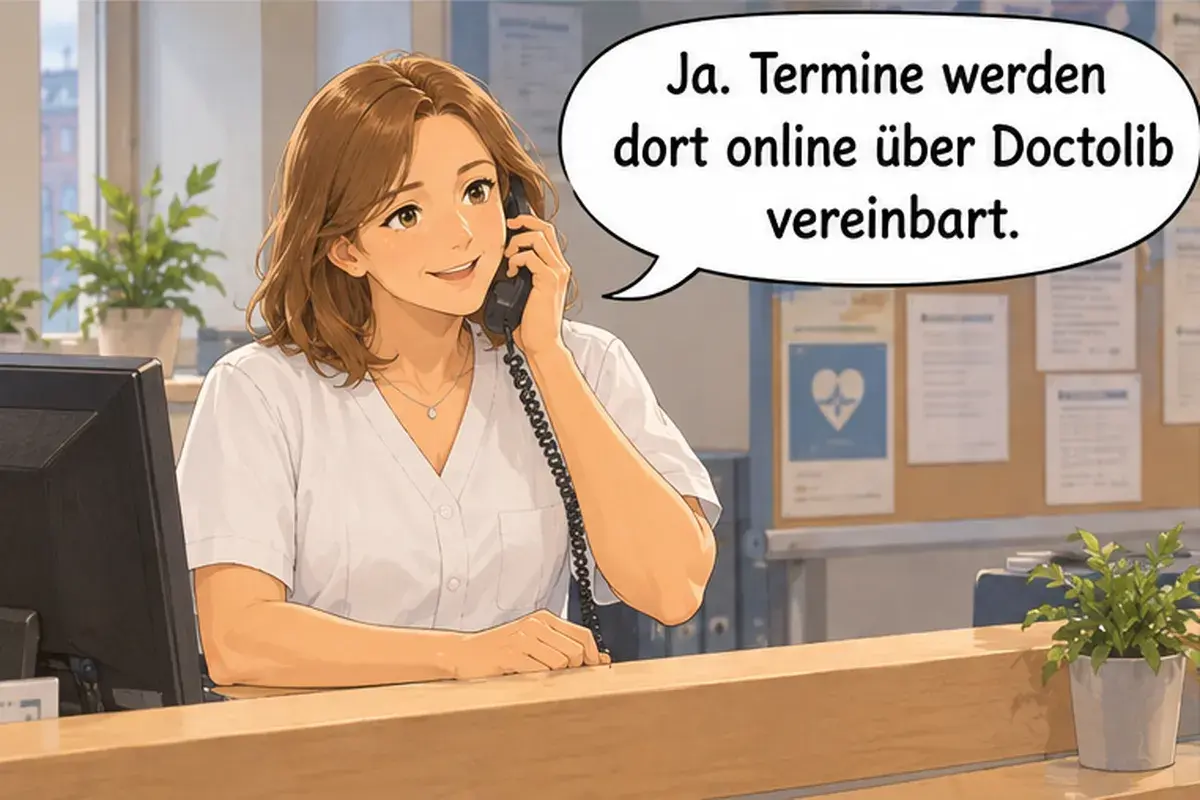
- Arzthelferin
Ja. Termine werden dort online über Doctolib vereinbart.
Yes. Appointments there are made online through Doctolib.

- Katja
Was muss ich zum Termin mitbringen?
What do I have to bring to the appointment?
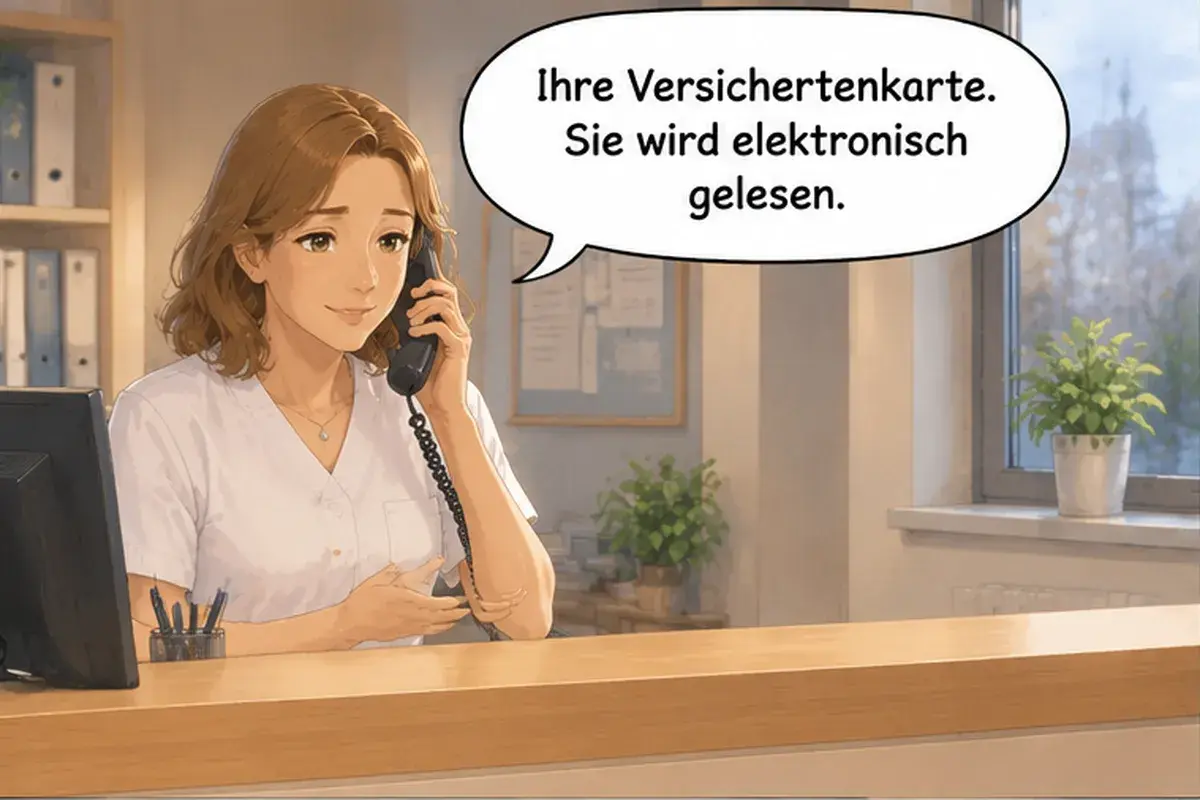
- Arzthelferin
Ihre Versichertenkarte. Sie wird elektronisch gelesen.
Your health insurance card. (formal) It's read electronically.

- Katja
Hoffentlich ist es keine Grippe.
Hopefully it's not the flu.
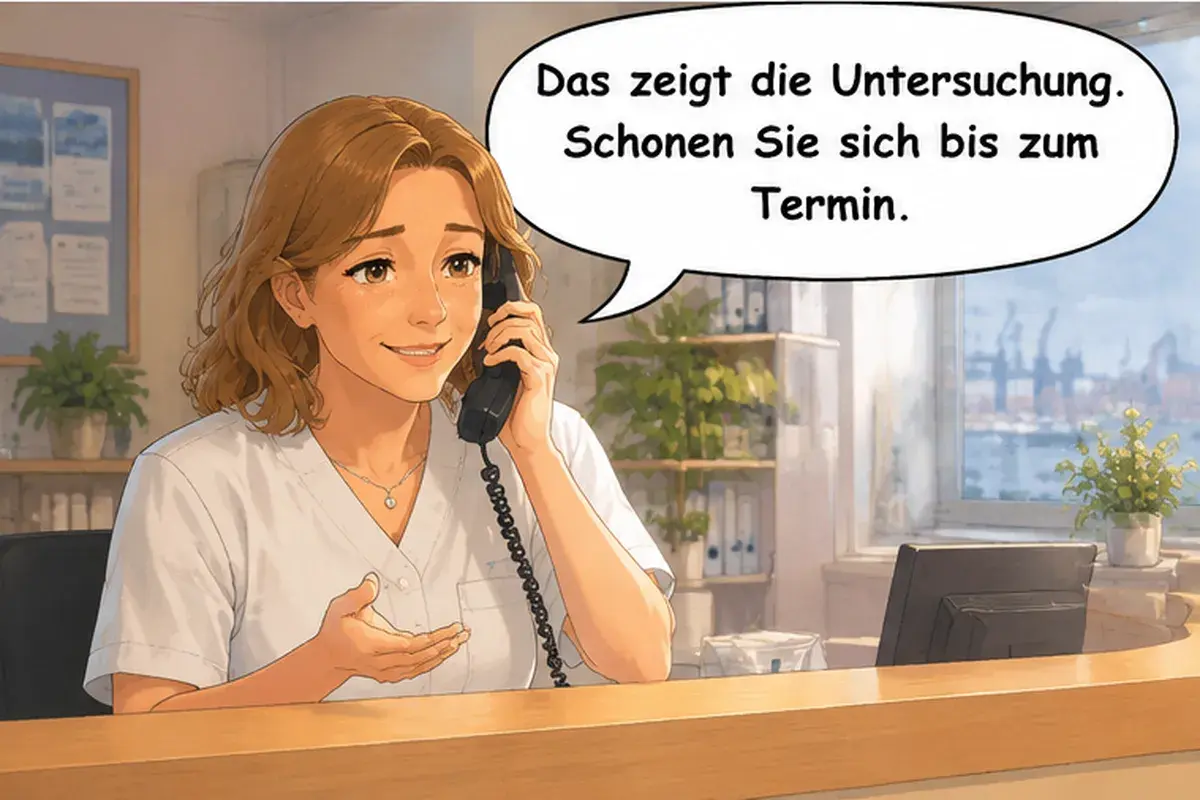
- Arzthelferin
Das zeigt die Untersuchung. Schonen Sie sich bis zum Termin.
The examination will show that. Take it easy until the appointment. (formal)

- Katja
Mache ich, danke. Ich kaufe Zitronen und Ingwer für den Tee.
Will do, thanks. I'll buy lemons and ginger for the tea.
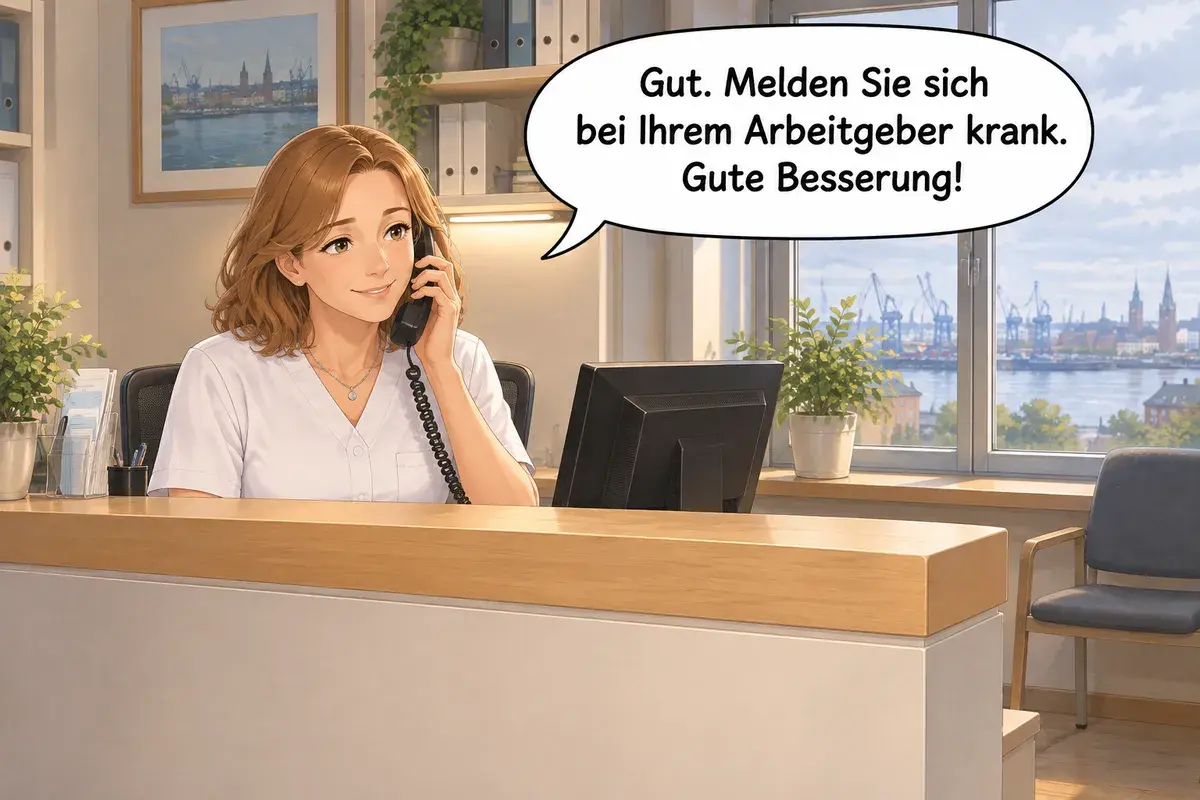
- Arzthelferin
Gut. Melden Sie sich bei Ihrem Arbeitgeber krank. Gute Besserung!
Good. Call in sick to your employer. (formal) Get well soon!
Grammar for this text
- Leider nehmen wir keine neuen Patienten auf —
aufnehmen(to take on a patient): the prefixaufsplits off and goes to the end. AfterLeiderthe verb is still second, andwircomes after it. - Werden dort neue Patienten aufgenommen? — the passive:
werden+ past participle at the end. Who takes them on isn't said, and it doesn't matter. More in the unit's grammar. - Termine werden dort online über Doctolib vereinbart —
Termineis plural (several appointments), so it'swerden, notwird. The past participlevereinbart(fromvereinbaren, A2) has noge-: the prefixver-doesn't split off.Doctolibis an app and website for booking doctor's appointments. - Sie wird elektronisch gelesen —
Siehere means "it" (theVersichertenkarte), not formal "you".gelesenis the past participle oflesen(to read): a machine reads the card, no paper needed. - Schonen Sie sich bis zum Termin —
sich schonen(to take it easy, not overdo it): a formal request, so the verb comes first, thenSie;sichmeans "yourself".bis zum Termin— until the appointment. - Mache ich — short for
Das mache ich: "Will do." In everyday speechDasis often dropped. - Melden Sie sich bei Ihrem Arbeitgeber krank —
sich krankmelden(to call in sick) is split:melden … krank. A formal request;bei Ihrem Arbeitgeber— to your employer (afterbeicomes the dative:Ihrem).
Words and grammar of the unit: Find a doctor and get a sick note.
Learn the words from the texts with flashcards
In the app, you can tap any word in a text to see its translation, forms and examples, and new words stick with flashcards. 15 minutes a day.
Start for freeEverything is open for free. No card needed to sign up.