

German dialogue with translation · B1 · 14 lines
Ich lasse sie mir schicken I'll have it sent to me
Comic · 14 panels
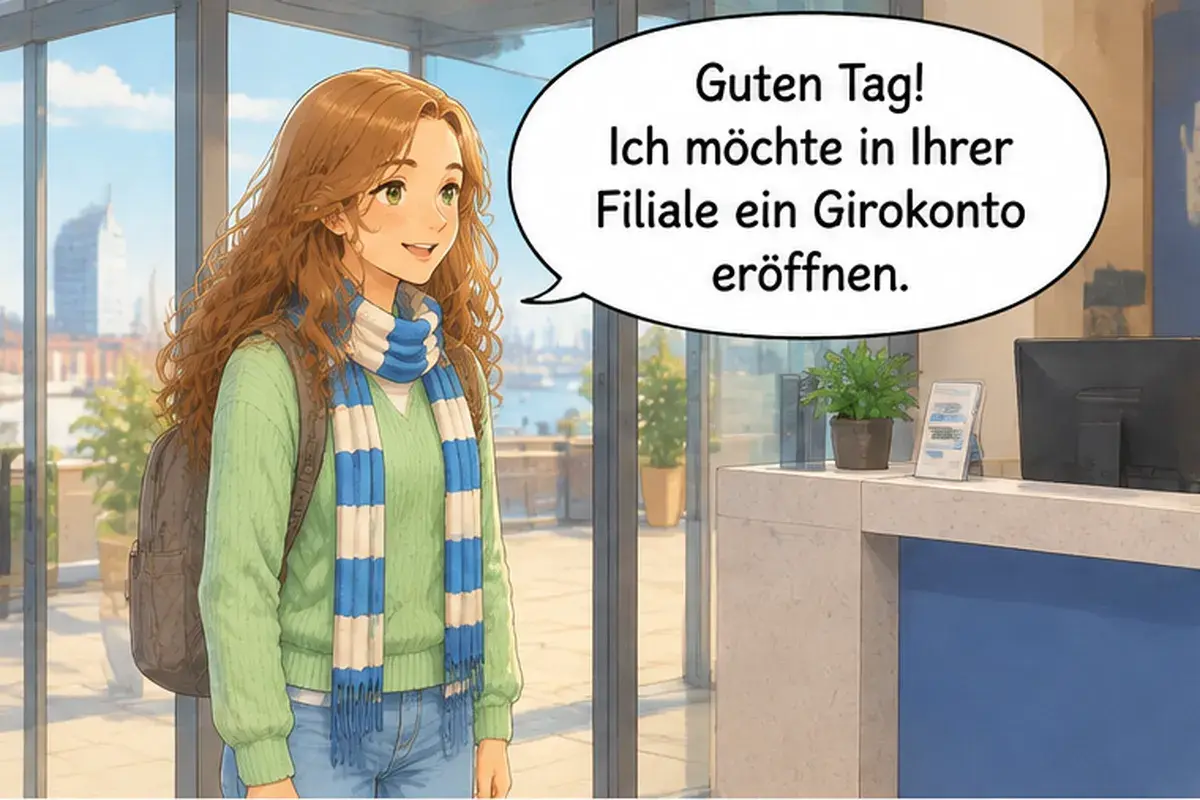
- Katja
Guten Tag! Ich möchte in Ihrer Filiale ein Girokonto eröffnen.
Hello! I'd like to open a checking account at your branch. (formal)
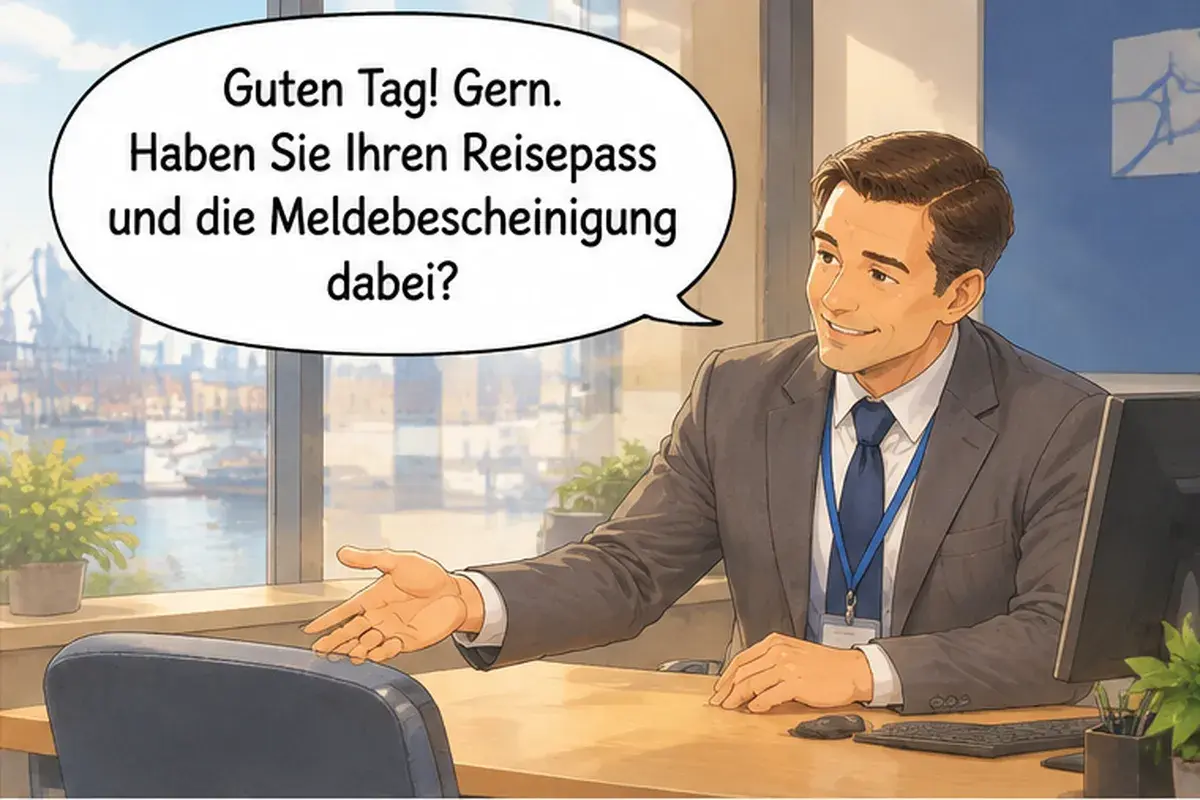
- Bankberater
Guten Tag! Gern. Haben Sie Ihren Reisepass und die Meldebescheinigung dabei?
Hello! Sure. Do you have your passport and the registration certificate with you? (formal)
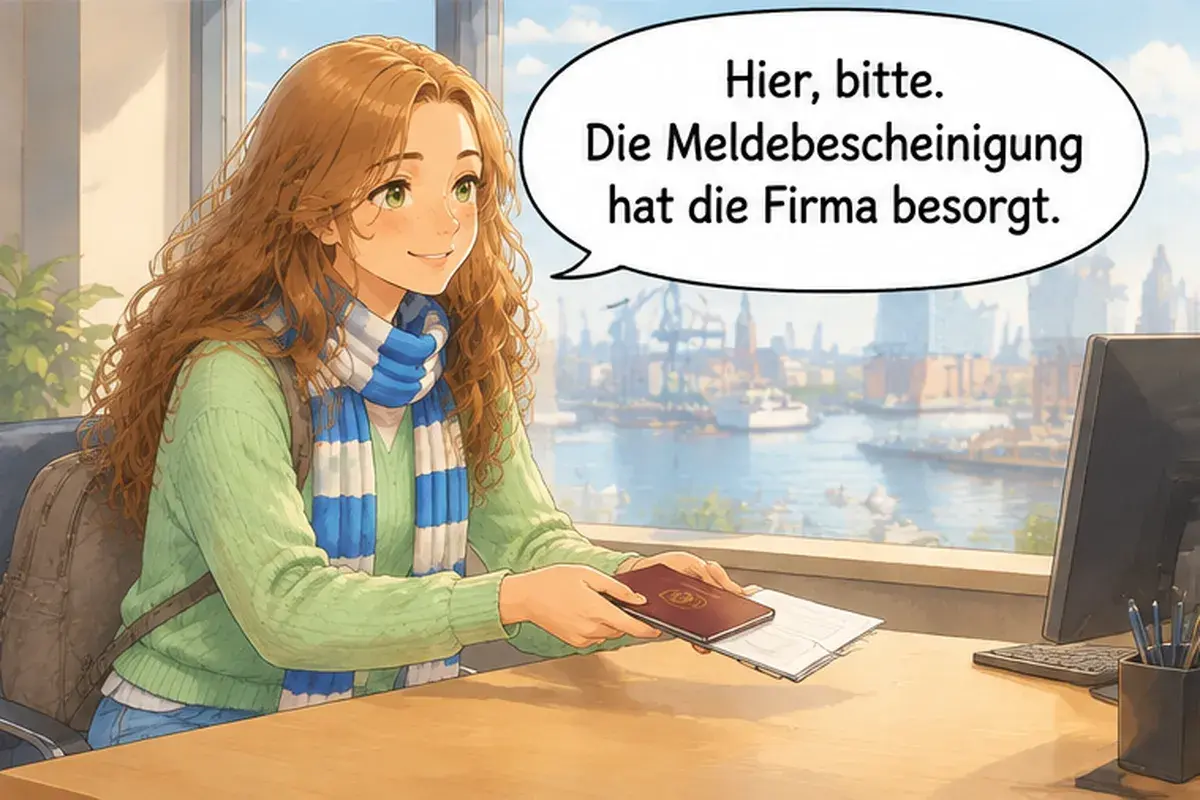
- Katja
Hier, bitte. Die Meldebescheinigung hat die Firma besorgt.
Here you go. The company got the registration certificate.
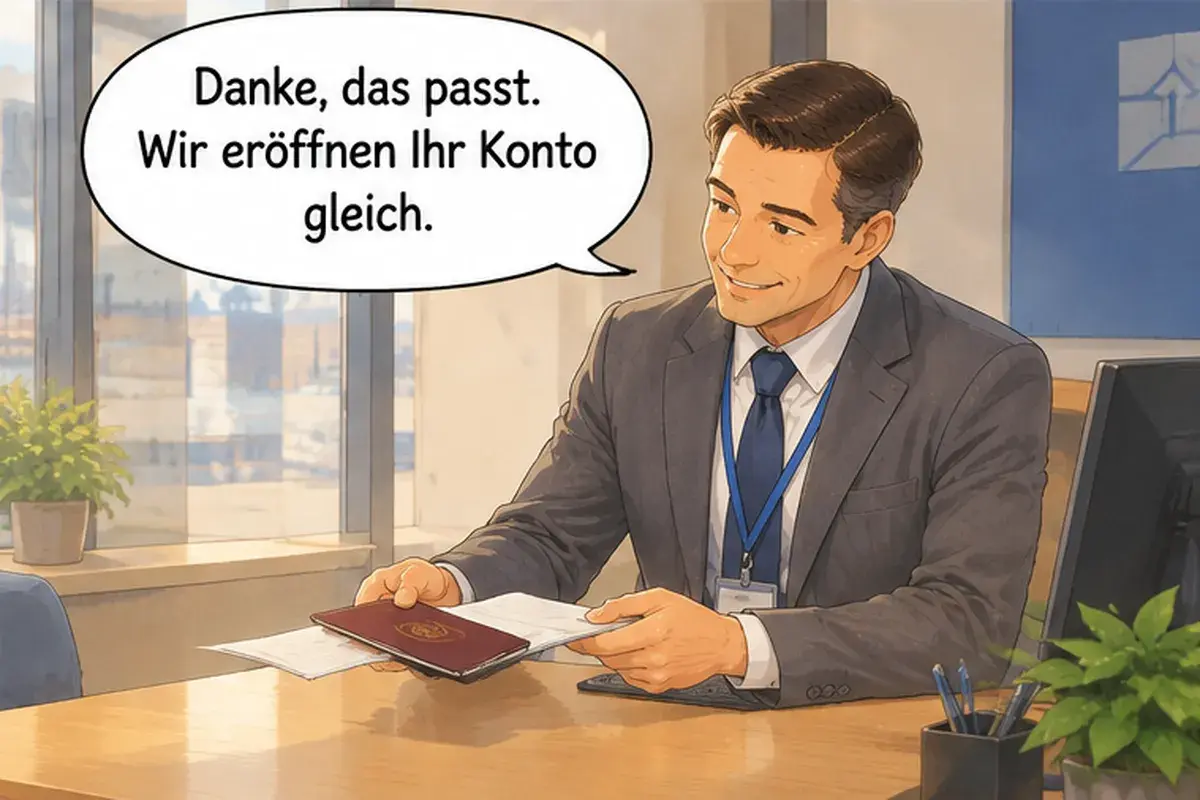
- Bankberater
Danke, das passt. Wir eröffnen Ihr Konto gleich.
Thank you, that's fine. We'll open your account right away. (formal)

- Katja
Super, dann war der Weg nicht umsonst! Gibt es Gebühren?
Great, then the trip wasn't for nothing! Are there any fees?
- Bankberater
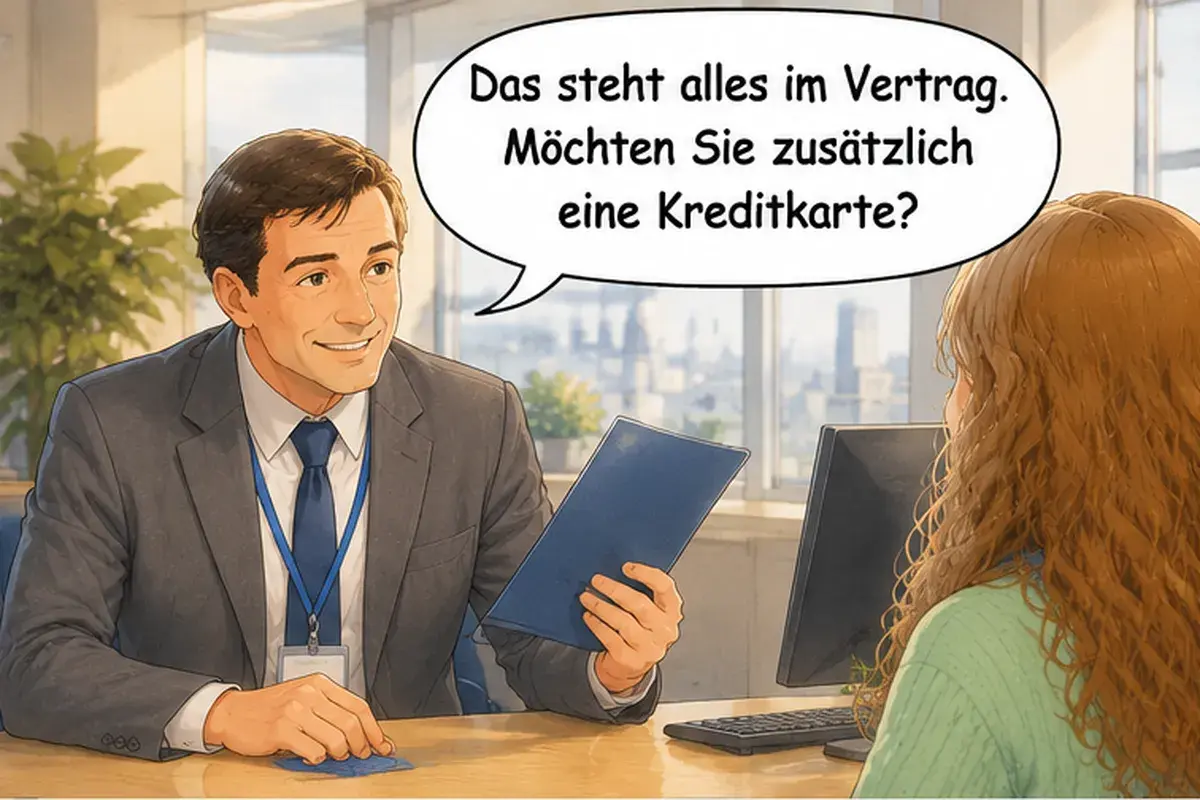
Das steht alles im Vertrag. Möchten Sie zusätzlich eine Kreditkarte?
It's all in the contract. Would you also like a credit card? (formal)
- Katja
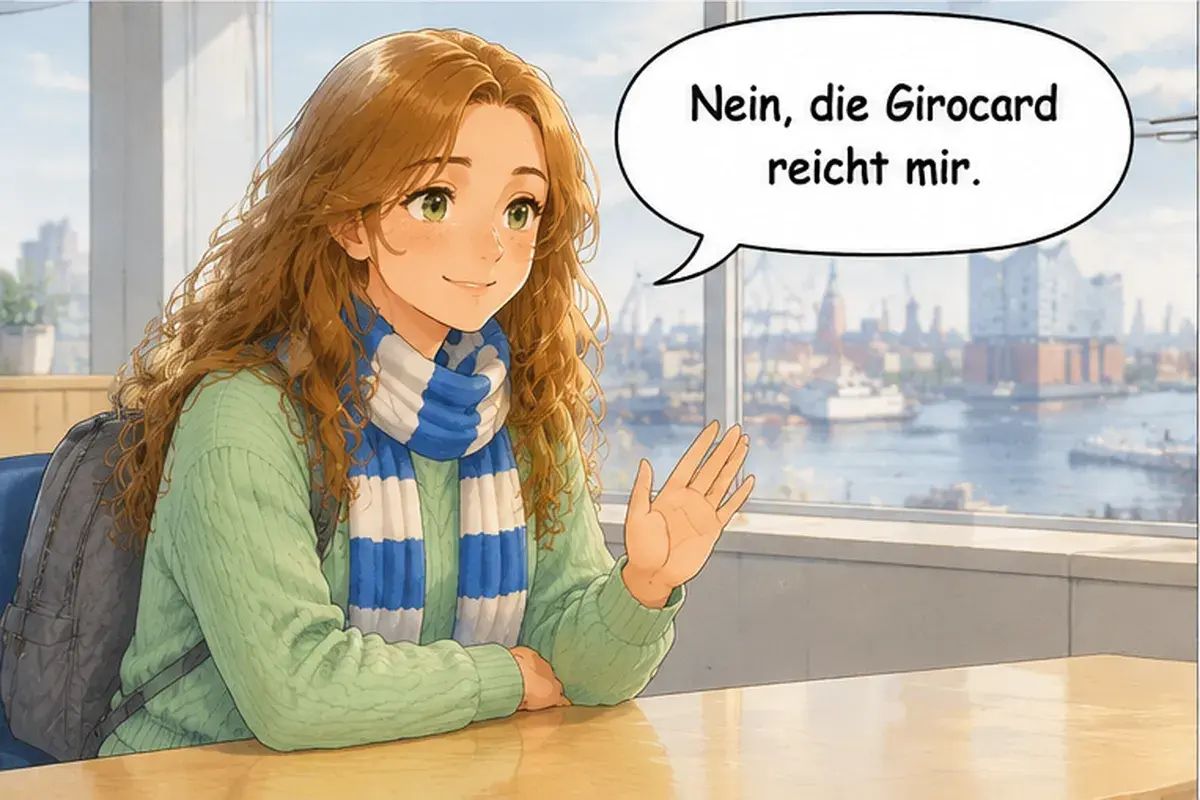
Nein, die Girocard reicht mir.
No, the debit card is enough for me.
- Bankberater
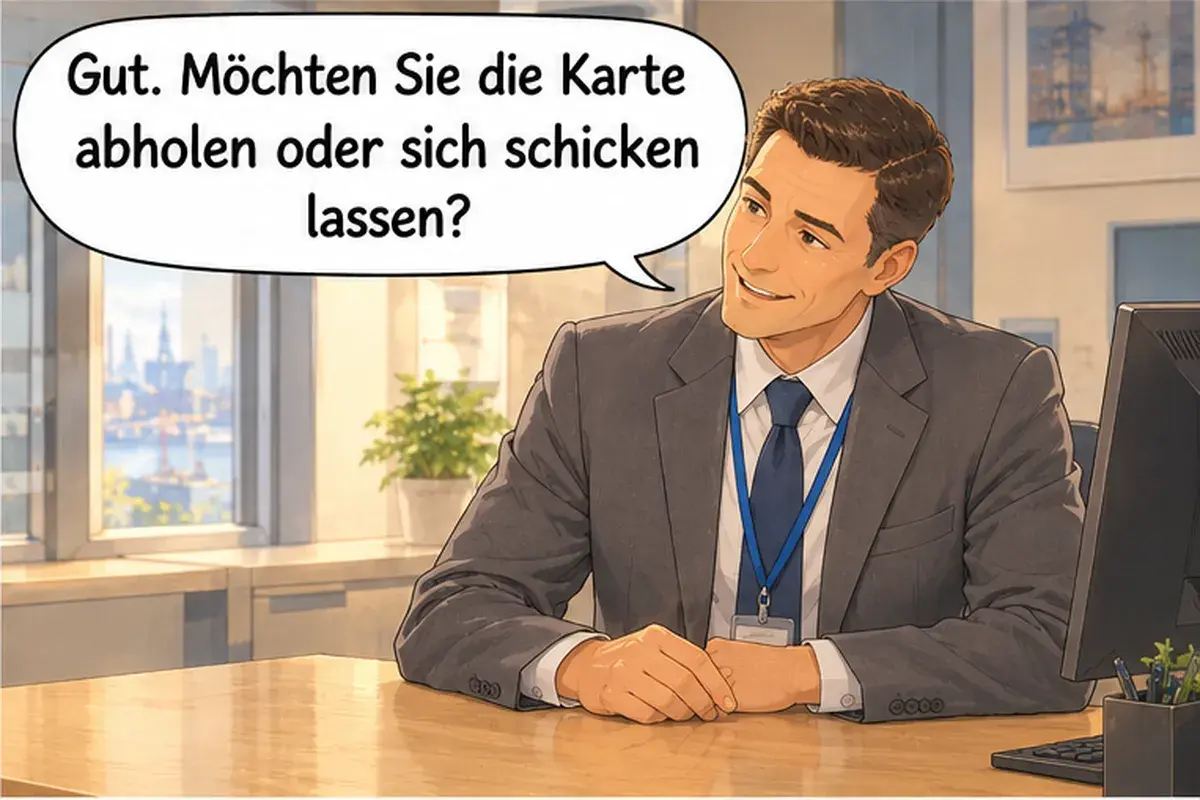
Gut. Möchten Sie die Karte abholen oder sich schicken lassen?
All right. Would you like to pick up the card or have it sent to you? (formal)

- Katja
Wie bitte? Noch einmal langsam, bitte.
Sorry? Once more, slowly, please.
- Bankberater
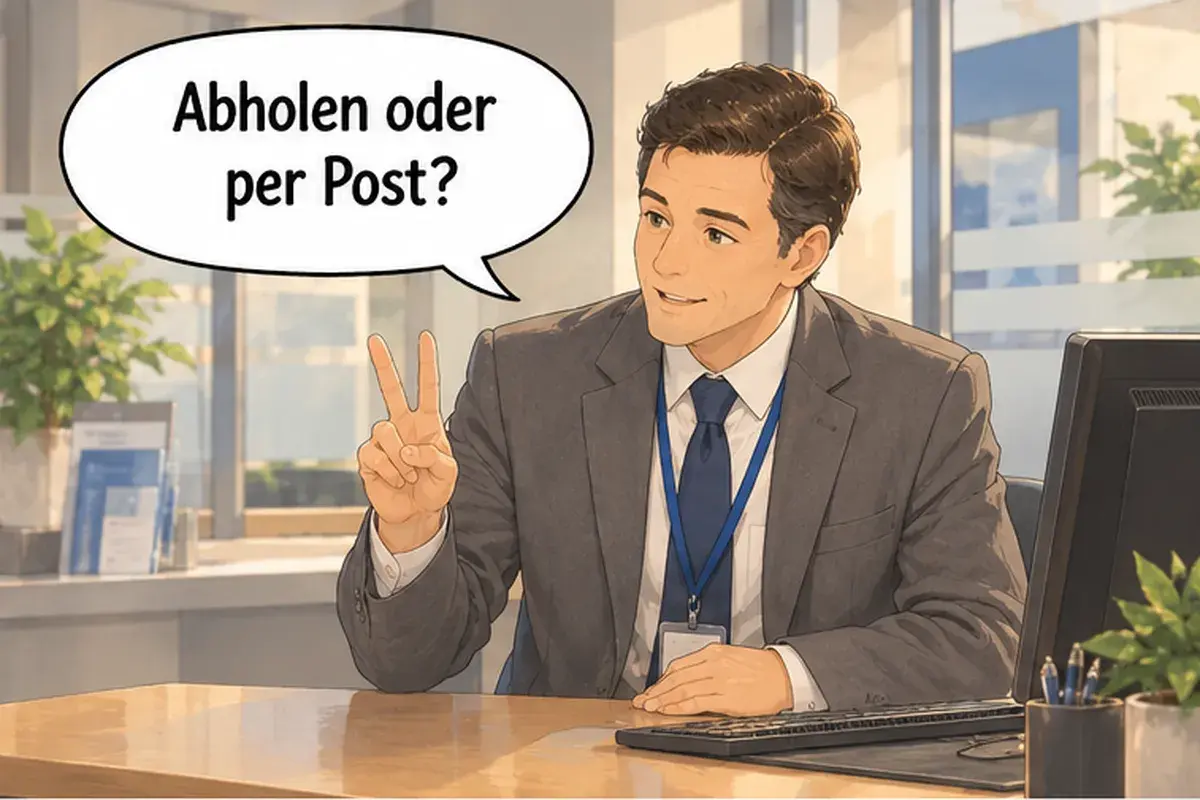
Abholen oder per Post?
Pick it up or by mail?

- Katja
Ich lasse sie mir schicken. Wie lange dauert das?
I'll have it sent to me. How long does that take?
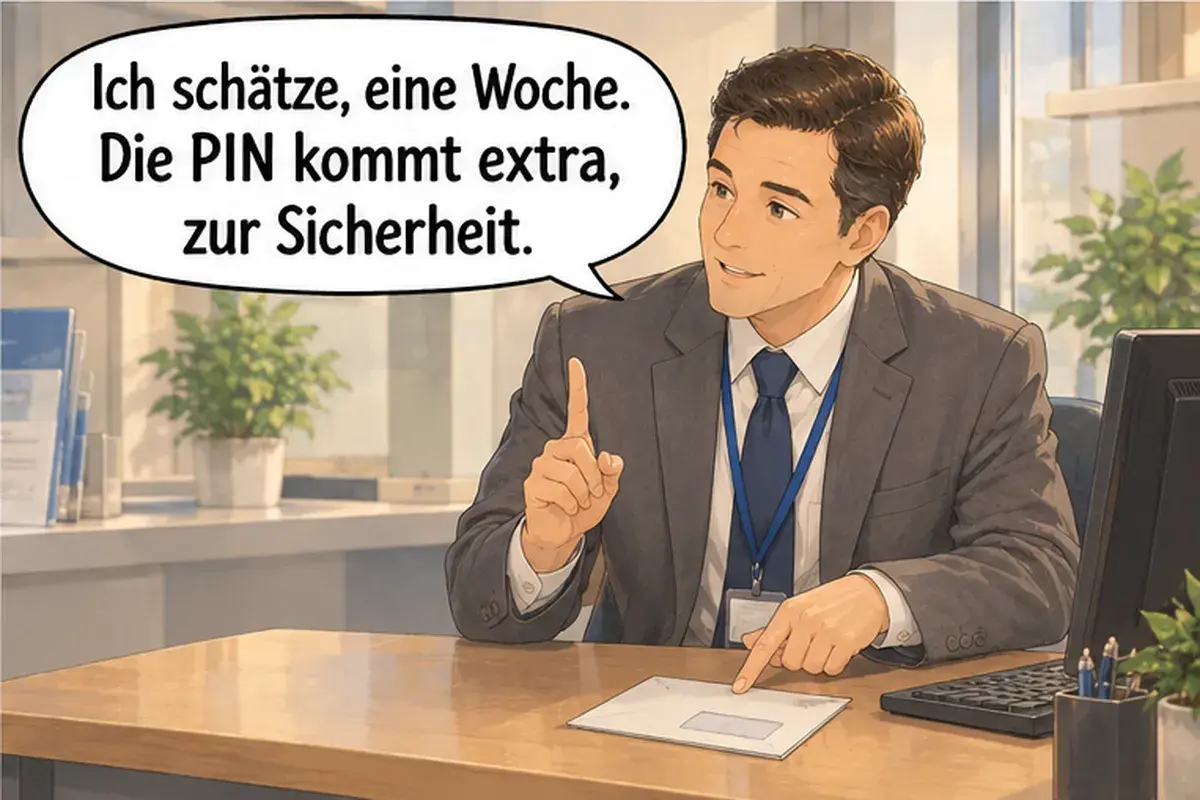
- Bankberater
Ich schätze, eine Woche. Die PIN kommt extra, zur Sicherheit.
I'd guess a week. The PIN comes separately, for security.
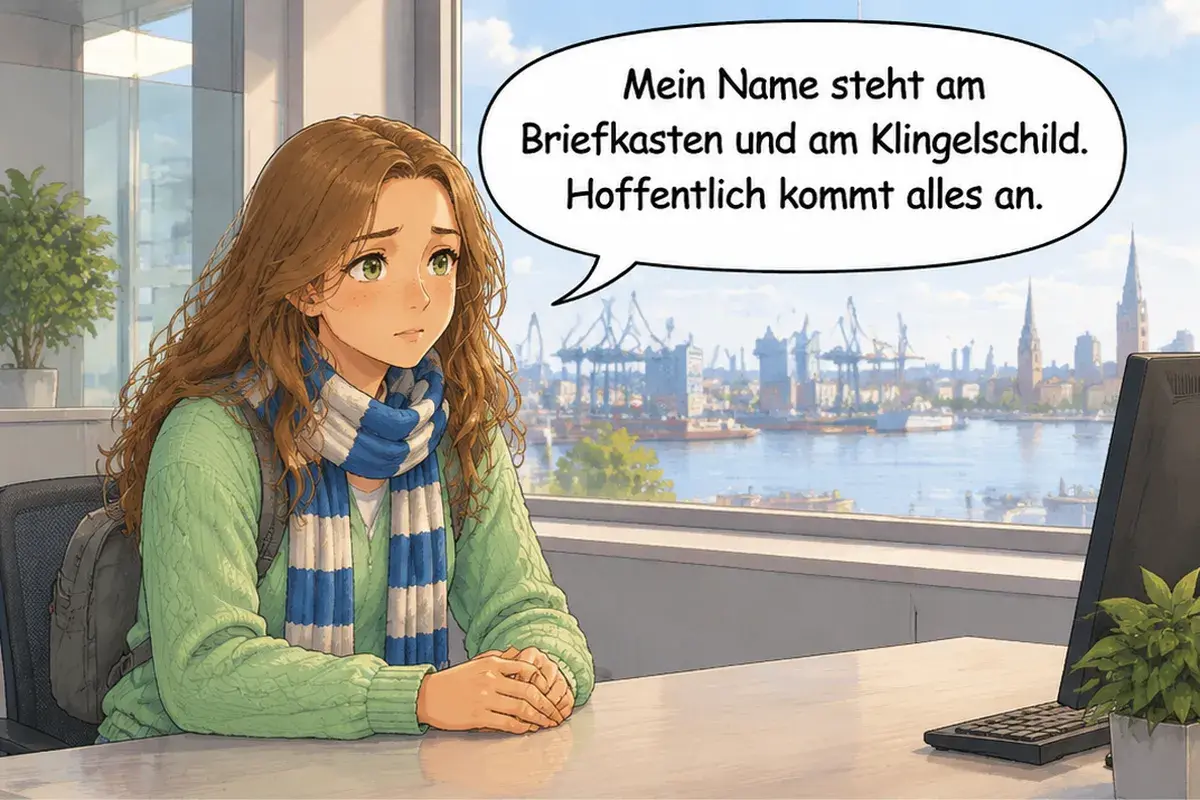
- Katja
Mein Name steht am Briefkasten und am Klingelschild. Hoffentlich kommt alles an.
My name is on the mailbox and on the doorbell name tag. Hopefully everything will arrive.
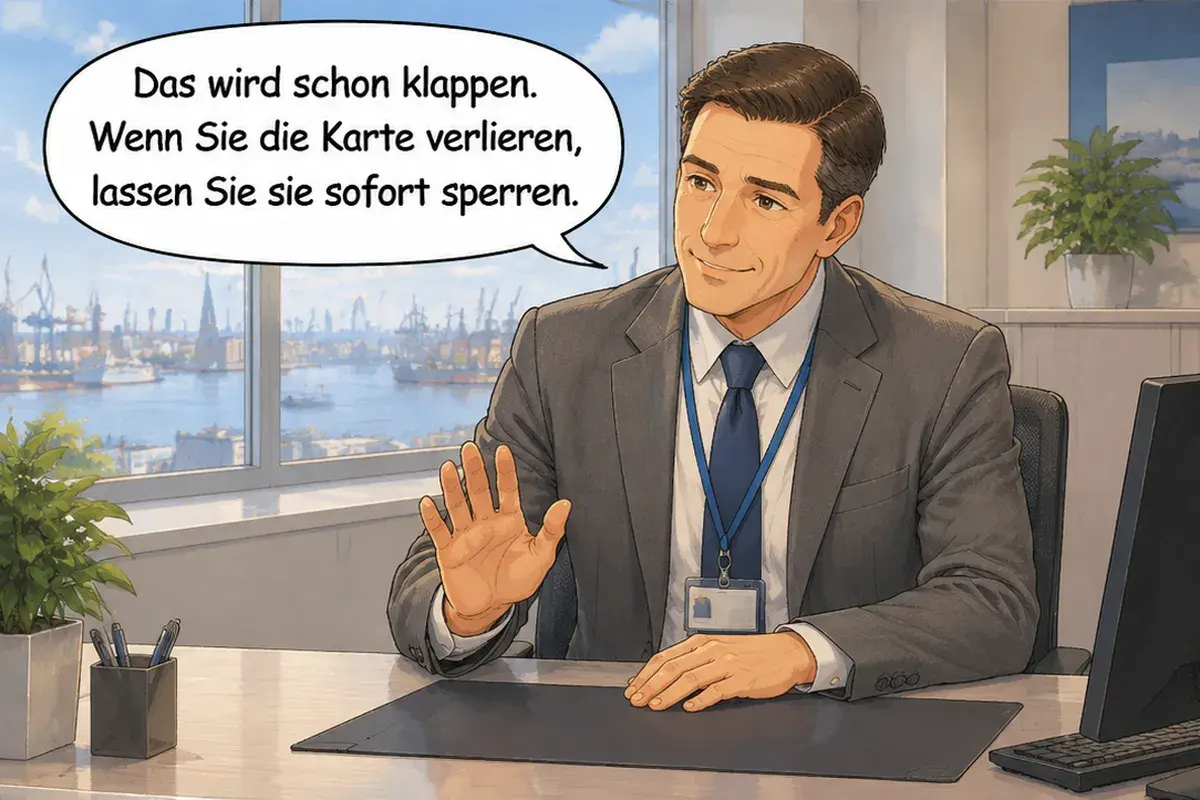
- Bankberater
Das wird schon klappen. Wenn Sie die Karte verlieren, lassen Sie sie sofort sperren.
It'll work out. If you lose the card, have it blocked right away. (formal)
Grammar for this text
- Ich lasse sie mir schicken —
lassenhere means "to have something done for me": the bank sends the card, not Katja.lasseis the ich form oflassen(at A2 you learned it as "leave"),mirmeans "for me", andschickengoes to the very end. The full rule is in the unit grammar. - Möchten Sie die Karte abholen oder sich schicken lassen? — a polite question with
möchten(A2). The two infinitives at the end are joined byoder.sichmeans "for yourself": it goes withSie, the waymirgoes withich. If you didn't understand, ask again: Wie bitte? Noch einmal langsam, bitte; the clerk will say it more simply: Abholen oder per Post? - Das wird schon klappen — a ready-made phrase: "it'll work out, don't worry".
wirdis the es form ofwerden, andklappenmeans "to work out".schondoesn't mean "already" here; it means "surely". This isn't the passive: afterwirdcomes an infinitive, not a past participle. - Die Meldebescheinigung hat die Firma besorgt — the object comes first: what matters is which paper the company got.
hat besorgtis the Perfekt (spoken past); the prefixbe-doesn't split off, so the participle has noge-. - Super, dann war der Weg nicht umsonst! —
umsonsthere means "for nothing", not "free": the trip was worth it. - Ich schätze, eine Woche —
schätzenhere means "to guess, to estimate": "I'd guess a week". The answer is short; the verb is left out. - Wenn Sie die Karte verlieren, lassen Sie sie sofort sperren — after
wenn, the verbverlierengoes to the end.lassen Sie sie sperrenis a polite request with the samelassen: "have it blocked".Sieis formal "you", andsieis "it" (the card).
Words and grammar of the unit: Open a bank account and sort out your card.
Learn the words from the texts with flashcards
In the app, you can tap any word in a text to see its translation, forms and examples, and new words stick with flashcards. 15 minutes a day.
Start for freeEverything is open for free. No card needed to sign up.