

German story with translation · B1 · 14 lines
Zum Wohl! Auf den Hafen! Cheers! To the port!
Comic · 8 panels

Obwohl wir müde waren, wollte ich noch nicht nach Hause.
Although we were tired, I didn't want to go home yet.
Am Wasser war es so voll, dass wir keinen freien Platz fanden.
It was so crowded by the water that we didn't find a free spot.

Tobias kannte eine Stelle an der Elbe, wo es ruhiger war.
Tobias knew a spot on the Elbe where it was quieter.
Wir gingen einen breiten Weg entlang, der direkt am Wasser lag.
We walked along a wide path that was right by the water.

Die Luft war salzig und kühl, aber ich hatte zum Glück eine Jacke dabei.
The air was salty and cool, but luckily I had a jacket with me.
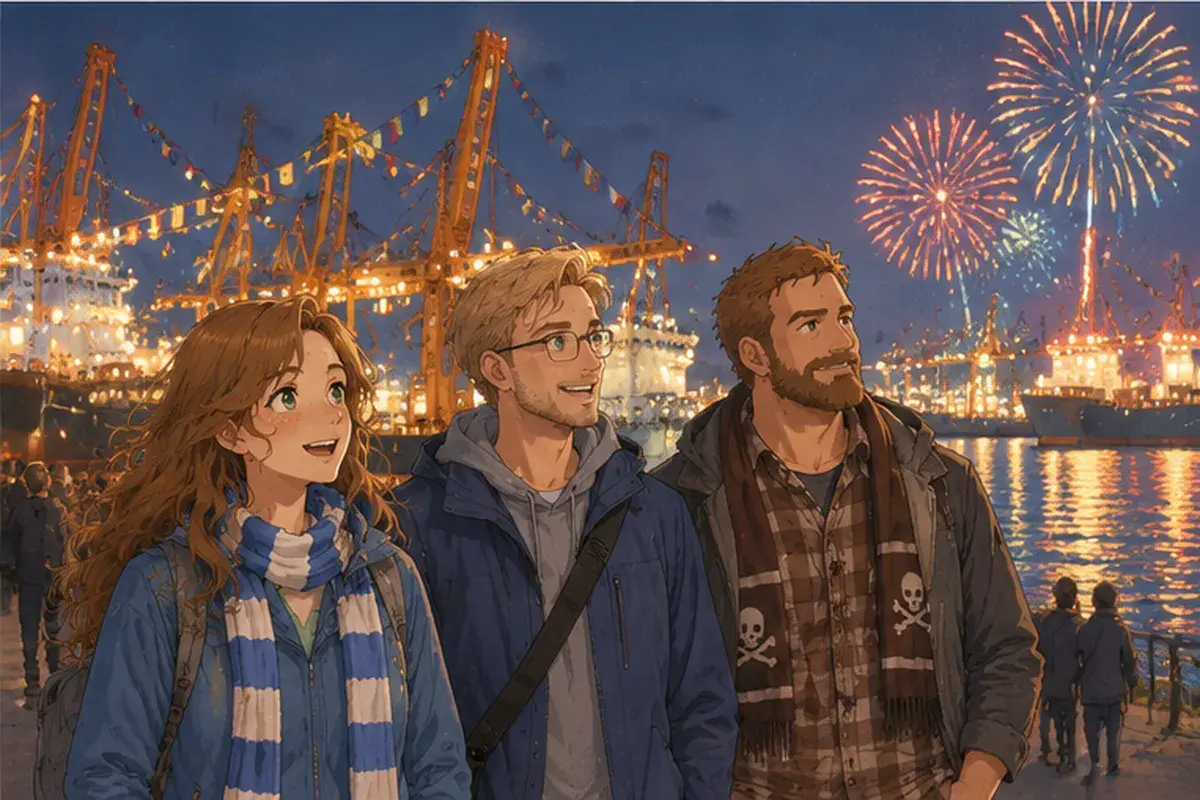
Als die Dämmerung kam, glänzten die hohen Kräne in goldenem Licht.
When dusk came, the tall cranes gleamed in golden light.
Auf den großen Schiffen hingen bunte Flaggen, und alles wirkte festlich.
Colorful flags hung on the big ships, and everything looked festive.
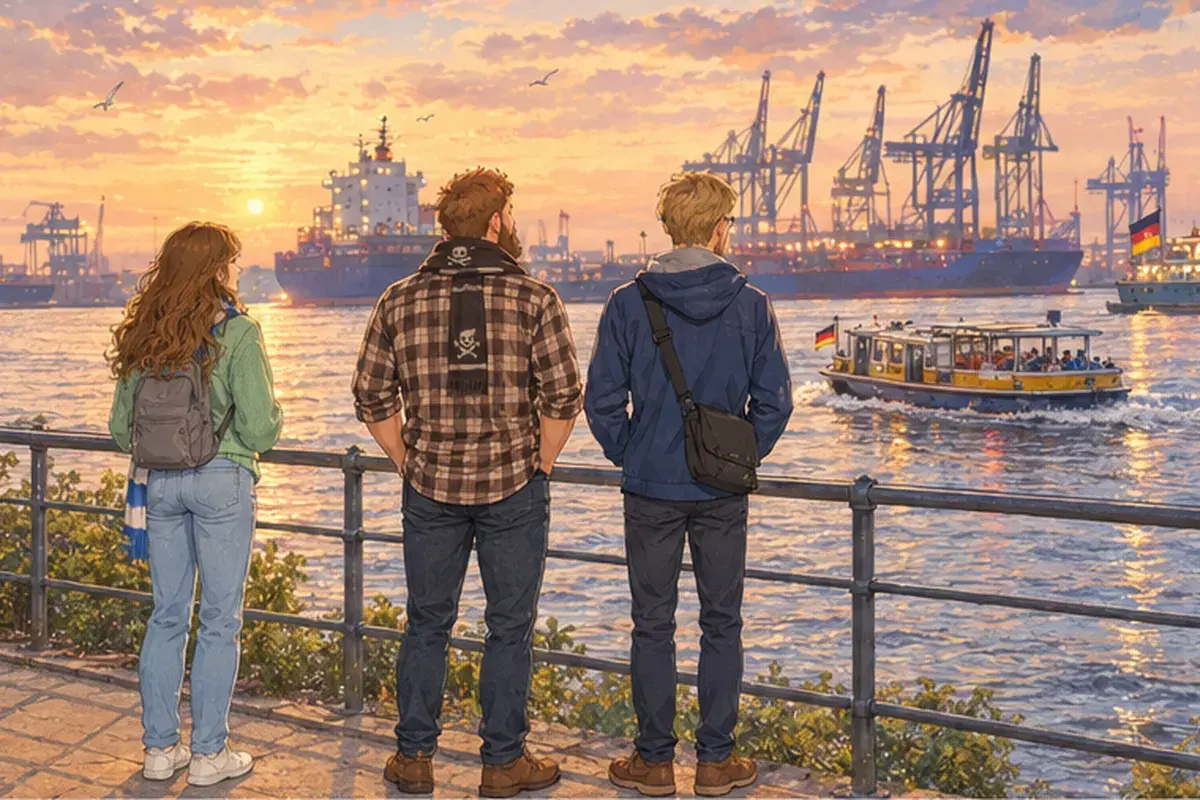
Während eine kleine Barkasse hin und her fuhr, hupten die Schiffe laut.
While a small launch went back and forth, the ships honked loudly.
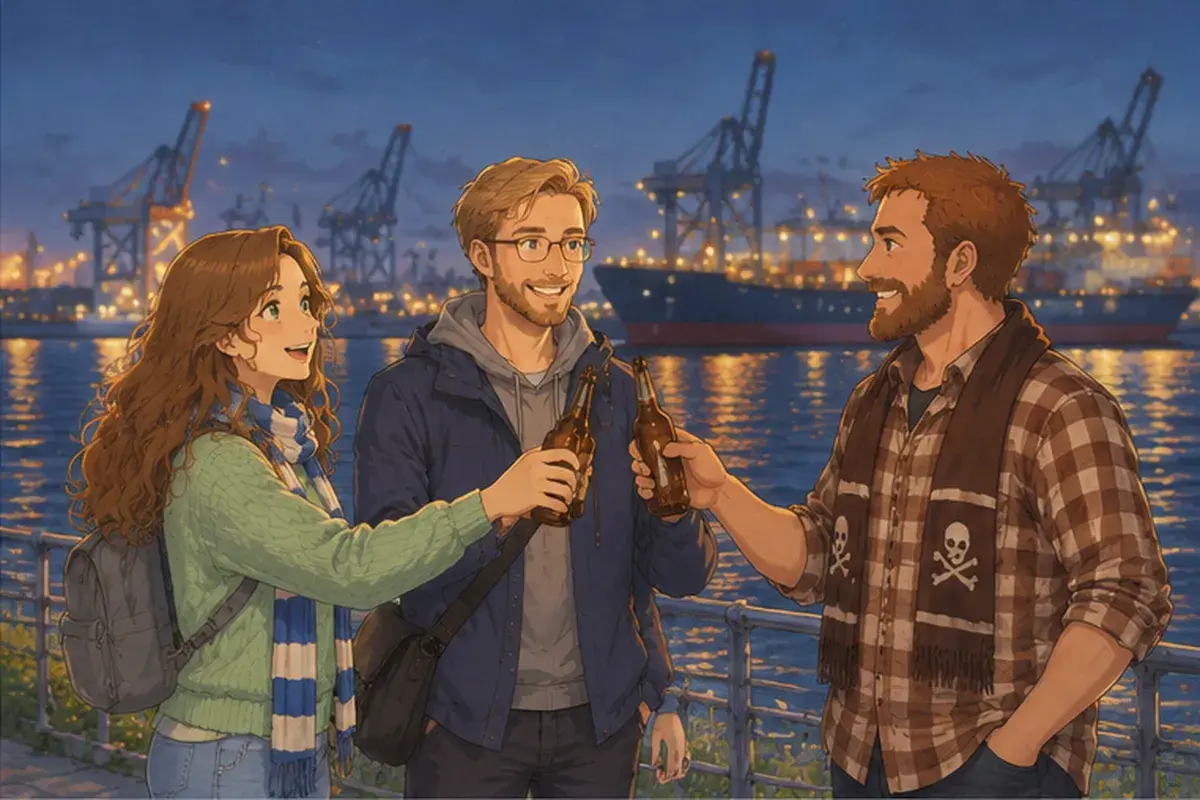
Tobias holte drei Bier, weil er mit uns auf den Abend trinken wollte.
Tobias got three beers because he wanted to drink to the evening with us.
„Zum Wohl!“, sagte er. „Auf den Hafen!“
"Cheers!" he said. "To the port!"

Dann wurde es dunkel, und endlich ging es los: das Feuerwerk.
Then it got dark, and finally it started: the fireworks.
Wir standen unter freiem Himmel und sahen zu, wie bunte Lichter über der Elbe leuchteten.
We stood in the open air and watched colorful lights shine over the Elbe.
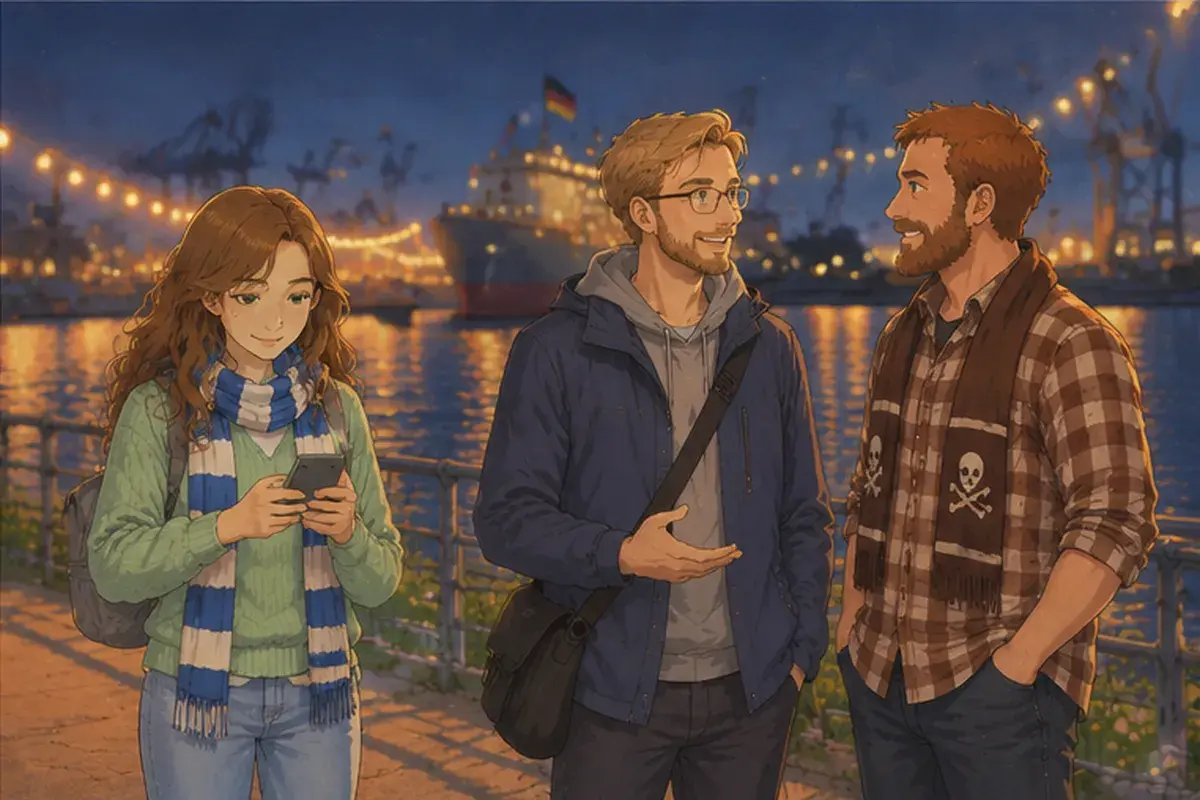
Kein Wunder, dass jedes Jahr so viele kommen: So eine große Veranstaltung kannte ich noch nicht.
No wonder so many people come every year: I'd never been to such a big event before.
Ich schrieb Lukas, dass der Hafen Geburtstag hatte und wir mit ihm feierten.
I wrote to Lukas that the port was having its birthday and we were celebrating with it.
Grammar for this text
- Am Wasser war es so voll, dass wir keinen freien Platz fanden —
so …, dassmeans "so … that"; the verb goes to the end:fanden(fromfinden:i→a).keinen freien Platzis masculine accusative; afterkeinenthe adjective takes-en. - Tobias kannte eine Stelle an der Elbe, wo es ruhiger war —
kannteis the Präteritum (narrative past) ofkennen.womeans "where": a clause about a place (unit 7), withwarat the end. - Wir gingen einen breiten Weg entlang, der direkt am Wasser lag —
entlangcomes after the noun, while English puts "along" first, and the noun before it is in the accusative:einen breiten Weg(aftereinen,-en).dermeans "that, which" and refers toWeg; the verblag(fromliegen) is at the end. - Als die Dämmerung kam, glänzten die hohen Kräne in goldenem Licht —
alsmeans "when", one time in the past.hochloses itscbefore an ending:die hohen Kräne.Kräneis the plural ofKran.in goldenem Licht: there's no article, sogoldentakes-em, likedem. - Auf den großen Schiffen hingen bunte Flaggen —
auf den großen Schiffenis the dative plural (-en), andbunte Flaggenis plural with no article (-e).hingenis the Präteritum ofhängen(to hang, to be hanging). - Während eine kleine Barkasse hin und her fuhr, hupten die Schiffe laut —
währendmeans "while":fuhris at the end of its clause, and the main clause starts right with its verb:hupten die Schiffe. - Wir standen unter freiem Himmel und sahen zu, wie bunte Lichter über der Elbe leuchteten —
unter freiem Himmelmeans "in the open air" (-em, no article).sahen … zuis the separable verbzusehen(to watch).
Words and grammar of the unit: Celebrate the Port Anniversary.
Learn the words from the texts with flashcards
In the app, you can tap any word in a text to see its translation, forms and examples, and new words stick with flashcards. 15 minutes a day.
Start for freeEverything is open for free. No card needed to sign up.