

German dialogue with translation · B1 · 14 lines
Wer hat eigentlich Geburtstag? Whose birthday is it, anyway?
Comic · 14 panels
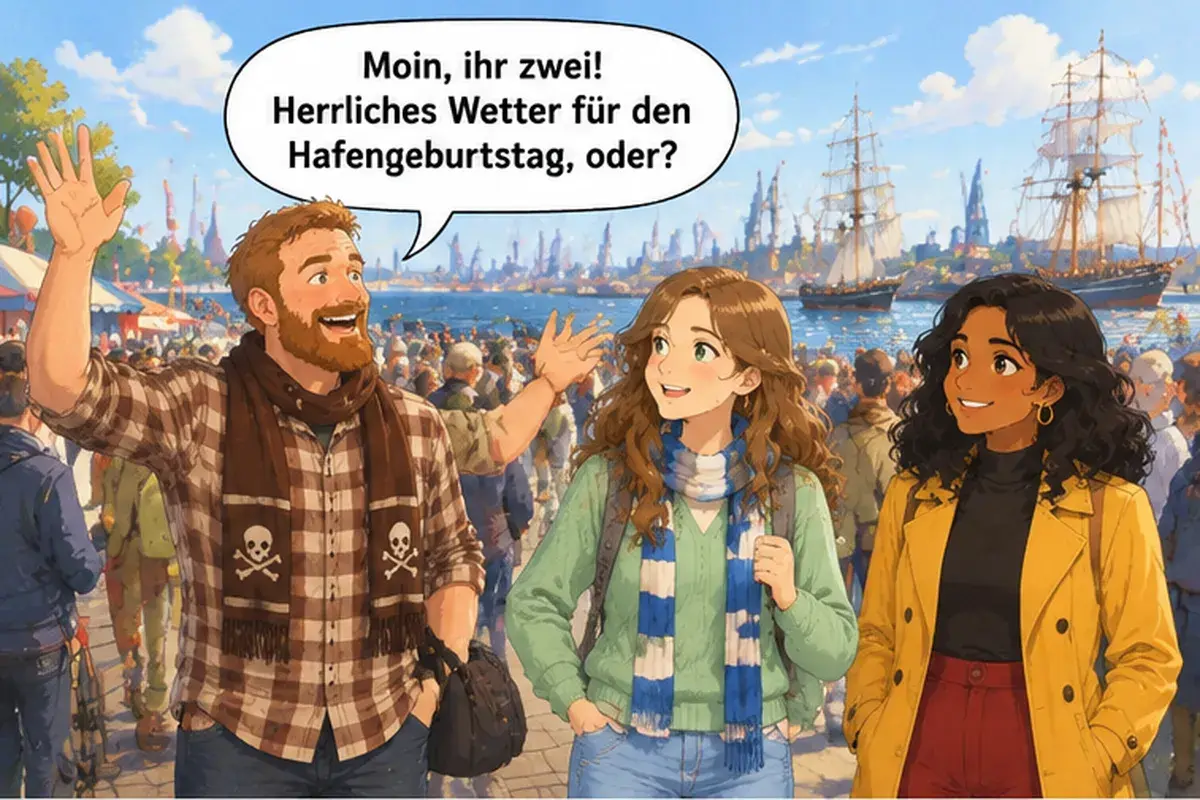
- Tobias
Moin, ihr zwei! Herrliches Wetter für den Hafengeburtstag, oder?
Hi, you two! Wonderful weather for the Port Anniversary, right?

- Katja
Moin, Tobias! Das ist ja ein Gedränge hier!
Hi, Tobias! It's a real crush here!
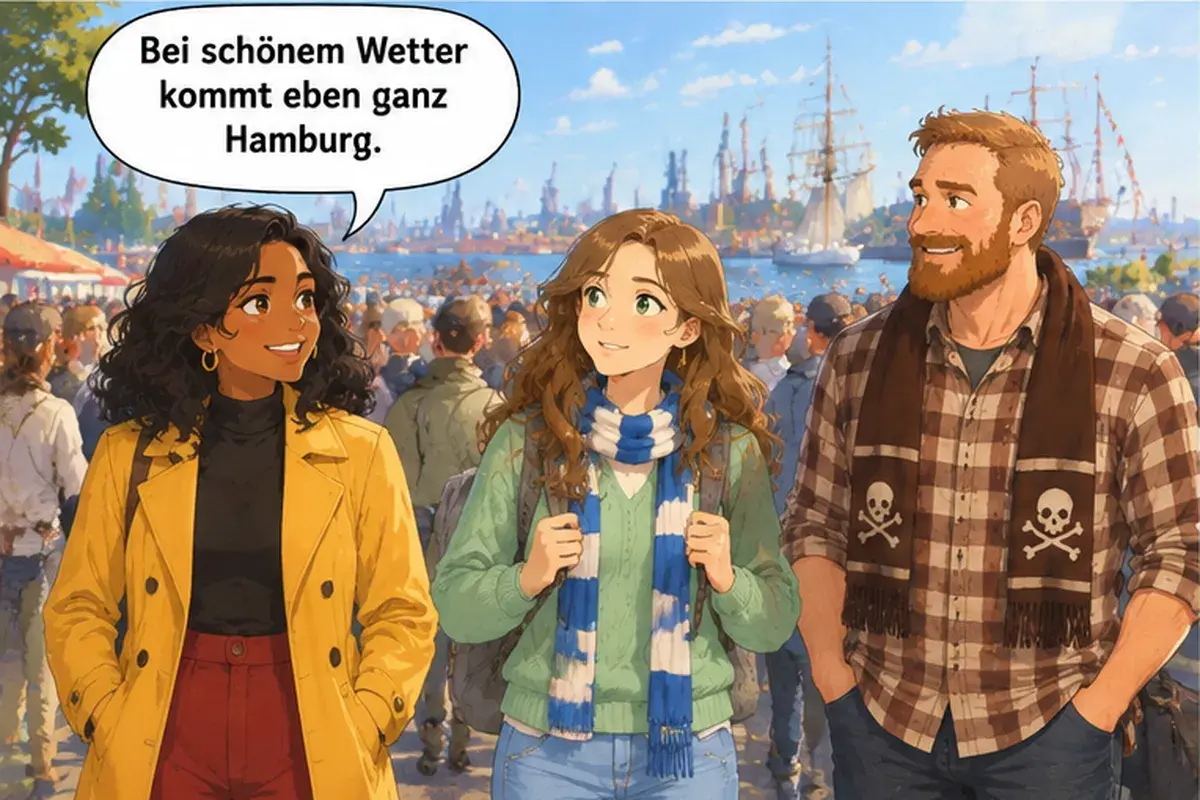
- Priya
Bei schönem Wetter kommt eben ganz Hamburg.
When the weather's nice, all of Hamburg just comes out.
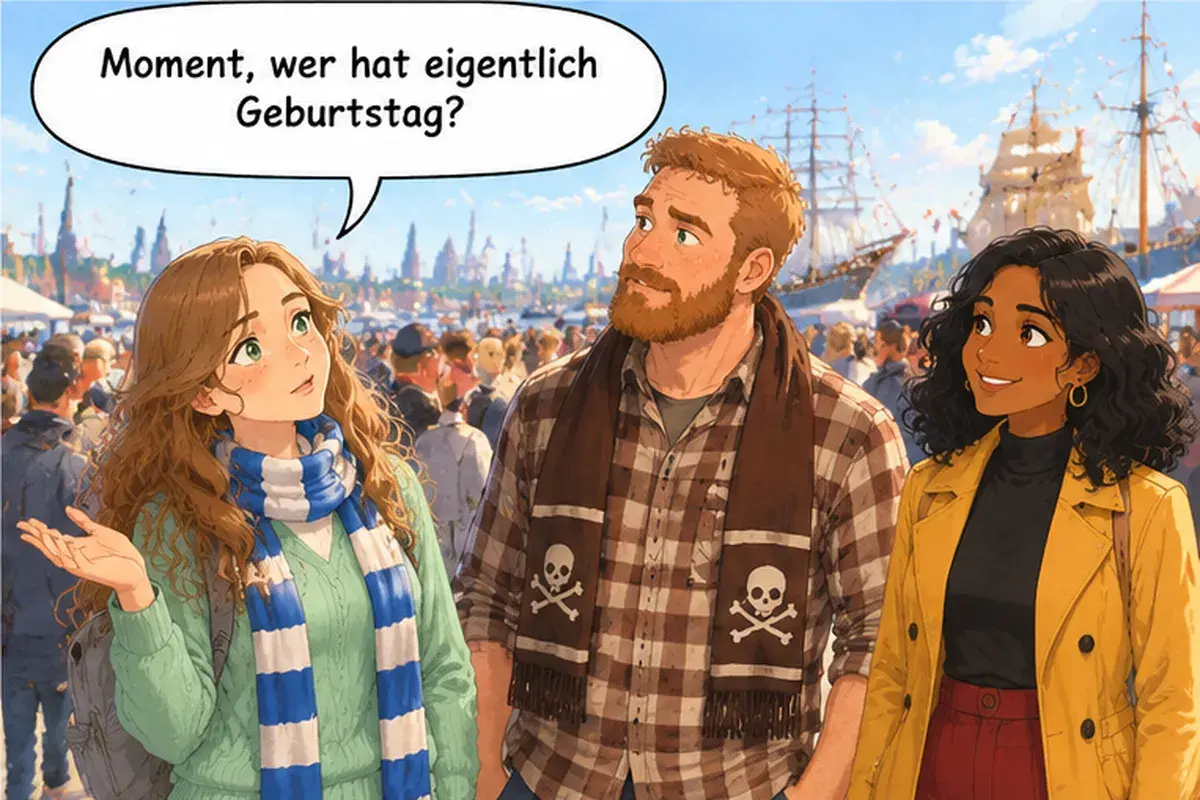
- Katja
Moment, wer hat eigentlich Geburtstag?
Wait, whose birthday is it, anyway?
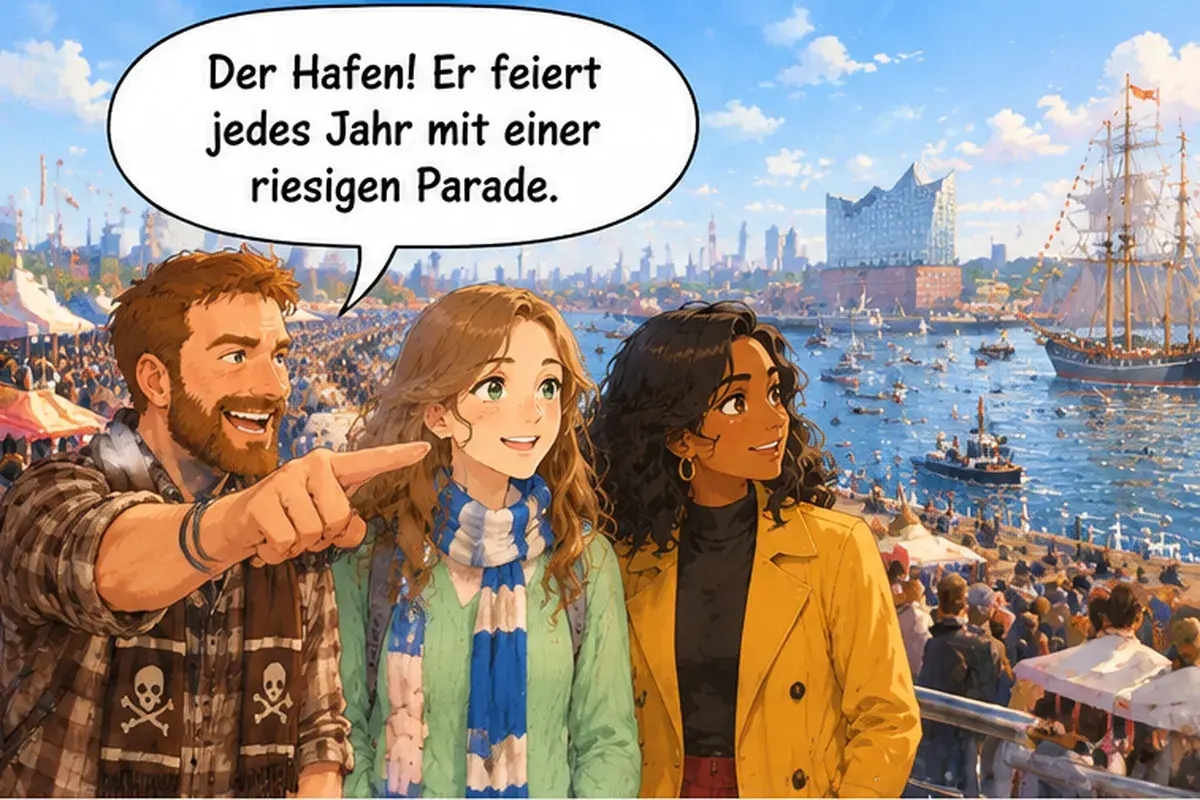
- Tobias
Der Hafen! Er feiert jedes Jahr mit einer riesigen Parade.
The port's! It celebrates every year with a huge parade.
- Priya
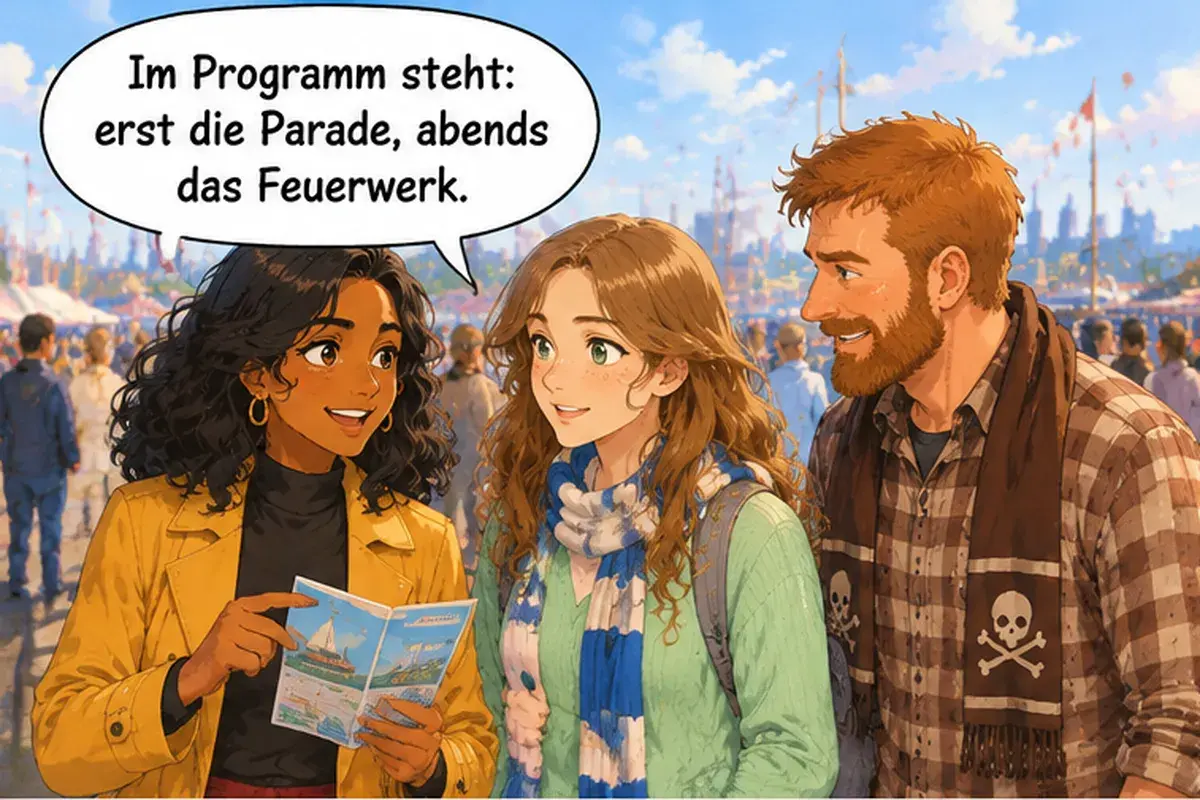
Im Programm steht: erst die Parade, abends das Feuerwerk.
The program says: first the parade, then the fireworks in the evening.
- Tobias
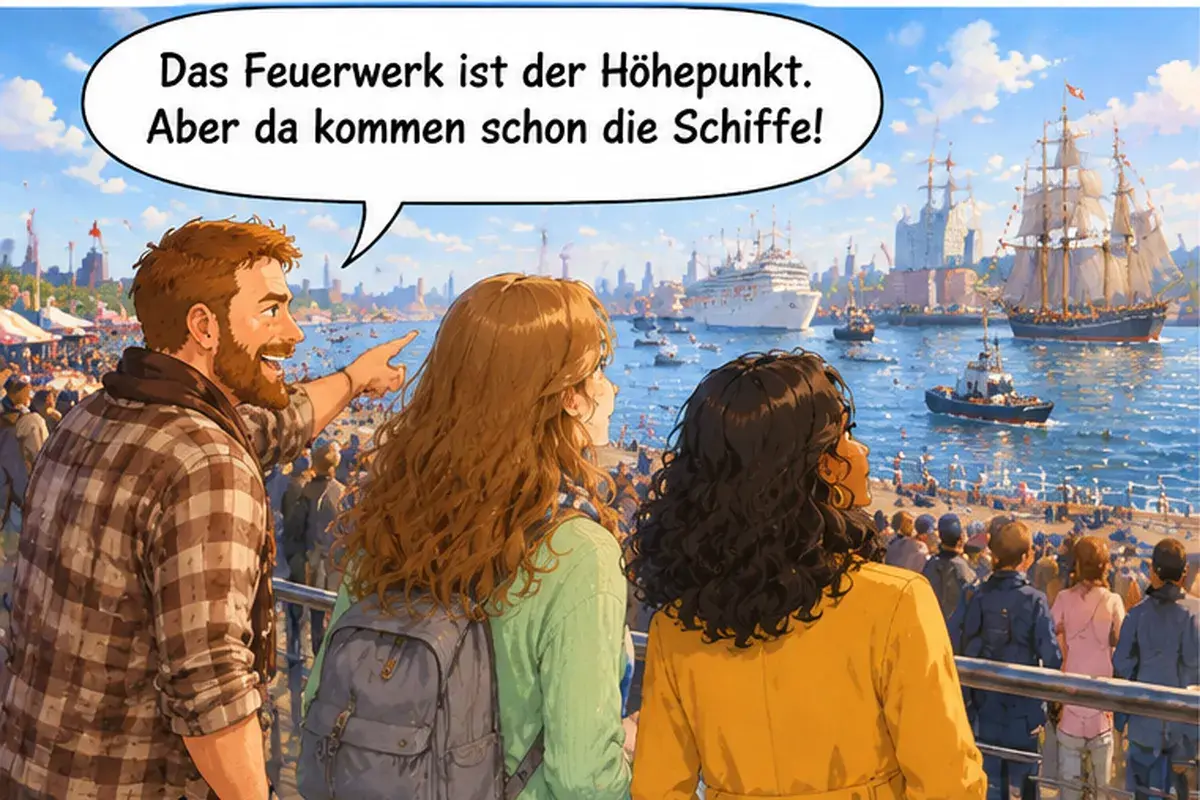
Das Feuerwerk ist der Höhepunkt. Aber da kommen schon die Schiffe!
The fireworks are the highlight. But here come the ships already!
- Katja
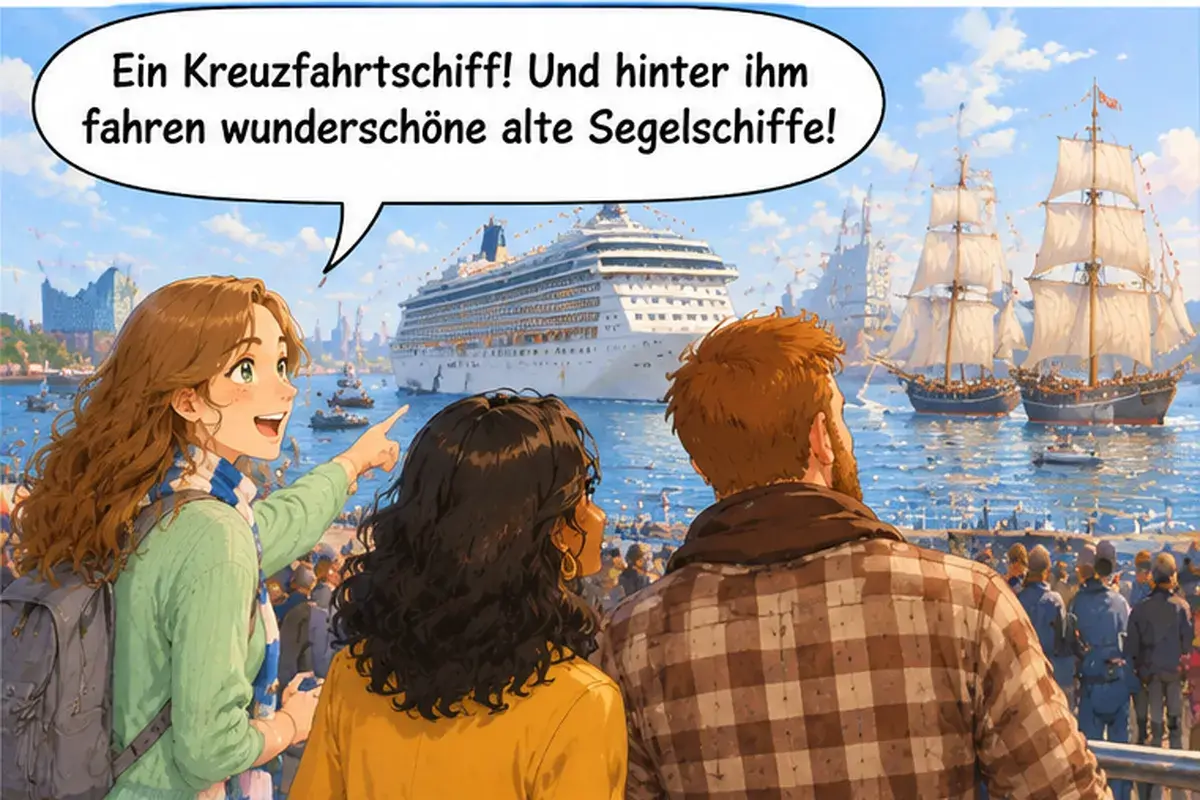
Ein Kreuzfahrtschiff! Und hinter ihm fahren wunderschöne alte Segelschiffe!
A cruise ship! And behind it come beautiful old sailing ships!
- Priya
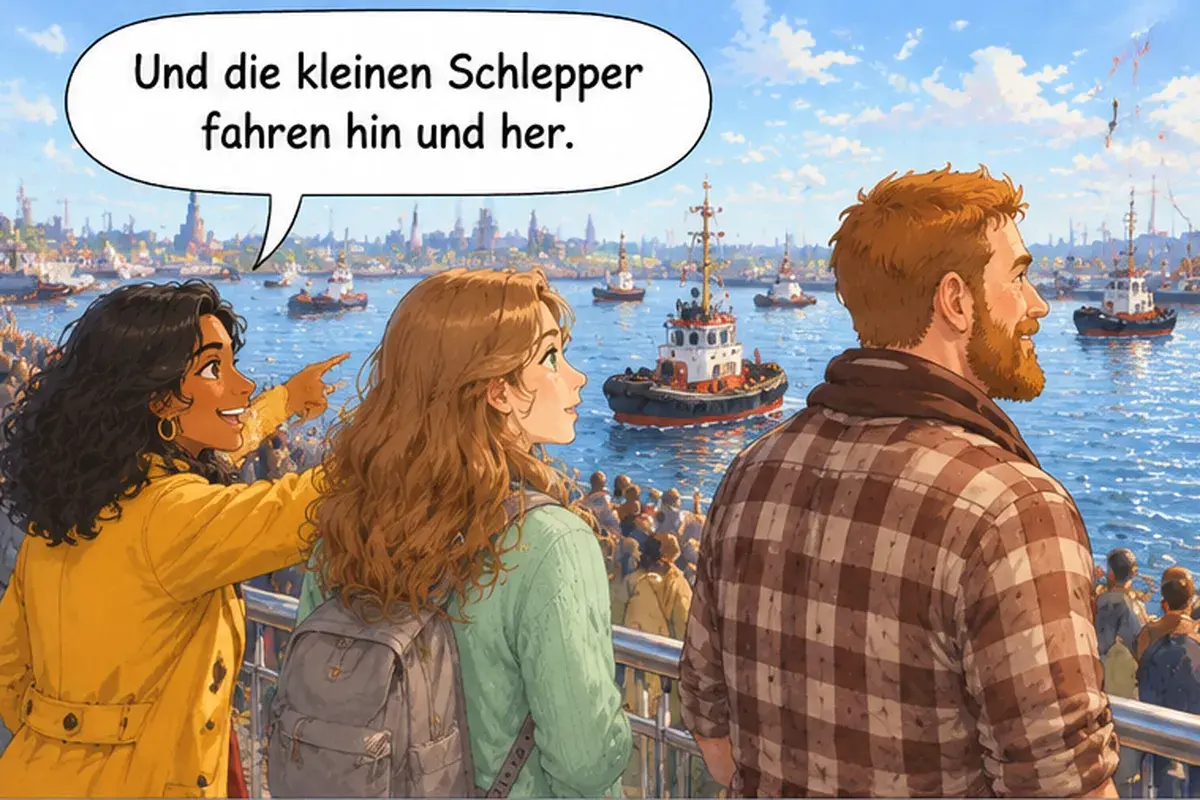
Und die kleinen Schlepper fahren hin und her.
And the little tugboats go back and forth.
- Tobias
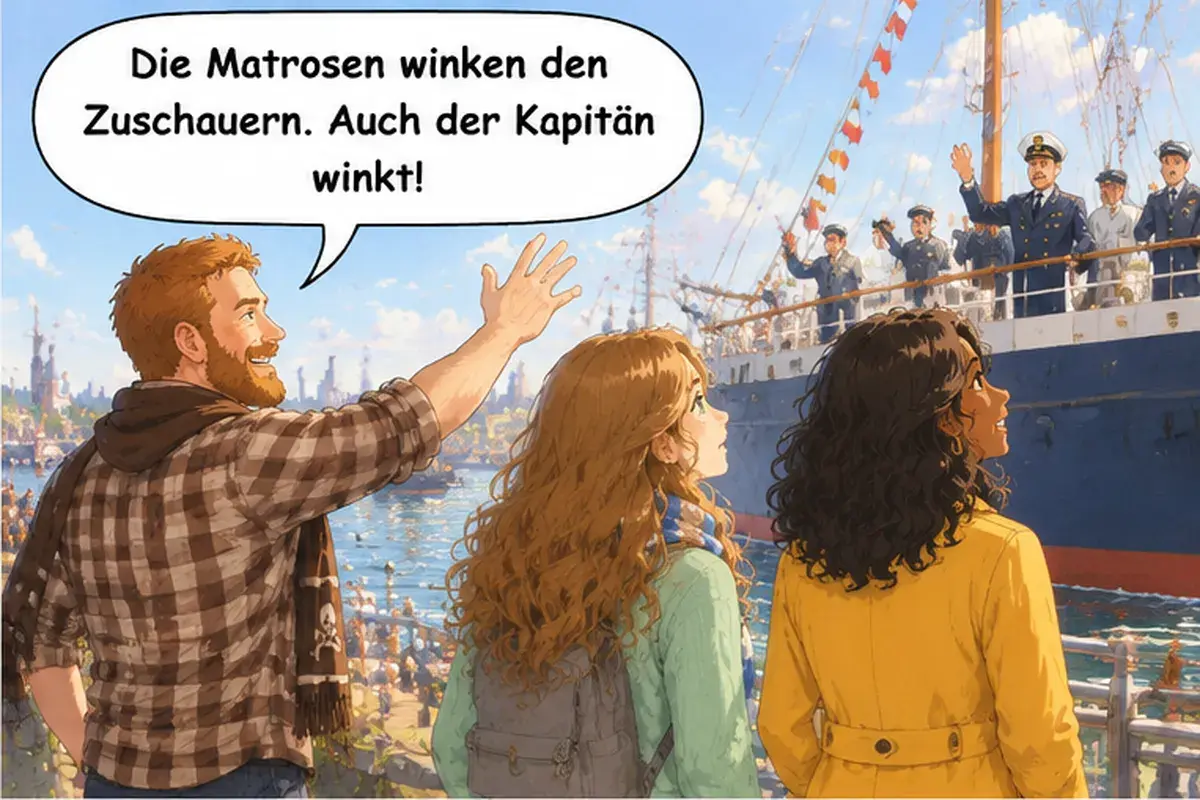
Die Matrosen winken den Zuschauern. Auch der Kapitän winkt!
The sailors are waving to the spectators. The captain's waving too!
- Katja
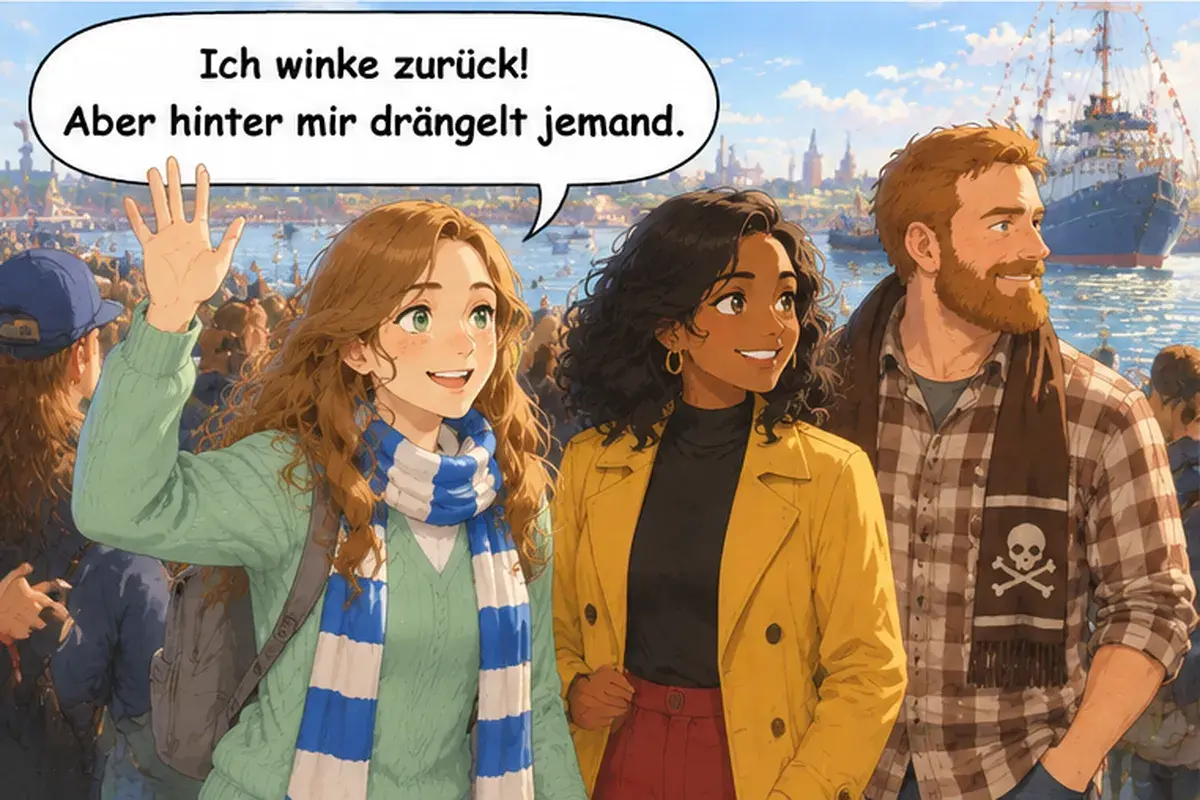
Ich winke zurück! Aber hinter mir drängelt jemand.
I'm waving back! But someone behind me is pushing.
- Priya
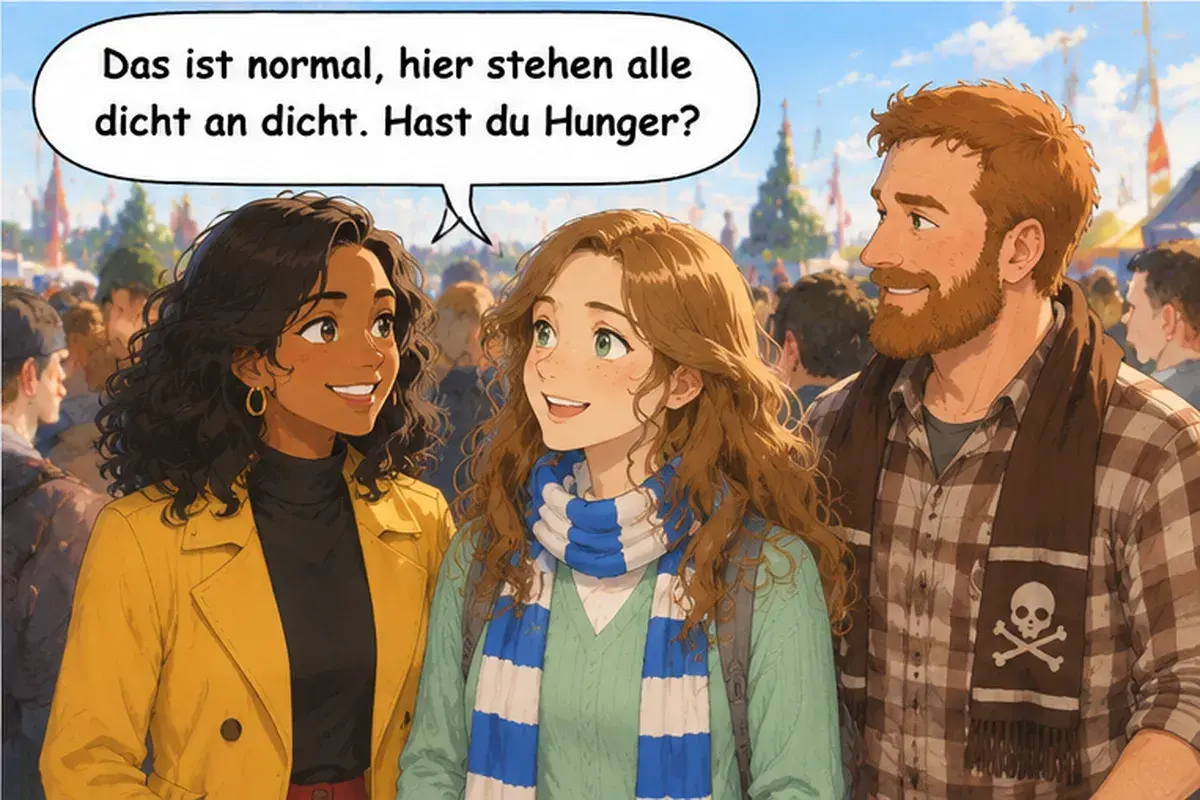
Das ist normal, hier stehen alle dicht an dicht. Hast du Hunger?
That's normal, everyone's standing packed close together here. Are you hungry?
- Katja
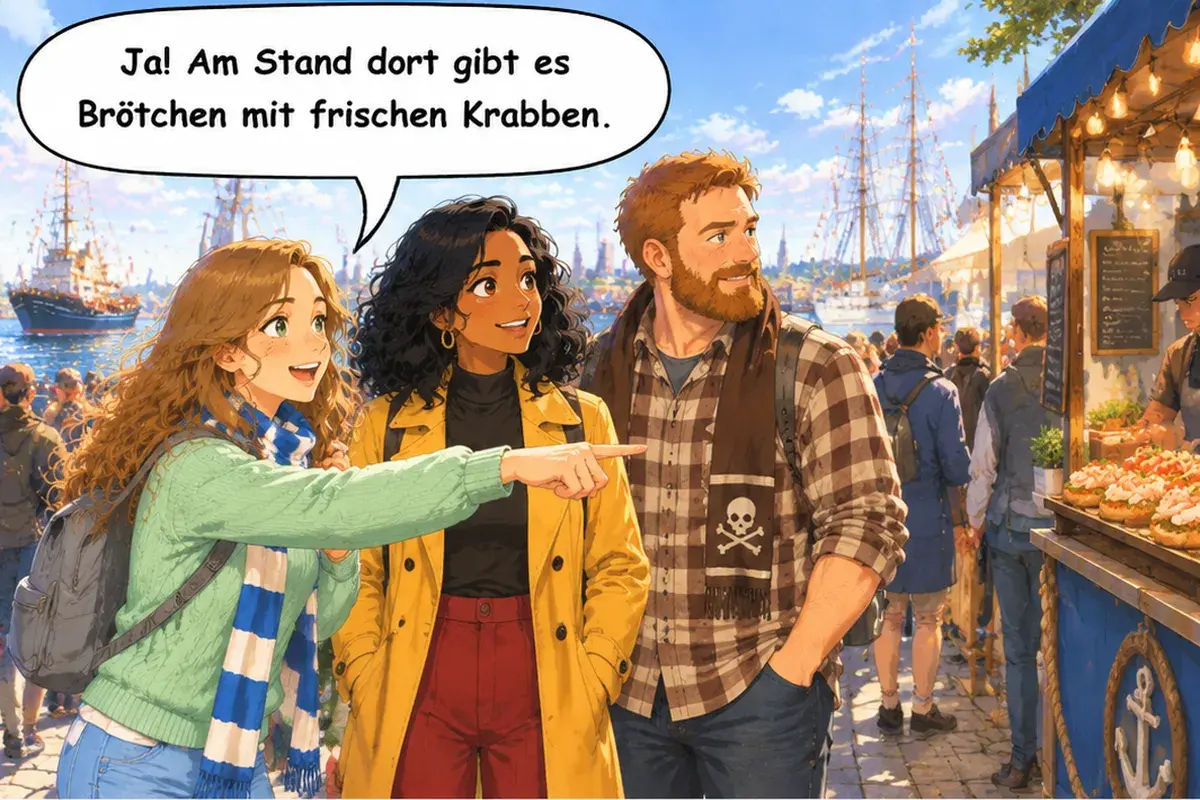
Ja! Am Stand dort gibt es Brötchen mit frischen Krabben.
Yes! There are rolls with fresh shrimp at that stand over there.
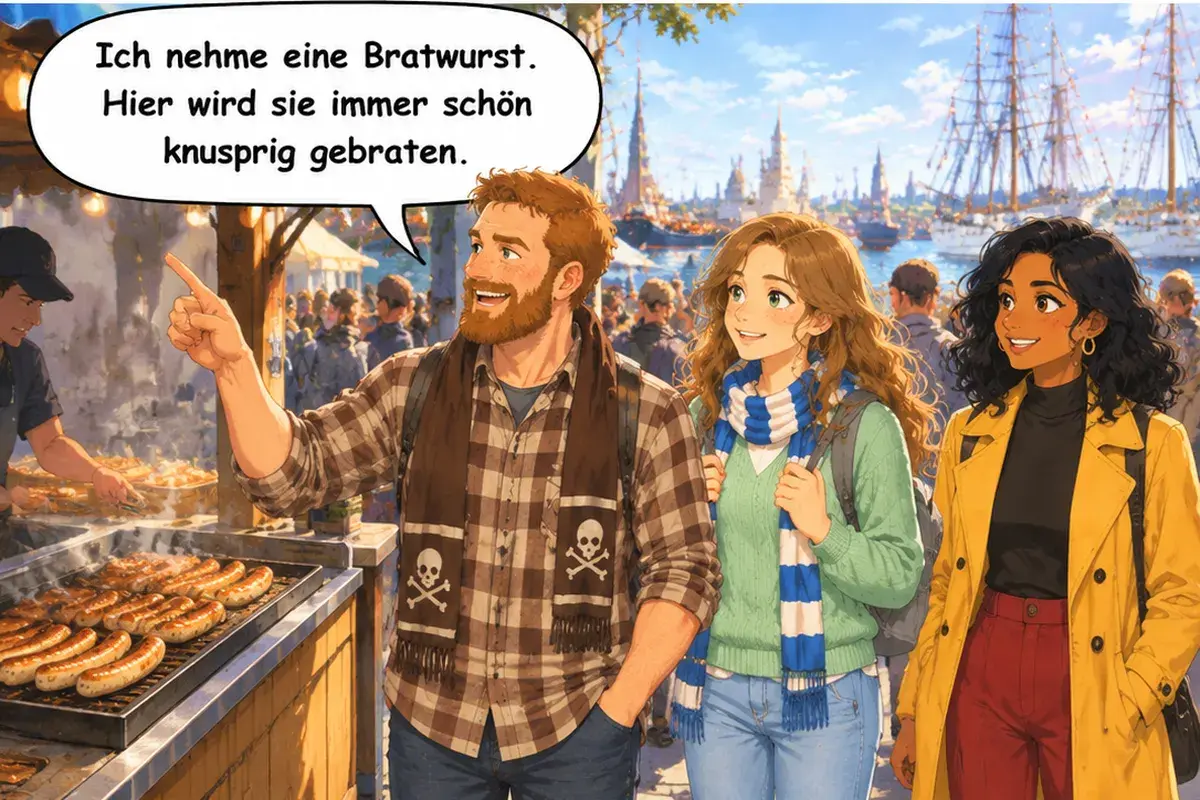
- Tobias
Ich nehme eine Bratwurst. Hier wird sie immer schön knusprig gebraten.
I'll have a bratwurst. Here it's always fried nice and crispy.
Grammar for this text
- Herrliches Wetter für den Hafengeburtstag, oder? — there's no article, so
herrlichtakes the ending itself:-es, likedas(Wetteris neuter).Hafengeburtstagis two words in one,Hafen+Geburtstag: literally "the port's birthday".oder?at the end means "right?". - Bei schönem Wetter kommt eben ganz Hamburg —
beitakes the dative; there's no article, soschöngets-em, likedem.ebenis a particle: "just, that's how it is" (unit 8). - mit einer riesigen Parade —
mittakes the dative:eine→einer, and aftereinerthe adjective takes-en. - wunderschöne alte Segelschiffe — plural with no article: both adjectives get
-e(likedie). Two adjectives in a row always have the same ending. - Die Matrosen winken den Zuschauern —
winkentakes the dative, like English "wave to someone".die Zuschauer→den Zuschauern: in the dative plural, nouns add-n. - hinter mir drängelt jemand —
drängelnmeans "to push, to shove";miris the dative ofich: herehintersays where something is, so it takes the dative. - Hier wird sie immer schön knusprig gebraten — the passive voice (werden + past participle) from unit 5:
wird gebratenmeans "is fried", and it doesn't matter who fries it.sieisdie Bratwurst.gebratenis the past participle ofbraten.schönmakes the next word stronger here:schön knusprig— "nice and crispy".
Words and grammar of the unit: Celebrate the Port Anniversary.
Learn the words from the texts with flashcards
In the app, you can tap any word in a text to see its translation, forms and examples, and new words stick with flashcards. 15 minutes a day.
Start for freeEverything is open for free. No card needed to sign up.