

German dialogue with translation · B1 · 14 lines
Du kannst ruhig langsamer laufen You can go ahead and run slower
Comic · 14 panels
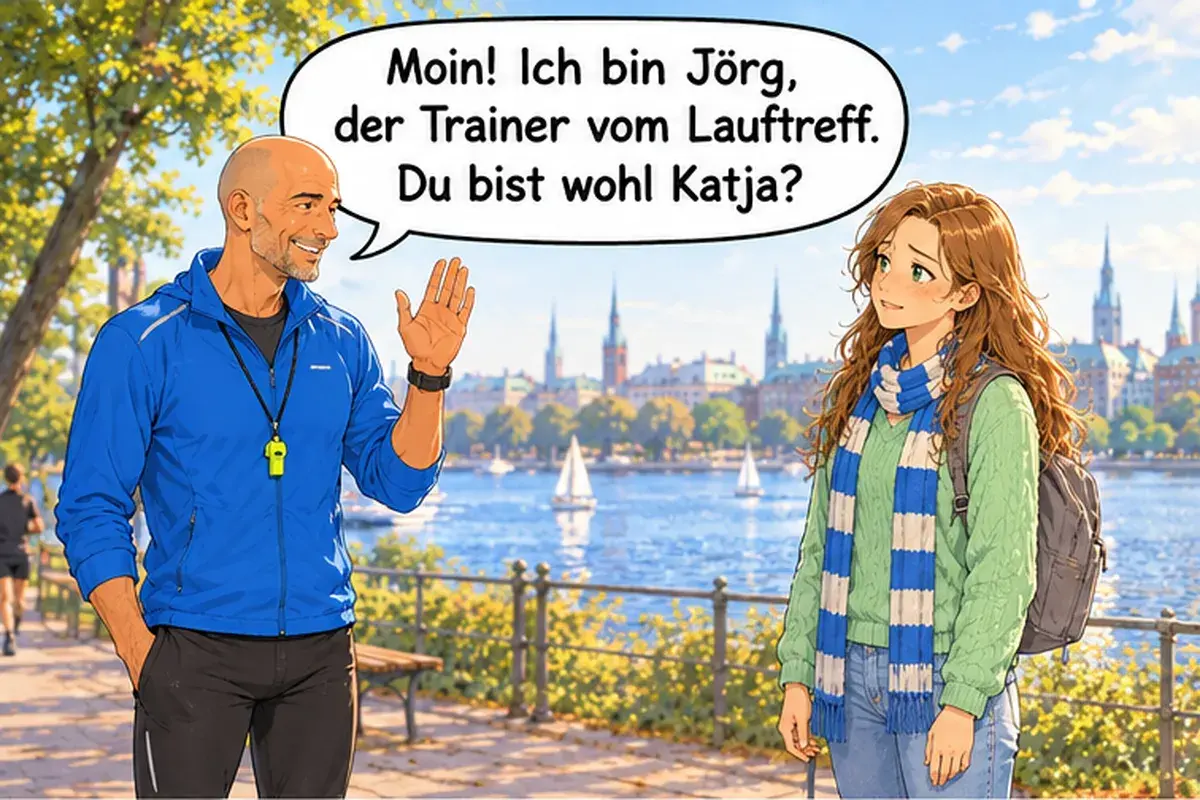
- Jörg
Moin! Ich bin Jörg, der Trainer vom Lauftreff. Du bist wohl Katja?
Hi! I'm Jörg, the coach of the running club. You're probably Katja?
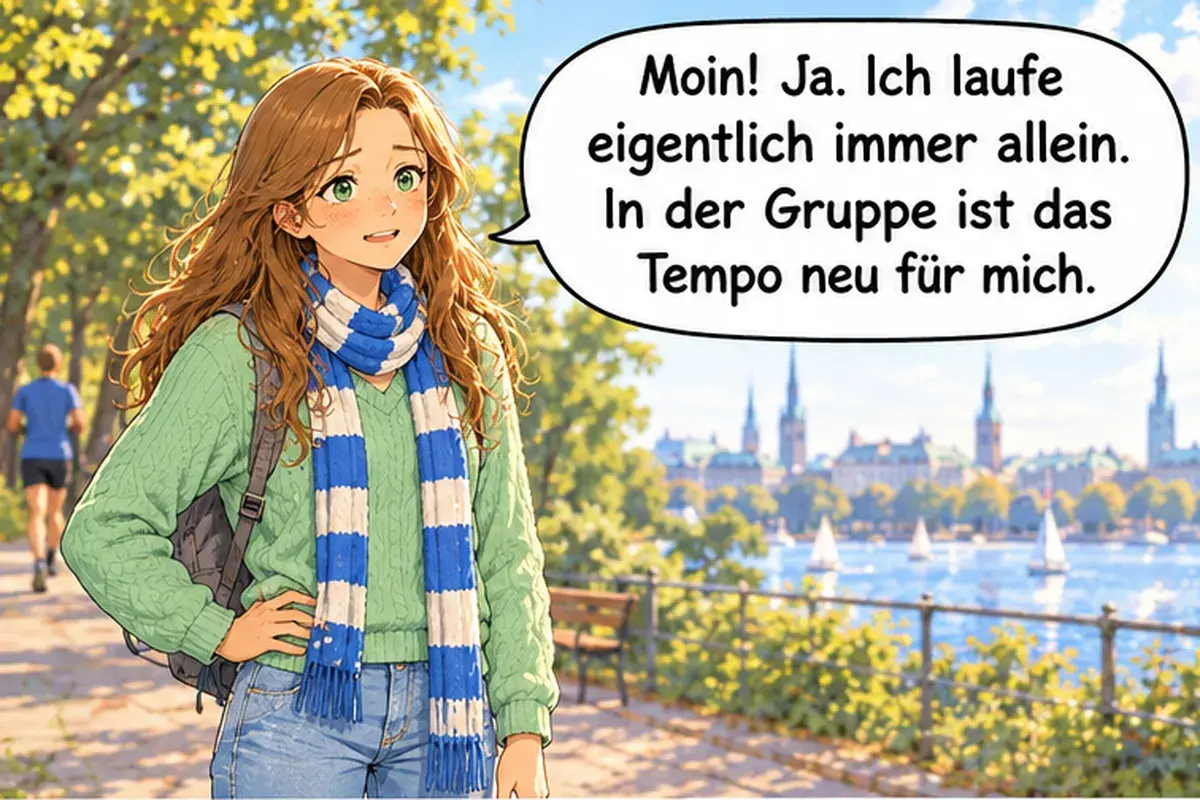
- Katja
Moin! Ja. Ich laufe eigentlich immer allein. In der Gruppe ist das Tempo neu für mich.
Hi! Yes. Actually, I always run alone. In the group, the pace is new to me.
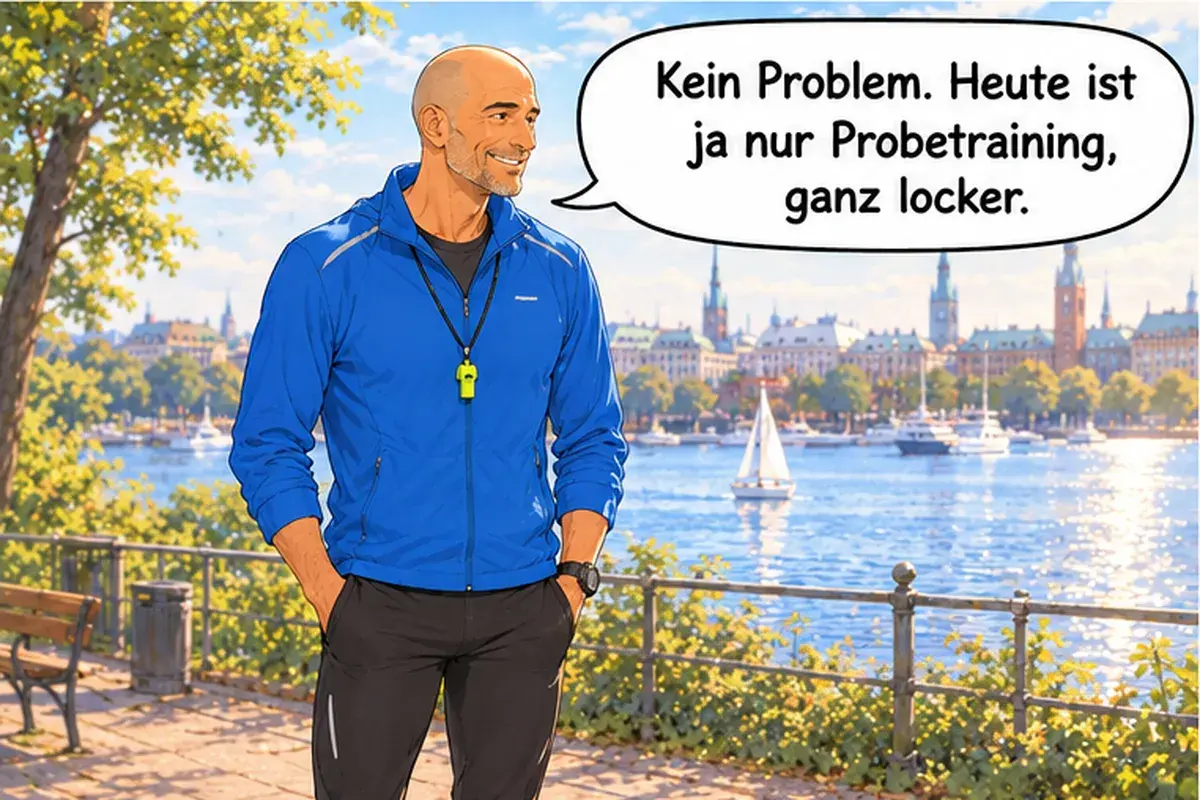
- Jörg
Kein Problem. Heute ist ja nur Probetraining, ganz locker.
No problem. Today is just a trial workout, nice and easy.

- Katja
Laufen wir heute einmal um die Alster herum?
Are we running once around the Alster today?
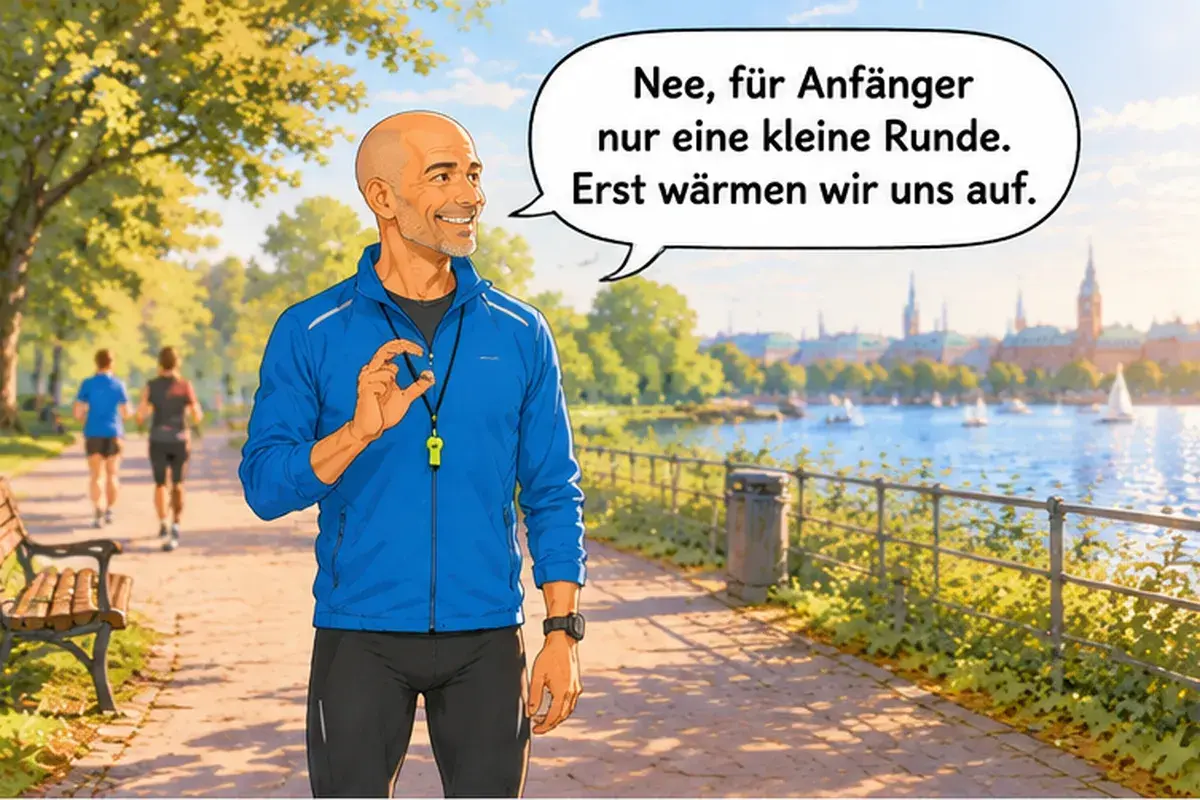
- Jörg
Nee, für Anfänger nur eine kleine Runde. Erst wärmen wir uns auf.
Nope, only a short loop for beginners. First we warm up.

- Katja
Ich bin schon außer Atem. Das Tempo ist zu hoch für mich.
I'm already out of breath. The pace is too high for me.
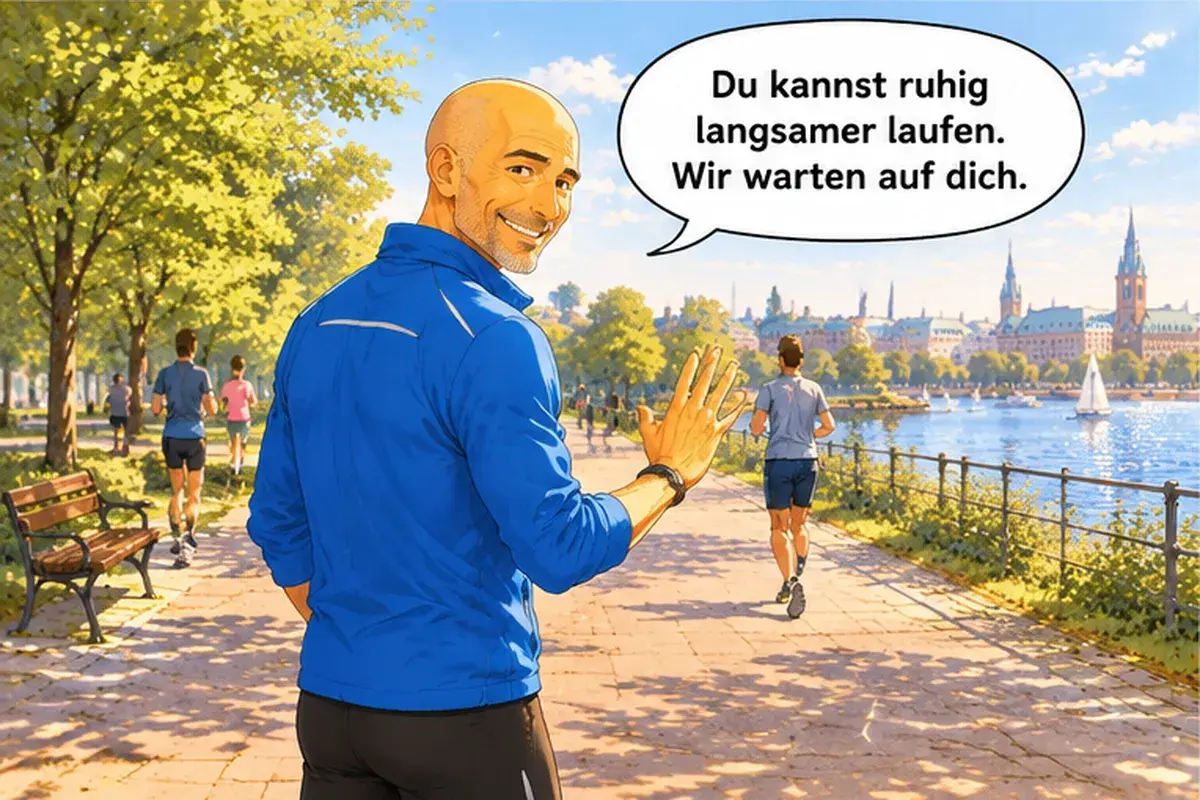
- Jörg
Du kannst ruhig langsamer laufen. Wir warten auf dich.
You can go ahead and run slower. We'll wait for you.

- Katja
Und wenn ich ganz müde bin?
And what if I'm really tired?
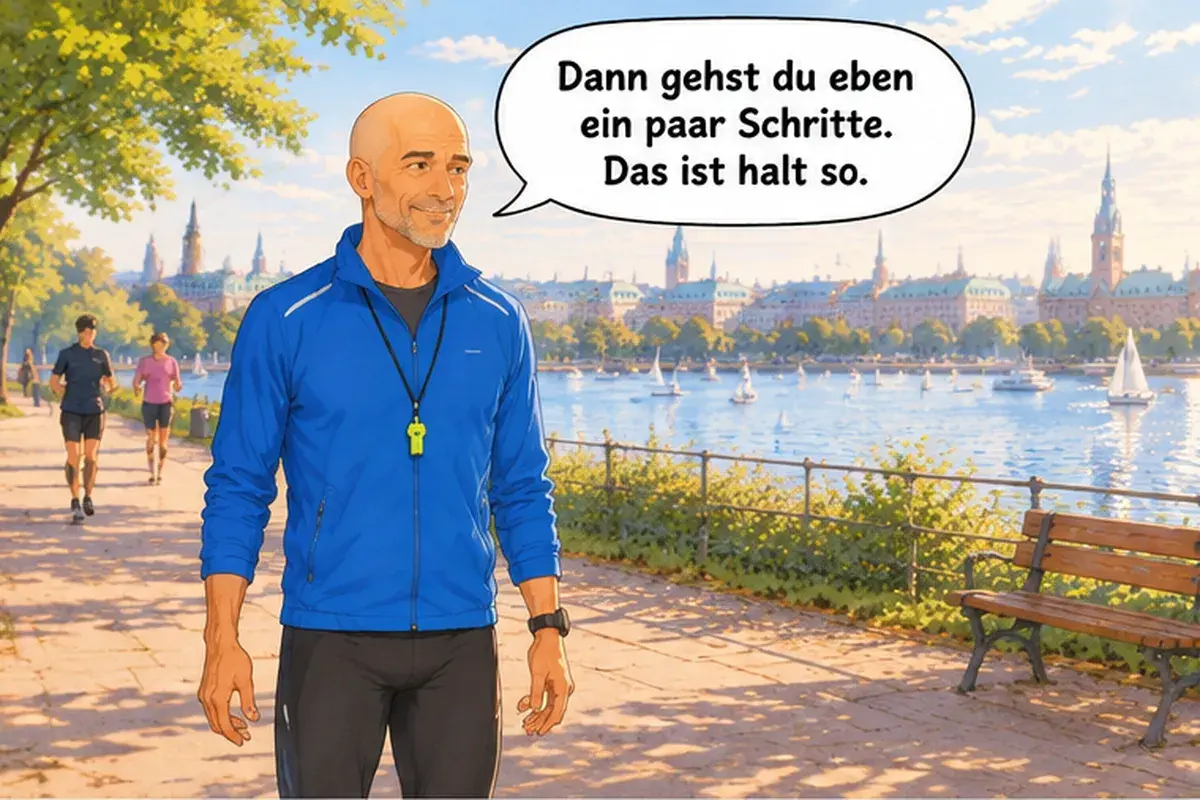
- Jörg
Dann gehst du eben ein paar Schritte. Das ist halt so.
Then you just walk a few steps. That's just how it is.
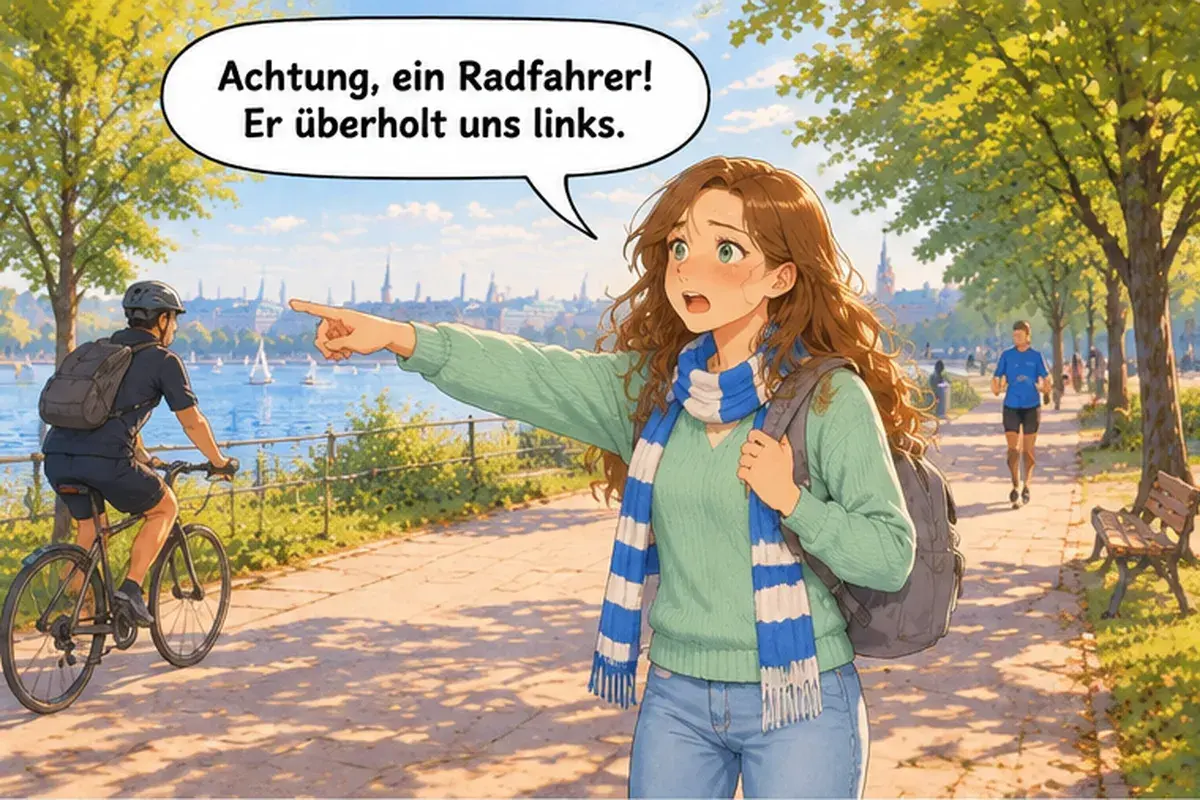
- Katja
Achtung, ein Radfahrer! Er überholt uns links.
Watch out, a cyclist! He's passing us on the left.
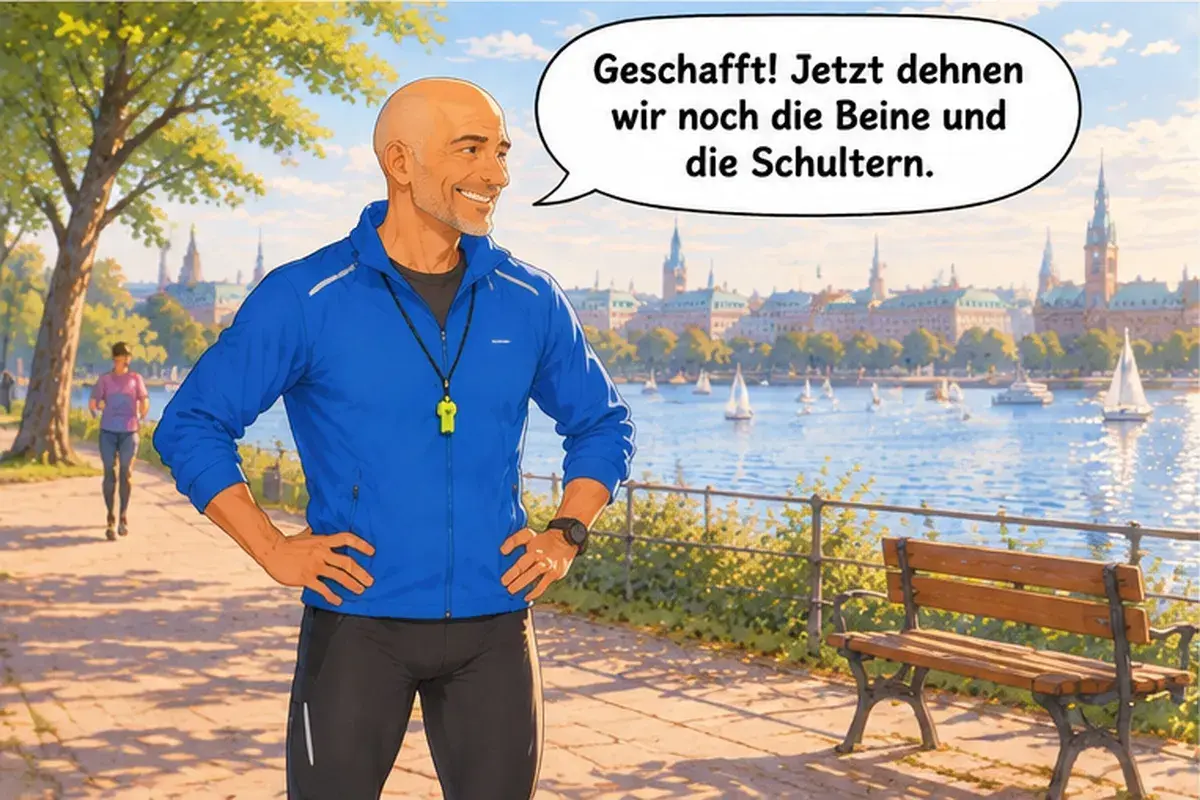
- Jörg
Geschafft! Jetzt dehnen wir noch die Beine und die Schultern.
Made it! Now we'll stretch our legs and shoulders too.

- Katja
Ich schwitze, aber es war gar nicht schlimm.
I'm sweating, but it wasn't bad at all.
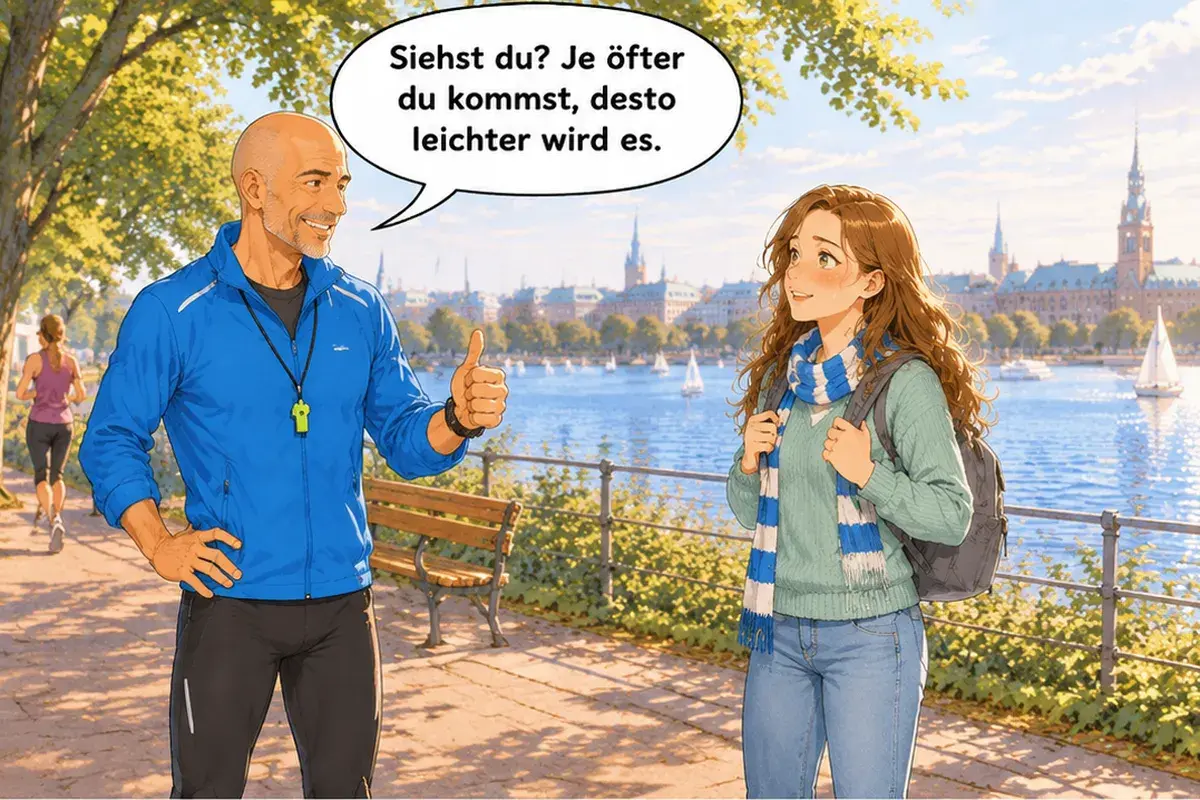
- Jörg
Siehst du? Je öfter du kommst, desto leichter wird es.
See? The more often you come, the easier it gets.
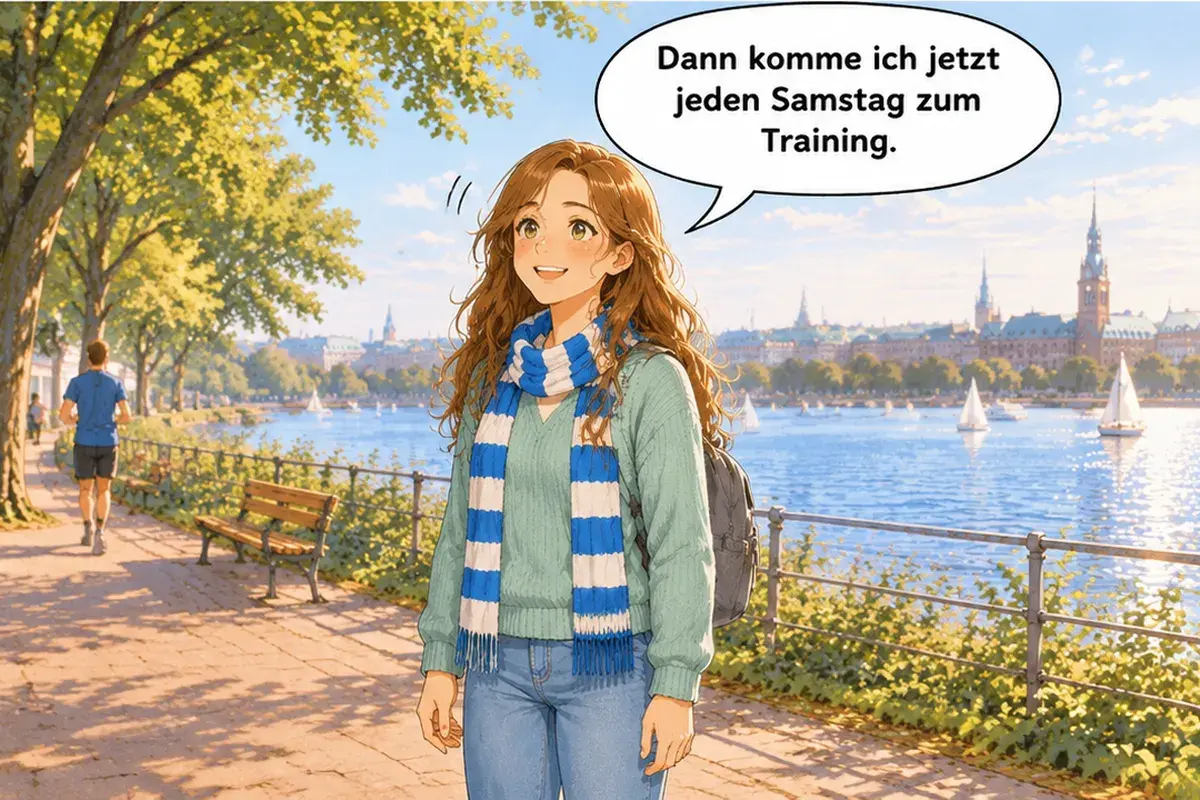
- Katja
Dann komme ich jetzt jeden Samstag zum Training.
Then from now on I'll come to training every Saturday.
Grammar for this text
- Ich laufe eigentlich immer allein — here
eigentlichis a particle meaning "actually": it softens the sentence, as if Katja is explaining why she has doubts. Du bist wohl Katja? —wohlis a guess: Jörg is almost sure, but checks ("you're probably Katja?"). More about particles in the unit grammar. - Erst wärmen wir uns auf —
aufwärmen(to warm up) is separable:wärmenis in second place (first place is taken byerst), the subjectwircomes right after it, and the prefixaufgoes to the very end.unsmeans "ourselves": the verb is reflexive. English just says "we warm up". - Nee, für Anfänger nur eine kleine Runde —
neeis a casual "no" ("nope"), only for people you sayduto.eine kleine Runde— "a short loop";kleinegets its ending because ofeine.Anfänger— "beginners". - Ich bin schon außer Atem — a set phrase:
außer Atem sein— "to be out of breath", just like in English.Atem(breath) is a noun, so it has a capital letter. - Wir warten auf dich —
warten auf+ accusative (unit 3): "to wait for someone".dich— "you", the object form, like "him" next to "he". - Er überholt uns links —
überholen(to pass) doesn't split: hereüberis an inseparable prefix, soüberholtstays in one piece.links— "on the left". - Je öfter du kommst, desto leichter wird es — in the first part the verb
kommstgoes to the end; in the second,wirdcomes right afterdesto leichter. More in the unit grammar.
Words and grammar of the unit: Join a running club.
Learn the words from the texts with flashcards
In the app, you can tap any word in a text to see its translation, forms and examples, and new words stick with flashcards. 15 minutes a day.
Start for freeEverything is open for free. No card needed to sign up.