

German dialogue with translation · A2 · 14 lines
Kann ich den nächsten Zug nehmen? Can I take the next train?
Comic · 14 panels
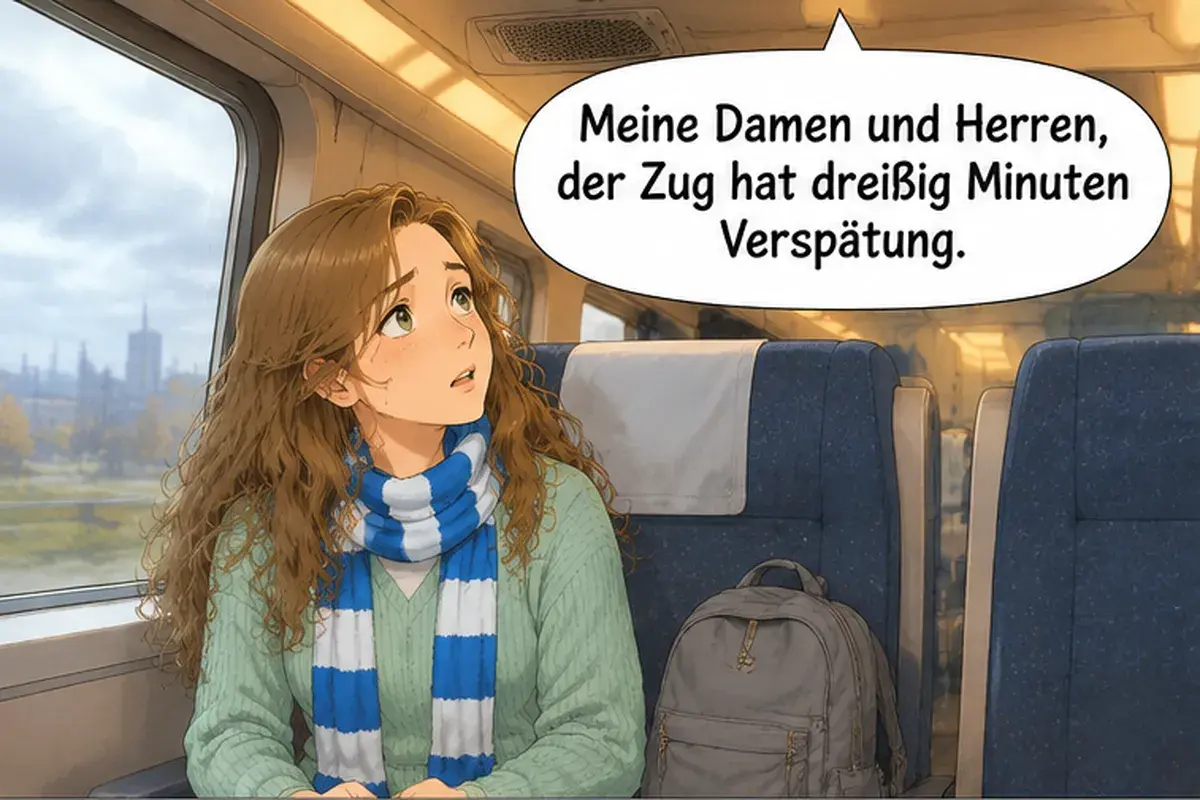
- Durchsage
Meine Damen und Herren, der Zug hat dreißig Minuten Verspätung.
Ladies and gentlemen, the train is thirty minutes late.
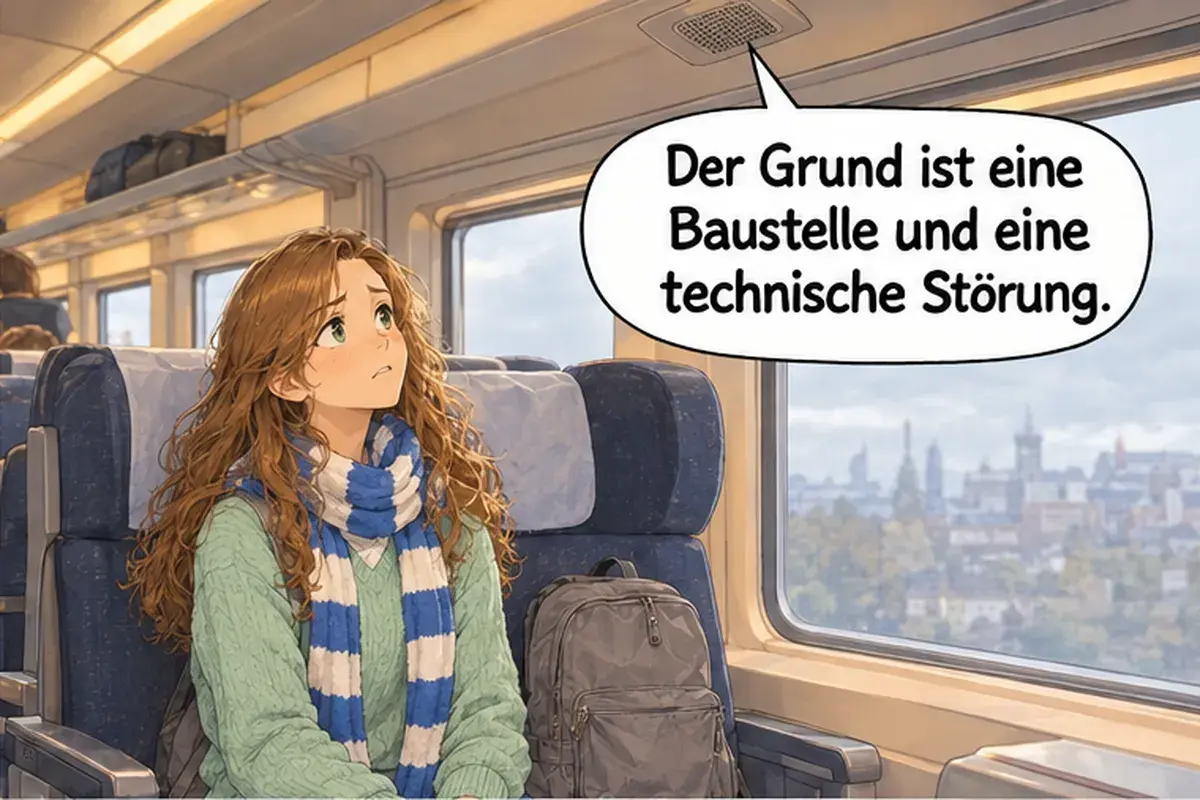
- Durchsage
Der Grund ist eine Baustelle und eine technische Störung.
The reason is a construction site and a technical malfunction.
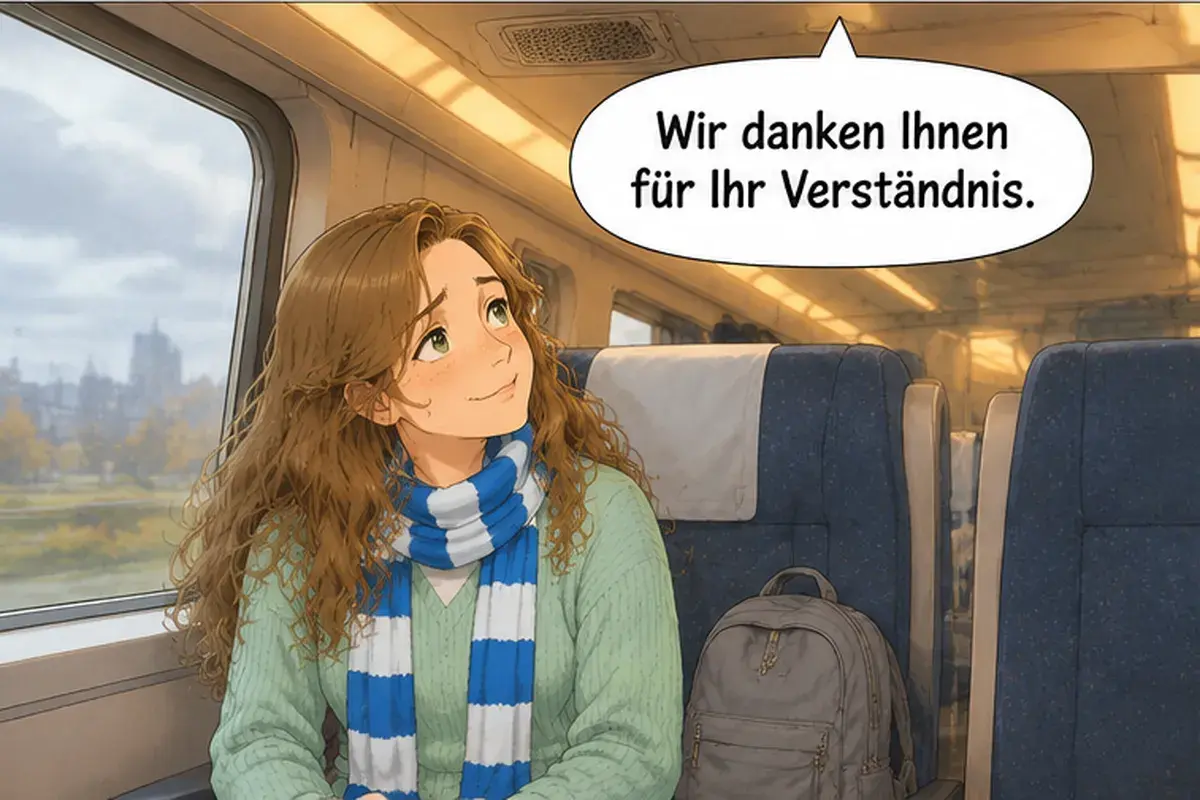
- Durchsage
Wir danken Ihnen für Ihr Verständnis.
We thank you for your understanding. (formal)
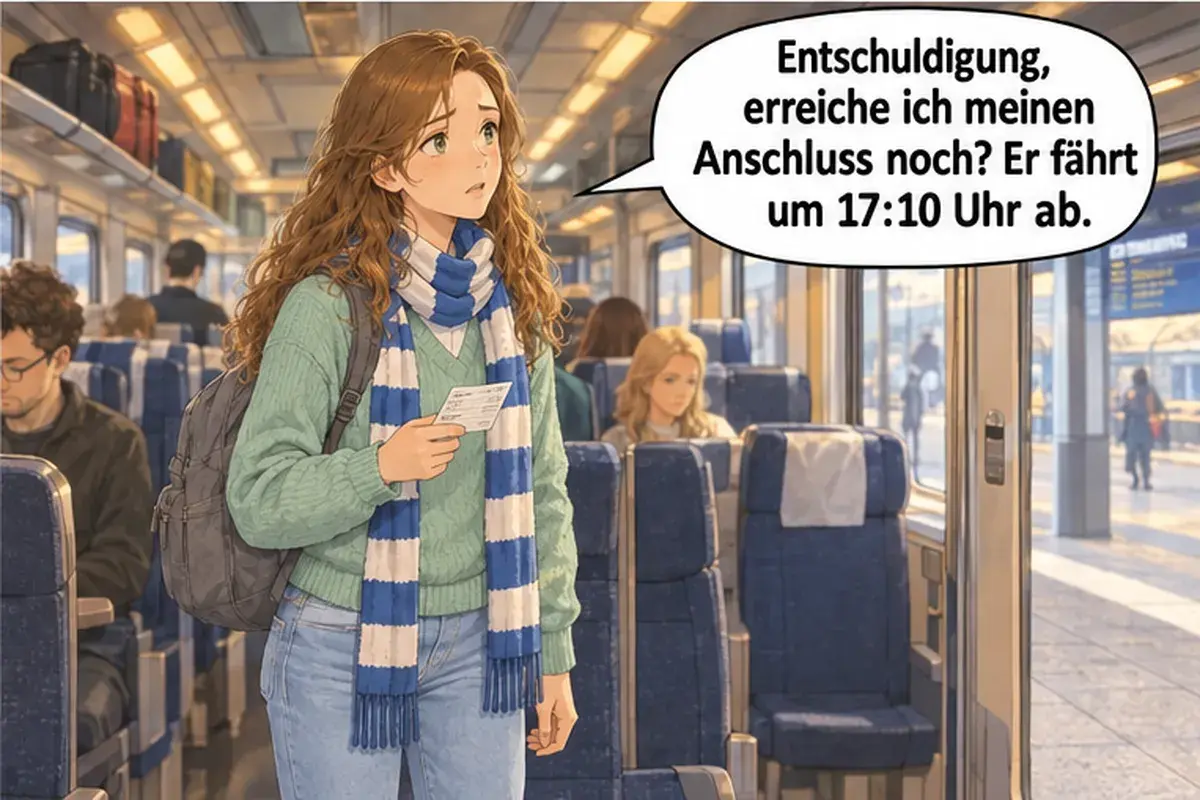
- Katja
Entschuldigung, erreiche ich meinen Anschluss noch? Er fährt um 17:10 Uhr ab.
Excuse me, will I still make my connection? It leaves at 17:10.
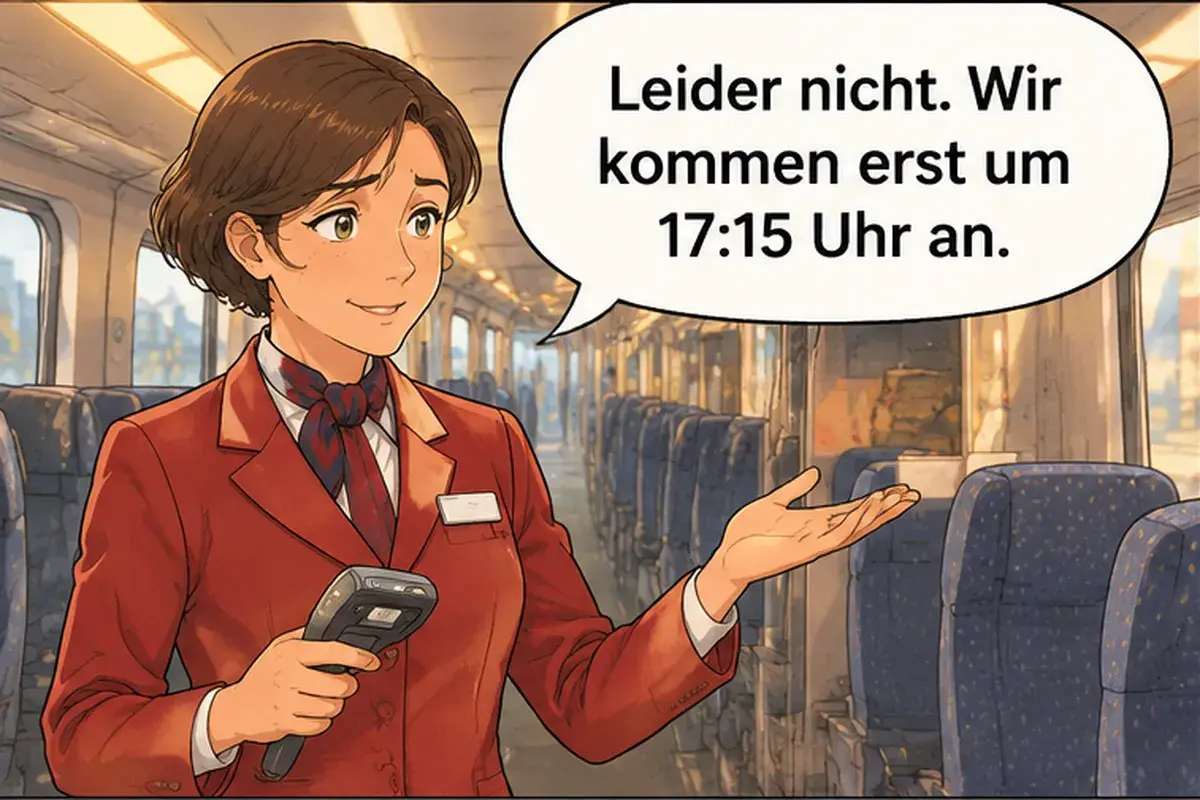
- Zugbegleiterin
Leider nicht. Wir kommen erst um 17:15 Uhr an.
I'm afraid not. We don't arrive until 17:15.

- Katja
Ich habe einen Sparpreis. Kann ich den nächsten Zug nehmen?
I have a saver fare. Can I take the next train?
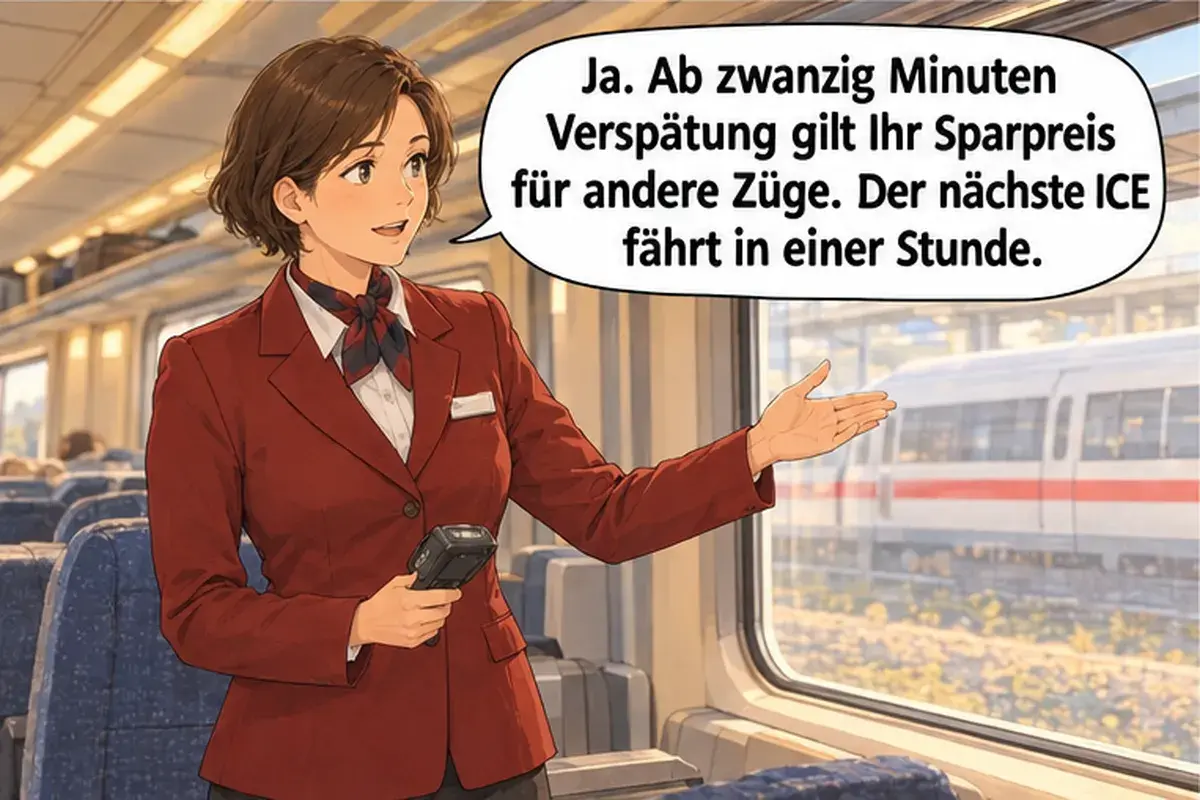
- Zugbegleiterin
Ja. Ab zwanzig Minuten Verspätung gilt Ihr Sparpreis für andere Züge. Der nächste ICE fährt in einer Stunde.
Yes. With a delay of twenty minutes or more, your saver fare is valid on other trains. (formal) The next ICE leaves in an hour.

- Durchsage
Liebe Fahrgäste, dieser Zug endet hier.
Dear passengers, this train ends here.
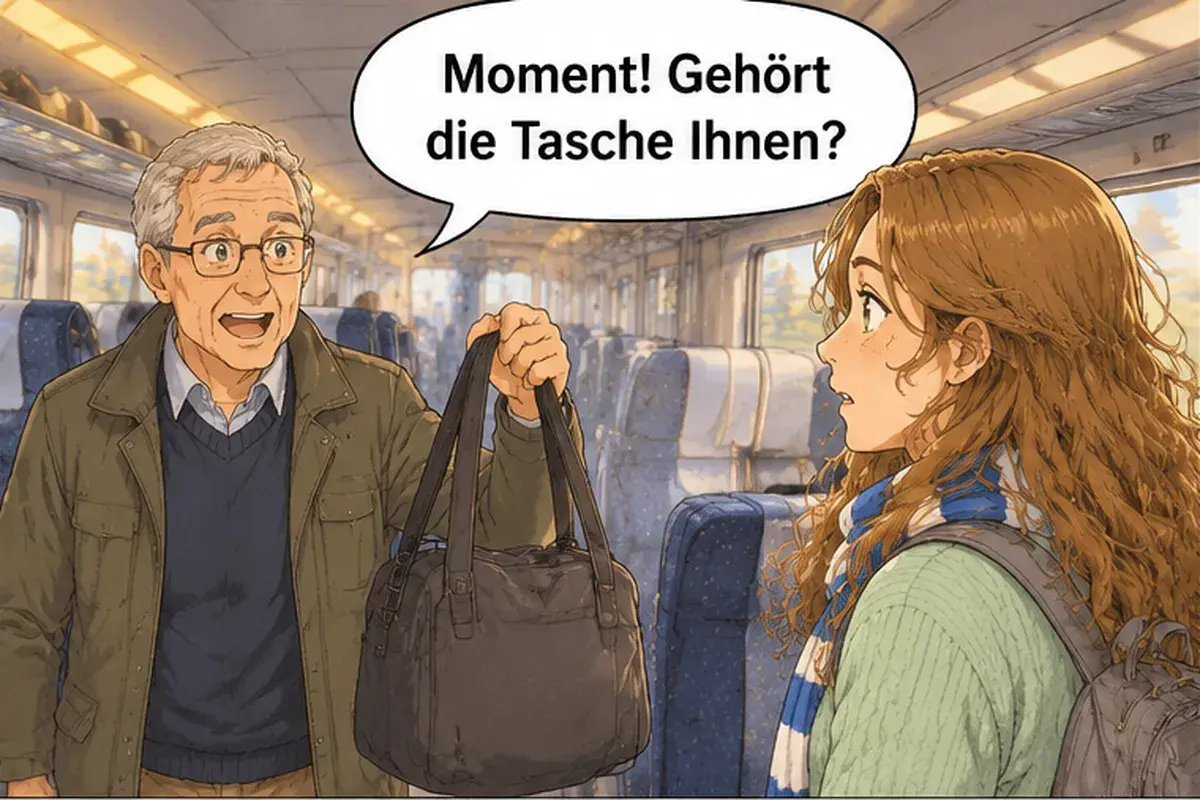
- Mann
Moment! Gehört die Tasche Ihnen?
Just a moment! Does the bag belong to you? (formal)
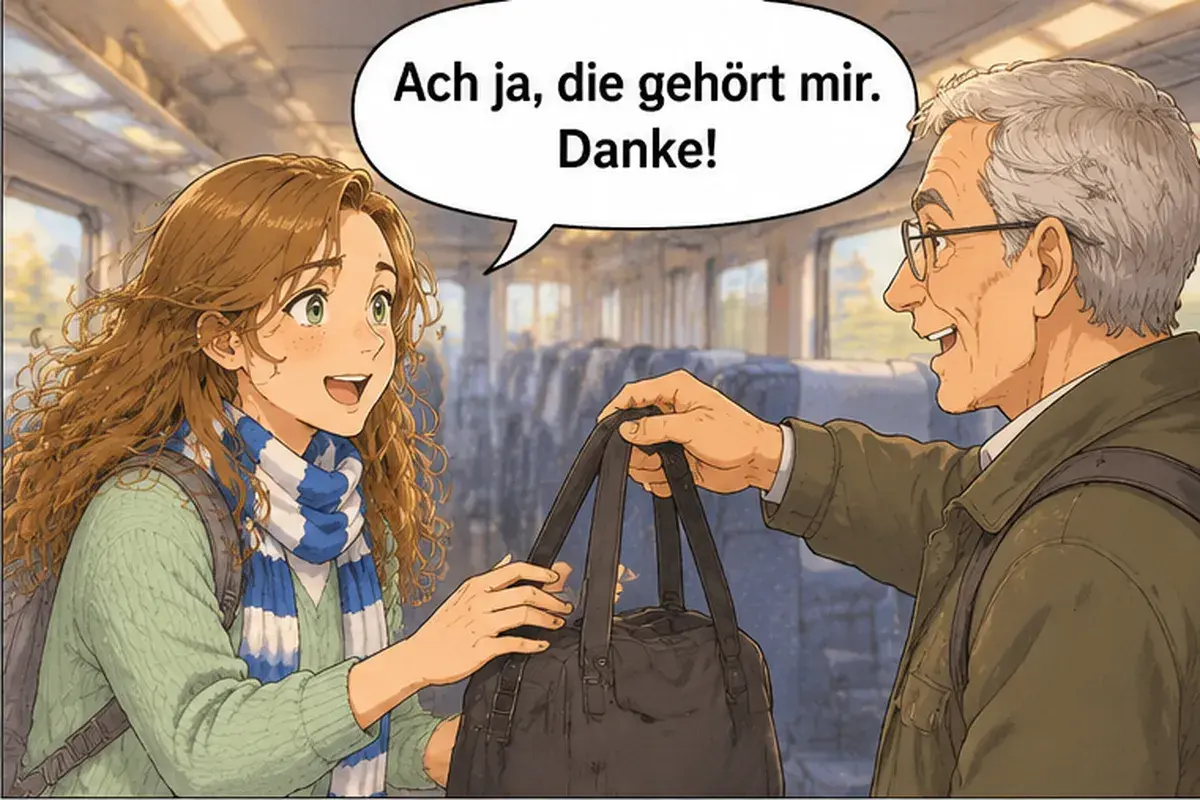
- Katja
Ach ja, die gehört mir. Danke!
Oh yes, it belongs to me. Thanks!

- Durchsage
Gleiswechsel: Der ICE nach München um 18:15 Uhr fährt heute auf Gleis 12 ein.
Track change: the ICE to Munich at 18:15 is arriving on track 12 today.
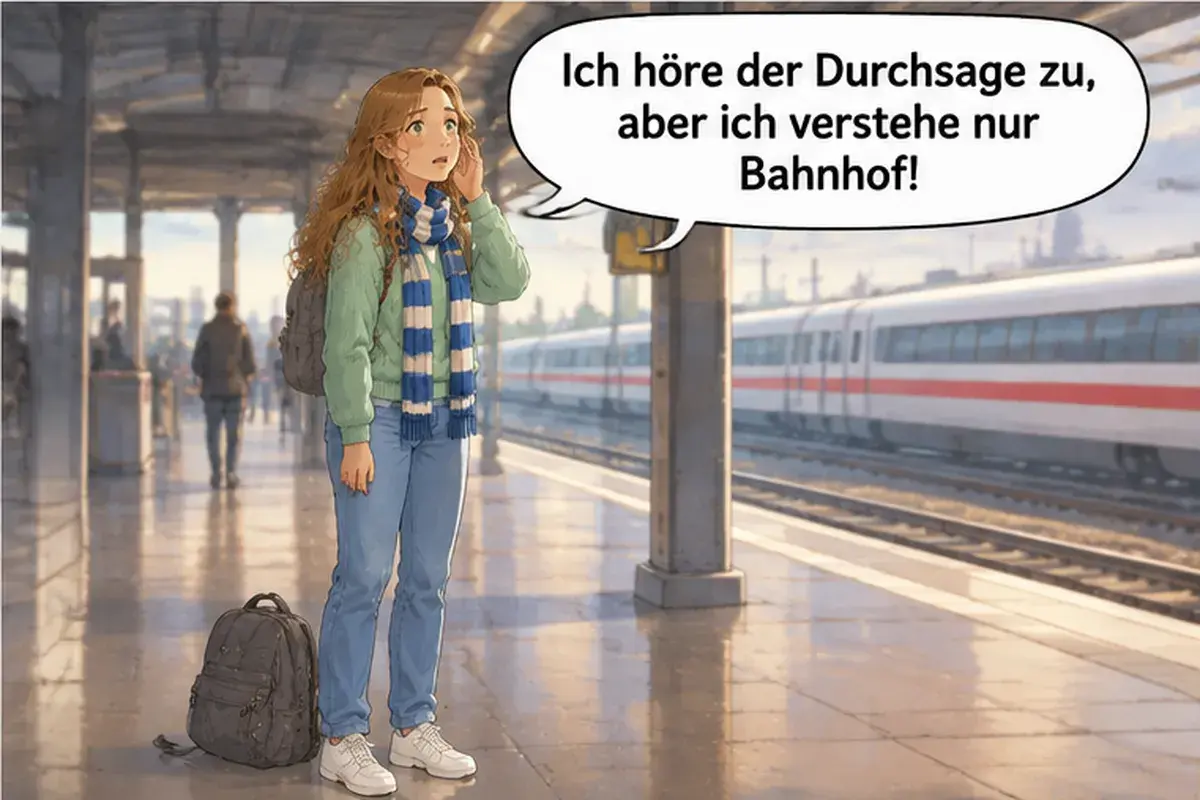
- Katja
Ich höre der Durchsage zu, aber ich verstehe nur Bahnhof!
I'm listening to the announcement, but it's all Greek to me!
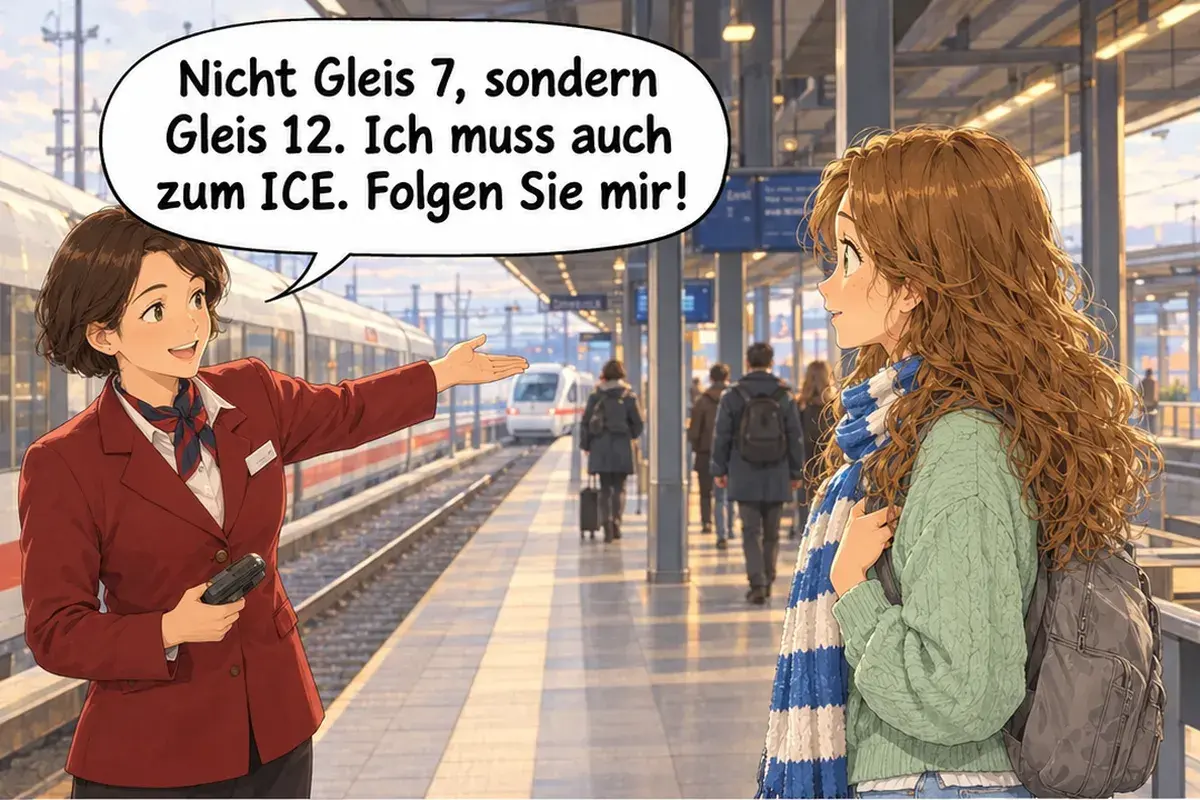
- Zugbegleiterin
Nicht Gleis 7, sondern Gleis 12. Ich muss auch zum ICE. Folgen Sie mir!
Not track 7, but track 12. I have to get to the ICE too. Follow me! (formal)

- Katja
Vielen Dank! Sie helfen mir sehr.
Thank you very much! You're helping me a lot. (formal)
Grammar for this text
- Wir danken Ihnen für Ihr Verständnis. —
danken(to thank) takes the dative:Ihnen, "you" (formal). English says "thank you" with no change, but in German the person you thank is in the dative. - Entschuldigung, erreiche ich meinen Anschluss noch? Er fährt um 17:10 Uhr ab. —
erreichenhere means "to make, to catch" (a train).Eris the connection:der Anschlussis masculine, so "it" iser.fährt … abisabfahren(to leave):a → äiner fährt(A1, unit 4), and the prefixabgoes to the end. - Kann ich den nächsten Zug nehmen? — a ready-made phrase: "Can I take the next train?" The ending
-eninnächstenand-eintechnische(eine technische Störung) come in unit 13; for now, learn these phrases as a whole. - Ab zwanzig Minuten Verspätung gilt Ihr Sparpreis für andere Züge. —
giltis the er / sie / es form ofgelten(to be valid): the stem changese → i, likeessen → isst.Zügeis the plural ofZug:u → ü. ASparpreis(saver fare) is a cheap ticket for one train only; after a long delay you may take another one.in einer Stundemeans "in an hour": dative afterin(unit 3). - Moment! Gehört die Tasche Ihnen? —
gehörtcomes fromgehören(to belong). The owner is in the dative:Ihnen,mir(die gehört mir). English has the same idea: "belong to you". - Ich höre der Durchsage zu, aber ich verstehe nur Bahnhof! —
zuhören(to listen to):höre … zu, with the prefix at the end. What you listen to is in the dative:die Durchsagebecomesder Durchsage.Ich verstehe nur Bahnhofis a saying, word for word "I only understand 'train station'", meaning "it's all Greek to me". - Nicht Gleis 7, sondern Gleis 12. Ich muss auch zum ICE. Folgen Sie mir! —
sondernmeans "but" afternicht.zum=zu+dem(dative, unit 3).Folgen Sie mir!is the Sie command (A1, unit 8);folgen(to follow) takes the dative:mir.
Words and grammar of the unit: Handle a train delay.
Learn the words from the texts with flashcards
In the app, you can tap any word in a text to see its translation, forms and examples, and new words stick with flashcards. 15 minutes a day.
Start for freeEverything is open for free. No card needed to sign up.