

German dialogue with translation · A2 · 14 lines
Ist es heute voll? Is it crowded today?
Comic · 14 panels

- Katja
Moin! Ein Ticket für die Plaza, bitte. Ist es heute voll?
Hi! One ticket for the Plaza, please. Is it crowded today?
- Mitarbeiterin
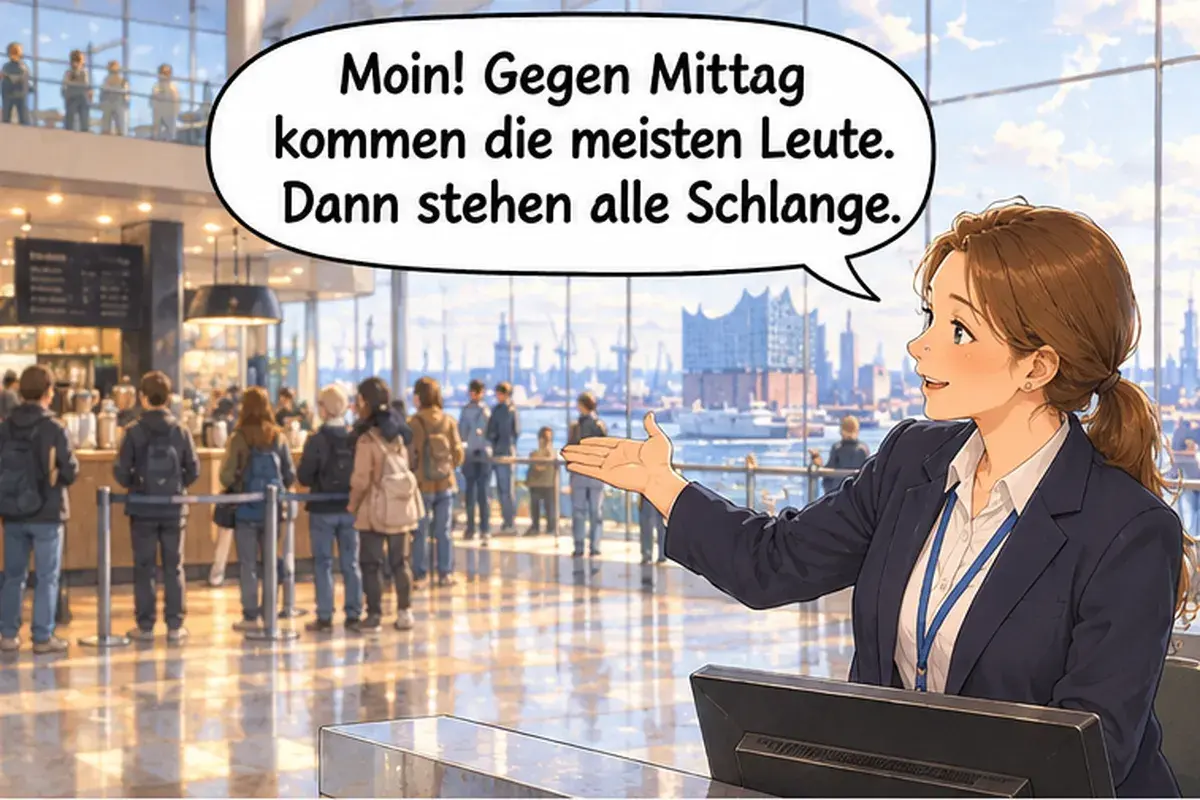
Moin! Gegen Mittag kommen die meisten Leute. Dann stehen alle Schlange.
Hi! Most people come around noon. Then everyone stands in line.

- Katja
Dann am Vormittag. Erst ein Kaffee: Ich bin seit vier wach!
Then in the morning. Coffee first: I've been awake since four!
- Mitarbeiterin
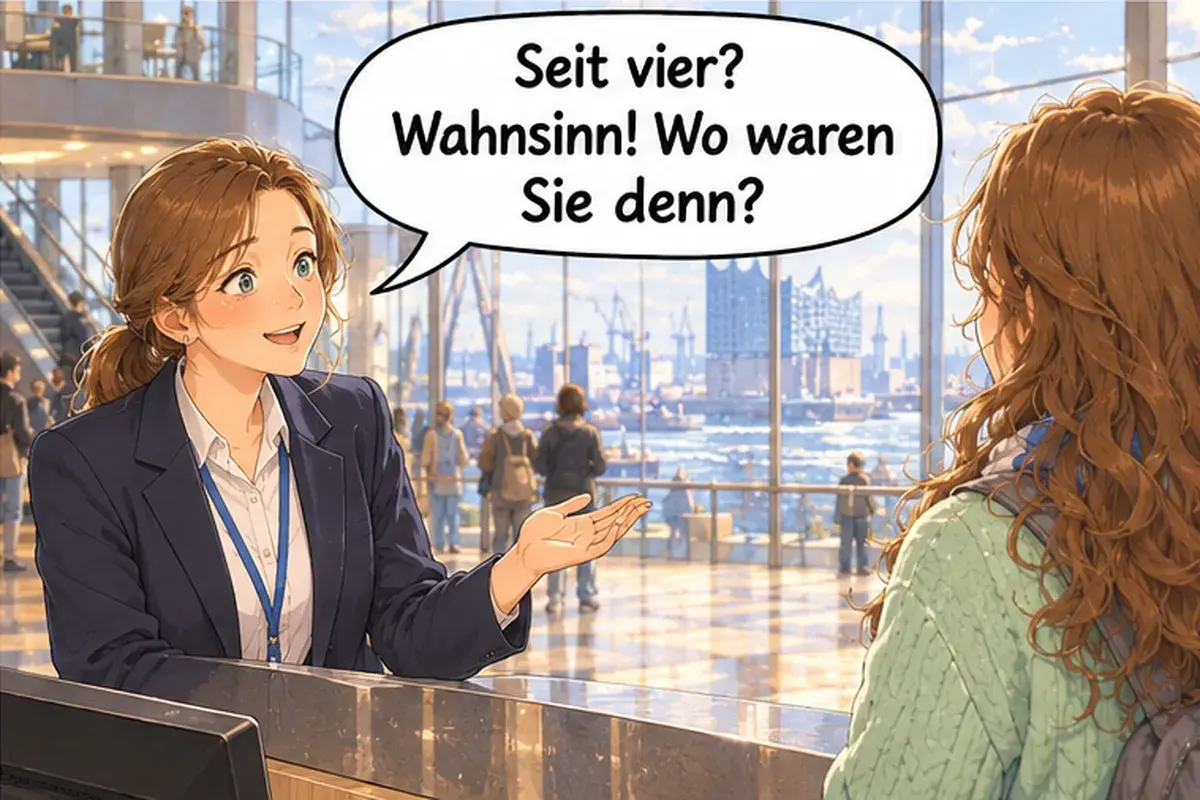
Seit vier? Wahnsinn! Wo waren Sie denn?
Since four? Crazy! So where were you? (formal)

- Katja
Auf dem Fischmarkt! Ich habe den Wecker auf vier Uhr gestellt.
At the fish market! I set the alarm clock for four o'clock.
- Mitarbeiterin
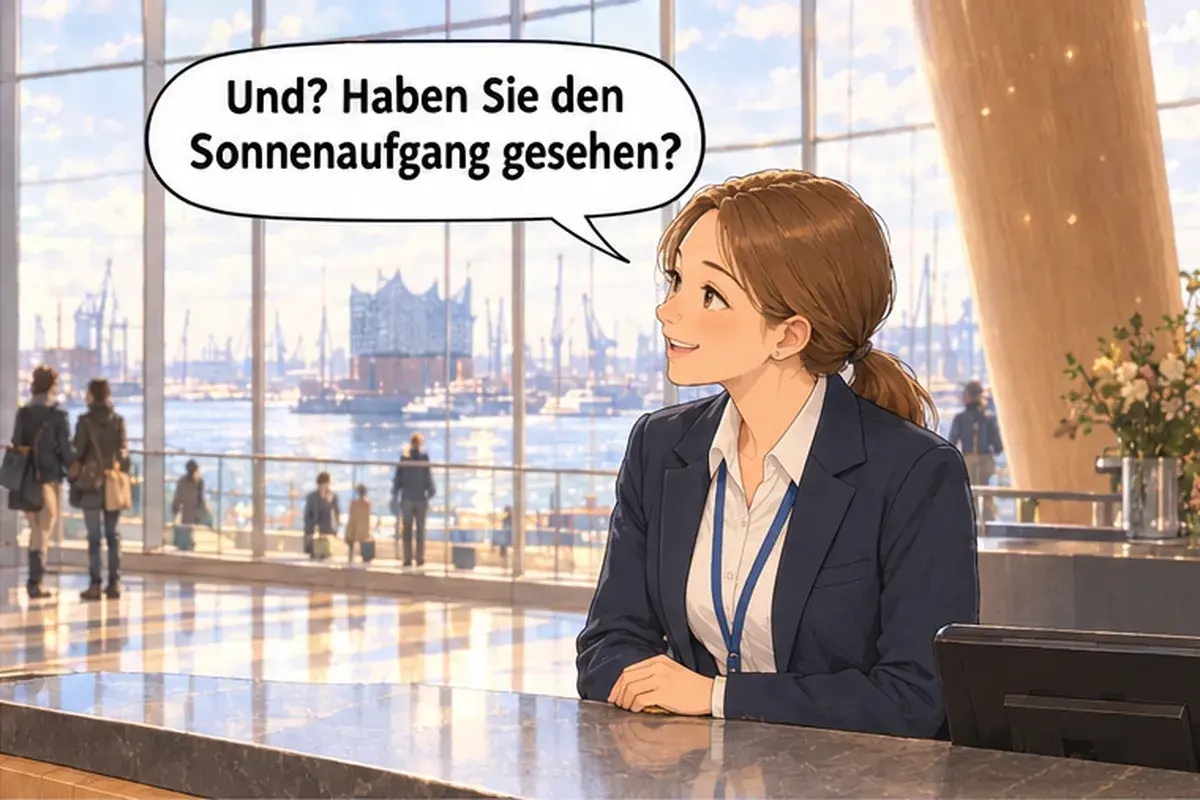
Und? Haben Sie den Sonnenaufgang gesehen?
And? Did you see the sunrise? (formal)

- Katja
Leider nicht. Der Nebel war ziemlich stark.
Unfortunately not. The fog was pretty heavy.
- Mitarbeiterin
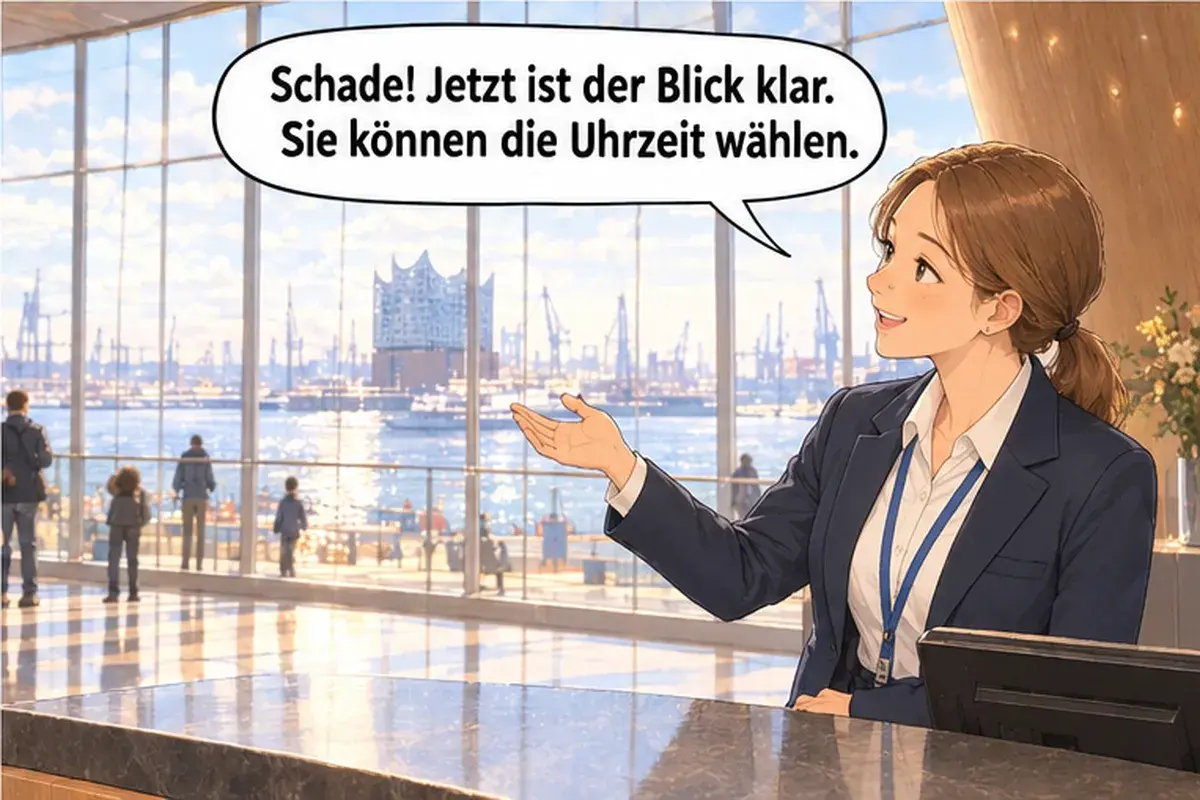
Schade! Jetzt ist der Blick klar. Sie können die Uhrzeit wählen.
Too bad! Now the view is clear. You can choose the time. (formal)

- Katja
Elf Uhr, bitte. Gibt es auch Tickets für ein Konzert?
Eleven o'clock, please. Are there tickets for a concert too?
- Mitarbeiterin
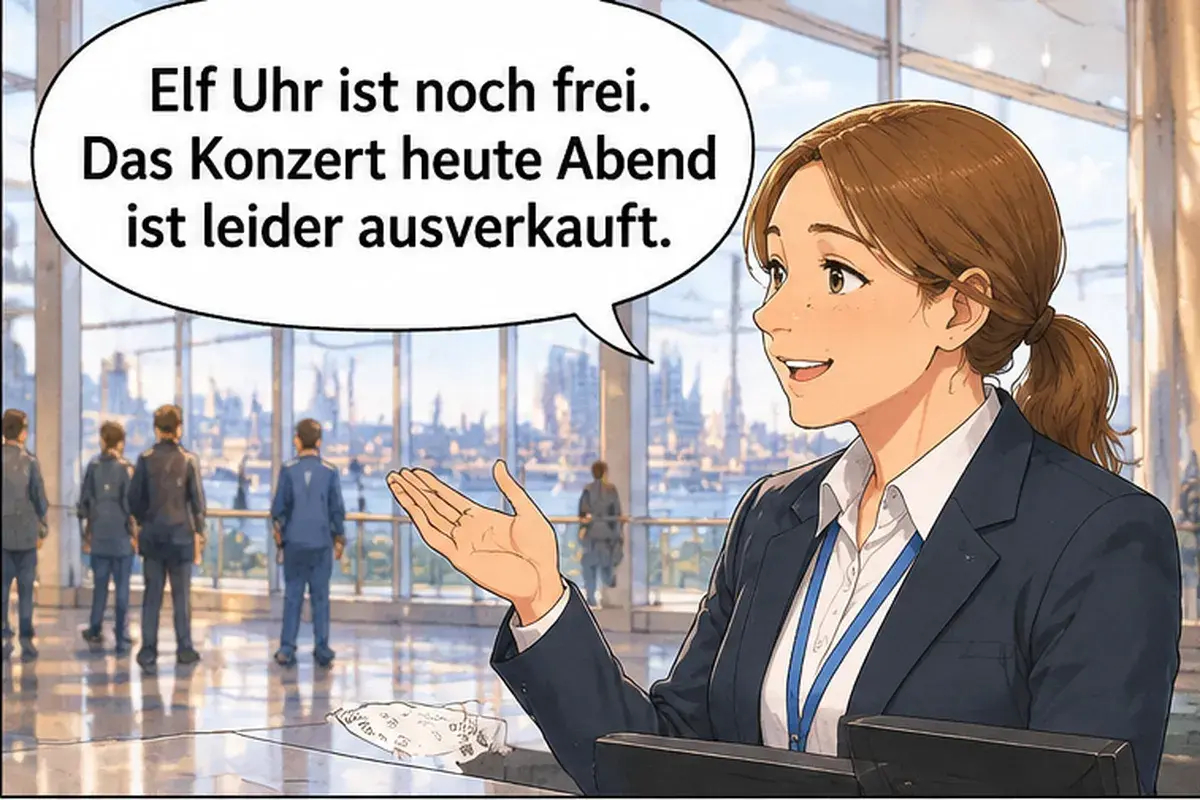
Elf Uhr ist noch frei. Das Konzert heute Abend ist leider ausverkauft.
Eleven o'clock is still available. Unfortunately, the concert tonight is sold out.

- Katja
Schade! Dann nur die Plaza. Kann ich mit Karte zahlen?
Too bad! Then just the Plaza. Can I pay by card?

- Mitarbeiterin
Ja, gern. Hier ist Ihr Ticket. Die Rolltreppe ist links.
Yes, of course. Here's your ticket. The escalator is on the left. (formal)
- Katja
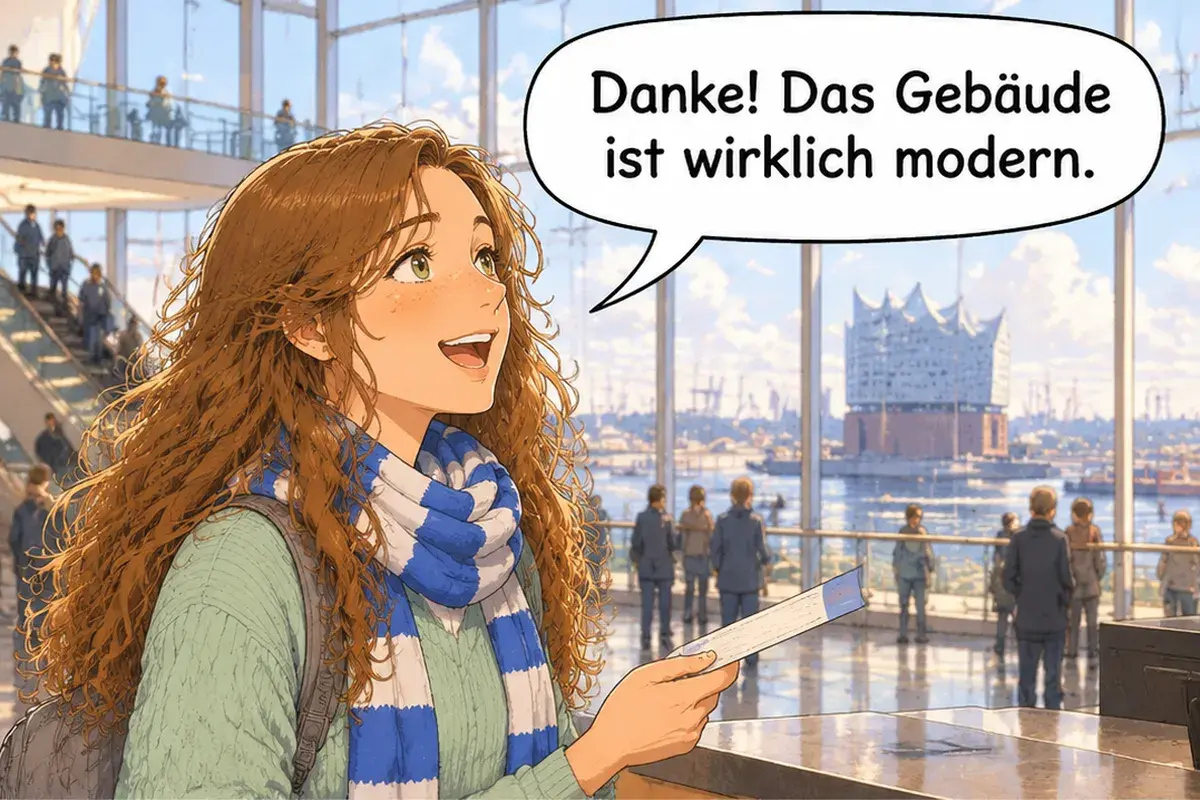
Danke! Das Gebäude ist wirklich modern.
Thanks! The building is really modern.

- Mitarbeiterin
Stimmt! Viel Spaß!
True! Have fun!
Grammar for this text
- Ist es heute voll? — "Is it crowded today?" Word for word: "is it full today?".
voll— full, crowded: you ask this about a museum, a café or a train. - Gegen Mittag kommen die meisten Leute — with time,
gegenmeans "around" (gegen Mittag,gegen zehn).die meisten Leute— most people:viel — mehr — am meisten, but before a noun it'sdie meisten, notam meisten. Dann stehen alle Schlange —Schlange stehen— to stand in line, with no article beforeSchlange. - Ich bin seit vier wach —
seit vier— since four and still now, so German uses the present tense:bin … wach. English says "I've been awake since four". - Wo waren Sie denn? —
waren— were: the past ofseinforSie,wirandsie(you knowwarfromWie war's?; more in unit 11).dennmakes the question softer and friendlier, like English "so": So where were you? - Auf dem Fischmarkt! — a short answer to "where were you?"; the full answer is
Ich war auf dem Fischmarkt. Afterauf, when you say where something is, comes the dative (unit 3):der Fischmarkt→dem Fischmarkt. "Where" and "where to" in detail — unit 8. - Haben Sie den Sonnenaufgang gesehen? — the Perfekt (spoken past):
habenand the past participlegesehenat the end (irregular, fromsehen).denis the accusative:der Sonnenaufgangis masculine. - Der Nebel war ziemlich stark —
war— was, the er / sie / es form ofseinin the past.starkabout fog — thick, heavy. Kann ich mit Karte zahlen? — the frameKann ich …?(can I …?): the second verb goes to the end.
Words and grammar of the unit: Compare and choose.
Learn the words from the texts with flashcards
In the app, you can tap any word in a text to see its translation, forms and examples, and new words stick with flashcards. 15 minutes a day.
Start for freeEverything is open for free. No card needed to sign up.