

German dialogue with translation · A2 · 14 lines
Der hier ist größer als der da This one is bigger than that one
Comic · 14 panels
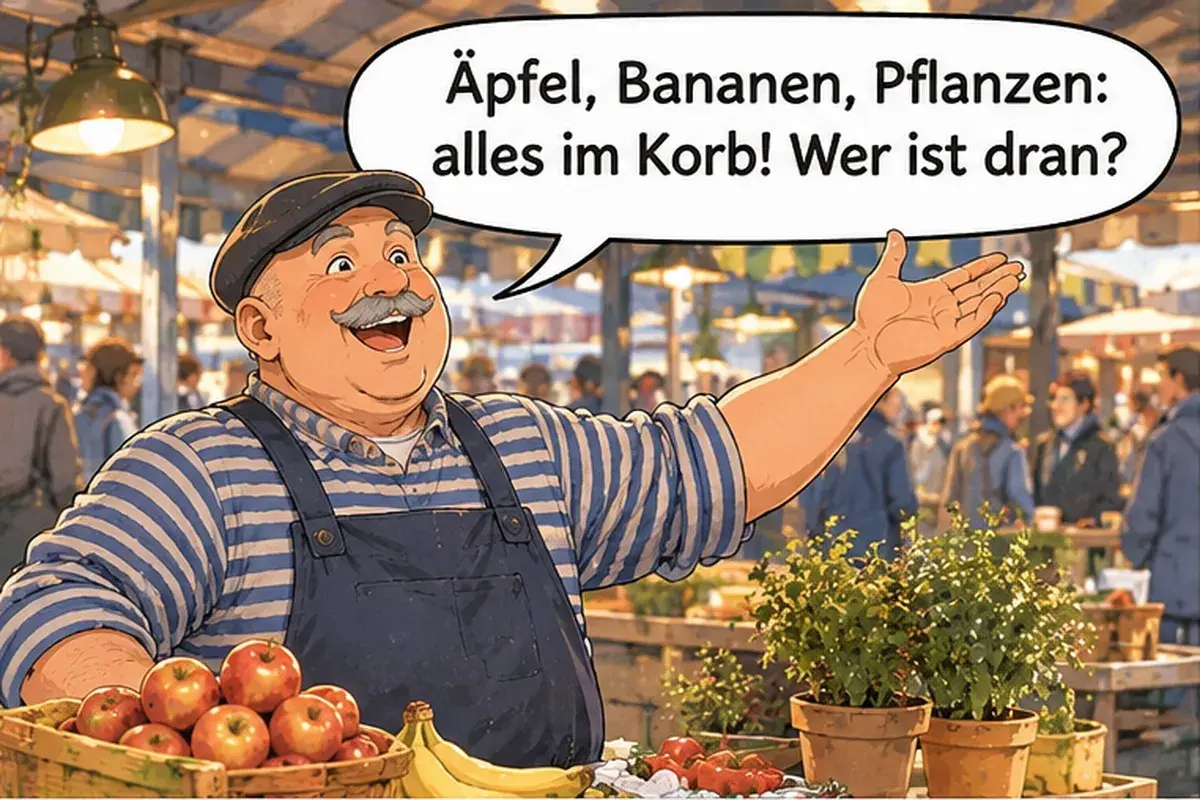
- Verkäufer
Äpfel, Bananen, Pflanzen: alles im Korb! Wer ist dran?
Apples, bananas, plants: all in the basket! Whose turn is it?

- Katja
Moin! Der Fischmarkt ist ziemlich laut. Alle Händler rufen!
Hi! The fish market is pretty loud. All the vendors are shouting!

- Verkäuferin
Moin! Die Marktschreier sind noch lauter. Was darf es sein?
Hi! The market criers are even louder. What can I get you?
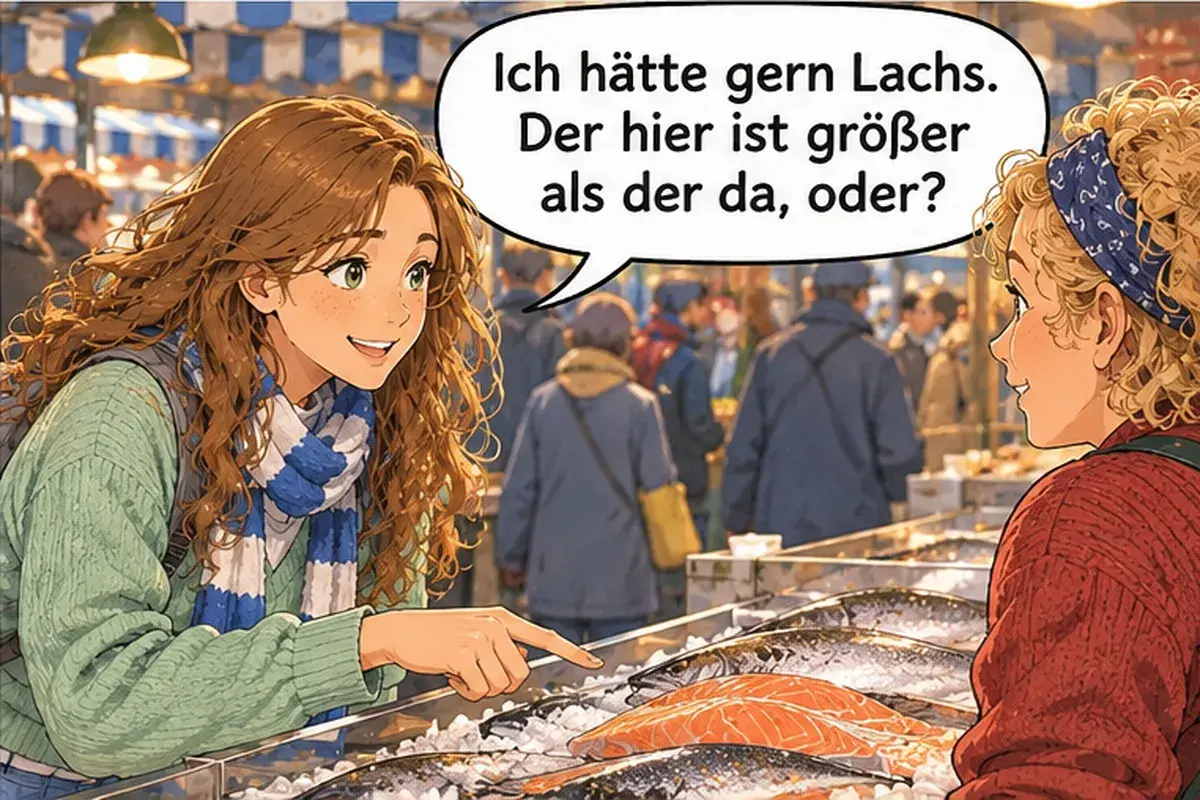
- Katja
Ich hätte gern Lachs. Der hier ist größer als der da, oder?
I'd like some salmon. This one is bigger than that one, right?
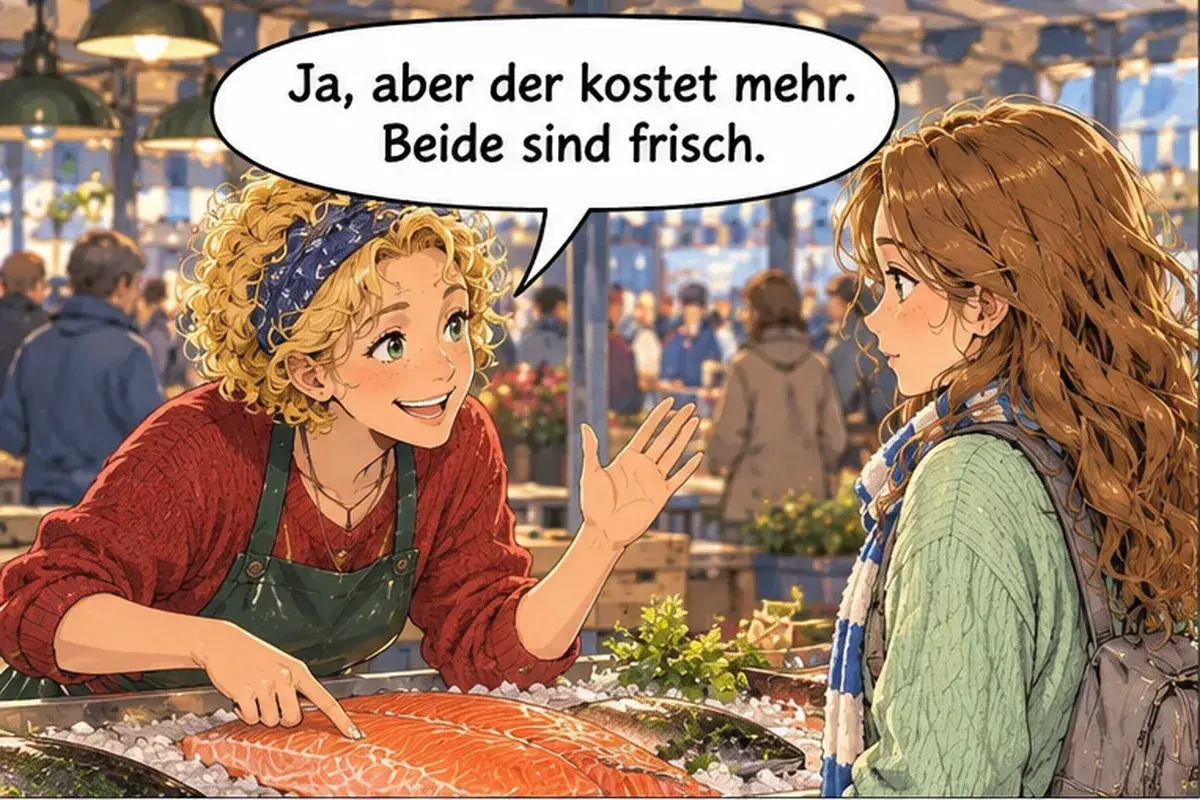
- Verkäuferin
Ja, aber der kostet mehr. Beide sind frisch.
Yes, but it costs more. Both are fresh.
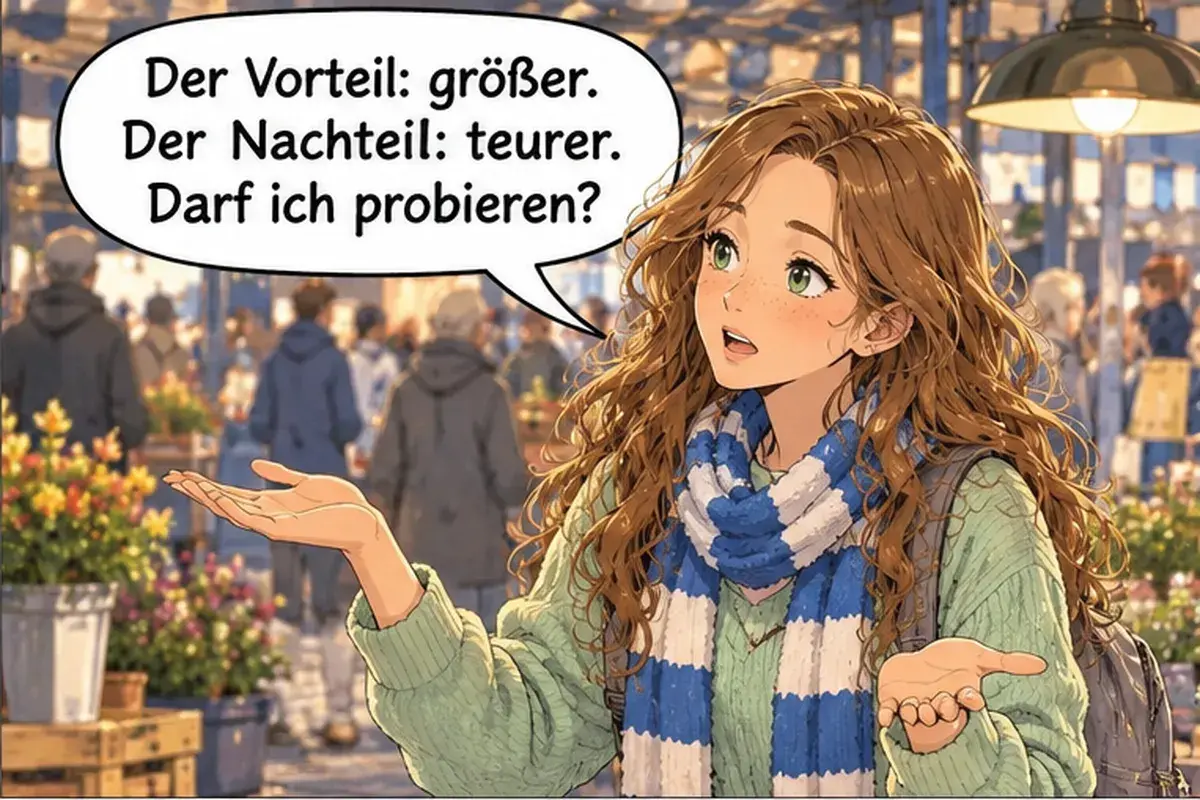
- Katja
Der Vorteil: größer. Der Nachteil: teurer. Darf ich probieren?
The advantage: bigger. The disadvantage: more expensive. May I try some?

- Verkäuferin
Klar, gern! Die Qualität ist hier am besten.
Sure, of course! The quality is best here.

- Katja
Ich vergleiche: Der Geschmack ist ähnlich. Der Unterschied ist gar nicht groß.
I'm comparing: the taste is similar. The difference isn't big at all.

- Verkäuferin
Sehen Sie? Der da ist genauso gut wie der hier. Den kaufen die Leute am meisten.
See? That one is just as good as this one. People buy that one the most. (formal)

- Katja
Ich kann mich nicht entscheiden. Am liebsten nehme ich beide!
I can't decide. Most of all, I'd like to take both!

- Verkäuferin
Beide? Sehr gern! Das ist eine Menge Lachs!
Both? Gladly! That's a lot of salmon!
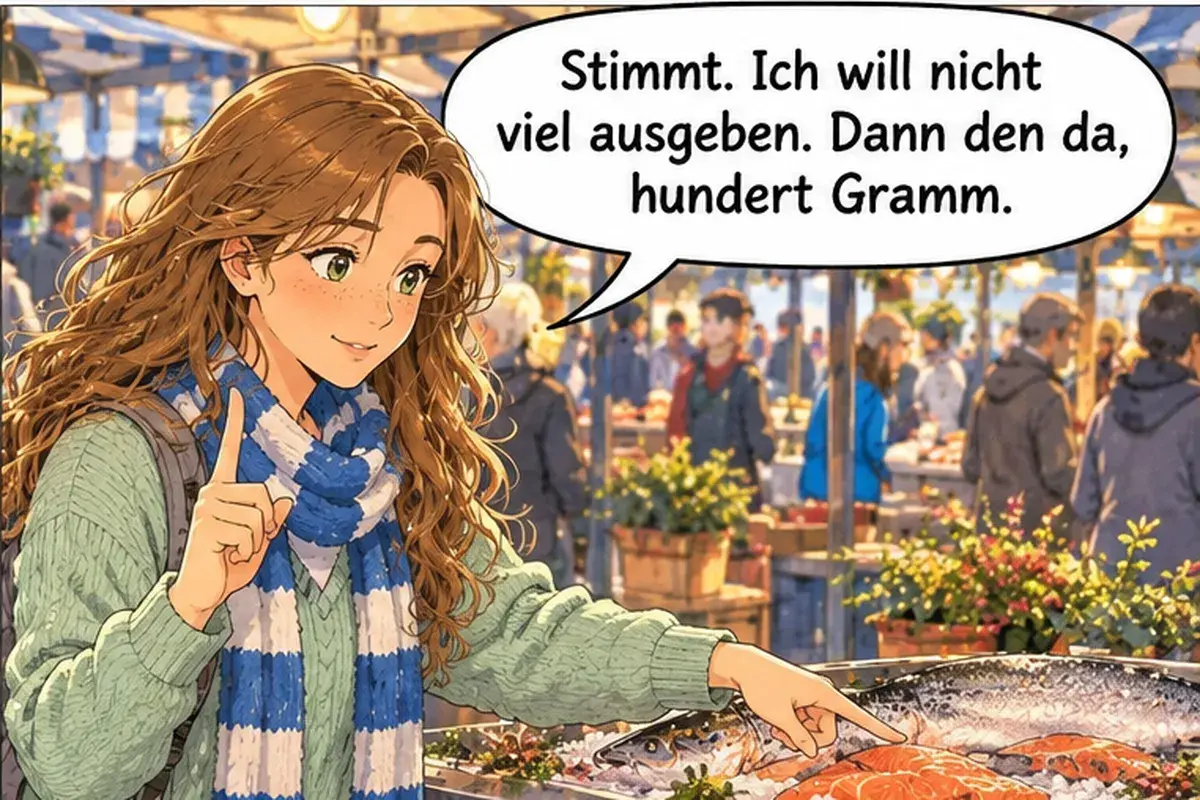
- Katja
Stimmt. Ich will nicht viel ausgeben. Dann den da, hundert Gramm.
True. I don't want to spend much. Then that one, a hundred grams.
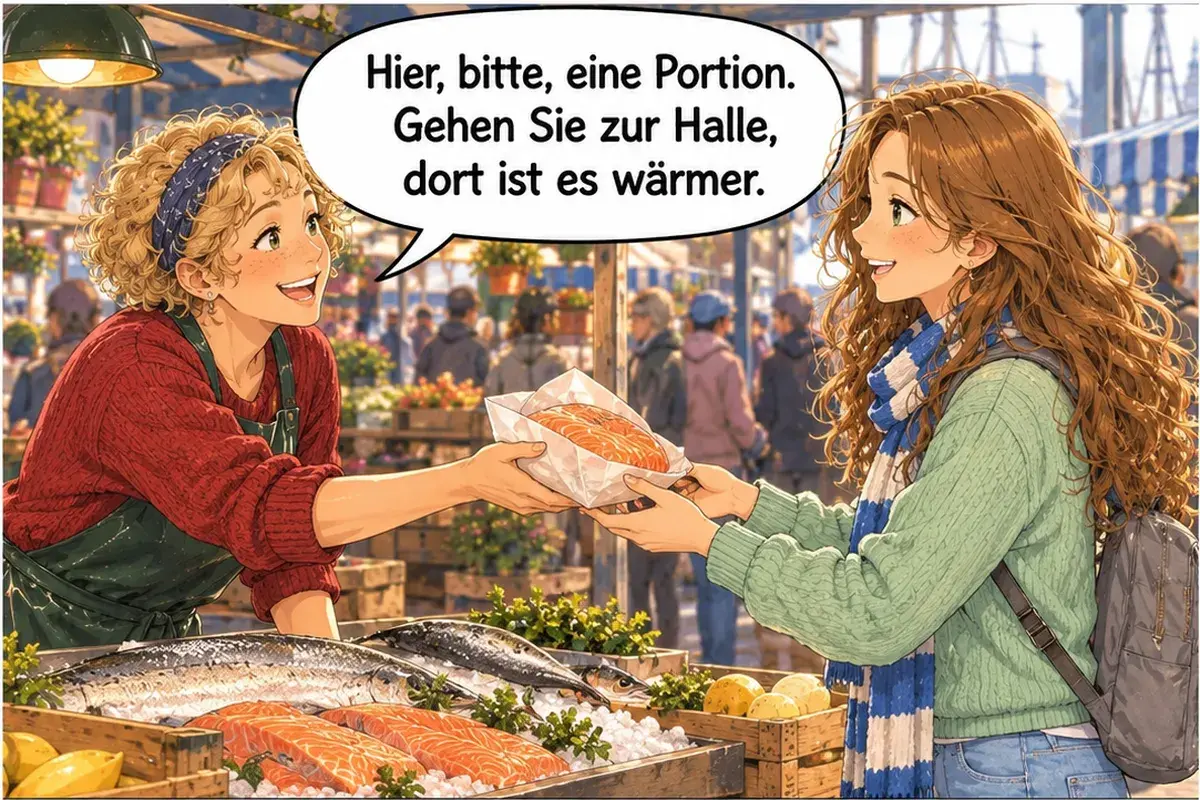
- Verkäuferin
Hier, bitte, eine Portion. Gehen Sie zur Halle, dort ist es wärmer.
Here you go, one portion. Go to the hall, it's warmer there. (formal)

- Katja
Danke! Schönen Sonntag noch!
Thanks! Enjoy the rest of your Sunday!
Grammar for this text
- Wer ist dran? — "Whose turn is it?"
dranis colloquial, short fordaran. The answer:Ich bin dran— it's my turn. - Was darf es sein? — "What can I get you?" A seller's phrase; learn it as a whole.
darfis the er / sie / es form ofdürfen(may, to be allowed to);esis your order. The answer:Ich hätte gern …. - Ich hätte gern Lachs — a ready-made polite phrase: "I'd like …".
hätteis a special form ofhaben(the rule is in unit 15). Learn it as a whole. - Der hier ist größer als der da, oder? —
der hier,der da— "this one", "that one":derpoints toLachs(masculine).größercomes fromgroß(abecomesä),als— than.oder?at the end — "right?". - Der Vorteil: größer. Der Nachteil: teurer. — "The advantage: bigger. The disadvantage: more expensive." In speech the verb is often left out. In
teurer,teuerloses itse. German just adds-erwhere English says "more expensive". - Die Qualität ist hier am besten —
am besten— best, the special form ofgut(besser,am besten). Den kaufen die Leute am meisten —am meisten— the most, about amount, fromviel(mehr,am meisten).Dencomes first to stress "that one"; it's the accusative, like English "him": people buy it. - Ich kann mich nicht entscheiden — a ready-made phrase: "I can't decide."
kannis the ich form ofkönnen, with no ending.mich— "myself", but English just says "decide" (reflexive verbs are in unit 6). Am liebsten nehme ich beide — afterAm liebstencomes the verb, thenich: the verb is always second.
Words and grammar of the unit: Compare and choose.
Learn the words from the texts with flashcards
In the app, you can tap any word in a text to see its translation, forms and examples, and new words stick with flashcards. 15 minutes a day.
Start for freeEverything is open for free. No card needed to sign up.