
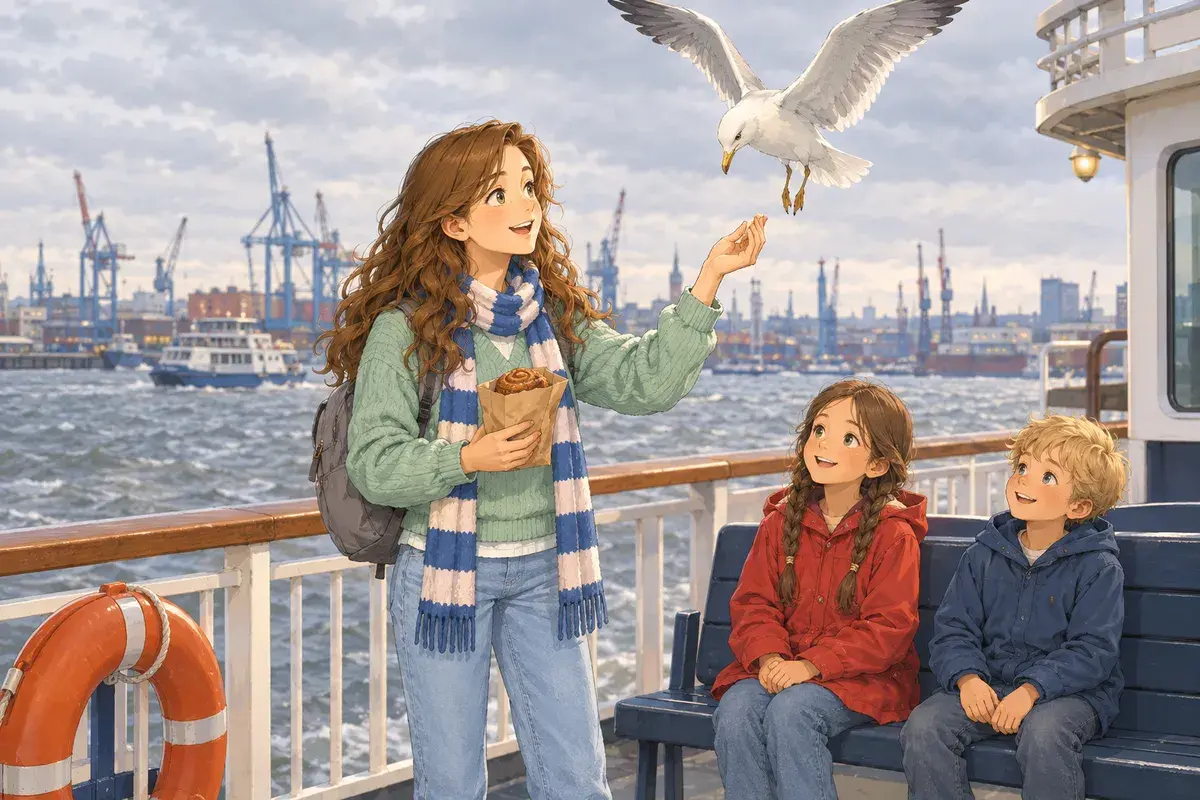
German story with translation · A2 · 12 lines
Grüße an die Möwe! Greetings to the seagull!
Comic · 12 panels

Ich mache keine Hafenrundfahrt, sondern fahre mit der Fähre 62.
I'm not doing a harbor tour but taking ferry 62.
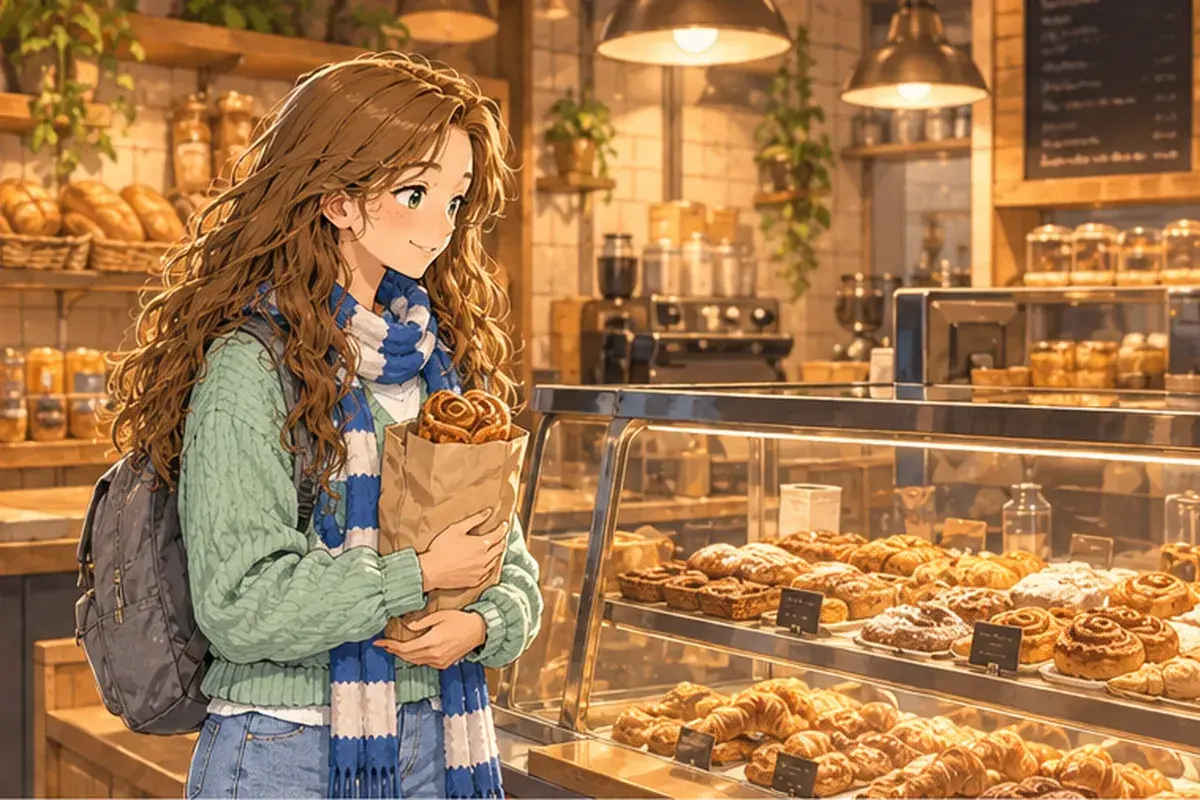
Vorher hole ich in der Bäckerei ein Franzbrötchen.
Before that, I pick up a cinnamon pastry (Franzbrötchen) at the bakery.
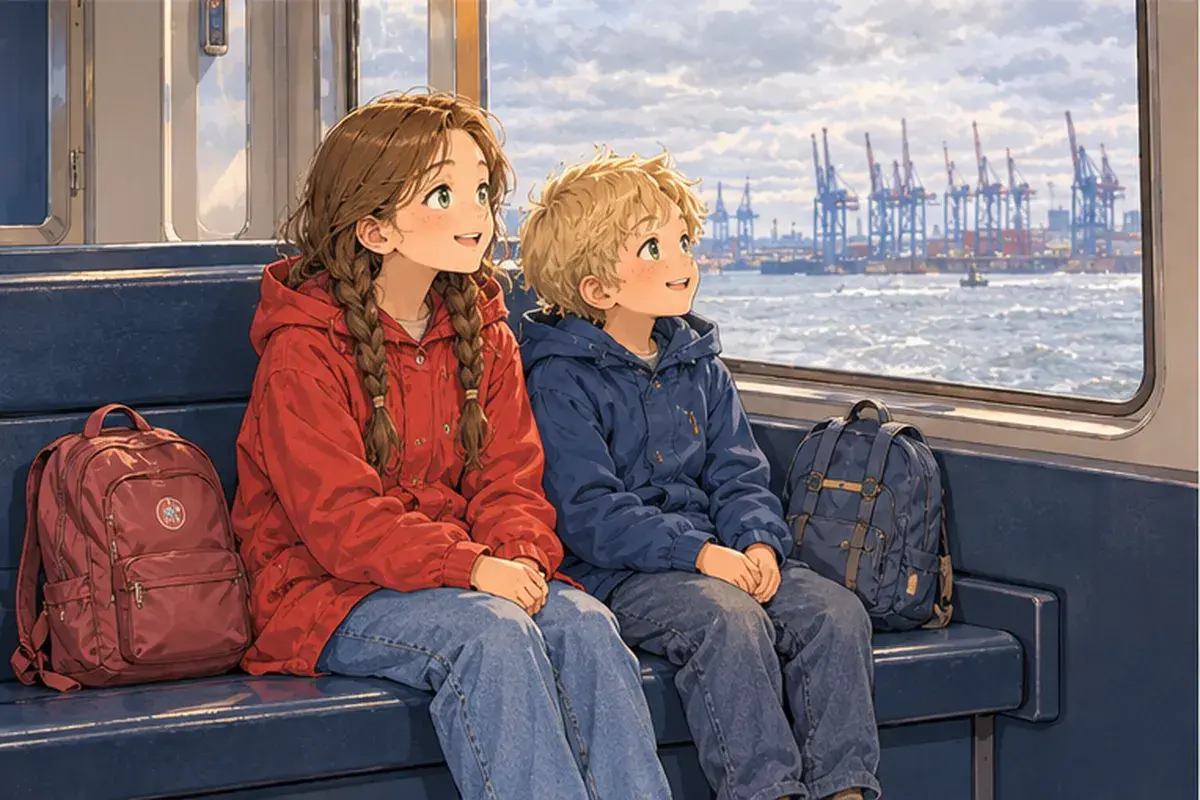
Fast alle sitzen drinnen, außer zwei Kindern.
Almost everyone is sitting inside, except two children.

Ich stehe auch draußen, denn der Blick auf den Hafen ist sehr schön.
I'm standing outside too, because the view of the harbor is very beautiful.

Ein Meer gibt es hier nicht, aber ich mag den Wind.
There's no sea here, but I like the wind.

Da drüben sehe ich sogar einen Strand, hier in der Stadt!
Over there I even see a beach, right here in the city!
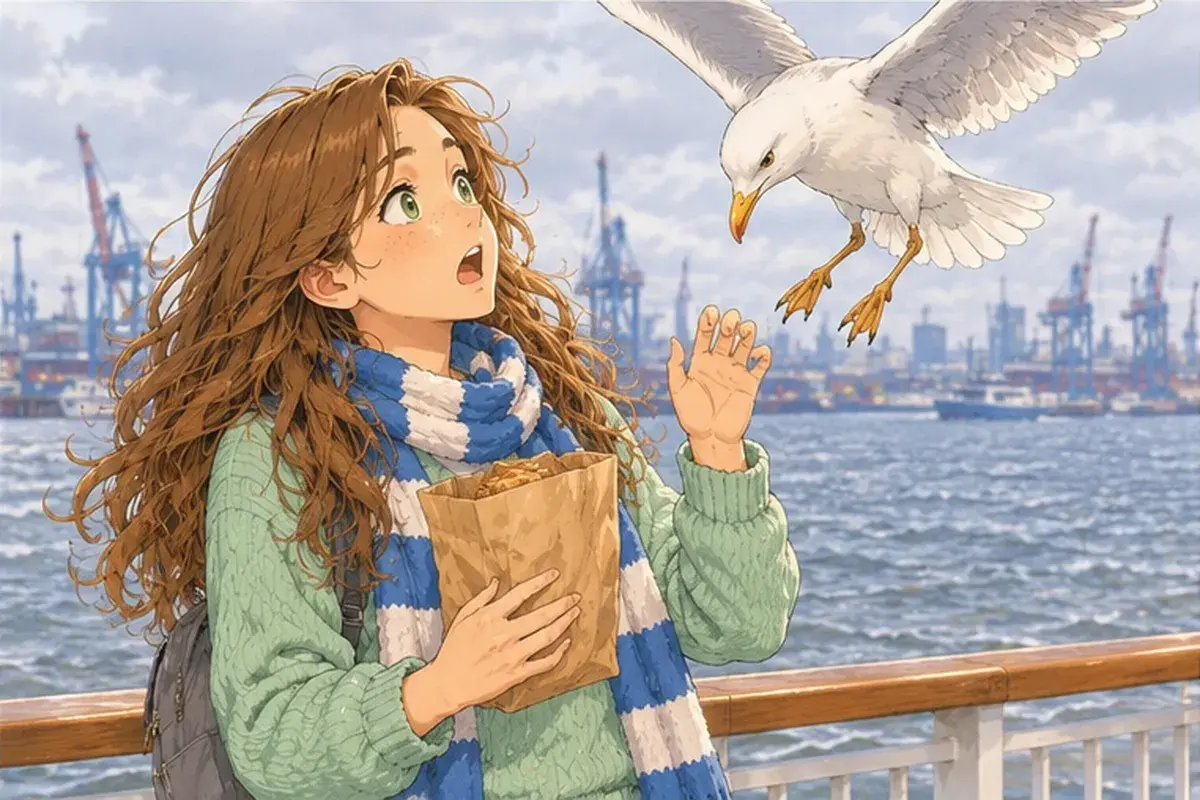
Plötzlich kommt eine Möwe. Sie will mein Franzbrötchen!
Suddenly a seagull comes along. It wants my cinnamon pastry!
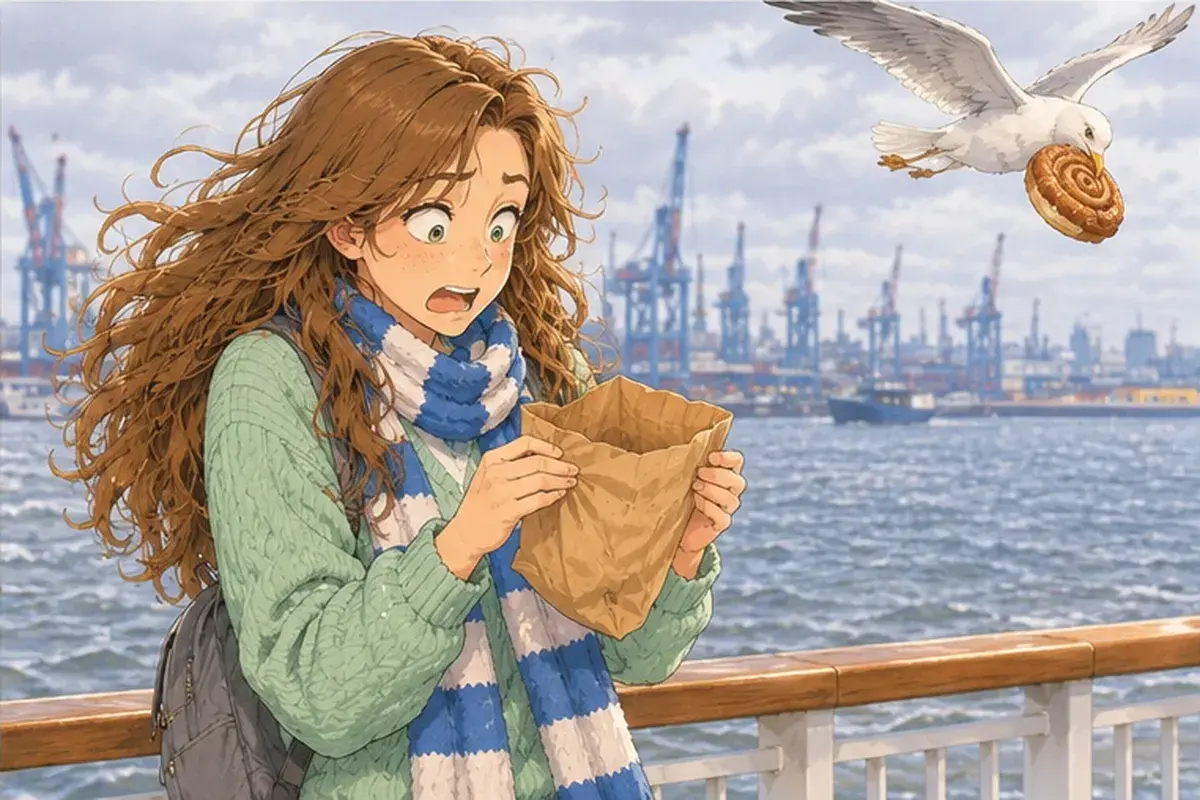
Zu spät! Das Franzbrötchen ist weg.
Too late! The cinnamon pastry is gone.

Der Verkäufer hat gesagt: Vorsicht, die Möwen!
The vendor said: careful, the seagulls!

Ich muss lachen. Beim Essen bleibe ich jetzt lieber drinnen.
I have to laugh. Now I'd rather stay inside while I eat.

Ich schicke Lukas ein Foto: Viele Grüße aus Hamburg!
I send Lukas a photo: Best wishes from Hamburg!

Er antwortet sofort: Grüße an die Möwe!
He replies right away: Greetings to the seagull!
Grammar for this text
- Ich mache keine Hafenrundfahrt, sondern fahre mit der Fähre 62. —
sondernmeans "but (rather)" after a negative:keine …, sondern …(aberadds,sondernreplaces). The secondichaftersondernisn't repeated: oneichfor both verbs, as in English.mit der Fähreis the dative:die Fährebecomesder Fähre, "by ferry". - Vorher hole ich in der Bäckerei ein Franzbrötchen. —
Vorhercomes first, so it'shole ich.in der Bäckereianswers "where?":die Bäckereiin the dative isder Bäckerei.Franzbrötchenis a cinnamon pastry, neuter. - Fast alle sitzen drinnen, außer zwei Kindern. —
fastmeans "almost" (not "quickly").außertakes the dative, and in the plural the noun adds-n:zwei Kinderbecomeszwei Kindern, "except two children".drinnenmeans inside,draußenmeans outside. - Ein Meer gibt es hier nicht. —
es gibt+ accusative (A1, unit 3).Ein Meercomes first because it's the main point; the verb stays in second place, andescomes after it. - Sie will mein Franzbrötchen! —
Sieat the start of a sentence means "she" here (the seagull,die Möwe), not the formal "you". English says "it" about a bird; German follows the noun's gender.willis fromwollenand means "wants", not English "will". The er / sie / es form is the same as the ich form, with no-t. - Beim Essen bleibe ich jetzt lieber drinnen. —
beimisbei dem;beim Essenmeans "while eating".Essenwith a capital letter is a noun: "eating, food". - Grüße an die Möwe! —
Grüße an …means "greetings to …"; at the end of a message people writeViele Grüße. Lukas is joking: greetings to the seagull that stole the pastry.
Words and grammar of the unit: Meet up and talk about work.
Learn the words from the texts with flashcards
In the app, you can tap any word in a text to see its translation, forms and examples, and new words stick with flashcards. 15 minutes a day.
Start for freeEverything is open for free. No card needed to sign up.