

German dialogue with translation · A2 · 14 lines
Was genau machen Sie? What exactly do you do?
Comic · 14 panels
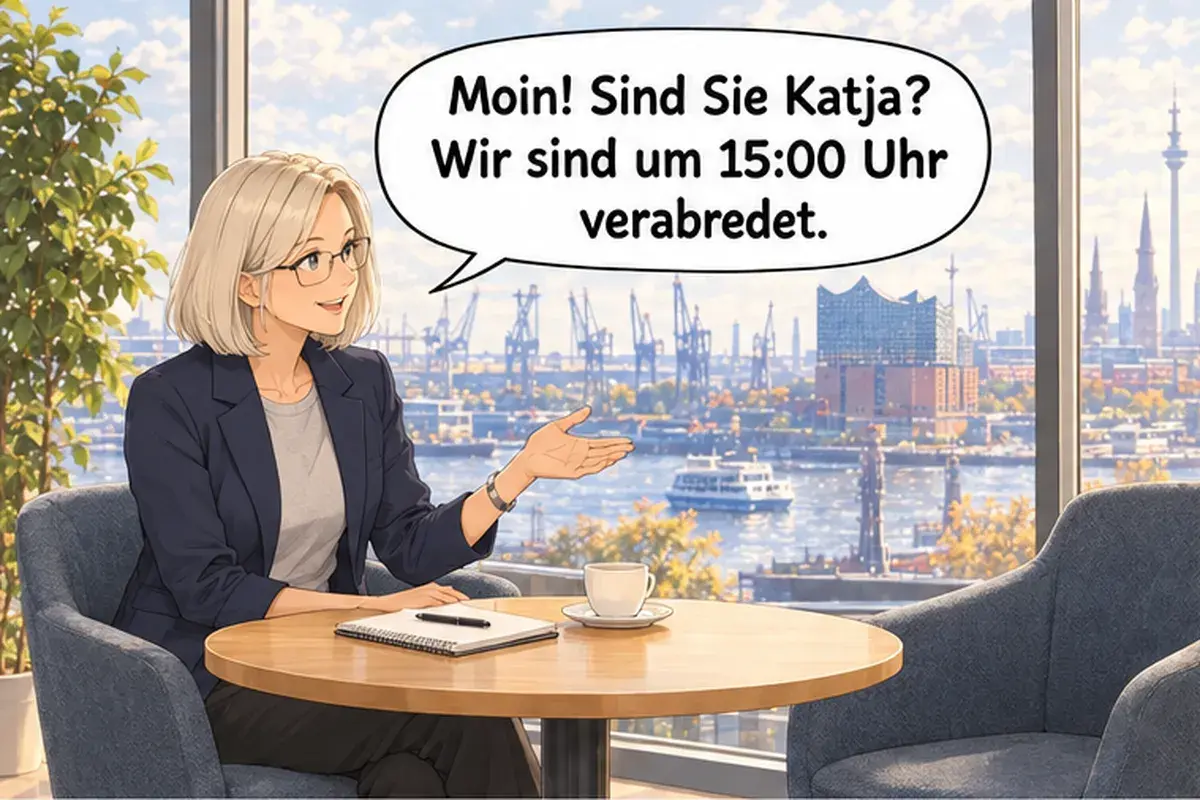
- Sabine
Moin! Sind Sie Katja? Wir sind um 15:00 Uhr verabredet.
Hello! Are you Katja? (formal) We arranged to meet at 15:00.

- Katja
Moin! Ja. Freut mich, Frau Krüger.
Hello! Yes. Nice to meet you, Frau Krüger.
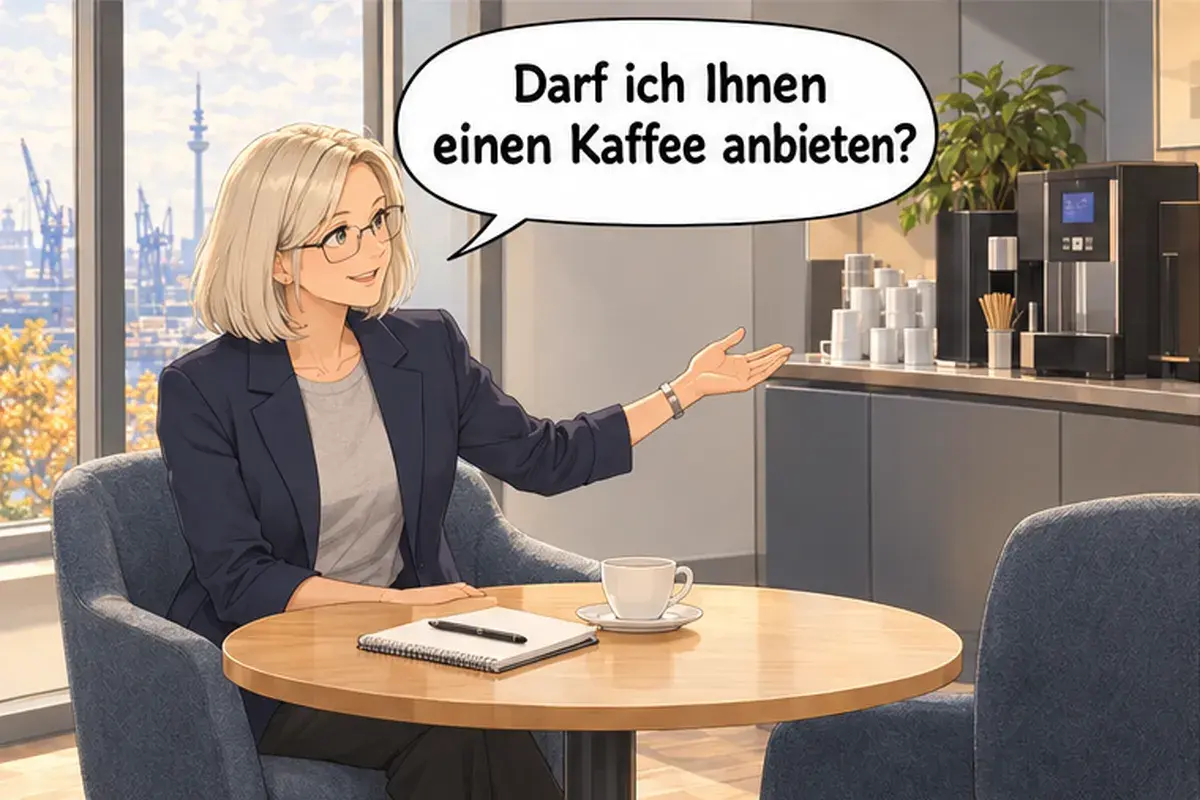
- Sabine
Darf ich Ihnen einen Kaffee anbieten?
May I offer you a coffee? (formal)

- Katja
Sehr gern, danke!
I'd love one, thank you!
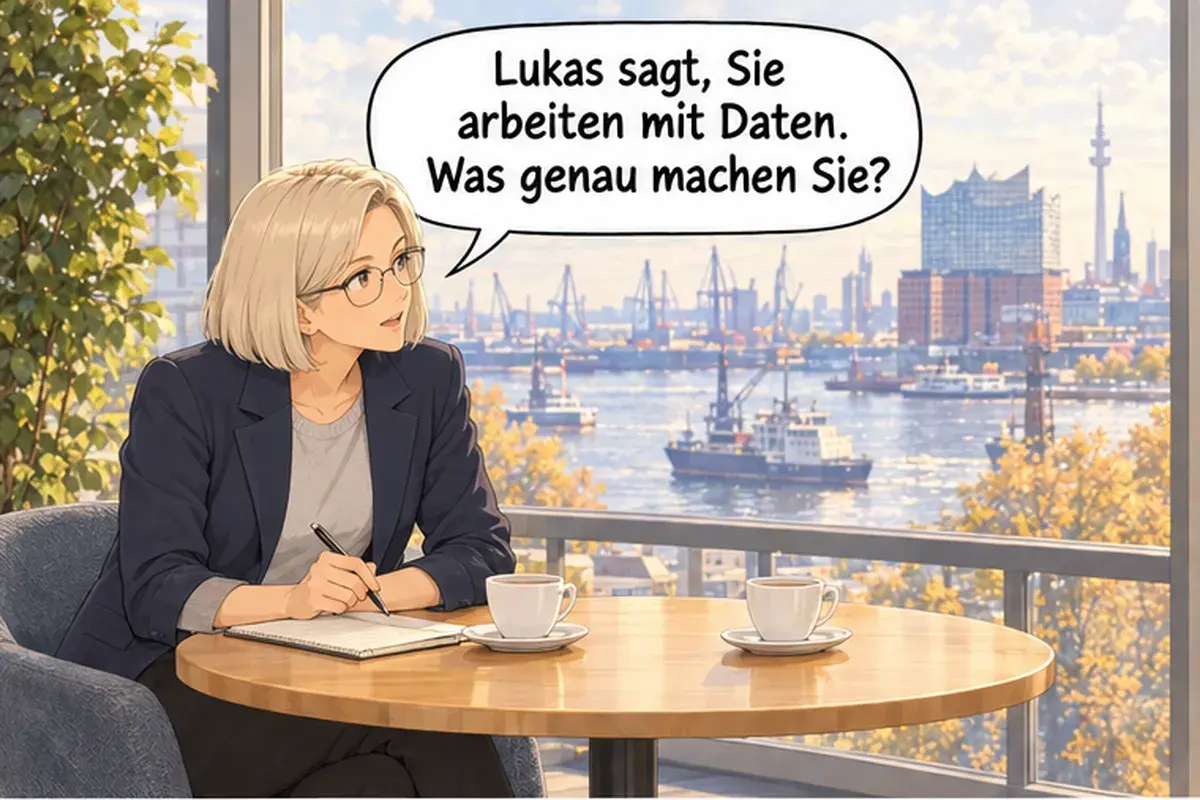
- Sabine
Lukas sagt, Sie arbeiten mit Daten. Was genau machen Sie?
Lukas says you work with data. What exactly do you do? (formal)
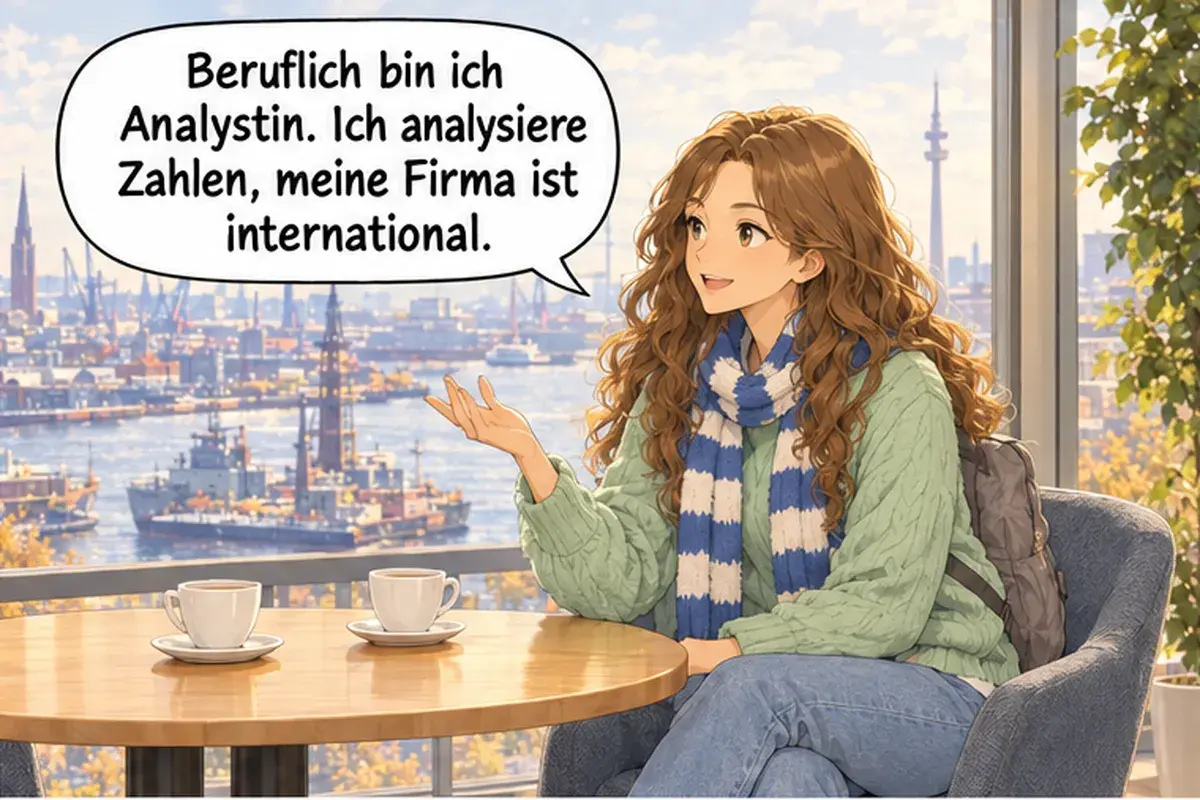
- Katja
Beruflich bin ich Analystin. Ich analysiere Zahlen, meine Firma ist international.
By profession, I'm an analyst. I analyze numbers, and my company is international.
- Sabine
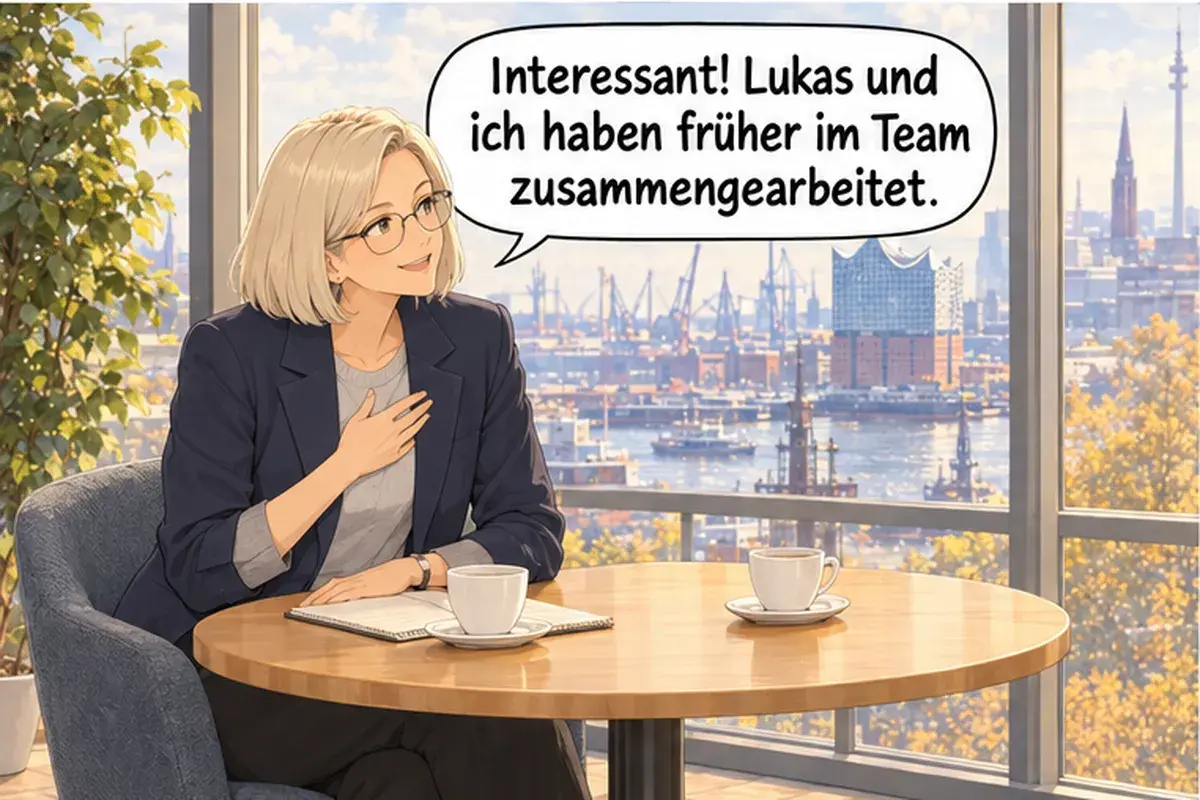
Interessant! Lukas und ich haben früher im Team zusammengearbeitet.
Interesting! Lukas and I used to work together on a team.
- Katja
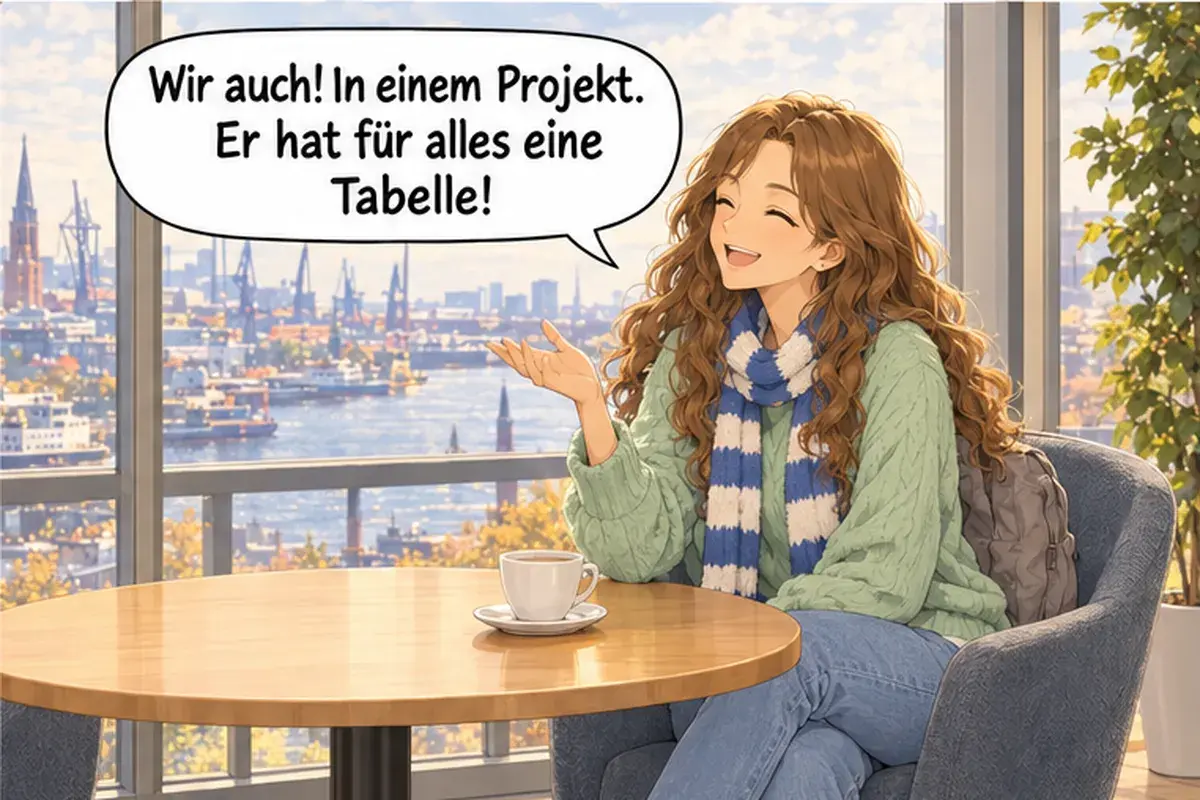
Wir auch! In einem Projekt. Er hat für alles eine Tabelle!
Us too! On a project. He has a spreadsheet for everything!
- Sabine
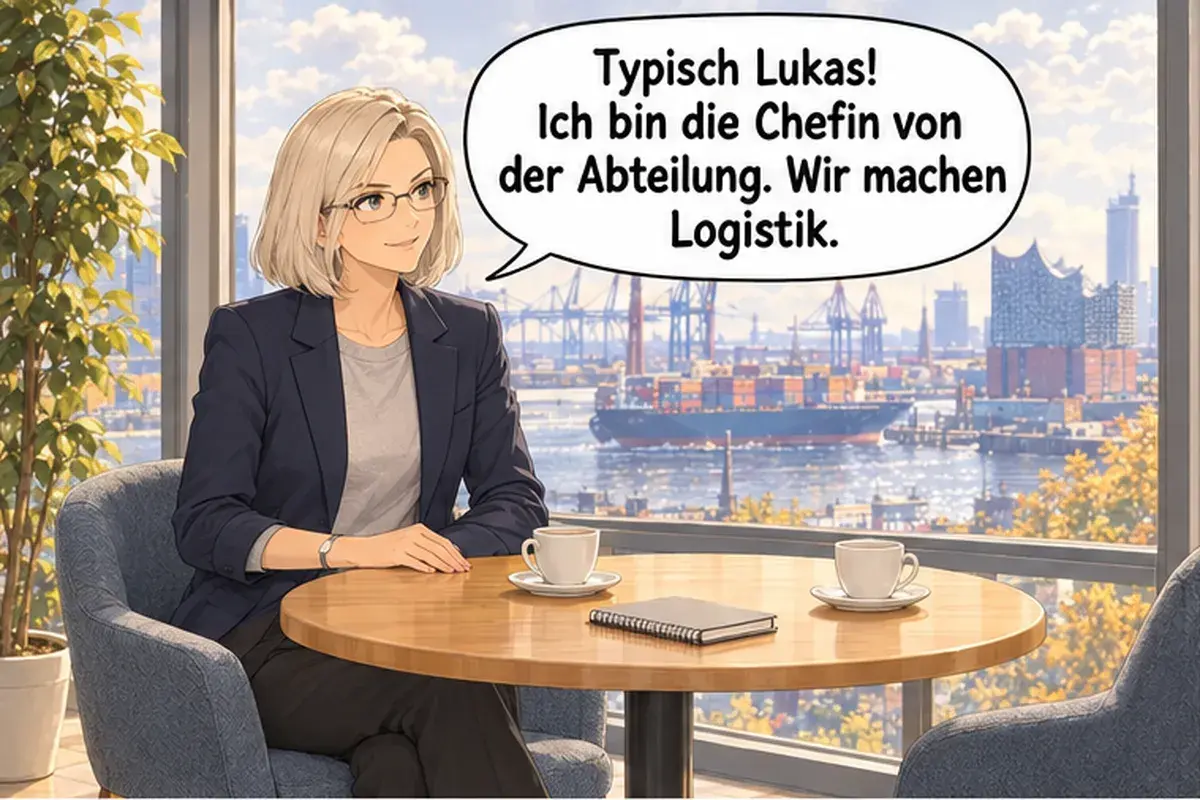
Typisch Lukas! Ich bin die Chefin von der Abteilung. Wir machen Logistik.
Typical Lukas! I'm the boss of the department. We do logistics.
- Katja
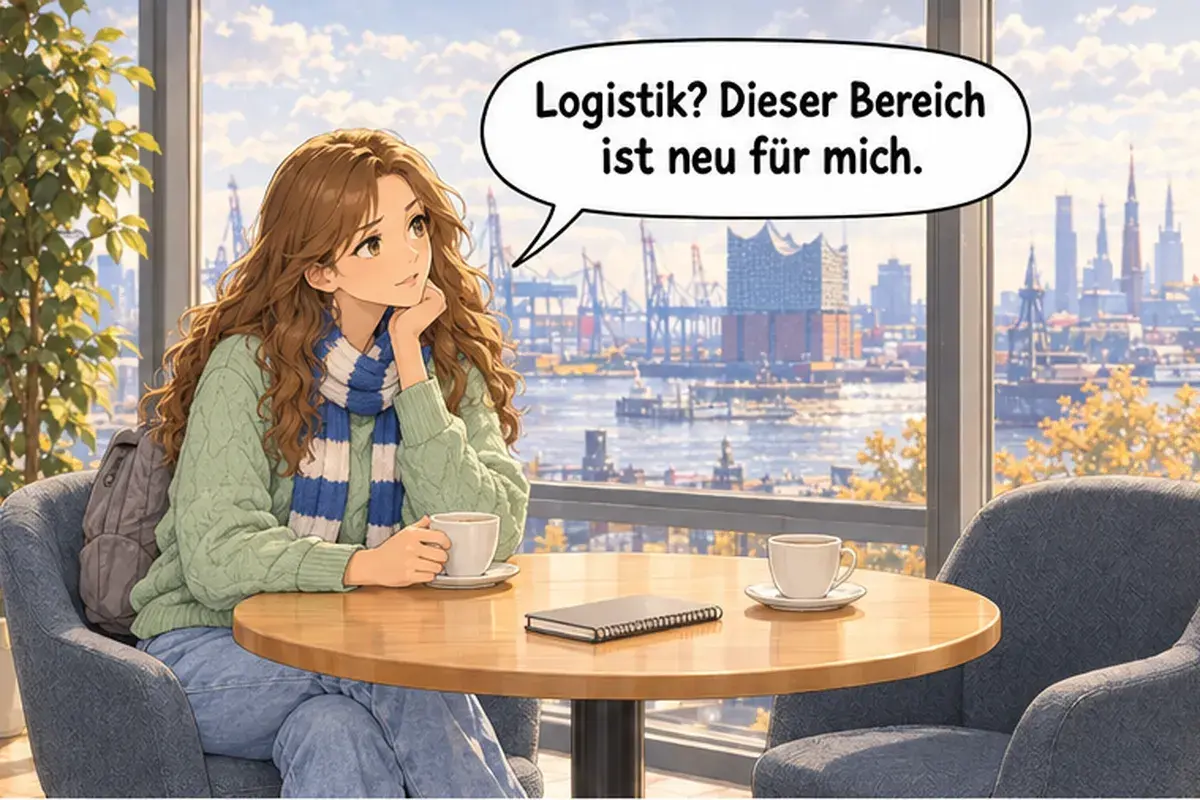
Logistik? Dieser Bereich ist neu für mich.
Logistics? This field is new to me.
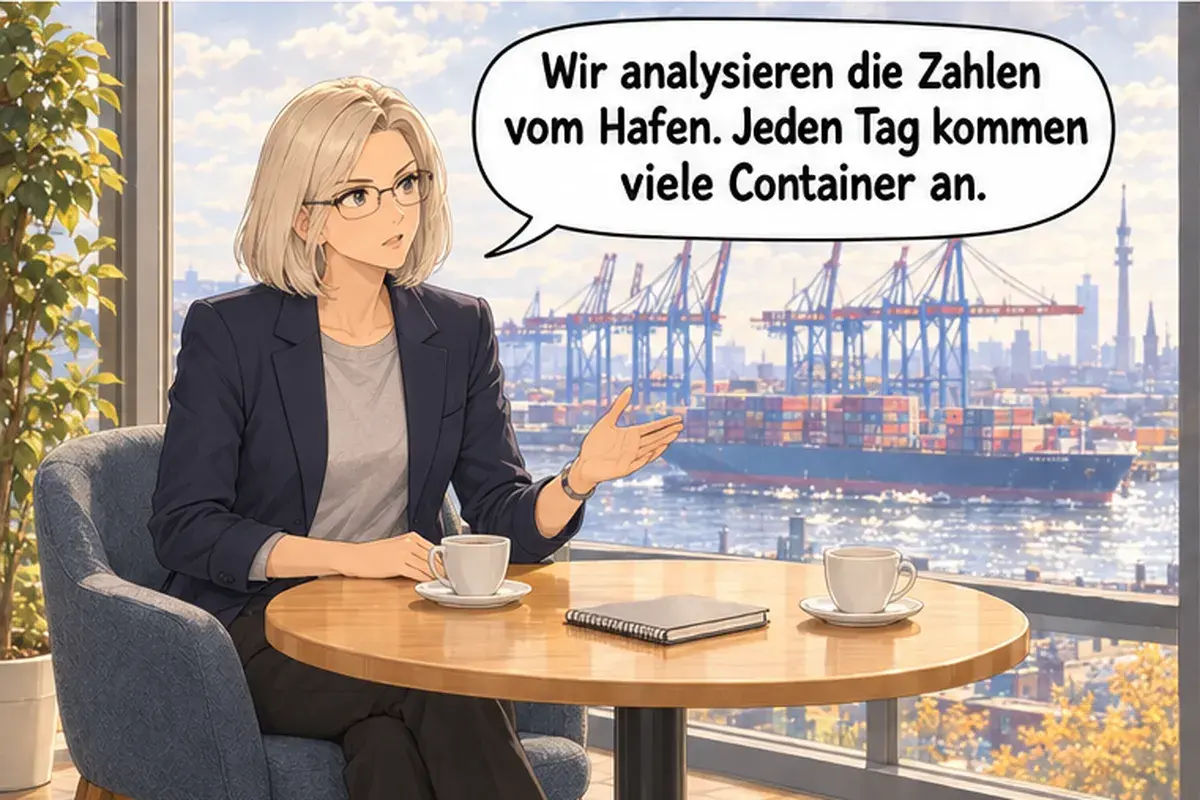
- Sabine
Wir analysieren die Zahlen vom Hafen. Jeden Tag kommen viele Container an.
We analyze the numbers from the harbor. Lots of containers arrive every day.
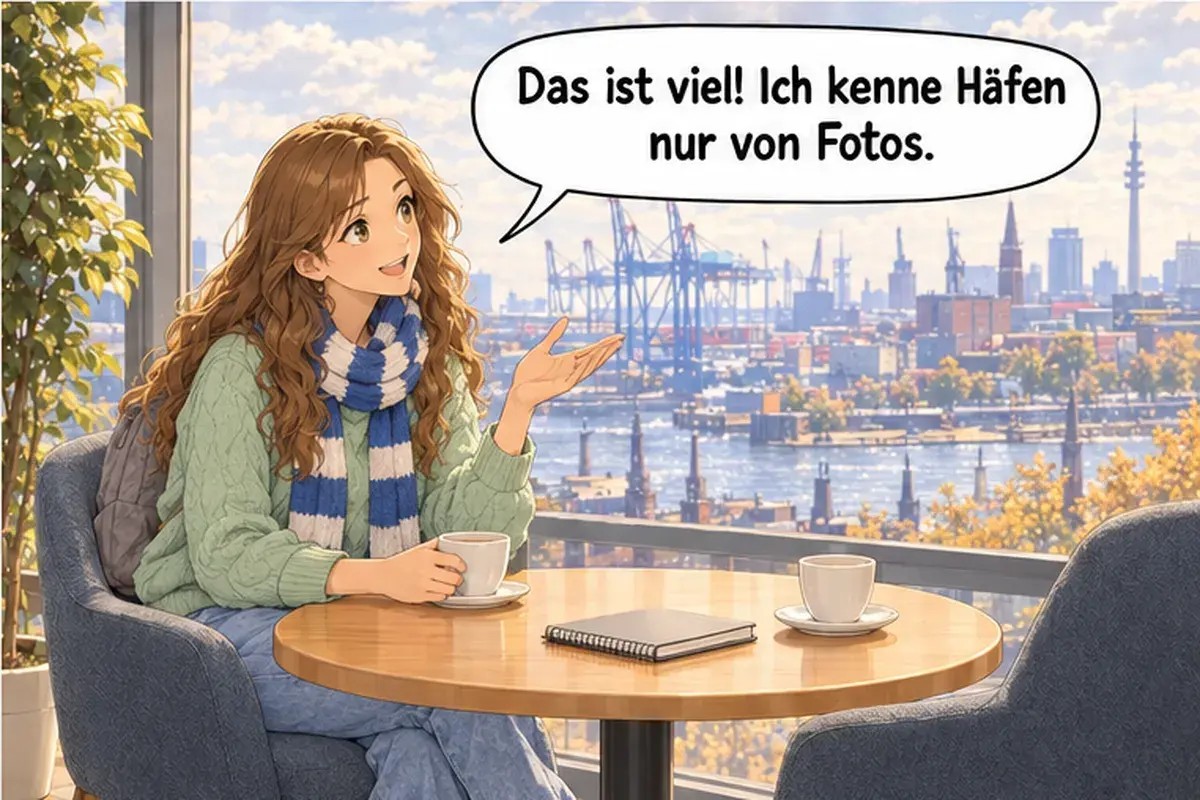
- Katja
Das ist viel! Ich kenne Häfen nur von Fotos.
That's a lot! I only know harbors from photos.
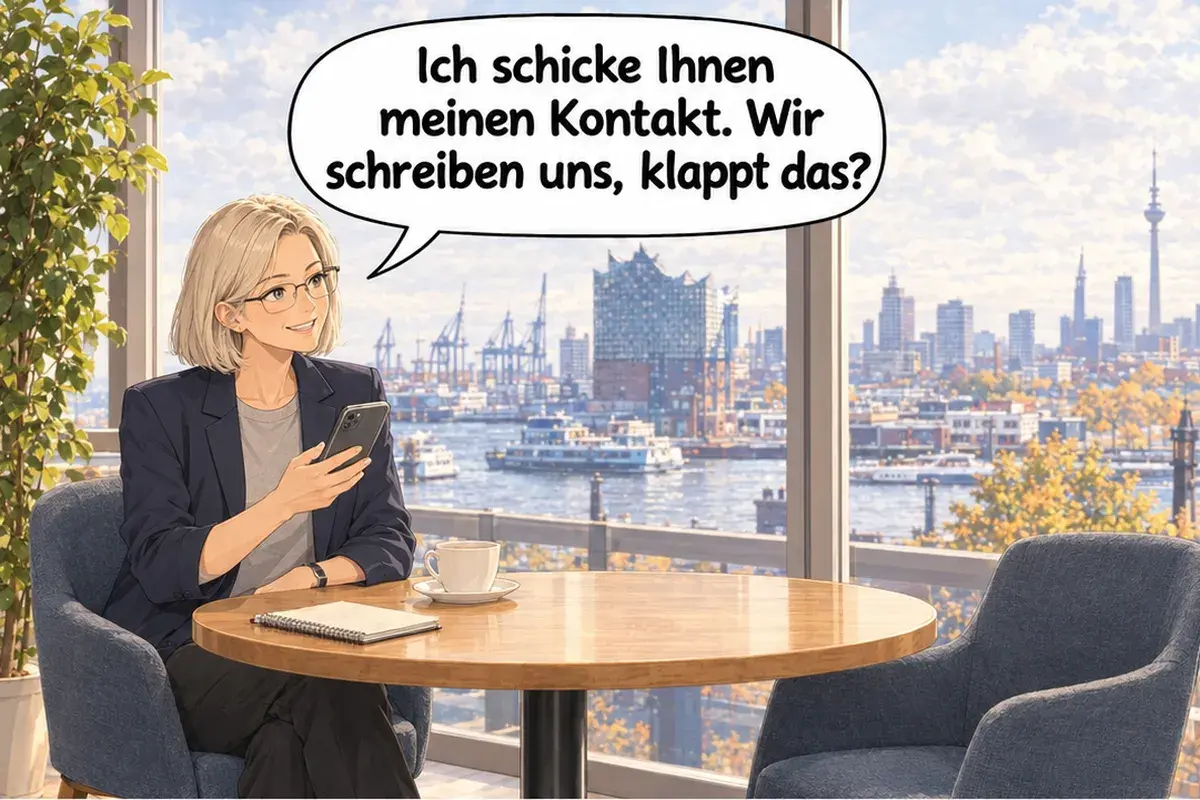
- Sabine
Ich schicke Ihnen meinen Kontakt. Wir schreiben uns, klappt das?
I'll send you my contact info (formal). We'll write to each other. Does that work?
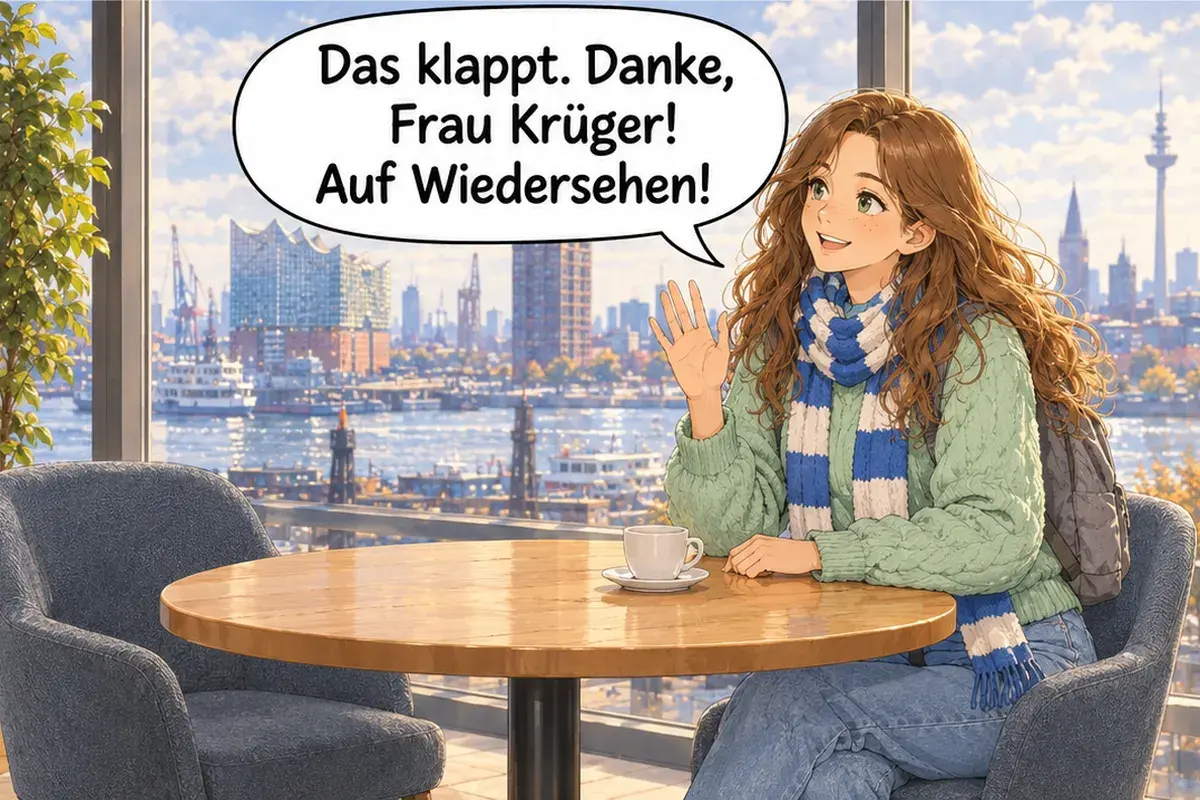
- Katja
Das klappt. Danke, Frau Krüger! Auf Wiedersehen!
That works. Thank you, Frau Krüger! Goodbye!
Grammar for this text
- Wir sind um 15:00 Uhr verabredet. — "We're meeting at 15:00."
verabredetis the past participle ofsich verabreden(to arrange to meet); withsind, the sentence means "we've arranged to meet". In speech people usually sayum drei. Reflexive verbs come in unit 6. - Lukas sagt, Sie arbeiten mit Daten. —
Siewith a capital S is the formal "you" (Katja and Sabine useSiewith each other). Aftermitcomes the dative;Datenmeans "data" and is plural only. Don't confuse it withDatum(date). - Beruflich bin ich Analystin. —
Beruflichcomes first, so the verbbincomes right after it, and thenich.Analystinis the female form (der Analyst, A1). There's no article before a job, unlike English "an analyst". - Lukas und ich haben früher im Team zusammengearbeitet. — the Perfekt (spoken past), unit 1:
haben+ past participle.zusammenarbeitenis a separable verb, sogegoes between the parts:zusammen-ge-arbeitet.im Teamisin dem Team. - Ich bin die Chefin von der Abteilung. —
die Chefinis the female form ofder Chef(boss, not a cook).von der Abteilungmeans "of the department":vontakes the dative, sodie Abteilungbecomesder Abteilung. - Darf ich Ihnen einen Kaffee anbieten? —
anbietenmeans "to offer". AfterDarf ich, it goes to the end in one piece, without splitting.Ihnenmeans "(to) you", the dative ofSie(more in unit 5);einen Kaffeeis the accusative (A1). - Wir schreiben uns, klappt das? — "we'll write to each other, does that work?"
unshere means "each other" (more in unit 6).klappenmeans "to work out"; the answer isDas klappt.
Words and grammar of the unit: Meet up and talk about work.
Learn the words from the texts with flashcards
In the app, you can tap any word in a text to see its translation, forms and examples, and new words stick with flashcards. 15 minutes a day.
Start for freeEverything is open for free. No card needed to sign up.