

German dialogue with translation · A2 · 14 lines
Mit oder ohne Zwiebeln? With or without onions?
Comic · 14 panels
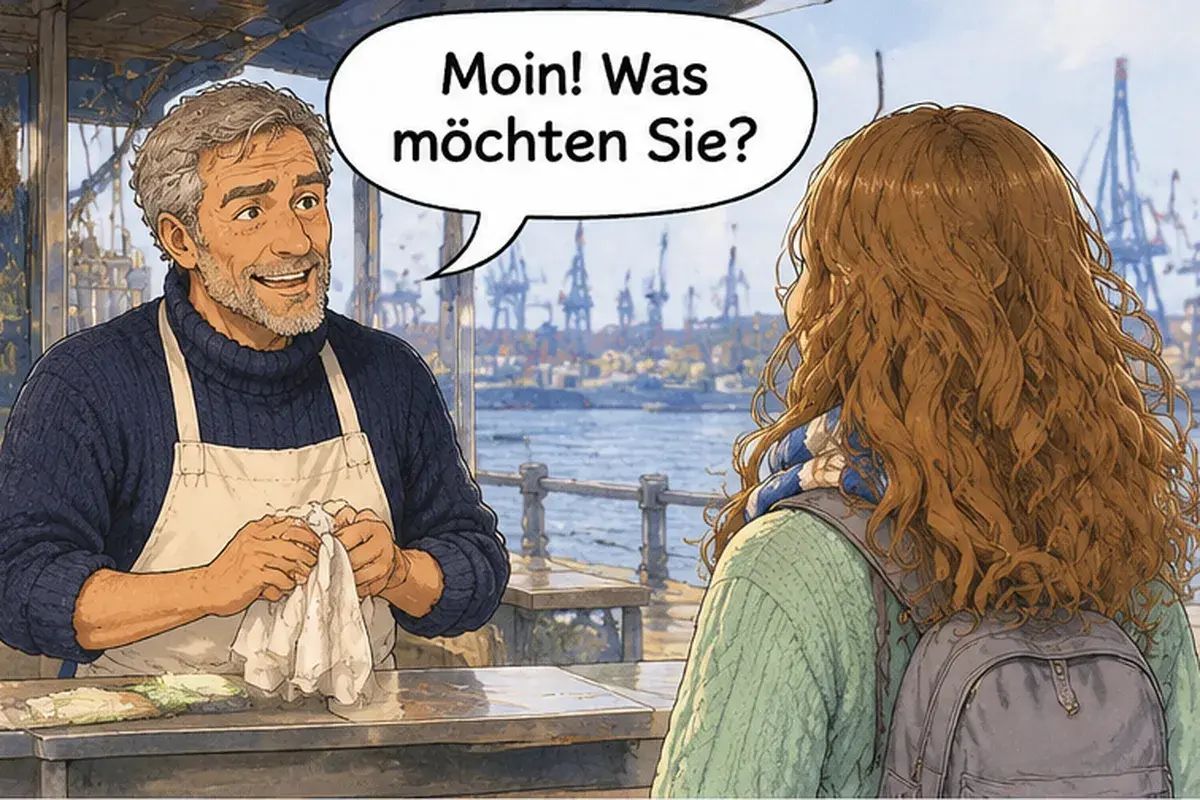
- Verkäufer
Moin! Was möchten Sie?
Hi! What would you like? (formal)
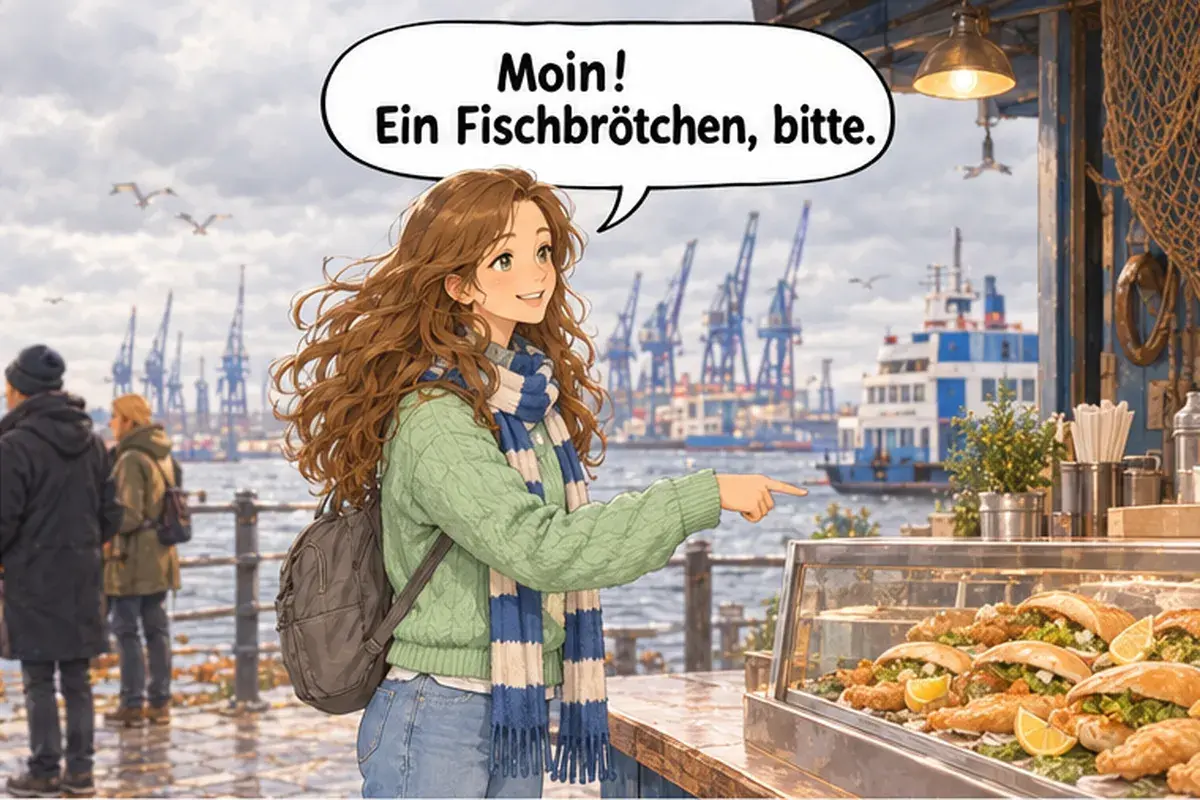
- Katja
Moin! Ein Fischbrötchen, bitte.
Hi! A fish sandwich, please.
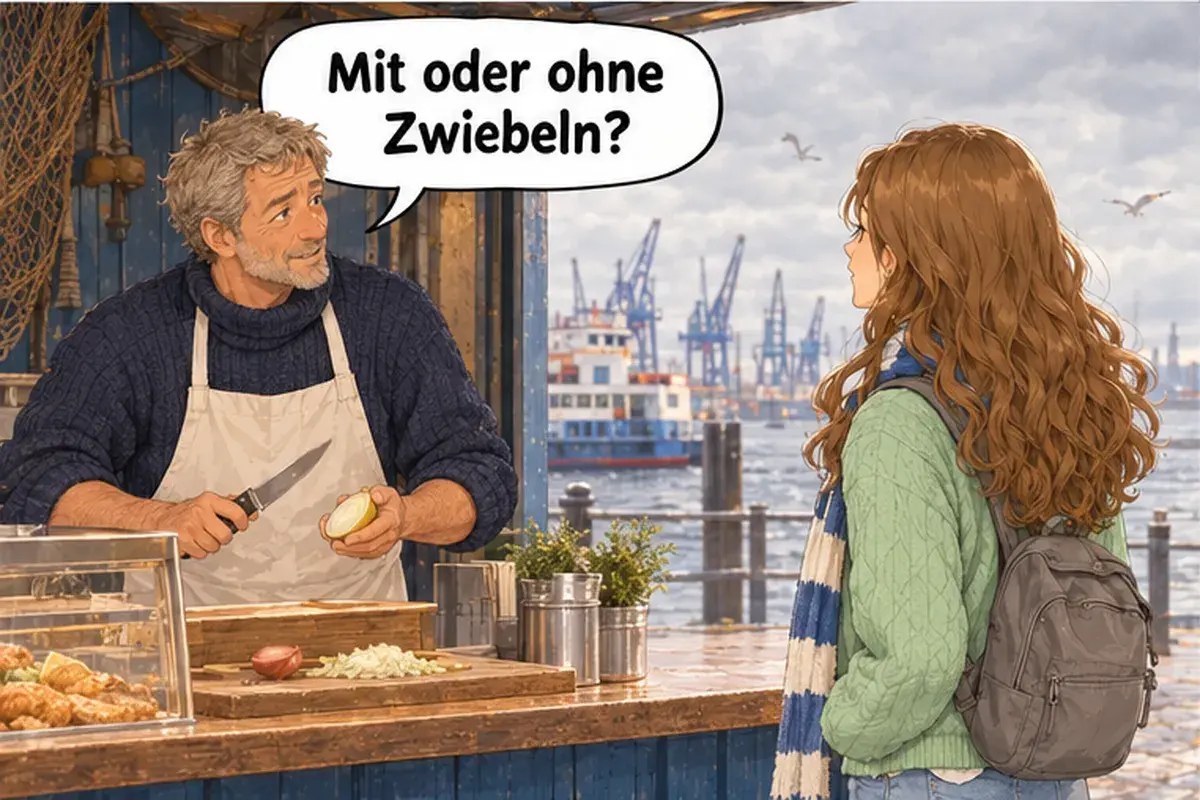
- Verkäufer
Mit oder ohne Zwiebeln?
With or without onions?
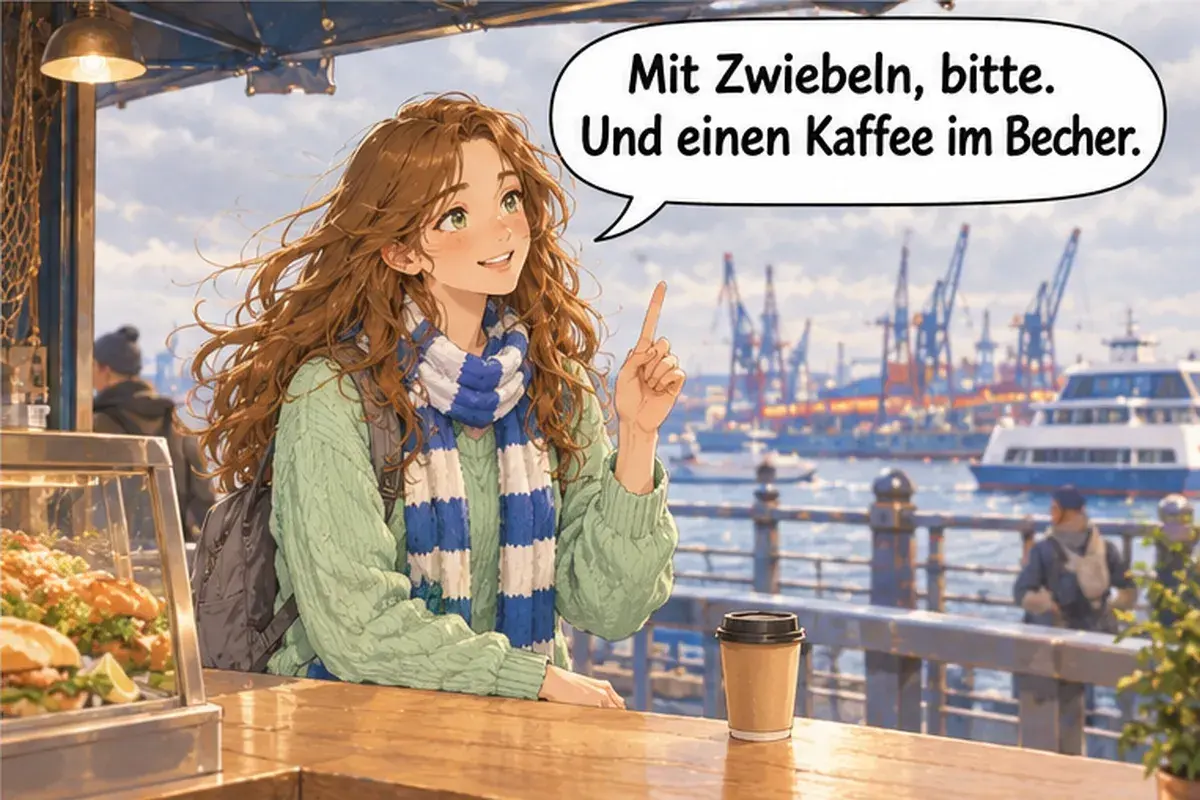
- Katja
Mit Zwiebeln, bitte. Und einen Kaffee im Becher.
With onions, please. And a coffee in a cup.
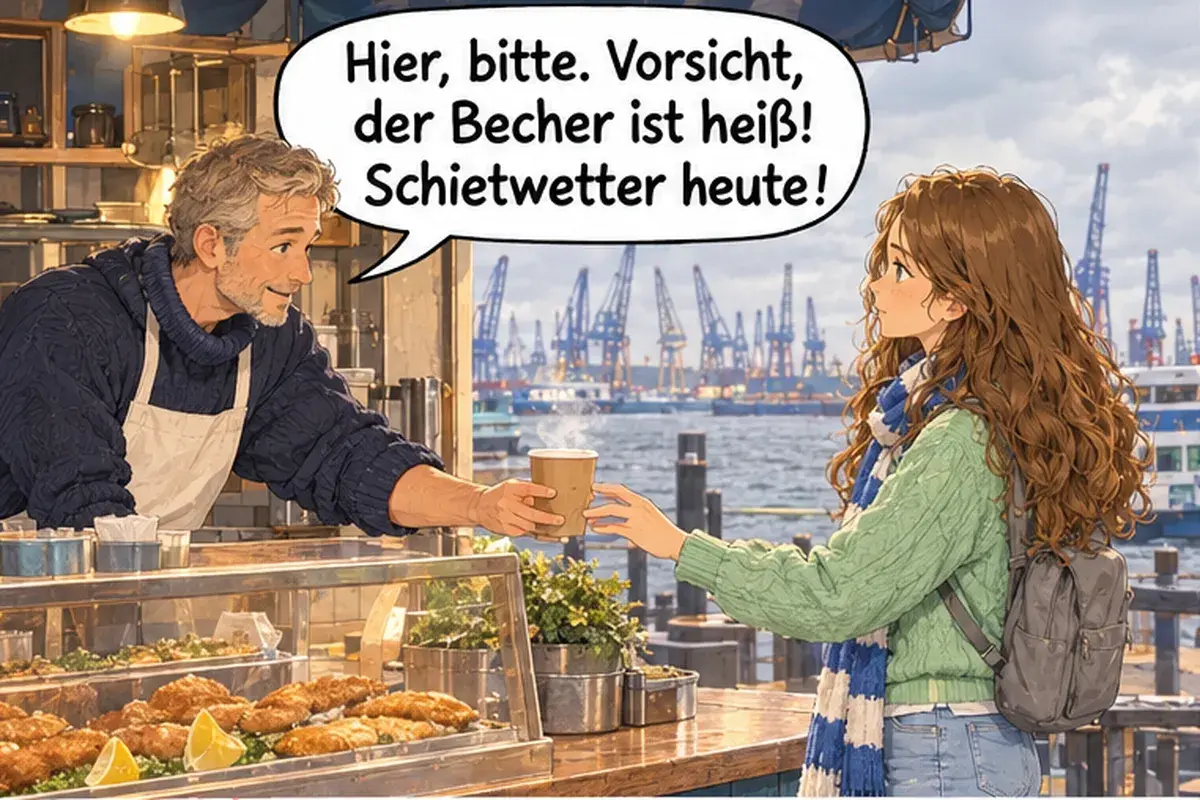
- Verkäufer
Hier, bitte. Vorsicht, der Becher ist heiß! Schietwetter heute!
Here you go. Careful, the cup is hot! Lousy weather today!
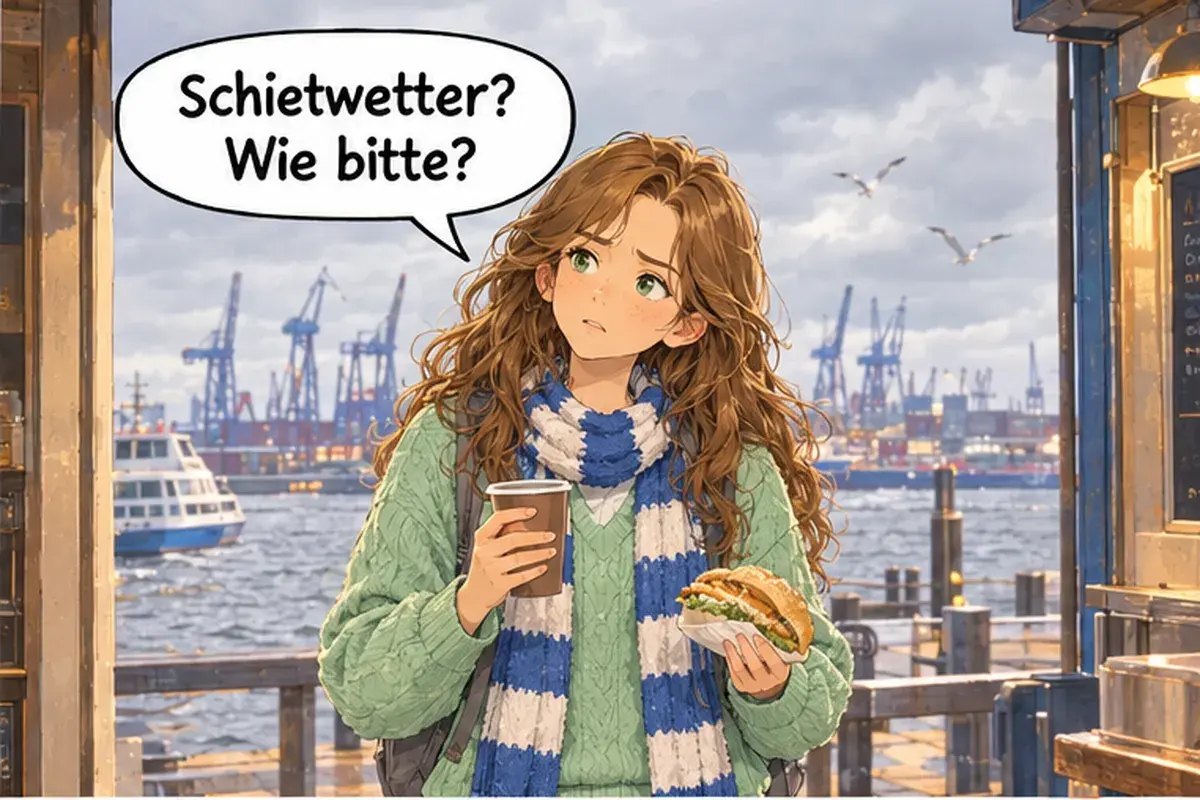
- Katja
Schietwetter? Wie bitte?
Schietwetter? Sorry?
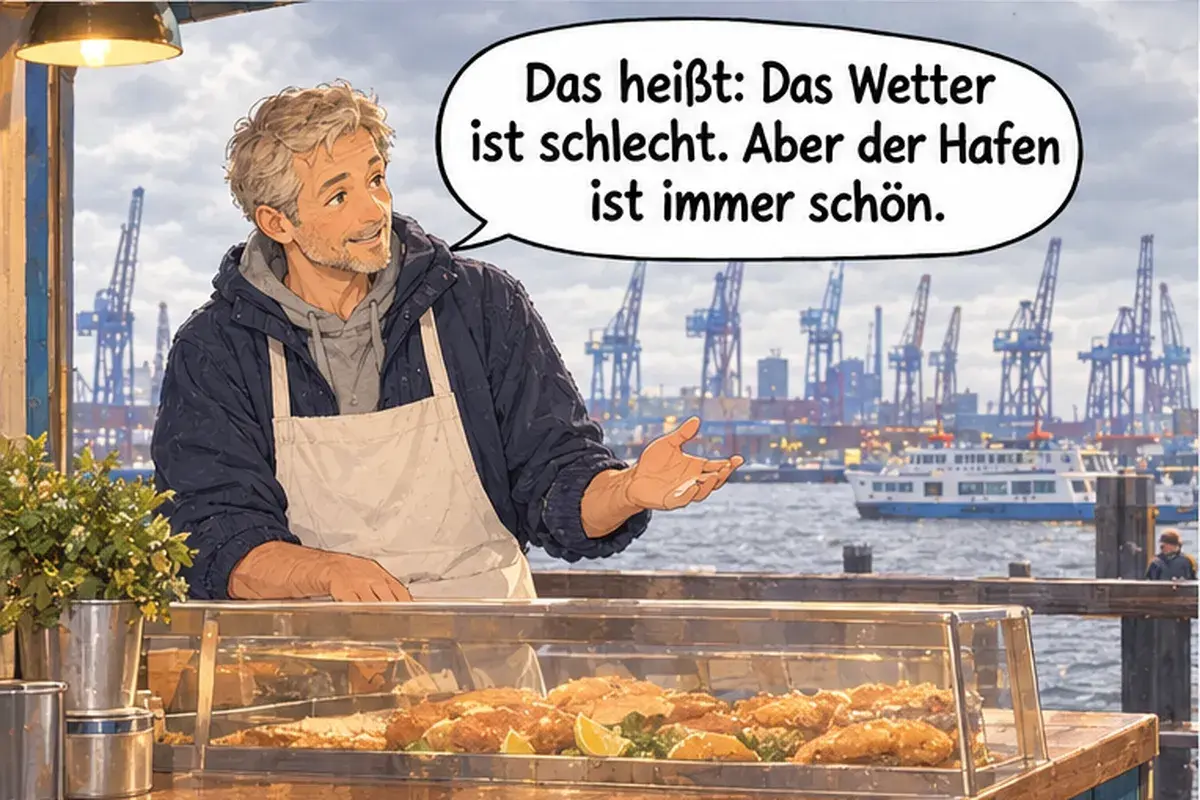
- Verkäufer
Das heißt: Das Wetter ist schlecht. Aber der Hafen ist immer schön.
That means the weather is bad. But the harbor is always beautiful.
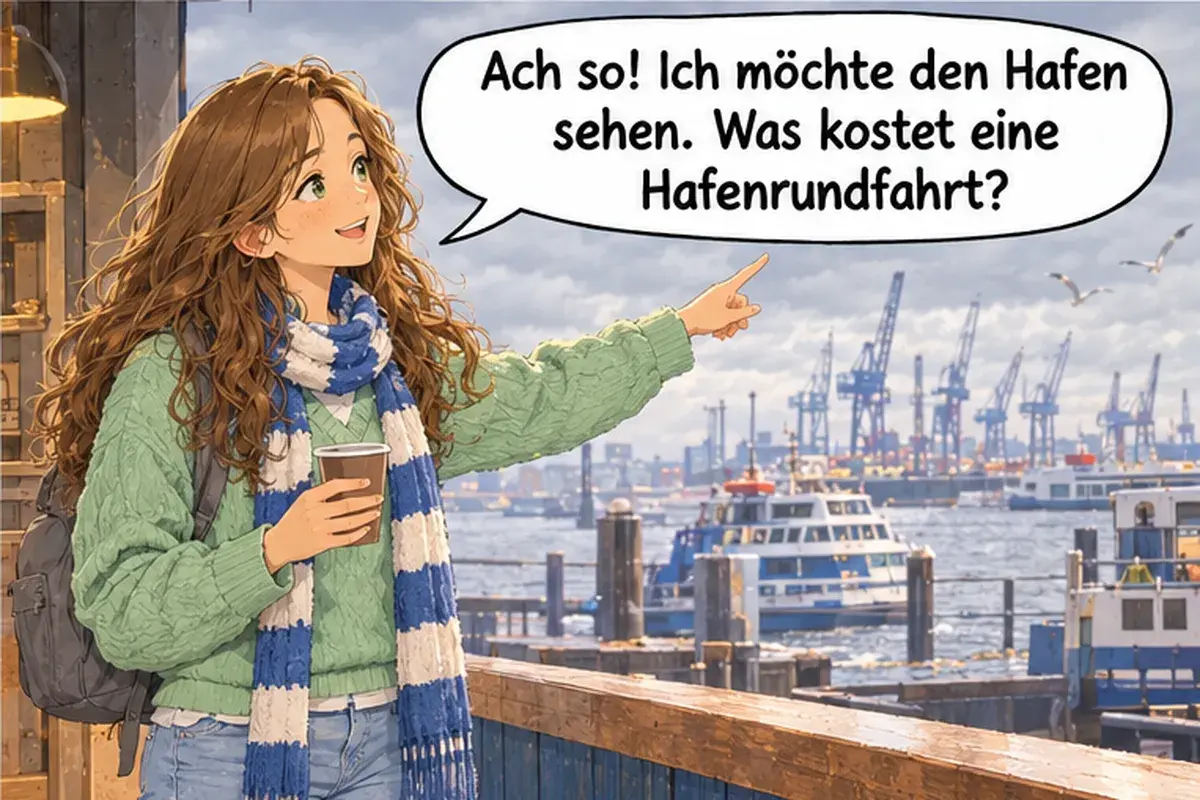
- Katja
Ach so! Ich möchte den Hafen sehen. Was kostet eine Hafenrundfahrt?
Oh, I see! I'd like to see the harbor. How much does a harbor tour cost?
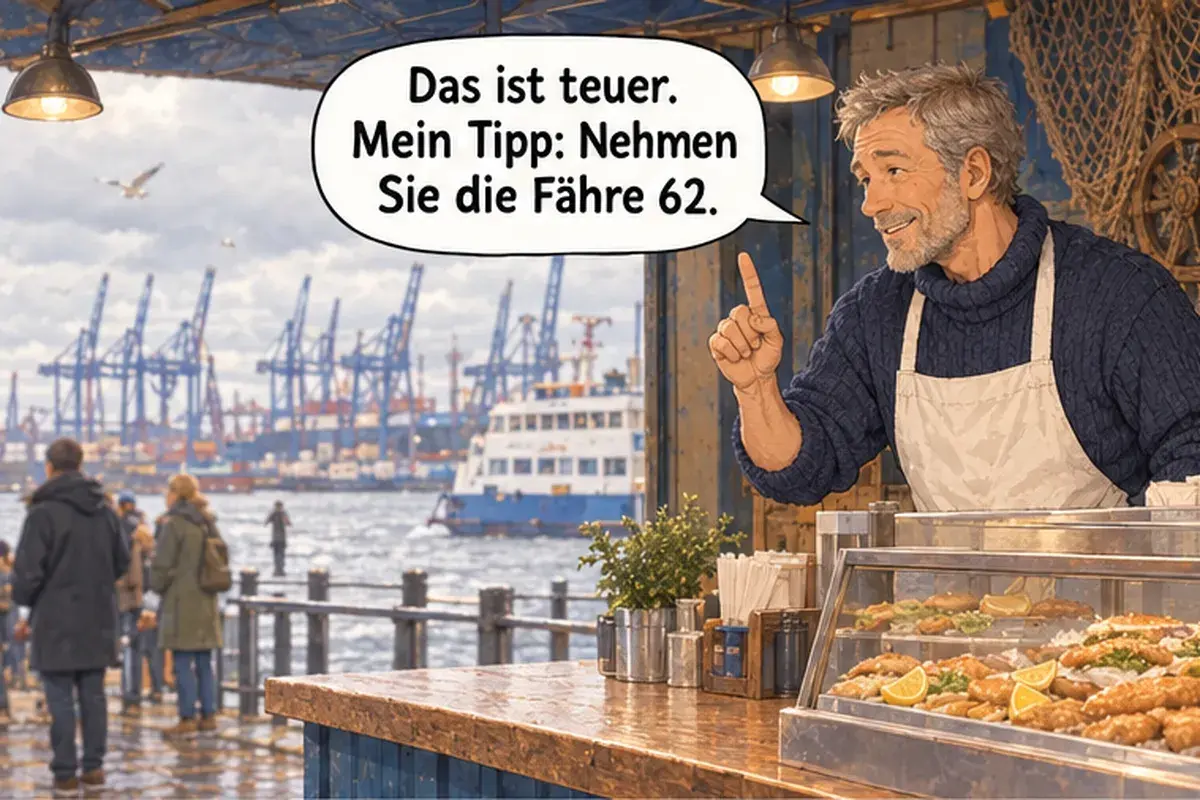
- Verkäufer
Das ist teuer. Mein Tipp: Nehmen Sie die Fähre 62.
That's expensive. My tip: take ferry 62. (formal)
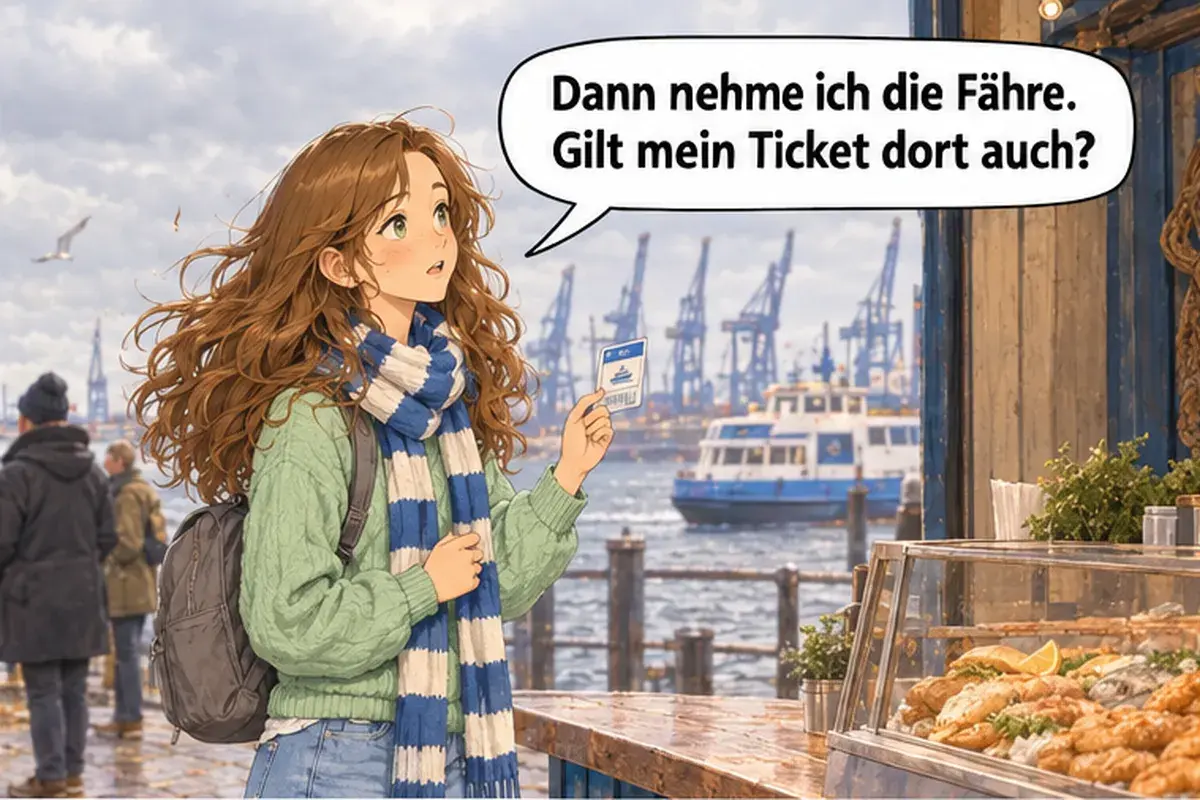
- Katja
Dann nehme ich die Fähre. Gilt mein Ticket dort auch?
Then I'll take the ferry. Is my ticket valid there too?
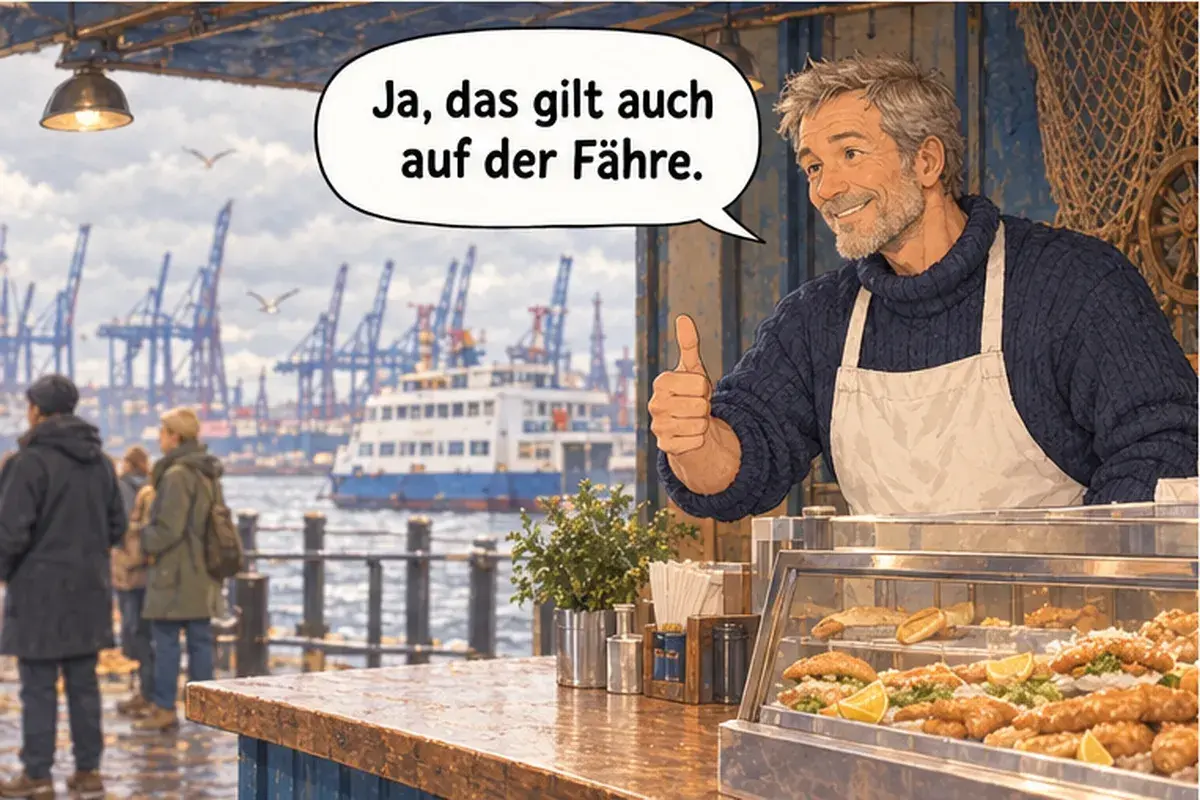
- Verkäufer
Ja, das gilt auch auf der Fähre.
Yes, it's valid on the ferry too.
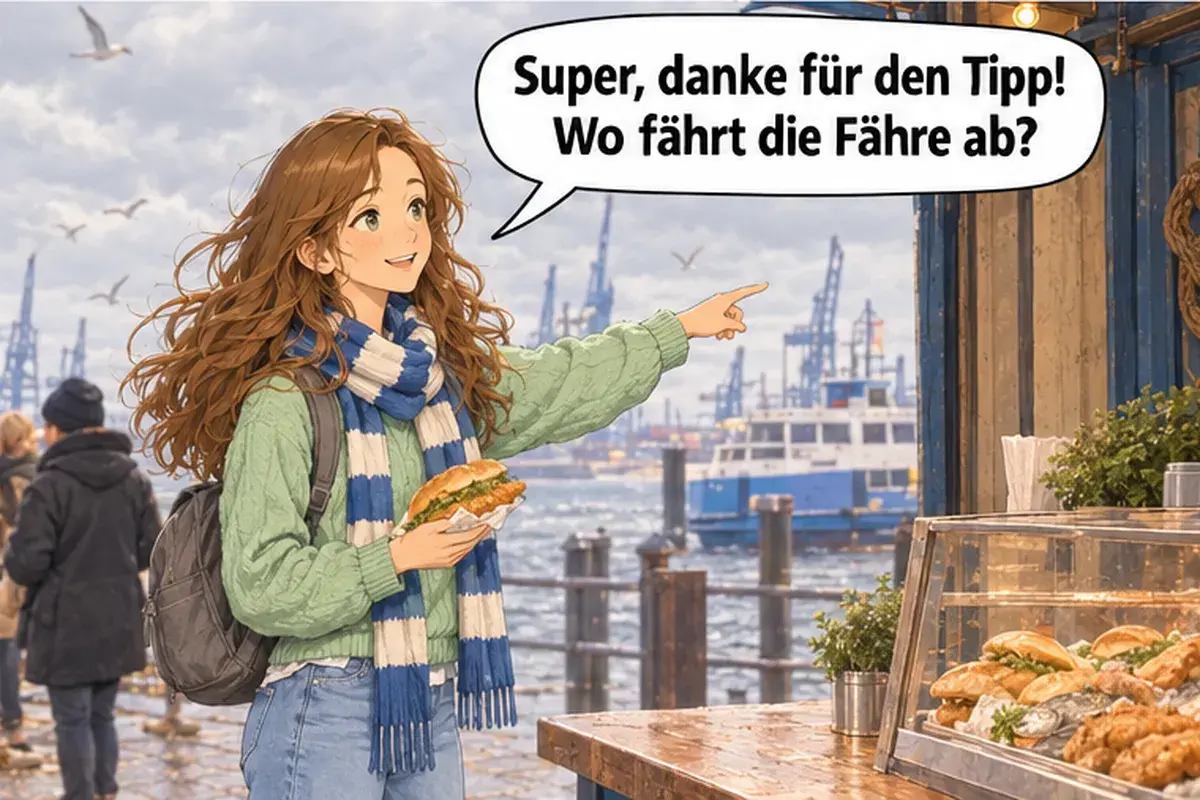
- Katja
Super, danke für den Tipp! Wo fährt die Fähre ab?
Great, thanks for the tip! Where does the ferry leave from?
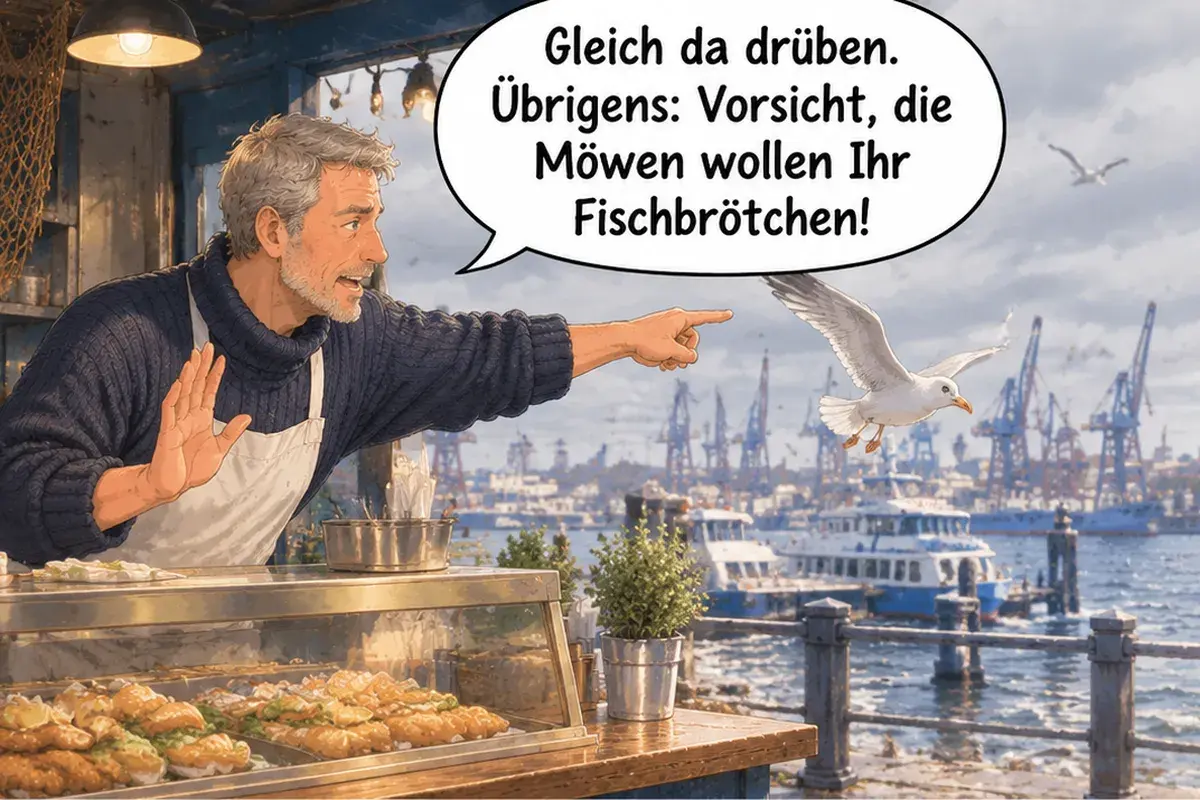
- Verkäufer
Gleich da drüben. Übrigens: Vorsicht, die Möwen wollen Ihr Fischbrötchen!
Right over there. By the way, careful: the seagulls want your fish sandwich! (formal)
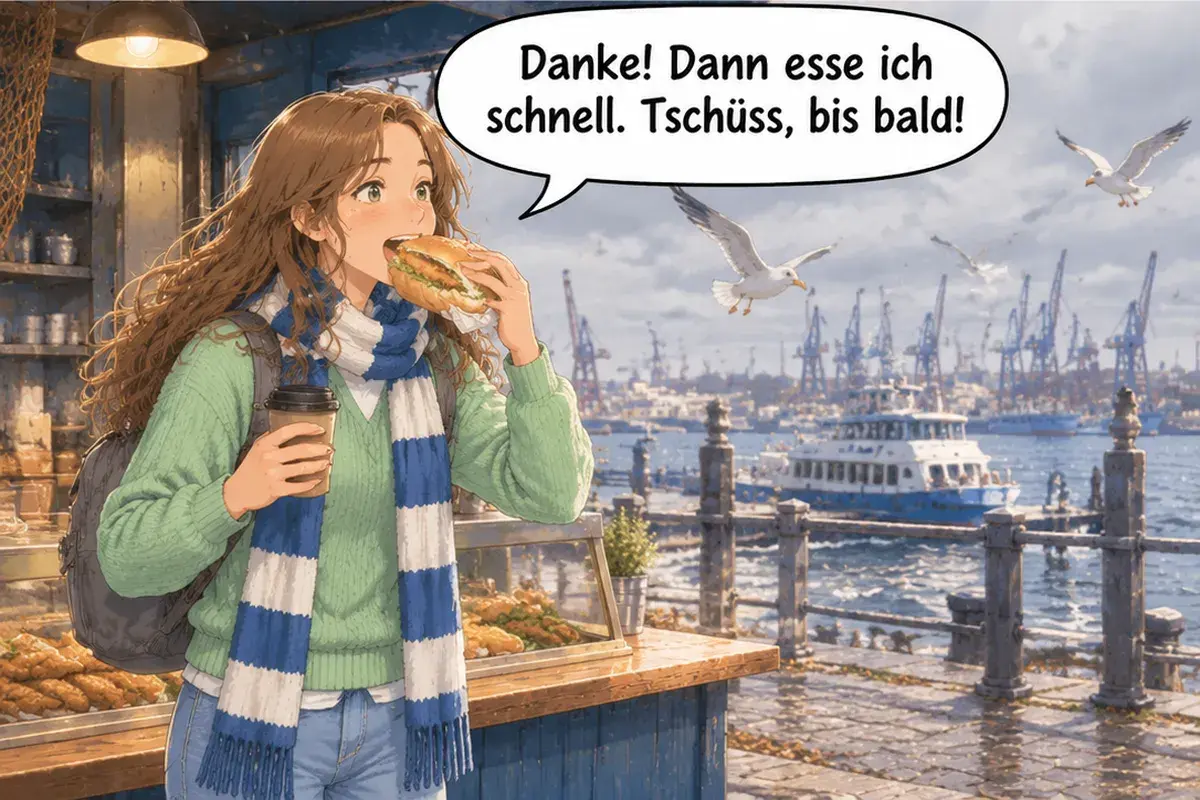
- Katja
Danke! Dann esse ich schnell. Tschüss, bis bald!
Thanks! Then I'll eat fast. Bye, see you soon!
Grammar for this text
- Moin! Ein Fischbrötchen, bitte. —
Moinis the Hamburg greeting, and you answer with the same word (see the unit grammar).Fischbrötchenis neuter, so it'sein. Ordering without a verb is normal: everyone does it, just like "A coffee, please" in English. - Mit oder ohne Zwiebeln? —
Zwiebelnis plural: that's how you order, with no article. Aftermitcomes the dative (see the unit grammar). - Und einen Kaffee im Becher. —
einenis the accusative (masculine, an order; A1).imisin dem: in the dativeder Becherbecomesdem Becher, "in a cup". - Schietwetter heute! — a northern word for "lousy weather". It's a bit rude, but in Hamburg people say it good-naturedly. You can also say
Das Wetter ist schlecht. The gender:das Schietwetter. - Mein Tipp: Nehmen Sie die Fähre 62. — polite advice: the verb comes first, and
Sieright after it (Nehmen Sie, A1). Say the number as one word:zweiundsechzig. - Gilt mein Ticket dort auch? —
giltis the er / sie / es form ofgelten(to be valid, unit 2): the stem changes frometoi. Ticket isdas Ticket, so it'ses gilt. - Wo fährt die Fähre ab? —
abfahren(to leave, to depart) splits in two:fährt(likefahren,abecomesä) is in second place, andabgoes to the end of the question.
Words and grammar of the unit: Meet up and talk about work.
Learn the words from the texts with flashcards
In the app, you can tap any word in a text to see its translation, forms and examples, and new words stick with flashcards. 15 minutes a day.
Start for freeEverything is open for free. No card needed to sign up.