

German dialogue with translation · A2 · 14 lines
Ich sage dir Bescheid I'll let you know
Comic · 14 panels
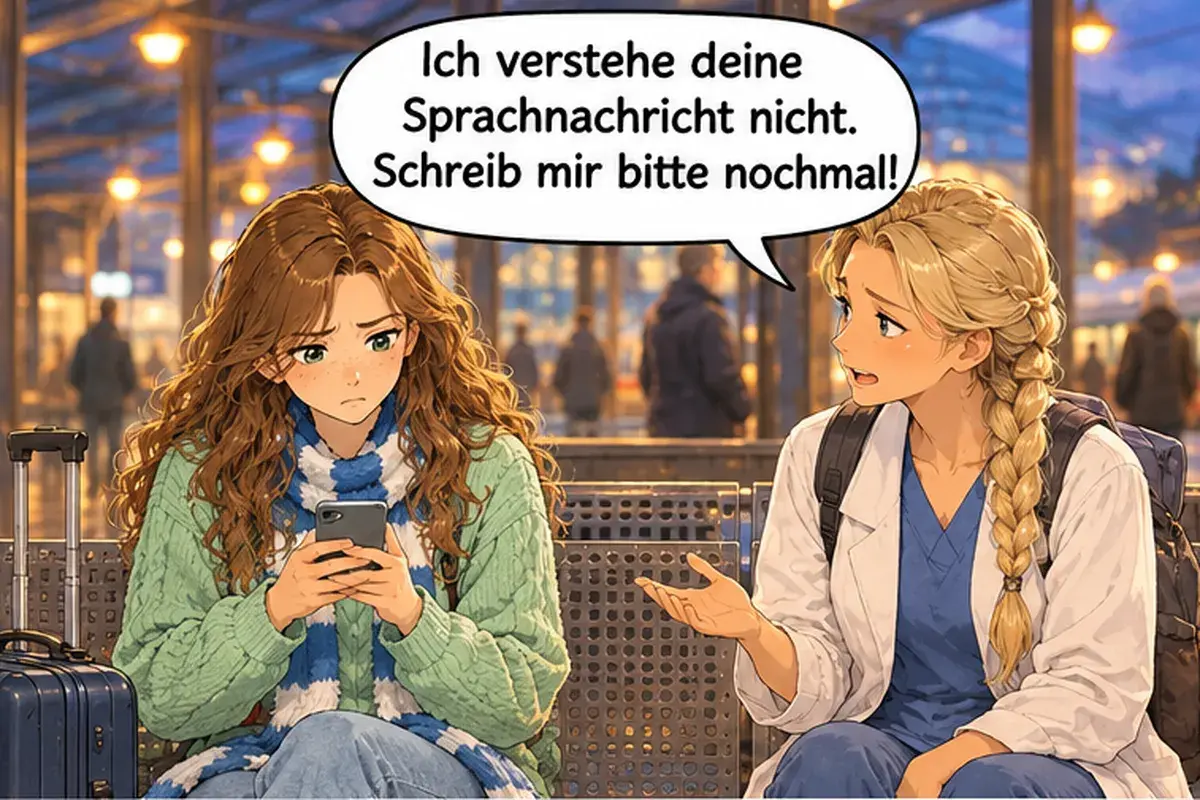
- Hanna
Ich verstehe deine Sprachnachricht nicht. Schreib mir bitte nochmal!
I don't understand your voice message. Write to me again, please!
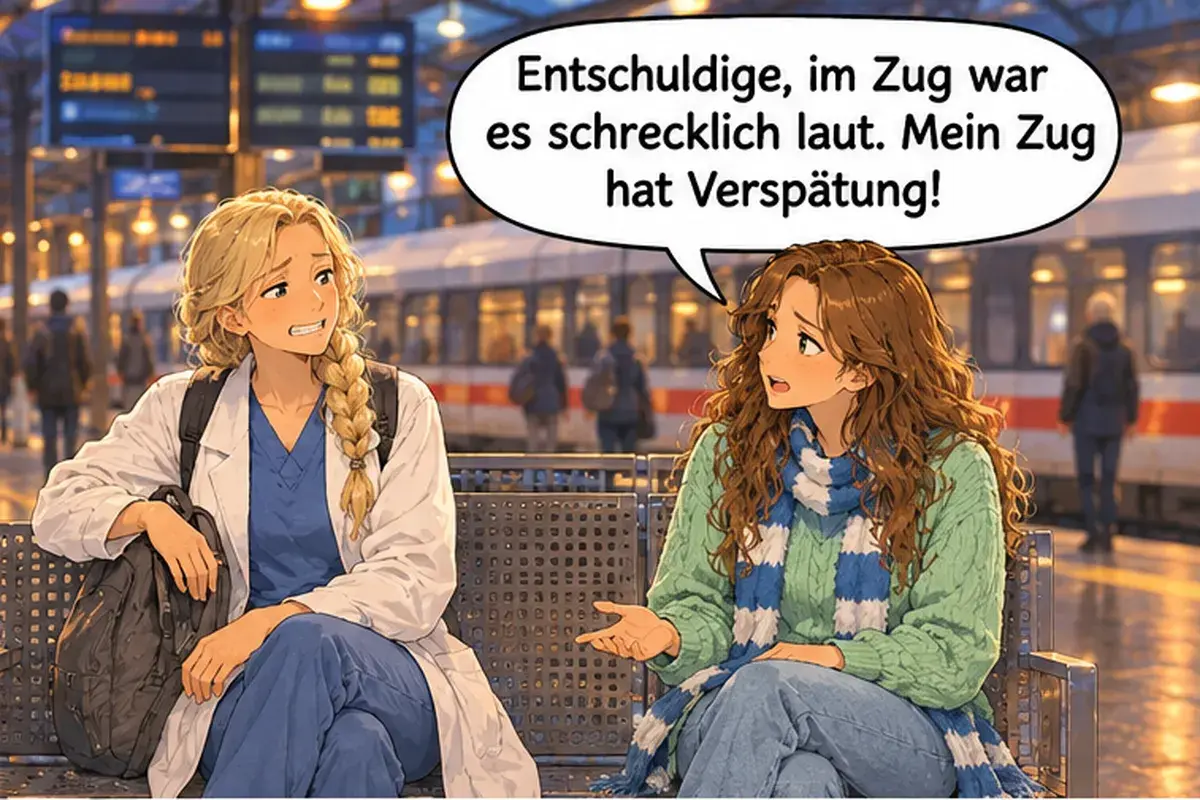
- Katja
Entschuldige, im Zug war es schrecklich laut. Mein Zug hat Verspätung!
Sorry, it was terribly loud on the train. My train is late!
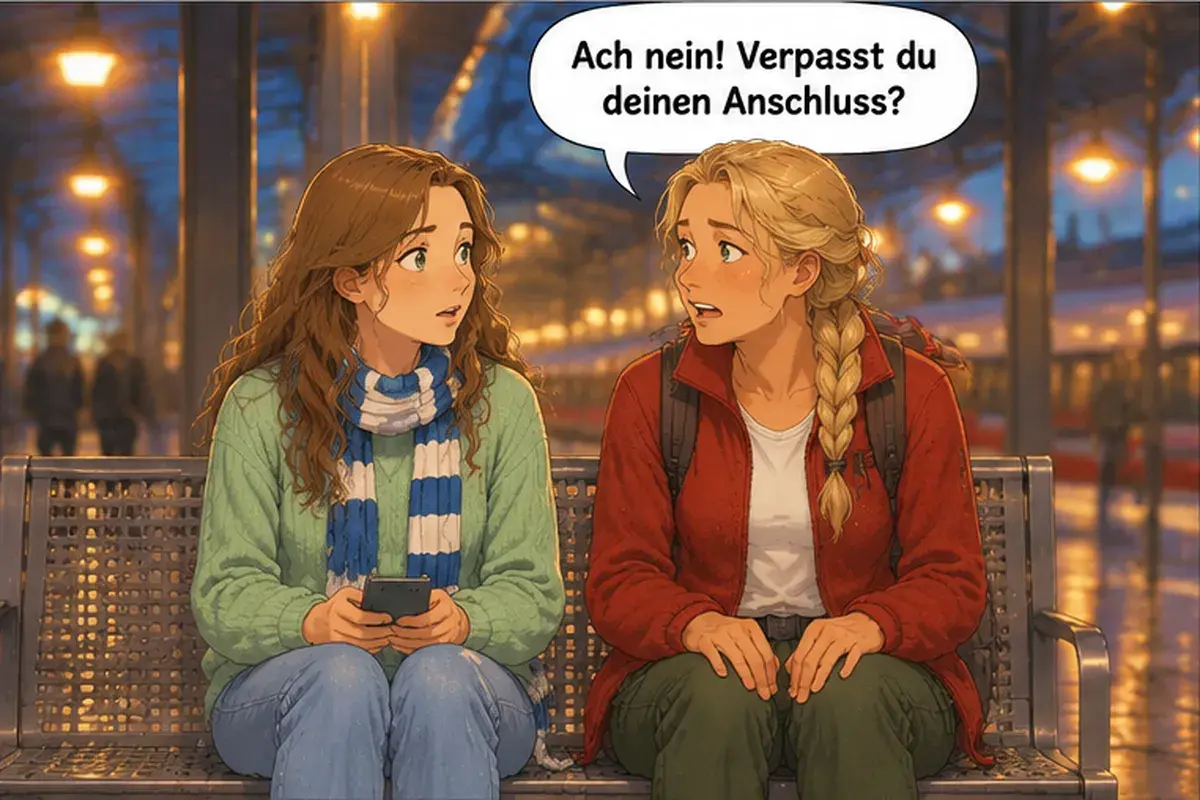
- Hanna
Ach nein! Verpasst du deinen Anschluss?
Oh no! Are you missing your connection?
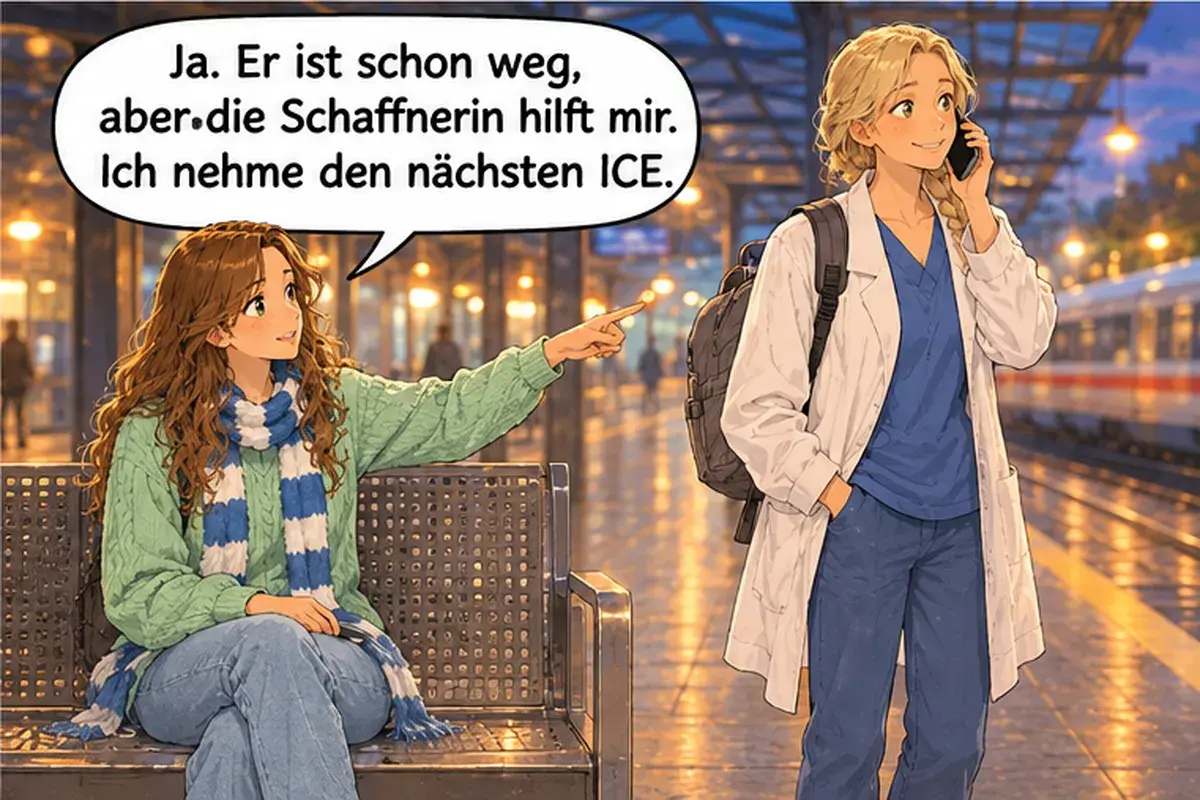
- Katja
Ja. Er ist schon weg, aber die Schaffnerin hilft mir. Ich nehme den nächsten ICE.
Yes. It's already gone, but the conductor is helping me. I'm taking the next ICE.
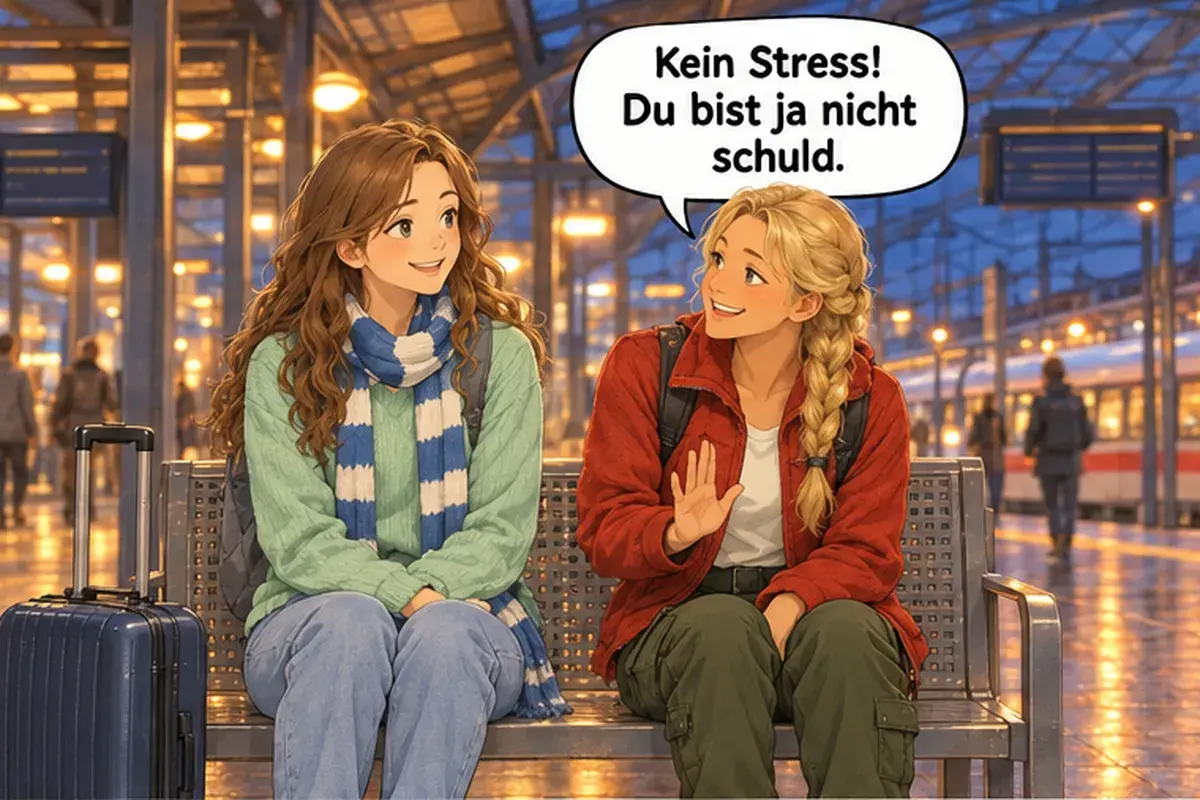
- Hanna
Kein Stress! Du bist ja nicht schuld.
No stress! You're not to blame, after all.
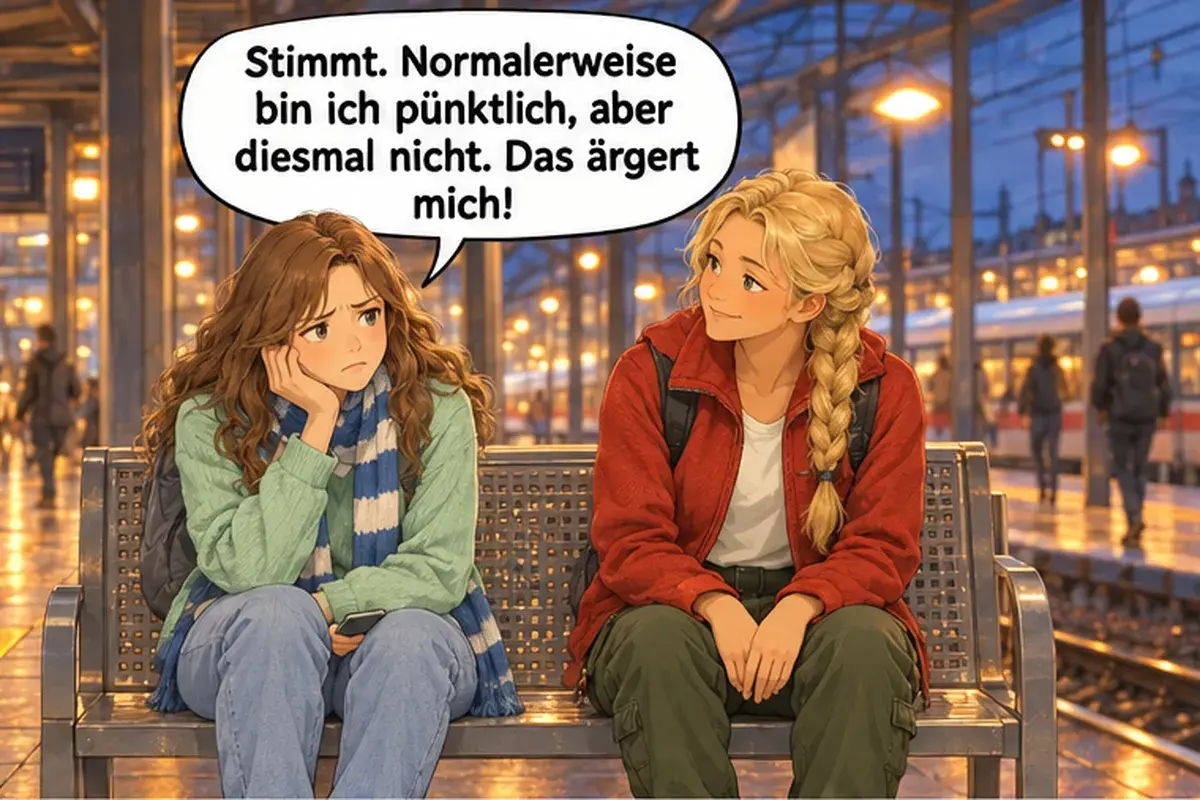
- Katja
Stimmt. Normalerweise bin ich pünktlich, aber diesmal nicht. Das ärgert mich!
Right. Usually I'm on time, but not this time. That annoys me!
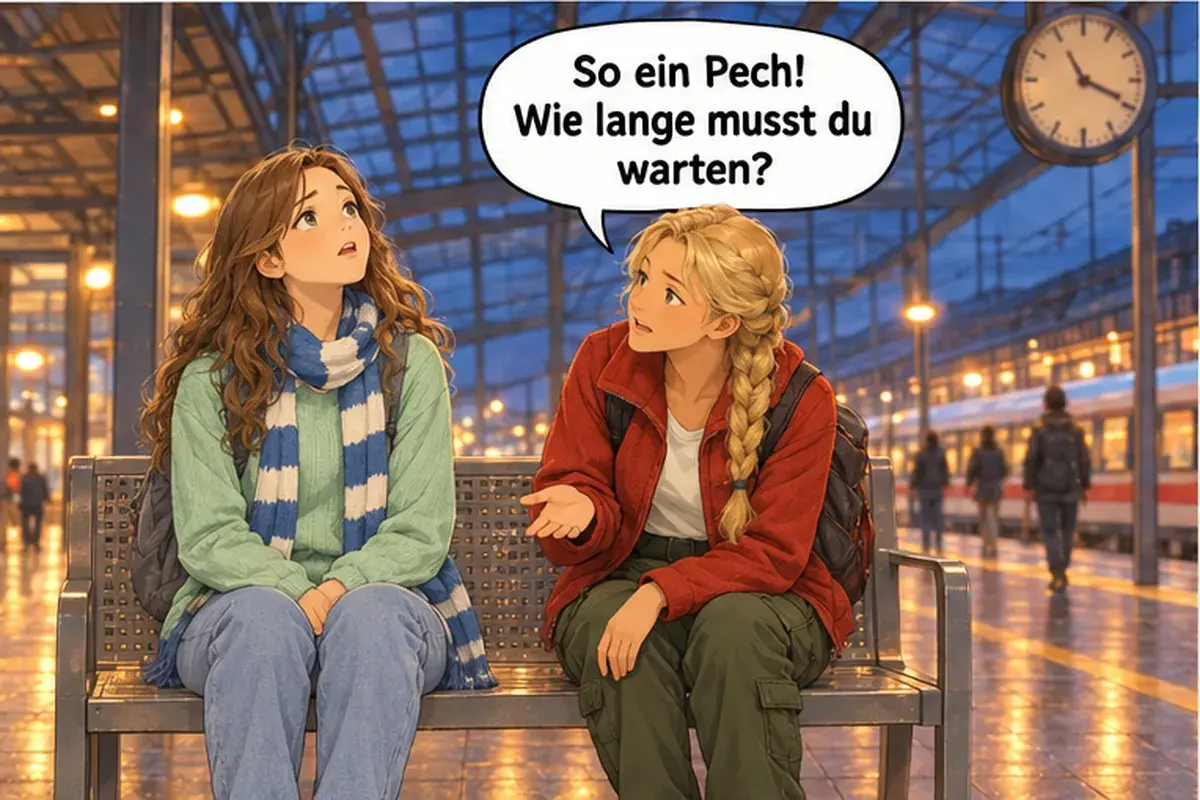
- Hanna
So ein Pech! Wie lange musst du warten?
What bad luck! How long do you have to wait?
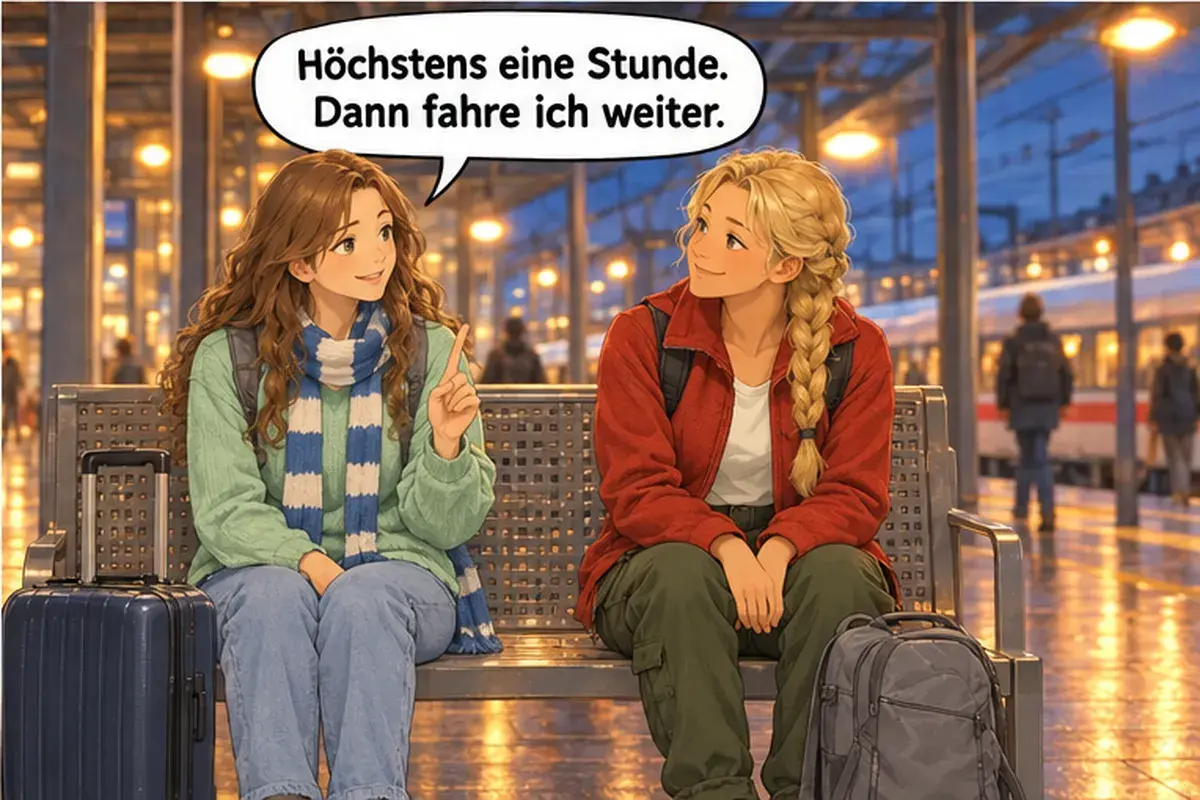
- Katja
Höchstens eine Stunde. Dann fahre ich weiter.
An hour at most. Then I'll go on.
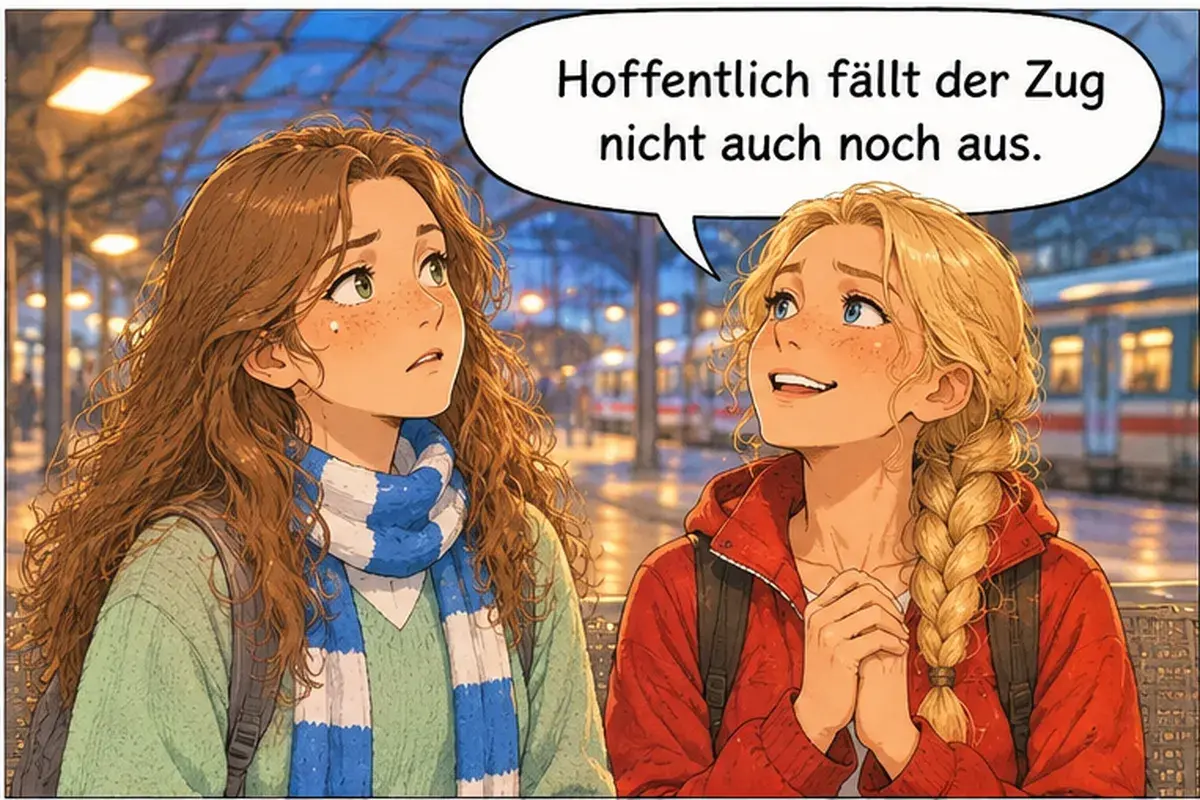
- Hanna
Hoffentlich fällt der Zug nicht auch noch aus.
Hopefully the train won't be canceled on top of that.

- Katja
Sag das nicht! Inzwischen trinke ich einen Kaffee.
Don't say that! In the meantime, I'll have a coffee.

- Hanna
Gute Idee! Sag mir bitte Bescheid. Ich hole dich ab.
Good idea! Please let me know. I'll pick you up.

- Katja
Ich sage dir Bescheid. Spätestens um 20 Uhr bin ich da.
I'll let you know. I'll be there by 20:00 at the latest.
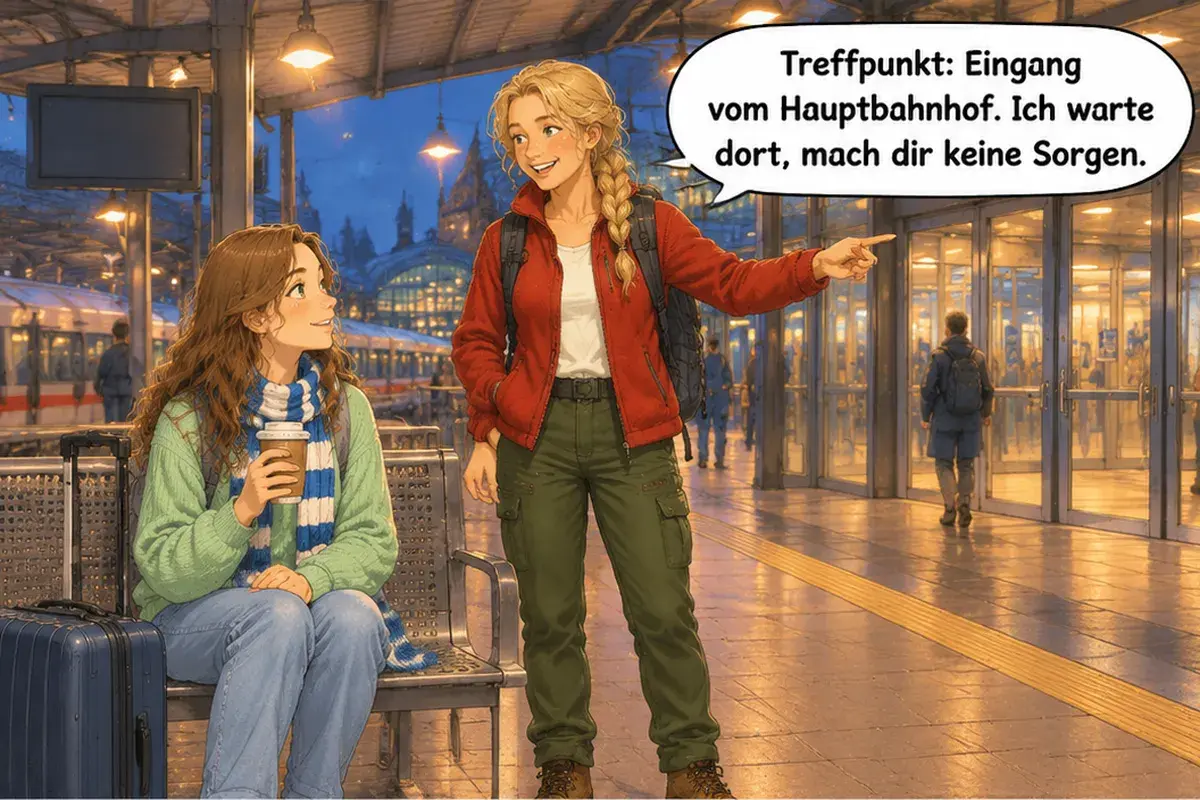
- Hanna
Treffpunkt: Eingang vom Hauptbahnhof. Ich warte dort, mach dir keine Sorgen.
Meeting point: the entrance of the main station. I'll wait there, don't worry.

- Katja
Danke für deine Geduld! Bis gleich!
Thanks for your patience! See you in a bit!
Grammar for this text
- Schreib mir bitte nochmal! — the du command (A1, unit 15): the verb comes first, without
du:schreiben → schreib.mirmeans "(to) me": the person you write to is in the dative.nochmalmeans "again". - Er ist schon weg, aber die Schaffnerin hilft mir. —
weghere means "gone, left" (about a train).hilftis the er / sie / es form ofhelfen(to help): the stem changese → i. The person you help is in the dative:mir. English says "help me", German saysmir, notmich. - Kein Stress! Du bist ja nicht schuld. —
Kein Stressis a set phrase: "No rush, relax!"schuldmeans "to blame" and never changes.jais a small word meaning "after all, you know". - Normalerweise bin ich pünktlich, aber diesmal nicht. Das ärgert mich! —
Normalerweiseis in first place, so the verbbincomes second andichcomes after it. In English the subject would stay before the verb.ärgertis the form ofärgern(to annoy) fordas: "that annoys me".michis the person who gets annoyed (accusative, like "me"). - Hoffentlich fällt der Zug nicht auch noch aus. —
ausfallen(to be canceled):fälltcomes fromfallen(a → ä), andausgoes to the end. AfterHoffentlichthe verb comes right away. - Sag mir bitte Bescheid. — "let me know". The person you tell is in the dative (
mir,dir: Ich sage dir Bescheid).Sagis the du command. - Ich warte dort, mach dir keine Sorgen. —
Mach dir keine Sorgenis a set phrase, "don't worry": learn it as a whole. Danke für deine Geduld! Bis gleich! —Bis gleichmeans "see you in a bit": you'll see each other very soon, in an hour or two. For later, sayBis später.
Words and grammar of the unit: Handle a train delay.
Learn the words from the texts with flashcards
In the app, you can tap any word in a text to see its translation, forms and examples, and new words stick with flashcards. 15 minutes a day.
Start for freeEverything is open for free. No card needed to sign up.