

German dialogue with translation · A2 · 13 lines
Willkommen in München! Welcome to Munich!
Comic · 13 panels

- Hanna
Servus, Katja! Willkommen in München!
Hi, Katja! Welcome to Munich!

- Katja
Servus, Hanna! Entschuldigung, ich habe mich im Bahnhof verlaufen.
Hi, Hanna! Sorry, I got lost in the station.

- Hanna
Kein Problem! Komm her, ich umarme dich!
No problem! Come here, I'll give you a hug!

- Katja
Du bist so herzlich! Lukas sagt, du bist Krankenpflegerin.
You're so warmhearted! Lukas says you're a nurse.
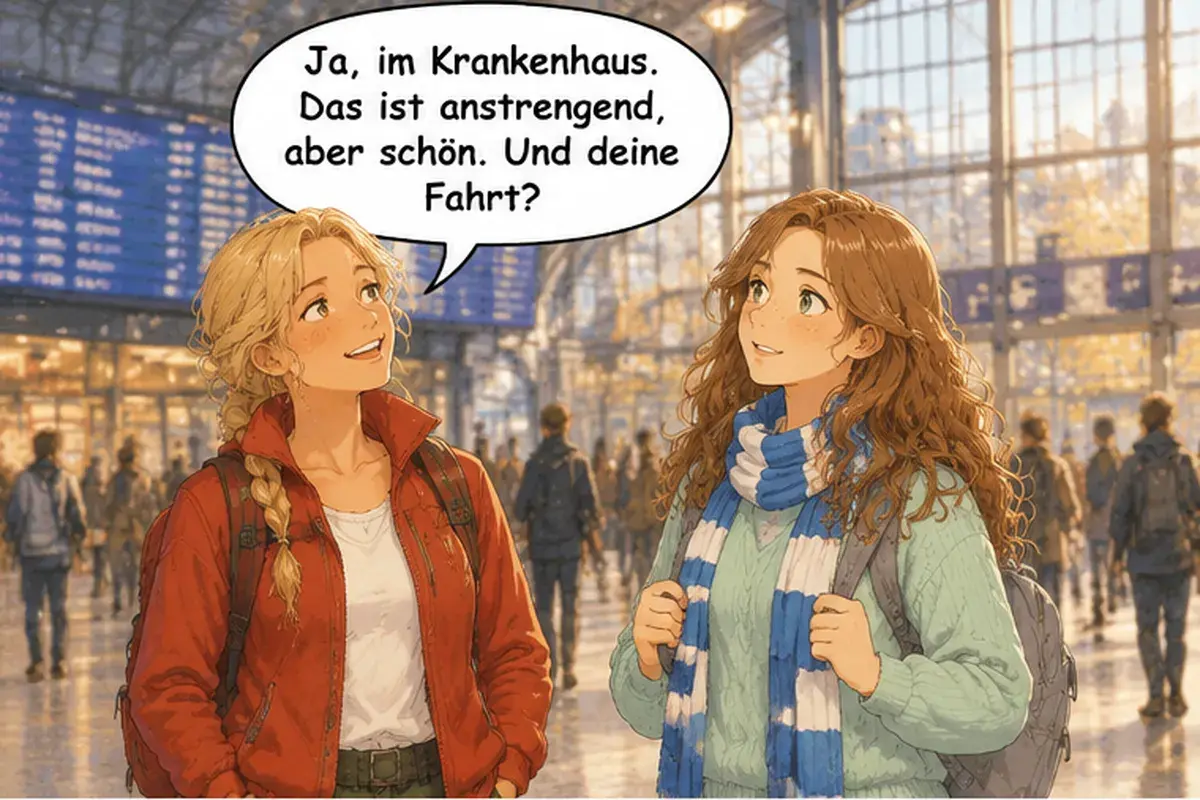
- Hanna
Ja, im Krankenhaus. Das ist anstrengend, aber schön. Und deine Fahrt?
Yes, at the hospital. It's tiring, but it's nice. And your trip?

- Katja
Lang! Heute möchte ich mich nur ausruhen. Morgen gehen wir aus, ja?
Long! Today I'd just like to rest. We're going out tomorrow, right?
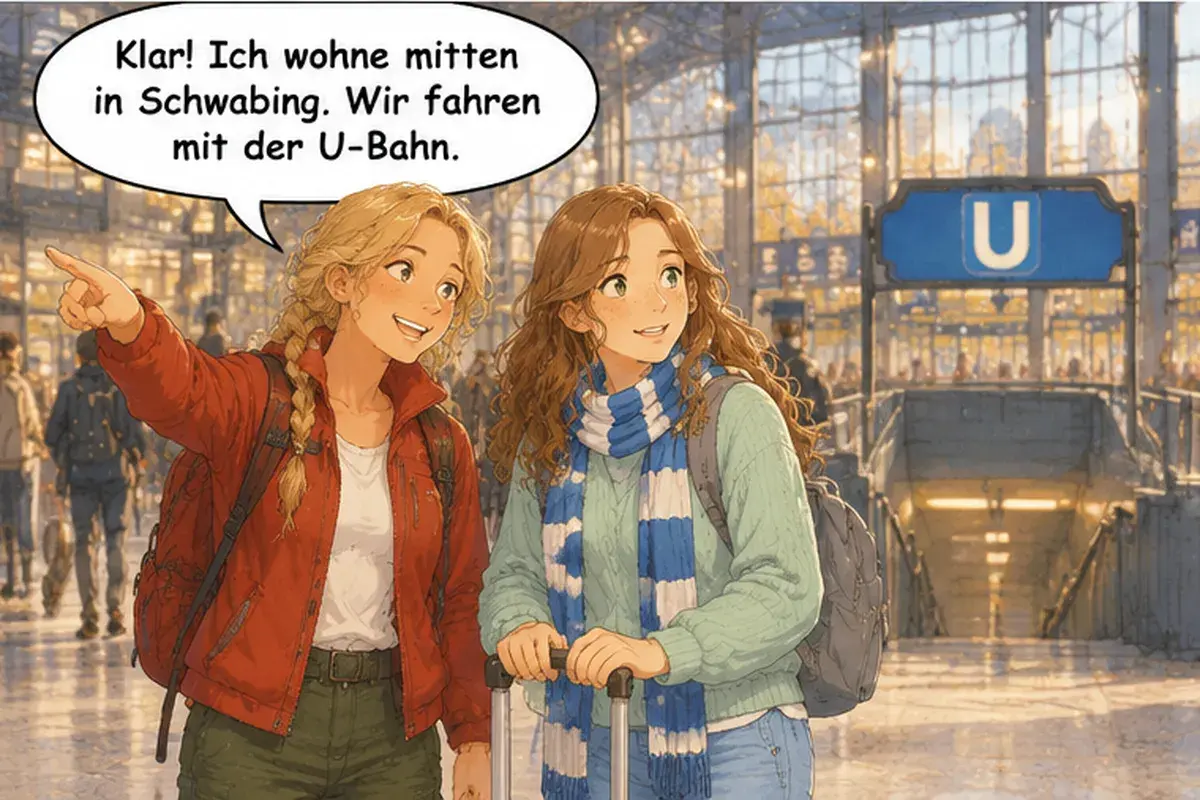
- Hanna
Klar! Ich wohne mitten in Schwabing. Wir fahren mit der U-Bahn.
Sure! I live right in the middle of Schwabing. We'll take the subway.

- Katja
Sag mal, wann sagt man Servus und wann Grüß Gott?
Tell me, when do you say "Servus" and when "Grüß Gott"?

- Hanna
Grüß Gott geht immer. Servus sagt man nur zu Freunden.
"Grüß Gott" always works. You only say "Servus" to friends.

- Katja
Die Leute hier sprechen so anders. Ist das Dialekt?
People here talk so differently. Is that dialect?

- Hanna
Ja, Bayerisch. Du verstehst es bald. Hier biegen wir links ab.
Yes, Bavarian. You'll understand it soon. We turn left here.

- Katja
Es ist so ruhig hier. Wo sind die Dirndl und Lederhosen?
It's so quiet here. Where are the dirndls and lederhosen?

- Hanna
Die Wiesn ist vorbei, die Saison auch. Die Dirndl sind im Schrank.
Oktoberfest is over, and so is the season. The dirndls are in the closet.
Grammar for this text
- Servus, Katja! —
Servusis a Bavarian "hi". People use it with friends. When to sayServusand when to sayGrüß Gottis in the unit grammar. - Ich habe mich im Bahnhof verlaufen. —
sich verlaufenmeans to get lost (on foot). It's a reflexive verb:ichgoes withmich. This is the Perfekt withhaben; the participleverlaufenhas noge-because of the prefixver-(likeverpasst). - Komm her, ich umarme dich! —
Kommis the du command ofkommen, andhermeans "over here".ich umarmeis the present tense, but here it's about what happens right now: I'll give you a hug. - Lukas sagt, du bist Krankenpflegerin. — Lukas says you're a nurse. There's no
dass(that), so the word order stays normal, and English can drop "that" too.die Krankenpflegerinis the feminine form ofder Krankenpfleger. With a job, German uses no article: English says "a nurse". - Heute möchte ich mich nur ausruhen. —
möchtecomes second,michcomes right afterich, andausruhengoes to the end. Withoutmöchteit'sIch ruhe mich aus, and the prefixausgoes to the end. - Morgen gehen wir aus, ja? —
ausgehenmeans to go out (in the evening), just like in English.aushas gone to the end, like inaufstehen. Theja?at the end means "right?". - Die Wiesn ist vorbei, die Saison auch. —
die Wiesnis what people in Munich call Oktoberfest. The secondist vorbeiis left out, just like in English: Oktoberfest is over, and so is the season.
Words and grammar of the unit: Visit a friend at home.
Learn the words from the texts with flashcards
In the app, you can tap any word in a text to see its translation, forms and examples, and new words stick with flashcards. 15 minutes a day.
Start for freeEverything is open for free. No card needed to sign up.