

German dialogue with translation · A2 · 14 lines
Fühl dich wie zu Hause! Make yourself at home!
Comic · 14 panels

- Hanna
So, wir sind da. Komm rein!
Well, here we are. Come in!
- Katja
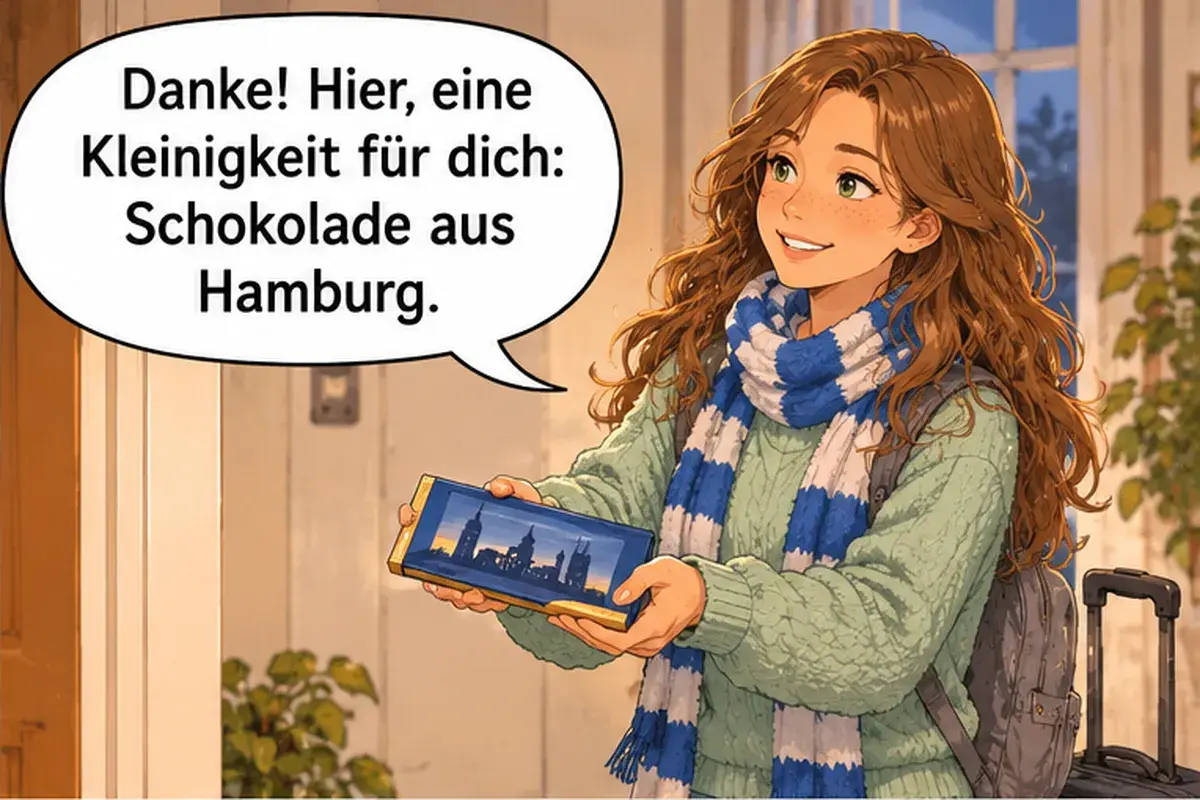
Danke! Hier, eine Kleinigkeit für dich: Schokolade aus Hamburg.
Thanks! Here, a little something for you: chocolate from Hamburg.

- Hanna
Wie lieb! Zieh bitte die Schuhe aus. Hier, Hausschuhe für Gäste.
How sweet! Please take off your shoes. Here are slippers for guests.
- Katja
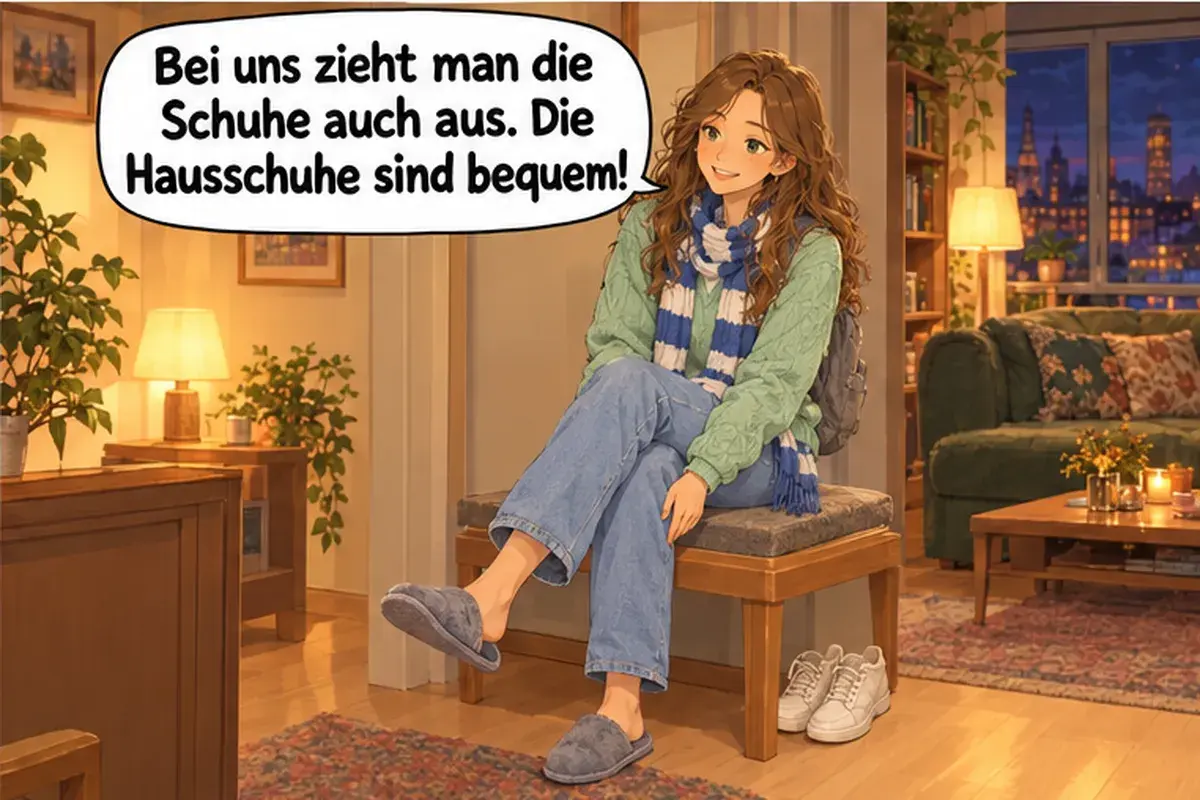
Bei uns zieht man die Schuhe auch aus. Die Hausschuhe sind bequem!
Back home, people take their shoes off too. The slippers are comfortable!
- Hanna
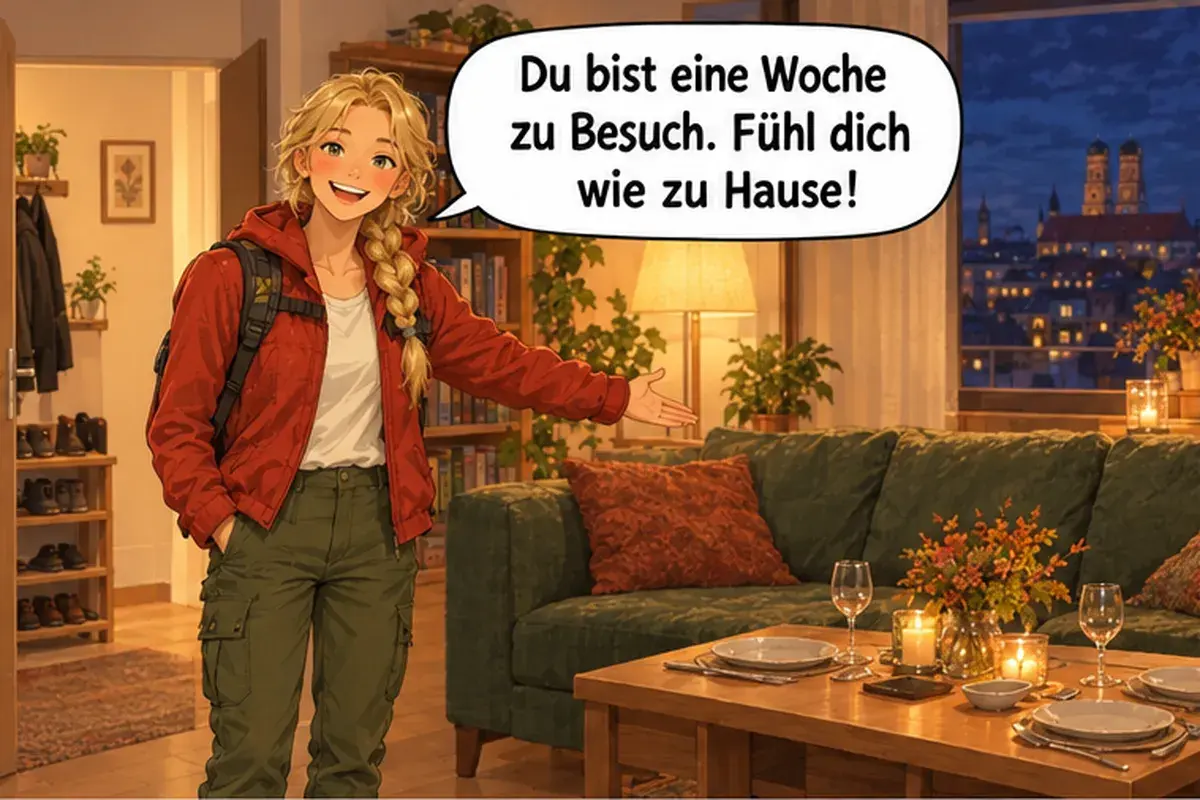
Du bist eine Woche zu Besuch. Fühl dich wie zu Hause!
You're visiting for a week. Make yourself at home!
- Katja
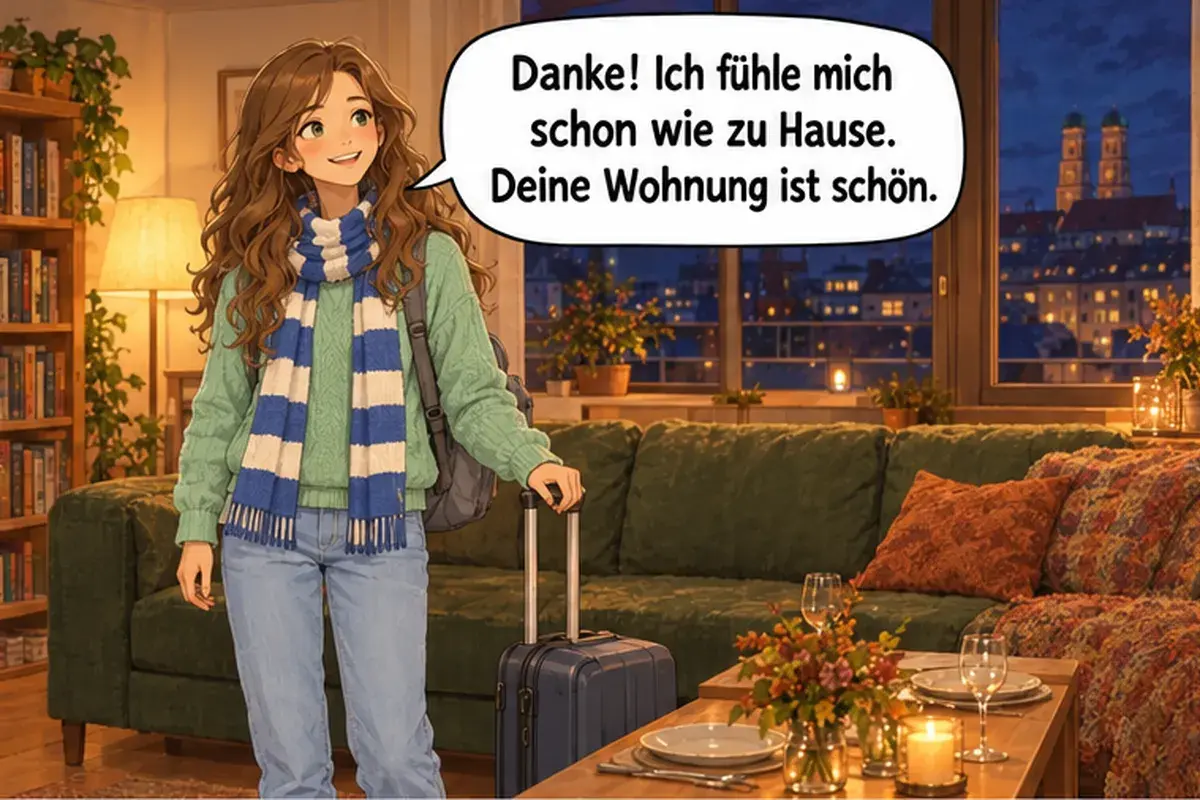
Danke! Ich fühle mich schon wie zu Hause. Deine Wohnung ist schön.
Thanks! I already feel at home. Your apartment is beautiful.
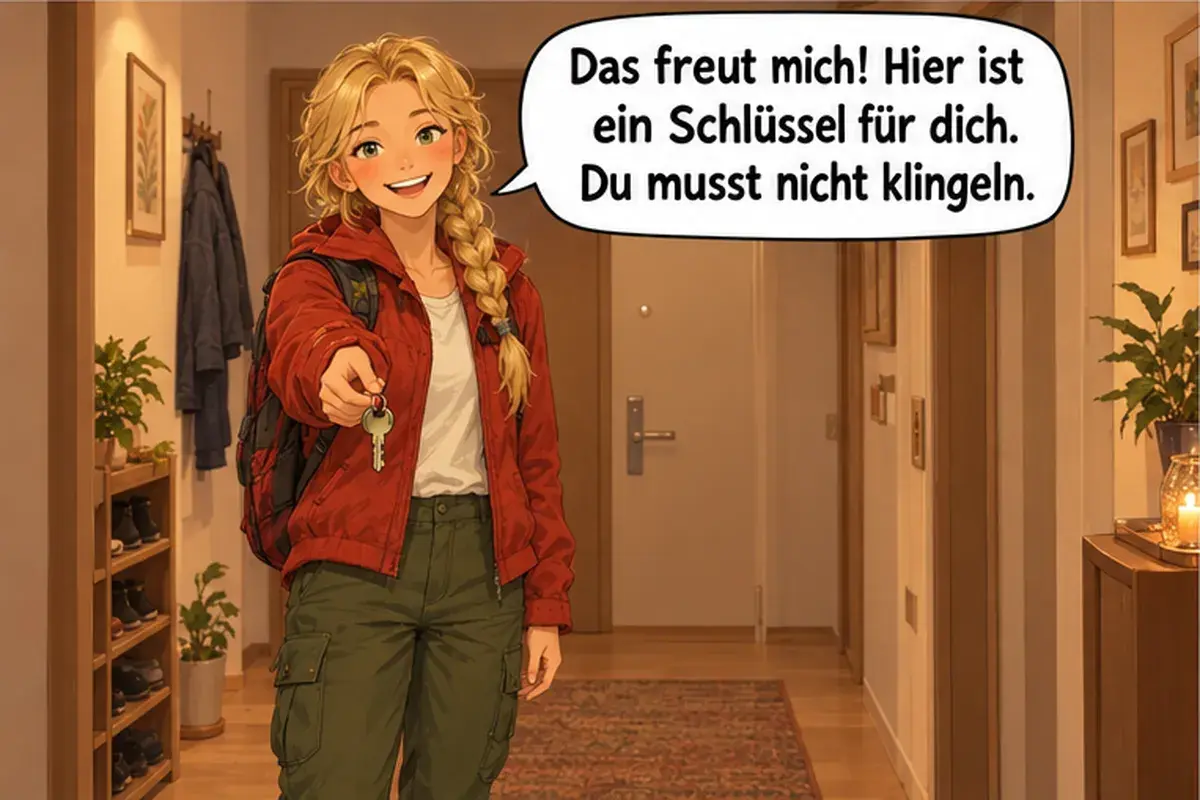
- Hanna
Das freut mich! Hier ist ein Schlüssel für dich. Du musst nicht klingeln.
I'm glad! Here's a key for you. You don't have to ring the doorbell.
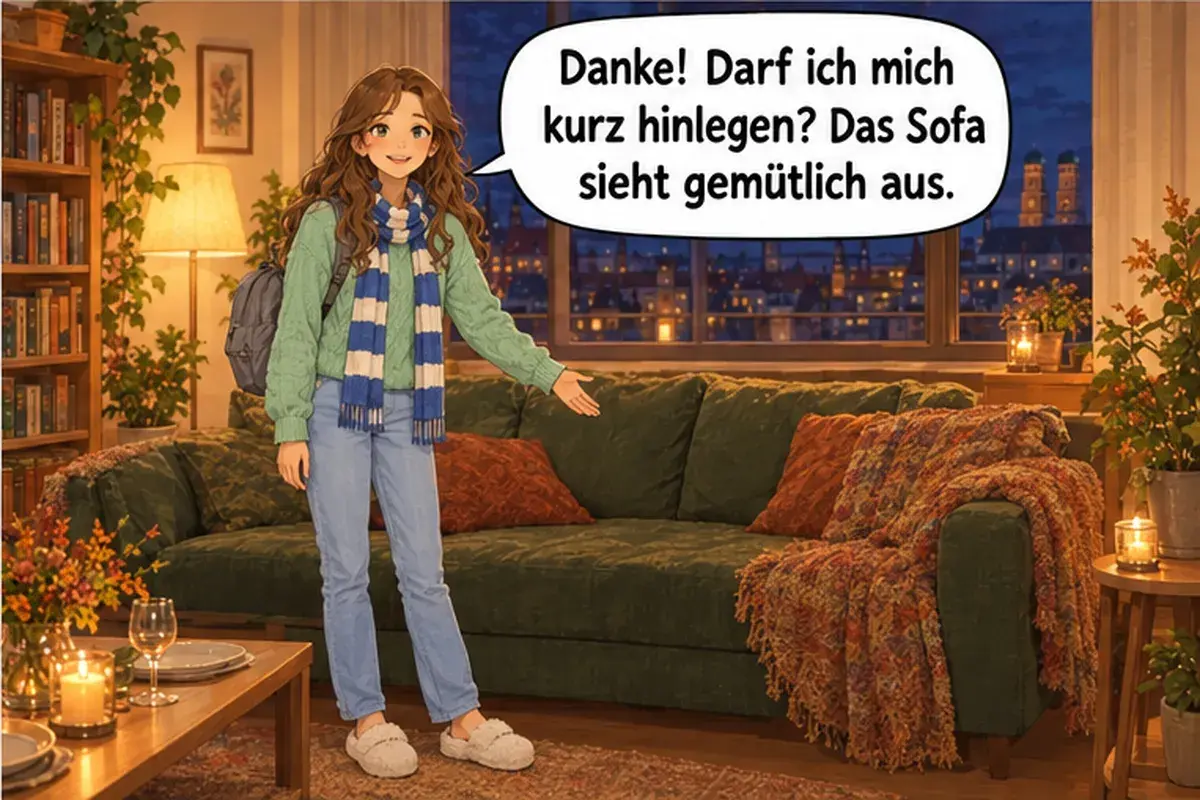
- Katja
Danke! Darf ich mich kurz hinlegen? Das Sofa sieht gemütlich aus.
Thanks! May I lie down for a bit? The sofa looks cozy.
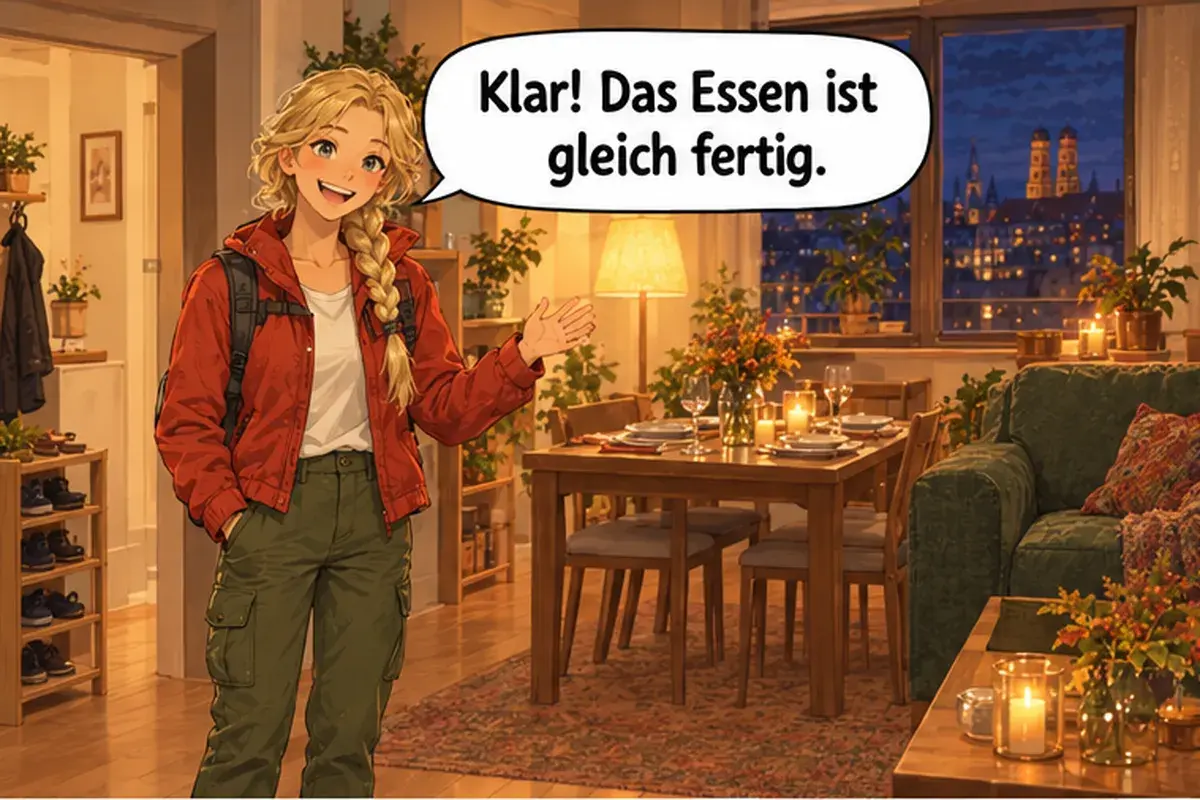
- Hanna
Klar! Das Essen ist gleich fertig.
Sure! The food will be ready in a minute.
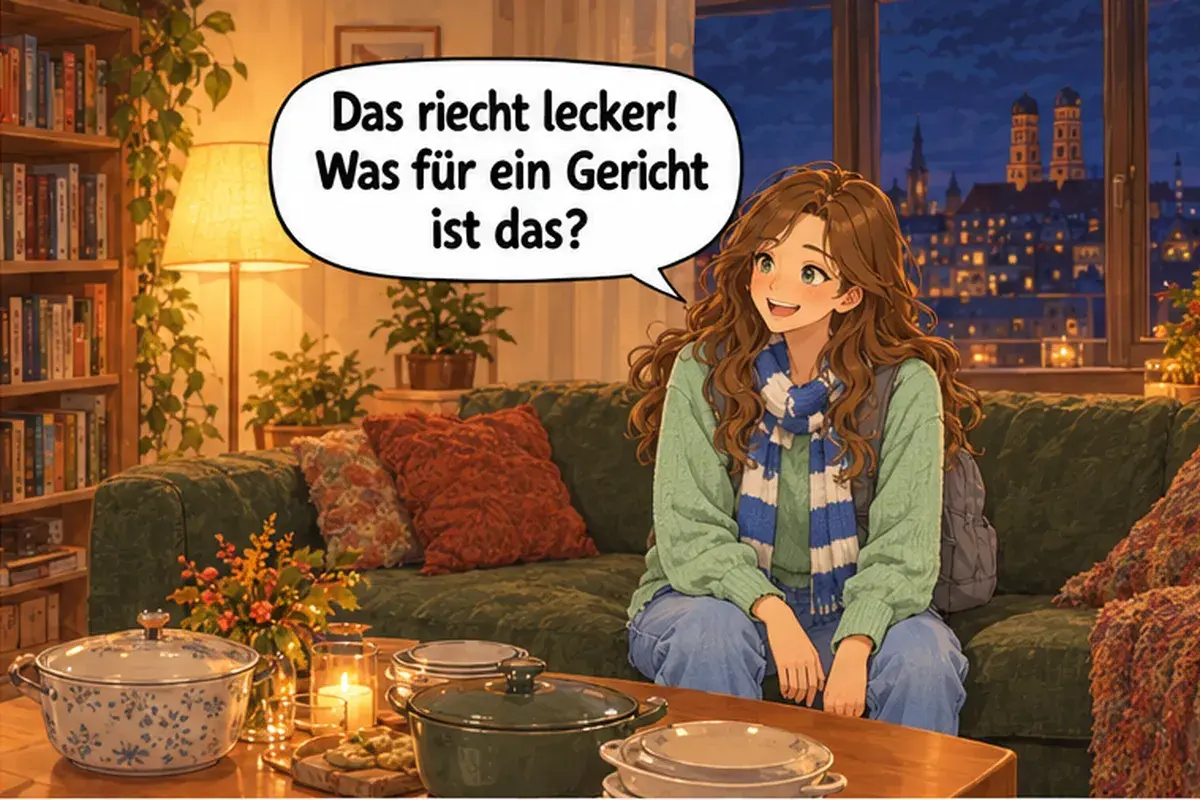
- Katja
Das riecht lecker! Was für ein Gericht ist das?
That smells delicious! What kind of dish is that?

- Hanna
Knödel mit Soße, ganz vegetarisch. Ich habe schon gedeckt. Bedien dich!
Dumplings with sauce, completely vegetarian. I've already set the table. Help yourself!
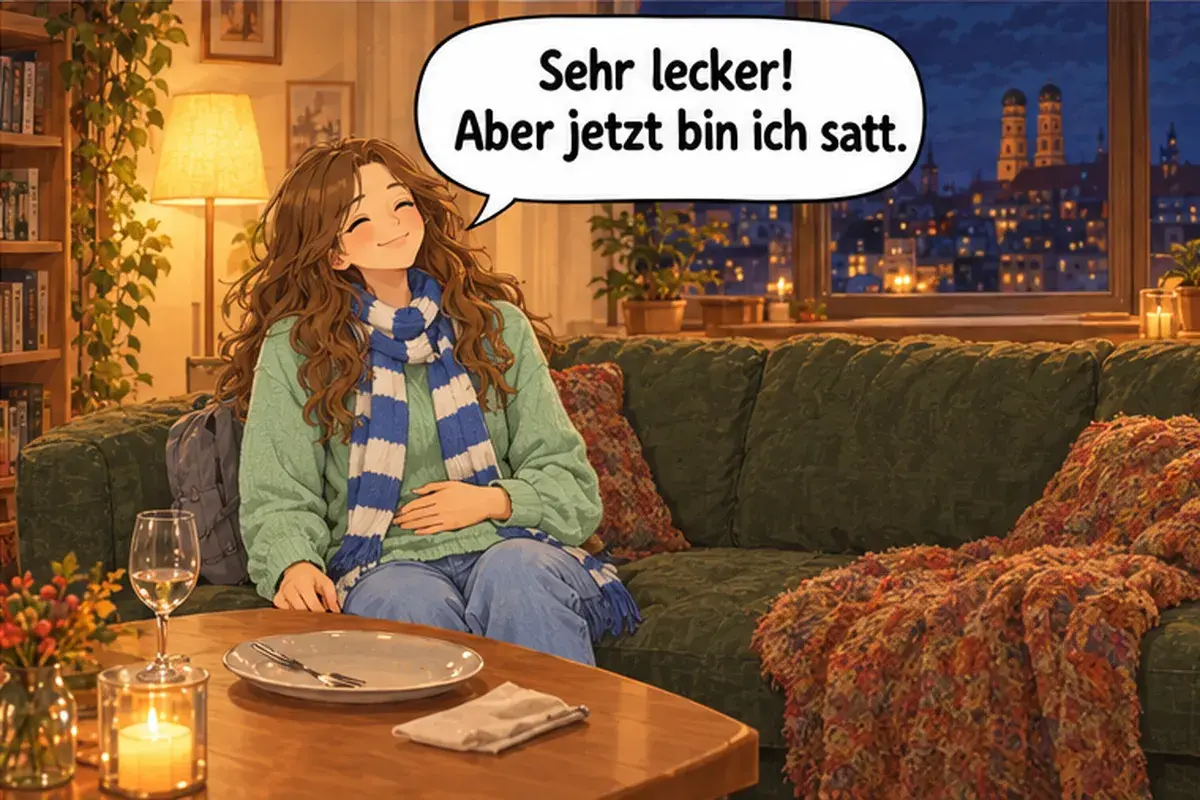
- Katja
Sehr lecker! Aber jetzt bin ich satt.
Really tasty! But now I'm full.

- Hanna
Zum Nachtisch gibt es Kuchen. Teilen wir ein Stück?
There's cake for dessert. Shall we share a piece?

- Katja
Gern! Danke für alles, Hanna.
I'd love to! Thanks for everything, Hanna.
Grammar for this text
- Zieh bitte die Schuhe aus. —
ausziehenmeans to take off (shoes, clothes). This is the du command: takedu ziehst, dropduand-st, and you getzieh. The prefixausgoes to the end. Guests at the door getHausschuhe(slippers). - Bei uns zieht man die Schuhe auch aus. —
manmeans people in general, and the verb takes the er form:man zieht aus.bei unsmeans "at our place" or "back home". It's a set phrase; the dative afterbeiwas in unit 3. - Du bist eine Woche zu Besuch. Fühl dich wie zu Hause! —
zu Besuch seinmeans to be visiting;eine Wochemeans for a whole week.Fühl dich!is the command ofsich fühlen:du fühlst dichbecomesFühl dich!, anddichstays. - Du musst nicht klingeln. —
musstis the du form ofmüssen.klingelnmeans to ring the doorbell; with a key, Katja doesn't need to. Careful:nicht müssenmeans "don't have to", not "must not".nichtcomes beforeklingelnat the end. - Darf ich mich kurz hinlegen? —
darfis the ich form ofdürfen(unit 2): a polite request, like "May I…?".michcomes before the infinitive; withoutdarfit'sIch lege mich hin. - Das Sofa sieht gemütlich aus. —
aussehenmeans to look (nice, tired, cozy).sehenchangesetoie:er sieht. Andausgoes to the end. - Ich habe schon gedeckt. Bedien dich! —
deckenmeans to set the table; in the Perfekt it'shabe gedeckt.sich bedienenmeans to help yourself; the command isdu bedienst dichwithoutduand-st:Bedien dich!
Words and grammar of the unit: Visit a friend at home.
Learn the words from the texts with flashcards
In the app, you can tap any word in a text to see its translation, forms and examples, and new words stick with flashcards. 15 minutes a day.
Start for freeEverything is open for free. No card needed to sign up.