

German dialogue with translation · A2 · 14 lines
Wartet auf mich! Wait for me! (to several people)
Comic · 14 panels
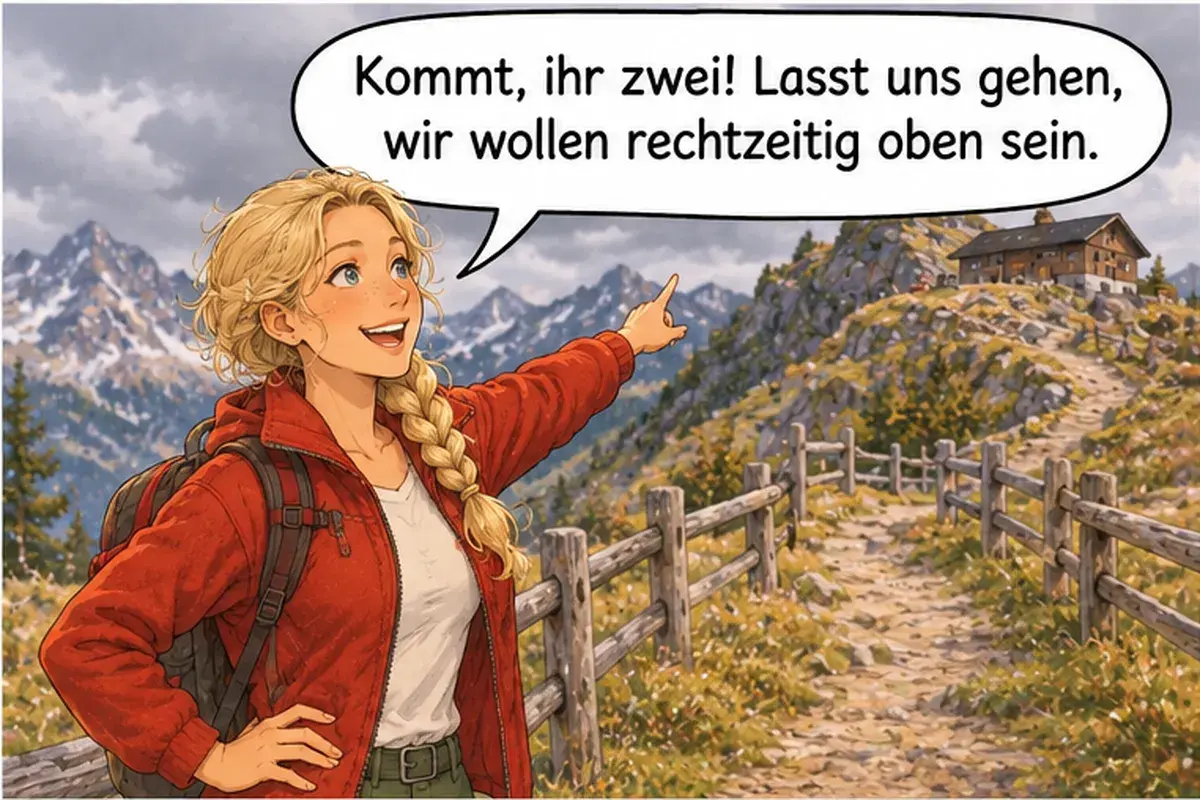
- Hanna
Kommt, ihr zwei! Lasst uns gehen, wir wollen rechtzeitig oben sein.
Come on, you two! Let's go, we want to be at the top in time.
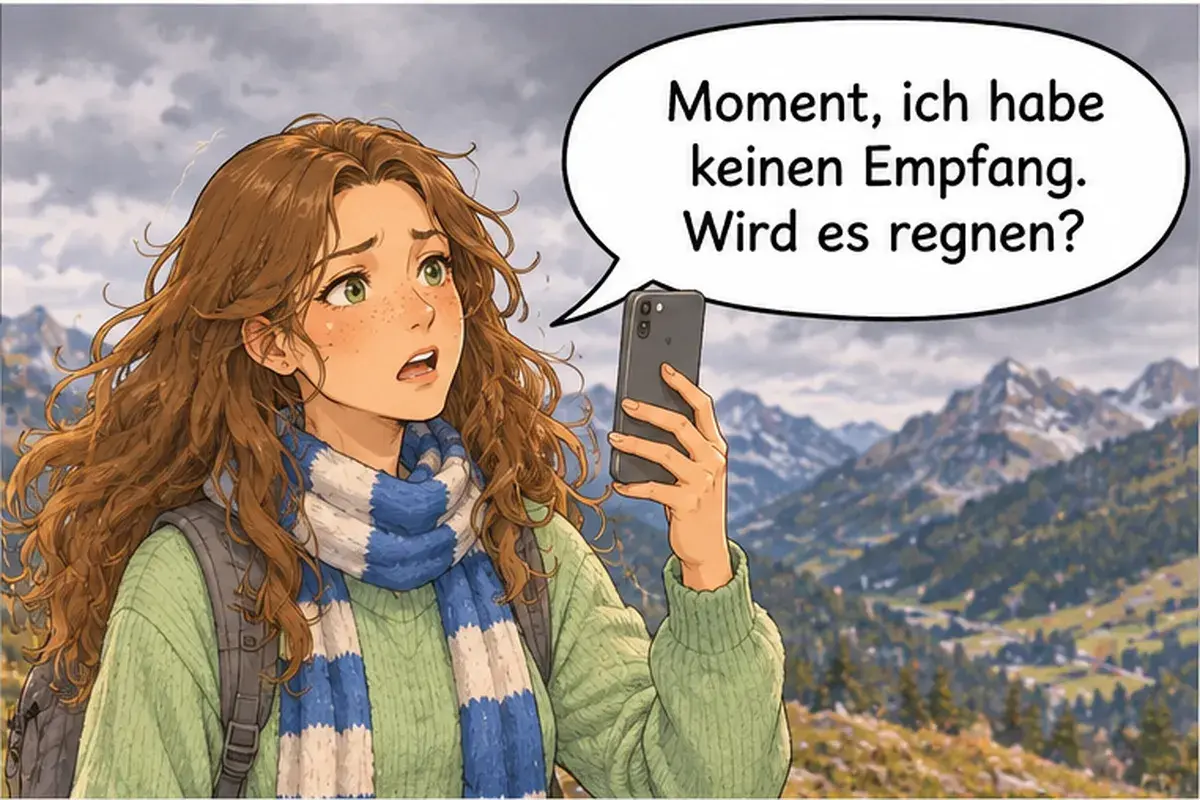
- Katja
Moment, ich habe keinen Empfang. Wird es regnen?
One moment, I don't have a signal. Is it going to rain?
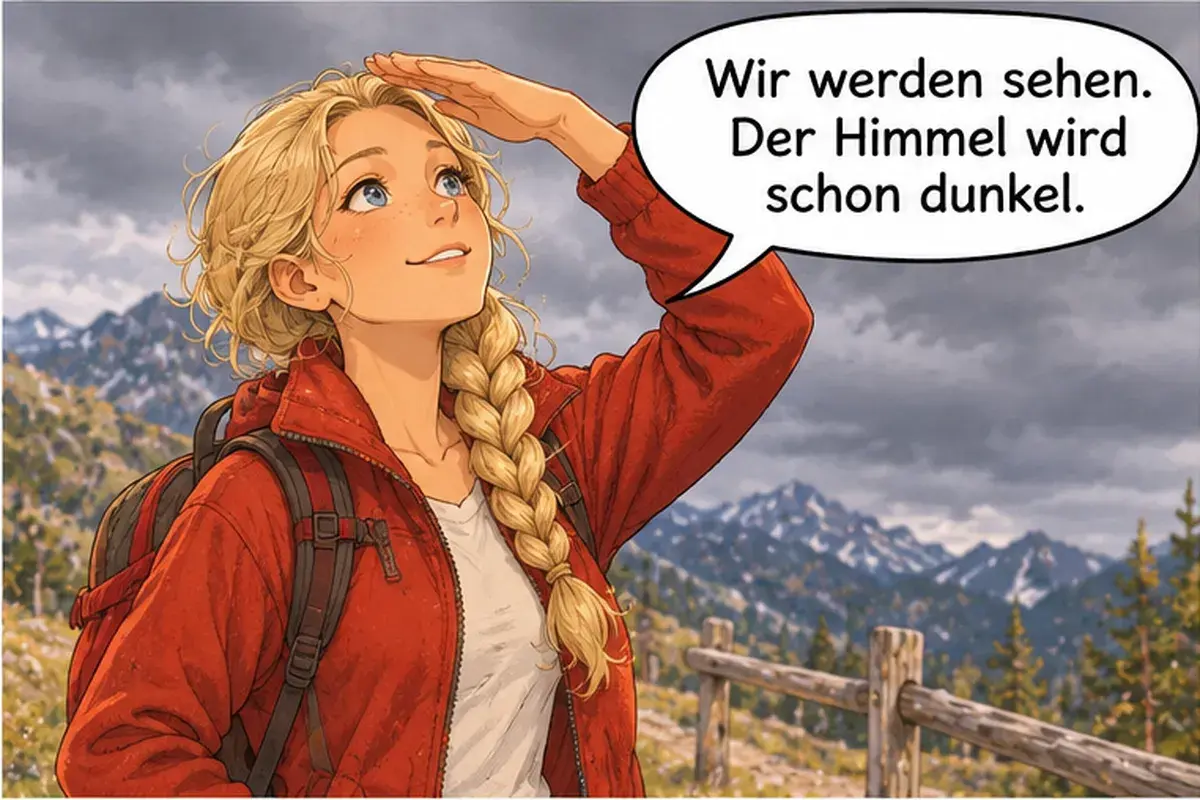
- Hanna
Wir werden sehen. Der Himmel wird schon dunkel.
We'll see. The sky is already getting dark.
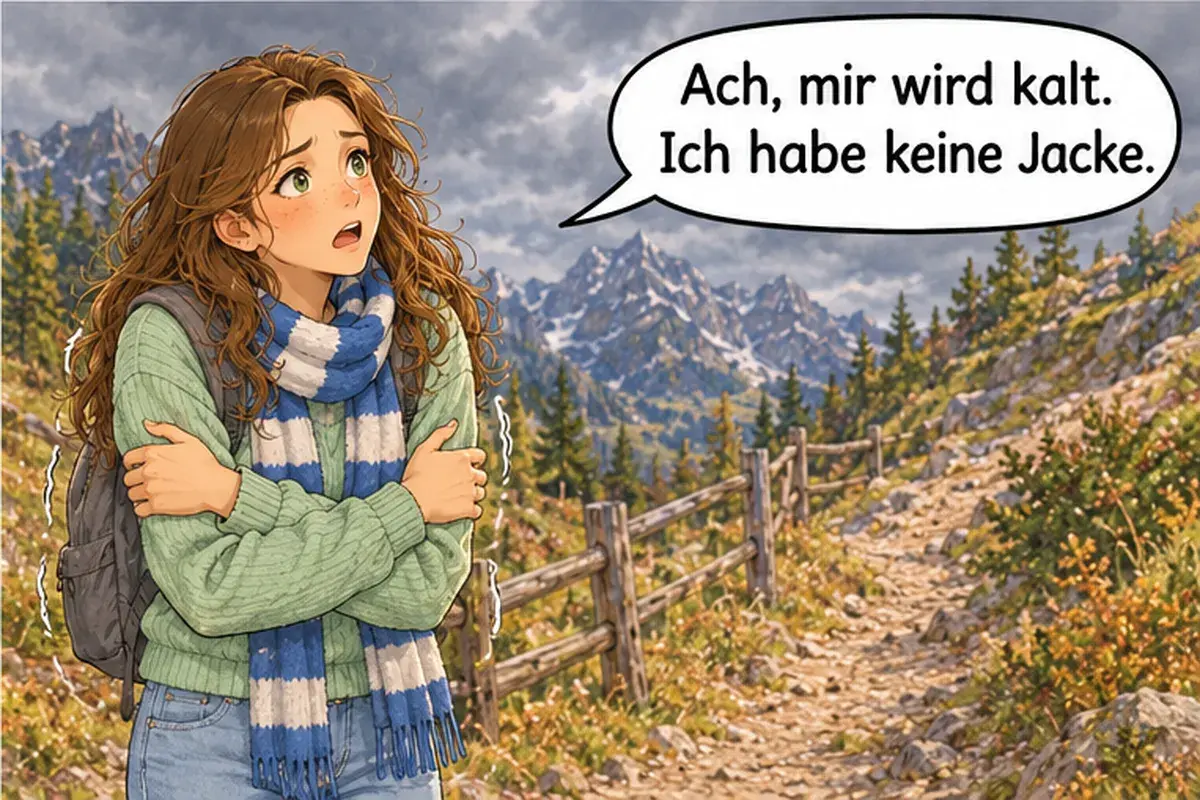
- Katja
Ach, mir wird kalt. Ich habe keine Jacke.
Oh, I'm getting cold. I don't have a jacket.
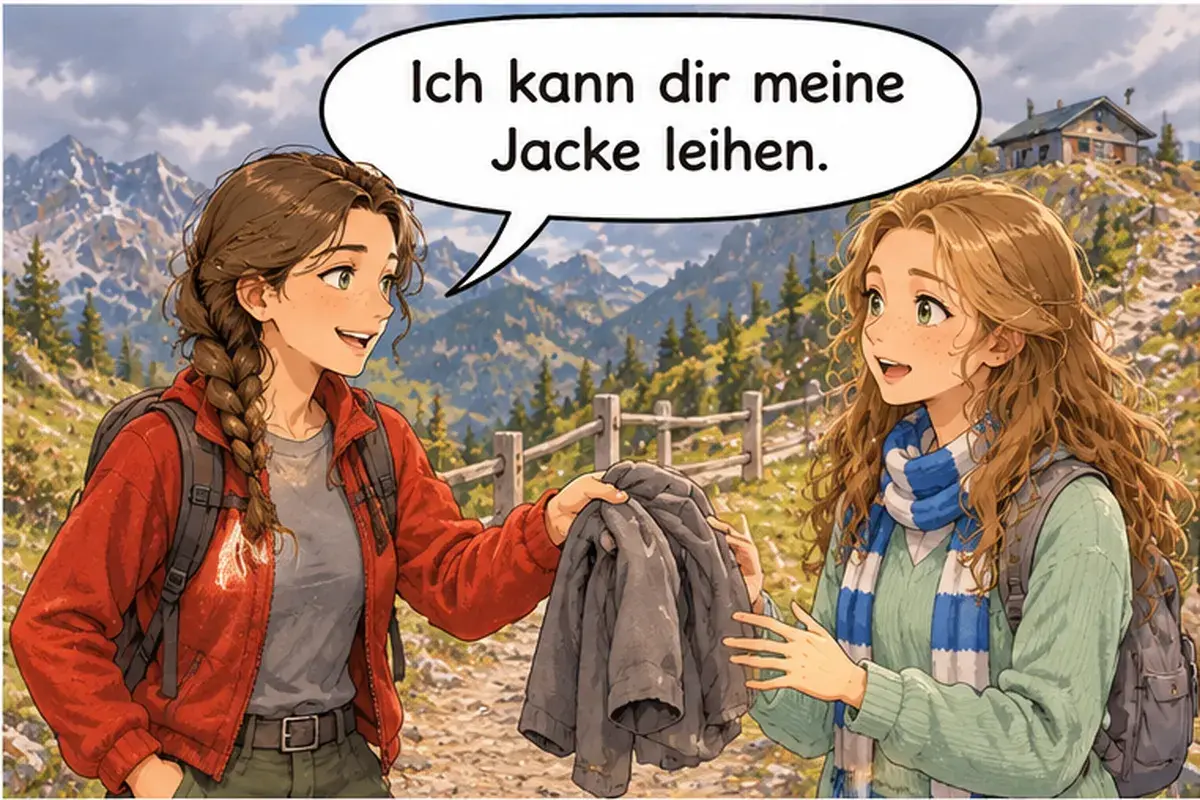
- Freundin
Ich kann dir meine Jacke leihen.
I can lend you my jacket.
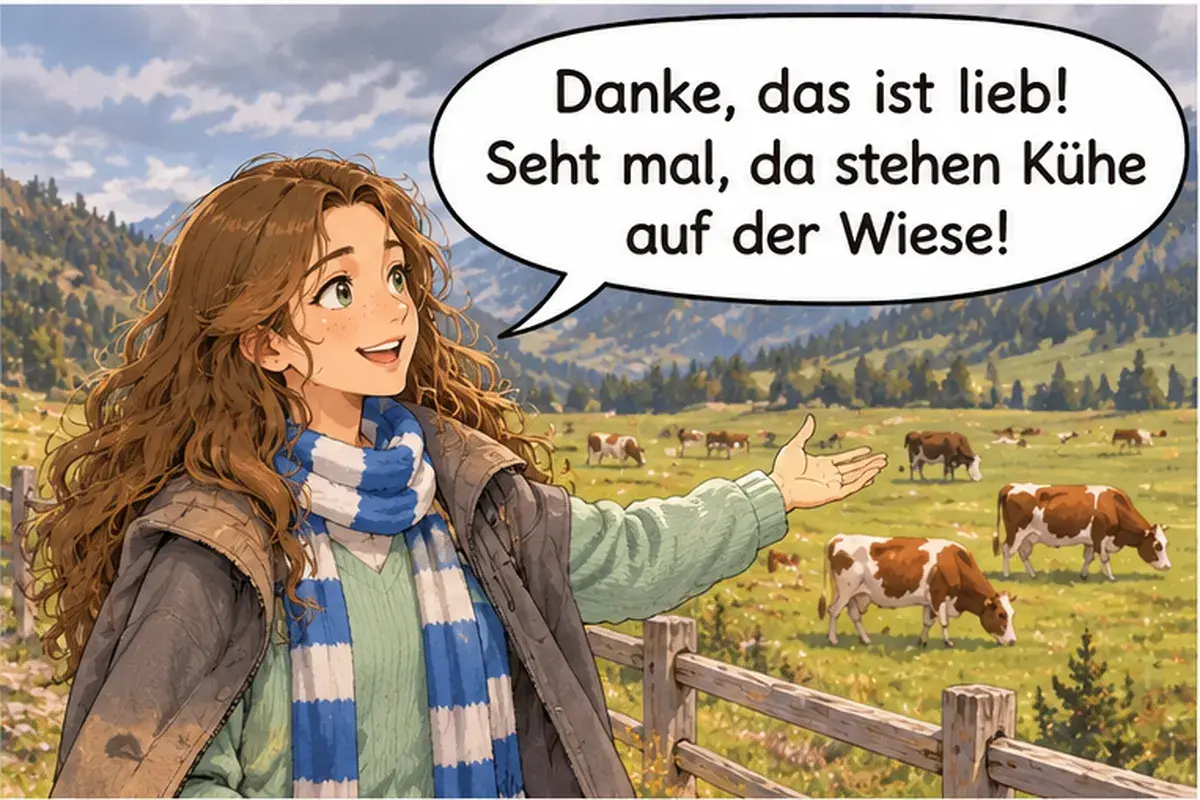
- Katja
Danke, das ist lieb! Seht mal, da stehen Kühe auf der Wiese!
Thanks, that's sweet of you! Look, there are cows in the meadow! (to several people)

- Hanna
Die tun nichts. Aber ab hier wird der Weg steil.
They won't do anything. But from here on, the trail gets steep.
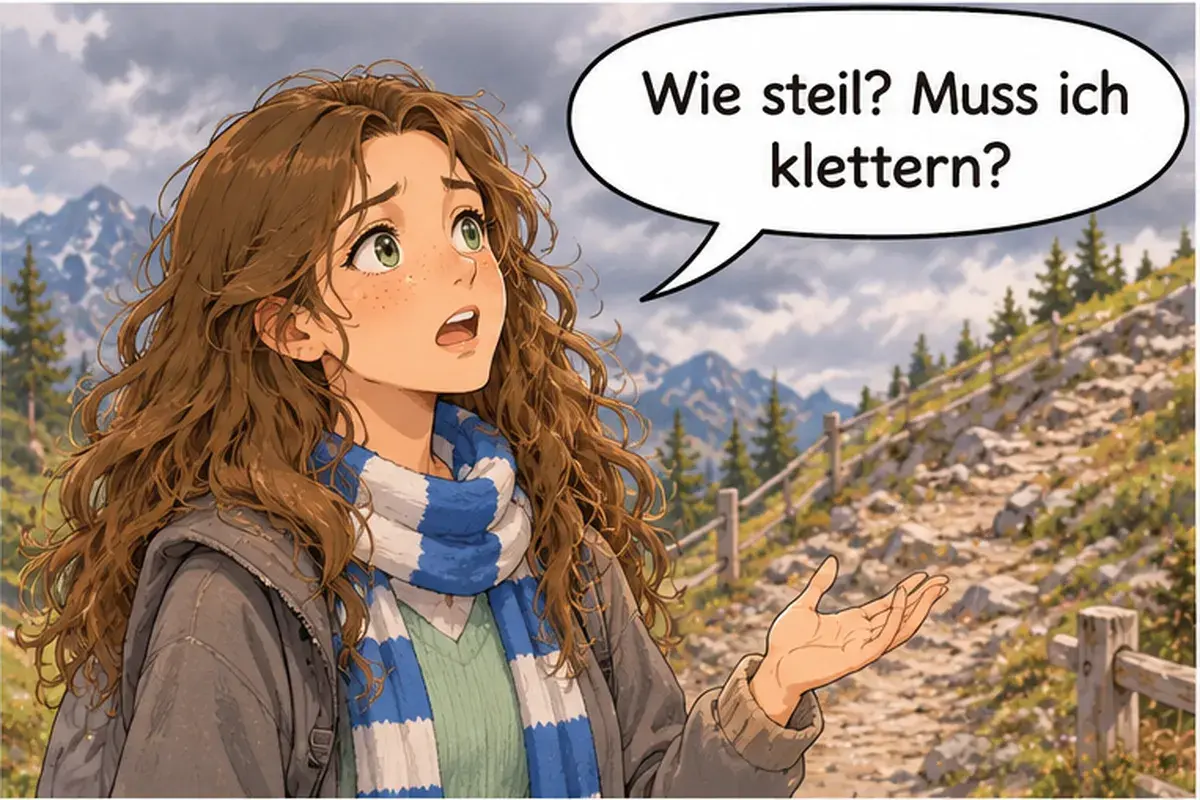
- Katja
Wie steil? Muss ich klettern?
How steep? Do I have to climb?

- Hanna
Am Ende ein Stück, ja. Der Weg ist gut. Sei vorsichtig!
A bit at the end, yes. The trail is good. Be careful!
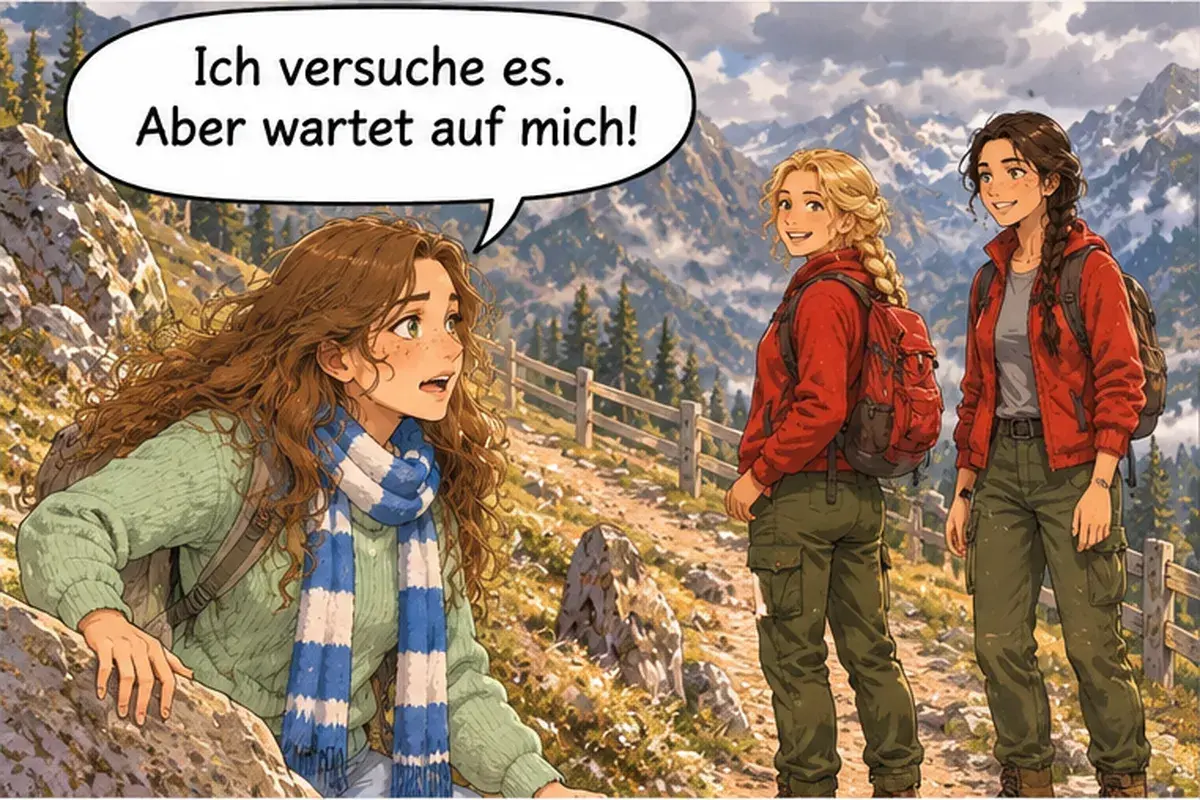
- Katja
Ich versuche es. Aber wartet auf mich!
I'll try. But wait for me! (to several people)
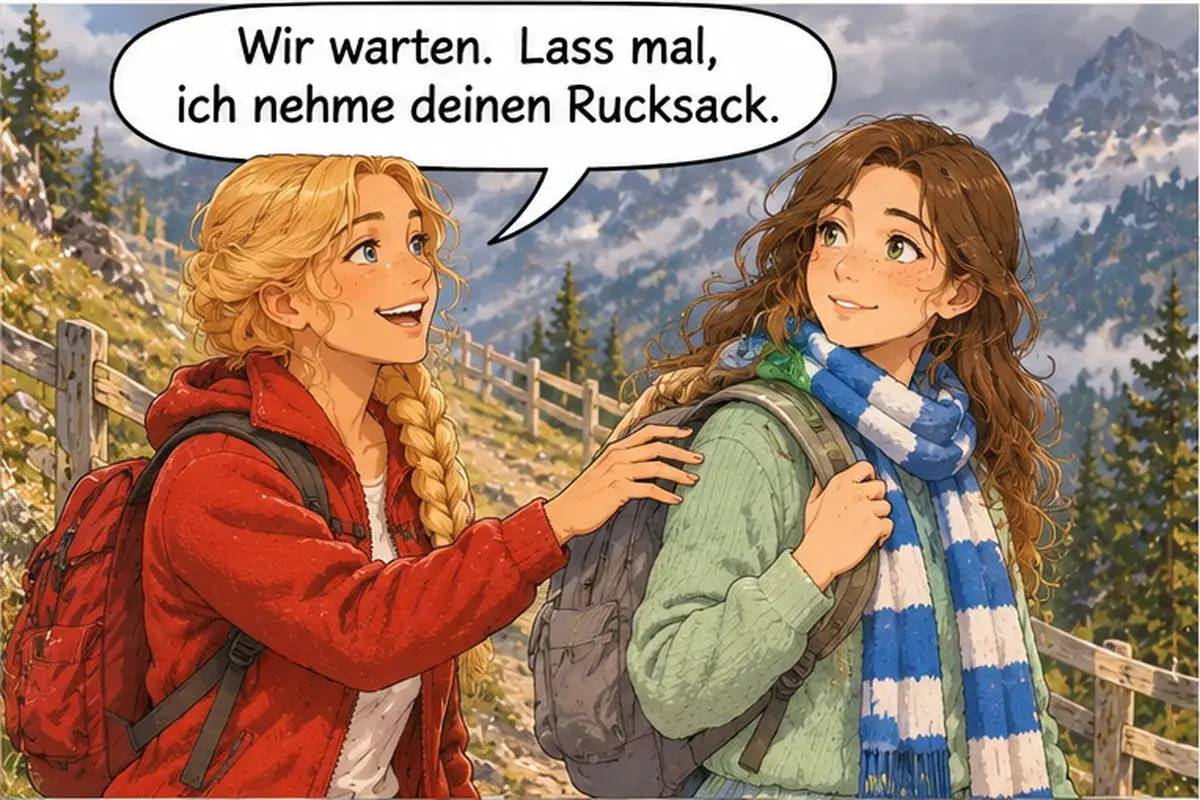
- Hanna
Wir warten. Lass mal, ich nehme deinen Rucksack.
We'll wait. Leave it, I'll take your backpack.

- Katja
Wir sind oben! Der Gipfel, die Berge, das Tal – so viel Natur!
We're at the top! The summit, the mountains, the valley – so much nature!
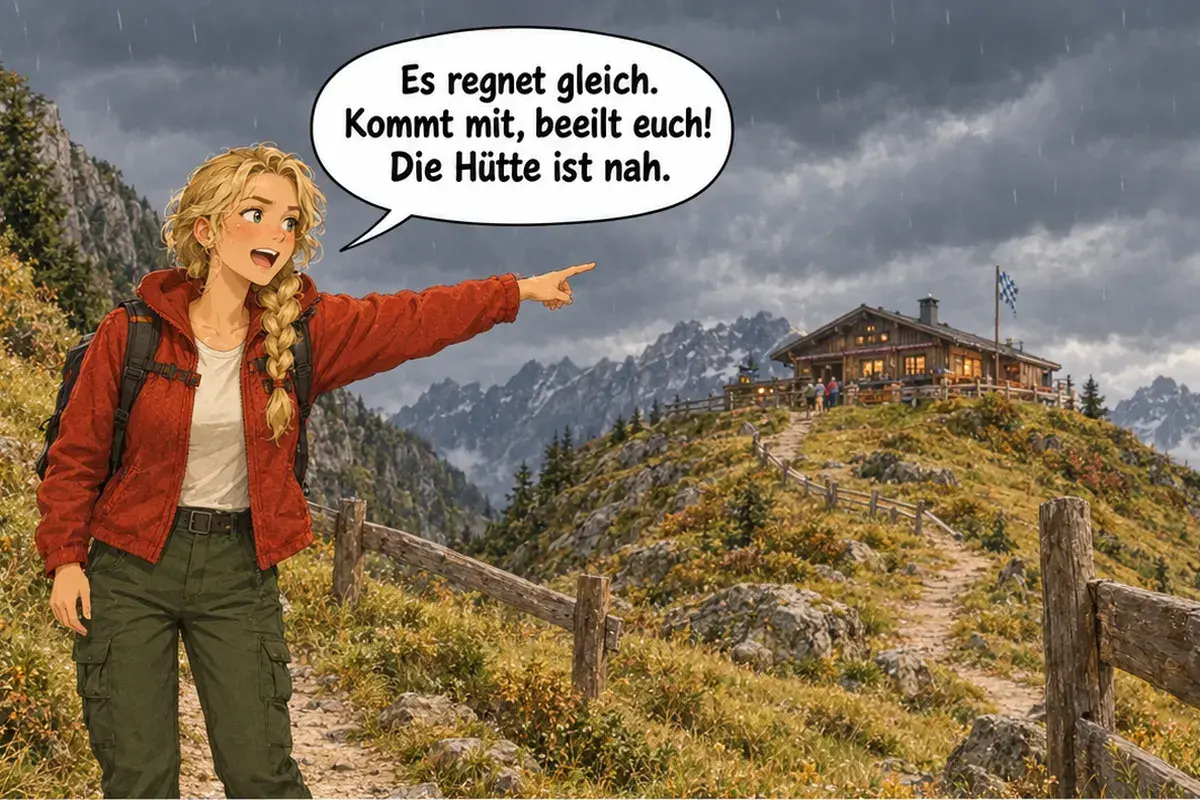
- Hanna
Es regnet gleich. Kommt mit, beeilt euch! Die Hütte ist nah.
It's about to rain. Come with us, hurry up! (to several people) The hut is close.
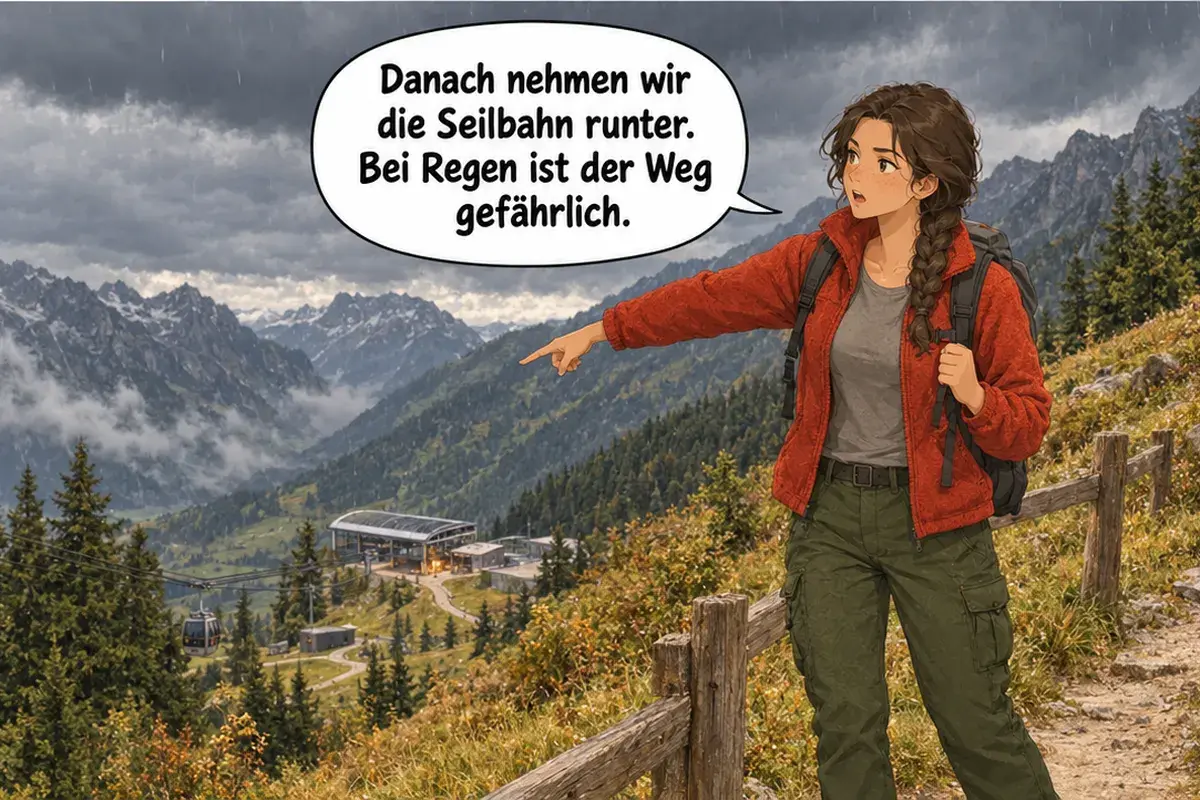
- Freundin
Danach nehmen wir die Seilbahn runter. Bei Regen ist der Weg gefährlich.
Afterward we'll take the cable car down. The trail is dangerous in the rain.
Grammar for this text
- Kommt, ihr zwei! — a command to several people you call du: take the ihr form
ihr kommtand dropihr. To one person it would beKomm!. The same goes for Seht mal (ihr seht, fromsehen) and wartet auf mich (ihr wartet, fromwarten). - Lasst uns gehen —
lasstis the ihr command oflassen. Word for word it's "let us go", and in English that's simply "let's go". To one person:Lass uns gehen. - Wird es regnen?, Wir werden sehen — the future with
werden:wirdis the es form ofwerden(ich werde, du wirst, er wird), andwerdenis the wir form. The main verb (regnen,sehen) goes to the very end. In a questionwirdmoves to first place. Wir werden sehen is a set phrase: "we'll see". - Mir wird kalt, Der Himmel wird schon dunkel — here
wirdis followed by an adjective, not an infinitive. So it isn't the future but "to get": "I'm getting cold", "the sky is getting dark".miris "(to) me" (unit 5). German says "to me it gets cold", not "I get cold". - Sei vorsichtig! —
seiis the du command ofsein(to be). It's irregular: notbist, butsei. To several people:Seid vorsichtig!. - Kommt mit, beeilt euch! —
mitkommensends its prefix to the end:Kommt mit!.sich beeilenin the ihr command isbeeilt euch:sichbecomeseuch. - Lass mal, ich nehme deinen Rucksack —
Lass malmeans "leave it, never mind, I'll do it": Hanna takes the job on herself.
Words and grammar of the unit: Head for the mountains.
Learn the words from the texts with flashcards
In the app, you can tap any word in a text to see its translation, forms and examples, and new words stick with flashcards. 15 minutes a day.
Start for freeEverything is open for free. No card needed to sign up.