

German dialogue with translation · A2 · 14 lines
Was raten Sie mir? What do you advise me to do? (formal)
Comic · 14 panels
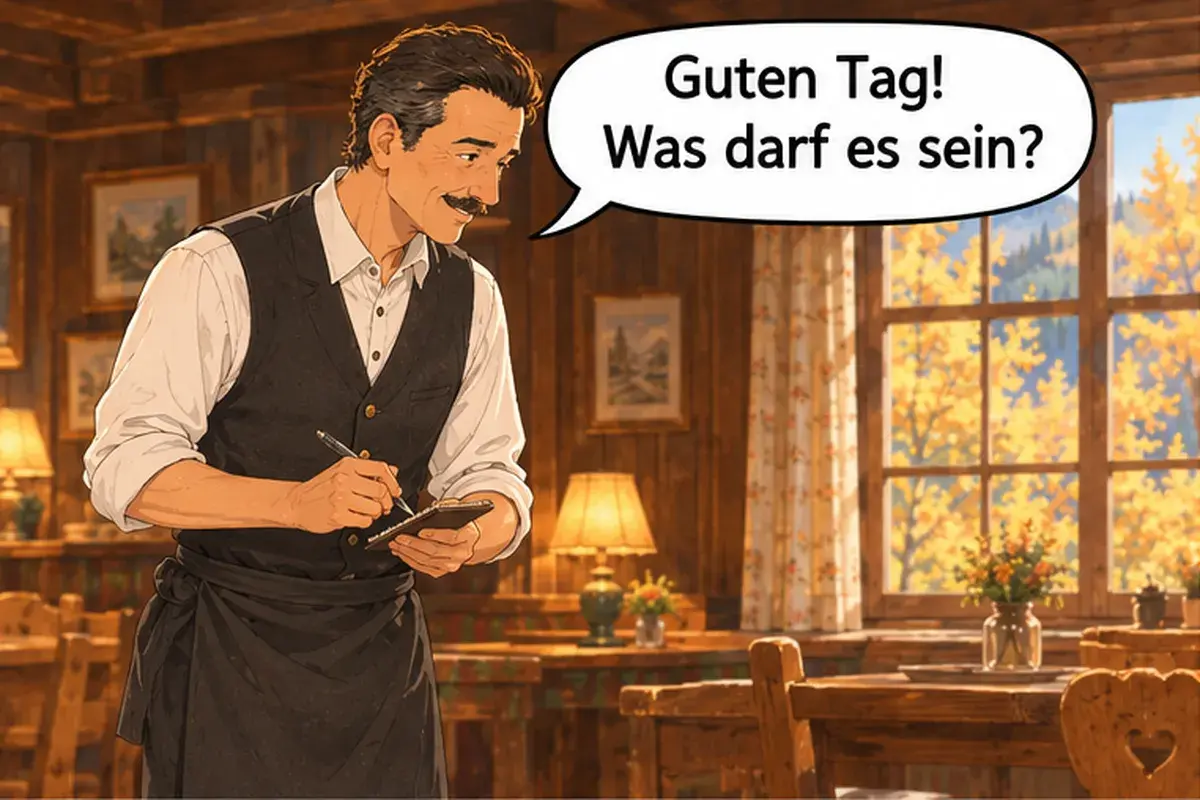
- Kellner
Guten Tag! Was darf es sein?
Hello! What can I get you?
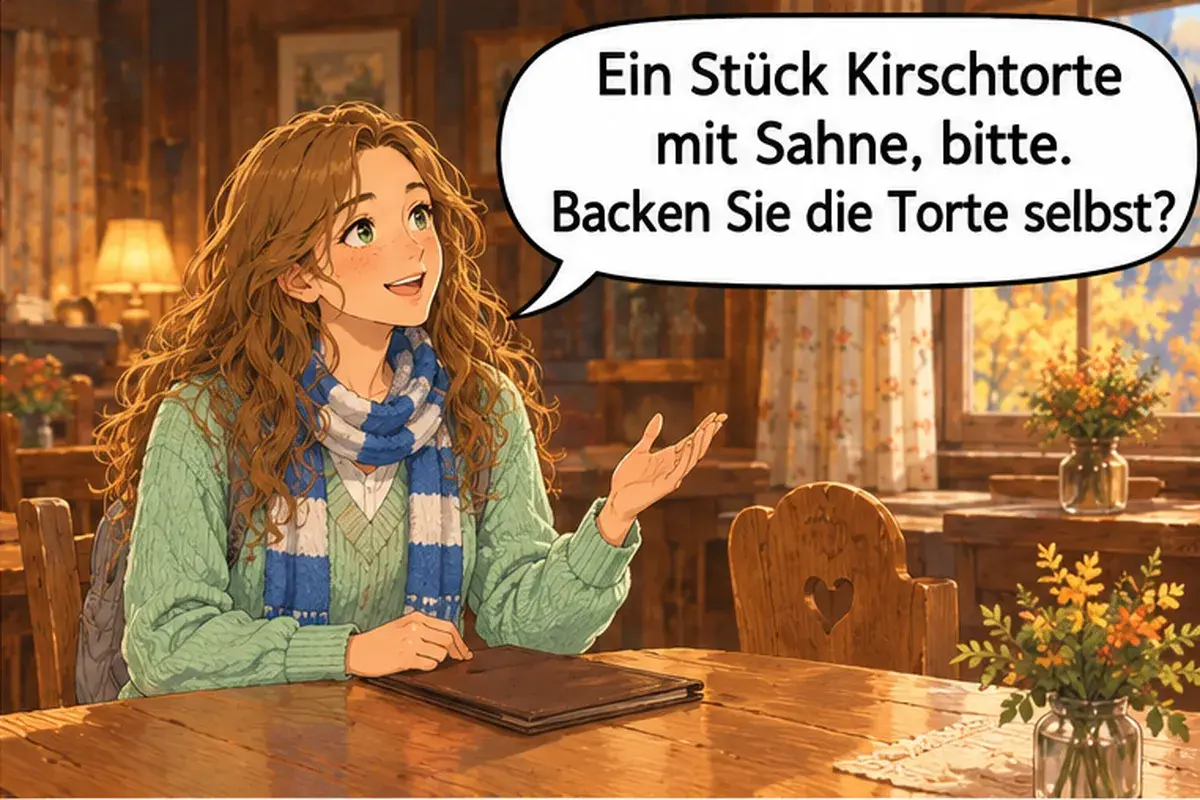
- Katja
Ein Stück Kirschtorte mit Sahne, bitte. Backen Sie die Torte selbst?
A piece of cherry cake with cream, please. Do you bake the cake yourself? (formal)
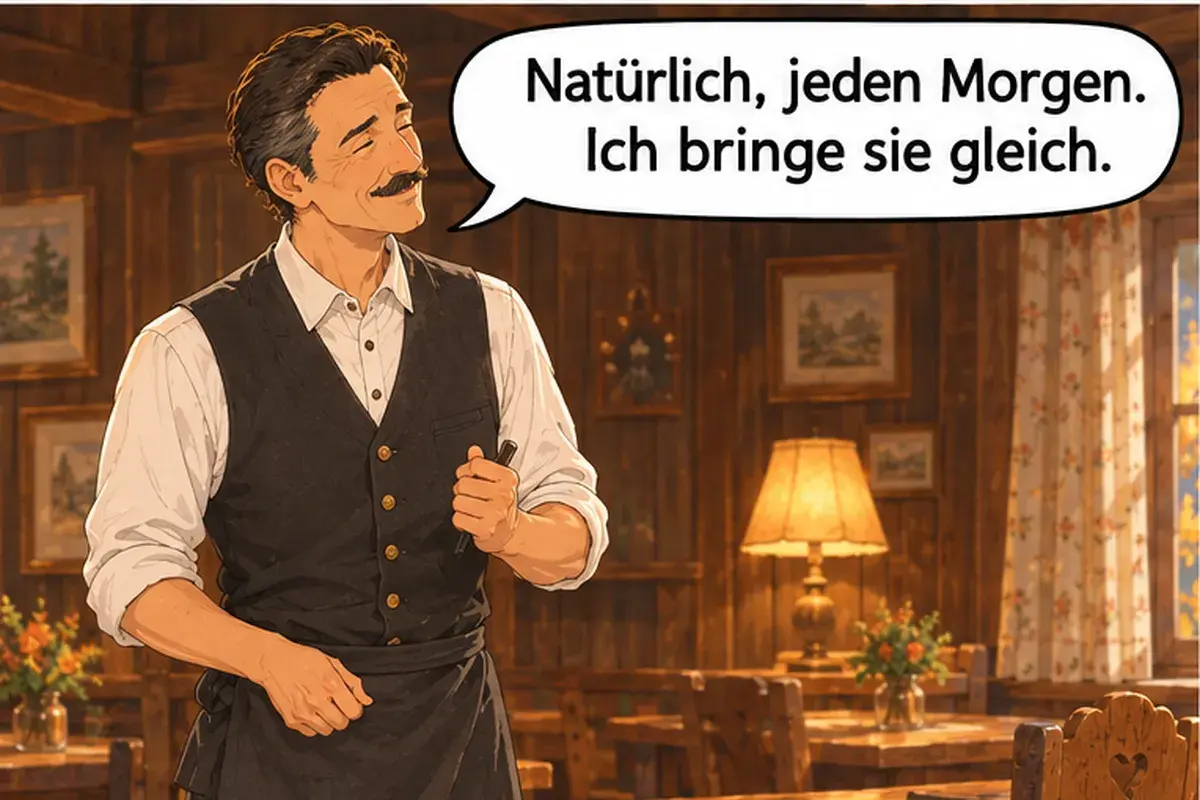
- Kellner
Natürlich, jeden Morgen. Ich bringe sie gleich.
Of course, every morning. I'll bring it right away.
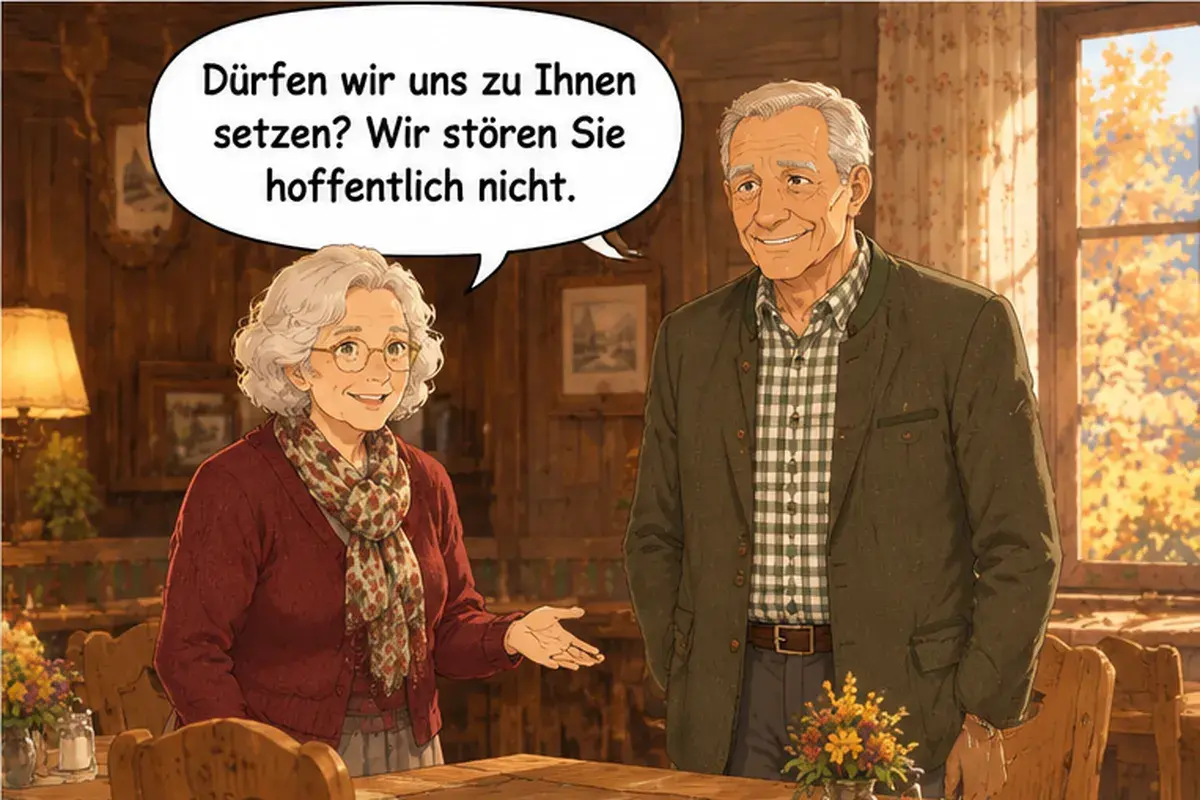
- Frau
Dürfen wir uns zu Ihnen setzen? Wir stören Sie hoffentlich nicht.
May we sit with you? Hopefully we're not disturbing you. (formal)
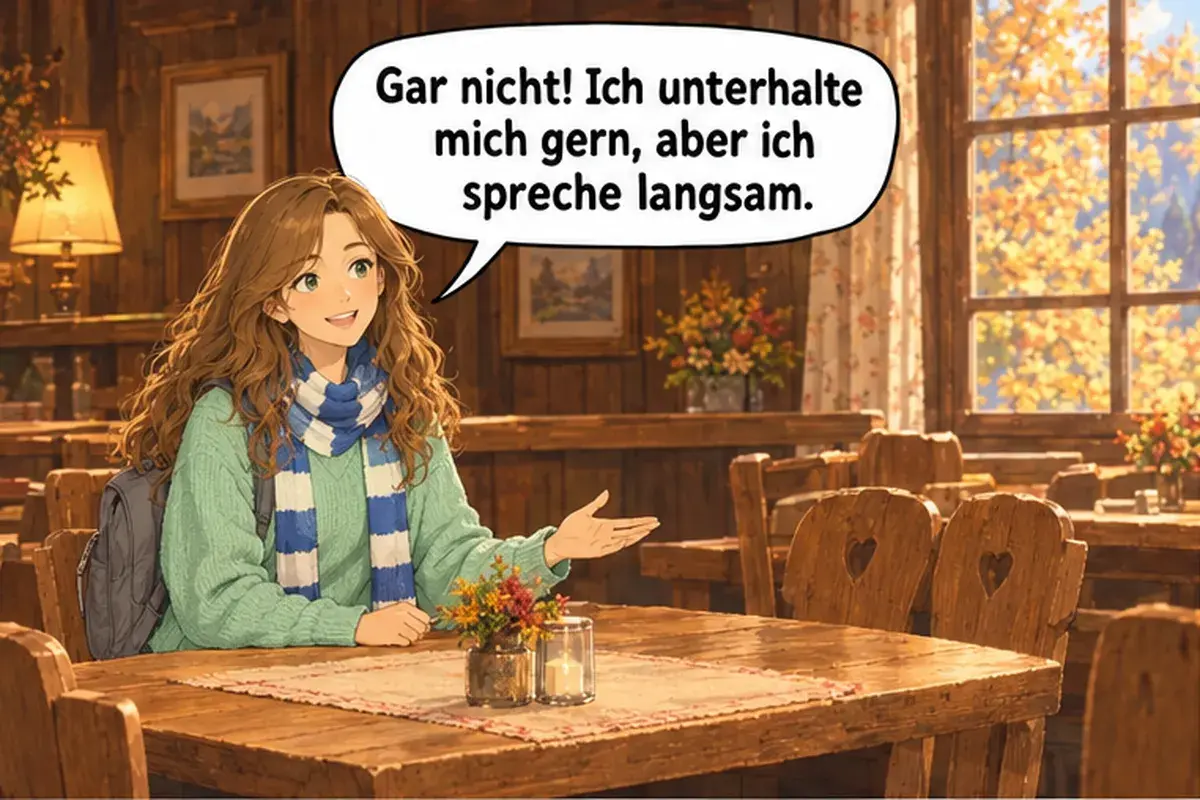
- Katja
Gar nicht! Ich unterhalte mich gern, aber ich spreche langsam.
Not at all! I like chatting, but I speak slowly.
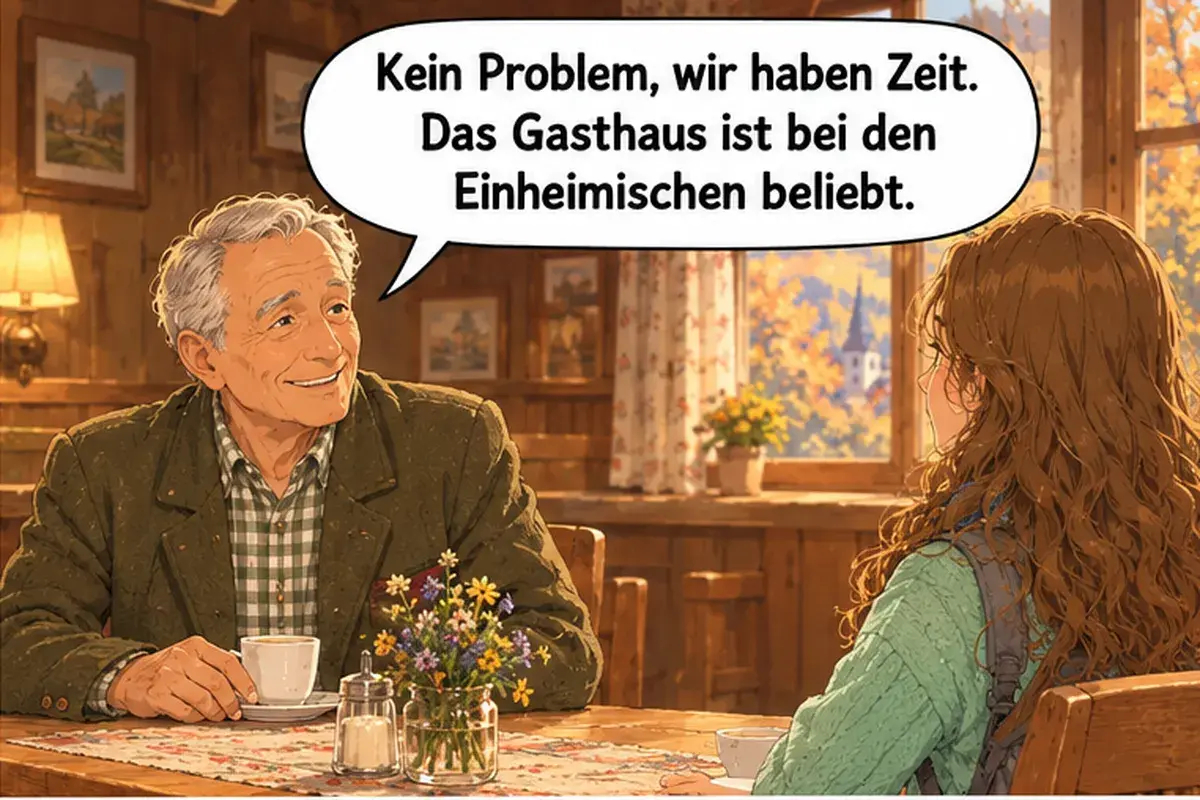
- Mann
Kein Problem, wir haben Zeit. Das Gasthaus ist bei den Einheimischen beliebt.
No problem, we have time. The inn is popular with the locals.
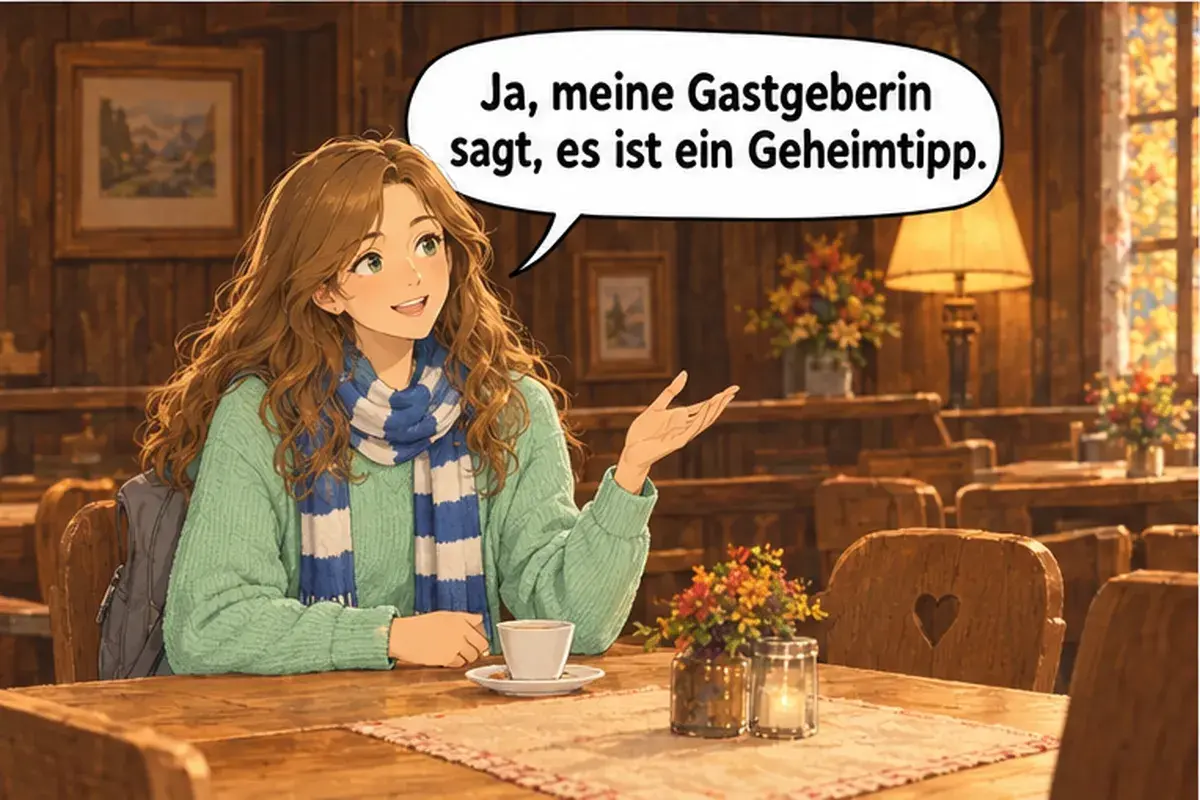
- Katja
Ja, meine Gastgeberin sagt, es ist ein Geheimtipp.
Yes, my host says it's a hidden gem.
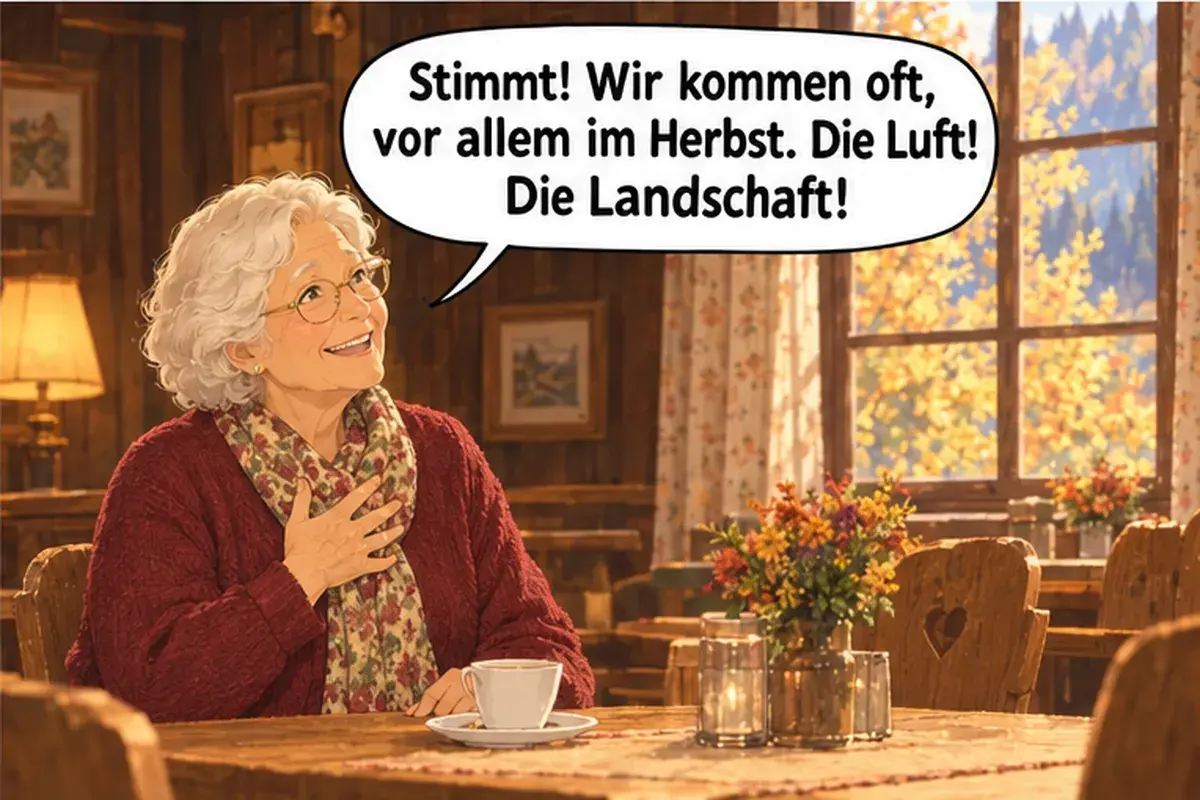
- Frau
Stimmt! Wir kommen oft, vor allem im Herbst. Die Luft! Die Landschaft!
That's right! We come often, especially in the fall. The air! The landscape!
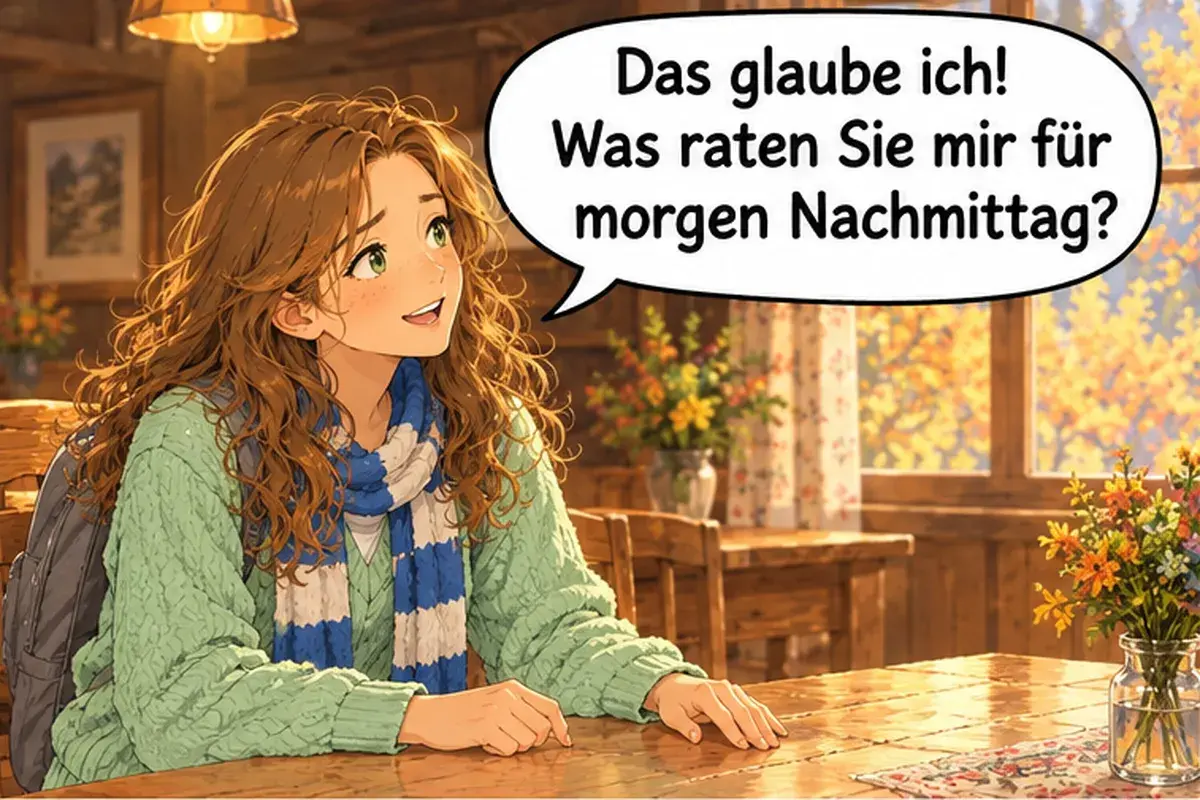
- Katja
Das glaube ich! Was raten Sie mir für morgen Nachmittag?
I believe it! What do you advise me to do tomorrow afternoon? (formal)
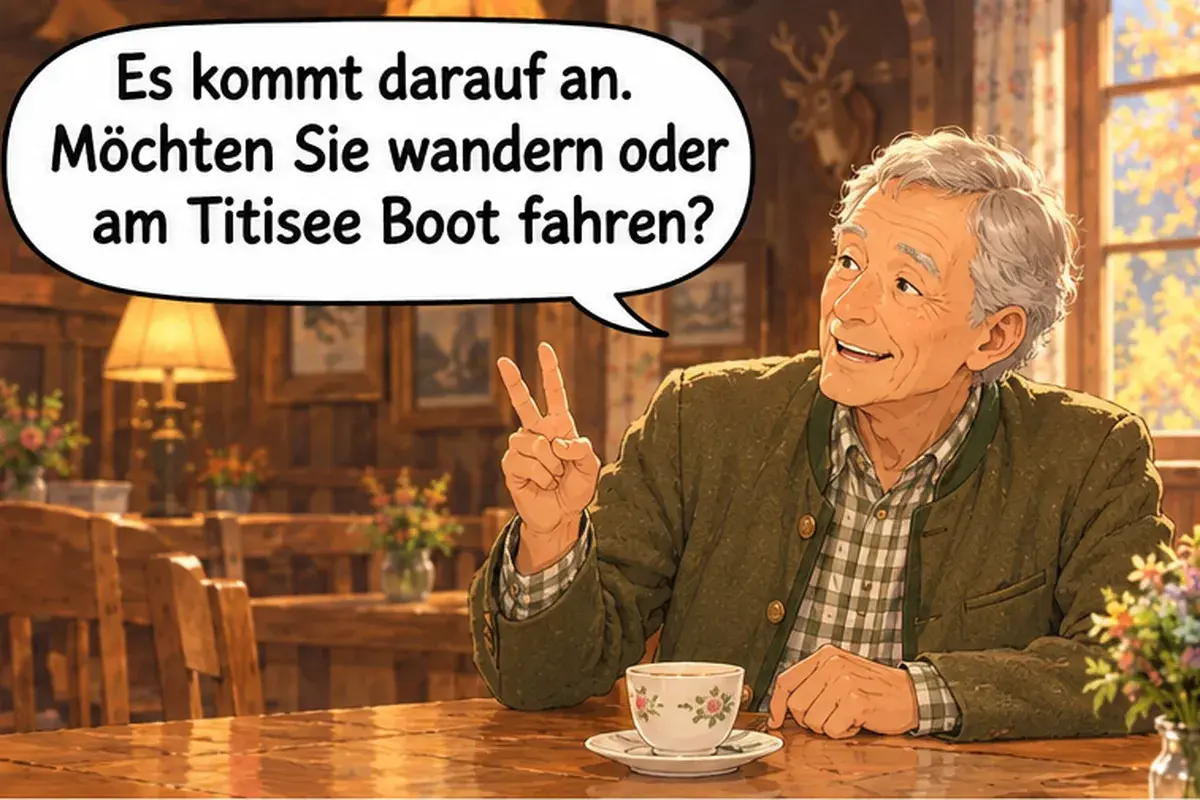
- Mann
Es kommt darauf an. Möchten Sie wandern oder am Titisee Boot fahren?
It depends. Would you like to go hiking or go boating on the Titisee? (formal)

- Katja
Zum Titisee? Ich habe keine Zeit, so weit zu fahren.
To the Titisee? I don't have time to go that far.
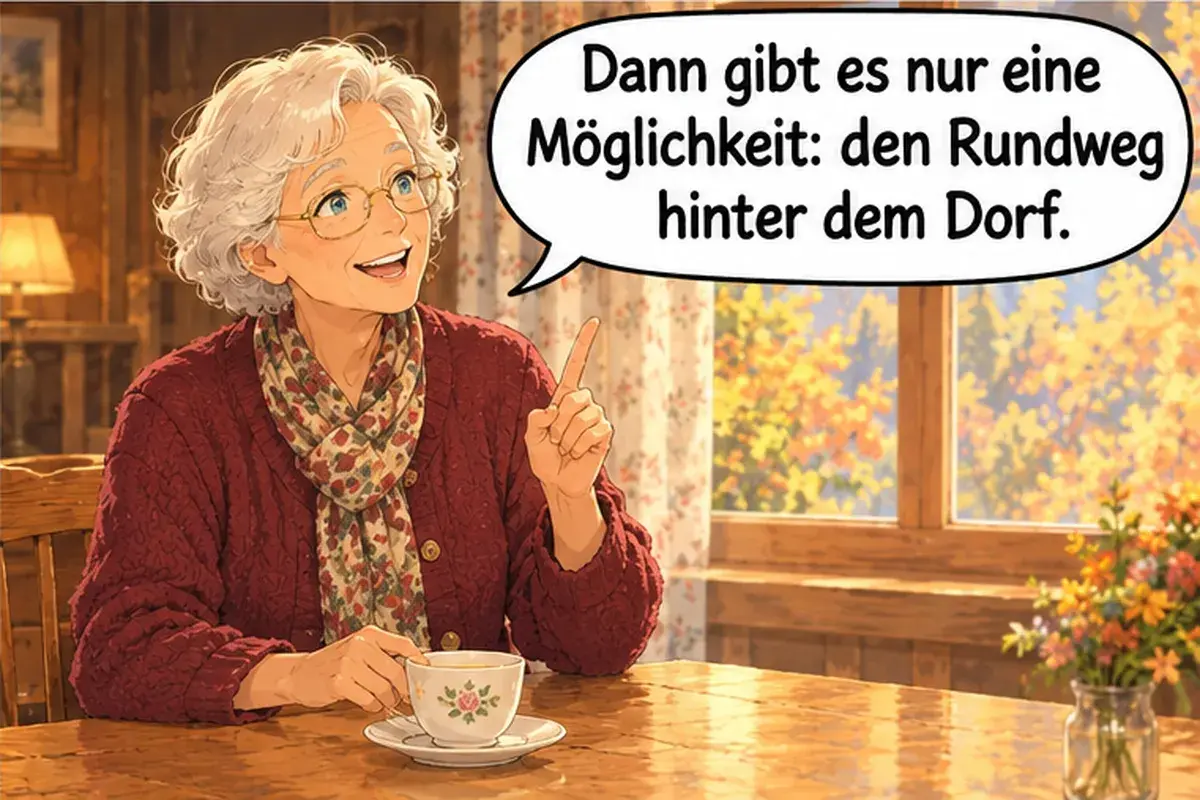
- Frau
Dann gibt es nur eine Möglichkeit: den Rundweg hinter dem Dorf.
Then there's only one option: the loop trail behind the village.
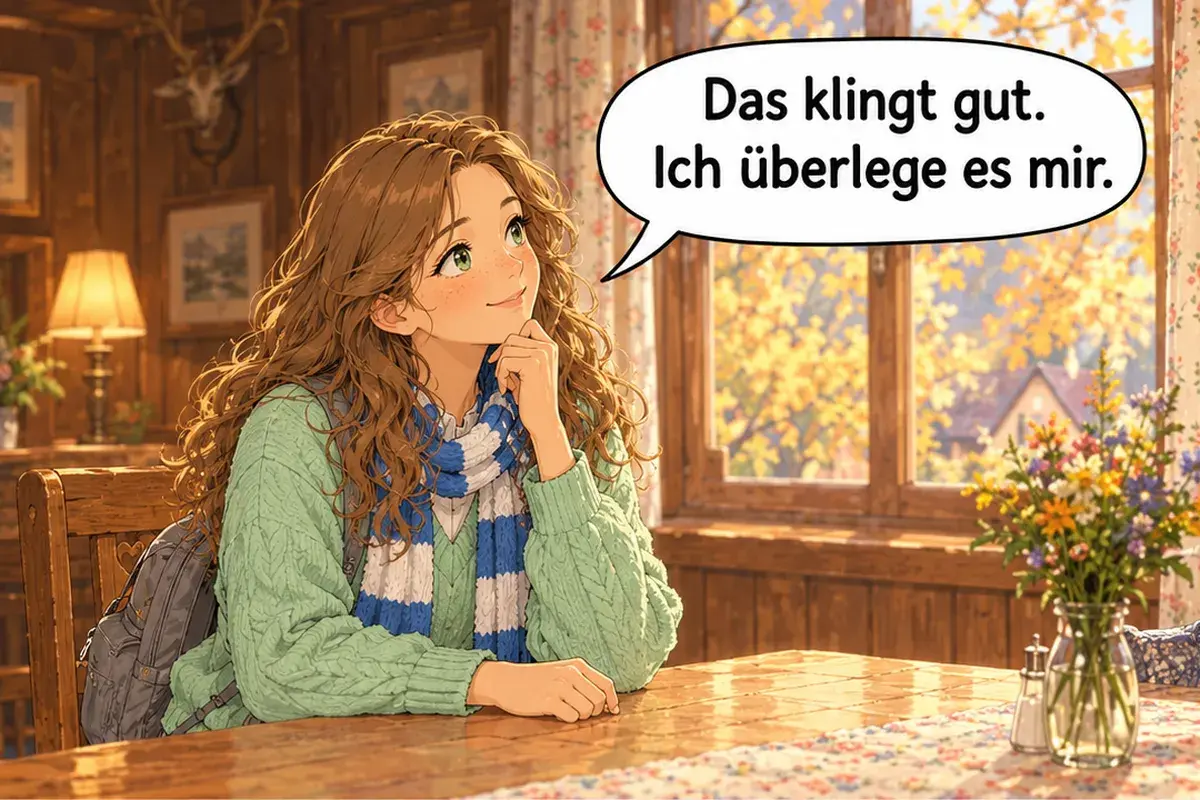
- Katja
Das klingt gut. Ich überlege es mir.
That sounds good. I'll think about it.

- Kellner
Hier, Ihre Kirschtorte mit Sahne. Guten Appetit!
Here's your cherry cake with cream. Enjoy your meal! (formal)
Grammar for this text
- Dürfen wir uns zu Ihnen setzen? —
dürfenmeans "may, to be allowed to" (unit 2).uns setzenmeans "to sit down" (a reflexive verb, unit 6), andzu Ihnenmeans "with you" (dative, unit 5): that's how you ask if you can join someone at their table. Wir stören Sie hoffentlich nicht —störenmeans "to disturb",Siehere is "you" as the object (accusative), andhoffentlichmeans "hopefully". - Ich unterhalte mich gern —
sich unterhaltenmeans "to talk, to chat".michis the reflexive pronoun, as inIch freue mich; English doesn't need "myself" here. - Meine Gastgeberin sagt, es ist ein Geheimtipp — after
sagtcomes a comma and a normal sentence with the usual word order (es ist). It isn't a question, so the verb doesn't move to the end. AGeheimtippis a place that only insiders know about. - Was raten Sie mir für morgen Nachmittag? —
ratenmeans "to advise".er räthas an umlaut, butSie ratendoesn't change.mirmeans "(to) me" (unit 5). - Es kommt darauf an — a set phrase, "it depends". It comes from
ankommen auf(to depend on), which is whyanis at the end; say it as a whole.am Titiseemeans "at the Titisee". - Ich habe keine Zeit, so weit zu fahren — "I don't have time to go that far": after the comma comes the infinitive with
zuright before it (this unit's grammar). - Ich überlege es mir — "I'll think about it": what you say when you haven't decided yet.
Words and grammar of the unit: Ask for advice.
Learn the words from the texts with flashcards
In the app, you can tap any word in a text to see its translation, forms and examples, and new words stick with flashcards. 15 minutes a day.
Start for freeEverything is open for free. No card needed to sign up.