

German dialogue with translation · A2 · 14 lines
Haben Sie Ihren Pass dabei? Do you have your passport with you? (formal)
Comic · 14 panels
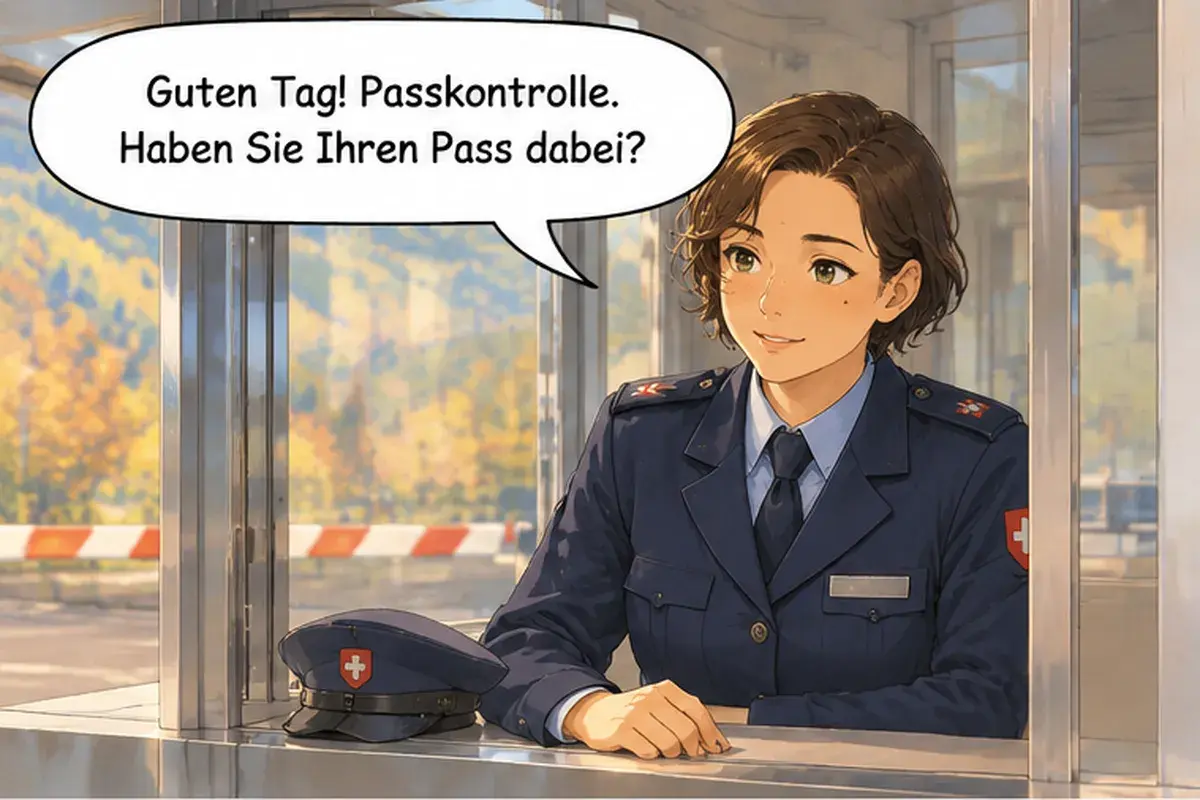
- Grenzbeamtin
Guten Tag! Passkontrolle. Haben Sie Ihren Pass dabei?
Hello! Passport check. Do you have your passport with you? (formal)
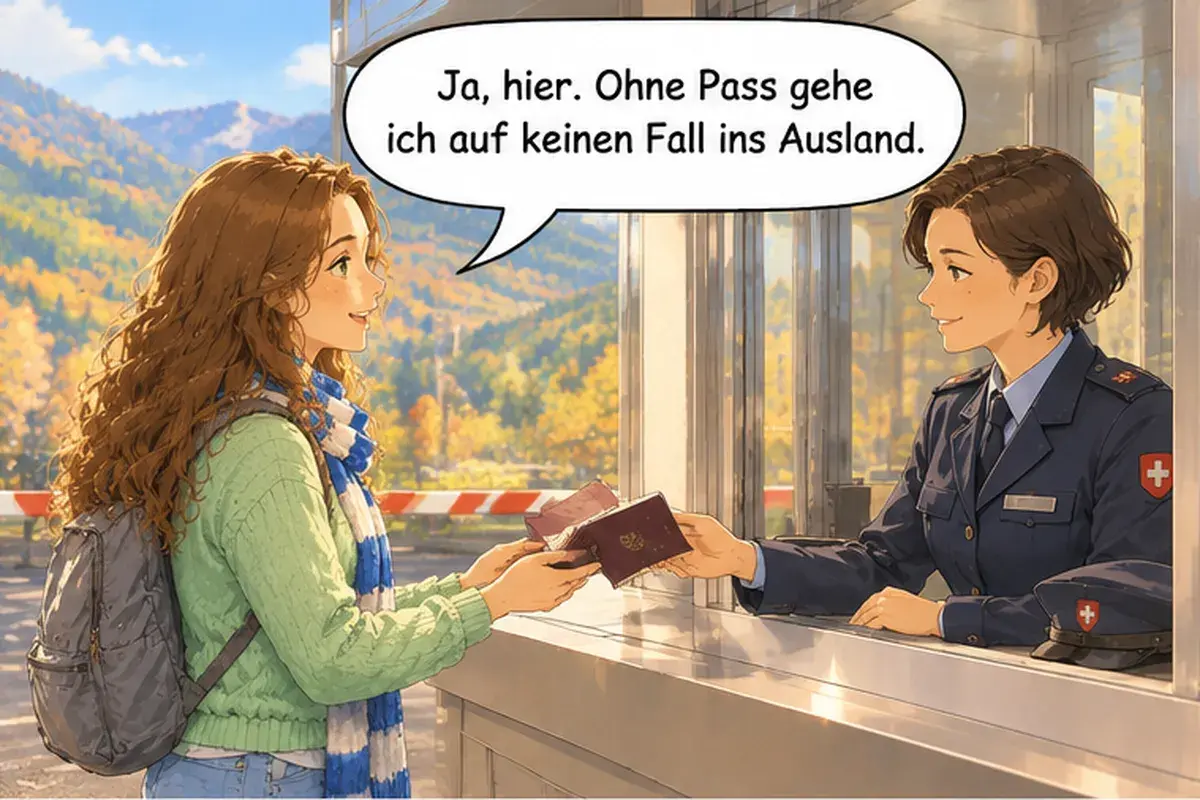
- Katja
Ja, hier. Ohne Pass gehe ich auf keinen Fall ins Ausland.
Yes, here. There's no way I'd go abroad without a passport.
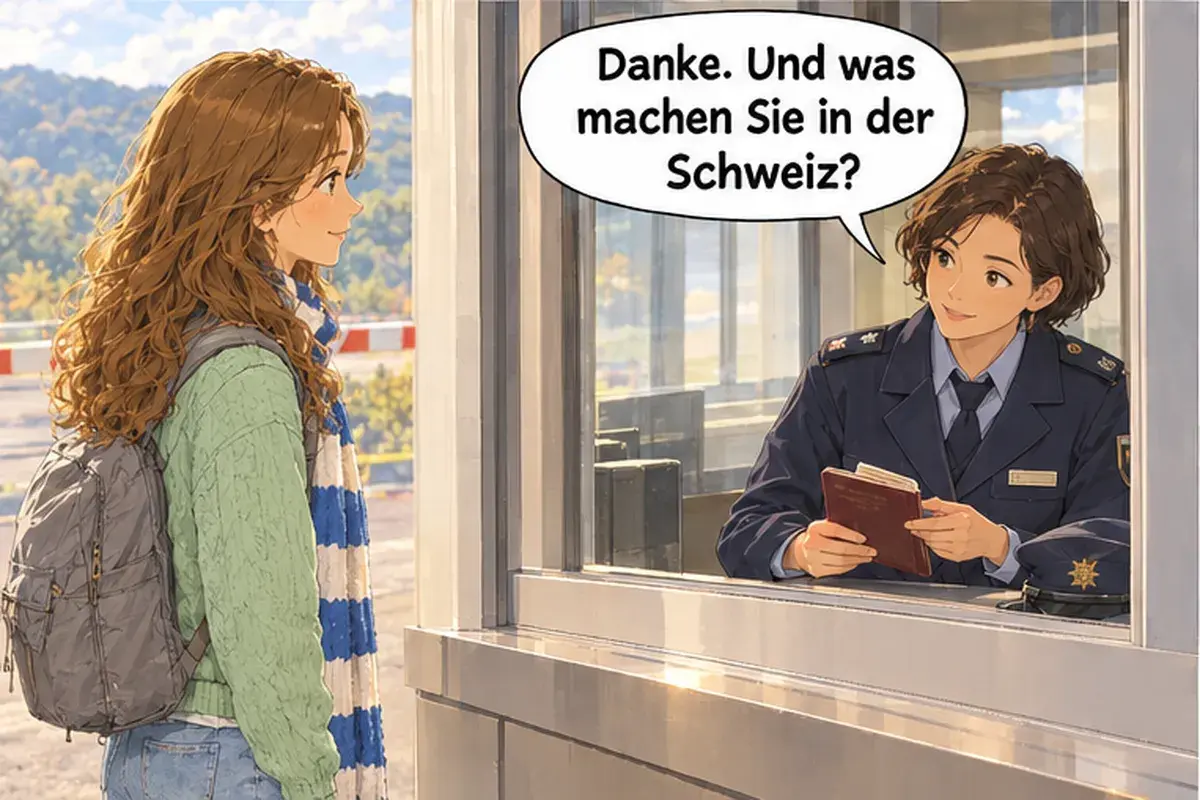
- Grenzbeamtin
Danke. Und was machen Sie in der Schweiz?
Thank you. And what are you doing in Switzerland? (formal)

- Katja
Ich bin Touristin, ich habe ein Visum. Ich gehe nur spazieren.
I'm a tourist, I have a visa (woman speaking). I'm just going for a walk.

- Grenzbeamtin
Gut. Wie lange dauert Ihr Aufenthalt?
Good. How long is your stay? (formal)
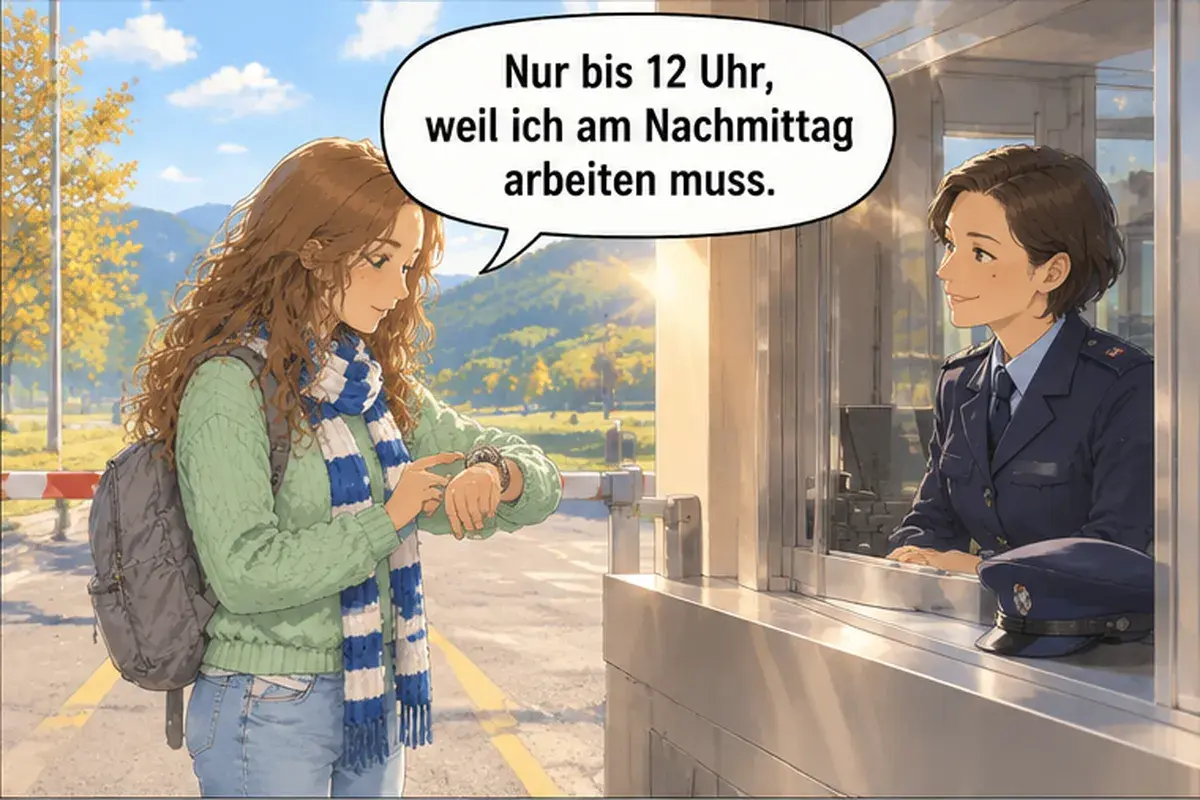
- Katja
Nur bis 12 Uhr, weil ich am Nachmittag arbeiten muss.
Only until 12, because I have to work in the afternoon.
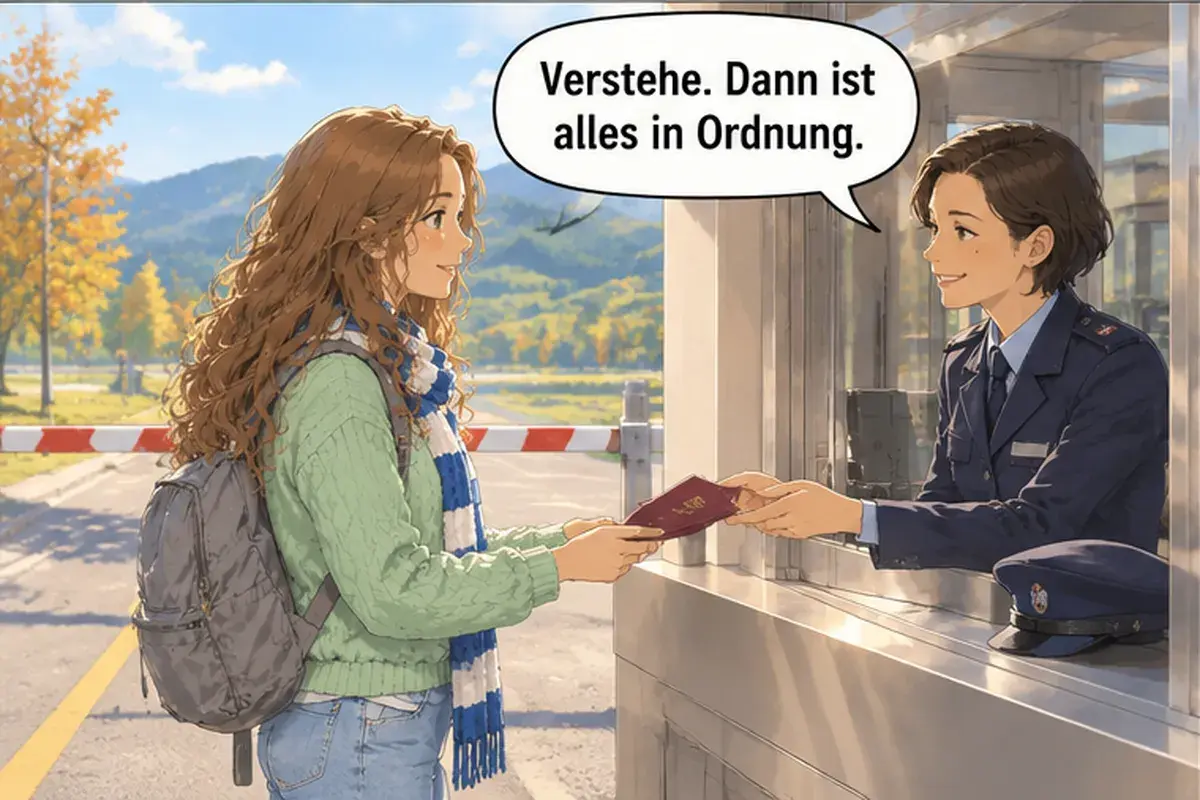
- Grenzbeamtin
Verstehe. Dann ist alles in Ordnung.
I see. Then everything's in order.

- Katja
Danke! Die Wahrheit ist: Ich will auch Schokolade kaufen.
Thanks! The truth is, I also want to buy chocolate.
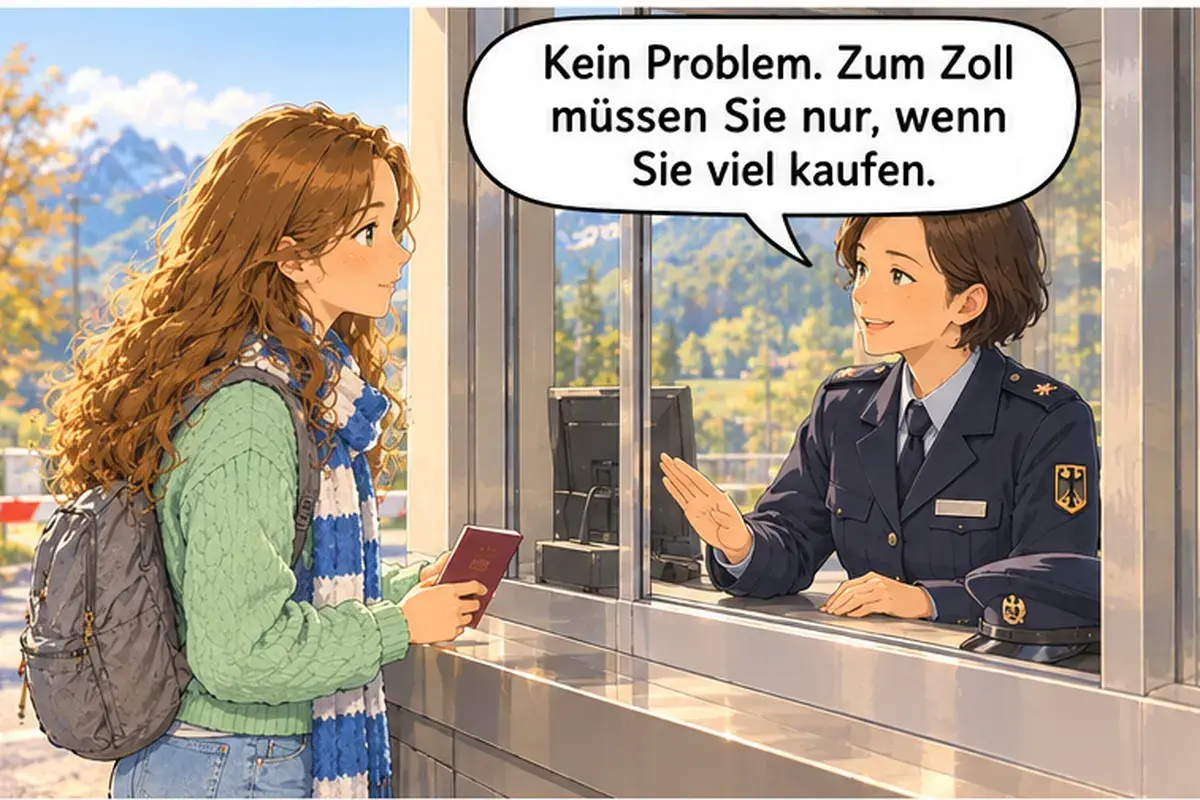
- Grenzbeamtin
Kein Problem. Zum Zoll müssen Sie nur, wenn Sie viel kaufen.
No problem. You only have to go to customs if you buy a lot. (formal)
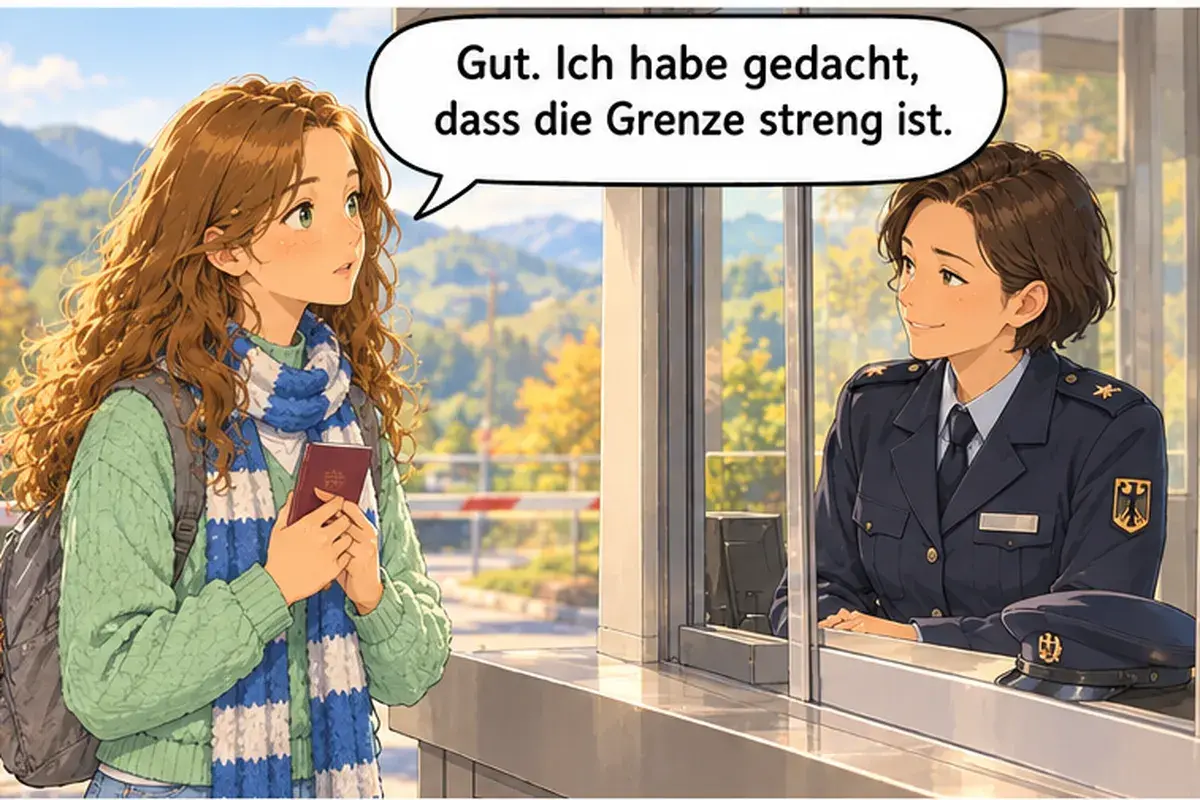
- Katja
Gut. Ich habe gedacht, dass die Grenze streng ist.
Good. I thought that the border was strict.

- Grenzbeamtin
Nein, wir kontrollieren nicht jeden. Die Gruppe dort zum Beispiel nicht.
No, we don't check everyone. That group over there, for example, we don't.
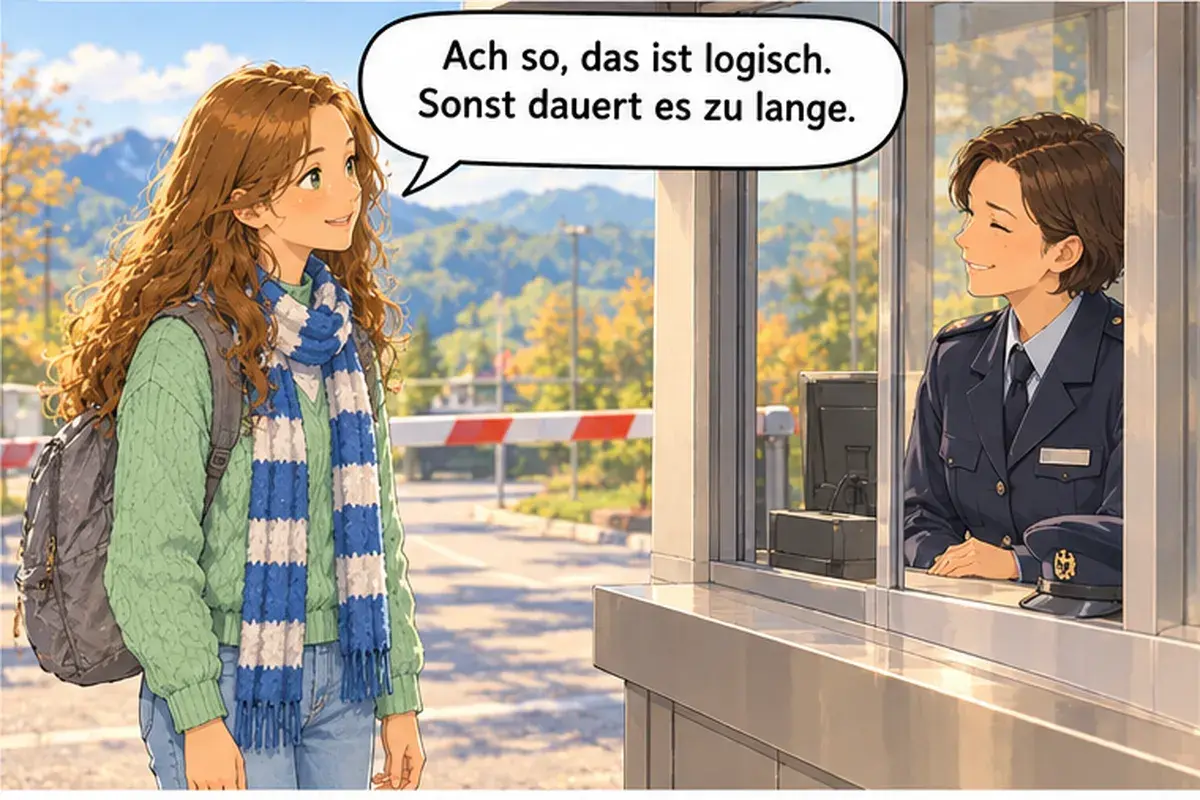
- Katja
Ach so, das ist logisch. Sonst dauert es zu lange.
Oh, I see, that's logical. Otherwise it takes too long.
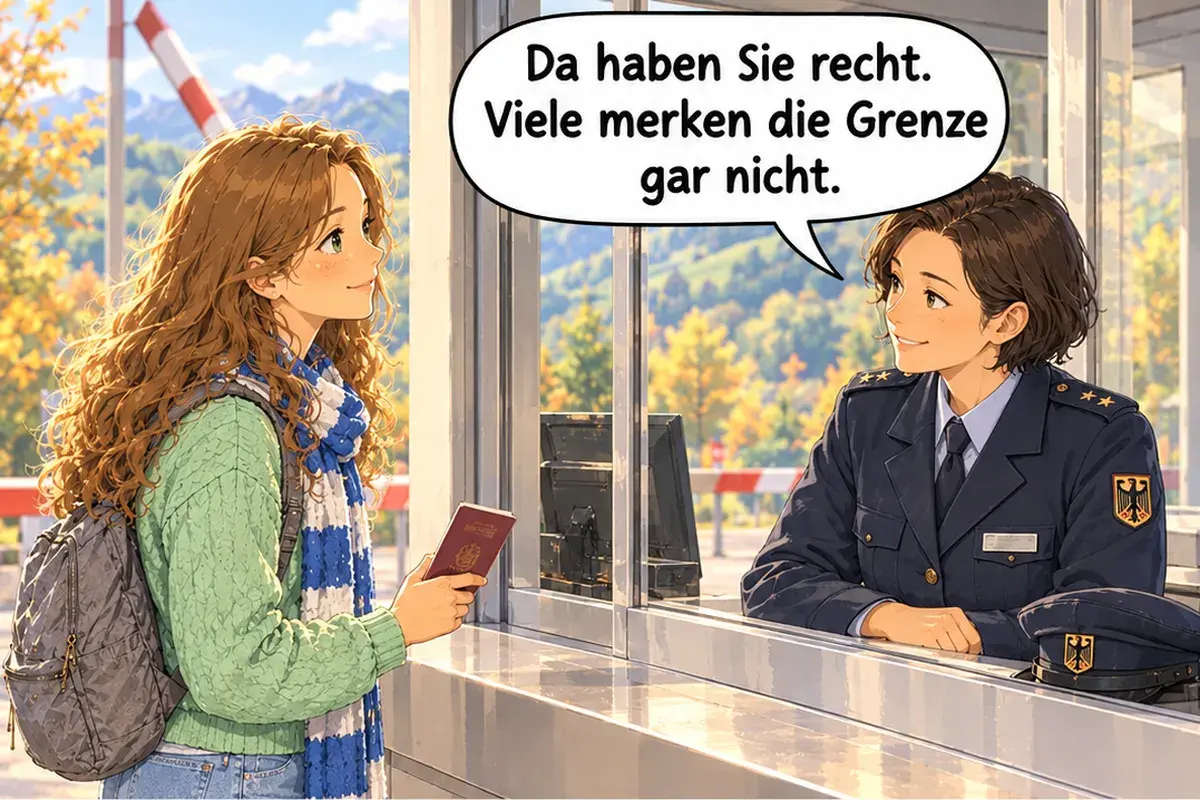
- Grenzbeamtin
Da haben Sie recht. Viele merken die Grenze gar nicht.
You're right about that. A lot of people don't even notice the border. (formal)

- Katja
Danke und schönen Tag noch!
Thank you, and have a nice day!
Grammar for this text
- Haben Sie Ihren Pass dabei? —
dabei habenmeans "to have with you":dabeigoes to the end.Ihrenis "your" (formal) in the accusative (der Pass→Ihren Pass).SieandIhrwith a capital letter are the formal "you" and "your". - Ohne Pass gehe ich auf keinen Fall ins Ausland. —
auf keinen Fallmeans "no way": learn it as a whole.Ohne Passcomes first, so the verbgeheis second andichcomes after it.insis short forin das: going somewhere (where to?) takes the accusative. - Nur bis 12 Uhr, weil ich am Nachmittag arbeiten muss. — after
weilthe conjugated verbmussgoes to the very end, afterarbeiten. There's a comma beforeweil. - Zum Zoll müssen Sie nur, wenn Sie viel kaufen. — with
müssen, German often leaves out the verb of movement:zum Zoll müssen Siemeans "you have to (go) to customs".wennmeans "if" here, andkaufenis at the end. - Ich habe gedacht, dass die Grenze streng ist. —
gedachtis the irregular past participle ofdenken(to think).dassmeans "that", andistgoes to the end. The articledasis spelled with ones. - Die Gruppe dort zum Beispiel nicht. — a short sentence:
kontrollieren wiris left out, just like English "That group over there, for example, we don't."logischmeans "logical, that makes sense": a common reply to an explanation. - Da haben Sie recht. —
recht habenmeans "to be right".rechtdoesn't change:ich habe recht,Sie haben recht.
Words and grammar of the unit: Explain why.
Learn the words from the texts with flashcards
In the app, you can tap any word in a text to see its translation, forms and examples, and new words stick with flashcards. 15 minutes a day.
Start for freeEverything is open for free. No card needed to sign up.