
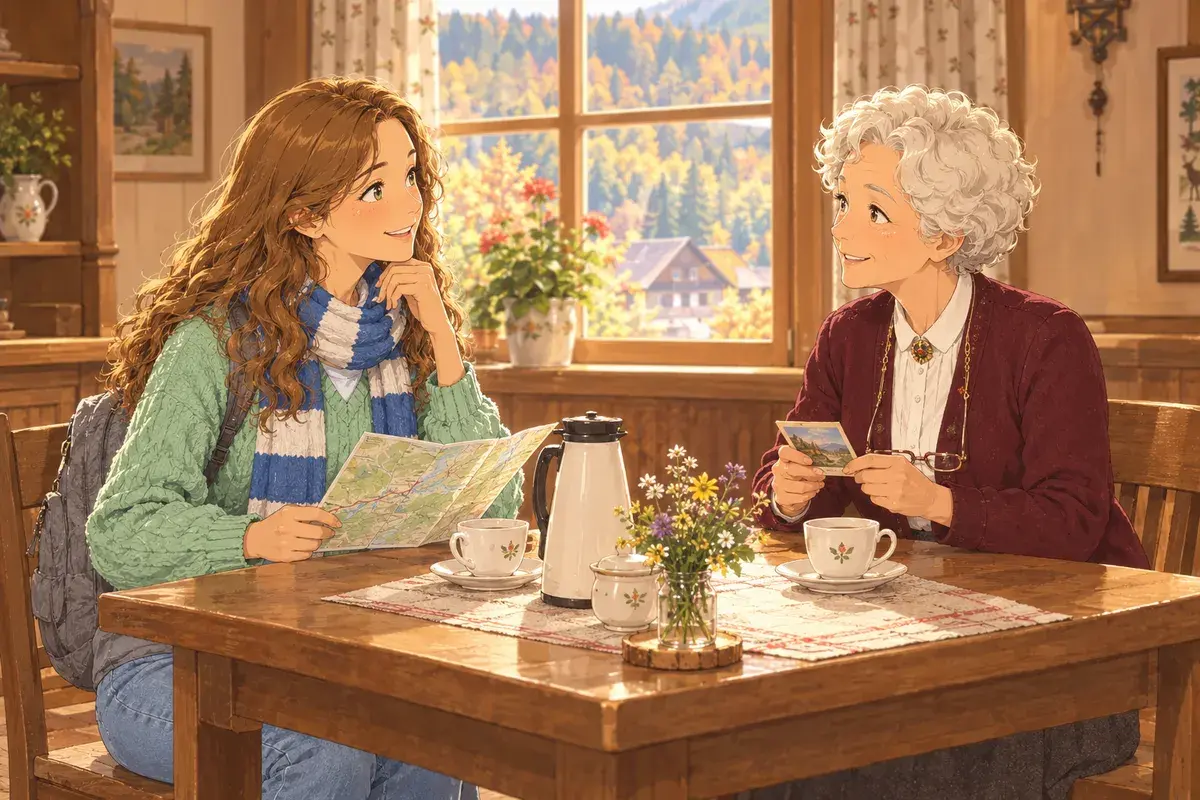
German dialogue with translation · A2 · 14 lines
Haben Sie einen Vorschlag? Do you have a suggestion? (formal)
Comic · 14 panels
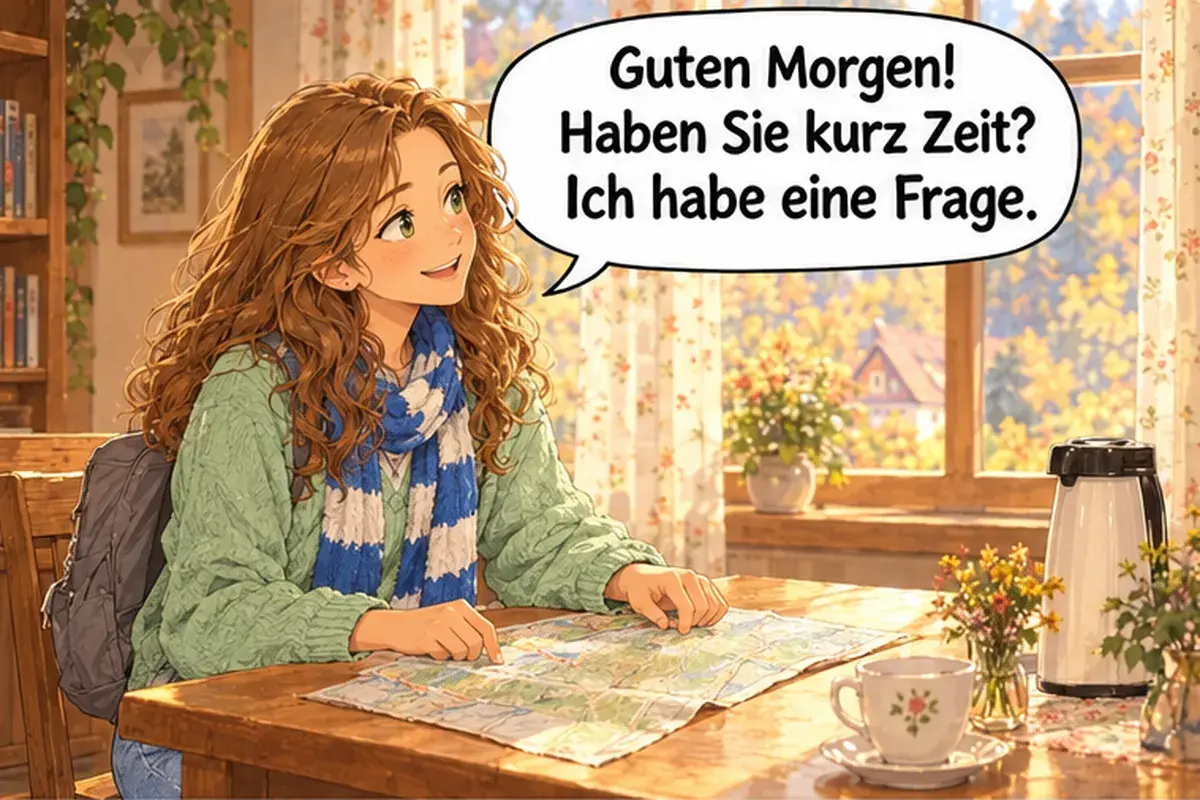
- Katja
Guten Morgen! Haben Sie kurz Zeit? Ich habe eine Frage.
Good morning! Do you have a minute? I have a question. (formal)
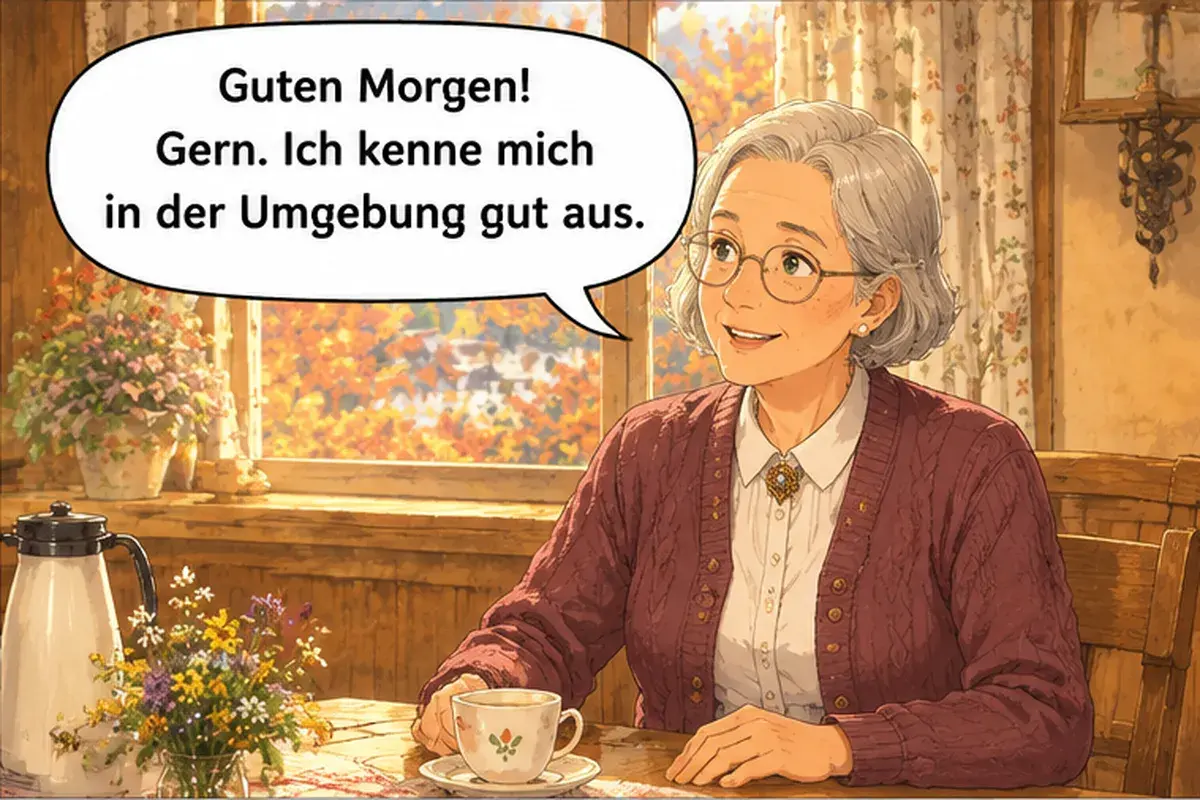
- Gastgeberin
Guten Morgen! Gern. Ich kenne mich in der Umgebung gut aus.
Good morning! Sure. I know my way around the area well.
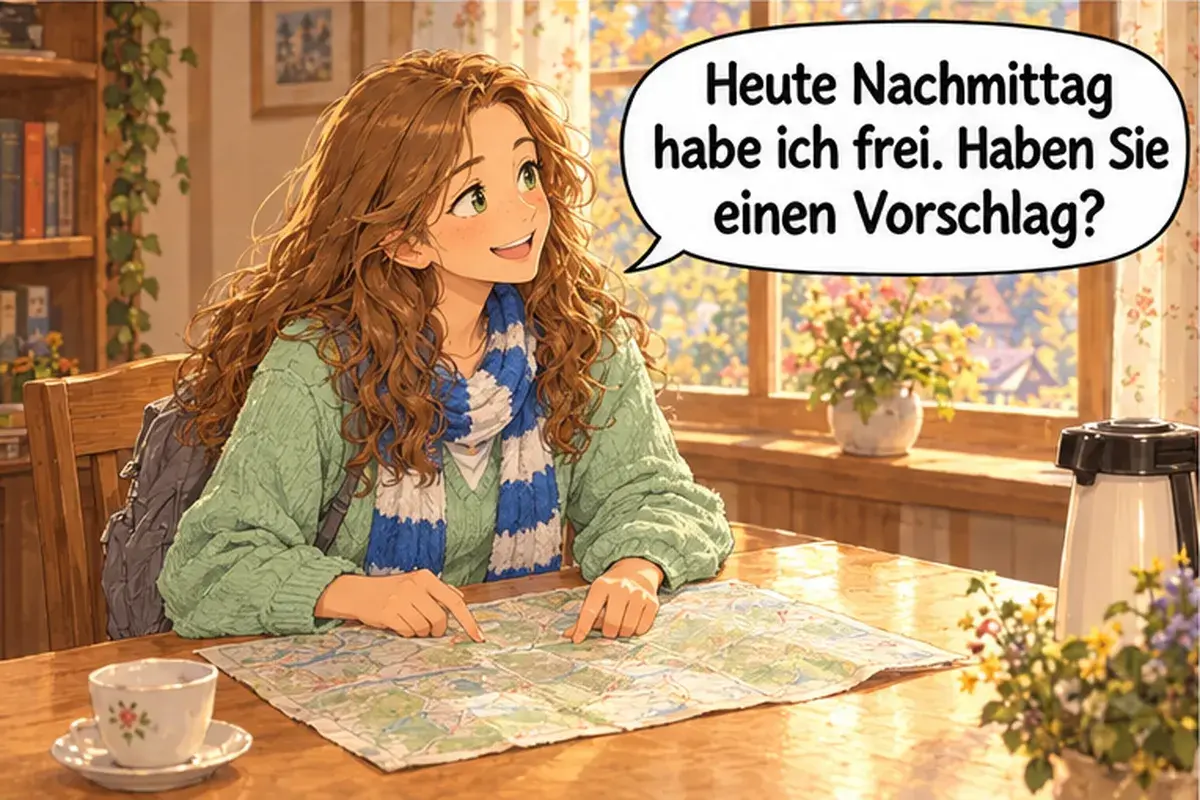
- Katja
Heute Nachmittag habe ich frei. Haben Sie einen Vorschlag?
I'm free this afternoon. Do you have a suggestion? (formal)
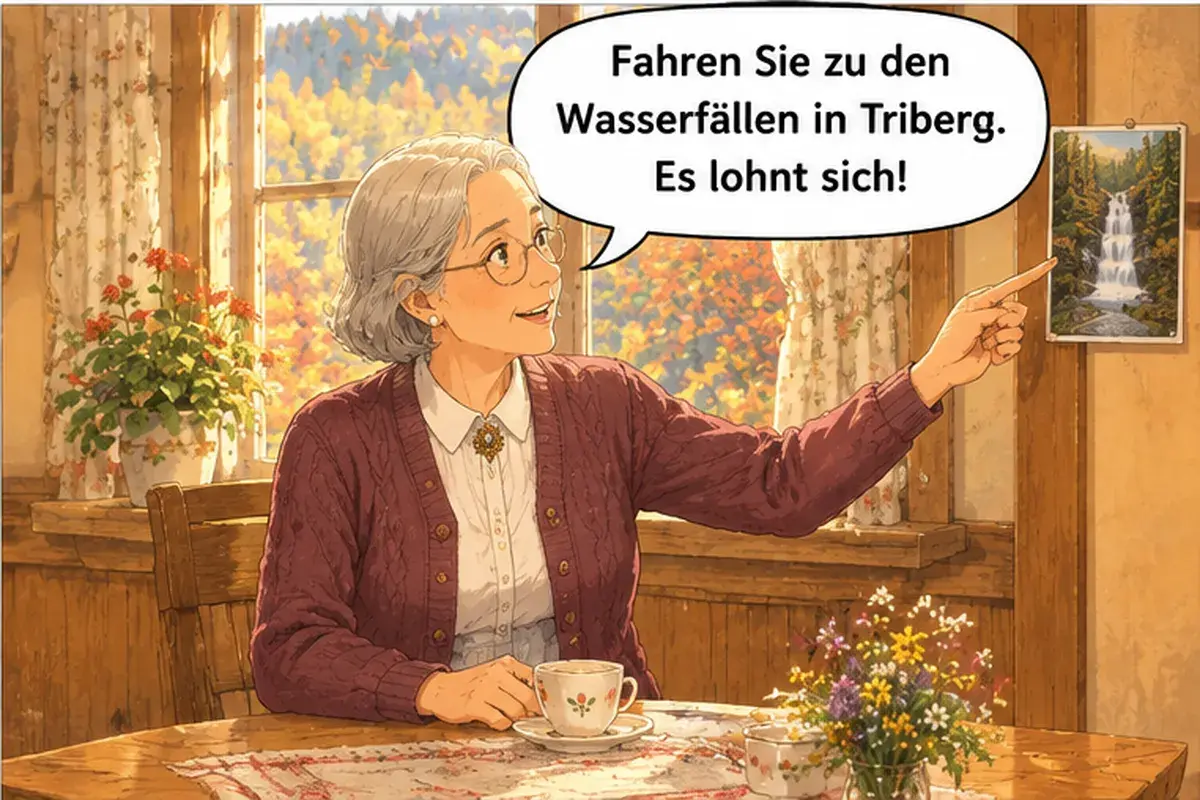
- Gastgeberin
Fahren Sie zu den Wasserfällen in Triberg. Es lohnt sich!
Go to the waterfalls in Triberg. It's worth it! (formal)
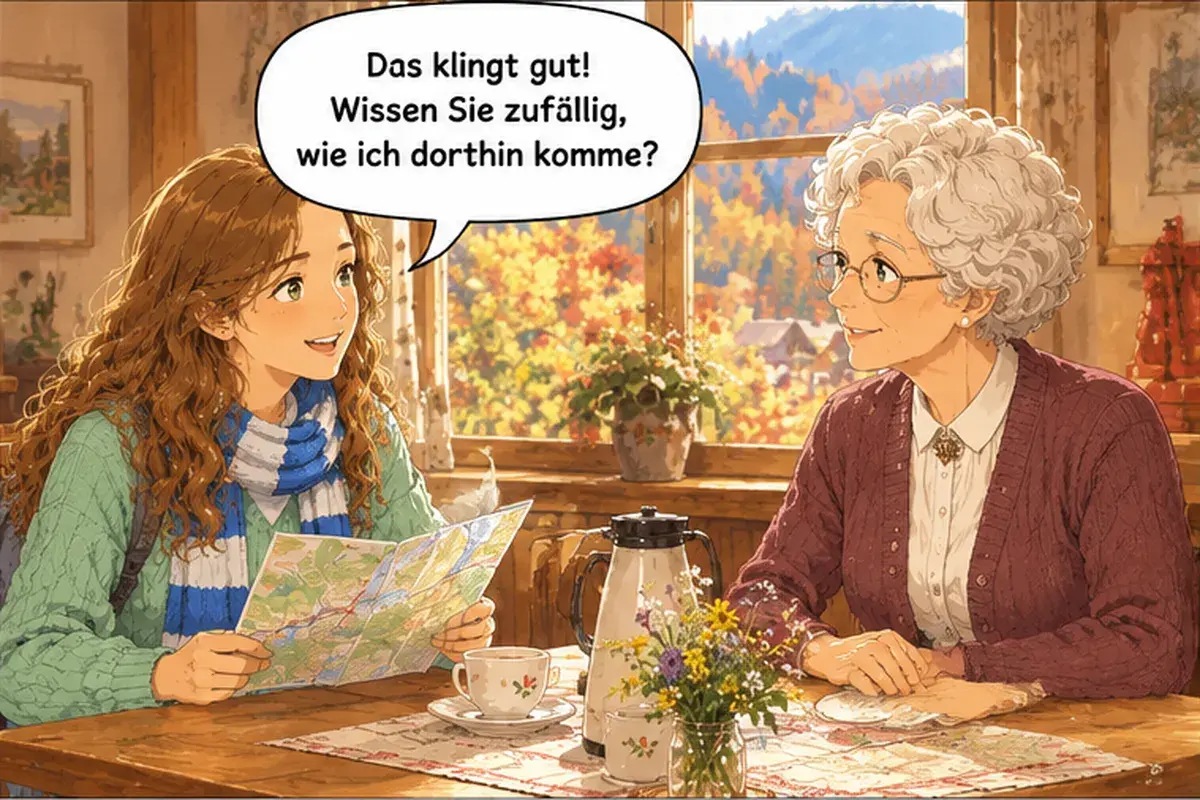
- Katja
Das klingt gut! Wissen Sie zufällig, wie ich dorthin komme?
That sounds good! Do you happen to know how I get there? (formal)
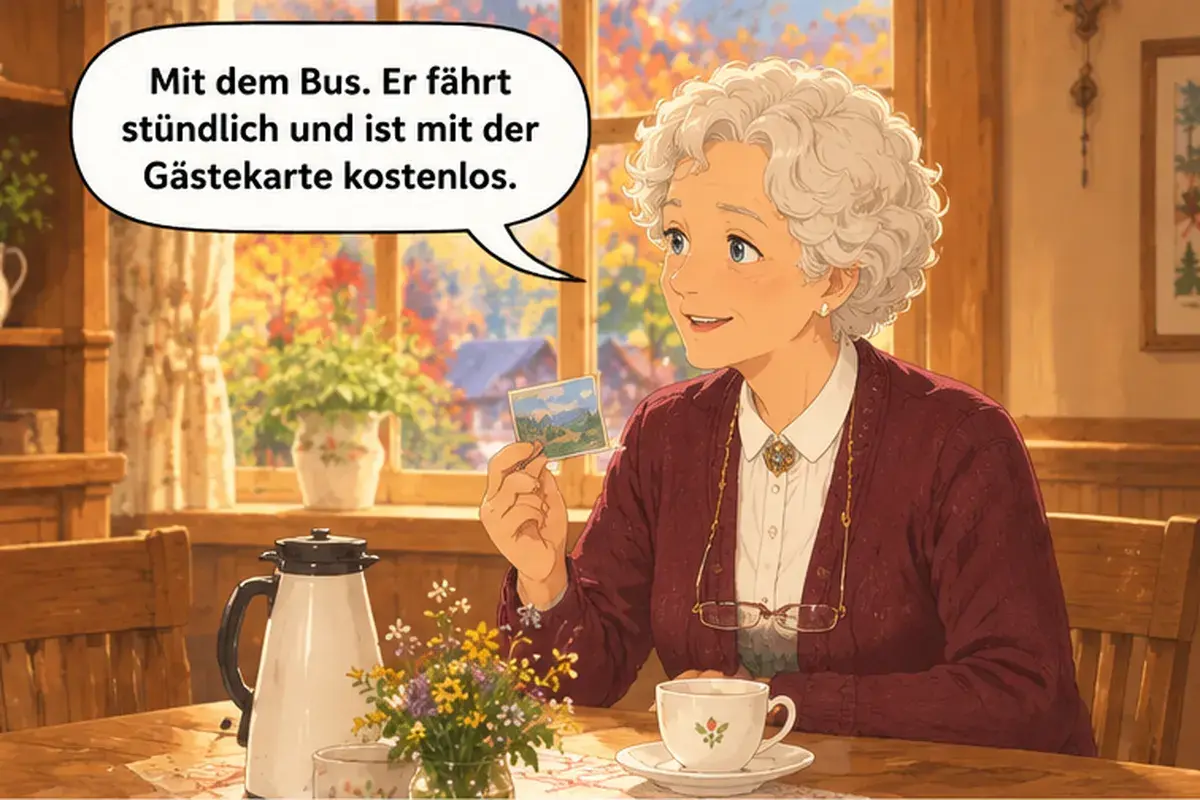
- Gastgeberin
Mit dem Bus. Er fährt stündlich und ist mit der Gästekarte kostenlos.
By bus. It runs every hour, and it's free with the guest card.
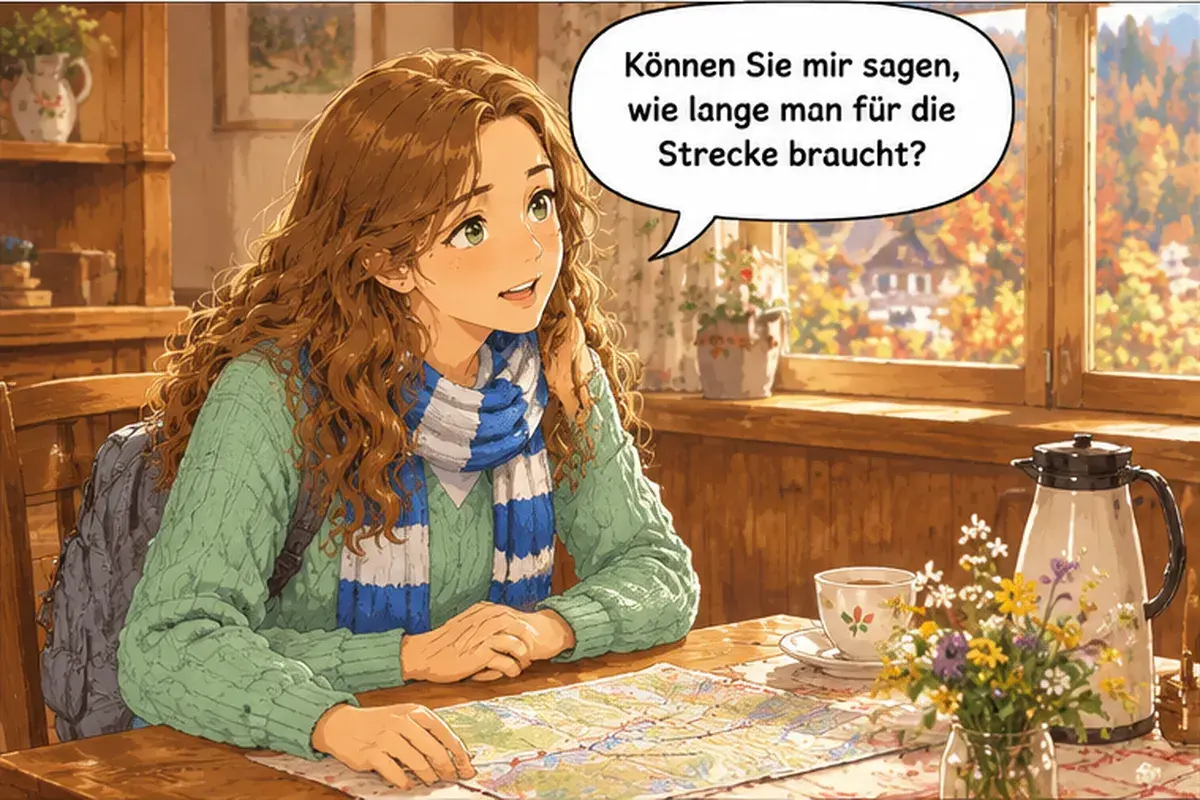
- Katja
Können Sie mir sagen, wie lange man für die Strecke braucht?
Can you tell me how long it takes to cover the distance? (formal)
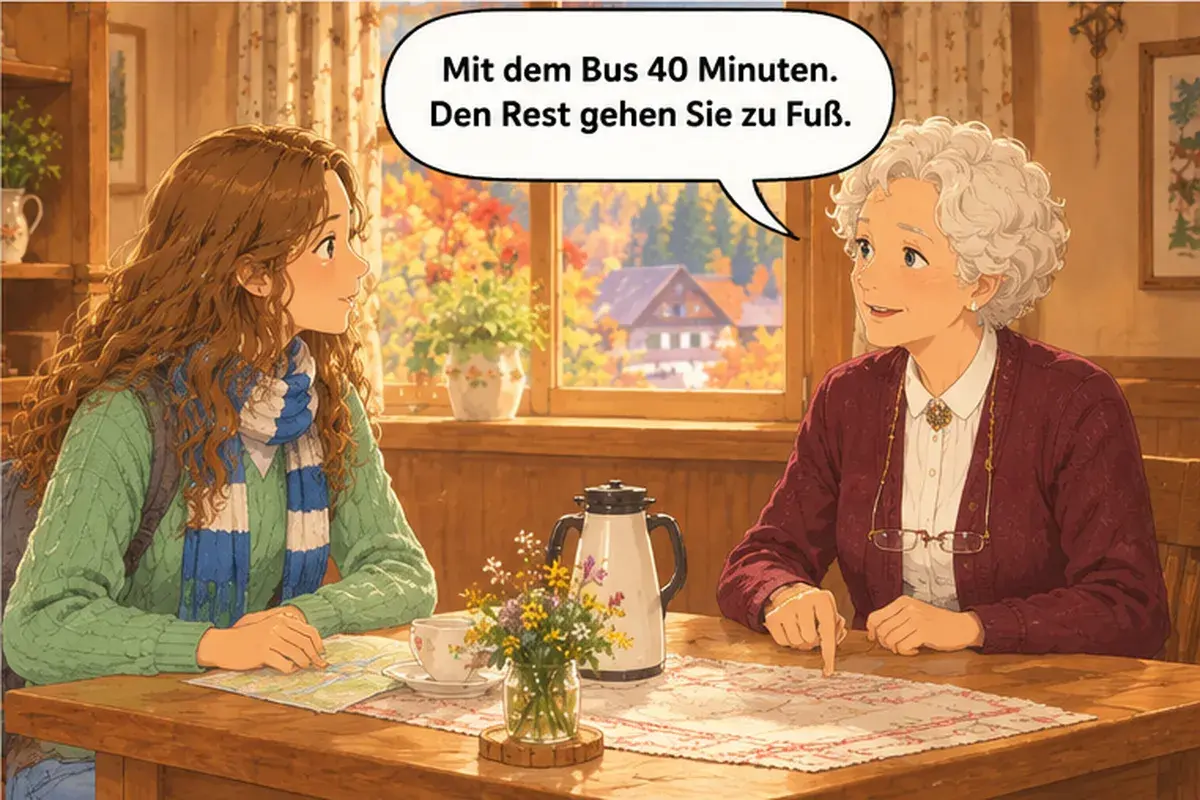
- Gastgeberin
Mit dem Bus 40 Minuten. Den Rest gehen Sie zu Fuß.
40 minutes by bus. You go the rest of the way on foot. (formal)
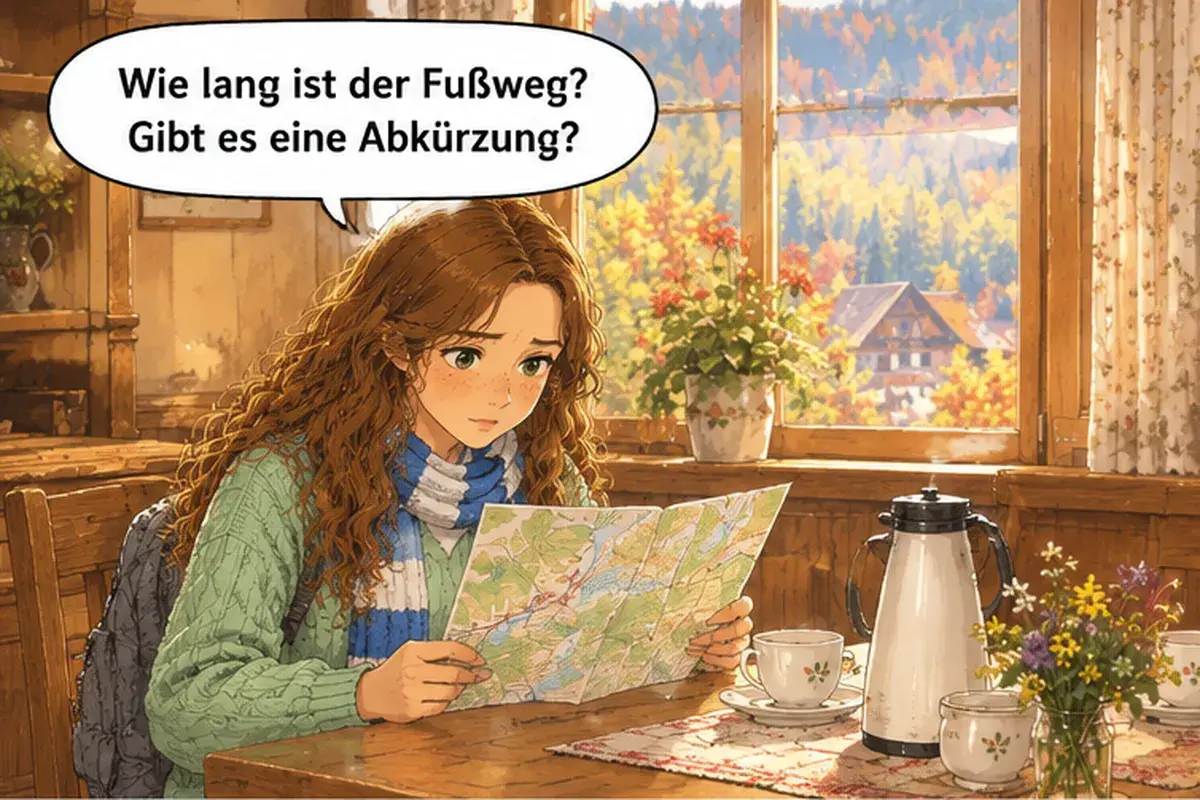
- Katja
Wie lang ist der Fußweg? Gibt es eine Abkürzung?
How long is the walk? Is there a shortcut?
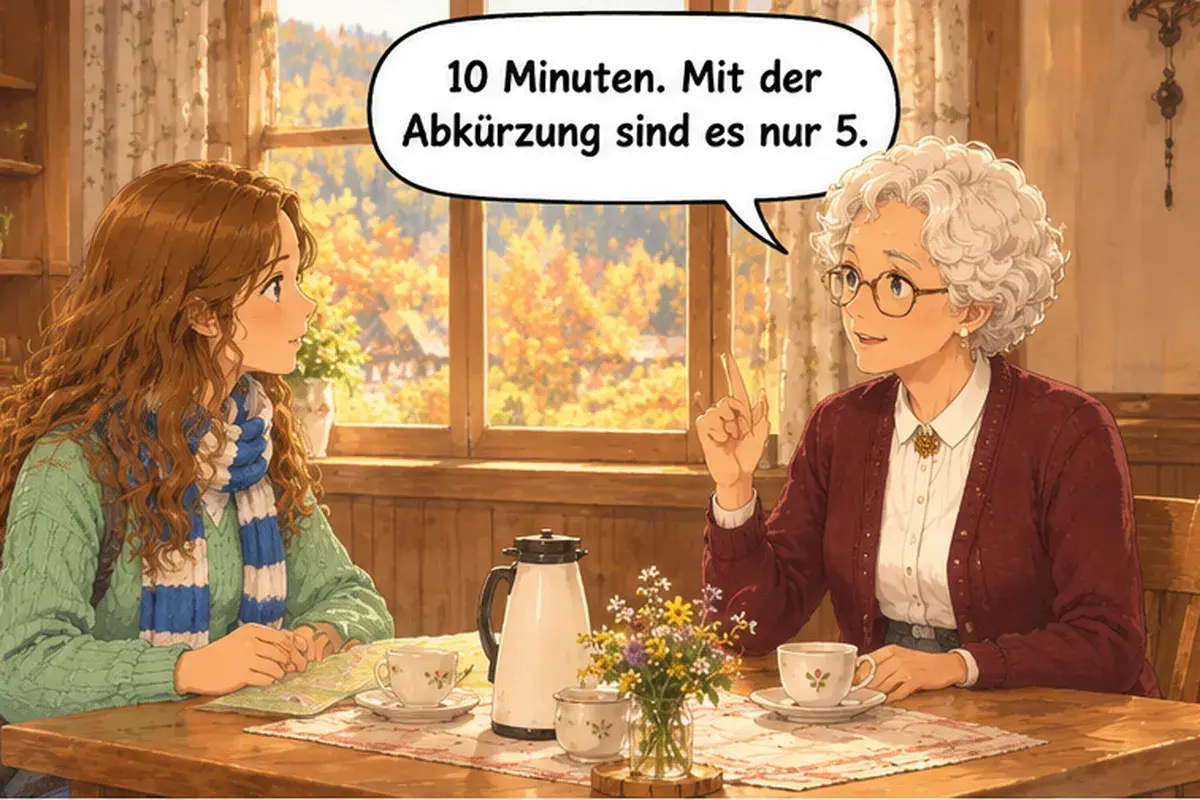
- Gastgeberin
10 Minuten. Mit der Abkürzung sind es nur 5.
10 minutes. With the shortcut it's only 5.
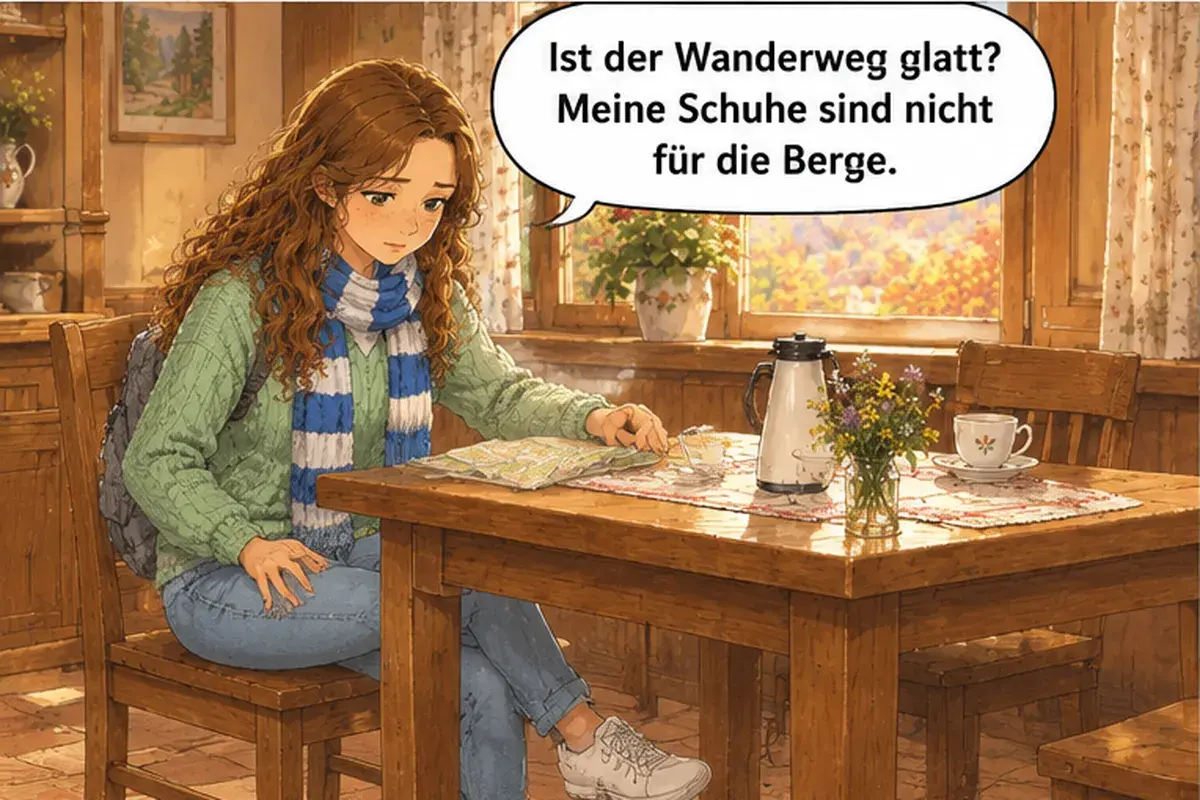
- Katja
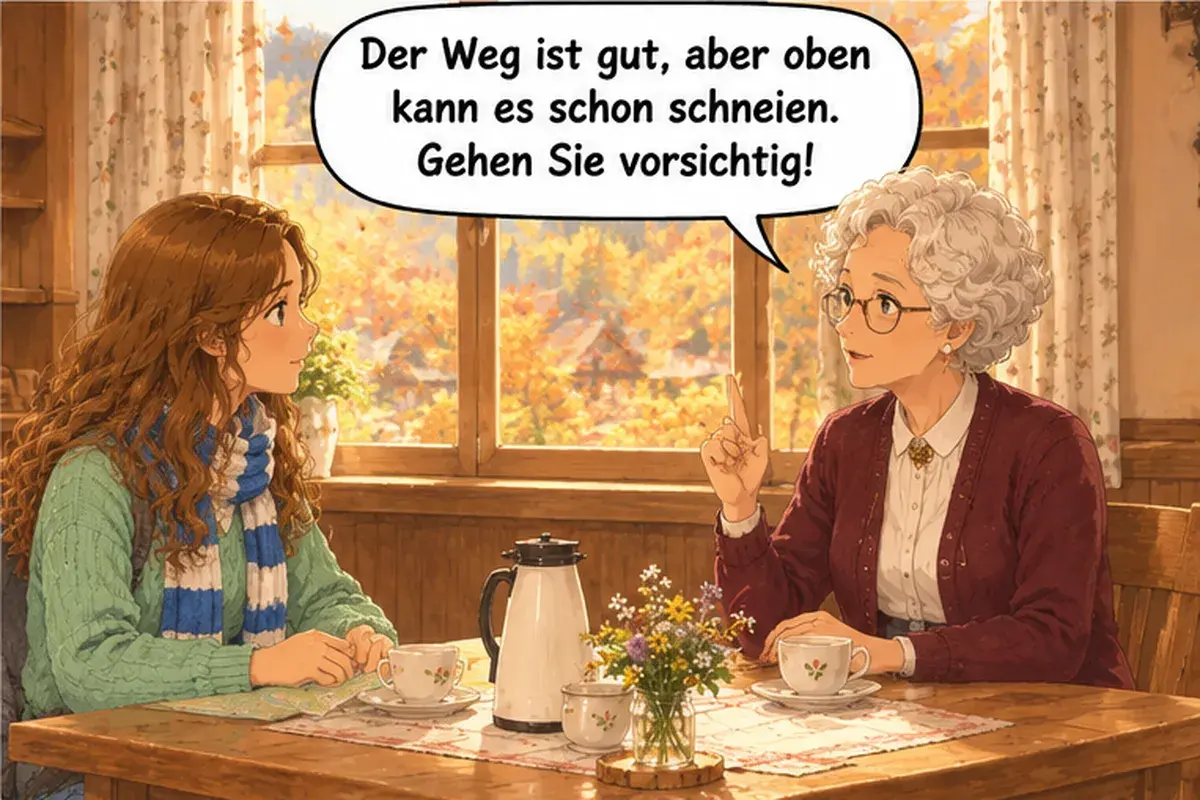
Ist der Wanderweg glatt? Meine Schuhe sind nicht für die Berge.
Is the hiking trail slippery? My shoes aren't for the mountains.
- Gastgeberin
Der Weg ist gut, aber oben kann es schon schneien. Gehen Sie vorsichtig!
The path is good, but up top it may already be snowing. Walk carefully! (formal)
- Katja
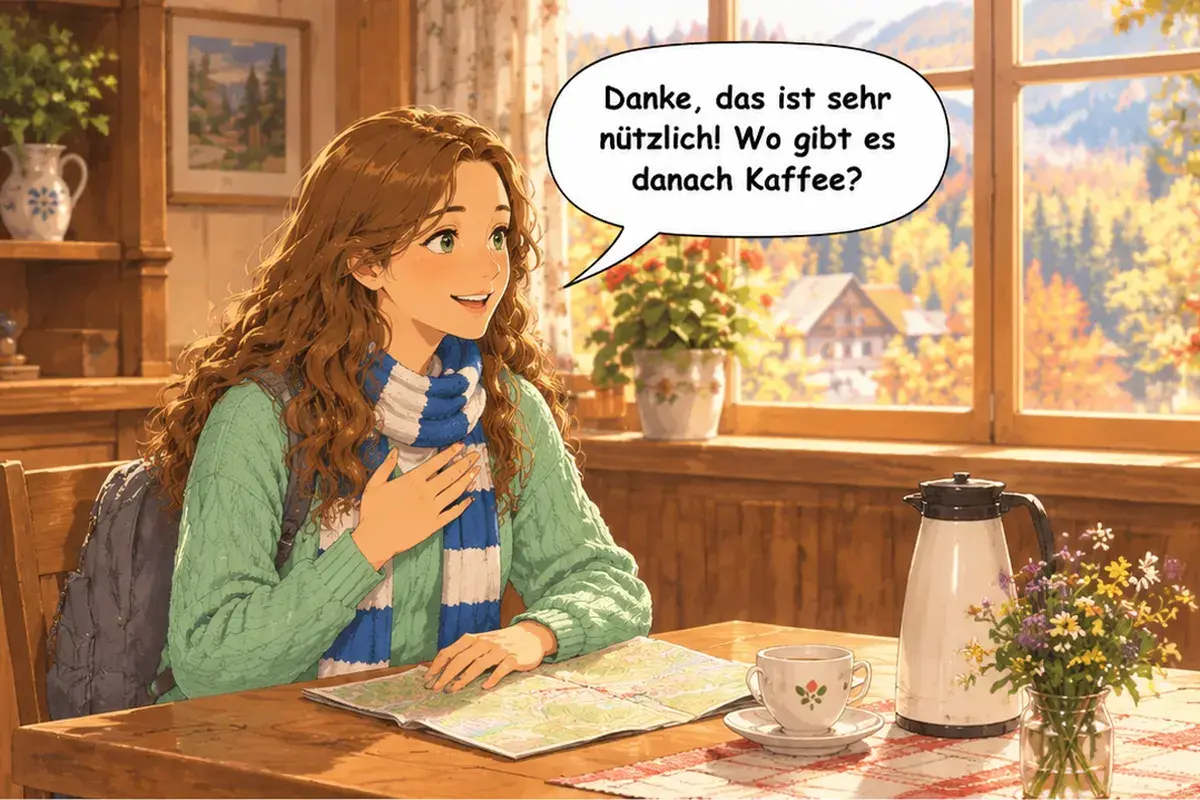
Danke, das ist sehr nützlich! Wo gibt es danach Kaffee?
Thanks, that's very useful! Where can I get coffee afterward?
- Gastgeberin
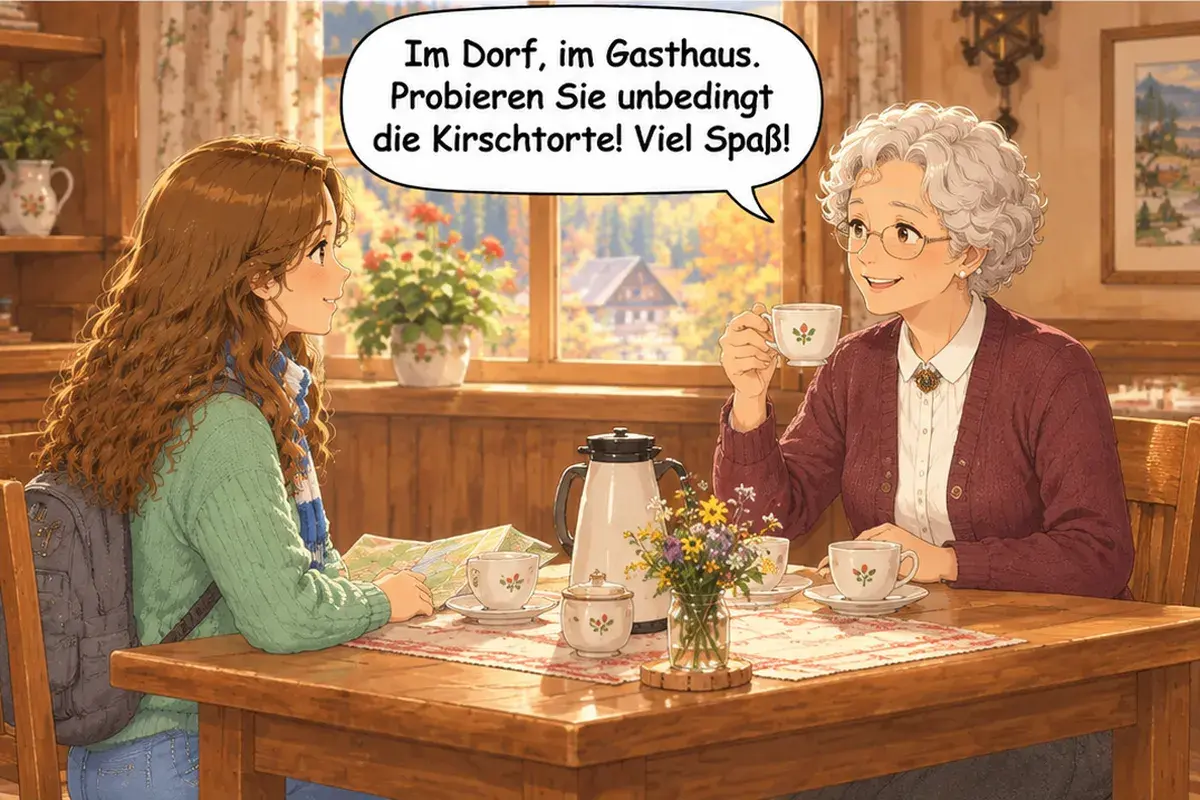
Im Dorf, im Gasthaus. Probieren Sie unbedingt die Kirschtorte! Viel Spaß!
In the village, at the inn. Be sure to try the cherry cake! Have fun! (formal)
Grammar for this text
- Ich kenne mich in der Umgebung gut aus —
sich auskennenmeans "to know your way around". It's a separable verb:kenneis in second place,michcomes right after it, and the prefixausgoes to the end.in der Umgebungmeans "in the area" (dative, unit 8). - Es lohnt sich — a set phrase, "it's worth it": learn it as a whole.
Lohnt sich das?— the question form: "is it worth it?"- Wissen Sie zufällig, wie ich dorthin komme? — an indirect question (this unit's grammar): the verb
kommegoes to the very end.zufällig(by any chance) makes the question softer, like "Do you happen to know …?".dorthinis "there" when you're going somewhere (where to?). - Können Sie mir sagen, wie lange man für die Strecke braucht? —
mirmeans "(to) me", dative (unit 5; likeKönnen Sie mir helfen?in A1). The verbbrauchtgoes to the end.Wie lange braucht man für die Strecke?is how people ask how long it takes to get somewhere.dauern(to take, to last) is used about the trip itself:Die Fahrt dauert 40 Minuten. - Er fährt stündlich und ist mit der Gästekarte kostenlos —
stündlichmeans "every hour". In the Black Forest your host gives you a guest card (KONUS): with it, buses and regional trains are free, but not theICE. - Den Rest gehen Sie zu Fuß —
der Restbecomesden Restin the accusative (it's the object). The object comes first, sogehenstays in second place andSiecomes after it.zu Fußmeans "on foot". - Oben kann es schon schneien —
schneienmeans "to snow". It's an impersonal verb, likeregnen: the subject is alwayses, just like "it" in "it snows".
Words and grammar of the unit: Ask for advice.
Learn the words from the texts with flashcards
In the app, you can tap any word in a text to see its translation, forms and examples, and new words stick with flashcards. 15 minutes a day.
Start for freeEverything is open for free. No card needed to sign up.