

German dialogue with translation · A2 · 14 lines
Wie sieht Ihr Freund aus? What does your friend look like? (formal)
Comic · 14 panels
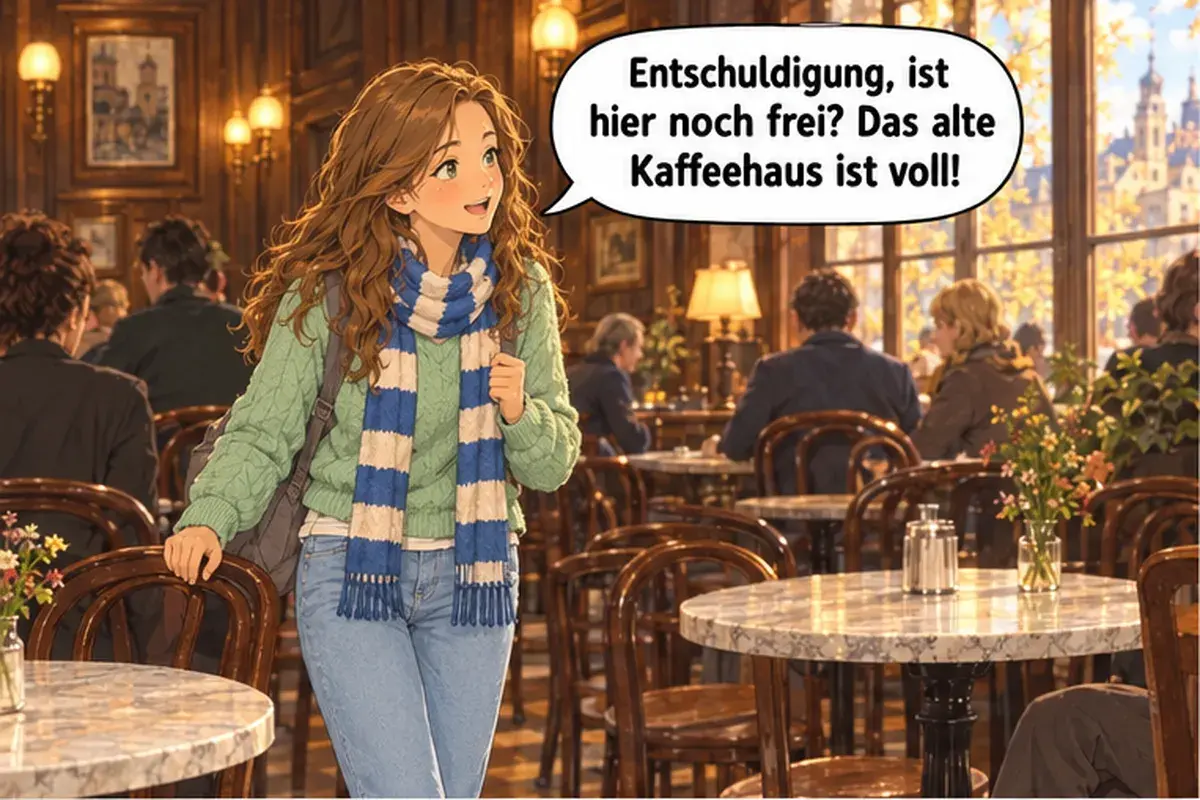
- Katja
Entschuldigung, ist hier noch frei? Das alte Kaffeehaus ist voll!
Excuse me, is this seat still free? The old coffeehouse is full!
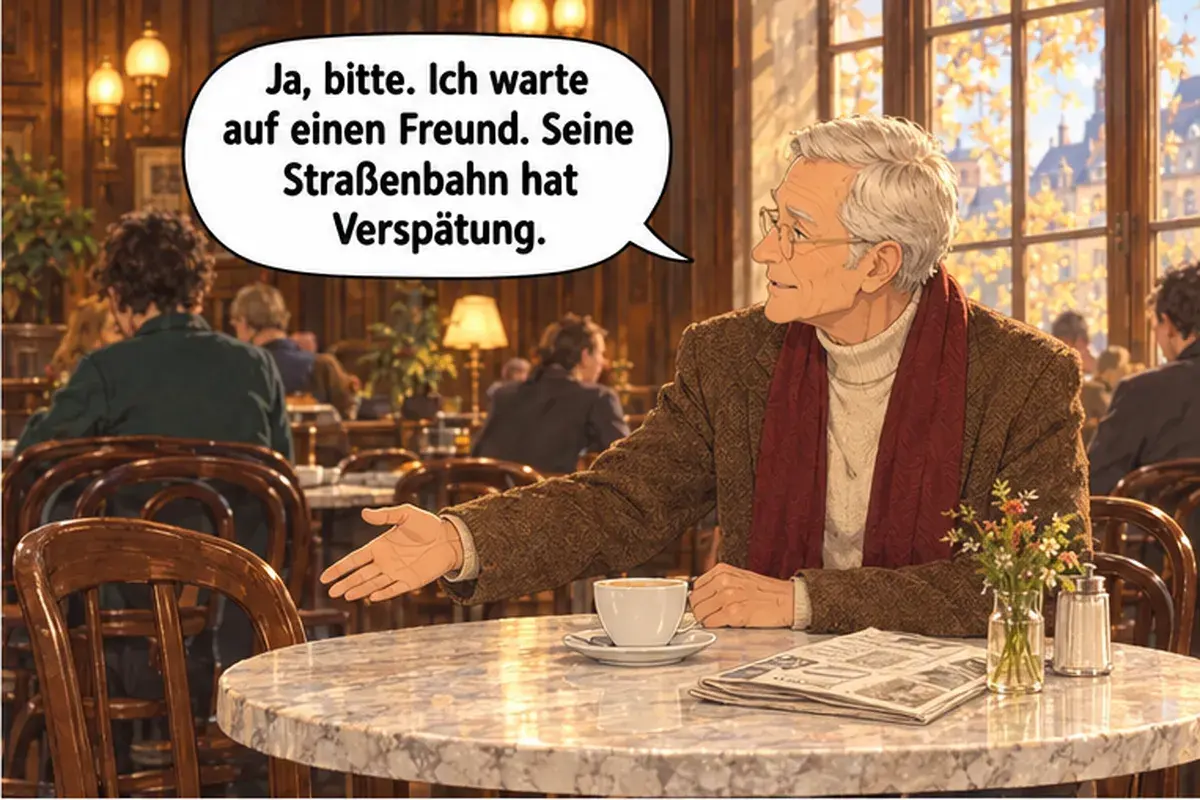
- Herr Albrecht
Ja, bitte. Ich warte auf einen Freund. Seine Straßenbahn hat Verspätung.
Yes, go ahead. I'm waiting for a friend. His streetcar is late.
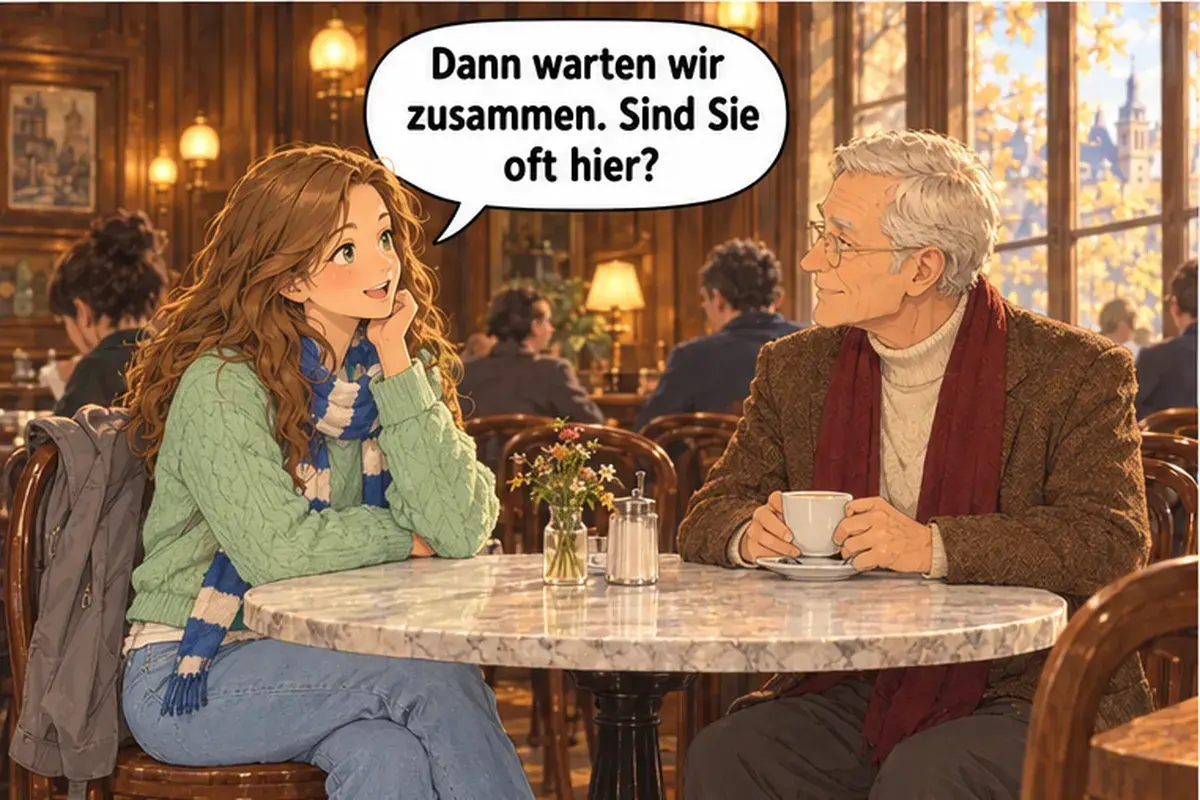
- Katja
Dann warten wir zusammen. Sind Sie oft hier?
Then we'll wait together. Are you here often? (formal)
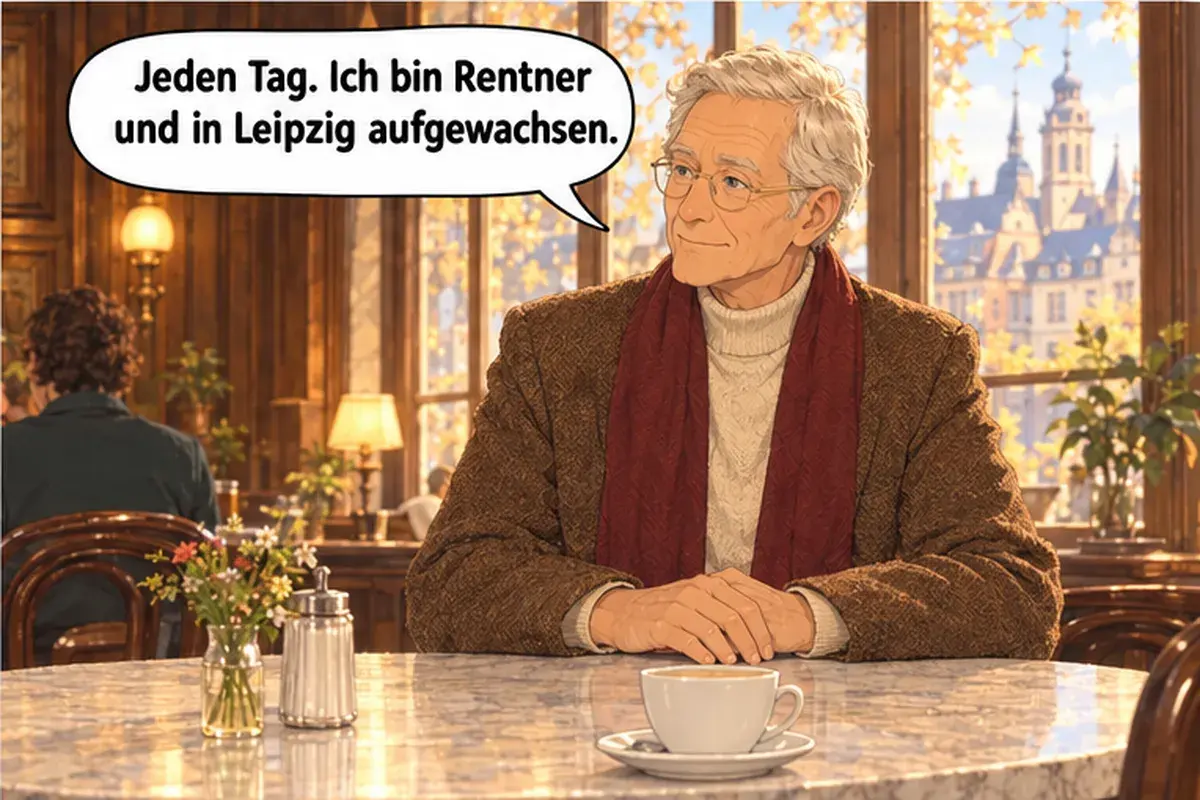
- Herr Albrecht
Jeden Tag. Ich bin Rentner und in Leipzig aufgewachsen.
Every day. I'm a retiree, and I grew up in Leipzig.
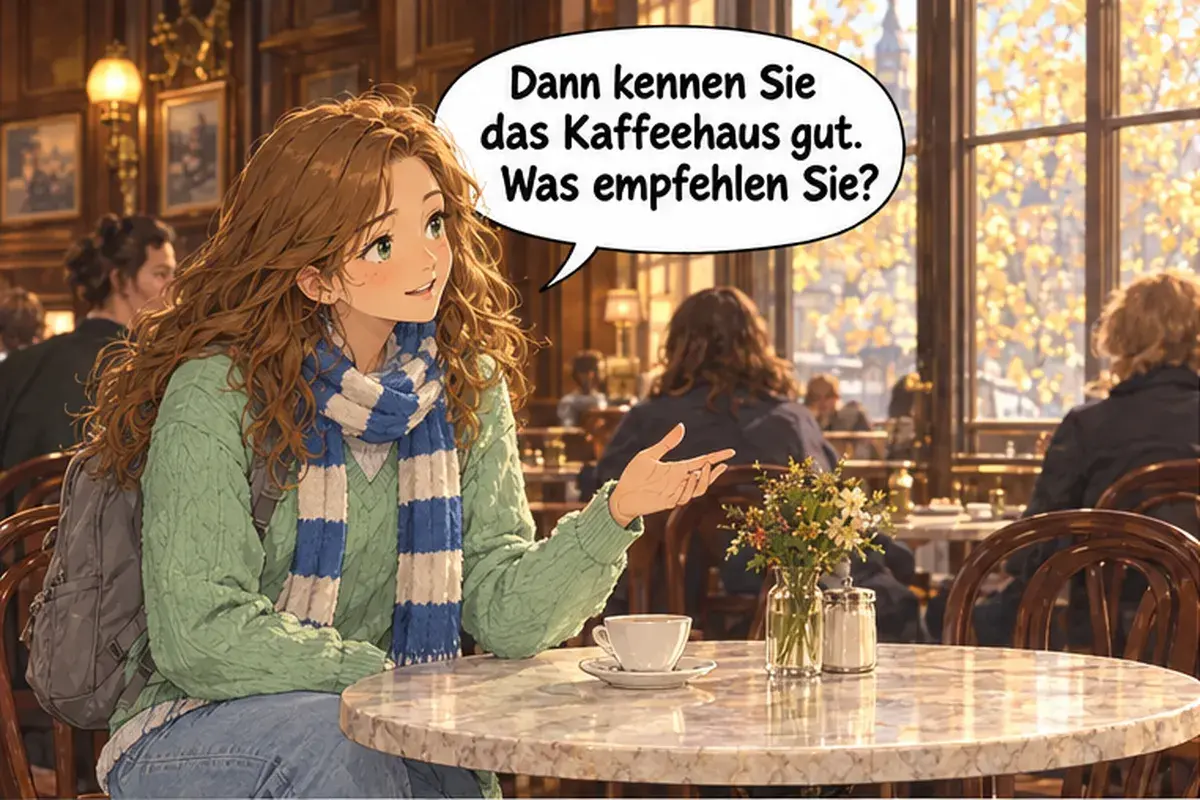
- Katja
Dann kennen Sie das Kaffeehaus gut. Was empfehlen Sie?
Then you know the coffeehouse well. What do you recommend? (formal)
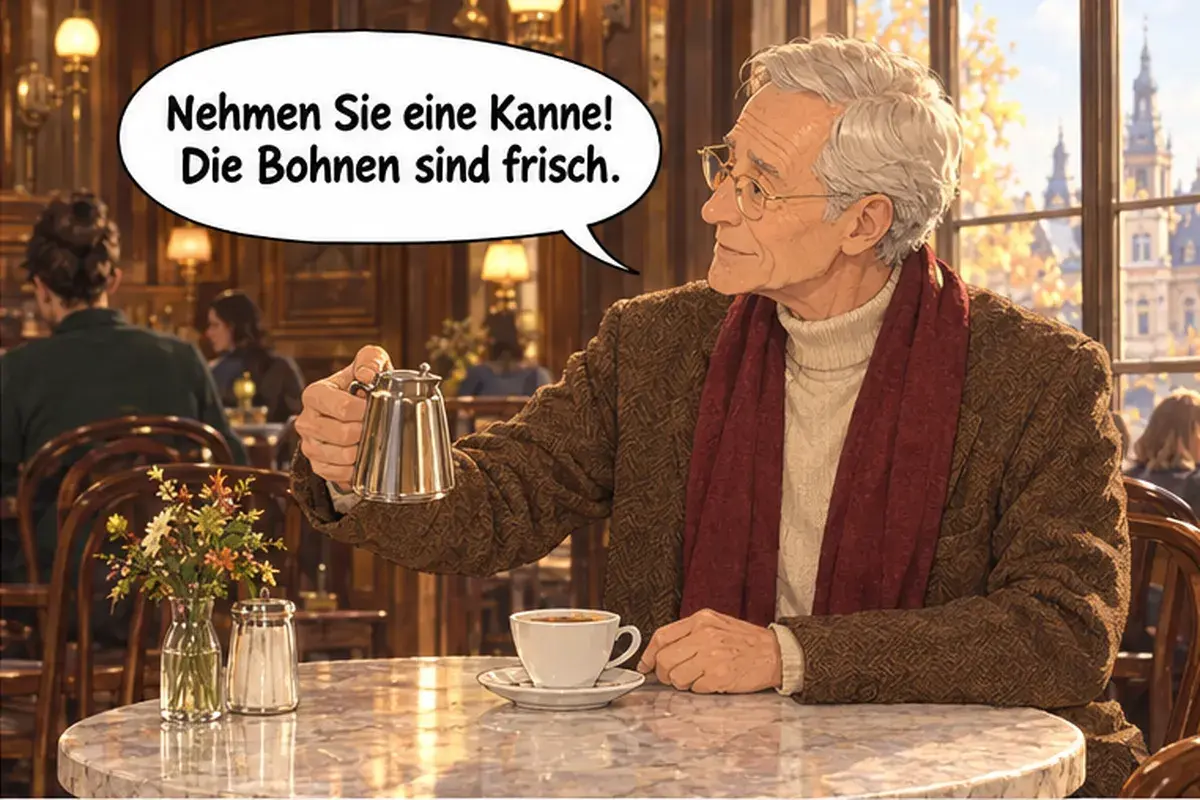
- Herr Albrecht
Nehmen Sie eine Kanne! Die Bohnen sind frisch.
Get a pot! The beans are fresh. (formal)
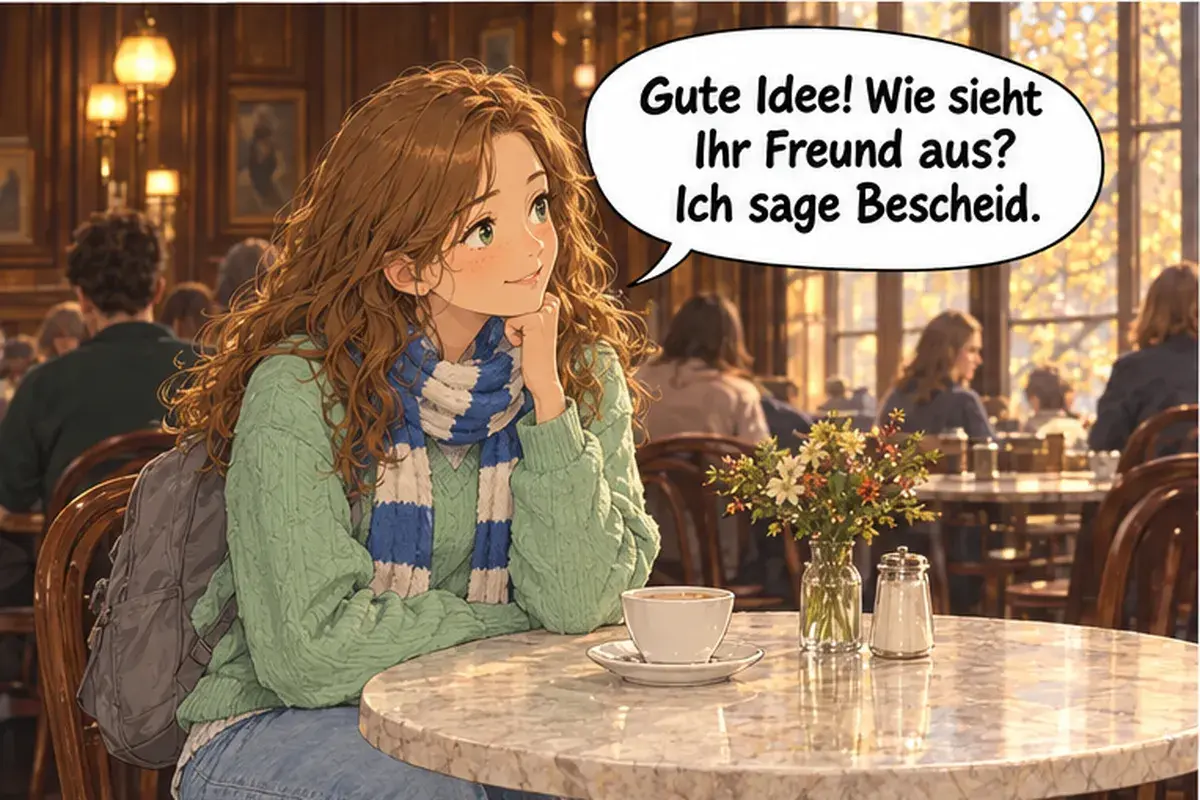
- Katja
Gute Idee! Wie sieht Ihr Freund aus? Ich sage Bescheid.
Good idea! What does your friend look like? I'll let you know. (formal)
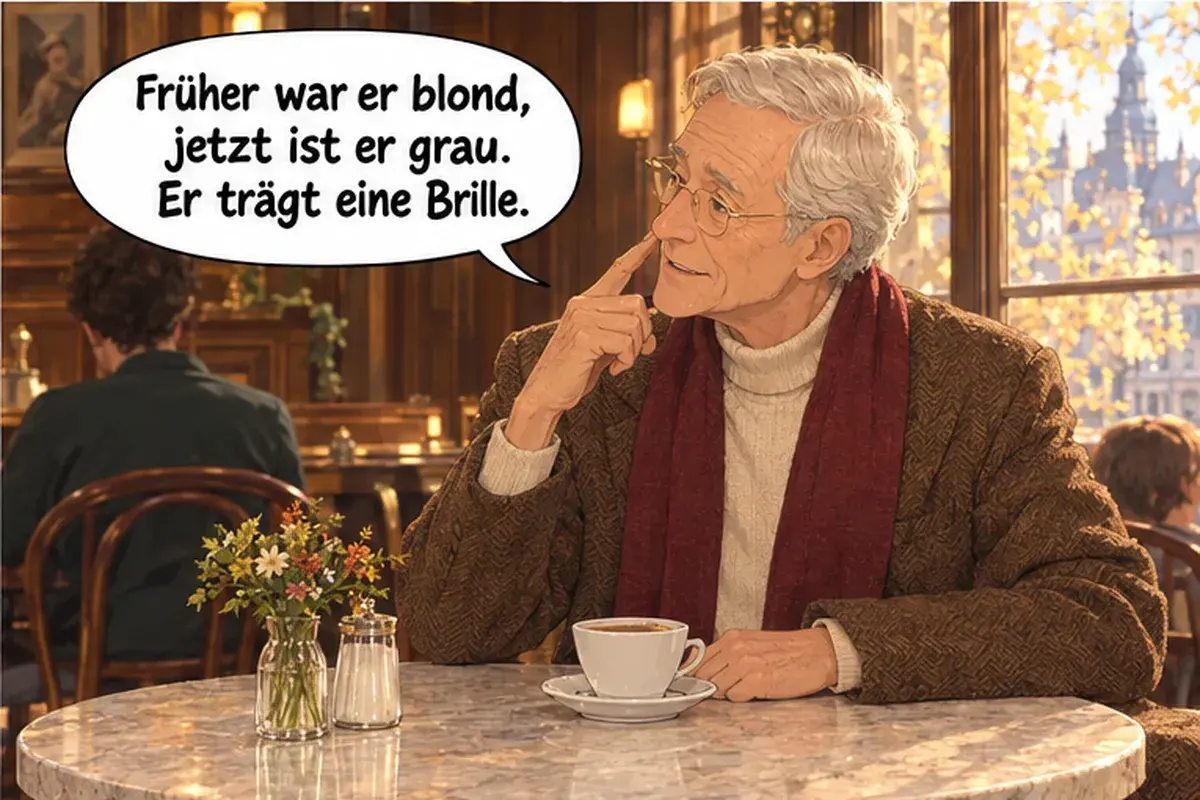
- Herr Albrecht
Früher war er blond, jetzt ist er grau. Er trägt eine Brille.
He used to be blond, now he's gray. He wears glasses.
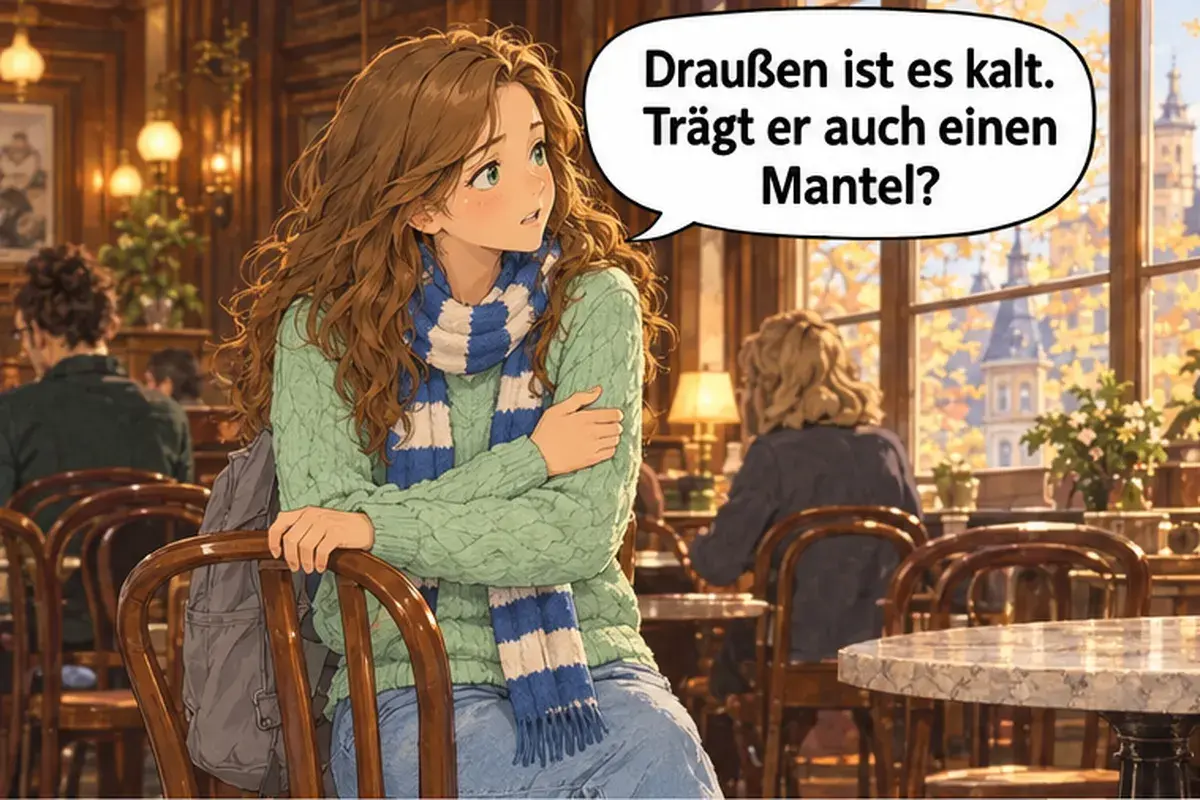
- Katja
Draußen ist es kalt. Trägt er auch einen Mantel?
It's cold outside. Is he wearing a coat too?
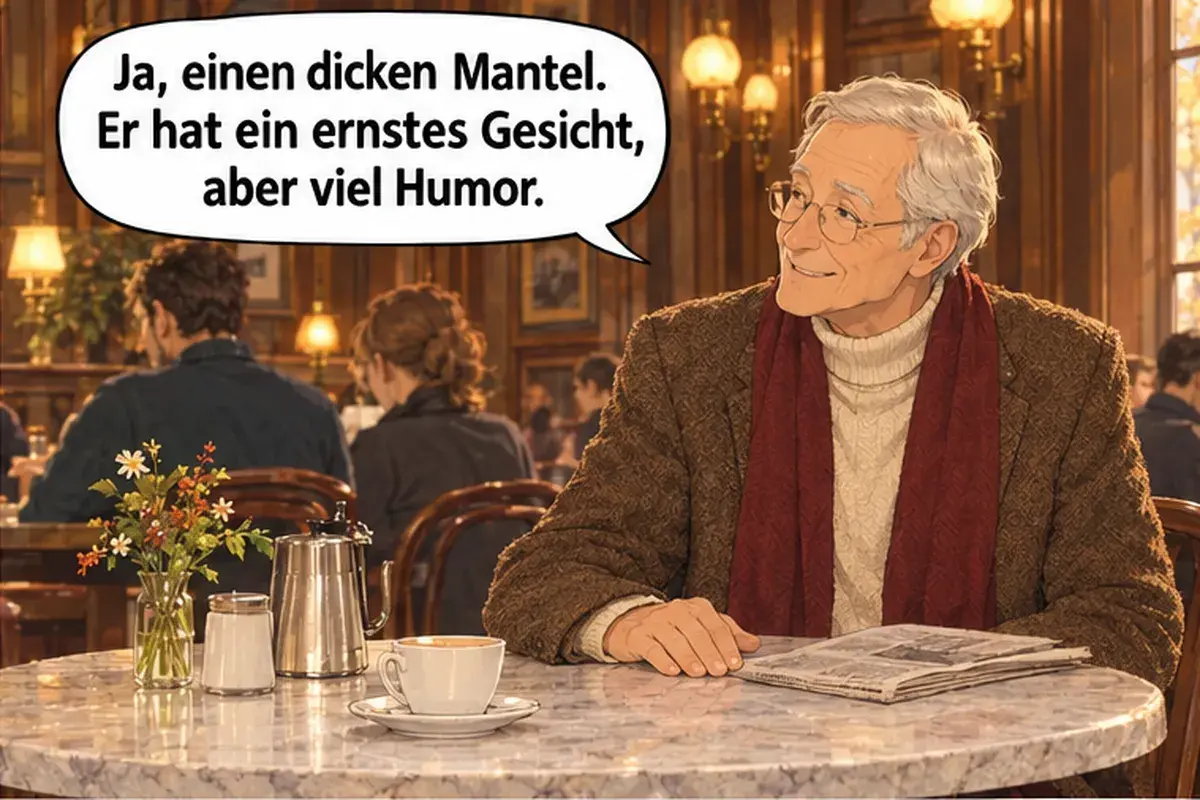
- Herr Albrecht
Ja, einen dicken Mantel. Er hat ein ernstes Gesicht, aber viel Humor.
Yes, a thick coat. He has a serious face, but a great sense of humor.
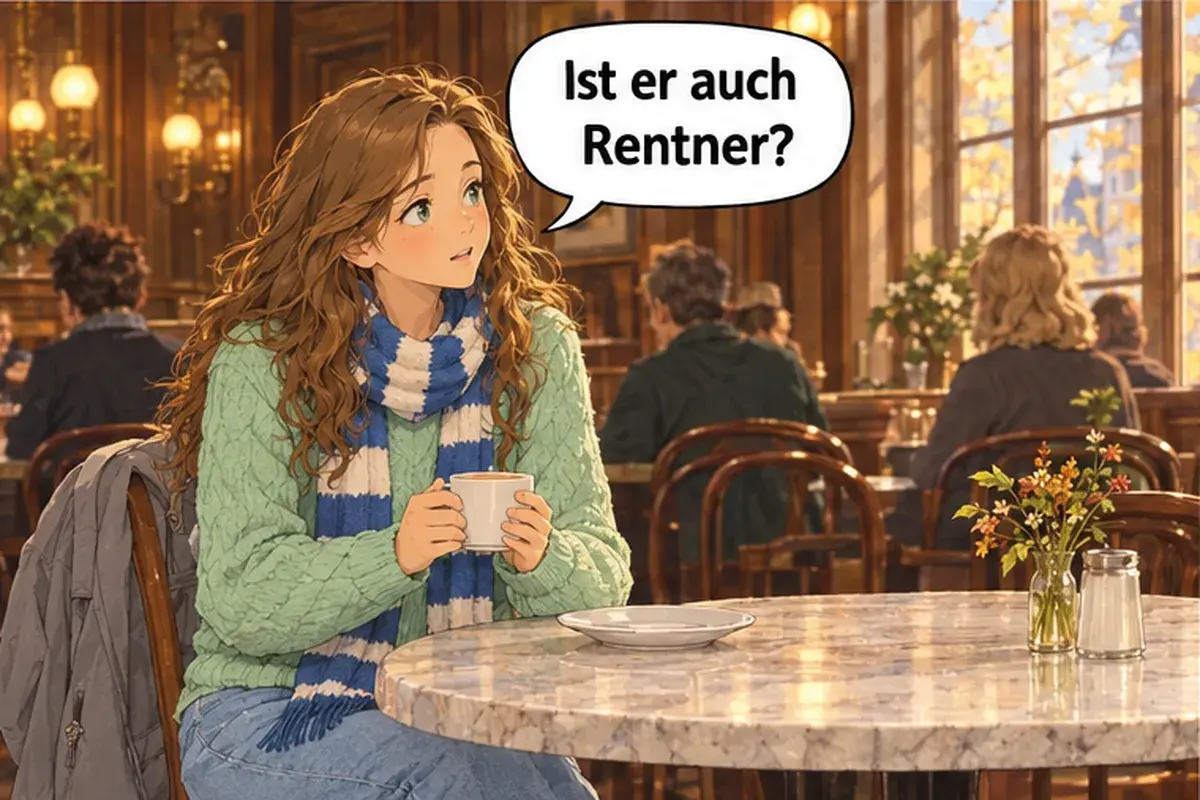
- Katja
Ist er auch Rentner?
Is he a retiree too?
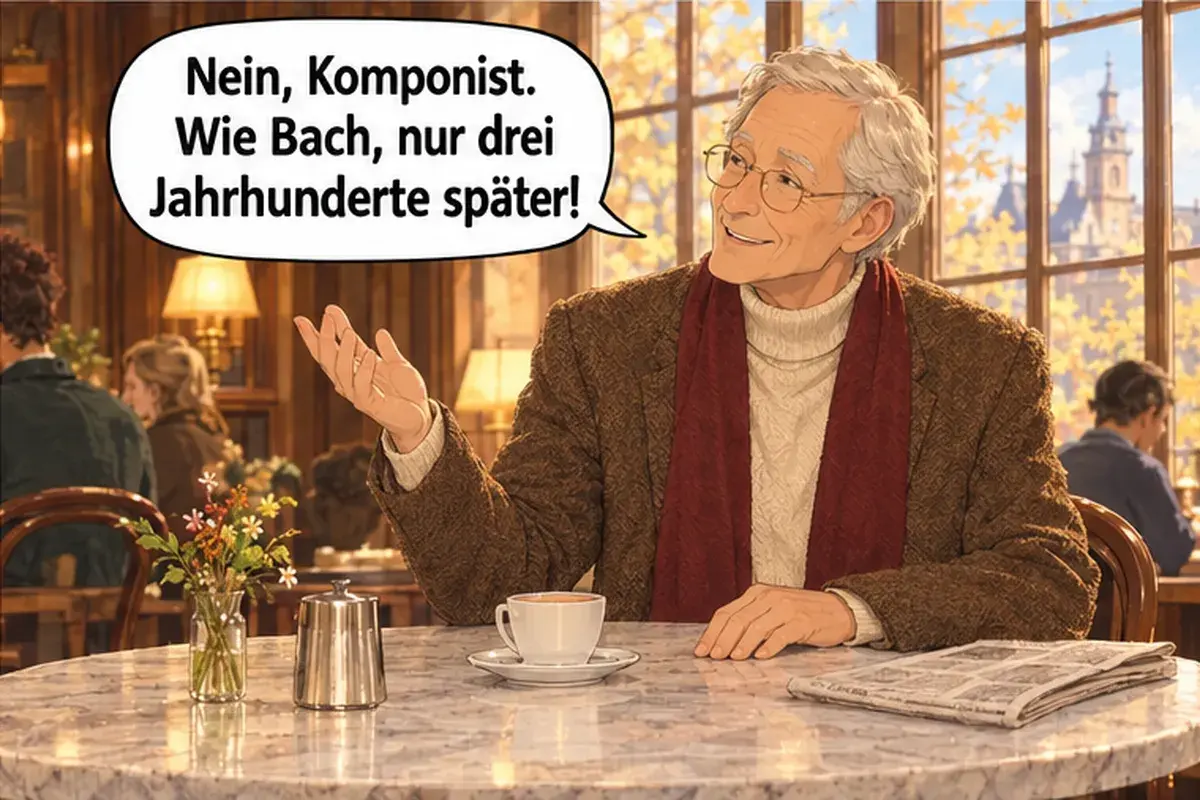
- Herr Albrecht
Nein, Komponist. Wie Bach, nur drei Jahrhunderte später!
No, a composer. Like Bach, only three centuries later!
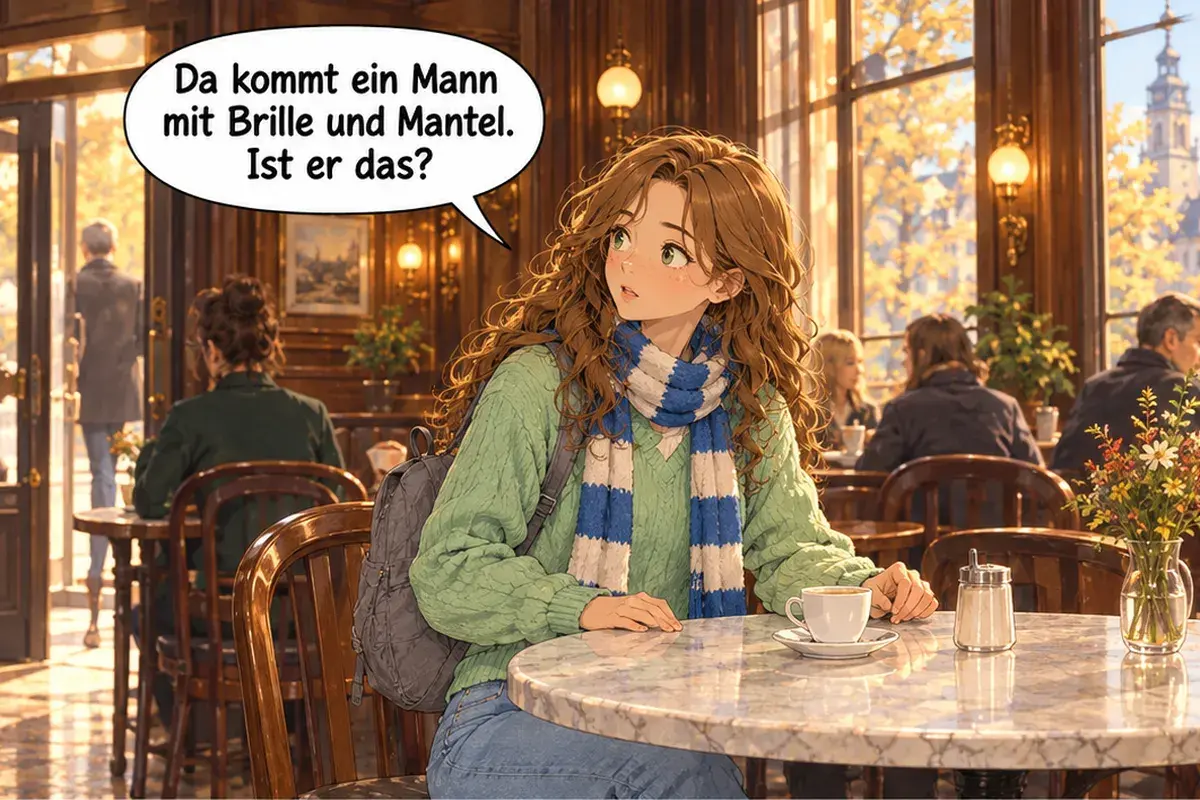
- Katja
Da kommt ein Mann mit Brille und Mantel. Ist er das?
Here comes a man with glasses and a coat. Is that him?
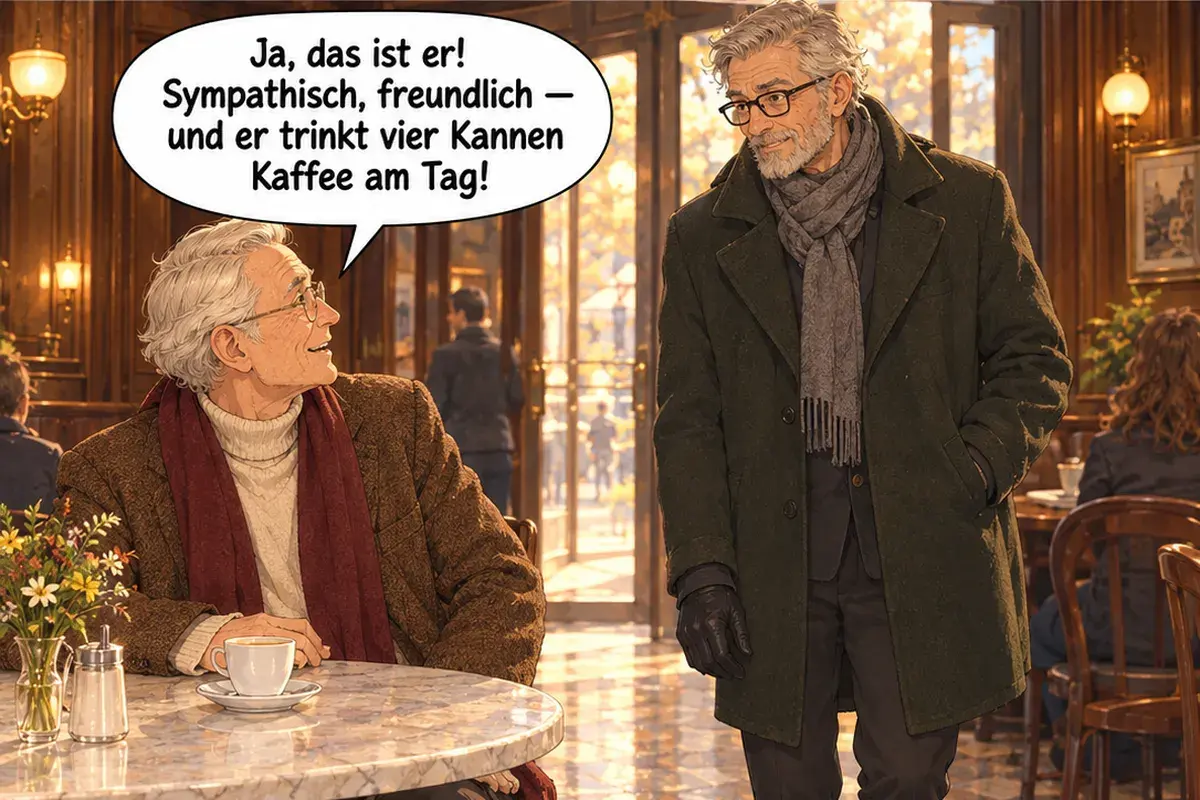
- Herr Albrecht
Ja, das ist er! Sympathisch, freundlich — und er trinkt vier Kannen Kaffee am Tag!
Yes, that's him! Likable, friendly — and he drinks four pots of coffee a day!
Grammar for this text
- Das alte Kaffeehaus ist voll — Leipzig has a famous coffeehouse,
Zum Arabischen Coffe Baum, with a coffee museum; in the text it isdas alte Kaffeehaus.alttakes-e: a neuter noun afterdas(see the block "Adjective endings after der and ein"). - Seine Straßenbahn hat Verspätung —
seinemeans "his": the owner is the friend, andStraßenbahnis feminine, soseineends in-e.Verspätung habenmeans "to be late" (about a train or a streetcar): it's the streetcar that is late, not the friend. - Ich sage Bescheid —
Bescheid sagenmeans "to let someone know";Bescheidis a noun here, so it has a capital letter. - Er trägt eine Brille —
trägtis the er form oftragen(to wear clothes or glasses; to carry):achanges toä(ich trage, du trägst, er trägt), likefährt. German says oneBrille, English says "glasses". - Ja, einen dicken Mantel —
Mantelis masculine, accusative:einen dicken. But in Er hat ein ernstes Gesicht,Gesichtis neuter andeinhas no ending, soernsttakes it:-es. - Wie Bach, nur drei Jahrhunderte später —
Jahrhundertmeans "century";drei Jahrhunderte— three centuries. Bach was a great composer who worked in Leipzig. The joke: Herr Albrecht's friend is a composer too, he just came three centuries "late".
Words and grammar of the unit: Describing things and people.
Learn the words from the texts with flashcards
In the app, you can tap any word in a text to see its translation, forms and examples, and new words stick with flashcards. 15 minutes a day.
Start for freeEverything is open for free. No card needed to sign up.