

German dialogue with translation · A2 · 14 lines
Ist hier das Fundbüro? Is the lost and found here?
Comic · 14 panels

- Katja
Guten Tag! Ist hier das Fundbüro?
Hello! Is the lost and found here?

- Mitarbeiterin
Guten Tag! Ja. Haben Sie etwas verloren?
Hello! Yes. Did you lose something? (formal)

- Katja
Meinen Schal. Ich habe ihn vorhin in der Straßenbahn liegen lassen.
My scarf. I left it on the streetcar earlier.

- Mitarbeiterin
Wie sieht er aus? Beschreiben Sie ihn bitte.
What does it look like? Please describe it. (formal)

- Katja
Er ist blau, lang und gestreift. Aus Wolle, dick und weich.
It's blue, long and striped. Made of wool, thick and soft.
- Mitarbeiterin
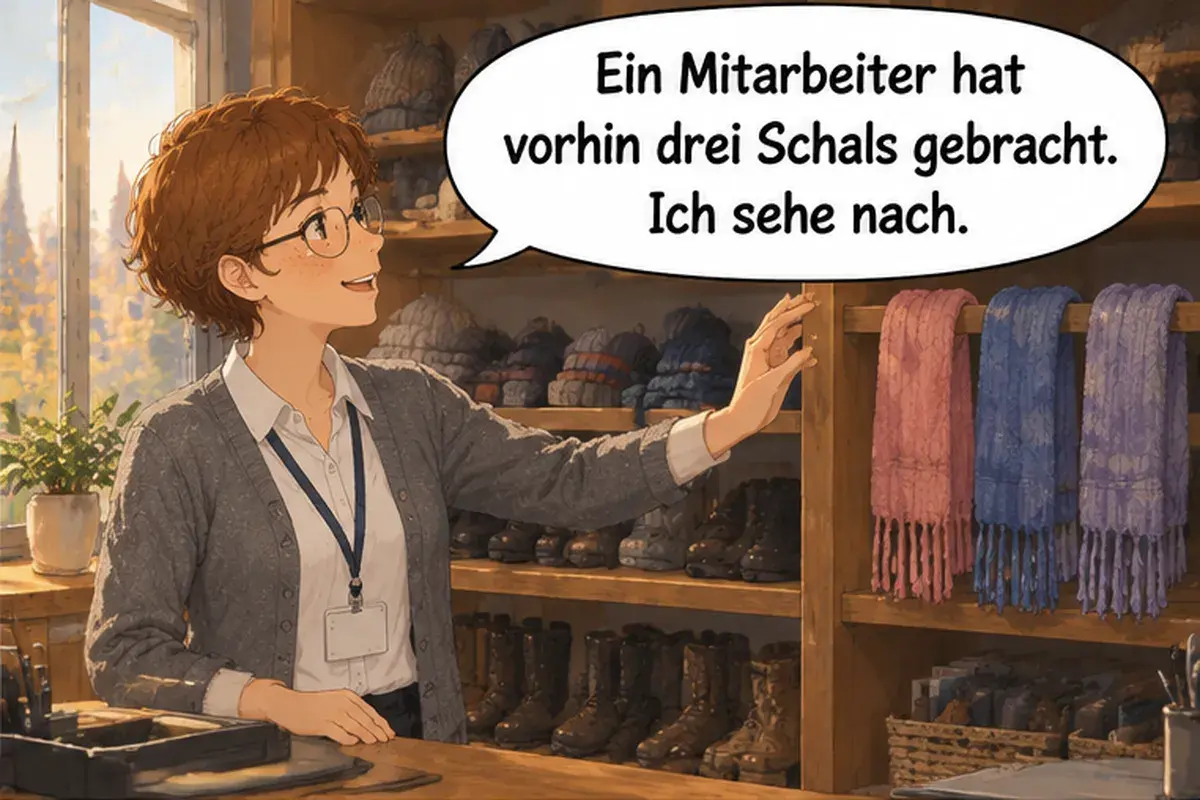
Ein Mitarbeiter hat vorhin drei Schals gebracht. Ich sehe nach.
An employee brought in three scarves earlier. I'll take a look.

- Katja
Danke! Er ist für mich wertvoll: Meine Mutter hat ihn gestrickt.
Thank you! It's valuable to me: my mother knitted it.

- Mitarbeiterin
Verstehe. Hier habe ich einen rosa Schal und einen lila Schal.
I see. Here I have a pink scarf and a purple scarf.

- Katja
Nein, beide sind zu dünn. Mein Schal ist dick.
No, they're both too thin. My scarf is thick.

- Mitarbeiterin
Und hier? Ich habe noch einen langen, blauen Schal.
And here? I have another long blue scarf.

- Katja
Ja, das ist er! Danke! Ein langer, blauer, gestreifter Schal!
Yes, that's it! Thank you! A long, blue, striped scarf!

- Mitarbeiterin
Gern. Sie müssen nur noch ein Formular ausfüllen. Ihren Pass bitte.
You're welcome. You just have to fill out a form. Your passport, please. (formal)

- Katja
Hier, bitte. Sonst verliere ich nie etwas!
Here you are. Otherwise I never lose anything!
- Mitarbeiterin
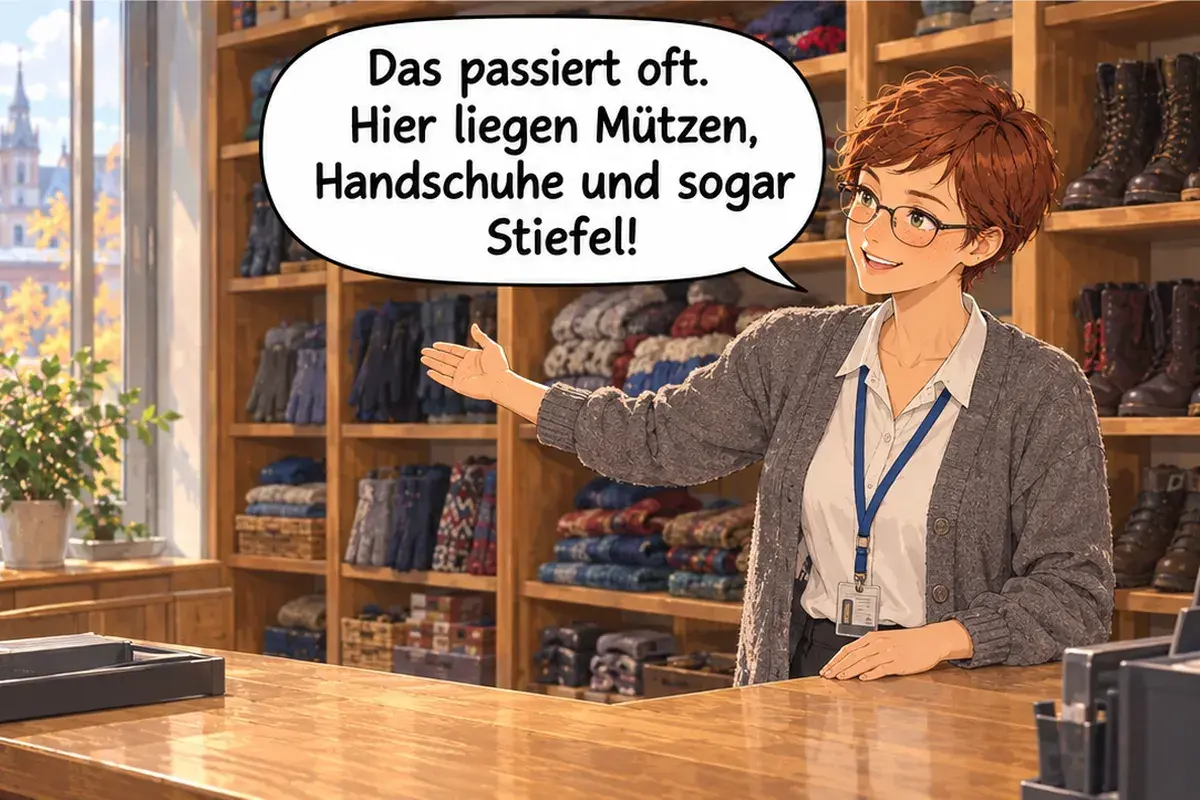
Das passiert oft. Hier liegen Mützen, Handschuhe und sogar Stiefel!
That happens a lot. There are hats, gloves and even boots lying here!
Grammar for this text
- Ich habe ihn vorhin in der Straßenbahn liegen lassen —
liegen lassenmeans "to leave (something) behind". In the Perfekt (spoken past),habeis in second place, and two infinitives stand together at the end.ihnis "it" here:der Schalis masculine, so German saysihn(him) where English says "it".vorhinmeans "earlier, a little while ago". - Wie sieht er aus? —
aussehen(to look like) is a separable verb:siehtis in second place,ausgoes to the end.siehtis the er form ofsehen:echanges toie(ich sehe, du siehst, er sieht). English asks "what", German askswie(how). - Beschreiben Sie ihn bitte — a polite request, the Sie command: the verb comes first, then
Sie: "Please describe it." - Meine Mutter hat ihn gestrickt —
gestricktis the past participle ofstricken(to knit), likegemacht:ge-+ stem +-t. In Ein Mitarbeiter hat vorhin drei Schals gebracht,gebrachtcomes frombringen: it also ends in-t, but the stem changes (bring→brach). - Hier habe ich einen rosa Schal und einen lila Schal —
rosaandlilatake no endings. Butblaudoes: in Ich habe noch einen langen, blauen Schal,Schalis masculine and is the object, so-en. When the scarf is the subject: Ein langer, blauer, gestreifter Schal —-er. - Sonst verliere ich nie etwas —
verliereis the ich form ofverlieren(to lose). The past participle isverloren: noge-, ending-en(Haben Sie etwas verloren?).
Words and grammar of the unit: Describing things and people.
Learn the words from the texts with flashcards
In the app, you can tap any word in a text to see its translation, forms and examples, and new words stick with flashcards. 15 minutes a day.
Start for freeEverything is open for free. No card needed to sign up.