

German dialogue with translation · A2 · 14 lines
Haben Sie heute noch einen Termin frei? Do you still have an appointment available today?
Comic · 14 panels
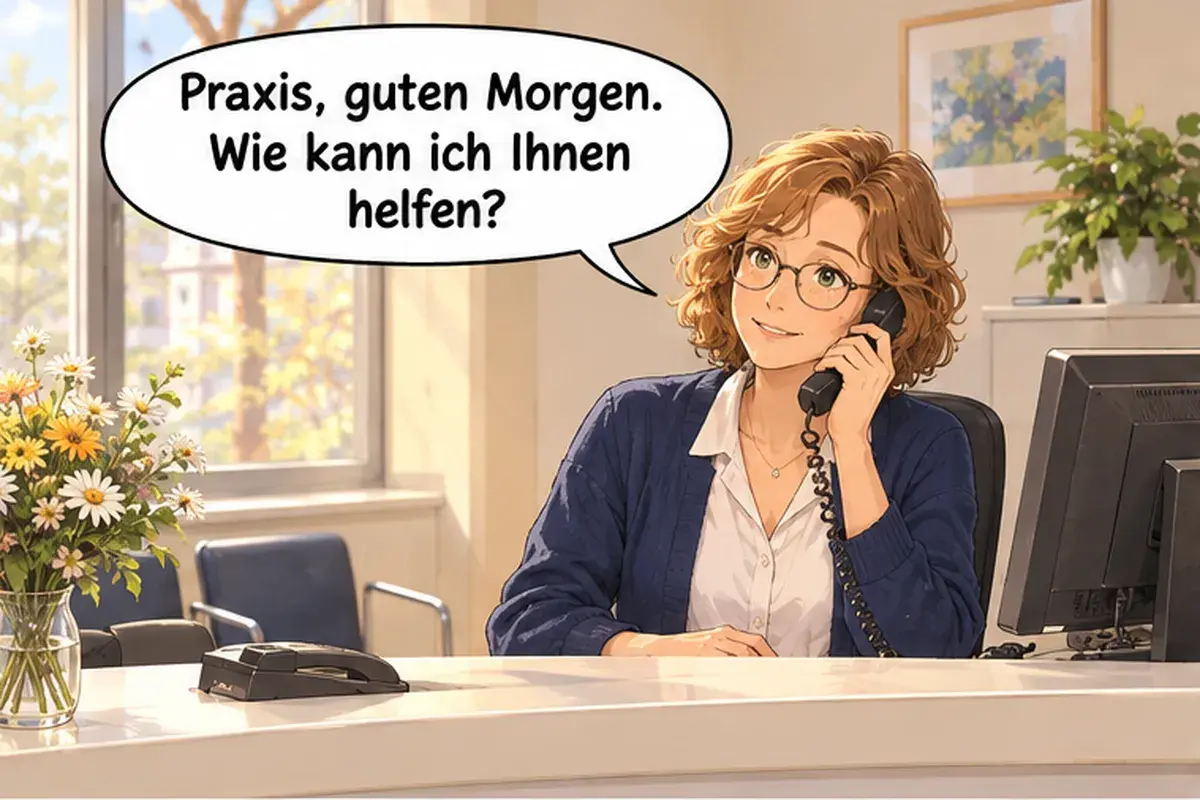
- Arzthelferin
Praxis, guten Morgen. Wie kann ich Ihnen helfen?
Doctor's office, good morning. How can I help you? (formal)
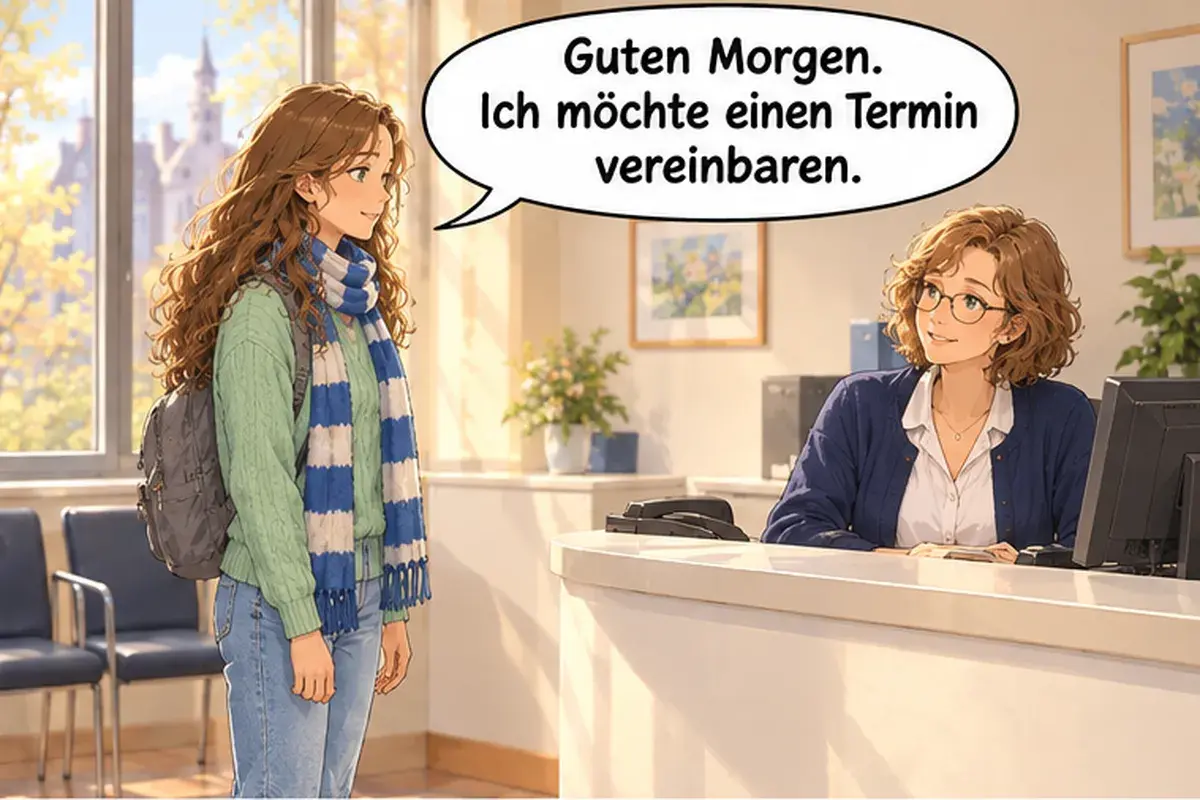
- Katja
Guten Morgen. Ich möchte einen Termin vereinbaren.
Good morning. I'd like to make an appointment.
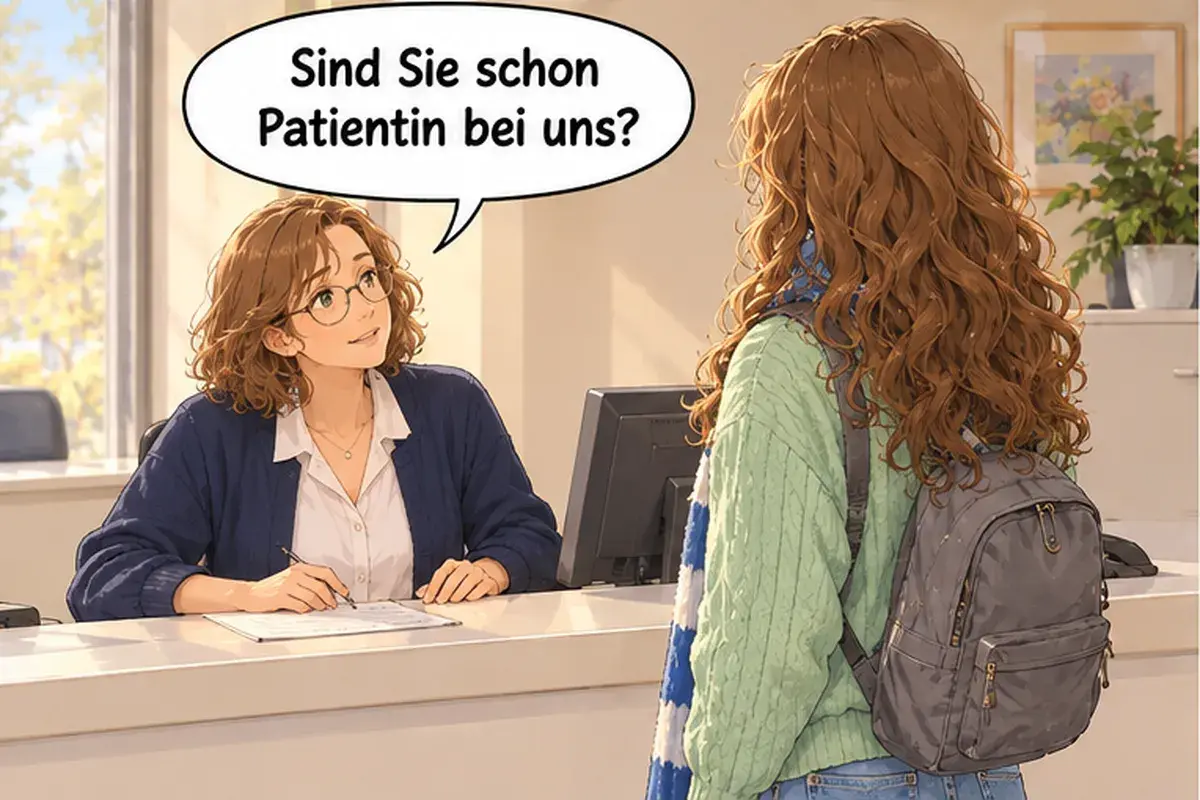
- Arzthelferin
Sind Sie schon Patientin bei uns?
Are you already a patient here? (to a woman, formal)

- Katja
Nein, ich bin Touristin. Ich habe Schmerzen im Knie.
No, I'm a tourist (woman speaking). I have pain in my knee.

- Arzthelferin
Seit wann haben Sie die Schmerzen? Ist es ein Notfall?
How long have you had the pain? (formal) Is it an emergency?
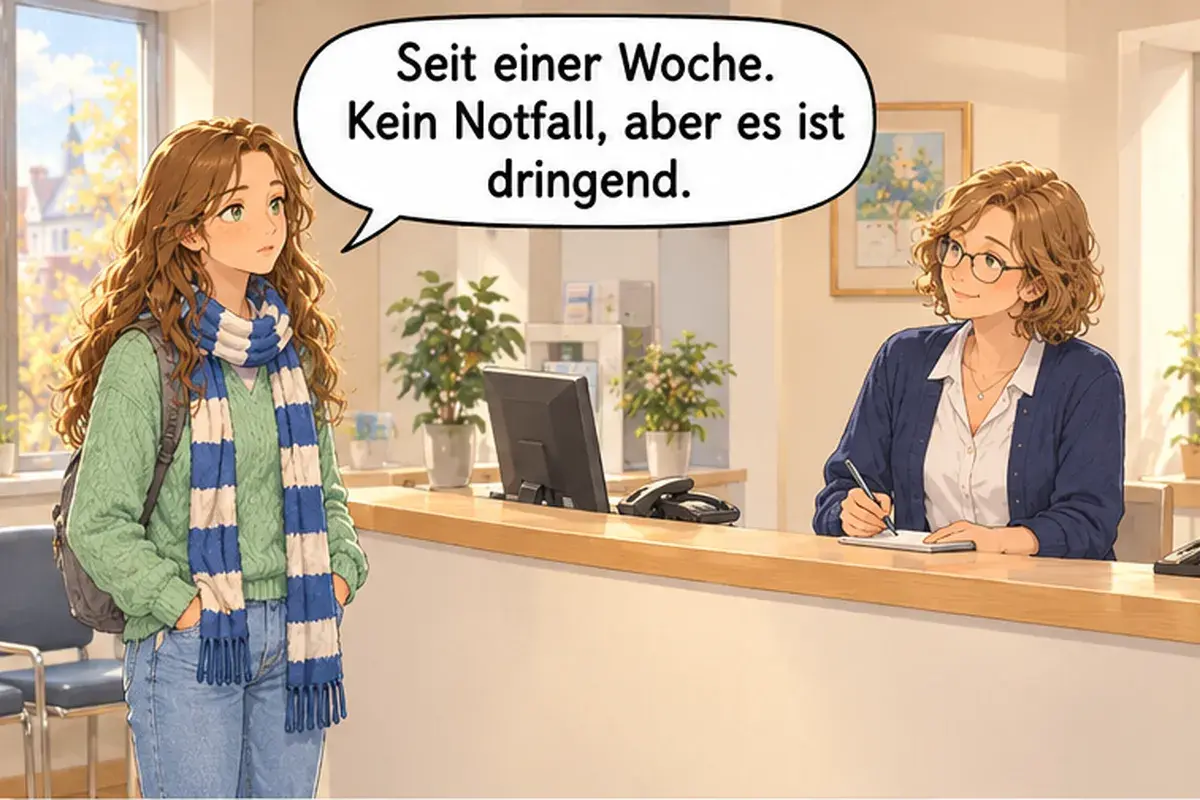
- Katja
Seit einer Woche. Kein Notfall, aber es ist dringend.
For a week. Not an emergency, but it's urgent.
- Arzthelferin
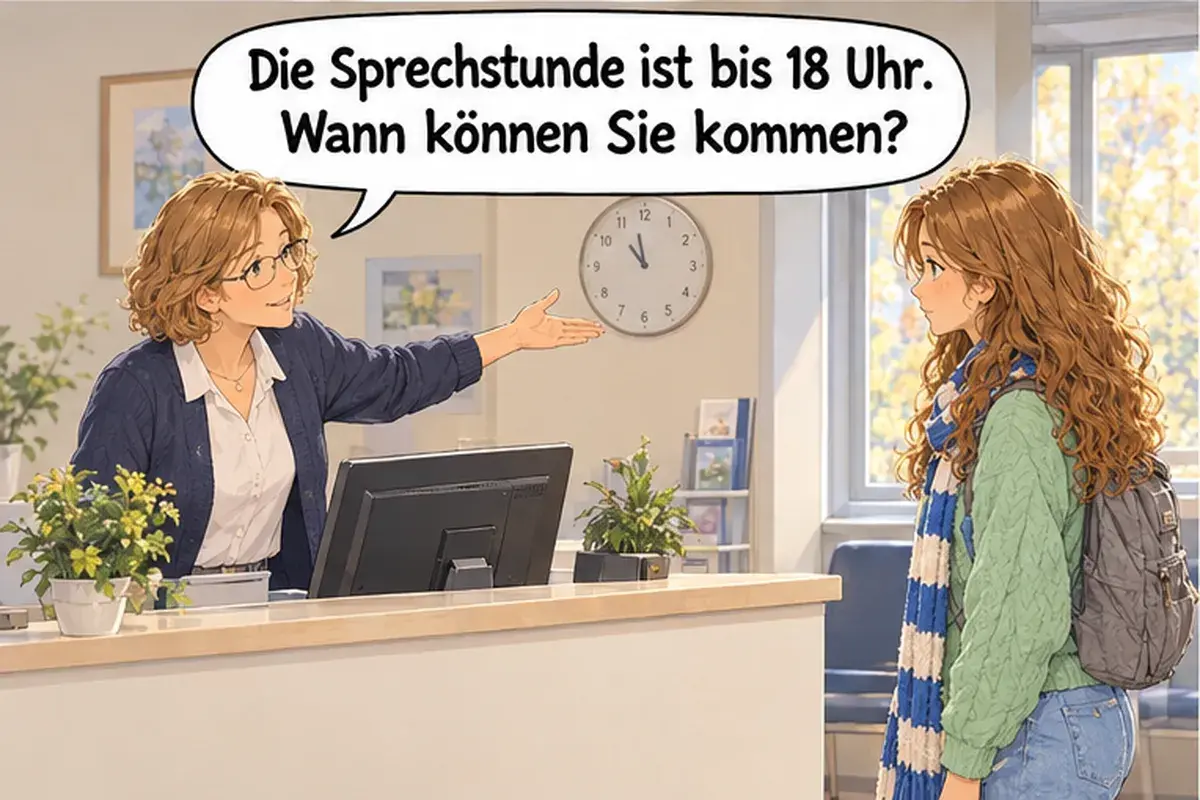
Die Sprechstunde ist bis 18 Uhr. Wann können Sie kommen?
Office hours are until 18:00. When can you come? (formal)
- Katja
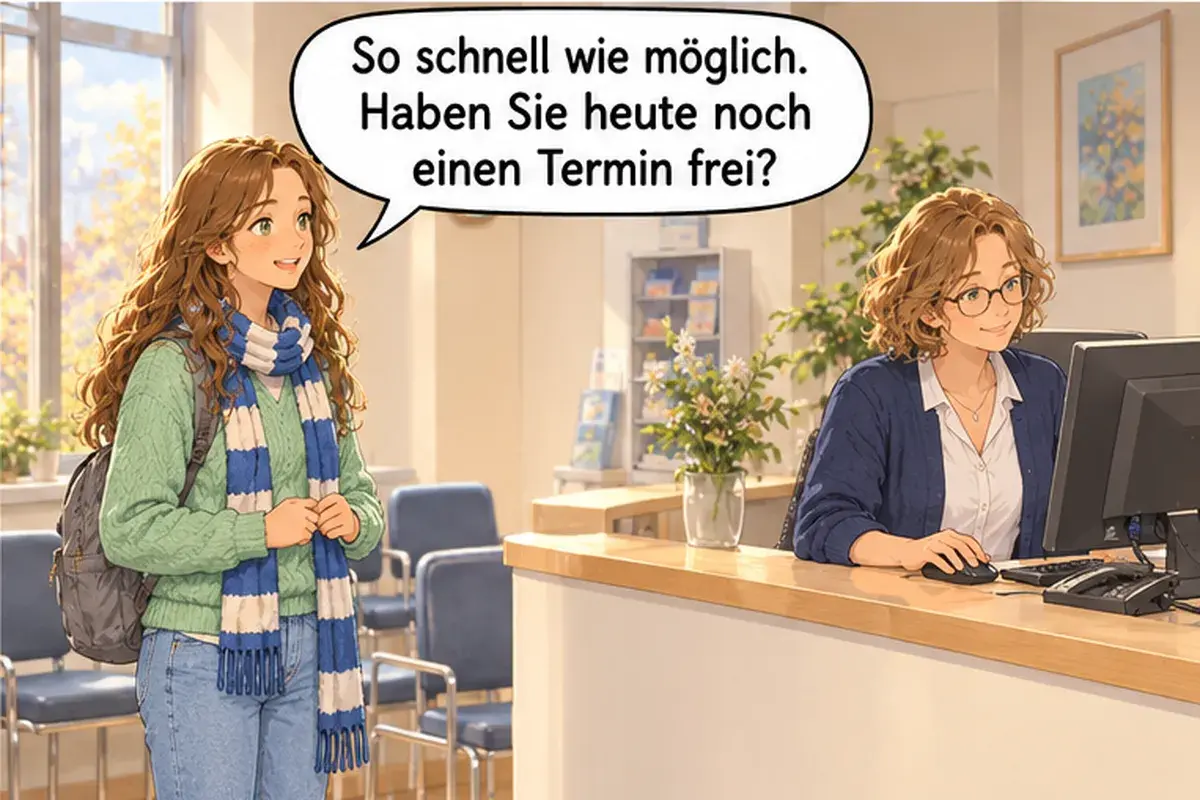
So schnell wie möglich. Haben Sie heute noch einen Termin frei?
As soon as possible. Do you still have an appointment available today? (formal)
- Arzthelferin
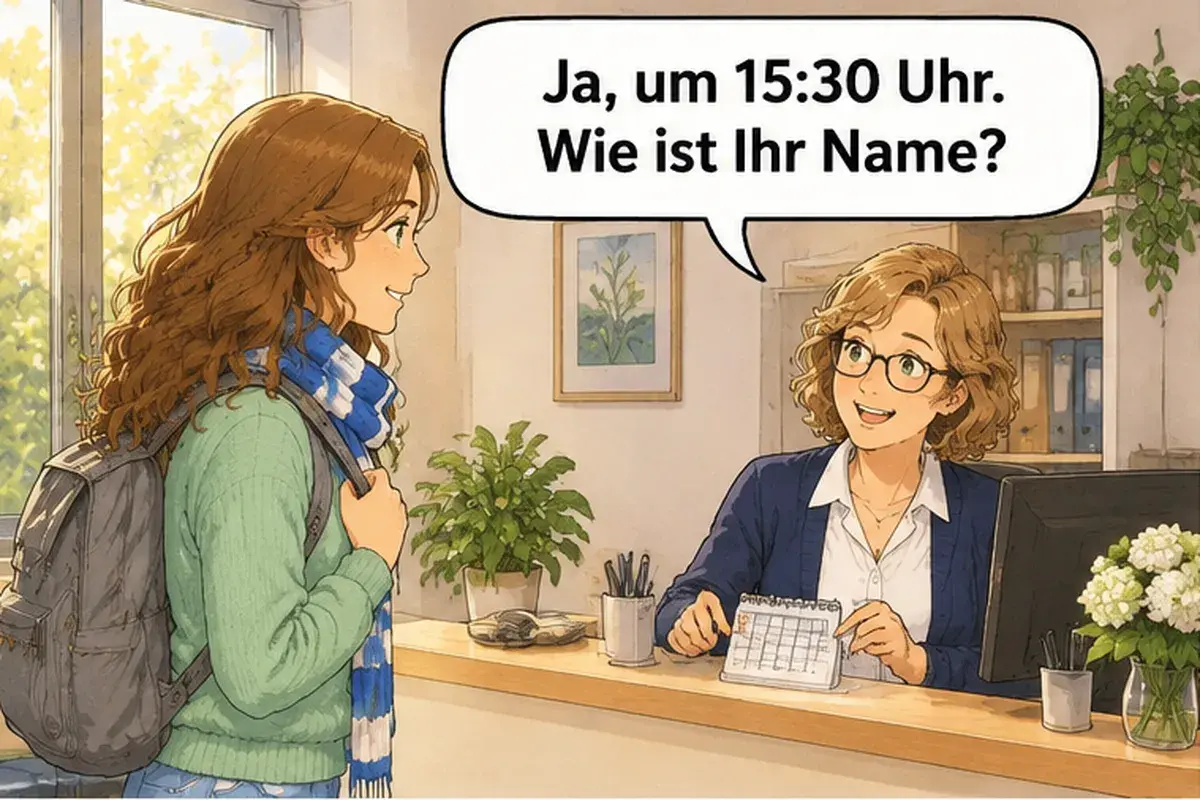
Ja, um 15:30 Uhr. Wie ist Ihr Name?
Yes, at 15:30. What's your name? (formal)
- Katja
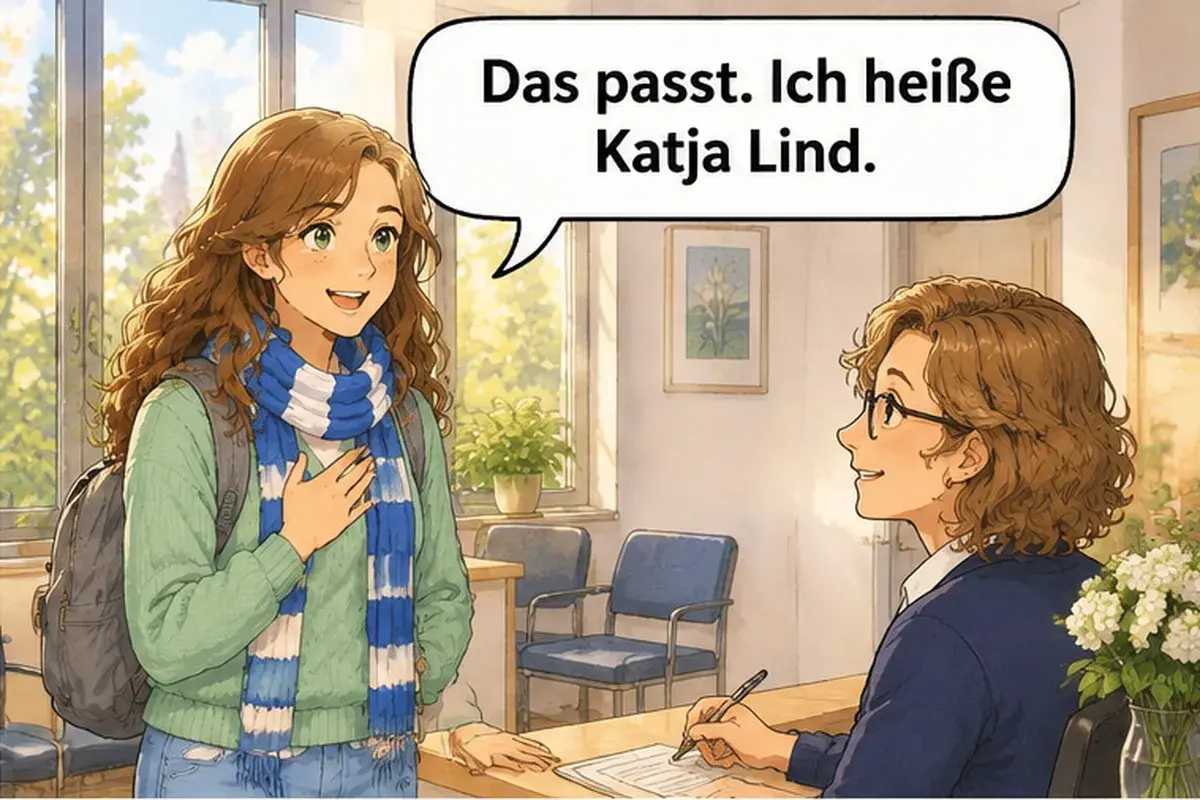
Das passt. Ich heiße Katja Lind.
That works. My name is Katja Lind.
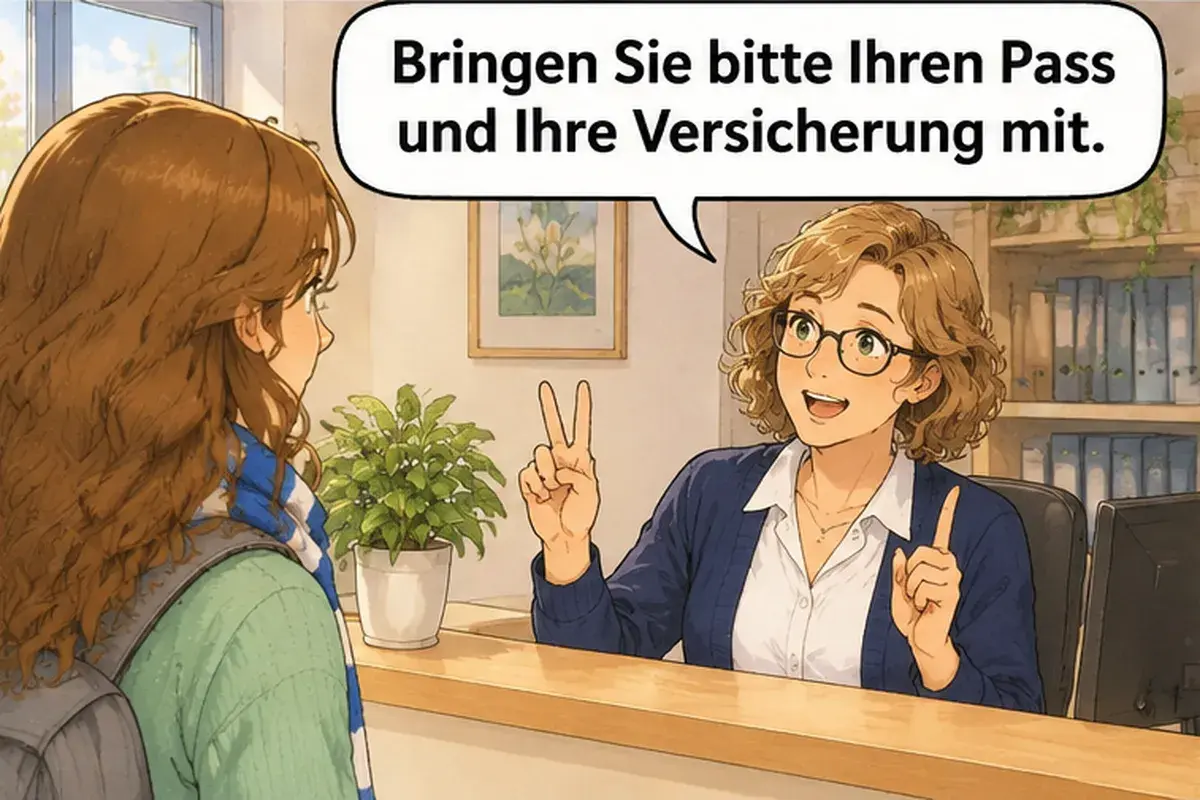
- Arzthelferin
Bringen Sie bitte Ihren Pass und Ihre Versicherung mit.
Please bring your passport and your insurance with you. (formal)
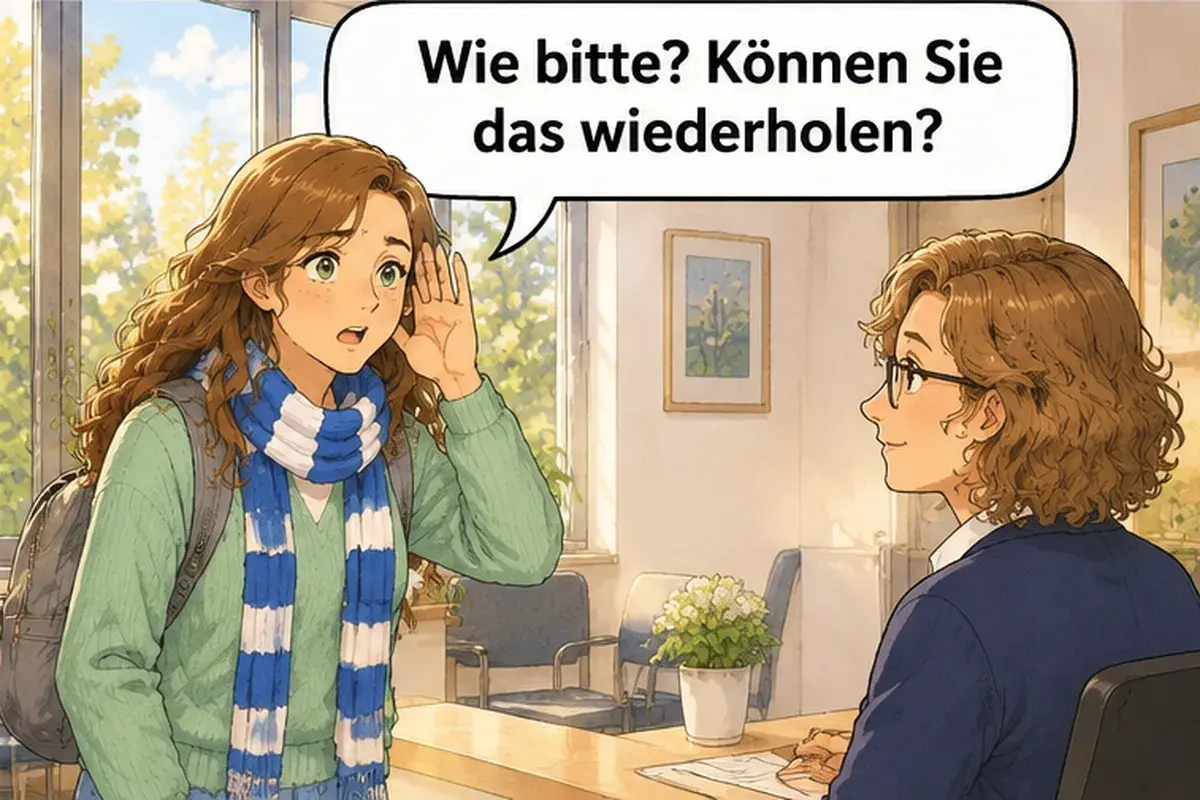
- Katja
Wie bitte? Können Sie das wiederholen?
Sorry? Can you repeat that? (formal)
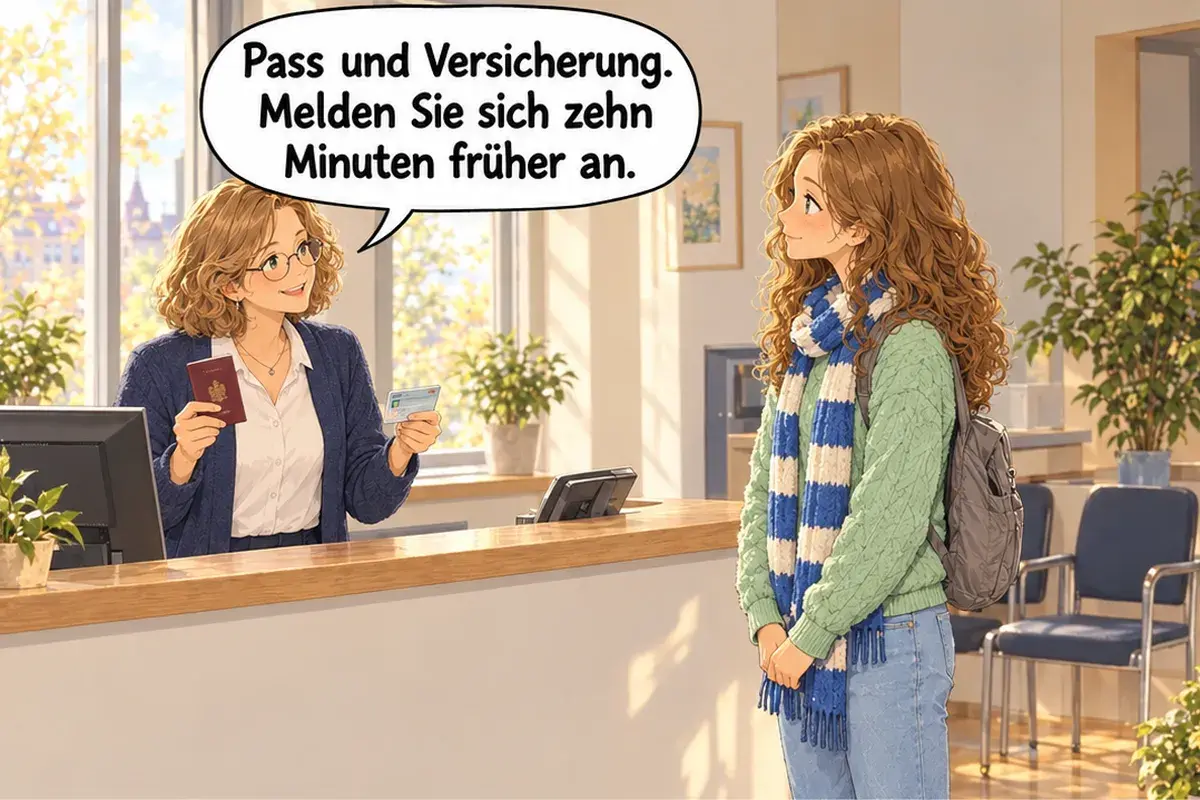
- Arzthelferin
Pass und Versicherung. Melden Sie sich zehn Minuten früher an.
Passport and insurance. Check in ten minutes early. (formal)

- Katja
Alles klar. Danke, bis später!
Got it. Thanks, see you later!
Grammar for this text
- Ich möchte einen Termin vereinbaren —
vereinbarenmeans "to arrange, to agree on";einen Termin vereinbaren— "to make an appointment".Ich möchteis a set phrase from A1: "I'd like". - Ich habe Schmerzen im Knie — a key phrase of this unit.
Schmerzen("pain") is plural here and has no article.imisin dem: "in the knee" (where? — unit 8). - Seit wann haben Sie die Schmerzen? —
seit wannmeans "since when, how long". The answer Seit einer Woche — "for a week":seittakes the dative, andeineris the feminine form (unit 3). English says "for" here, German saysseit. - Kein Notfall, aber es ist dringend — a
Notfallis an emergency, when you need an ambulance;dringendmeans "urgent", but not life-threatening.keinnegates a noun (A1). - So schnell wie möglich — a set phrase, "as soon as possible"; learn it as a whole.
- Bringen Sie bitte Ihren Pass und Ihre Versicherung mit —
mitbringen("to bring along"): the prefixmitgoes to the end.Bringen Sie …is a polite Sie command (A1, unit 8).IhrenandIhrewith a capital I mean "your" (formal). - Melden Sie sich zehn Minuten früher an —
sich anmelden("to check in"):sichmeans "yourself", and the prefixangoes to the end.zehn Minuten früher— "ten minutes early".
Words and grammar of the unit: Make a doctor's appointment.
Learn the words from the texts with flashcards
In the app, you can tap any word in a text to see its translation, forms and examples, and new words stick with flashcards. 15 minutes a day.
Start for freeEverything is open for free. No card needed to sign up.