

German dialogue with translation · A2 · 14 lines
Ich bin auf der Treppe hingefallen I fell down on the stairs
Comic · 14 panels

- Katja
Guten Tag. Ich bin Katja Lind und habe einen Termin.
Hello. I'm Katja Lind, and I have an appointment.
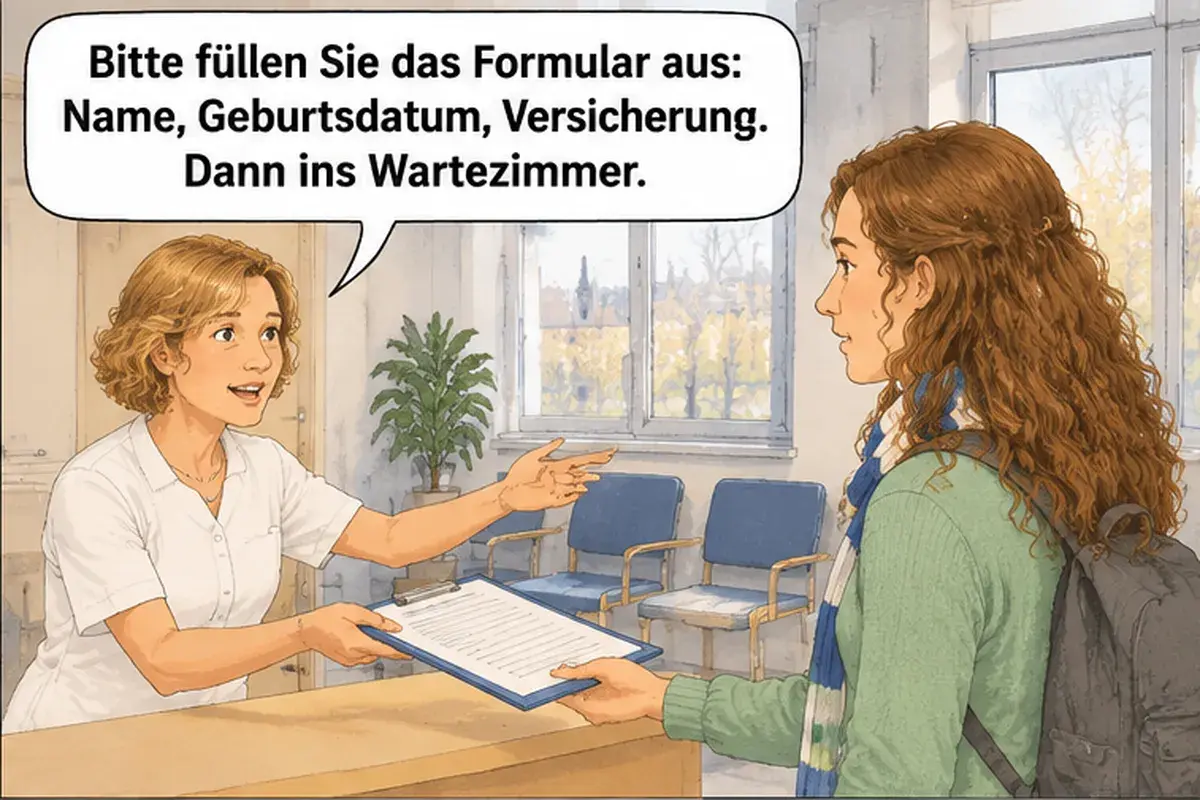
- Arzthelferin
Bitte füllen Sie das Formular aus: Name, Geburtsdatum, Versicherung. Dann ins Wartezimmer.
Please fill out the form: name, date of birth, insurance. Then go to the waiting room. (formal)
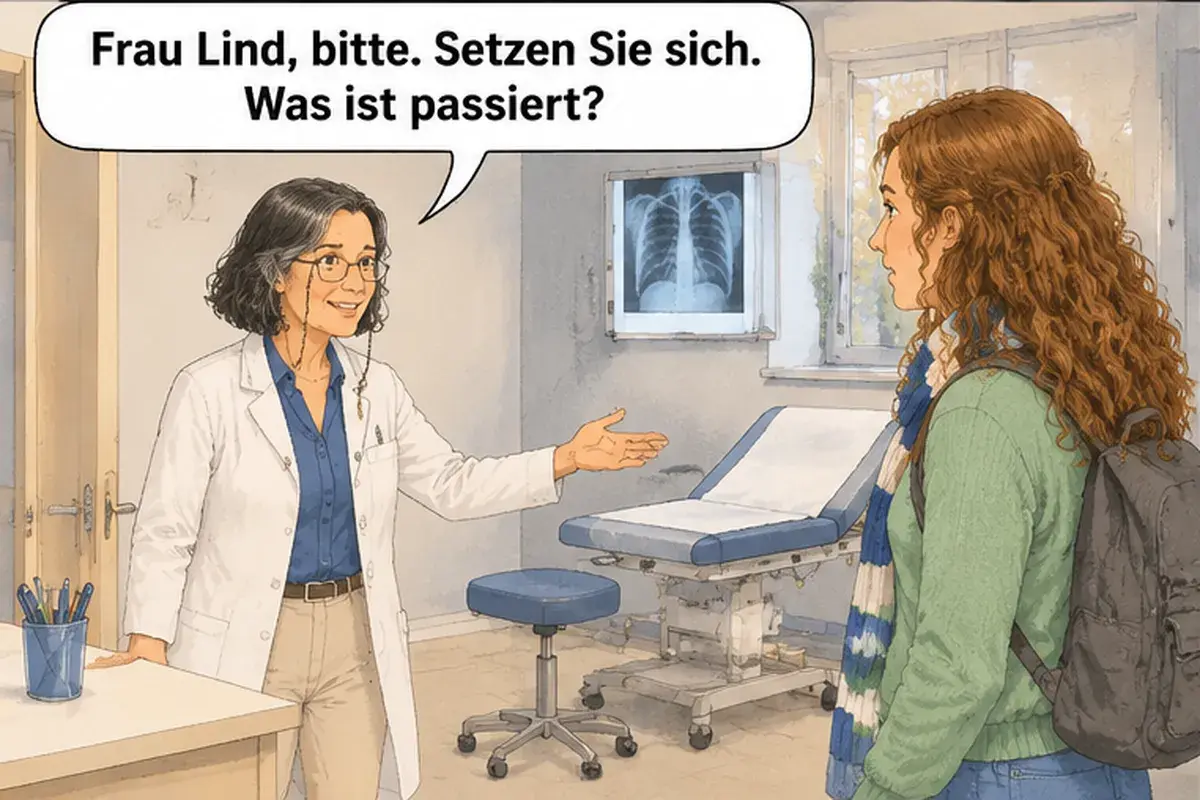
- Ärztin
Frau Lind, bitte. Setzen Sie sich. Was ist passiert?
Frau Lind, please. Have a seat. (formal) What happened?

- Katja
Ich bin auf der Treppe hingefallen und habe mich verletzt.
I fell down on the stairs and hurt myself.
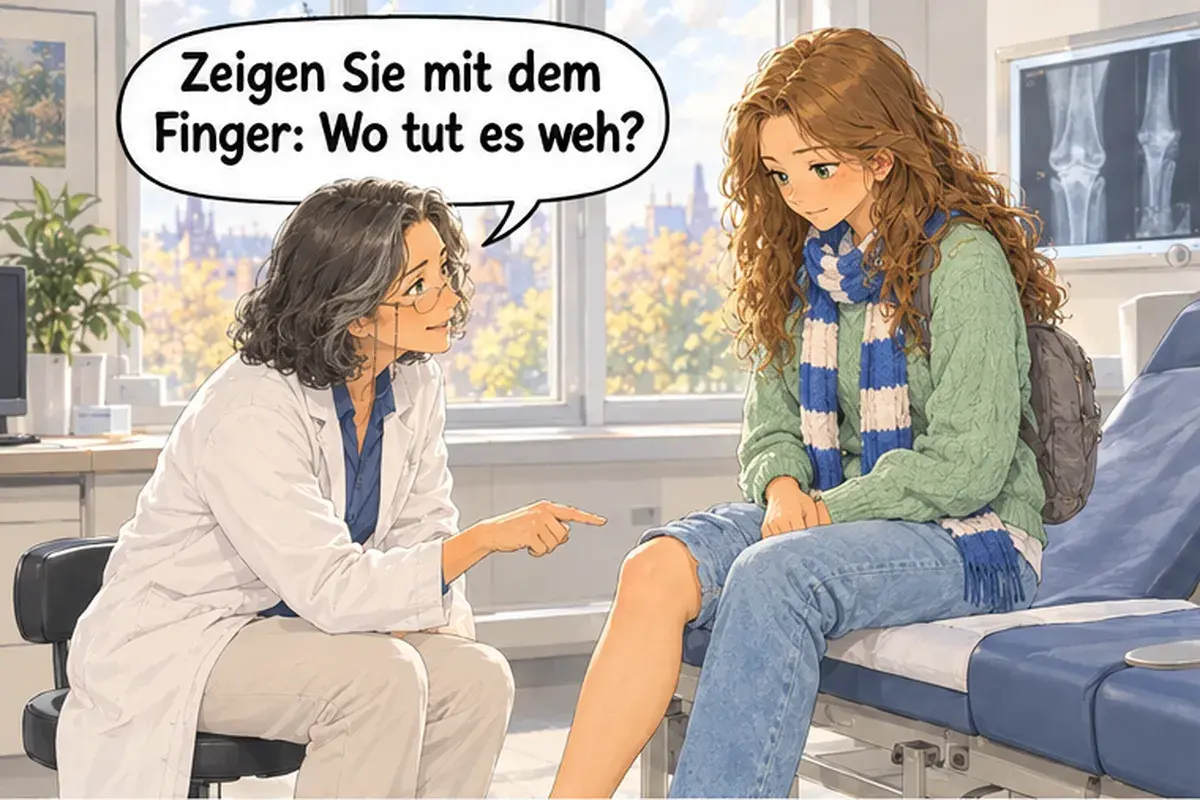
- Ärztin
Zeigen Sie mit dem Finger: Wo tut es weh?
Point with your finger: where does it hurt? (formal)

- Katja
Im Knie. Der Arm ist wieder gut.
In my knee. My arm is fine again.

- Ärztin
Ich untersuche das Knie. Bewegen Sie bitte den Fuß und das Bein.
I'll examine your knee. Please move your foot and your leg. (formal)

- Katja
Das Bein geht, aber hier tut es weh.
My leg is fine, but it hurts here.

- Ärztin
Das Knie ist geschwollen. Wir röntgen es gleich.
The knee is swollen. We'll X-ray it right away.

- Katja
Hoffentlich ist der Knochen nicht gebrochen!
Hopefully the bone isn't broken!

- Ärztin
Nein, zum Glück nicht. Halten Sie das Knie ruhig. Die Salbe dreimal am Tag.
No, luckily not. Keep your knee still. (formal) The ointment three times a day.
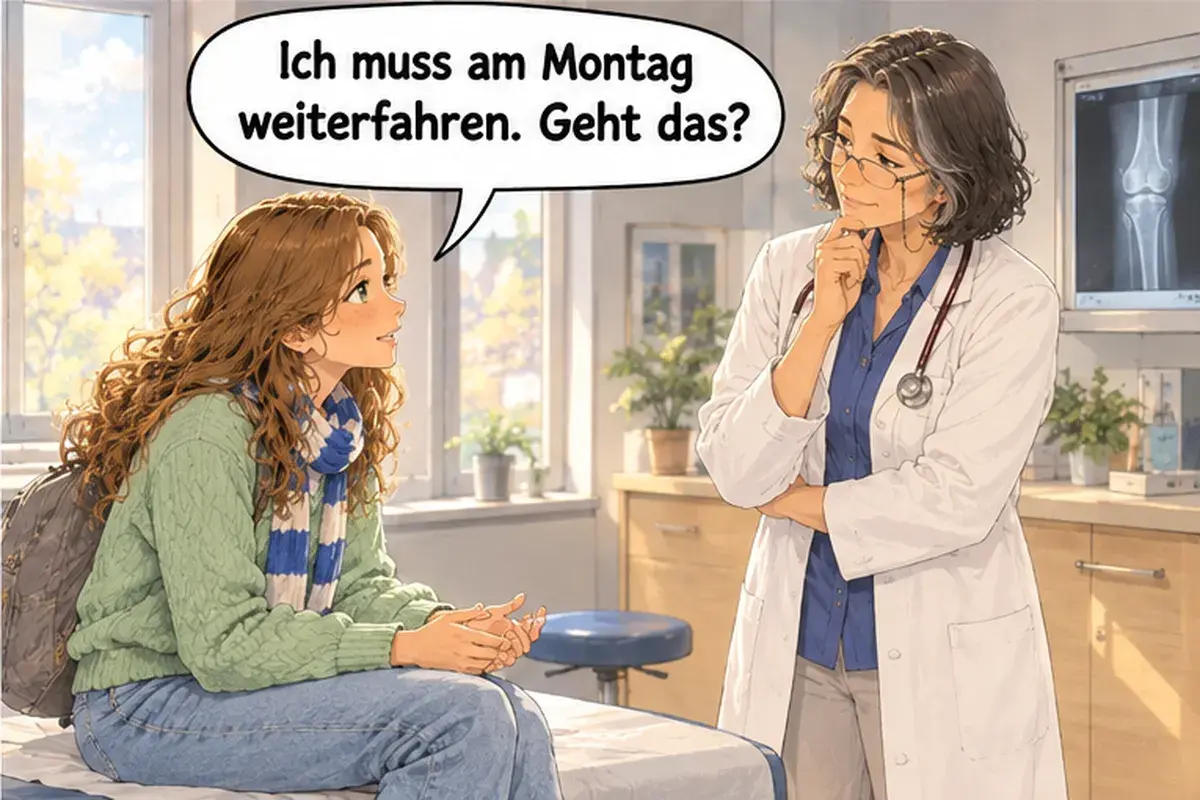
- Katja
Ich muss am Montag weiterfahren. Geht das?
I have to continue my trip on Monday. Is that OK?
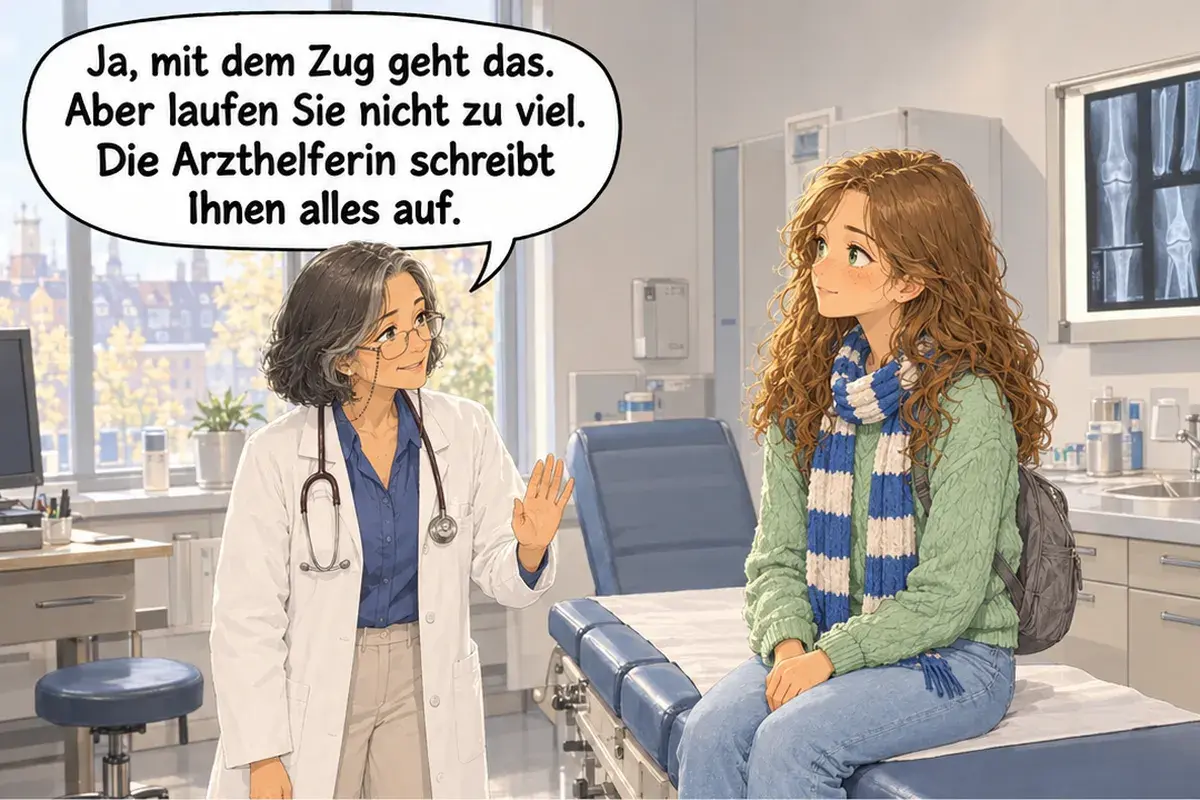
- Ärztin
Ja, mit dem Zug geht das. Aber laufen Sie nicht zu viel. Die Arzthelferin schreibt Ihnen alles auf.
Yes, by train that's fine. But don't walk too much. (formal) The medical assistant will write everything down for you.

- Katja
Alles klar. Vielen Dank, auf Wiedersehen!
Got it. Thank you very much, goodbye!
Grammar for this text
- Setzen Sie sich —
sich setzen("to sit down"): a polite Sie command;sichmeans "yourself" (unit 6). English just says "Have a seat". - Ich bin auf der Treppe hingefallen — the Perfekt (spoken past) of
hinfallen("to fall down"):bin … hingefallen. The helper verb issein: falling is a change of position (unit 1). The participlehingefallencomes fromfallen(er fällt), and the prefixhinis written as one word with it.auf der Treppe— "on the stairs" (where? — dative, unit 8). - habe mich verletzt —
sich verletzen("to get hurt"), the Perfekt withhaben.michmeans "myself"; the participleverletzthas noge-becausever-doesn't split off. - Wir röntgen es gleich —
röntgen("to X-ray") is a regular verb; withwirit looks the same as in the dictionary.esmeans "it":das Knieis neuter. In Ich untersuche das Knie, the first part ofuntersuchen("to examine") doesn't split off, sountersuchestays one word. - Hoffentlich ist der Knochen nicht gebrochen —
gebrochenis the participle ofbrechen("to break";er bricht, an irregular verb).hoffentlichmeans "hopefully". - Halten Sie das Knie ruhig — here
haltenmeans "to keep", andruhigmeans "still, without moving". Die Salbe dreimal am Tag — doctors often leave out the verb; in full:Nehmen Sie die Salbe dreimal am Tag.am Tag— "a day". - Die Arzthelferin schreibt Ihnen alles auf —
aufschreiben("to write down"): the prefixaufgoes to the end.Ihnenmeans "(to) you", formal (dative, unit 5).
Words and grammar of the unit: Make a doctor's appointment.
Learn the words from the texts with flashcards
In the app, you can tap any word in a text to see its translation, forms and examples, and new words stick with flashcards. 15 minutes a day.
Start for freeEverything is open for free. No card needed to sign up.