

German dialogue with translation · A2 · 11 lines
Ich soll das Knie ruhig halten I'm supposed to keep my knee still
Comic · 11 panels
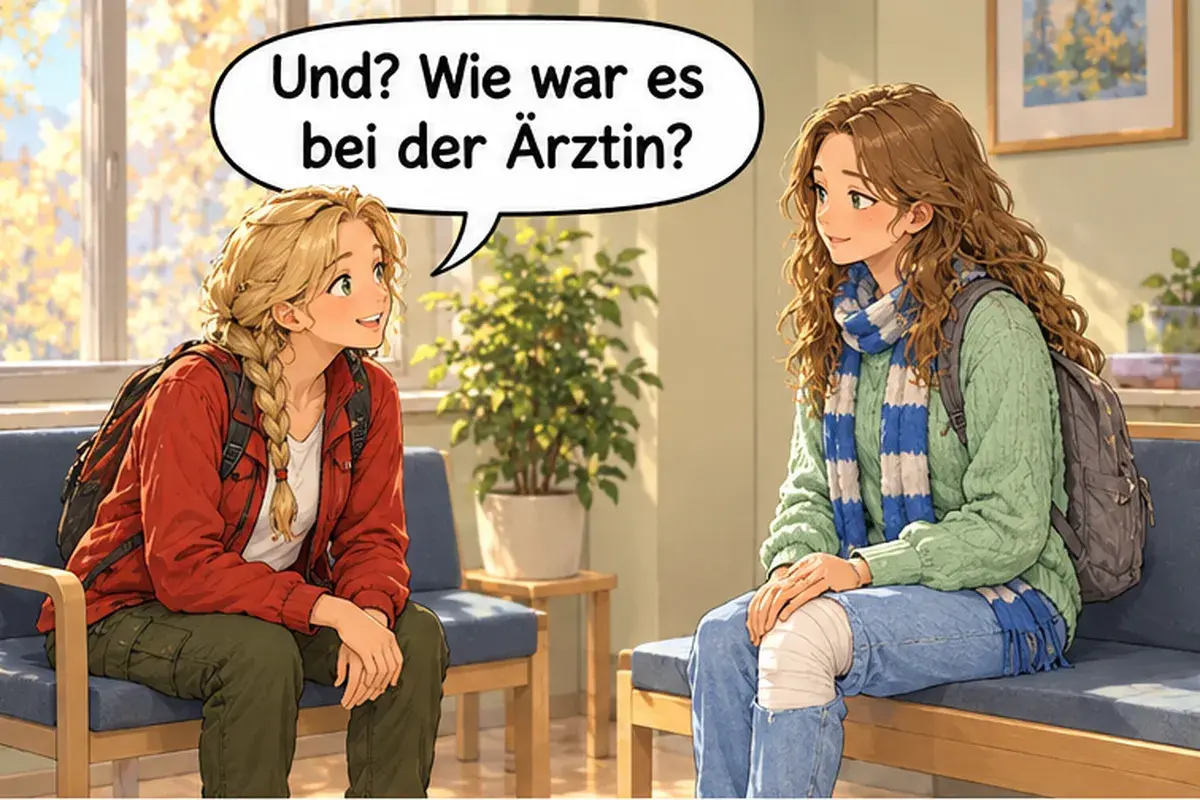
- Hanna
Und? Wie war es bei der Ärztin?
So? How was it at the doctor's?
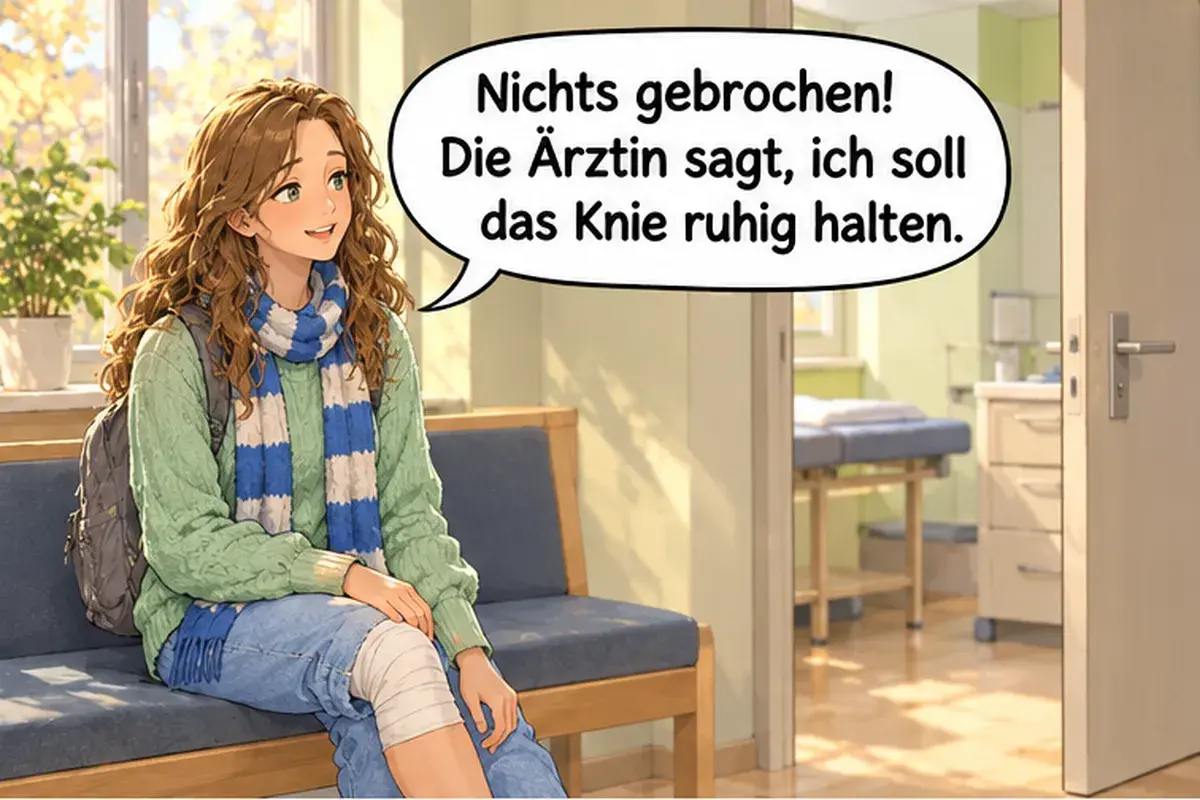
- Katja
Nichts gebrochen! Die Ärztin sagt, ich soll das Knie ruhig halten.
Nothing's broken! The doctor says I should keep my knee still.
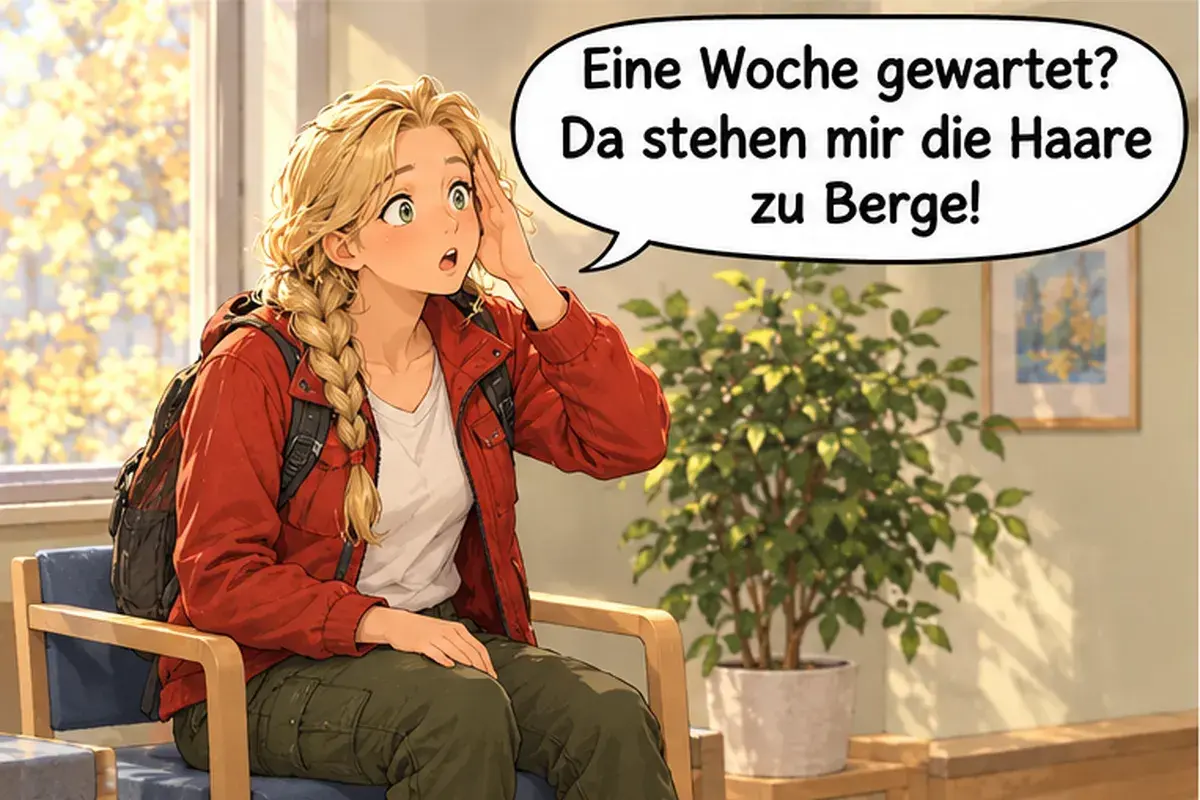
- Hanna
Eine Woche gewartet? Da stehen mir die Haare zu Berge!
You waited a week? That makes my hair stand on end!

- Katja
Zuerst habe ich nur ein Pflaster gebraucht.
At first I only needed a bandage.
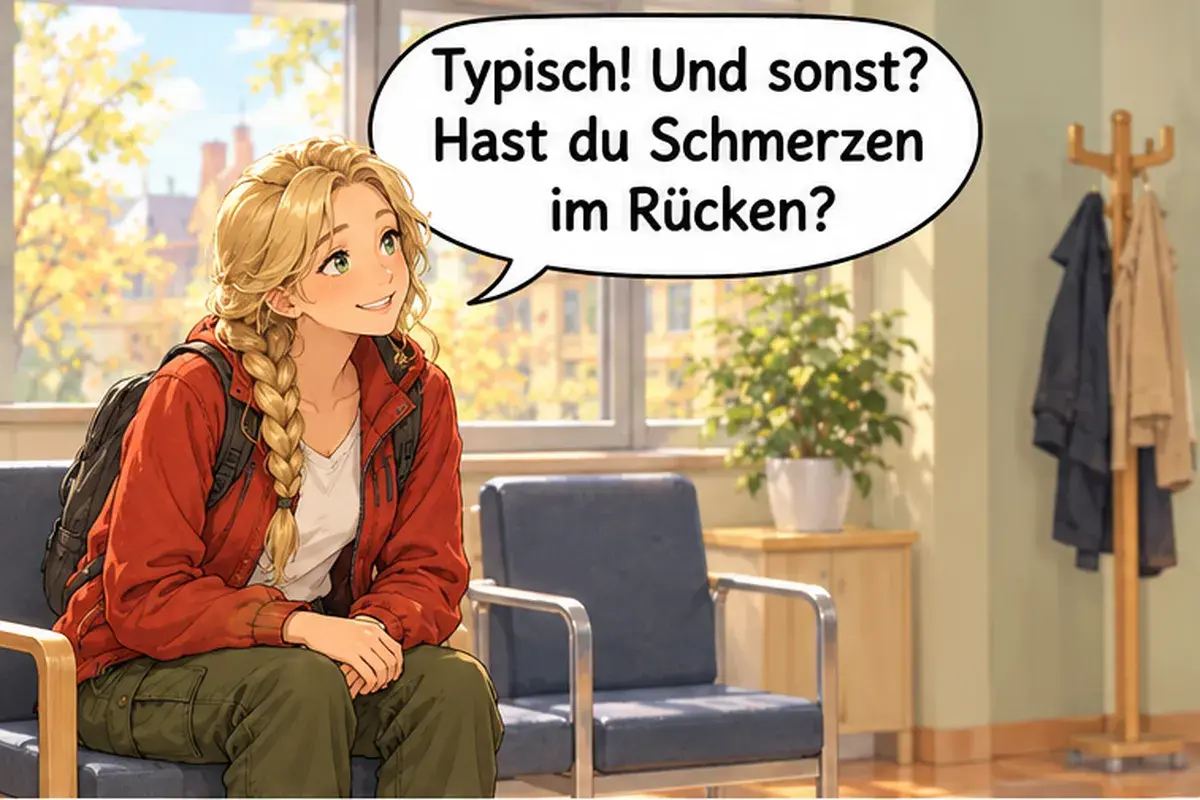
- Hanna
Typisch! Und sonst? Hast du Schmerzen im Rücken?
Typical! Anything else? Do you have pain in your back?
- Katja
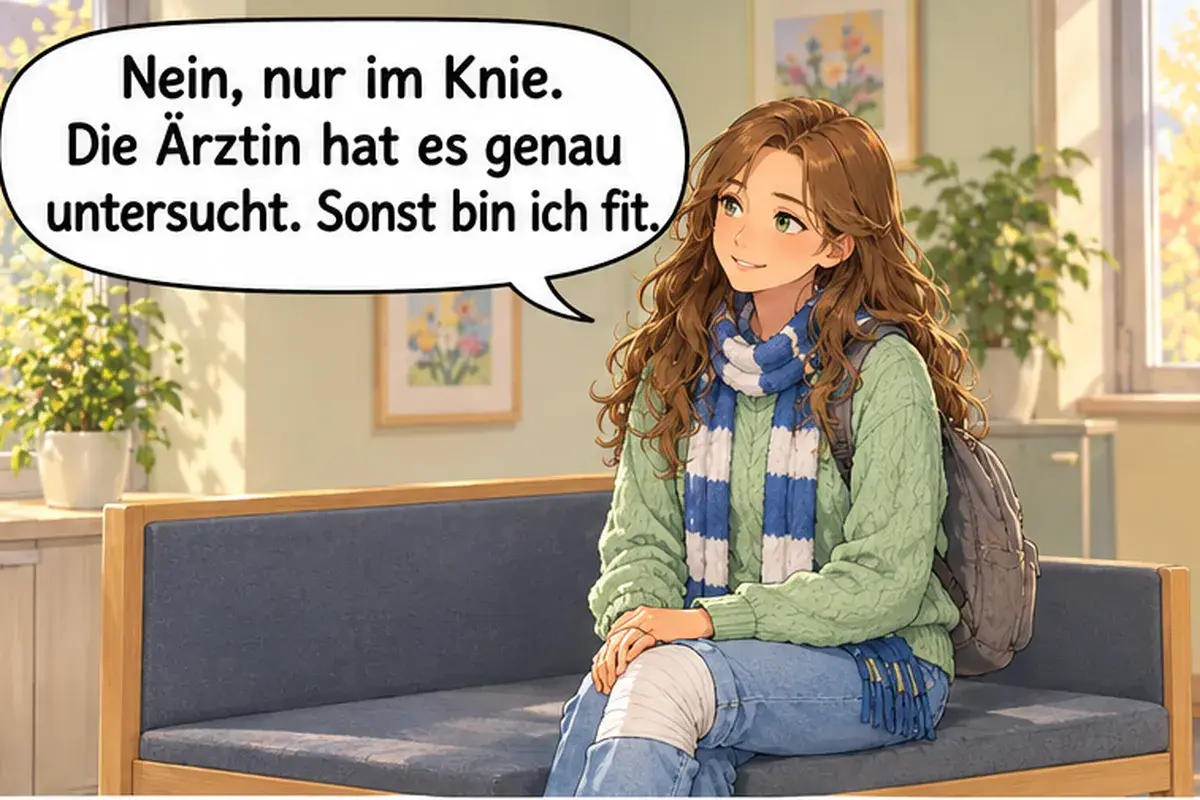
Nein, nur im Knie. Die Ärztin hat es genau untersucht. Sonst bin ich fit.
No, only in my knee. The doctor examined it carefully. Otherwise I'm fit.

- Hanna
Super. Gesundheit geht vor, dein Körper braucht Ruhe. Gute Besserung!
Great. Health comes first; your body needs rest. Get well soon!

- Katja
Danke! Ich soll auch die Salbe dreimal am Tag nehmen.
Thanks! I'm also supposed to use the ointment three times a day.
- Hanna
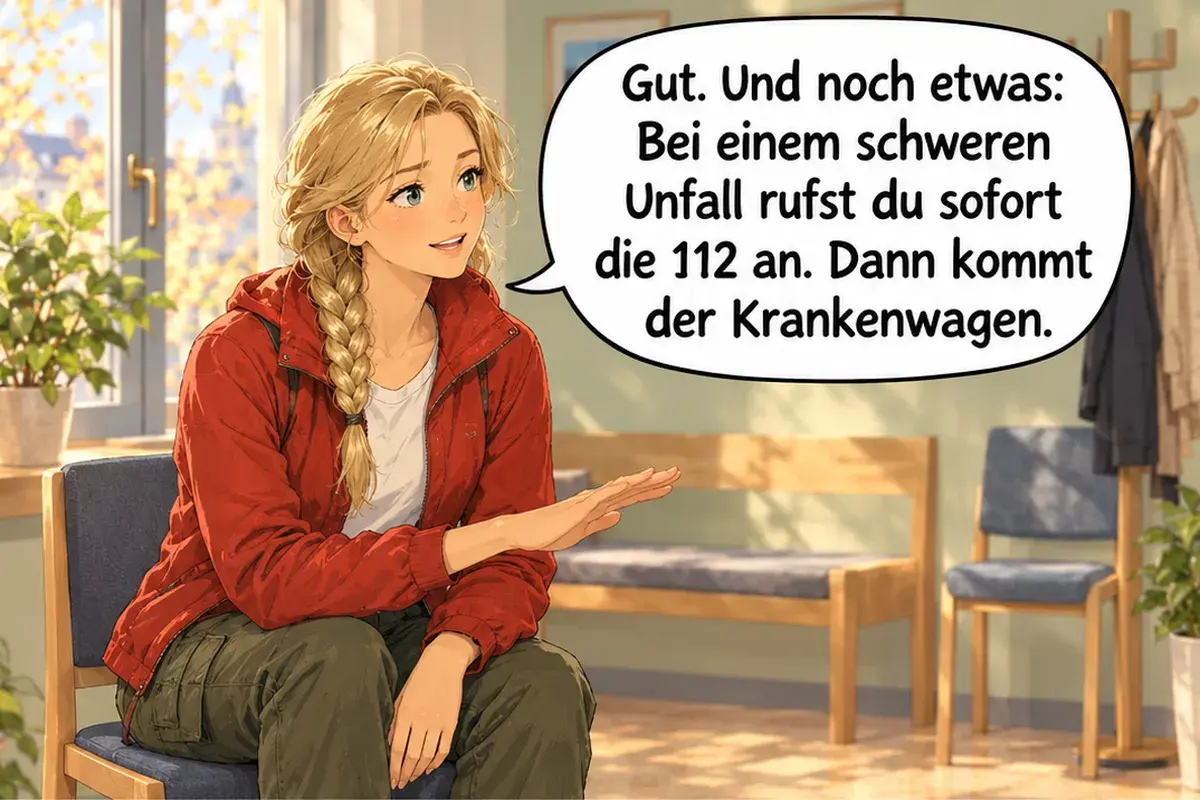
Gut. Und noch etwas: Bei einem schweren Unfall rufst du sofort die 112 an. Dann kommt der Krankenwagen.
Good. And one more thing: if there's a serious accident, you call 112 right away. Then the ambulance comes.
- Katja
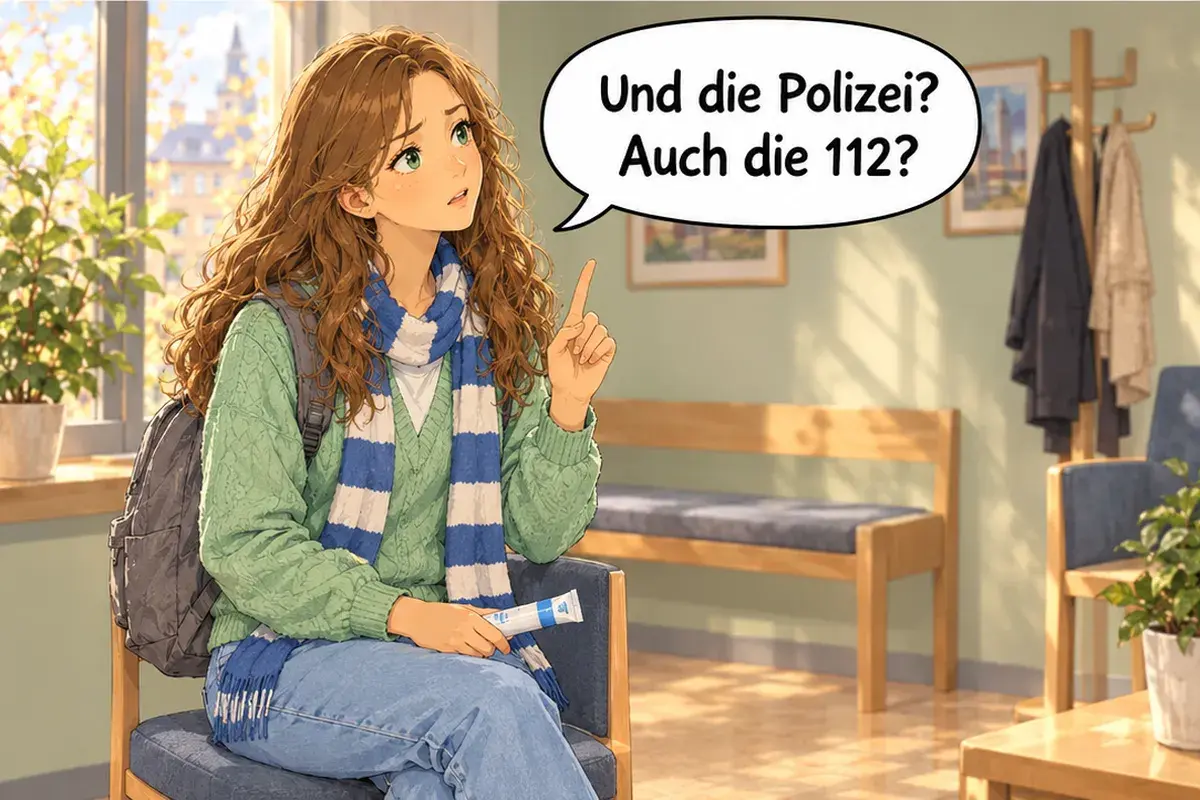
Und die Polizei? Auch die 112?
And the police? Also 112?
- Hanna
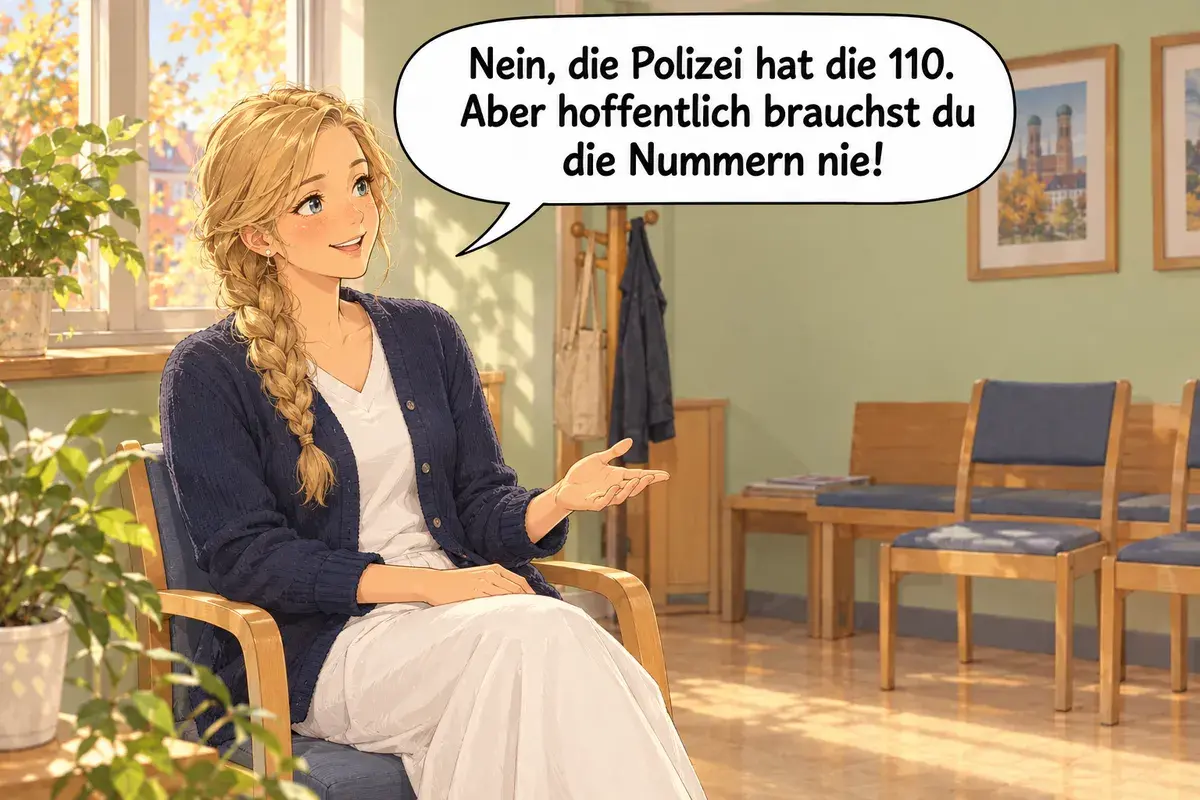
Nein, die Polizei hat die 110. Aber hoffentlich brauchst du die Nummern nie!
No, the police number is 110. But hopefully you'll never need the numbers!
Grammar for this text
- Die Ärztin sagt, ich soll das Knie ruhig halten — passing on the doctor's advice. The doctor said
Halten Sie das Knie ruhig!, and Katja talks about herself:ich soll+ the verb at the end.sollis the ich form ofsollen(no ending, likekann,muss): "I'm supposed to". After the comma, the word order is normal. More in the unit grammar. - Nichts gebrochen! — a short line without a verb, the way people write in messages; in full:
Es ist nichts gebrochen.nichtsmeans "nothing" (unit 12). - Eine Woche gewartet? — a question without
hast du, just the participle: people talk and text like this. In full:Hast du eine Woche gewartet?.gewartetis the participle ofwarten. - Da stehen mir die Haare zu Berge — an idiom: "that makes my hair stand on end", that is, "I'm shocked".
mirmeans "(to) me" (dative, unit 5); learnzu Bergeas a whole. - Zuerst habe ich nur ein Pflaster gebraucht — the Perfekt (spoken past) of
brauchen:habe … gebraucht.Zuerstcomes first, sohabeis second andichcomes after it. - Die Ärztin hat es genau untersucht — the Perfekt of
untersuchen("to examine"): noge-in the participle, becauseunter-doesn't split off here (likeverletztin text 2).esmeans "it": the knee. - Gesundheit geht vor — a set phrase: "health comes first".
geht voris fromvorgehen; in this course, learn it as a set phrase. - rufst du sofort die 112 an — from
anrufen:angoes to the end. These numbers are read digit by digit:eins-eins-zwei,eins-eins-null.
Words and grammar of the unit: Make a doctor's appointment.
Learn the words from the texts with flashcards
In the app, you can tap any word in a text to see its translation, forms and examples, and new words stick with flashcards. 15 minutes a day.
Start for freeEverything is open for free. No card needed to sign up.