

German dialogue with translation · A2 · 14 lines
Was ist heute los? What's going on today?
Comic · 14 panels
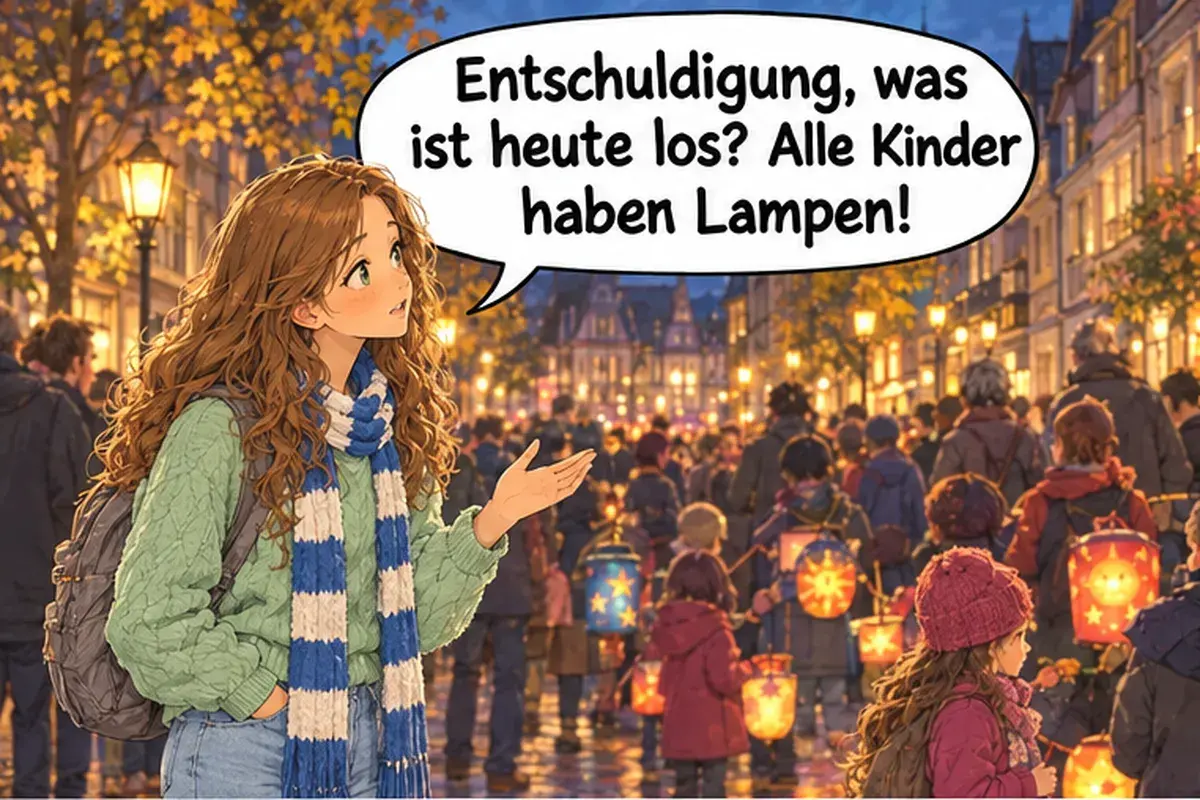
- Katja
Entschuldigung, was ist heute los? Alle Kinder haben Lampen!
Excuse me, what's going on today? All the children have lamps!
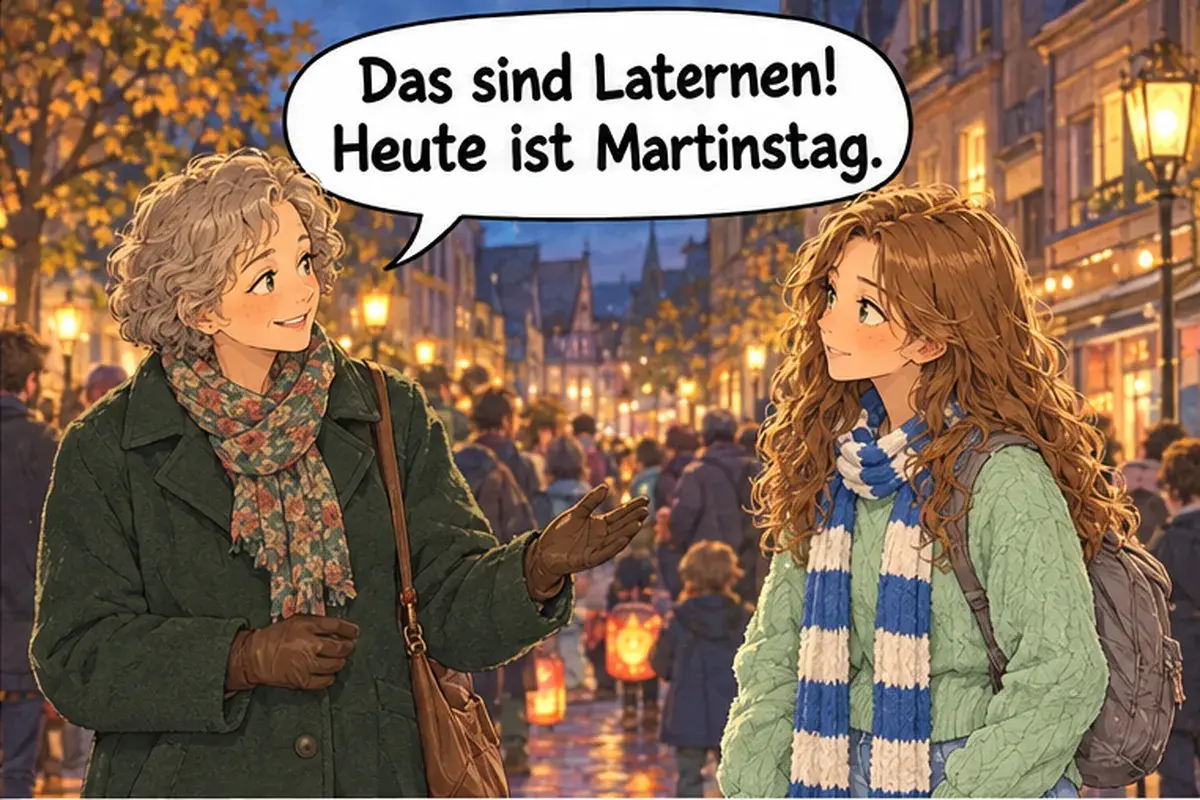
- Frau
Das sind Laternen! Heute ist Martinstag.
Those are lanterns! Today is St. Martin's Day.
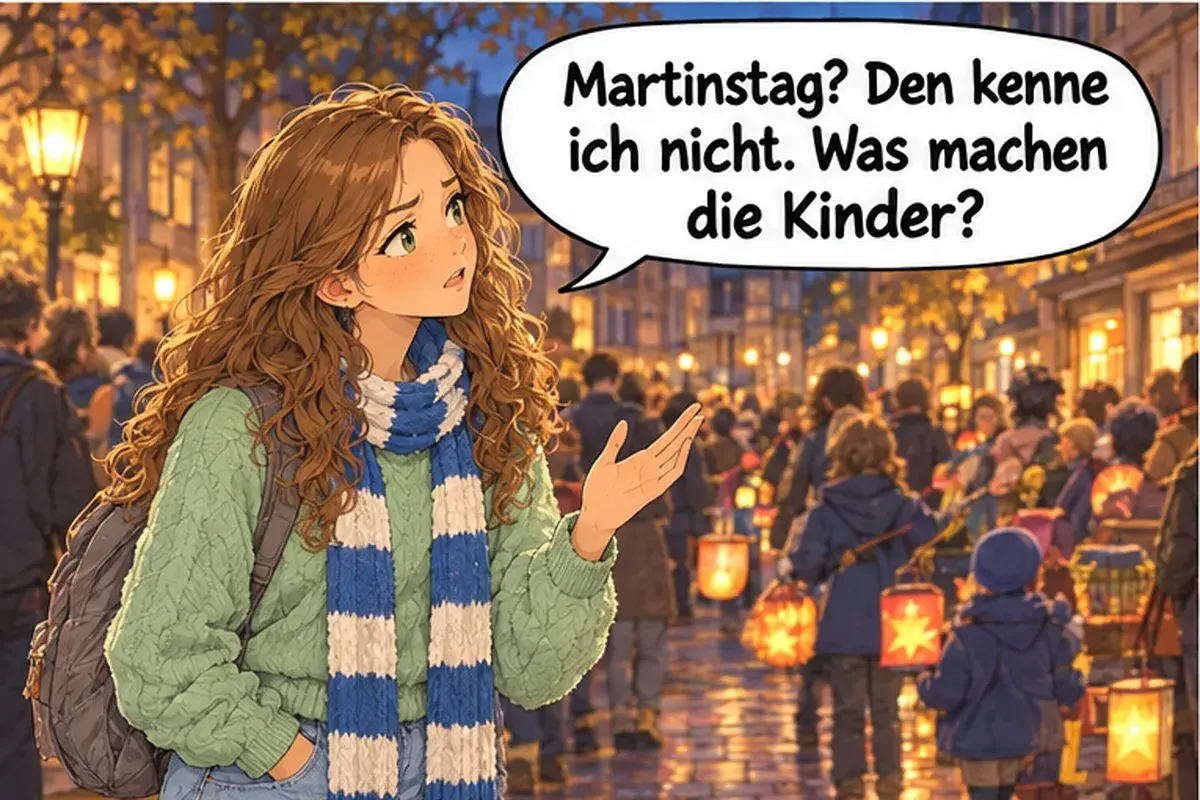
- Katja
Martinstag? Den kenne ich nicht. Was machen die Kinder?
St. Martin's Day? I don't know that one. What are the children doing?
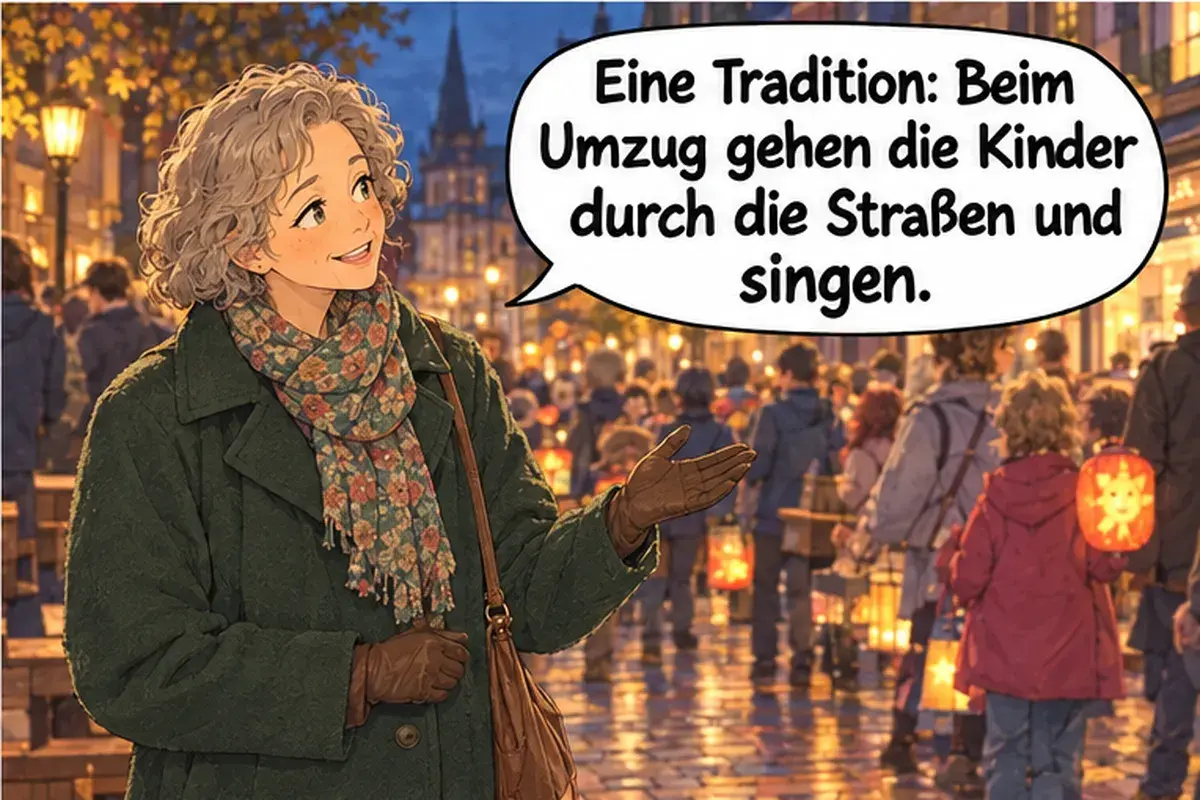
- Frau
Eine Tradition: Beim Umzug gehen die Kinder durch die Straßen und singen.
It's a tradition: during the parade, the children walk through the streets and sing.
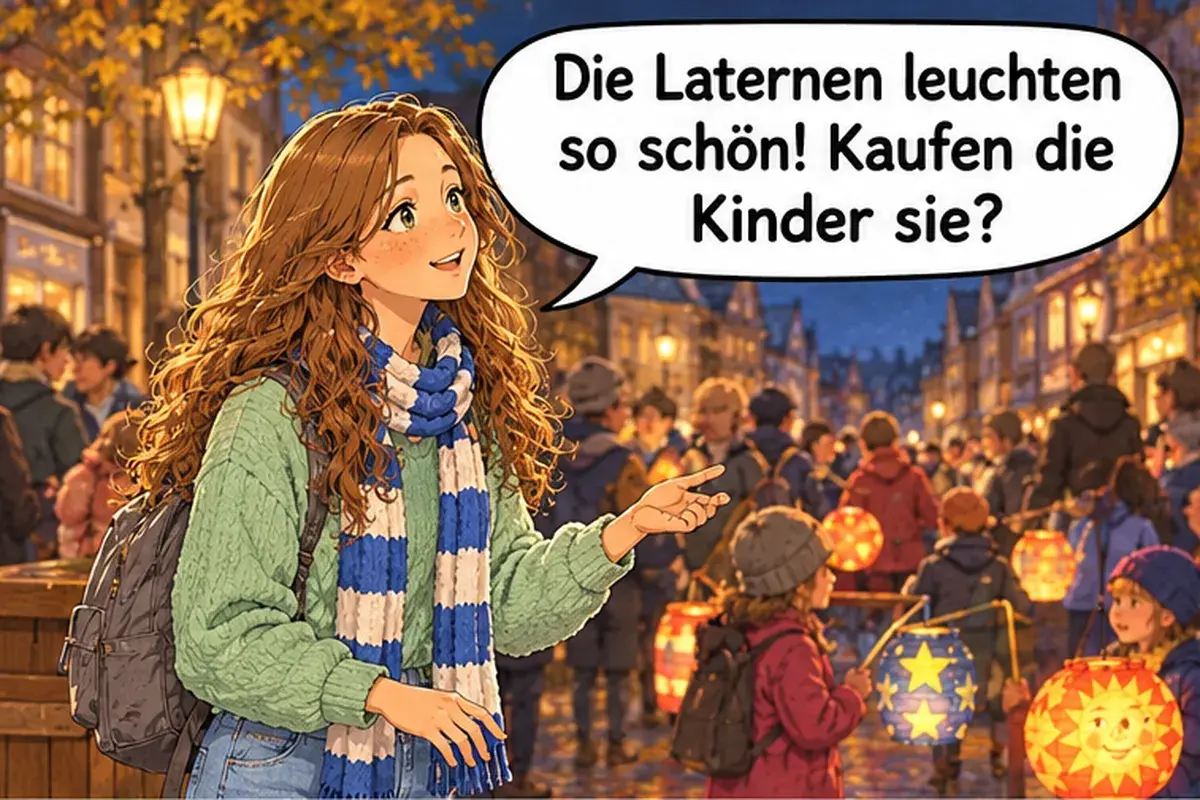
- Katja
Die Laternen leuchten so schön! Kaufen die Kinder sie?
The lanterns glow so beautifully! Do the children buy them?
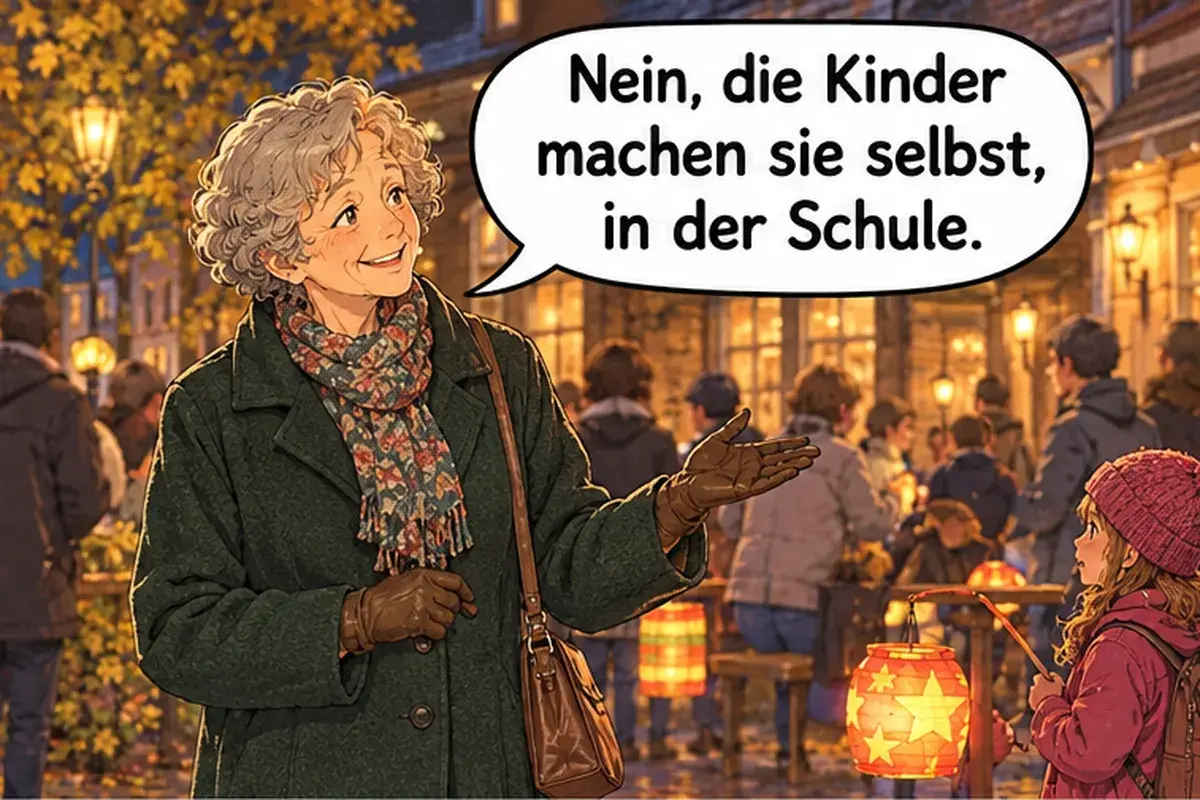
- Frau
Nein, die Kinder machen sie selbst, in der Schule.
No, the children make them themselves, at school.
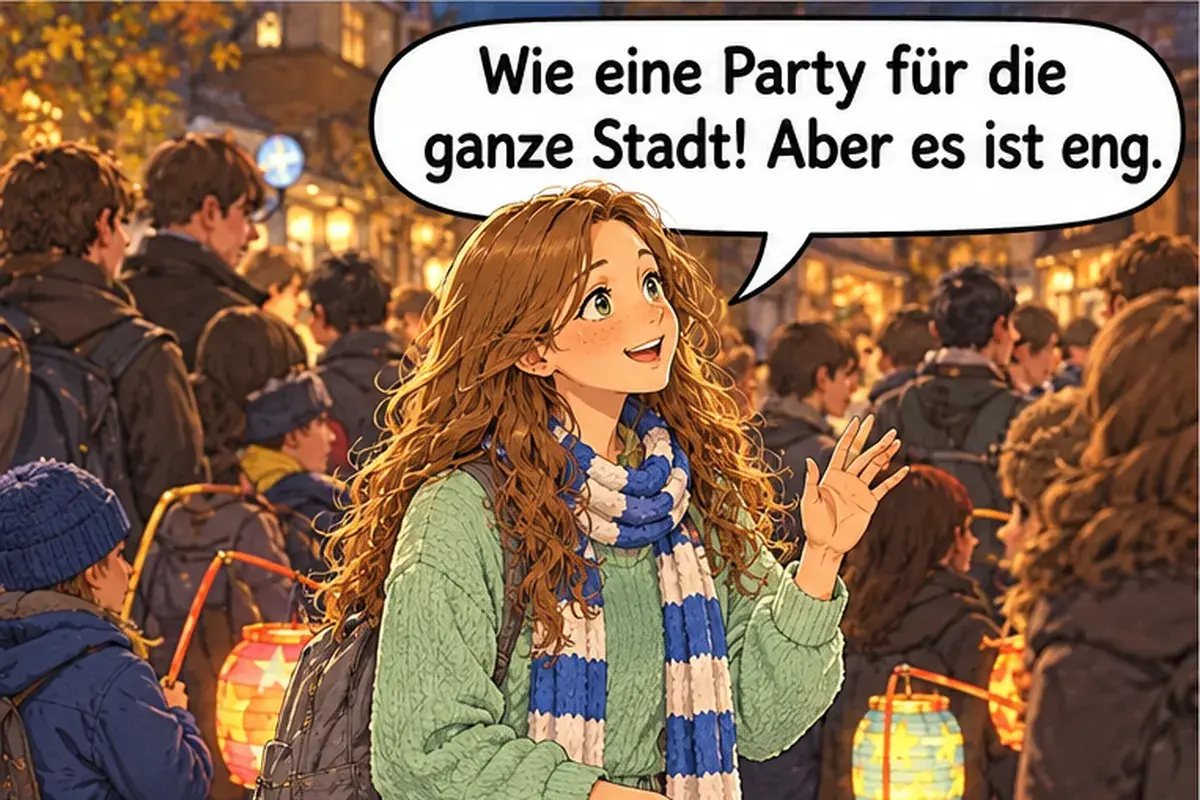
- Katja
Wie eine Party für die ganze Stadt! Aber es ist eng.
Like a party for the whole city! But it's crowded.
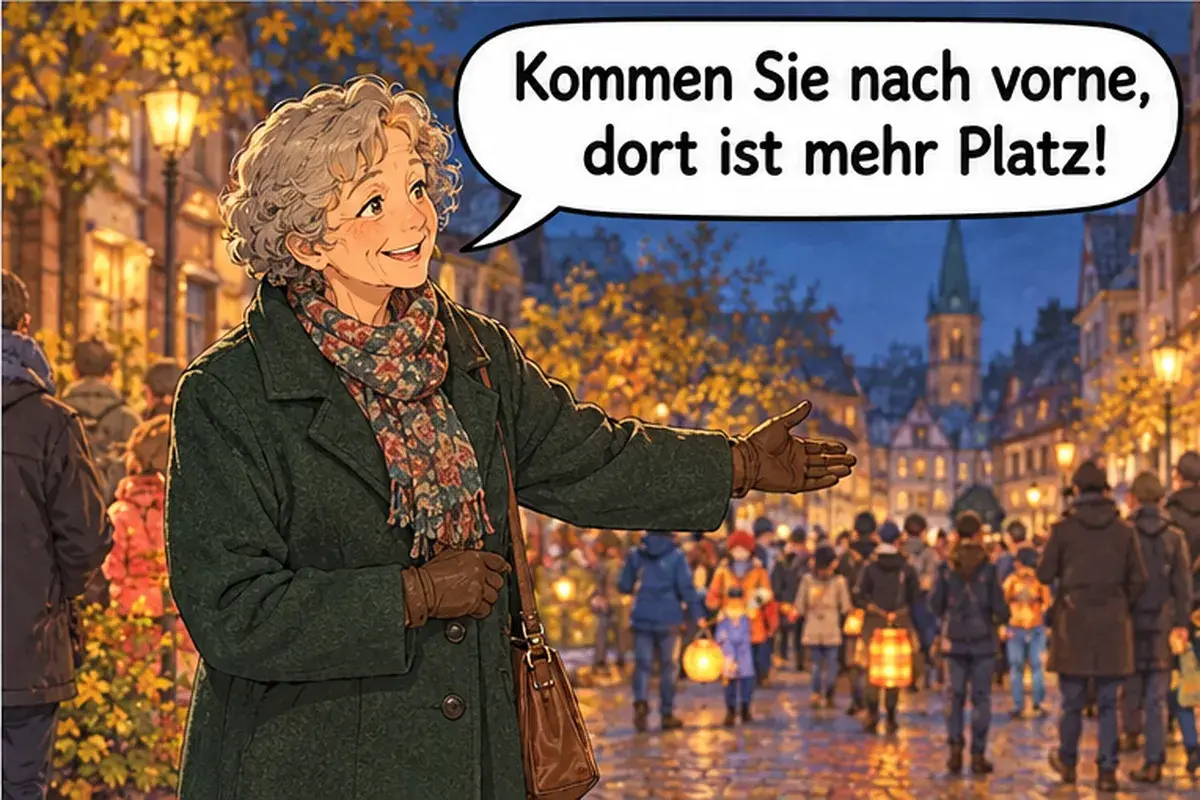
- Frau
Kommen Sie nach vorne, dort ist mehr Platz!
Come up to the front, there's more room there! (formal)
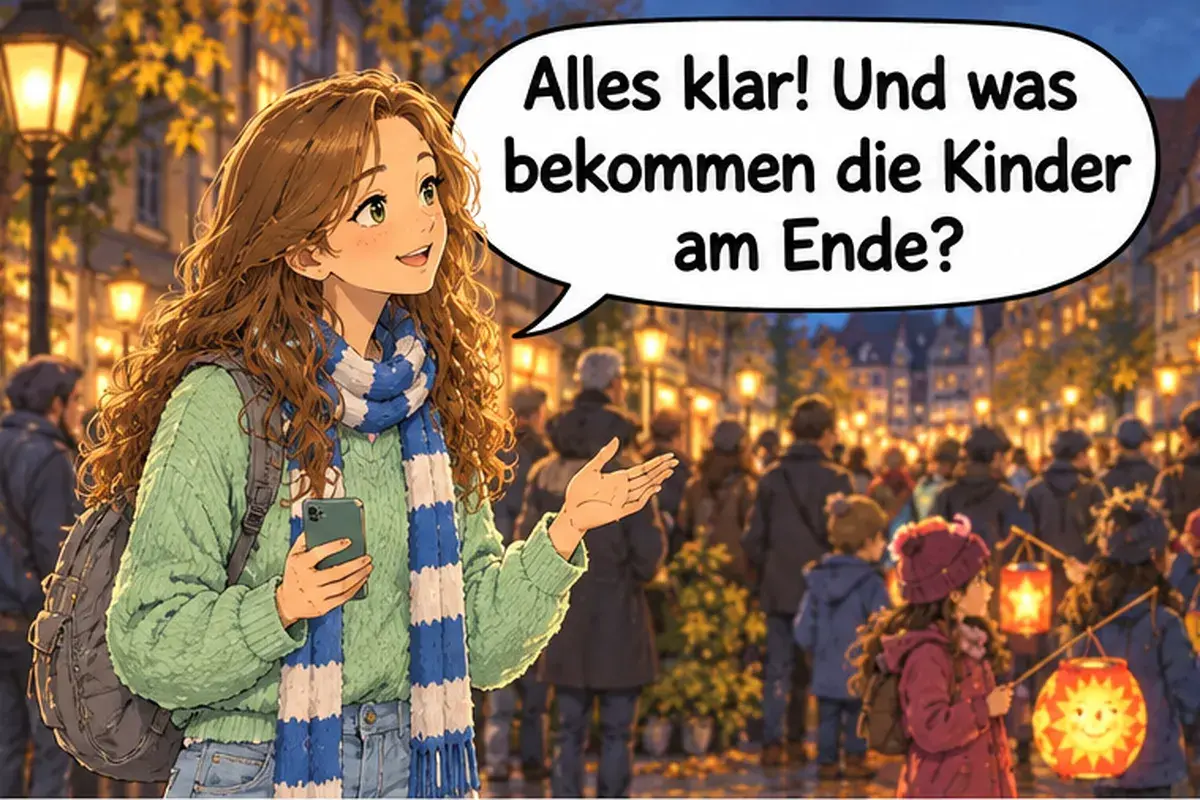
- Katja
Alles klar! Und was bekommen die Kinder am Ende?
Got it! And what do the children get at the end?
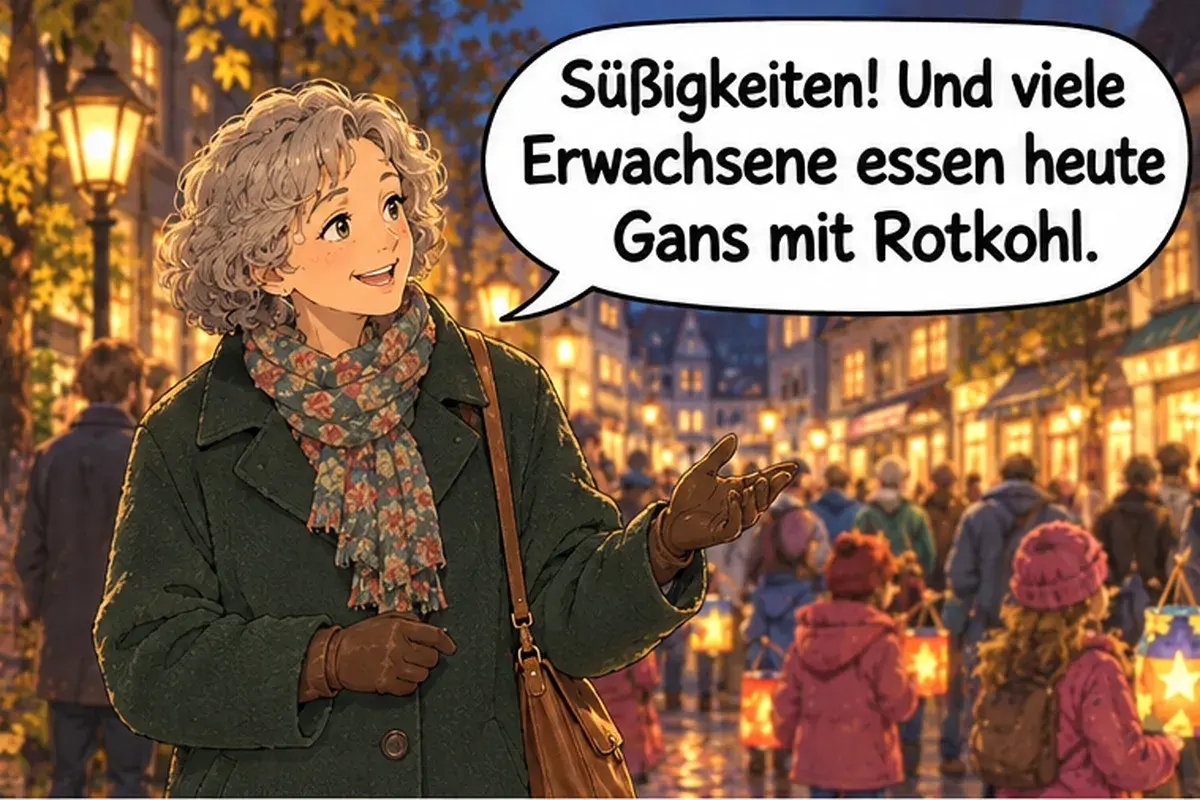
- Frau
Süßigkeiten! Und viele Erwachsene essen heute Gans mit Rotkohl.
Candy! And lots of adults eat goose with red cabbage today.
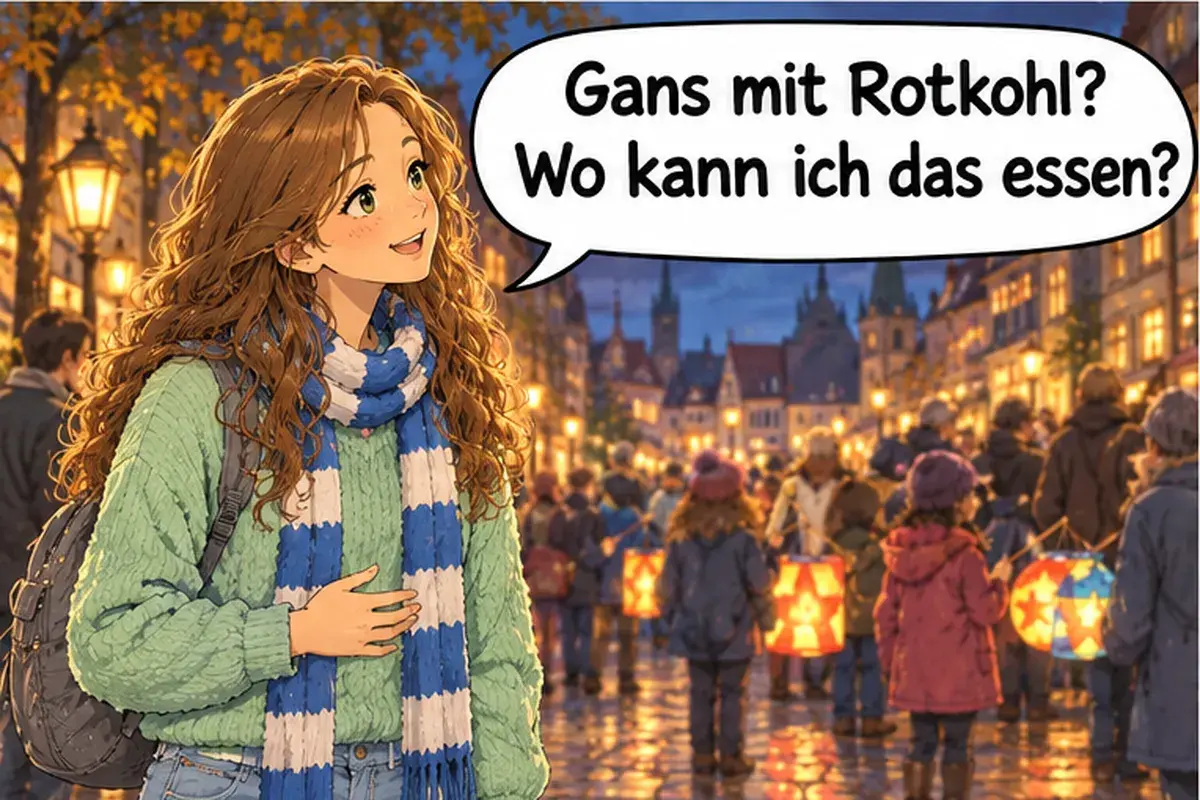
- Katja
Gans mit Rotkohl? Wo kann ich das essen?
Goose with red cabbage? Where can I eat that?
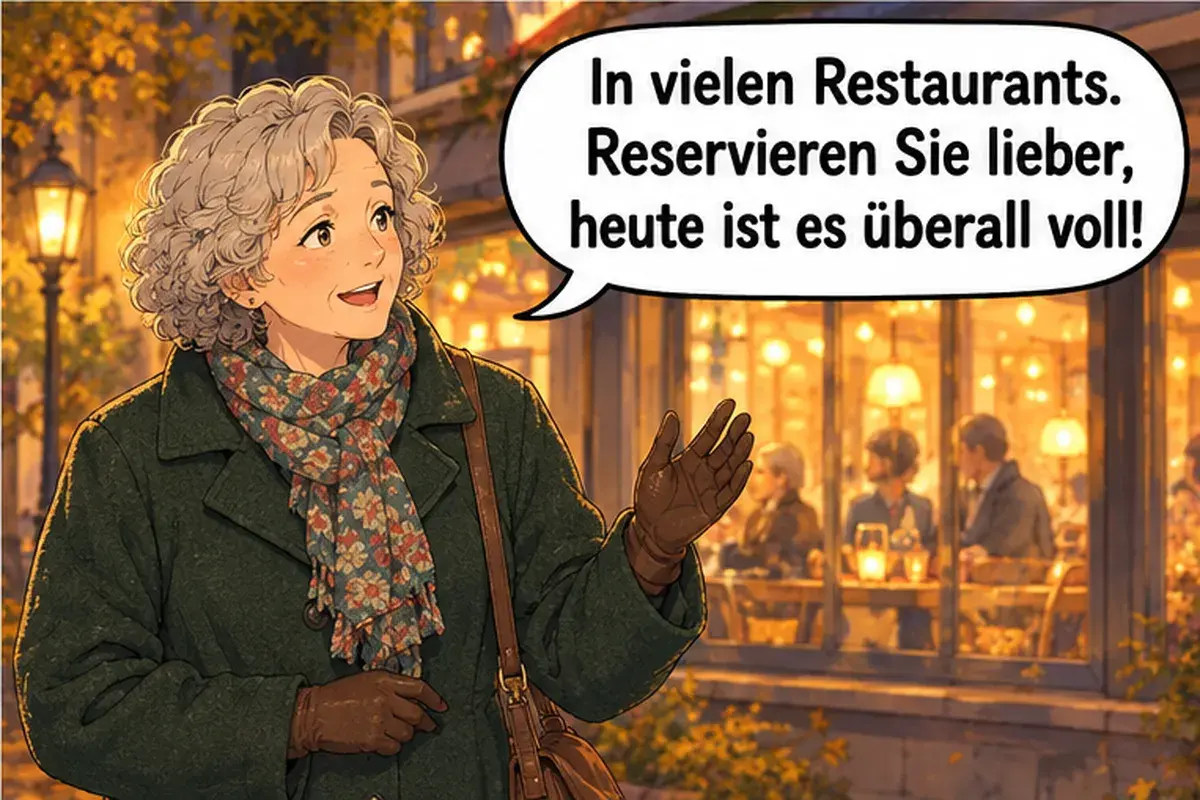
- Frau
In vielen Restaurants. Reservieren Sie lieber, heute ist es überall voll!
At lots of restaurants. You'd better make a reservation, it's packed everywhere today! (formal)
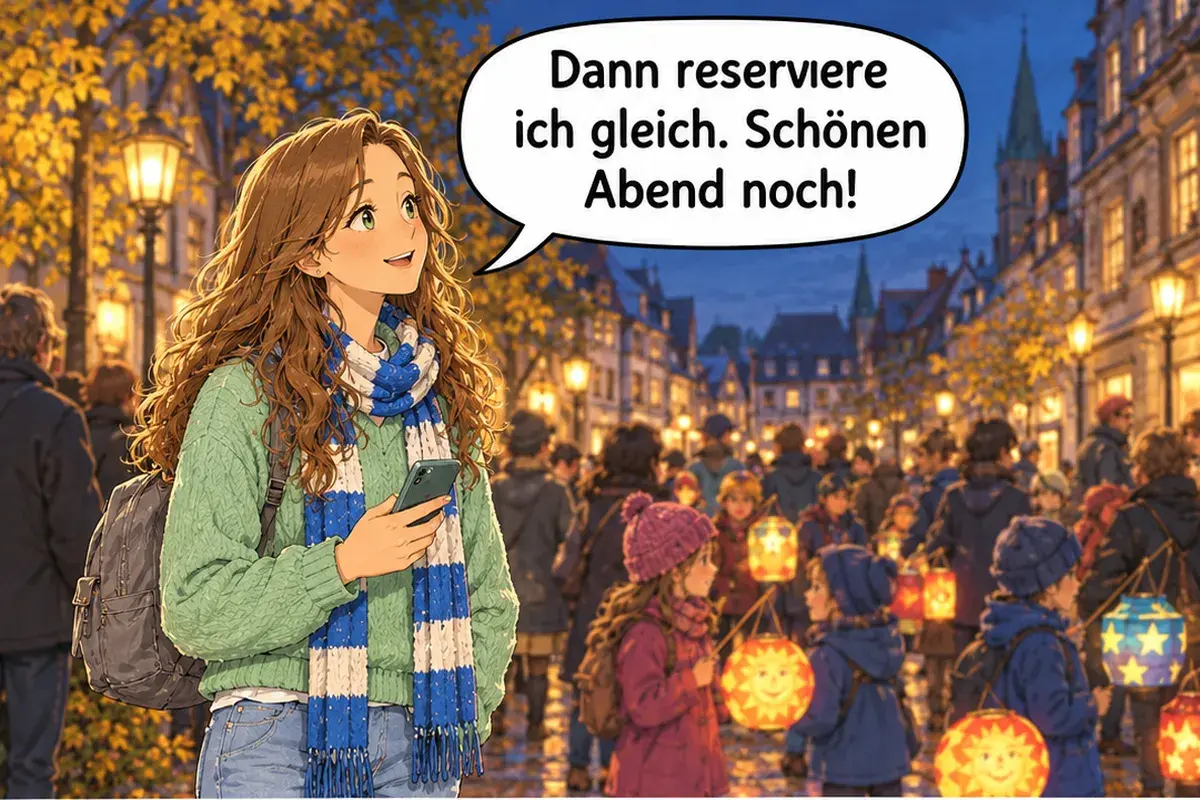
- Katja
Dann reserviere ich gleich. Schönen Abend noch!
Then I'll make a reservation right away. Have a nice evening!
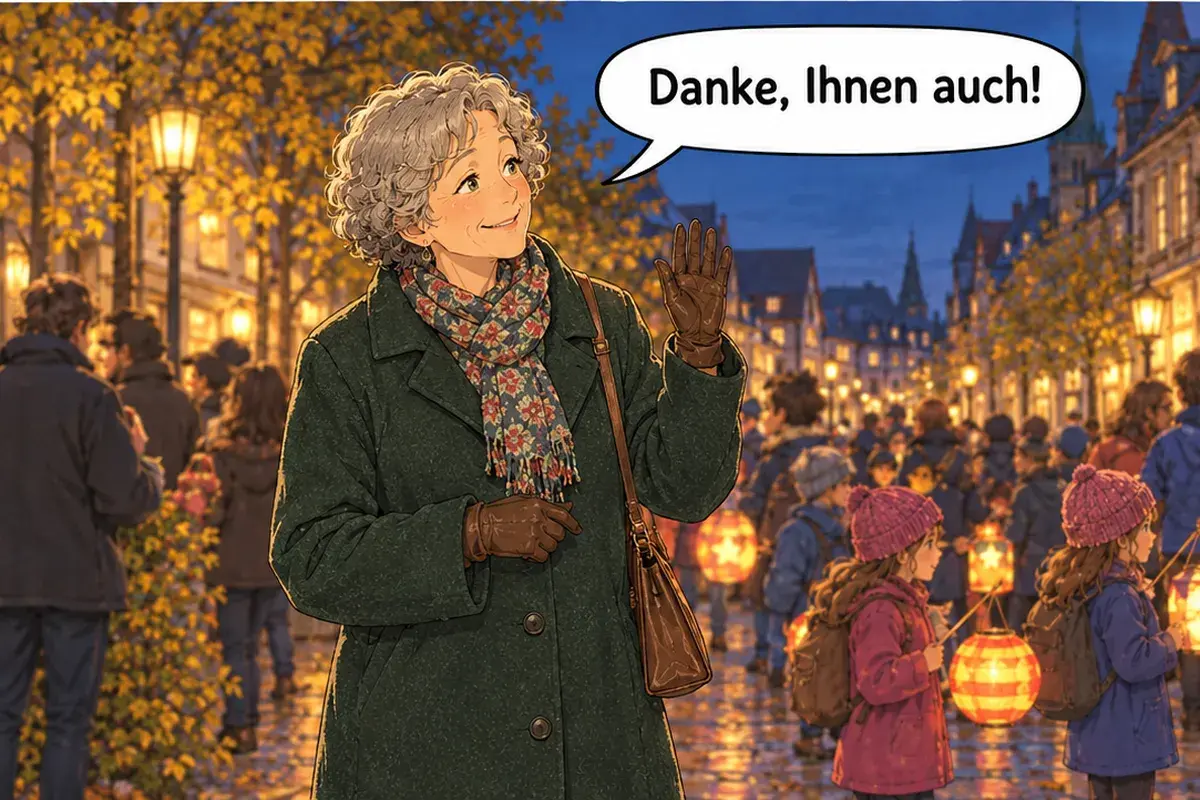
- Frau
Danke, Ihnen auch!
Thanks, you too! (formal)
Grammar for this text
- Entschuldigung, was ist heute los? —
Was ist los?means "What's wrong?" or "What's going on?" (A1, unit 18). Withheutethe question means "what's going on today?". - Heute ist Martinstag. — St. Martin's Day, a children's festival on November 11: in the evening, children walk through the streets with lanterns and sing.
- Den kenne ich nicht. —
denstands forMartinstag(der) in the accusative, like English "him" or "that one". The word comes first for emphasis: "that one I don't know". That's whykenneis in second place andichcomes after it. - Beim Umzug gehen die Kinder durch die Straßen und singen. —
beim=bei dem, the dative (unit 3): "during the parade".durchtakes the accusative (unit 4): "through the streets". - Kommen Sie nach vorne, dort ist mehr Platz! —
Kommen Sieis a polite request, the Sie command: the verb comes first, andSieright after it.nach vornemeans "to the front",mehrmeans "more" (unit 4). - Reservieren Sie lieber, heute ist es überall voll! — the Sie command again: the verb first,
Sieright after it.liebermeans "better, rather" (unit 4), so the request means "you'd better reserve".Es ist vollmeans "it's packed". - Danke, Ihnen auch! — "you too".
Ihnenis the dative ofSie(unit 5); the full thought is "(I wish) you a nice evening too".
Words and grammar of the unit: Celebrate with the locals.
Learn the words from the texts with flashcards
In the app, you can tap any word in a text to see its translation, forms and examples, and new words stick with flashcards. 15 minutes a day.
Start for freeEverything is open for free. No card needed to sign up.